Weekly tips, affirmations, and small actions to feel your best.

11 Quotes to Remember When Everything Is Going Wrong

Sometimes, it seems that everything goes wrong, despite our best efforts to make things right.We can do everything in our power to make something work, but life might have different plans. Many of us feel as though we have no control over our lives, and while that might hold some truth to some extent, we do have the power to control how we react to situations. The next time you feel frustrated or at the end of your rope over something in life, just remember the following quotes to keep things in perspective.

11 Quotes to Remember When Everything Is Going Wrong

1. Sometimes you just need to talk to a four year old and an 84 year old to understand life again. – Kristen Butler
12990996_10153451498797371_4140948225949534067_n

Sometimes, we forget important lessons throughout life that can help us through tough situations. When we can get a different perspective, it can make all the difference in how we react to a situation. Next time you find that everything is going wrong, talk to a child and an older adult to see what they think about it. Chances are, you’ll get your answer, plus a whole new outlook on life.


2. If you have nothing to be grateful for, check your pulse.
13000115_10153449320712371_1149999697099954122_n

When everything goes wrong, we often forget about everything we have to be grateful for. Remember that even when your life seems like a nightmare, you have the chance at making everything right again, because you are alive and breathing.

3. Always remember that your present situation is not your final destination. The best is yet to come.

13001097_10153448925747371_4236262378678791277_n

Remember that you are not a tree; you can move. When everything goes wrong, maybe the best choice is just to move on, set your sights on new horizons, and write a new chapter in your story.

4. When life is sweet, say thank you and celebrate. When life is bitter, say thank you and grow.
12985459_10153445921952371_3088218910243123490_n

We live in a world of duality; we must have darkness to show us the light, and vice versa. Don’t expect life to always hand you lemons, but when it does, say your thanks and use them as you will.

5. Sometimes the bad things that happen in our lives put us directly on the path to the best things that will ever happen to us.
13012827_10153443858027371_1989798039857480821_n

See the beauty in the bad times and know that something better lies ahead. Use the bad experiences as a tool to help you grow, learn and gain a new perspective.


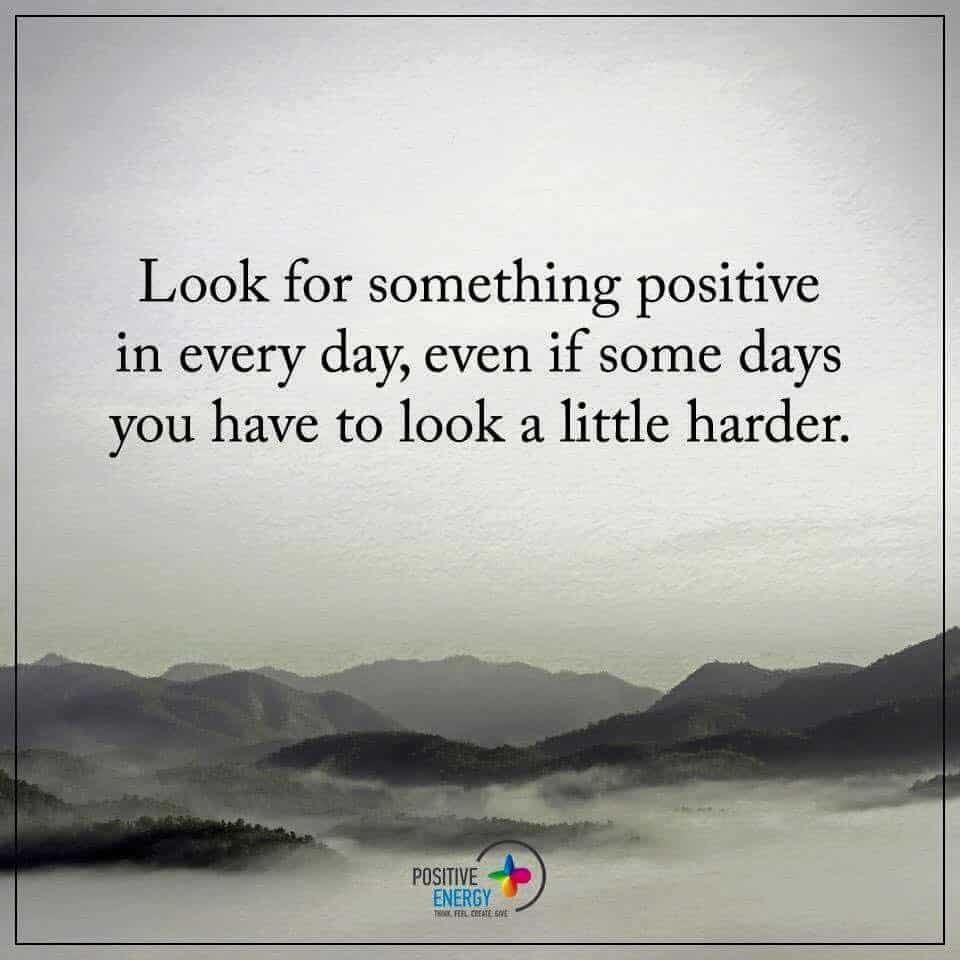
6. Look for something positive in every day, even if some days you have to look a little harder.
12961564_10153442043462371_19800582011959623_n

Not every day will go exactly as you planned and have rainbows and butterflies; some days will challenge you, but let those experiences change you for the better.

7. Life does not have to be perfect to be wonderful.

12987063_10153439766512371_8533855966579862133_n

Everything might go wrong, but look at the things you still have that mean the world to you. If you have a pulse, a family who loves you, friends that adore you, food to eat and roof over your head, you have more than most.

8. You’re always one decision away from a totally different life.

14021604_10153723970917371_8627690546748566880_n

If you don’t like your life, remember; you can change it. You have the power and control to make this life everything you ever dreamed of, so don’t let reality discourage you. And you can transcend reality based on your thoughts, perceptions, and attitude.

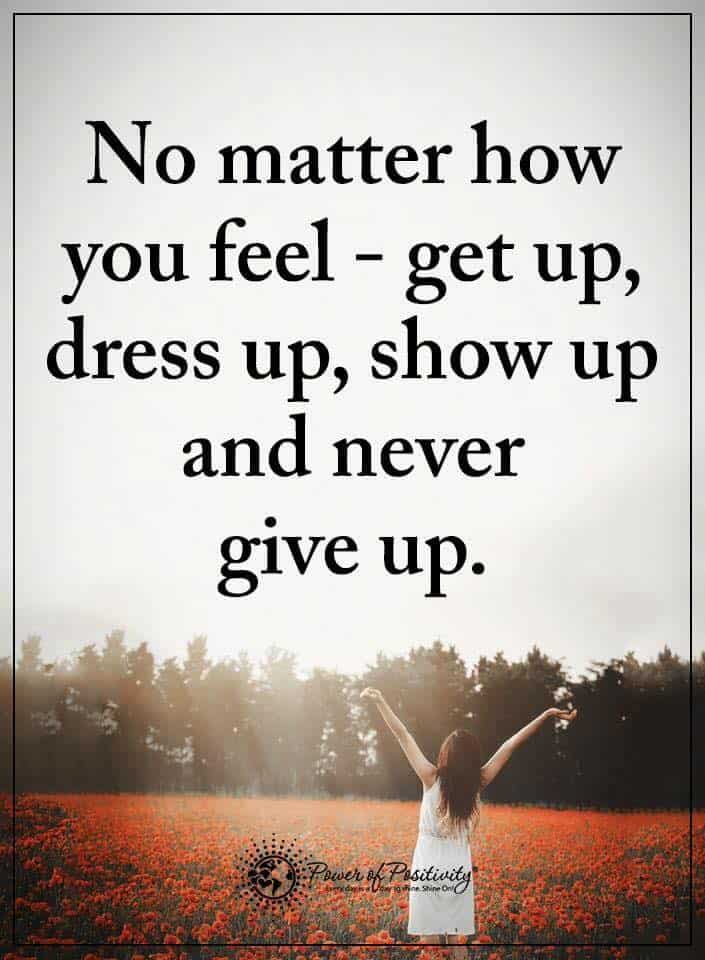
9. No matter how you feel – get up, dress up, show up and never give up.
 

14045644_10153726585892371_1523998607033969919_n

Never allow life to beat you down for too long; you can only move forward and make positive change if you keep a good mindset and allow the tough times to make you stronger.

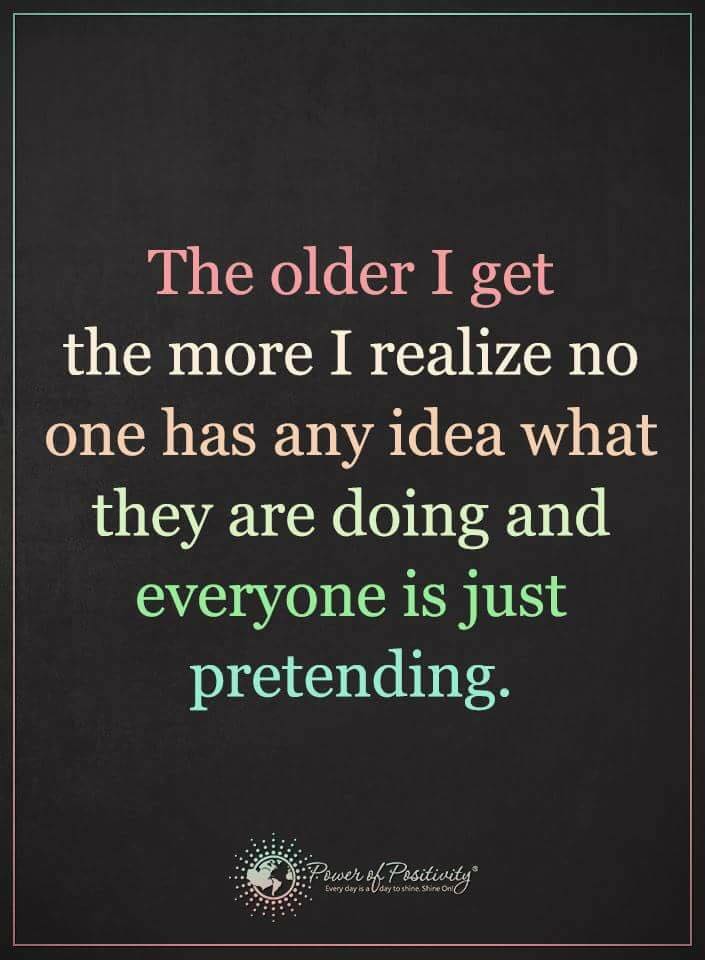
10. The older I get, the more I realize no one has any idea what they are doing and everyone is just pretending.
14055130_10153721443307371_6597113830580012125_n

The next time you take life too seriously, remember that we all are winging it here. No one knows more than anyone else on the right way to live, so if things go wrong, remember that everyone is in the same boat. You are not alone here.

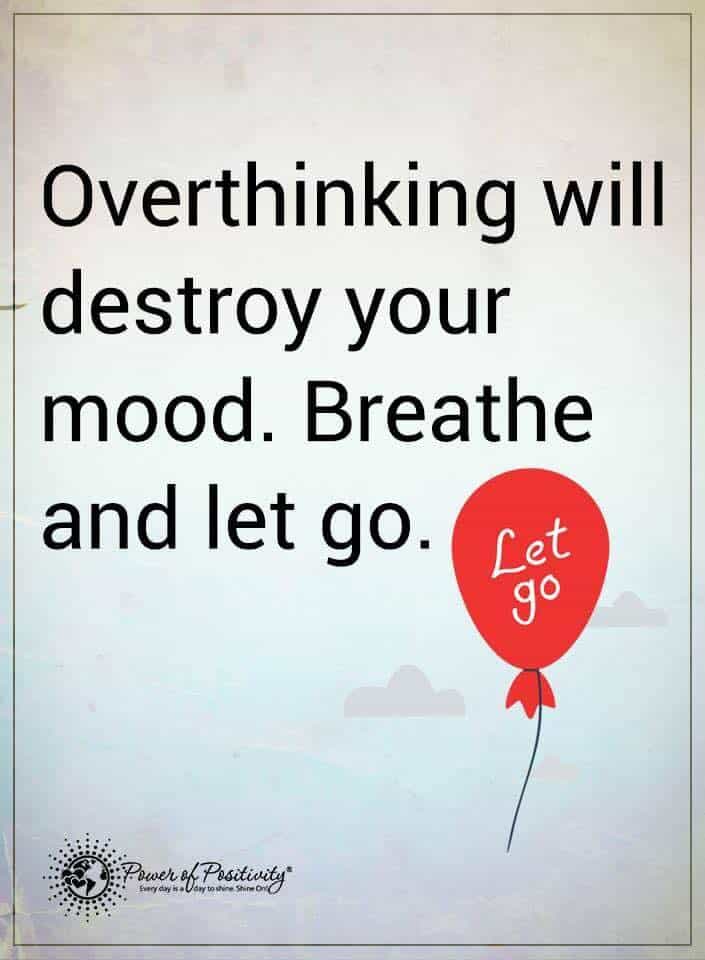
11. Overthinking will destroy your mood. Breathe and let go.
14088474_10153732826477371_8710303188899345188_n

Sometimes, we even create problems in our own heads that don’t really exist in reality. Stay mindful of your thoughts, and don’t let them control you.

Ask yourself, “Is everything really going wrong, or do I just think that based on my perception?”

Related article: 11 Quotes To Remember When You Have Problems
11 Signs You’ve Met a Love From a Past Life

Have you ever felt overwhelming familiarity and joy upon meeting someone? You may have just connected with the spirit of a partner from a past life.

Meeting someone from a past life can feel overwhelming but in a good way. More times than not, meeting someone from a past life, especially a soulmate, means you have an essential mission to complete with them during your time here on Earth.

11 Signs You’ve Met a Partner From A Past Life

soulmate

1. They feel like home to you.

You finally feel understood fully and completely. You feel like you can be your goofball self around them, and they won’t judge you. In fact, they’ll embrace and accept you unconditionally. You feel totally comforted and completely looking into their eyes. You feel the same with them like you have connected with someone who knows your soul to the core.

2. Your emotions run wild when you meet them.

The person you meet draws up a wellspring of emotions within you. You can’t place it precisely, but something about the encounter felt incredibly powerful and life-changing. You feel you haven’t seen them in ages, and have suddenly crossed paths in such a surprising way. You know that you never want to let this person go when you see them again.

3. You have past life memories together.

You don’t know how or why, but you both share memories of past lives together. You might recall living in the same place, having the same occupation, or crossing paths along travels in a foreign country. You just intuitively know and remember these things, and the memories have carried over into all the lives you have shared with this person.

4. You share everything with them.

You feel that you can spill everything from your soul, unabashedly and fully, and they won’t judge you. You’ve never felt so heard and understood by someone before; they hang onto your every word, and you feel important and listened to. They make you feel comfortable baring your soul, so you do, and have never felt so alive.

5. You lose track of time with them.

13770274_10153655167367371_5951830808044769445_n

You forget about the reality around them – time doesn’t mean anything when you have them at your side. Upon meeting them again, you two might spontaneously decide to catch up, and before you know it, five hours have passed. You feel so in tune and engaged with them that you easily lose track of time, space, and all of reality.

6. You feel connected, even in different places.

Even during your time apart, you feel like you have a strong connection with this person. You may have thought about them before, or seen them in a dream. You knew exactly what they looked like without ever meeting them before in this lifetime, and knew you would cross paths with them someday. Destiny decided that you two would come together again, and you heard the call long before you and your soulmate actually met.

7. You have an instant connection.

You may have felt misunderstood and alone for most of your life, but meeting them erases all those painful memories. You have an unbreakable bond with them that feels more powerful than anything you’ve felt before, and you can talk and be with them effortlessly.

Psychic Michele Knight says about past life connections: “We’ve all been in the situation where we’ve met someone new but have this immediate and deep connection – sometimes to the point of being able to anticipate what they are going to say next – or feeling as if they’ve been in our life forever. Often this can mean they have been in a spiritual sense as this kind of ‘instant karma’ we feel with certain people is exactly that. A karmic, past life connection and the level of comfort and feeling we already ‘know’ someone is merely our shared history catching up with us and playing out in this lifetime.”

8. You can communicate with them telepathically.

You may recall messages they sent you before you reconnected; this will explain why you have such a strong connection with them. Your hearts and souls have become intertwined due to your cosmic relationship. You have traveled to many places together, some in this galaxy and some very far away. No matter where you go, you can hear each other and know exactly what one another is thinking.

You may notice things like them saying something as you were thinking about it, or finishing each other’s sentences often.

9. You have a deep spiritual connection.

Your connection with them goes much deeper than just the surface; while you two have a solid physical connection, you also share the same views spiritually, emotionally, and mentally. You two balance each other out, and feel comfortable expressing yourself in all aspects and realms. You connect on a very deep level, and “get” one another. You can talk for hours, or not talk at all but still understand each other. Just sitting beside them, you feel this unbreakable bond.

things that happen when you meet your soulmate

10. You have never had a connection so powerful before.

You can’t recall anything that ever felt like this before. You feel in awe of their presence, so moved by their existence. It shakes you to the core, and you never want to stay the same after meeting them. Your soulmate makes you a better person, and not everyone possesses the power to bring about such a change.

11. They make you feel more like yourself.

Your soulmate should lift you up, not drag you down. Upon meeting them, you realize you feel more alive, vibrant, and full. All the empty spaces fill with light, and you notice yourself becoming lighter in spirit, too. You somehow understand yourself better once you meet them, and feel like you’ve awoken after a long, deep slumber.

(C)Power of Positivity, LLC. All rights reserved

A Simple 12 Word Text That Is Guaranteed To Improve Someone’s Day

You send text messages daily, and telling the important people in your life that you care about them is as easy as a simple 12-word text that is actually designed to help improve their day. 

A great conversation by text message can be a challenge to accomplish seeing as we rarely have time to write out our full thoughts and feelings. Instead, we abbreviate, shorten, and delete any unnecessary information when we type a text message response.

A Simple 12 Word Text That Is Guaranteed To Improve Someone’s Day

You stare at your phone screen waiting for a response from the person who you just texted, but nothing is coming through. You think to yourself ‘They must be busy’ but the lack of a reply leaves you wondering if something is wrong or how you can help. Without knowing, you’re at a loss to improve their day, or even to know if they need or want your help. In this article we will look at a simple 12-word text that will help you get a reply next time.

14079678_10153726584177371_3901463618685510026_n

The frustration of waiting for a text reply

Ever ask someone how they are doing by text message and just get a single word response like ‘fine’ or ‘OK?’ You aren’t alone; texting how we truly feel is difficult, just like it’s sometimes difficult to express ourselves verbally as well. You might tell anyone the same response, rather than taking the time to explaining your frustration at the bank today or whatever is on your mind.

Researchers working jointly from the Palo Alto Research Center in Palo Alto, California and St John’s Innovation Centre in Cambridge, United Kingdom looked at daily text message communication among teenagers. They say ‘Most of the single messages that were sent asked, either explicitly or implicitly, for a response. Some were conversational openers such as ‘Hi what are you doing?’ or ‘What’s up?’ Others took the form of explicit enquiries to the recipients such as ‘Did you have a good evening/weekend?’ Other messages that described events or activities also appeared to be implicit requests for responses.’

Unfortunately, many text messages went unanswered, which was frustrating for the sender of the message. The researchers say ‘One extreme example of a single (person) requesting a response was an SMS that (a participant) received which he summarized as ‘I’ve had a big fight and I don’t know what to do.” In this case, there was no answer, even though the person sending the text message was clearly having a moment of crisis. So how do we get people to respond to our text messages’

The simple 12 word text message guaranteed to improve someone’s day

The key to using an effectively worded text message that prompts people to respond is to make it like a game. In her book Reality is Broken, author and game researcher Jane McGonigal says that the way we word a simple text message can elicit a response from the people we care about and that will enable us to act to help them.

Getting people to pay attention is as simple as making a kind of game out of your text message. The 12 word text that McGonigal suggests we use is ‘How is your day going on a scale of one to ten?’ She says that this lets the person quickly respond with a single number. But it’s as though they are playing a game with us, which most people enjoy. It’s like they are seeing this 12-word text message as a game and they hope to get the answer right to the trivia question that you asked.

The next step to guarantee that you’ll improve someone’s day with a text

After the person responds to you with a number, say ‘5’ for example, McGonigal says you then would ask ‘Is there anything I can do to help you to go from a 5 to a 6?’ or whatever the next highest number would be. In this way, you have a sense of how they are feeling, and you have also offered to help improve their day.

The person you are texting may not know how to communicate their needs and describe a way for you to help, but once you have a sense for how they feel, you can make suggestions that you are willing to give that will improve their mood, state of mind, spiritual or physical well-being.

Related article: What Do The Emojis You Use Reveal About Your Personality?

If you are offering help to someone you care about, remember to first make sure that your own physical, mental, emotional and spiritual needs are met. Giving to someone else without filling your own bucket first leaves you drained of energy and unable to give anymore.

(C)Power of Positivity, LLC. All rights reserved

5 Signs of Poor Heart Health to Never Ignore

According to Dr. David Majdalani of the Cleveland Health Clinic, there are five symptoms of poor heart health that you should know. So seek immediate medical attention if you experience them.

Five Signs of Poor Heart Health Everyone Should Know

Watch for these red flags and seek advice from your doctor immediately.

1. Abnormal heart beat.

Also known in medical circles as an “arrhythmia”, and it does not necessarily mean your heart is beating too fast or too slow.

This could seem like a skipped beat, an additional beat, some kind of “fluttering”, “tachycardia” – beating too quickly, or “bradycardia” – beating too slowly. Or it may show no symptoms at all, being a “silent” arrhythmia. These could be serious or harmless, so it is best to err on the side of caution and visit your local doctor.

poor heart health

Symptoms of an abnormal heartbeat, according to WebMD:

N.B. There could be no symptoms if it is a “silent” arrhythmia.

– Palpitations – skipping or additional beats, fluttering, or “flip-flops”.
– Pounding in the chest.
– Dizziness.
– Fainting.
– Shortness of breath.
– Chest pain or tightening.
– Feeling very tired – weakness or fatigue.

If you have an abnormal heart beat, stop:

– Doing certain activities that bring on the complaint more often.
– Smoking, if you do.
– Excessive drinking of alcohol. One drink per day for women, two per day for men.
– Excessive intake of caffeine.
– Taking cold and cough medicines containing stimulants. Always seek the advice of your physician to see which medications are optimal for you.

2. Chest pain.

In the words of the NHS in the United Kingdom, “chest pain can be caused by anything from muscle pain to a heart attack and should never be ignored.” However, it might not be the heart that is causing this discomfort. As well as the heart, the pain could be caused by the muscles in the affected area, lungs, gullet, nerves, or ribs, including the sternum. Types of chest pain, as stated on WebMD, include: sharp, dull, burning, aching, stabbing, or a tight crushing sensation.

Symptoms to watch out for in addition to chest pain:

– Dizziness, nausea, fast heart rate or breathing, confusion, grey complexion, or excessive sweating.
– Pain spreading to the jaw, left arm, or back.
– Sudden feeling of pressure or crushing under the breast bone.
– Extremely low blood pressure or heart rate.
– Shortness of breath.

Causes for heart-related chest pain:

– Coronary Artery Disease.
– Angina.
– Heart attack.
– Myocarditis, the same symptoms of a heart attack but without the blockage.
– Pericarditis.
– Hypertrophic cardiomyopathy.
– Mitral Valve Prolapse.
– Coronary Artery Dissection.

3. Deep Vein Thrombosis (DVT).

This is caused by a blood clot in one or more deep veins. This has received media attention over the last decade or two thanks to the deaths of various people from DVT due to inactivity inside aircraft.

It is usually caused when you suffer from “certain medical conditions that affect how your blood clots”, according to Mayo Clinic. It adds that DVT “can also happen if you don’t move for a long time, such as after surgery, following an accident, or when you are confined to a hospital or nursing home bed.” It is known that DVT can also cause a pulmonary embolism, thanks to a free-running blood clot which goes straight to the lungs. A DVT and pulmonary embolism combo is known as venous thromboembolism (VTE).

As noted in the NHS in the UK, symptoms of DVT and pulmonary embolism are:

DVT:

– pain, swelling and tenderness in one of your legs (usually your calf)
– a heavy ache in the affected area
– warm skin in the area of the clot
– red skin, particularly at the back of your leg below the knee.
– DVT usually (although not always) affects one leg. The pain may be worse when you bend your foot upward towards your knee.

Pulmonary embolism:

If left untreated, about one in 10 people with a DVT will develop a pulmonary embolism. A pulmonary embolism is a very serious condition which causes:

– breathlessness, which may come on gradually or suddenly
– chest pain, which may become worse when you breathe in
– sudden collapse
– Both DVT and pulmonary embolism require urgent investigation and treatment.

Risk Factors:

Anyone can develop DVT, but it becomes more common over the age of 40. As well as age, there are also a number of other risk factors, including:

– having a history of DVT or pulmonary embolism
– having a family history of blood clots
– being inactive for long periods – such as after an operation or during a long journey
– blood vessel damage – a damaged blood vessel wall can result in the formation of a blood clot
– having certain conditions or treatments that cause your blood to clot more easily than normal – such as cancer (including chemotherapy and radiotherapy treatment), heart and lung disease, thrombophilia and Hughes syndrome
– being pregnant; your blood also clots more easily during pregnancy
– being overweight or obese
– The combined contraceptive pill and hormone replacement therapy (HRT) both contain the female hormone oestrogen, which causes the blood to clot more easily. If you’re taking either of these, your risk of developing DVT is slightly increased.

4. Heart attack.

It goes without saying, you must act immediately with this one. A “heart attack (also known as Myocardial infarction or MI), occurs when blood flow stops to a part of the heart causing damage to the heart muscle. The most common symptom is chest pain or discomfort which may travel into the shoulder, arm, back, neck, or jaw. Often it is in the center or left side of the chest and lasts for more than a few minutes. The discomfort may occasionally feel like heartburn. Other symptoms may include shortness of breath, nausea, feeling faint, a cold sweat, or feeling tired,” states Wikipedia.

However, the build-up of a heart attack “is normally gradual, over several minutes, and rarely instantaneous,” continues Wikipedia. The quicker you react to the onset of MI, the higher the chances of survival. Call emergency services immediately if you experience any of the mentioned symptoms.

5. Coronary heart disease, CHD.

Here are the causes of CHD, as described by NHS in the UK:

“Coronary heart disease is the term that describes what happens when your heart’s blood supply is blocked or interrupted by a build-up of fatty substances in the coronary arteries. Over time, the walls of your arteries can become furred up with fatty deposits. This process is known as atherosclerosis and the fatty deposits are called atheroma.

Atherosclerosis can be caused by lifestyle factors and other conditions, such as:

– smoking
– high cholesterol
– high blood pressure (hypertension)
– diabetes

poor heart health

Five Actions to Avoid Poor Heart Health and Live a Healthier Lifestyle

Avoiding poor heart health is something you can start doing today. Your lifestyle choices today benefit your heart healthy in the future. Here are five practical ways to keep your heart healthy.

1 – Eat a healthy heart diet

Eating healthy means you don’t eat from just one food group, but your diet includes a full range of natural foods from all the food groups, such as

  • Whole grains-High in vitamins B and E.
  • Fruits and vegetables- High in fiber, vitamins, and minerals
  • Heathy fats-Olive oil and natural plant oils. This includes eating nuts and seeds.
  • Eat low salt- High sodium diet isn’t good for your heart. Too much salt increases your risk of high blood pressure.
  • Eat herbs and spices-Use these to flavor your food instead of salt or sugar

2 – Stay active

Regular exercise reduces your risk for a heart attack or heart disease. Exercise strengthens your heart, muscles, and bones. Staying active with exercise makes you feel happier and, depending upon the intensity of your exercise, it creates more neurons in your brain. It’s recommended that you do moderate exercise for at least 150 minutes a week. Some exercises you can do include

  • Running
  • Brisk walking
  • Cycling
  • Swimming
  • Jumping rope
  • Tennis
  • Dancing

Doing something is better than nothing. Don’t feel overwhelmed at first. Set realistic goals for yourself. Start small and build up the time and intensity you’re exercising.

3 – Manage stress

Stress is a normal part of life, but if your stress is over the top, you need to manage it to keep your heart healthy. Add these things to your life to help reduce your stress.

  • Exercise-Walk your dog, walk to your friend’s house instead of driving, take your kids on a hike.
  • Take breaks-Take a personal day once a month to destress and get recharged.
  • Slow down-Don’t allow busyness to rule your life.
  • Find a hobby-Find a hobby. Do you love painting? Knitting? Dancing?
  • Talk about your problems-Find a trusted friend to talk with about your problems.

4 – Know your cholesterol levels

Cholesterol is a fatty substance your body produces naturally. It’s also in foods. There are two types of cholesterol: good cholesterol (HDL) and bad cholesterol (LDL). Bad cholesterol builds up in your arteries, causing blockages that affect the blood flow to your heart. This puts you at risk for a heart attack or stroke. Eating too many “bad” fats found in fatty meats, pizza, pastries, or fried foods raises your cholesterol levels. Read labels on food packages and find healthy alternatives to avoid poor heart health.

5 – Regular Heart Health Check

Schedule a yearly check-up. Your health care provider will run tests to check your heart health. These include

  • Blood pressure check
  • Blood work to check your cholesterol levels
  • Medical history information

Be sure to tell your doctor if you have symptoms that could show heart problems such as chest pains, dizziness, or fatigue.

heart

Final Thoughts on Identifying the Signs of Poor Heart Health

Never ignore these five signs of poor heart health. Being aware of them could save your life. Taking care of your heart is something you can start doing right away. Healthy lifestyle choices such as regular exercise, eating natural, healthy foods, managing your stress, and regular check-ups will benefit your heart both today and in the future.

(C)Power of Positivity, LLC. All rights reserved

Science Explains 5 Things That Happen To Your Body When You Try Cupping

When you learn about the benefits of cupping for improving your health, you will change your mind about it being an outdated and barbaric medical practice. Conversely, you may even decide to try it for yourself. When you think of medieval medical practices, you may think of leeches or depictions of cupping in historical movies. The doctor holds a flame briefly under a glass jar or cup before placing it on the back of a sick patient. Thus, they create a vacuum that then sucks the skin up into the glass jar.

The practice of cupping seems so contrary to our understanding of how modern medicine works that we find it hard to believe it can benefit our health. But modern medicine has proved just that; this ancient practice really can help heal the sick.

There are different types of cupping. However, the entire practice comes from the Traditional Chinese Medicinal practice of acupressure, which has proven therapeutic effects. This article examines the benefits of cupping based on scientific evidence. We will also explain the types of therapies that are available.

5 Ways Cupping Works To Improve Your Health

Cupping is not something you should ever try at home because of the potential risk of injury, infection, or doing more harm than good. The International Cupping Therapy Association (ICTA) has an international list of trained therapists who use extensive knowledge of anatomy and physiology to improve your health. You can find a practitioner worldwide through the link on their website.

Wet cupping therapy involves minor surface cuts to the skin, and the suction is only created by dry cupping. Both types of cupping work to improve your health, but most of the research has been on wet cupping’s effects. Wet cupping is used in traditional Asian and Arabic medicine and dates back thousands of years.

Cupping is simply applying suction to the skin surface to create negative pressure. The International Cupping Therapy Association says that cupping can improve your health if you suffer from several physical and mental health problems, including the common cold or flu, depression, arthritis, anxiety, sciatica, intestinal problems, muscle pain, and even cellulite and stretch marks.

cupping

The ICTA lists these health benefits of cupping:

Here are some benefits of this ancient Eastern therapy.

  • Deep tissue stimulation
  • Relieves inflammation
  • Promotes the flow of lymphatic fluid to stimulate the immune system
  • Pulls blood supply to the skin
  • Stretches muscle and connective tissue
  • Encourages circulation
  • Loosens scar tissue adhesions
  • Stimulates the flow of Qi energy

Five Proven Benefits of Cupping Therapy:

1. Increases immune system function

In a review of an ancient cupping therapy technique called Al-hijamah, which is a wet cupping technique, Egyptian and Saudi Arabian researchers say that the therapy ‘may be a promising treatment for increasing immunity of human body, potentiating pharmacological effects of modern drugs and clearing blood from pathological substances causing and related to pathogenesis of many diseases.’ The research showed that cupping therapy helped increase immune system function by 156% when it was added to conventional pharmacological treatment. Without the drug therapy, cupping increased the immune system natural killer cell response by 133%.

2. Reduces chronic pain

The joint Egyptian and Saudi Arabian studies also found that chronic pain intensity reported by patients decreased after therapy. The amount of pain reported by patients seeking help decreased by almost 34% after one month of treatment with cupping, 40% after two months, and 59% after three months of therapy. This was true for people who have rheumatoid arthritis. Moreover, the benefits may also extend to other types of chronic pain.

3. Viral and bacterial illnesses defenses improve

Herpes, influenza, viral hepatitis, acne, dermatitis, and cellulitis are all health problems that can be improved by cupping therapy. The ways that the therapy improves health are complex because the treatment works on multiple bodily systems simultaneously. In the neurological system, neurotransmitters such as serotonin, dopamine, and endorphins are all released during therapy. In the immune system, temporary skin irritation activates the immune function. As a result, it increases interferons, tumor necrotizing factor, and lymphatic fluid flow.

4. Reduced rates of cardiovascular disease

Systolic hypertension, heart failure, vascular leg blood clots, myocardial ischemia and arrhythmia, and even myocardial infarction or heart attack instances were reduced by using cupping therapy as reported by the Egyptian-Arabian study.

cupping

5. Decreased headaches

Headache and migraine pain can be so debilitating that people can miss work and have a financial impact due to the pain that they experience. People may also miss out on fun social activities and hobbies that they used to enjoy (pre-headache!). The good news is that the therapy improves the health of those dealing with headaches.

A joint research study between the Kermanshah University of Medical Sciences in Iran and the University of Alabama at Birmingham, USA studied wet cupping therapy as a remedy for headaches. They say that for patients who tried the therapy 3 times over a 28 day period, ‘headache severity decreased by 66% following wet-cupping treatment. Treated patients also experienced the equivalent of 12.6 fewer days of headache per month. We conclude that wet-cupping leads to clinical relevant benefits for primary care patients with headache.’

The Law of Dharma That Will Change Your Life

We are all aware of what karma is. It has been used quite a lot in the Western world in the 21st Century. However, karma only tells part of the story. Dharma is the other!

We must differentiate between dharma and karma in order to understand dharma better and how it works. Here are the definitions of dharma and karma, as explained by Difference Between:

Karma: refers to the actions that one does in relation to one’s dharma. In a sense, dharma could be seen as one’s lifelong task, and karma, the steps that one has to take to complete the task.

Dharma: refers to one’s duty in this life. Your dharma varies according to your class, your family, and the time of your life.

So, dharma is purpose – what you set out to do in life. It is the end goal, whereas karma is what you do to get to the end goal (or what you do not do).

14045644_10153726585892371_1523998607033969919_n (1)

The Law of Dharma is the 7th and last law in Deepak Chopra’s Seven Spiritual Laws of Success. In the Law of Dharma, Deepak Chopra asks us to: “Seek your higher Self. Discover your unique talents. Ask yourself how you are best suited to serve humanity. Using your unique talents and serving others brings unlimited bliss and abundance.”

This law is the granddaddy of them all, for when we have understood fully and perfected it, all other laws are put in motion by the Universe and it feels like everything is falling into place. Chopra continues in Amber-Allen: “Every person is a never-ending project of the Universe.” The project belongs to the Universe but the path is yours. You decide the path to abundance and the Universe will make it happen.

The Law of Dharma That Will Change Your Life

Dharma and work

The easiest example of seeing dharma in action is through work and how people serve their clients and others that help to put money in your pocket. In the world of work, there is no such thing as a “bad job”, even for the most hated of professions, for example taxman, banker, lawyer, accountant, or dentist. These people serve in their job to put food on the table and keep the roof over their heads. They do not become bad people just because the job requires them to do unpopular things. Naturally, if one such person decides to do these unpopular things for their own gain (i.e. steal), this affects their karma in a negative way, which in turn affects how they reach their end goal – their dharma.

On the opposite side of the coin, if you have good motivation and good heart despite making many mistakes, you are practicing dharma, and automatically, you are engaging in virtuous activities. For the record, this is not a free pass for anyone who does not know how to do a job without the correct competency levels. In terms of difficulty within the professional realm, desiring work with no challenges is completely redundant. It is like asking for lemonade without water. The late Jim Rohn says it best when he suggests: “Don’t wish it were easier, wish you were better. Don’t wish for less problems, wish for more skills. Don’t wish for less challenge, wish for more wisdom.”

Related article: 12 Laws of Karma That Will Change Your Life

Here is the million dollar question: “Do you know what your dharma is?”

(C)Power of Positivity, LLC. All rights reserved

11 Behaviors In A Relationship That Reveal Untrue Love

You met that great person a few months ago, and everything on the surface seems swell. However, something in the back of your mind tells you that the oasis of love seems like a mirage, yet you cannot quite put your finger on it. Have you really found the sweet water of love amongst hundreds of square miles of dating desert? These red flags tell you what to look for in the grander scheme of things

11 Signs You Haven’t Found True Love Yet (Even If You Think You Have)

13962704_10153729909552371_1343473462974552070_n (1)

1. They do not read your mind.

No, not like Mel Gibson in “What Women Want.” But how can anyone possibly enjoy a special relationship with a person who do not have those “you read my mind” moments every once in a while? Having these moments shows how strong a connection you both have, and the feeling when it happens is the ultimate in soulmates. It almost makes the intangible tangible. One look is all fireworks take to go off in your mind. Of course, it is not the be all and end all but not having this happen is not a good start.

2. There is zero chemistry.

We need physics to get to chemistry. Therefore, if your magnet of attraction is not functioning correctly, how can a chemical reaction occur in their brain? This applies even more so when you are in a relationship. No chemistry makes a relationship go stale and be lifeless. We only get a maximum of two years’ worth of chemistry from Mother Nature to start relationship between soulmates, after that we must put in the effort. However, people go on autopilot romantically because “we have them”. Unless you are a necrophiliac, this becomes a soulless relationship.

3. They never compliment you.

Mother Teresa once said, “there is more hunger for love and appreciation in this world than for bread.” We want the people that we care about to feel great, do we not? The best way to do that is to compliment them. An example for the ladies: “You look beautiful in that pink dress.” And the fellas: “You are so amazing taking me to the theme park on your day off.” It is a little reminder that they are essential people in our lives. If that rarely happens, let alone wanting to bring you down a peg or two, you must ask yourself why.

4. You feel judgment instead of love on a consistent level.

“That cheese you are eating stinks more than your awful smelly feet. Put it away and take a shower.” Being judgemental is like cyanide for relationships, except the poison is gradual and it gnaws away at what you have with your beau/belle. Carolyn Hidalgo of Tiny Buddha agrees: “Many believe love is putting up with, sacrificing, tolerating, or suffering in silence thinking their commitment is proof of their love. This is not love.” Do you think that this constitutes a special relationship? Hidalgo adds: “Understanding, seeing, hearing, and accepting someone for who they are is love.” In other words, talking to your sweetheart and calmly conveying your dislikes can promote individuality within the two-person union. Mel Gibson is shouting, “Freedom!”

5. Your love seems to forget your existence.

Out of sight, out of mind? You should not be. They say relationships should be fifty-fifty, but does your squeeze put a hundred percent into their fifty? That text in the morning tells you you are in their thoughts. Bringing soup or going to the pharmacy for you when you are unwell implies that they are also there in the bad times. Remembering the great time you both had at the beach and laughing about how they beat you at the game you both made up (you let them win, of course!). These are just three examples of how much you mean to them. It is all about how high you are in their list of priorities.

6. You feel the need to retype text messages.

Does it feel like you are writing a Pulitzer Prize novel texting your honey bunny something that usually takes five seconds? Type, delete, and start over. Rinse, wash, repeat. Worrying about what to say in a text should worry you and set off alarm bells in your head. Soulmates text each other, and if the correct message is not conveyed, they explain themselves.

love

7. You are finding yourself forever explaining their actions.

Friends and family mention something to you about their behavior and you explain why, making you feel like you are caught in the middle. Kim Quindlen of the Thought Catalog writes: “You make excuses for why they treat you the way they do. You have to reassure your loved ones that you’re with the right person, instead of them being able to see it themselves from the way you two behave around each other and the way your partner treats you.” It does not matter whether their behavior caused tension, anger, confusion, perplexity, or just plain old curiosity, soulmates do not need to do this on behalf of their other half.

8. No work on the relationship on their part.

Relationships are a one-man tango, said no-one ever. There is no hundred percent in their fifty shares of the relationship, not even in the smaller stuff. “You invite them to come out to trivia with your friends, or to go to your family’s house for dinner. Sometimes they come and sometimes they don’t, but they never seem too excited about it,” says Quindlen.

Soulmates jump at the chance to spend quality time with you and the people you hold dear. If that is not the case, you will no doubt also experience the following, as Quindlen informs: “And they never make much of an effort to incorporate you into their life either. You know very little about their friends and family, even though you’d like to.” You are not invited to the family home where Trevor or Trixie grew up or hang out with the crazy crew on a Saturday night, keeping you at arm’s length. Thus leading to Quindlen’s conclusion: “And sometimes, it feels as though you’re leading two separate lives that barely even overlap one another.”

9. They are not happy to see you.

This one is self-explanatory, but seeing as though we love our readers… You are in a relationship because the other person makes you feel good in each other’s company. No one really believes the rom-com movie hype of beaming with happiness unless you return from touring Iraq. No matter the differences or physical distances, they should always be happy to see you, and vice versa. If not, distances will not just be physical. You will feel miles away from your love dove even though they are right next to you. Is that a soulmate to you? Hint: Check the Cambridge Dictionary definition above.

10. No apparent interest in the future as a couple.

Why are you in a committed relationship if there is no long-term future? It is like having no mozzarella cheese on a pizza or no Jolly Roger flag on a pirate ship. We are not discussing marriage, at least not yet, but having and pursuing the same life goals together. Of course, a soulmate will talk about the future at length, what they want and how they intend to get it – whatever “it” is. If this is not happening, there is no way that they can be your soul-matey. Arrrrrrrr, me hearties!

11. There is an uneasy sense of insecurity within the relationship.

The first two words that spring to mind are: “on” and “edge”. That is what insecurity feels like in a relationship. You do not want to set them off, do you? You are afraid of what Trevor or Trixie might think if you say they are wrong or contradict them. With a soulmate, everything seems plain sailing. You talk with candour, respecting each other’s points to of view. Naturally, one can get upset or angry with opinions, but understanding soon follows.

love

Final Thoughts on Finding a Genuine Love Relationship

As True Love Dates’ Debra Fileta points out, “Remember, you have the power to teach people how they can and can’t treat you.” If you do not like something, you either change it or compromise by interacting with the other relationship faction. Only you will know what to do if you find these signs, but if you are stuck, look no further than the Cambridge Dictionary’s definition of a soulmate. Good luck, mate!

(C)Power of Positivity, LLC. All rights reserved

5 Signs Your Back Pain Is Actually Sciatica (And How to Reverse It)

Back pain is just a part of daily life for many people, but if you’re trying to manage the pain without any improvement, it could be one of the five signs of the more severe problem of sciatica. We have the information you need to know if your back pain is related to nerve damage or compression and what you can do to reverse it in this article.

5 Clear Signs Your Back Pain Is Sciatica (And How to Reverse It)

The sciatic nerve is the largest and longest in the body. It runs from the low back down to the toes of both of your legs. Pain anywhere along this nerve could be a sign of sciatica, which can be caused by pinching or compression, inflammation, or damage to the sciatic nerve.

In the most severe cases of sciatica, patients are on bed rest for an extended period with no relief from their painful symptoms. In these extreme cases, someone may require surgery to correct the interior of a vertebral disk that has ruptured, has a lesion, or a bulge that is causing pressure on the sciatic nerve.

Excessive twisting, weight-bearing, or straining of the back can all lead to disk problems leading to sciatica pain. Seek the guidance of a medical professional if you are concerned that your back pain is lasting longer than a week, is getting worse, or is limiting your range of motion.

1. Unstable walking

Sciatica can affect the function of the lower legs and feet, and pinching or blockage of the nerve can lead to numbness, tingling, and in some severe cases, total sensory block, which can feel like having a prosthetic limb. With this sciatica problem, the patient may have had lower back pain and difficulty walking or standing for long periods, may often stumble when walking, or may feel like they need the help of a cane to feel more stable.

In these cases, the patient with back pain will experience a severe pain episode, but the pain suddenly goes away. Unfortunately, the pain going away is a sign of a more severe problem because it means that there is no transmission of pain being sent from the point of the pinched nerve either down to the foot or back to the brain to signal a problem.

sciatica

2. Pain when coughing or sneezing more often

Researchers at the Department of Neurosurgery at Otago University Medical School in New Zealand say ‘One of the most characteristic signs in sciatica and low-back pain due to disc protrusion is an exacerbation of pain on coughing or sneezing. This is, of course, a feature of ‘root pain’ in general.’

It’s a clear sign of sciatica if your lower back feels stiff and the muscles are rigid, and you also experience pain when couching or sneezing. The back muscles are rigid to protect the spine, and the sciatica nerve, almost like a splint would be for a broken leg.

3. Difficulty raising your leg straight out

The New Zealand researchers also looked at patients who had limitations on their range of motion in lifting a leg straight out of them or out in front and slightly at an angle to the right or left. They say that in patients who experience pain when raising a leg straight out, the pain is ‘due to spasm of the hamstring muscles, and this would result from a reflex-mechanism initiated by increases in the strains within the affected nerve root.’

4. Pain can be severe and sharp

Some back pain feels like a warm sensation, tightness, or throbbing in an area the size of the palm of your hand, and this is a sign of typical muscle strain from overexertion. This pain is much less severe than sciatica pain and will subside with rest. A clear sign of sciatica back pain is a sharp, intense feeling like you were zapped with a live electrical wire.

The good news for this kind of low back pain sufferers is that sciatica pain can be lessened and even reversed. A study of chiropractic manipulation treatment to relieve sciatica pain found that ‘Patients receiving active manipulations enjoyed significantly greater relief of local and radiating acute LBP (lower back pain), spent fewer days with moderate-to-severe pain, and consumed fewer drugs for the control of pain.’

5. Pain travels down one leg

Shooting, traveling, or radiating sharp pain is another clear sign that your back pain is related to sciatica and not a pulled muscle. The sciatica nerve extends to the toes, and the entire length of the nerve can carry the sensation of sciatica pain. Pain that travels in the body is usually nerve-related.

Fortunately, some simple yoga poses involving bending at the waist can help reverse sciatica pain. A hamstring stretch done by sitting with your legs out in front of you can loosen the hips and lower back muscles to ease pressure and tightness against the sciatic nerve.

Other Habits to Reduce Sciatica Pain

heels

Reduce sciatica pain with good nutrients

An effective way to reduce your sciatica pain is to eat foods rich in good nutrients. Eating these foods lowers your inflammation. Choose a diet rich in fresh vegetables, wholesome fruits, fatty fish, nuts, and seeds to decrease inflammation and improve overall health.

Drink healthy teas to reduce your sciatica pain

Certain teas boost your immunity and reduce inflammation. Drinking these healthy teas can help you deal with sciatica pain naturally. The best inflammation lowering teas to drink if you have sciatica pain are:

  • Ginger tea
  • Black teas
  • Turmeric teas
  • Green teas

Heat and ice therapy

You can get relief from your sciatica pain by alternating ice and heat on your lower back and legs. Ice reduces inflammation to ease your pain. The heat causes your blood to flow to the painful areas, which helps bring healing to those areas. The sciatica pain may cause you to overuse other muscles as you compensate. Then you end up with pain in other parts of your body. Use ice and heat therapy to help relax these different muscles.

Pressure Relief Cushion

Sitting a lot at work could be why you’re suffering from sciatica. It may be time for you to purchase a pressure relief cushion for your desk chair. These pressure relief cushions help you sit appropriately, so your weight is distributed correctly. This position takes the pressure off your spine and relieves your sciatica discomfort.

Good posture

Poor posture is one of the significant causes of sciatica pain. Having good posture when sitting or standing helps your body have an average balance. It also relieves tension in your body. If you notice yourself slumping or swaying your back, pull in your stomach and put your shoulders back relaxed to regain proper posture.

Lose weight

If you’re overweight, it can make sciatica worse. Extra weight means extra pressure on your spine, muscles, and joints. If your spine pushes down on your sciatica nerve, you’ll feel a burning pain radiating in your buttocks and down your leg. Back pain alone probably isn’t sciatica.

 Gentle stretches

Do some gentle stretches to get relief from your sciatica discomfort. Here are three for you to try.

1 – Pelvic Tilt

This stretch will strengthen your lower stomach muscles and stretch your lower back.

  • Lie on your back, knees bent.
  • Breathe easily as you tighten your stomach muscles with your back flat on the floor.
  • Title your pelvis upward towards the ceiling and hold for 5 seconds.
  • Repeat ten times.

2 – Knee to chest

This reduces nerve compression in your lower back.

  • Lie on your back, knees bent
  • Gently pull up your right knee to your chest.
  • Hold with your hand for 10 seconds.
  • Then do your opposite knee and hold for 10 seconds.
  • Repeat this five times on each knee.

3 – Leg extension

This strengthens your stomach and stretches your leg muscles.

  • Get on all fours.
  • Pull in your stomach to keep your back flat.
  • Raise one leg upwards behind you, straight out
  • Hold for 5 seconds.
  • Repeat with the other leg.
  • Do this ten times. Try extending the opposite arm with each leg extension if you get good at this.

Massage

Getting a massage can relieve the pain because of sciatica. Find an experienced masseuse who knows how to massage the sciatica nerve area.  A massage could be helpful in the first few weeks to reduce your pain and increase your mobility.

Take magnesium

Magnesium soothes inflamed nerves. Eat magnesium-rich foods in your diet, including:

  • Almonds
  • Cashews
  • Dark chocolate
  • Edamame
  • Kidney beans
  • Oatmeal
  • Peanuts
  • Pumpkin seeds
  • Shredded wheat cereal

You can also take calcium and magnesium supplements to get extra magnesium to reduce your pain.

NSAIDs short term

For short-term relief, take ibuprofen or acetaminophen. If the pain is intense, these drugs can help you relax to begin doing some stretches. Acute sciatica lasts anywhere from 4 to 6 weeks. Chronic sciatica can last up to eight weeks. Depending on what’s causing your sciatica, it may take longer. Don’t take NSAIDs for more than a couple of days, then move on to more natural remedies to deal with your pain.

Chiropractor

Your chiropractor can manipulate your back to improve your spine alignment and bring you some relief. They can tell you if you have damaged your spine with a herniated disc or maybe spinal stenosis, which is a narrowing of your spinal canal. Getting your spine manipulated reduces the pain and heals the sciatica nerve damage.

Change your position frequently

If you sit or stand a lot, keep changing your position frequently. You may want to lie down for five to ten minutes to allow your sciatica to settle down and your nerves to relax. Take a hot shower to ease the pain and relax your muscles.

Get more hip strength and flexibility.

Your glute muscles support your walking motion. If these muscles are weak or tight and you sit a lot at work or school, you’ll be susceptible to sciatica problems. This combination puts strain on your hip muscles around the sciatic nerve. You end up with burning pain that runs up and down your leg and buttocks. Improving your hip strength can ease this type of pain. Doing exercises or stretches helps strengthen these areas. Also, increasing your flexibility with yoga or pilates will help reduce your sciatica pain.

sciatica

Final Thoughts on Managing Sciatica Pain

Sciatica pain disrupts your ability to do your normal daily activities. You can try these (mostly) natural ways to relieve your sciatica pain and get your pain-free life back. Whether you try taking extra magnesium, doing gentle stretches, or using a pressure relief cushion, these suggestions are tried and accurate methods for sciatica pain relief. Don’t give up. It’s possible to heal your sciatica to get back to the busy, active lifestyle you love.

If You Sweat A Lot At Night, This May Be Why

The cool side of your pillow is a blessing, but if you sweat a lot at night, it might mean that flipping the pillow is not enough to help your possible underlying health problems. In this article we will look at some of the most common reasons for sweating a lot at night and what, if anything, you can do to help relieve that flushed, hot, sticky, sweaty nighttime feeling and help you rest in cool comfort.

Summer heat or heavy bedding is not the only reason you might sweat a lot at night, but they can certainly contribute. Your body’s temperature can fluctuate through the night as you sleep, so even a thermostat that is set to keep you cool might not be enough for your body’s peak body temperature at night.

If you sweat a lot at night, this may be why…

Night sweats are a symptom that can be found worldwide, and although most people associate them with menopause, both men and women can feel the heat at night for multiple reasons. In a recent study of the worldwide prevalence of people who sweat at night, researchers found that people in every continent around the globe except for Antarctica experienced these symptoms.

For women going through menopause, the researchers say ‘The prevalence of these symptoms varies widely and may be influenced by a range of factors, including climate, diet, lifestyle, women’s roles, and attitudes regarding the end of reproductive life and aging.’

In other words, if your knowledge and beliefs about menopause don’t include that you may sweat a lot at night, then you might either not notice, or not be concerned about it.

sweat

What it means if you sweat a lot at night

We humans aren’t covered with fur to keep us warm, so our bodies naturally exchange heat with the air around us. As we sweat, we create an evaporative cooling with our skin. The moisture evaporates. Thus, the surface of the skin feels cool to the touch, helping us to regulate our internal body temperature. As a result of sweating, we require a greater intake of water. Remember to hydrate throughout the day if you sweat a lot at night.

Medication

Many prescription medications have the side effect of making your body sweat at night. For example, tamoxifen for those going through breast cancer treatment is one common culprit of night sweats. Also on the list are medications that lower blood sugar levels as we will discuss further in this article. Another major class of drugs that may make you sweat a lot at night are antidepressants.

Hormonal changes

Menopause is the most common hormonal change that people associate with being a cause of night sweats, and for women this is sometimes true when natural levels of estrogen decrease with age. But men also experience hormonal changes that can raise body temperature overnight and cause sweating.

Men can in fact experience andropause, where levels of testosterone decrease later in age, causing night sweats. A natural decline in testosterone levels can cause sweating at night, but it is more pronounced in men who are undergoing treatment for prostate cancer. Researchers looked at the side effects of androgen deprivation therapy in men who were being treated for prostate cancer and found that ‘Hot flashes did impact on everyday functioning, and night sweats regularly disturbed sleep patterns and led to participants feeling tired and irritable. Participants reported a lack of control over their hot flashes and night sweats. There was reluctance among our sample to disclose the type of symptoms experienced to others.’

A viral illness

A virus will give you a fever and this lingering illness in the body can cause you to sweat more. Sometimes a virus is in your system long term, as in the example of Human Immunodeficiency Virus. People with HIV report more night sweating than others without the disease.

Depression and anxiety

Depressed mood may be linked to body temperature fluctuations, even if you aren’t taking antidepressants. The reasons for this may be in varying levels of neurotransmitters in the brain. Anxiety and a history of panic attacks are another potential factors that are related to imbalances in neurotransmitters and may be why you may sweat a lot at night.

Changes in your diet

Dietary changes may be a cause of sweating a lot at night. One potential culprit that might be in your diet are soy products. Soy consumption has been linked to sweating a lot at night. Other spicy foods can raise your temperature a little bit while you eat and digest them. So if you eat them right before bed you may notice yourself sweating more than usual, but otherwise the heat factor will decrease as you sleep.

What you can do if you sweat a lot at night

Valerian is an herb that can help you relax at night. Additionally, it can also help regulate your body temperature as you sleep, preventing the stickiness of night sweats.

Skip to content