Weekly tips, affirmations, and small actions to feel your best.

Researchers Reveal 8 Nutrients That Reverse ADHD Symptoms

Attention-deficit hyperactivity disorder, or ADHD, is one of the most common childhood neurodevelopmental disorders in the Western world. Neuropsychiatric disorder causes symptoms such as inattentiveness, impulsivity, hyperactivity, and disorganization. Children diagnosed with the condition may have conduct problems in the classroom, such as interrupting the teacher or getting up from their seats.

Nearly twice as many boys get diagnosed with ADHD as girls, with seven years old being the average age of diagnosis. Experts estimate that ADHD affects about 1 in 20 people under 18. Around two-thirds of people suffering from the disorder will display symptoms into adulthood. According to the National Institute of Mental Health, 4-5% of adults in the US have ADHD.

Doctors usually prescribe drugs such as Adderall or Ritalin to treat symptoms of ADHD. However, these medications often have unpleasant side effects like nausea, loss of appetite, fatigue, headaches, and stomach pain. Medication is necessary to manage symptoms effectively in some cases, but natural remedies and lifestyle changes can also help. We’ll go over a few common nutrients that can reduce symptoms of ADHD below.

Add These 8 Nutrients to Your Diet to Beat ADHD

impulsive adhd

1.     Bacopa

People have been using this tropical plant, also known as water hyssop, to enhance cognition for centuries. An Indian study involving 31 children with a previous diagnosis of ADHD discovered that bacopa reduced symptoms in 85% of children. In addition, symptom scores for restlessness and self-control improved in 93% and 89% of children.

The plant improves memory and concentration by regulating dopamine in the brain, enhancing cognitive abilities. However, it usually takes about 8-12 weeks to notice any cognitive improvements. If you’re interested, talk with your doctor before trying it, as it can interact with certain medications.

2. Pycnogenol

Derived from French maritime pine tree bark, pycnogenol contains powerful antioxidants that can improve concentration and memory in both children and adults. A 2006 study on pycnogenol dramatically reduced hyperactivity in children who took a daily pine bark supplement for four weeks. However, it can cause side effects such as fatigue, nausea, or vertigo, so start with a small dose to see how your body reacts.

If you have an autoimmune disease, doctors advise you not to take this supplement because it enhances immune system function.

3. Ginkgo Biloba

Ginkgo biloba comes from the nut of a tree native to China. Because of its ability to boost memory and attention, some doctors prescribe it to reduce dementia and Alzheimer’s symptoms. It’s also effective in treating ADHD symptoms, according to a 2014 German study involving 20 children. The researchers administered 240mg of ginkgo to the children for 3-5 weeks and noticed significant improvements in their cognitive functioning. However, they say that more studies are necessary before concluding.

4. Ginseng

For centuries, people have been using ginseng in traditional Chinese medicine to treat cancer, immune diseases, and nervous system disorders. It’s also known for enhancing brain function, increasing energy, and improving concentration.

The “red ginseng” variety, in particular, can reduce symptoms of ADHD, as shown in a 2011 study involving 18 children. Researchers administered 1,000mg of ginseng to the children for eight weeks and noticed improvements in their anxiety, social performance, and behavioral issues.

5. B-Complex Vitamin

Deficiencies in B vitamins — mainly B6 — can cause imbalances in neurotransmitters such as GABA, dopamine, and serotonin. This can lead to worsening ADHD symptoms like fatigue, irritability, and restlessness. However, studies show that supplementing with Vitamin B6 can increase alertness and reduce hyperactivity. Taking a B-complex that includes other essential B vitamins enhances brain activity is best.

6. Iron

Iron plays a pivotal role in many fundamental processes in the brain, such as neurotransmitter and DNA synthesis, oxygen transportation, and myelin production. Therefore, iron deficiencies can result in cognitive decline, brain fog, and inattentiveness. A 2004 study found that 84% of children with ADHD had abnormally low iron levels compared to just 18% of neurotypical kids. Another study published in Pediatric Neurology, showed that ADHD symptoms improved when children took 80 mg of iron per day.

7. Magnesium

Magnesium is a mineral that also helps with neurotransmitter synthesis, particularly those involved with attention. A small 2016 study found that 72% of the children diagnosed with ADHD had magnesium deficiencies. They showed significant improvements in cognitive function when supplementing with magnesium for eight weeks.

Another study found that eight-week-old children with ADHD who took magnesium and Vitamin D supplements had improved emotional and social health. They also had fewer conduct problems in school. Since Vitamin D lowers brain inflammation and boosts mood, it’s a crucial nutrient in protecting the brain from neurodevelopmental and neurodegenerative disorders.

8. Zinc

Finally, zinc plays an essential role in regulating dopamine, which occurs at insufficient levels in people with ADHD. However, a 2004 study published in BMC Psychiatry found that adding zinc supplements to the meals of 44 children with ADHD significantly improved their symptoms when combined with their standard medication. In addition to accessories, foods high in zinc include nuts, meats, shellfish, legumes, seeds, dairy, eggs, whole grains, and dark chocolate.

Hopefully, adding these nutrients to your diet will help you manage ADHD symptoms more quickly. Of course, talk with your doctor first to determine the best course of action for treatment. Some people may still require pharmaceutical interventions combined with lifestyle changes to notice improvements.

adhd

Final Thoughts on Nutrients That Help ADHD

Studies show that nutrient deficiencies exacerbate ADHD symptoms, especially in young children. While pharmaceutical drugs can help treat the condition, they also have many side effects that sometimes counteract the benefits. Also, some people may notice improvements by altering lifestyle habits, such as diet and exercise.

Research shows that nutrients like zinc, iron, magnesium and B vitamins can improve ADHD symptoms. Also, supplements like Ginkgo Biloba, ginseng, bacopa, and pycnogenol have reduced hyperactivity and inattention. Before taking any supplements, discuss treatment plans with your doctor, especially if you’re taking medication.

5 Warning Signs You Don’t Have Enough Oxygen In Your Blood

Breathing is an involuntary action that our bodies do whether or not we’re conscious of doing it. That means that we have to actively force ourselves not to breathe rather than the other way around.

Our bodies need oxygen to survive, not only to keep us breathing but to circulate oxygen through our blood, which then circulates oxygen to all of our vital organs, our cells, and the tissue in our bodies.

When our blood doesn’t have enough oxygen, it’s called hypoxemia.

“Hypoxemia can be acute, occurring suddenly because of an emergency, or chronic, taking place over time because of a long-term health condition like COPD,” adds Deborah Leader RN, BSN, PHN.

Whether or not a low level of oxygen in the blood is causing severe problems, there are still ways to tell when your blood isn’t getting the required oxygen levels.

Here Are Five Signs Your Blood Does Not Have Enough Oxygen

These five signs are the primary indicators that you might have hypoxemia.

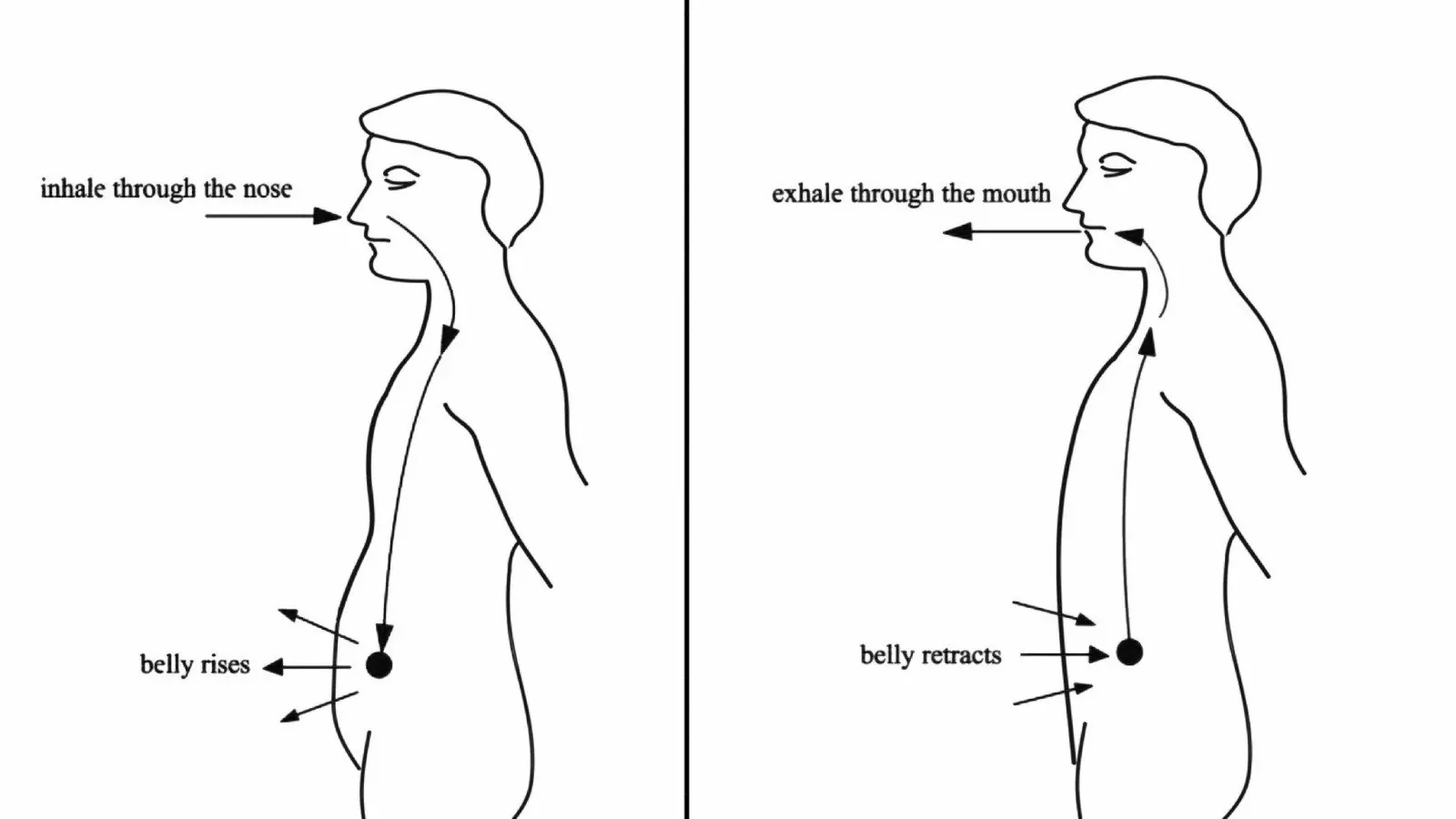
breathing exercise

Try these useful deep breathing techniques.

1. Weakness or dizziness

A common sign of having low oxygen in your blood is getting weak or dizzy more quickly than usual.

Has this ever happened to you?

If you answered yes, it doesn’t necessarily mean you have low oxygen in your blood. Most people have experienced standing up too quickly and getting dizzy, or their vision blurs for a short moment.

However, people who don’t have enough oxygen in their blood often find that this happens daily, during any level of light or strenuous activity.

Family physician Dr. D. Love states, “The muscle can burn fuel without oxygen for a limited time, but it cannot be maintained indefinitely. Therefore, chronically low oxygen levels will cause muscle weakness. It would be unusual that a low oxygen level will cause muscle weakness as a sole symptom; it would be expected that there would also be shortness of breath.”

Since your blood carries oxygen in the blood throughout your body, getting weak or dizzy quickly is a sign that your blood isn’t carrying enough oxygen to all the places it needs to go.

2. Chronic fatigue or exhaustion

Chronic fatigue is a significant sign that your body isn’t getting the oxygen that it needs in its blood. There are different types of feeling tired, but fatigue associated with hypoxemia is chronic and never-ending.

According to Dr. Graham Rogers, “Without the proper exchange of gases, your body can’t get the oxygen it needs. Over time, you will develop low blood oxygen levels, a condition called hypoxemia. When your body is low on oxygen, you feel tired. Fatigue comes more quickly when your lungs can’t properly inhale and exhale air.

People often report feeling exhausted halfway through the day, and no amount of sleep seems to be helping. Getting tired more quickly than others, or more rapidly than you used to, is also a sign that your blood isn’t getting enough oxygen.

3. Pounding or racing heart

Feelings of anxiety are often categorized by a racing or fast-beating heart. This symptom signifies that your heart is working hard to get oxygen to all the places it needs to go inside your body because there isn’t enough of it.

Suppose you’ve never experienced anxiety symptoms before, and your body has started to exhibit a racing heart without other anxiety symptoms. In that case, it might be due to a low oxygen level in the blood.

4. Shortness of breath

Of course, lack of oxygen means that you’re going to have trouble breathing. When you have difficulty breathing and pulling in oxygen, you’re going to have trouble getting enough oxygen into your blood as a result.

People who lack oxygen in their blood also report being short of breath whether or not they’re performing strenuous activity.

5. Headache and confusion

Ever get a pounding head after holding your breath? Many people experience headaches, and they can vary in severity.

By themselves, headaches aren’t a worrying sign of lack of oxygen in the blood. But paired with confusion, dizziness, and a lack of coordination, headaches can be a sign that your body isn’t circulating the amount of oxygen that it needs. Some people report feeling faint.

“Your brain needs a certain amount of blood flow and oxygen to run efficiently, and for us to feel healthy, and if that mechanism is damaged, your brain knows other ways to generate the pressure that it needs, says Dr. Patrick M. Nemechek

When your blood lacks oxygen, it can be challenging to concentrate and coordinate your body, leading to headaches and confusion.

“Without enough oxygen in the lungs, the organs cannot function properly. As a result, toxins accumulate in the bloodstream, and vascular headaches ensue. This happens because low oxygen levels initiate the widening of blood vessels and bring on migraines,” says Dr. Mark Wiley.

A lack of oxygen in the blood can cause concern because it often precipitates or stems from other diseases or illnesses. If you have any of these symptoms, see your family physician receive a diagnosis. These red flags may indicate other health concerns that need medical attention.

organic foods

How Exactly Can You Recover from Lacking Oxygen in Your Blood?

Now that you know what happens when you have low oxygen in your blood, you have another question. How will your doctor treat the condition? Here are six specific treatment options they might recommend.

1. The doctor will test you to confirm a diagnosis

Going to the doctor and getting tests done to determine how much oxygen is in your blood is the first step to getting the issue treated. The doctor will run a series of tests to see how much oxygen is in your blood and then test for the common causes of low oxygen levels.

Your doctor will then treat those problems, whatever they may be. Your heart, for example, may need help pumping correctly and may need intervention to pump better and improve your blood circulation.

2. Nasal cannula

Hypoxemia that isn’t very severe can be treated through a portable oxygen mask or nasal cannula, a thin tube with two separate openings that sit just inside your nostrils. This equipment will pump oxygen into your body and allow more oxygen to circulate through your blood. This device is a short-term treatment that doctors rely on to get your oxygen levels up.

Once you are stable, your physician will tailor a care plan to help you feel well again.

3. Regular oxygen use

When the level of oxygen in the blood is severely low, a doctor will often prescribe regular and long-term oxygen use. Depending on the severity of the oxygen levels in your blood, your doctor may have you use oxygen daily, overnight, or periodically throughout your day.

4. Eat nourishing, iron-dense food

According to The Lung Institute, eating an iron-rich diet can help you recover from hypoxemia. They explain that this dietary adjustment works because an underlying iron deficiency might cause the imbalance.

The American Red Cross offers this extensive list of foods that help boost iron levels:

Animal proteins:

  • Eggs
  • Beef
  • Lamb
  • Veal
  • Chicken
  • Turkey
  • Ham
  • Pork

Seafood:

  • Clams
  • Shrimp
  • Tuna
  • Sardines
  • Mackerel
  • Haddock
  • Oysters
  • Scallops

Beans and legumes:

  • Tofu
  • Kidney beans
  • Garbanzos or chickpeas
  • Navy beans
  • Pintos
  • Black beans

Leafy green vegetables:

  • Spinach
  • Swiss chard
  • Dandelion greens
  • Beet greens
  • Kale
  • Collard greens

Fruits and vegetables:

  • Tomatoes
  • Peas
  • Sweet potatoes
  • Broccoli
  • String beans
  • Strawberries
  • Dates
  • Figs
  • Raisins
  • Prunes and prune juice
  • Dried apricots or peaches

Grains:

  • Enriched white or whole wheat bread
  • Enriched  pasta
  • Wheat flour
  • Bran cereals
  • Oatmeal
  • Rye products
  • Enriched rice
  • Cornmeal

5. Exercise (even a little bit helps)

The Mayo Clinic suggests that engaging in exercise will help to improve breathing difficulties, boosting your respiration. Thus, you will replenish the oxygen in your blood.

Talk to your doctor on how to get started safely. They will likely tell you to start with short walks once a day, building up from there. They might also recommend you try gentle exercises such as yoga or light stretching exercises.

As you build up a tolerance for easy exercise, you will build stamina. Your doctor will challenge you to take your efforts to the next level once they believe you are ready to do so.

As an additional benefit, you might also shed a few pounds as you become more active, making it much easier to breathe.

6.  Avoid cigarette smoke

Whether you are a smoker or find yourself in second-hand smoke, you should avoid it altogether.

A study published in the European Respiratory Journal points to cigarette smoke as a significant contributor to COPD, hypoxemia, and narrowed arteries. Each of these can lead to heart attack, stroke, brain damage, and other devastating outcomes.

Speak with your family doctor about quitting.  If you are a non-smoker who lives with someone who smokes, discuss your health with them and support them in their effort to quit their nicotine habit.


blood oxygerFinal thoughts on Restoring Oxygen in Your Blood to Healthy Levels

“Oxygen is one of the most abundant elements in the universe. It’s a bit ironic, then, that people with breathing problems can’t seem to get enough of it.” –  Deborah Leader RN, BSN, PHN.

If you’re concerned with symptoms of low oxygen levels in your blood, it’s best to book an appointment with your doctor and have any necessary tests done to ensure that everything is working right.

Low oxygen levels can cause other health risks, so getting it addressed and treated as quickly as possible is the best course of action.

6 Things Your Nails Can Tell You About Your Health

Many of us look, trim, and – yes – bite on or chew (please stop!) without giving our nails much thought. But that could be a mistake, as healthy nails often reveal good health. On the other hand, dull, dry, splitting, or easily breaking fingernails might be an early sign of a health issue brewing.

But you don’t need to take our word for it. Here’s what the professionals say:

“Nails often reflect our general state of health. Changes in the nail, such as discoloration or thickening, can signal health problems including liver and kidney diseases, heart and lung conditions, anemia, and diabetes.”~ American Academy of Dermatology

Let’s take a step back and ask: what are nails, exactly?

Wikipedia provides an excellent definition:

“A nail is a horn-like envelope covering the tips of the fingers and toes in most primates and a few other mammals…Fingernails and toenails are made of a tough protective protein called alpha-keratin.”

Keratin is the same protein product in your skin and hair.

Now that we’ve got the mini-physiology lesson, let’s discuss six things that nails can reveal about your health.

What Do Your Nails Reveal About Your Health? The Answers Might Surprise You…

fingernails nails

1. Dry, Cracked, or Brittle Nails

Dry, cracked, or brittleness indicates exposing your hands to frequent water submersion. If you’re a dishwasher, diver, fisherman, or swimmer, you’ve likely experienced this symptom occasionally.

It’s also worth mentioning that dryness may reveal a Vitamin A, B, or C deficiency. Brittleness may result from frequent use of nail polish remover or chemical exposure (from household cleaning products, for example.)

2. Parallel Ridges

Parallel ridging, known as ‘Beau’s lines,’ shows an abnormality in growth. Beau’s lines may be a sign of diabetes, psoriasis, or a zinc deficiency. They can also be the product of nail trauma or a high fever that sometimes accompanies a severe illness.

 3. Puffy Fold

If the skin surrounding the cuticles is puffy and red, this is referred to as nail fold inflammation. Infection can cause nail fold inflammation, as can a connective tissue disorder such as lupus.

4. “Clubbing”

Clubbing occurs when the fingertips become engorged and your nails curve downward. It’s common for them to appear almost sickly white, which is often a sign of low oxygen in the blood. Clubbing could signify an internal problem, such as heart disease, inflammatory bowel disease, kidney disease, and lung disease.

5. Yellow Nails

A fungal infection most commonly causes yellowing. This often occurs after a viral infection, which weakens the immune system. The infection starts in the skin surrounding the nailbed and moves to under the nail plate. According to NIH, topical treatments tend to be ineffective, so connect with your doctor for a treatment plan.

6. Bluish color

Nails – and sometimes, fingertips – that appear blue can be a serious sign that the body is not getting enough oxygen. A bluish color may indicate a lung problem, such as emphysema, or a heart problem.

fingernails nails

Learn the proper steps to provide at-home nail care.

Final Thoughts: When it Comes to Nails, A Little Prevention Goes a Long Way

AAD gives the following seven recommendations for keeping them healthy:

  • Keep them clean and dry. This prevents bacteria from accumulating below the surface.
  • Cut them correctly– straight across and rounded slightly in the center. Proper cutting will help keep them healthy and prevent ingrown nails.
  • Soak your feet in warm salt water for five to ten minutes. This will make them easier to trim properly.
  • Shoes should fit properly – not too snug or too loose. It helps to consult with an expert in determining the proper fit, such as a podiatrist.
  • Don’t bite them, as this can transfer infectious bacteria between your fingers and mouth. Nail-biting can also damage the skin around your fingers, allowing infections to enter.
  • Apply a moisturizer, especially after removing polish or any other product containing chemicals.

If you experience recurring problems, it is advisable to seek advice from a medical specialist. Dermatologists specialize in diagnosing and treating skin, fingernail, and hair disorders.

10 Promises You Must Make Yourself In A Relationship

It can be hard to keep up with ourselves and form a healthy relationship. The thing is, though, is that when we make relationship promises with ourselves, it can help us keep a clear head when it comes to everything else going on in our lives! Instead of letting the rest of your life take control, make a few basic promises to yourself to help keep you going strong.

“Nourishing yourself in a way that helps you blossom in the direction you want to go is attainable, and you are worth the effort. ” – Deborah Day

Steve Maraboli once said, “The most powerful relationship you will ever have is the relationship with yourself.” When focusing on our relationships with other people, we often forget the importance of focusing on our relationships with ourselves. Life can be stressful, between work, outside relationships, family troubles, and pressure to perform.

Here Are 10 Promises You Must Make For Yourself

promises men make

1. Eat well, but treat yourself

Our bodies need all the right stuff to keep us going through all the stress in our day to day lives. However, that doesn’t mean that your body doesn’t need something that tastes good, too! Keeping your food healthy for your body is great, but letting yourself cheat every once in a while, is important, too.

Why?

If you’re never eating the foods you really enjoy or which give you pleasure, then that’s going to result in feelings of deprivation. If you have these feelings of deprivation, it can increase the chance of bingeing or overeating, and this can end up being quite an unhealthy cycle,” says accredited practicing dietitian Chloe McLeod.

Lesson? Give yourself what you want, because you more than deserve it. And it’ll keep you healthy too.

2. Don’t fret over the things you can’t change

Sometimes, you just can’t decide the outcome of what’s going to happen. No matter how hard you work, you may find that some things just end up the same. In that case, it’s time to just let it go. You did your best, but you can’t change everything. Don’t stress out too much over things that are immutable.

3. Take time for yourself

If you’re the type who loves to hang around other people, then you’ll want to remember that it’s important to take time for yourself, too. Give yourself time to recuperate from the social obligations and expectations. Take a long, hot bath or spend time reading your favorite book. You’re going to be the person looking out for you the most.

Or as Dr. Aymee Coget points out, “By not taking a little time out of each day for yourself, you might be less happy than possible. Start by focusing on yourself. Acknowledge that your own happiness is important and practice happiness-boosting routines.

4. Find time for your passion

You have to do something you love, and do it a lot! You may find yourself swamped with work or social expectations, which can be stressful. A great way to combat this and feel more like yourself is to find something you’re passionate about. Whether it’s yoga, dance, writing, or drawing, you’ll want to find time to do something you love.

positive life

5. Read a book

Any book! It doesn’t have to be a good book. After all, you’ll never know if it’s good until you read it! Just read. It’s a great way to relax and escape from reality, as well as getting our creative and logical juices flowing. You may also find that reading can help you figure out how to deal with your own day-to-day problems. It’s true!

Author Ceridwen Dovey says, “Reading has been shown to put our brains into a pleasurable trance-like state, similar to meditation, and it brings the same health benefits of deep relaxation and inner calm. Regular readers sleep better, have lower stress levels, higher self-esteem, and lower rates of depression than non-readers.

6. Stop putting energy into things that make you unhappy

If something in your life is making you miserable, you need to stop and reassess how badly you want to continue on the path that you’re on. Or if your job is making you unhappy, it may be time to start sending your resumes to somewhere else. If your major in school is driving you crazy, it might be time to see if there’s something else you want to do with your life. Finally, if you spend too much time on the things that make you miserable, there won’t be any time to do the things that make you happy.

7. Travel

Traveling around the world isn’t feasible for everyone. But if you can travel, you should. You don’t have to travel far – drive one state over, or stay in a new city. Traveling is a great way to meet new people, see new things, and experience new cultures that you would have otherwise been closed off to. It can help open up your entire worldview into something new.

Secretary general of the World Tourism Organization Taleb Rifai says, “Travel makes us different people. It opens our hearts, opens our minds and we see the world differently. The world will be a better place when we travel.

We couldn’t agree more!

8. Love your reflection

Unless you’re an identical twin, there’s no one else in the world who looks just like you. And that’s amazing. It can be difficult to look at yourself in the mirror and genuinely love what you see – but it’s one of the things that will make your relationship with yourself ten times more amazing. Learning to love your reflection is something that will help you realize that you deserve all of the love that is directed your way – even from yourself.

9. Stop comparing yourself to others

If your classmates went on to college a year before you did, that’s okay. If someone younger than you is succeeding in the field you want to be in, that’s fine too. Comparing yourself to other people will only make you feel miserable about where you are now.

While comparisons can be informative, they’re almost always discouraging, because someone’s always going to end up on the bottom,” says professor of sociology Deborah Carr, Ph.D.

You’re where you are for a reason, and things will work out for you in their own time. You should only be focusing on how to achieve your goals – not what other people have achieved.

10. Love your life

Create an environment that will make you genuinely happy, and genuinely fall in love with your life. Don’t focus on what other people have. Stop wishing that you could be doing something else, and instead just do it. Your hopes and dreams are yours to achieve, and only you will be able to make them come true.

Final thoughts

Your relationship with yourself will be the most important one you have in your entire life! It only makes sense to make these promises that will help keep you on the right track in life. When life gets too heavy or stressful, you’ll always have yourself to fall back on.

References:
http://www.huffingtonpost.com.au/2016/06/23/this-is-why-treating-yourself-to-bad-foods-is-totally-okay_a_21400471/
http://www.blogher.com/increase-your-happiness-making-time-yourself
https://www.newyorker.com/culture/cultural-comment/can-reading-make-you-happier
https://www.tripsavvy.com/travel-makes-you-happier-says-science-4093550
https://www.psychologytoday.com/blog/bouncing-back/201508/3-reasons-stop-comparing-yourself-others

Researchers Reveal 5 Secrets of People Who Have Lived to Be 100

While centenarians make up a small share of the world’s older population, their proportion is growing. In 1990 there were 2.9 centenarians for every 10,000 adults ages 65 and older around the world. That share grew to 7.4 by 2015 and is projected to rise by 23.6 by 2050~ Pew Research

Japan and Italy, what’s your secret?

All you can eat sushi and pasta? (“Please God…”)

On a serious note, the Japanese and Italians dust the rest of the world in the proportionate number of persons aged 100 and older.

Japan has the top spot at 4.8 per 10,000 people, followed by Italy at 4.1 per 10,000.

The U.S. ranks third at 2.2. China (0.3) and India (0.2) round out the top five.

What’s truly incredible is that these numbers are expected to rise as much as ten-fold over the next 35 years, according to the United Nations’ “World Population Prospects, 2017” report.

Genetics and Lifestyle

Okay, so there may come a time (in the not so distant future, perhaps) when we can alter our genes at-will.

That said, genes play a role in how long you’ll live. People who’ve reached a hundred are more likely than the rest of the population to have ancestors who lived for a long time.

Increasingly, however, lifestyle factors – in conjunction with scientific and medical advances – are playing a more prominent role in living a longer life.

Per science, here are five lifestyle factors popular among centenarians:

1. Have a positive attitude

We know for a fact that stress is a common denominator for many (most?) serious illnesses. The best stress-buster is a positive state of mind, which is perhaps the most crucial factor to living a long and healthy life.

Lynn Peters-Adler, J.D., a contributor to Next Avenue and Forbes writes:

“Almost all of the centenarians we spoke to believe a positive yet realistic attitude is critical throughout one’s life and described themselves as optimistic people.”

2. Keep a sense of humor

Emiliano Mercado Del Toro, 115 years old, has never failed to maintain his sense of humor – even when the bullets began to fly. Del Toro claims that he was visiting a “dancing club” – a.k.a., a bordello – before he dived under upon hearing gunshots. At 82 years old.

When asked about what he was doing while table dwelling, Del Toro replied “Praying…or at least I was when the bullets started flying!”

3. Live in moderation

John and Charlotte Henderson, 104 and 102, have been married for 77 years. Mr. Henderson is the University of Texas’ longest-living former football player, having played beginning as a freshman in 1932.

When asked about their “secrets,”  Mr. Henderson replies “Living in moderation. We never overdo anything. Eat well. Sleep well. Don’t overdrink. Don’t overeat. And exercise regularly.”

His wife adds her opinion: “We had such a good time when (he) retired. We traveled a lot. We just stay busy all of the time, and I’m sure that helps.”

4. Keep your brain active

Whether it’s reading the news, doing crossword puzzles, or playing cards, many seniors and centenarians prioritize keeping their mind active.

Dr. Dale Bredesen, an internationally-recognized expert in aging and neurodegenerative diseases, enrolls his patients in scientifically-validated brain training programs.

Dr. Henry Mahncke, CEO of Posit Science, who works with Bredesen’s patients, says: “There’s an emerging consensus that we need to treat neurodegenerative disorders with a (diverse) approach tailored to the individual, rather than a silver bullet.”

5. Staying “clean”

Harry Adler, 101, gives his straightforward and simple advice: “Just stay out of trouble.” Centenarians emphasize the importance of following your conscience and living clean.

According to a survey by Forbes: “almost 75 percent of the centenarians we surveyed never smoked; most of the others stopped between the ages of 40 and 70. And while some never drank, most said they enjoyed only an occasional cocktail or a glass of wine; some still do.”

Final Thoughts

The Japanese demonstrate the importance of proper dietary habits – a crucial factor to a long and healthy life.

In just over 70 years, Japan rose from having one of the world’s shortest life expectancies (post-WWII) to the highest. As we can’t list (or fully explain) all lifestyle components in a single article, here’s a quick list of what our Far Eastern friends do according to studies:

– Eat plenty of rice, vegetables, and fish.

– Drink a lot of natural tea (“matcha”).

– Only eat fresh foods.

– Eat smaller portions.

– Be more active. (As many Japanese do not drive, they must walk to the trains, work, and school.)

– Spend a lot of time in nature.

That said.

The culture of overwork, known as karoshi (“death from overwork) in Japanese, is a widely-recognized health crisis. Recently, a 31-year old journalist by the name of Miwa Sado died of heart failure after clocking more than 150 hours of overtime in one month.

In detailing health benefits of other cultures, of which there are many, it is only fair and just to include the elements of its culture that are counterproductive to health and happiness.

As of this writing, Japan’s federal government is working to implement federal laws to limit the hours that employees can work.

https://youtu.be/7BNGVmwxoHI

(C)Power of Positivity, LLC. All rights reserved
Sources:
http://www.pewresearch.org/fact-tank/2016/04/21/worlds-centenarian-population-projected-to-grow-eightfold-by-2050/

https://www.brainhq.com/media/pressreleases/end-alzheimers
https://www.forbes.com/sites/nextavenue/2013/08/20/7-life-secrets-of-centenarians/2/#6af3de077898
https://www.independent.co.uk/life-style/japan-is-facing-a-death-by-overwork-problem-heres-what-its-all-about-a8009096.html
https://www.prevention.com/mind-body/10-habits-of-people-whove-lived-to-be-100/slide/4
https://www.usatoday.com/story/news/2017/03/22/kaiser-want-live-past-100-centenarians-share-their-secrets/99510052/

8 Things To Remember If You Love An Independent Woman

Women come in all sorts of personalities, and being in a relationship with different women will feel differently each time. Being in a relationship with a strong, independent woman can be an amazing thing. You may never have been in a relationship with a woman like this before. But, there are also things that you should know when you’re in that kind of relationship.

An independent woman has no problem with telling you exactly what she thinks and feels, even if it can be awkward or uncomfortable. Loving an independent woman can also be one of the most fulfilling things. Here are some things to keep in mind when you’re in a relationship with an independent woman.

“The woman who follows the crowd will usually go no further than the crowd. The woman who walks alone is likely to find herself in places no one has ever been before.” – Albert Einstein

8 Things To Understand If You’re In A Relationship With An Independent Woman

1. Making things right

An independent woman won’t let things fester. When something has upset her, or if she has upset you in some way, she’ll always reach out to you to make things right. When she feels as if something needs to be made right, she’ll always make sure that there is time to talk about it, and for both of you to talk about your feelings. If you’re one to withdraw from difficulties, know that an independent woman won’t let that happen.

2. They’re strong for a reason

For a lot of independent women, they’ve had to earn that strength and independent streak through a lot of tragedies. They have had to crawl their way to where they are. She may hold a lot of pain and trauma deep down, and she won’t always be willing and ready to talk about it. When you’re in a relationship with an independent woman, you want to make sure that you make yourself available for her to talk about those things, without pressuring her.

3. A bright source of positivity

Despite having gone through so much in life, an independent woman will also be a bright source of positivity in your life. She’s good at putting on a strong face and weathering whatever life has to throw at you. When things go wrong, she isn’t one to flounder and be upset about it. She’ll have become an expert at finding the silver linings in any situation, which means that she’ll always be a good source of positive feelings and outlooks.

4. They can still get hurt

Even if it feels like she’s above feeling hurt, this just isn’t true. Despite the fact that she’s very strong and emotionally independent, she still has feelings just like any other person. She will end up trusting you the same way any other woman would. Be sure not to take advantage of her or hurt her emotionally, because it can still happen. She just may not forgive you as quickly as someone else might.

strong women

5. Their goals are important to them

Independent women have goals and ambitions that are extremely important. These goals and ambitions may even be more important than your relationship at times. You may find that she will cancel a date if it means that she can achieve something she’s been working towards in her career. You’ll need to learn to support her, because she’s had to learn how to be as ambitious as she is in order achieve her dreams.

Remember, “An independent, confident woman would never allow someone to tell her what she thinks, feels, needs, or wants —  or, what she “should” think or feel. She immediately recognizes that as a violation of her boundaries … and says so,” says relationship health doctor Rhoberta Shaler, PhD.

6. They’re self-sufficient

If you’re going into a relationship with an independent woman thinking that she’ll need to lean on you for most things, you’re going to be wrong! Independent women are mostly self-sufficient. She will be making her own money, have her own support system and be able to keep herself emotionally stable. That doesn’t mean that she won’t lean on you for some things, however. An important part of a relationship is learning to lean on one another. With an independent woman, she’ll simply be able to do more things herself.

7. They’re almost always a drama-free zone

Independent women know what they want. When you get into a relationship with her, she won’t have any time for games or drama.

You’re going to have to stop dancing around issues and start being straight with her, because that’s how she’s going to be with you. If there is an issue or something bothering her, you’re going to know about it. She is a problem-solver and she wants you to be, too,” says award-winning blogger and author James Michael Sama.

She’s not going to be the type of woman to make a big deal about things that don’t matter, or the kind of woman to let people walk all over her and cause drama in the relationship where there doesn’t need to be any.

8. They will respect your decisions

You never have to worry about whether or not an independent woman will respect the choices that you make in your life. She may want to discuss them with you further, but she’ll always respect the choices and decisions that you make. You’ll be able to talk through all of the major life choices that are in store and know that that she’ll give her honest opinion without trying to persuade you.

Final thoughts

Dating an independent woman is different than dating women with other personality types. You may be used to dating a certain type of woman, but when you’re in a relationship with a woman who has a sense of independence, you’ll be surprised by all the things you didn’t know. If you’re dating a woman who is far more independent than you’ve dated before, these things will help you keep your relationship healthy and strong.

8 Behaviors Strong People Display Often (Without Realizing It)

It is inherent in our DNA to be strong people; after all, we have a biological agenda to survive against all odds, and that requires great strength.

Out in nature, we had to battle harsh climates, food shortages, predators and other life-or-death situations, but in modern society, we have to face other challenges. Relationships, jobs, chores, finances, diets, exercise, and the like all require strength and perseverance to some degree. We all must fight every day to maintain all of the above, which means we must have willpower and determination.

However, some people display these behaviors more than others, whether because of personality differences or because they had no choice but to be strong when life tried to crush them at every opportunity. If you identify as a strong person, you likely display the following traits without even knowing it.

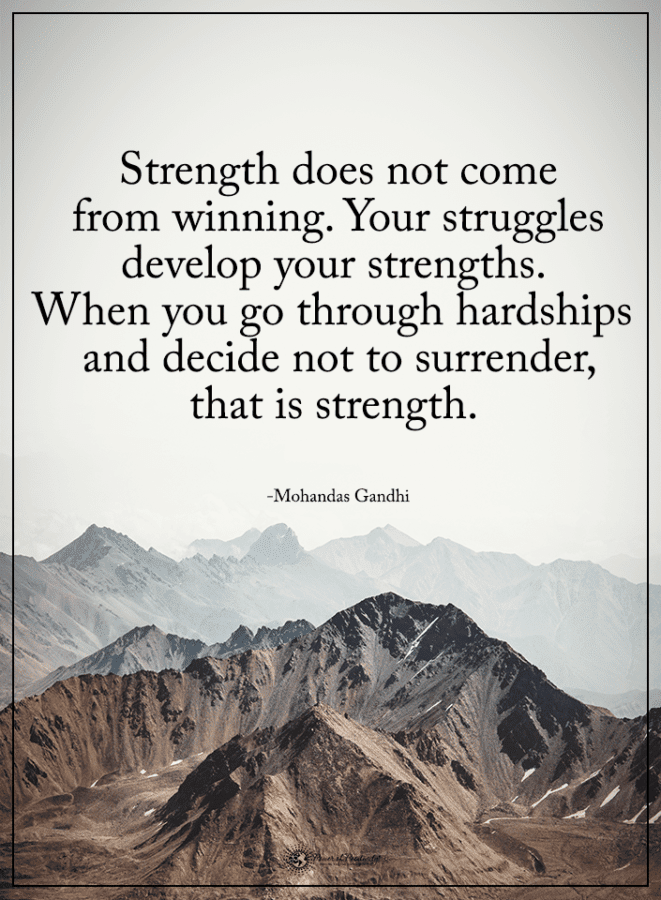
“Strength does not come from winning. Your struggles develop your strengths. When you go through hardships and decide not to surrender, that is strength.” – Mohandas Gandhi

Here are 8 behaviors strong people have without realizing it:

1. They know when to say ‘no.’

Mentally strong people don’t allow other people to dictate their lives; they aren’t afraid of saying no when they have to. If their schedule is already full and they simply don’t have time to take on anything else, they won’t hesitate to speak up. They know that their free time is precious and fleeting, so strong people will admit when their plate is full and they can’t take on any more obligations.

2. Strong people don’t run from failure.

In fact, strong people embrace failure. This might seem detrimental to one’s growth, but how can you grow without making mistakes if you think about it? Strong people know that in order to get anywhere in life, you must take calculated risks, and even if you fail, that only means you learned from it. If you hadn’t tried, you wouldn’t know what mistakes to avoid the next time. Strong people may not realize it, but they accept risks, allowing them to live a much richer life than those who only watch from the sidelines.

strong people

3. They can easily sniff out fake people.

Strong people can read others very easily, and know when someone is trying to pull a fast one on them. Within a few minutes of talking to someone, a strong person can tell what the other’s motives are, and will act accordingly. A strong person may not call out someone who seems shady, but they will walk the other way and never look back. You can’t play a strong person; they have been through it all before and know precisely what a disingenuous person acts like.

4. They love helping others.

Strong people don’t just leave others in the dust – they realize you’re only as strong as your weakest link. So they enjoy helping other people grow and become the best version of themselves. Strong people have been through many hardships to develop the mental stamina and resilience they now possess and wish for others to reach the highest heights, too. Strong people don’t cut others down to reach the top; they build them up so everyone can succeed.

5. Strong people carry the weight of the world on their shoulders.

For some reason, mentally strong people think that they have to “fix” society and constantly think of solutions to some of our most pressing problems. It might be that strong people have been through a lot in life and don’t like seeing others suffer the way they did. Maybe they see society’s potential and know it’s operating much lower than it could be. Whatever the reason, strong people often feel like heroes in today’s world, wanting to put on a cape and fly all over the world to assist others. They might take a job as a firefighter or police officer because of this drive to “save” society from itself.

6. They want to better their lives whenever possible.

Mentally strong people are never satisfied; they always want to do more, be more, accomplish more, and live more. They are always contemplating ways to improve their lives, and aren’t afraid to go out and reach their goals. You won’t meet many strong people without goals set for themselves – these people set the bar high and are always looking to outdo their old records.

7. Strong people don’t dwell on the past.

They see the past as a valuable lesson that can lead the way to a brighter future. They don’t regret anything they did or said in life because they know that every experience got them to where they are today. Strong people look ahead with optimism to the future and use the past as a stepping stone to their goals and dreams.

8. They overthink everything.

Mentally strong people always want to stay one step ahead of the game but don’t pay attention to the other players. Instead, they want to remain ahead in the competition between themselves and their minds, but they can succumb to being paralyzed by their thoughts if they aren’t careful. They spend days mulling over a decision because they want to make sure they take the right path in life. However, because they think so much about everything, it helps them to make more calculated choices since they consider every aspect of the moves they could make.

strong people

Final thoughts…

Strong people come in all shapes and sizes, but they usually have a few telling characteristics in common. Oftentimes, they display these behaviors without even realizing it, as though it’s second-nature to them. Sure, strong people will seem confident and strong-minded outwardly, but you don’t see all the things that happen in their minds. Even strong people don’t recognize the more “inward” traits of their personality sometimes, but these characteristics make up a strong person just as much as the ones the world enjoys seeing.

Do you have any of these behaviors? Let us know in the comments!

8 Habits That Make A Relationship Strong

Work, school, and other stressors can make it hard to maintain a strong relationship like when they first started in our day-to-day lives. It can be a struggle to get a relationship back where you want it to be.

“Well, it seems to me that the best relationships – the ones that last – are frequently the ones that are rooted in friendship.” – Gillian Anderson.

But like Nicholas Sparks mentioned, “Every couple needs to argue now and then. Just to prove that the relationship is strong enough to survive. Long-term relationships, the ones that matter, are all about weathering the peaks and the valleys.

Luckily, there are plenty of things that can help strengthen a relationship and keep the feeling of love steady and strong. It’s the little things that help build up a relationship. Sure, you need the strong foundations to start with, but the more minor things help build up a relationship and keep it strong.

8 Habits That Make Relationships Strong

strengthen relationship

1. Check up on each other

When you both make it a habit to check in on one another, it can help strengthen the feeling of love between you. Couples who call one another after a long day at work to see how they’re feeling or send a text to make sure they made it home okay after a long journey will have a better connection and feel taken care of by one another. It’s such a small thing, but it can make a difference.

2. Laughing together

A couple who can share a sense of humor and laugh together will form emotional bonds that can help keep the relationship running strong.

Psychologist Doris Bazzini, Ph.D., says, “Laughter reminiscence packs an additional punch because people relive the moment by laughing again.

Whether you decide to sit down with a funny movie or just an evening of watching funny YouTube videos, laughing together is essential. Once a couple laughs together, their brains will be wired to associate each other with happiness and laughter.

3. Sharing is caring

Whether it’s your feelings, or emotional and traumatic things from your past, learning to share with your partner can make your relationship that much stronger. Couples who feel as if they can tell one another anything will have a stronger connection than couples who are afraid to be vulnerable with one another. Strength comes from trusting one another, and couples who can share will have a strong and lasting relationship.

4. Good listening skills

Everyone wants to feel heard when they talk, so good listening skills are essential in any relationship. Everyone should be able to listen openly when their partner speaks. Letting your partner know that you’re listening to their feelings, fears, or concerns will help make it easier for them to trust and respect you. With trust comes strength in any relationship. Couples who are good at listening to one another will have a lasting, strong relationship.

5. Honesty is the best policy

Being completely honest will help keep the relationship strong, even if it’s not something that your partner wants to hear. Couples who can be honest about how they’re feeling, what they’re thinking, and their opinions on specific topics can keep their relationship strong.

What honesty gives you is a great deal of comfort. Knowing you can implicitly trust your mate allows you to be your best self, and your relationship will continue to thrive because you can give each other the positive energy you need to navigate life’s ups and downs,” says psychotherapist, syndicated columnist, and radio host Barton Goldsmith Ph.D.

It’s essential to trust that your partner is going to be honest with you, no matter what.

6. Giving in to impulse

Being spontaneous helps ensure that the relationship doesn’t fall into a rut. If you want to get in the car and take a vacation one town over for the weekend, do it! If you’re going to make random plans, follow through!

Over time, it’s inevitable that life falls into a pattern of routine and “same old, same old.” It’s easy to fall into behaviors that are reliable, steady, and boring as well. So it’s important to change it up from time to time to alter our thinking, provide a new perspective, and create interest and excitement,” says psychiatrist Abigail Brenner M.D.

Couples will have a strengthened relationship when they can go with the flow and give in to their impulses.

7. Take mental notes

Remembering what your partner likes and dislikes will mean that you’re paying close attention to your partner. Then, you’ll be able to show them that you’ve paid attention by giving them the things that they enjoy and avoiding the things they don’t. Couples who can focus on one another and take mental notes to remember the essential things will always have a strong relationship.

8. Teasing one another

Nothing has to be serious all the time! Couples should know when to give in and tease one another – especially if it means cheering one another up. Knowing when enough is an integral part of being able to tease one another. Couples with a strong relationship will know when to stop joking – but the teasing will help keep the relationship strong.

9. Resist blame-shifting

One habit that kills a strong relationship is blame-shifting.  When you’re upset, it’s tempting to blame your partner. It’s never helpful to single out one person as solely responsible. Sometimes couples don’t realize they’ve fallen into blaming one another. Contrary to what you may believe, it’s not just abusive people who blame shift. It’s a common habit that couples slip into. Blame-shifting is telling the other person what’s wrong with them. It’s refusing to take responsibility for your attitudes instead of blaming your partner.  Blame-shifting is subtle. It’s using is words or phrases like:

  • You never tell me anything
  • You’re always late for dinner
  • You started it. It’s not my fault.
  • I didn’t mean to be rude, but you made me mad.
  • I wouldn’t be so angry, but you…
  • You never help me. Why should I help you?

Blame-shifting damages your strong relationship. It’s important that you learn to take responsibility for your actions and words instead of placing the blame on your partner. Strong couples resist the urge to blame-shift. They learn how to work out their disagreements with gentle but kind words.

10. See the best in one another

Seeing the best in your partner means you believe they are trustworthy people. It means you trust them and the choices they make.  You don’t feel better than them, nor do you feel inferior to them. These attitudes damage a strong relationship. Your partner knows you believe the best about them. They’re confident that you won’t drill them with a thousand questions when they get home. Strong relationships have a mutual trust for one another without accusations or jealousy.

strong

11. Emotional encouragement

When you provide emotional support for your partner, you let them know you’ll stand with them in the good times and the bad times. You’re interested in how they feel about things. Strong couples learn to ask good, feeling-oriented questions to draw one another out. Questions you can request one another include:

  • How did that make you feel when your boss said that?
  • When your sister did that, how did you react?
  • What is one thing you worry about at work?
  • How did you feel when you heard that?

You may assume you know how your partner feels about something, but it’s always good to ask. This habit will make your relationship strong.

12. Encouragement

When you were first together, you and your partner probably encouraged one another. You probably told one another how wonderful you were and how much you loved each other. But after a few years, you may have slipped into assuming you don’t need to encourage one another anymore. Studies reveal that encouragement makes your significant other feel supported. Saying things as simple as:

  • I love being with you.
  • You are amazing.
  • I appreciate you did that for me.
  • Thank you for doing that.
  • You make me feel loved.
  • I’m so glad you’re mine.
  • I missed you today
  • I appreciate you taking the time to say that.

Strong couples make it a habit to encourage one another. They don’t assume the other person knows how they feel but make an effort to encourage.

13. Show mutual respect

A strong relationship comes from respect. When you respect someone, you regard their rights, feelings, and opinions. You show respect for your words and actions. Strong couples show respect by refusing to do these things:

  • Sarcastic or snarky responses
  • No eye-rolling
  • Being patient
  • Showing compassion
  • Allowing your partner to share their ideas
  • Apologizing when you make a mistake
  • Acknowledge their worth
  • Forgive quickly, not holding it over them.
  • Take responsibility for your actions and words

Mutual respect is a foundational habit that strong relationships are built on.

14. Mind your manner

It’s easy to slip into bad manners when you’re in a relationship. You may have good manners in public, but you don’t care at home. You’re rude and impolite. It may sound cliche, but practicing good manners around your partner shows them you respect them. Saying “please” and “thank you” makes your partner feel valued as a person. Greeting them when they get home with a hug and a kiss communicates your love. Good manners help you live together in peace with one another. It fosters a sense of security and even improves your happiness. It’s what strong people in solid relationships do.

15. Committed to their relationship

A strong relationship builds from commitment. Both partners work together to maintain the strength of the relationship. They say, “We’re in this for the duration.” They do the hard work they should make their relationship strong. They talk about hopes and expectations in their relationship. A strong couple realizes their weaknesses and works to overcome them. Celebrating life together is significant to them. They plan holidays, anniversaries, and birthdays together. If you’re committed to your relationship, you’re willing to talk about what irritates you without belittling your partner. You ask for input about your weaknesses. A strong couple is committed to one another. They’d rather face the storms of life together rather than apart.

16. Value spirituality

Strong relationships value spirituality. You can talk about your beliefs in God with your partner without fear of judgment. Both partners are willing to listen and ask questions. Knowing what one another believes should be a long conversation you have early in your relationship because your religious values are significant to your relationship. It’s not a good idea to tell a partner that religion is super important to you after six months of dating and never bringing it up. Studies show that people who take part in religious services are more hopeful and happier about their life. Good chance, valuing spirituality will not only make your relationship strong but increase your happiness and hope in life.

17. Plan the future together

One habit of strong couples is to talk and plan your future together. The more you talk, the more you understand one another’s goals, dreams, and desires for the future. You talk about things like:

  • Work goals
  • Dreams for your home
  • Saving money for a trip to Europe
  • Willingness to invest in stocks
  • Plans for vacation or holidays
  • Making family members a priority to visit

18. Use good listening techniques

Good listening skills are essential for a relationship. When you listen to your partner, you show them you care enough to hear their thoughts and opinions. Looking at your phone while they’re talking to you hinders your ability to listen well. It also tells your partner you’re not interested in what they’re saying. Being an active listener improves your communication and improves the overall happiness of your relationship. Strong couples value good listening skills and desire to grow in this area.

19. Have the same friends

When you’re in a relationship, it’s healthy to have your friends, but strong relationships make it a priority to have friends in common.  Hanging out with other couples strengthens your connection. You realize that other people have similar struggles as you two. Being together with other couples gives your relationship a different context and perspective. You see strengths and weaknesses in other couples, which you can decide you want or don’t want in your relationship.  It builds you together as a couple to have these common friendships.

20. Honesty about your relationship

Being in a relationship doesn’t mean you always “feel” in love with another person. It means you sometimes feel mad at your partner, but it doesn’t cancel out your commitment to them. A strong relationship builds from honesty, and your relationship has its ups and downs, but that’s okay.

strong

Final Thoughts On Building Strong Relationships

Relationships can start to falter when you’re least expecting it. Knowing the types of things that will keep the ties sturdy can help make sure that your relationship is still as strong and healthy as the day you got together. Couples who can laugh together, be honest, and trust one another will always have a long-lasting and strong relationship, no matter the trials and tribulations that life puts them through.

Strong relationships don’t just happen. A good relationship takes effort and establishes good habits. These twenty habits that make a relationship strong are hard work, but if you incorporate them into your relationship, it will be strong and resilient as you face the storms of life together.

Why You Should Never Skip Breakfast, According To Science

Dawn’s first light isn’t just a marker of a new day; it’s the herald of an opportunity. An opportunity to nourish our bodies, energize our minds, and set the tone for the hours that lie ahead. Many of us, in the hustle of our daily routines, might overlook or sidestep the first meal of the day. Yet, breakfast, affectionately coined the “most important meal,” holds more weight in that adage than one might initially perceive.

This isn’t merely about sating morning hunger or pairing a hot beverage with a tasty bite. It’s about grounding ourselves, preparing our metabolisms, and making a conscious decision to provide our bodies with the fuel it craves and deserves.

As we dig deeper into the world of breakfast and its many benefits, let’s remember that beyond the science and statistics, breakfast is a warm embrace for the soul, a gentle reminder that every day is a fresh start. Join us on this culinary journey as we uncover why starting the day with a nourishing meal is a gesture of self-love and an investment in our overall well-being.

Let’s talk about what the studies show about the morning meal:

The majority of researchers agree that people should not skip breakfast! Here’s why:

1. It’s Great for Overall Health

In a 16-year study conducted at Harvard University, researchers evaluated the risk of coronary heart disease (CHD) occurrence of nearly 27,000 American men.

Men who skipped breakfast had higher rates of hypertension, high cholesterol, and diabetes. “Men who skipped breakfast had a 27% higher risk of CHD compared with men who did not,” the authors state.

Further, men who skip breakfast are likelier to eat late at night. This is a big no-no: “Compared with men who did not eat late at night, those who (did) had a 55% higher CHD risk.”

2. Breakfast Boosts Your Memory!

In a study released in the Journal of Adolescent Health, researchers studied the relationship – if any – between breakfast and short-term memory.

319 individuals aged 13 to 20 years demonstrate that “high energy intake from breakfast had a beneficial effect on immediate recall in short-term memory…”

Another study found that certain breakfast foods, such as oatmeal, improved elementary-aged kids’ short-term and spatial abilities.

3. Cereal Improves Mental Well-being!

In a study, researchers discovered that volunteers who ate breakfast before academic tests outperformed students who skipped the morning meal.

Scientists believe the essential nutrients contained in foods like fresh fruits, oatmeal, whole grain cereals, and eggs, make us less susceptible to sluggishness and irritability.

4. Breakfast Enhances Cognitive Function!

We’ve already noted that breakfast foods help short-term memory and mental well-being. It’s no surprise, then, that breakfast boosts concentration and focus as well!

In a 2008 study published in the journal of Indian Pediatrics, researchers concluded that middle-school children who ate breakfast every day had better attention, concentration, memory, and (overall) achievement than kids who only sometimes or never ate breakfast.

Scientists note that glucose – the brain’s primary energy source–decreases rapidly during sleep. A healthy breakfast comprising fruit, eggs, oatmeal, and yogurt helps regulate blood sugar levels and support optimal cognitive function.

5. It Keeps Weight Off!

While eating to keep weight off (admittedly!) sounds counterintuitive, breakfast bucks this perception.

Harvard University, in a study of 17,000 men, found that “those who frequently ate breakfast cereal – both refined grain or the whole-grain types consistently weighed less than those who rarely or never ate breakfast cereal.”

It’s been accepted fact for quite some time that eating smaller meals more frequently (5-6 times daily) increases the body’s metabolism; which also helps keep those extra pounds off. Combining this knowledge with a healthy breakfast, preferably a whole-grain cereal, is a powerful one-two punch for keeping the weight off!


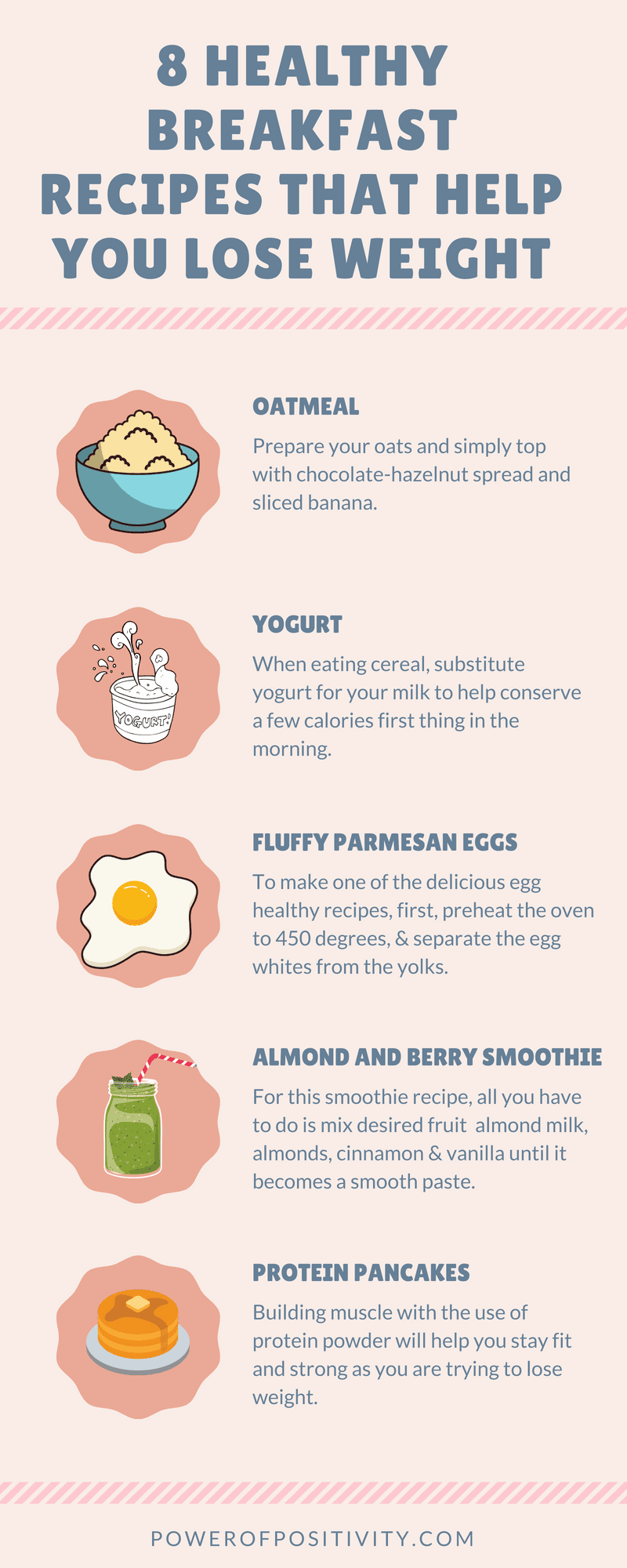
healthy breakfast recipes infographic

The Best Foods

So, we’ve established by now that breakfast is pretty darned important! Not all foods are created equal, of course, so we’ve come up with a short list of uber-healthy breakfast foods.

Here are some ideas:

  • Eggs: They’re healthy and delicious, of course, but they’re also packed with high-quality protein and other brain and muscle-boosting nutrients.
  • Oatmeal: Oatmeal is a staple breakfast food for millions, and for plenty of good reasons. Oats are rich in folate, omega-3 fatty acids, and potassium. Oatmeal also contains a fiber called beta-glucan, which promotes blood and heart health by lowering cholesterol.
  • Greek Yogurt: Greek yogurt packs twice as much protein as regular yogurt, which helps keep us full. It’s also loaded with calcium, which aids bone health.
  • Bananas: Bananas are a nutritious and incredibly versatile fruit. They’re brimming with potassium and healthy starch, which helps us feel full. Sliced bananas are delicious in oatmeal, cereal, and yogurt – adding natural sweetness without the sugar.
  • Strawberries: Like bananas, strawberries are loaded with nutrients and can be added to just about every kind of breakfast food. Strawberries are considered superfoods because they’re so high in antioxidants and relatively low in calories. Just one cup of strawberries gives you a full recommended daily intake (RDI) of vitamin C.
  • Grapefruit: While a bit too bitter for some, grapefruit is brimming with nutrients. The fruit contains fat-burning properties and has beneficial effects on blood sugar and insulin levels. It’s also loaded with antioxidants.

Other great morning foods: wheat germ, flaxseed, watermelon, blueberries, coffee, tea, and cantaloupe.

Skip to content