Weekly tips, affirmations, and small actions to feel your best.

Researchers Explain What Your Handwriting Says About You

Did you know that graphology – the study of handwriting – has been around since the great philosopher Aristotle? That’s right; people have studied one another’s handwriting for over 2,500 years.

Today, graphology is used for a variety of purposes, including psychological testing, employee selection, and even criminal investigations. How a person writes, according to the British Institute of Graphologists (BIG), can be used in “any area of human activity,” such as personality profiling, forensic analysis, and career guidance.

“When you get to know a person’s handwriting well enough, you recognize what script it is, just as if it were a well-known painting or photograph. Graphology is based on the principle that every individual’s handwriting has a character of its own, and this is entirely due to the uniqueness of the writer’s personality.” ~ The British Institute of Graphologists

“What’s the rationale for graphology?”

On the surface, handwriting analysis may seem a bit quirky. However, considering that we all write differently, it’s fair to say that something – our genetics, personality traits, habits, frame of mind – is also different.

BIG makes a couple of noteworthy observations:

“We were all taught to write in a specific way when we were children … but it is evident (that) everyone’s handwriting looks different. In fact, as soon as someone can write, he or she gradually alters the shapes and sizes of letters in accordance with (likes) and dislikes.”

Ultimately, the central principle of graphological practice is summed up as follows: “… handwriting is the pattern of our psychology expressed in symbols on the page, and these symbols are as unique as our own DNA.”

“A blend of art and science.”

The written word comprises three elements: movement, spacing and form. Graphologists place particular emphasis on form when analyzing how one writes. When observing form, graphologists focus on angles, slants, and spacing.

The above is the scientific aspect of graphology – but there is an “art” to the science. That is, experts also consider individual circumstances (setting, situation) in the analysis. So, graphology is somewhat of an “abstract science.”

Graphology and personality traits

Anyone else thinking of the scene when Sherlock Holmes analyzed Professor Moriarty’s signature in Sherlock Holmes: A Game of Shadows? Ha-ha. Awesome scene… anyways, it is relevant to this section.

One area where graphology has been widely utilized is in the study of personality traits. According to master graphologist Kathi Knight, “Just from analyzing your handwriting, experts can find over 5,000 (traits.)”

What does your handwriting reveal?

Ok, do you have paper and pen ready? You’ll need one for this next part.

Let’s go!

Please write the following sentence in cursive: “The quick fox jumps over the lazy dog.”

Got it? Awesome. Now let’s see what a graphologist would say based on nine criteria.

Size

– If your letters are large, you’re probably more extraverted (outgoing.) Like many other people-oriented individuals, you may also love attention.

– If your letters are small, you’re likely to be quieter or shy – two behaviors strongly associated with introverts. You may also possess the stronger-than-average focus and concentration skills.

Slant

– If your writing slants to the right, you’re impulsive, gregarious, sentimental, and good-hearted. You also place the utmost importance on relationships with friends and family.

– If your writing is centered (no visible slant), you’re probably very logical and precise in thought. You may value logic over emotions. For you, pragmatism rules the day.

– If your writing slants to the left, you may be a more reserved person. When it comes to working, you’d rather focus more on things than people. In other words, you may want to avoid retail.

Pressure

– If your writing resembles a bold font, you may strongly feel emotions. You may also be a bit more reactionary in nature.

– If your writing is lighter-toned, you may be more relaxed in disposition. You tend to manage your energy wisely.

Upper zone (the ‘l’ and ‘t’ in your writing sample)

– If your ‘l’ loops widely, you may have big dreams and goals.

– If your ‘l’ is tighter in form, you may feel disheartened by not yet reaching your aspirations.

– When your ‘t’ is looped, you may take criticism harshly. You may also be somewhat of a suspicious person.

– If your ‘t’ is linear, you’re well-disciplined, a diligent worker, and self-controlled.

Lower zone (the ‘y’ in your sample)

– A tight ‘y’ (little to no loop) may indicate you keep a small circle of friends.

– A broad ‘y’ means you have a larger social circle.

– A long ‘y’ may signify that you love traveling.

– A short ‘y’ means you’re more of a homebody.

Letter connection

– If your cursive diligently connects each letter, you’re likely more methodical and logical.

– If your cursive disconnects at certain points, you’re probably intelligent and intuitive.

Crossed ‘t’s’

– If most of your ‘t’s’ are crossed higher (near the top of the letter), you are both goal oriented and self confident.

– If you crossed your ‘t’s’ lower, you may feel insecure and lacking in direction.

Spacing

– If your words are closely spaced, you may need better time management skills.

– If your wording is evenly spaced, you are respectful of individual boundaries (including your own!)

How did you do? What are your thoughts? We’d love to hear from you!
5 Reasons People Still Feel Tired After Waking Up, According to Science

Do you wake up tired every day?

When you get seven to nine hours of sleep, you generally wake up quite refreshed. Sure, there may be a bit of the “sleep eye,” but it’s nothing a cup of coffee and a hot shower won’t cure. A non-morning person may need a bit (maybe, a lot) more coffee – but they’ll still shake it off.

Odds are, if you constantly feel yucky and groggy during the morning hours, there’s something amiss. While not a medically recognized term, brain fog is an actual condition. Brain fog is also quite common – but it isn’t a healthy or normal state.

We’re going to discuss five significant reasons for brain fog and how to combat this crappy feeling. We’ll call these “fog fixes” just for fun.

Here are five reasons you still feel tired when you wake up:

healthy

1. Lack of quality sleep

Big surprise, what takes numero uno, right? A surprise to (*counting hands*) no one?

Per the National Sleep Foundation or NSF, “at least 40 million Americans suffer from over 70 different sleeping disorders … 60 percent of adults report having sleep problems a few nights a week or more.”

Without proper sleep (around 7-9 hours for a healthy adult), the brain and body can not be replenished. An idle mind plus a sluggish body equals a bad day.

Fog Fix #1: Get in the habit of going to bed and waking up at the same time every night, even on the weekends. Have a standard set for bedtime (e.g., shower, put on jammies, dim lights, read for 30 minutes, lights out.)

2. Poor nutrition/bad diet

While you may be eating healthy, it doesn’t mean you’re getting the necessary nutrients. Nutritional deficiencies are prevalent – and a big reason for brain fog.

Fog Fix #2: Ensure that you’re (a) eating a well-balanced, healthy diet and (b) supplementing for shortcomings in nutritional intake. Vitamins A, C, and B12, along with calcium, magnesium, and zinc, are essential for brain health.

Taking a high-quality multivitamin is an excellent option to get all essential and non-essential nutrients. Pure food sources are even better.

3. Chronic stress

There’s this widespread myth in society that subjecting yourself to constant stress for the sake of work (“productivity” *cough* “BS!” *Cough*) is noble.

What?!

We have all the technology to make every piece of information in the world available at our fingertips, yet, less than one-quarter of Americans work for a company that allows remote work. Ironically, over 80 percent of people who work from home report higher satisfaction.

Productivity? Data studies show remote work increases it dramatically.

Work is a massive part of the stress epidemic in this country (and others.) It’s a problem yearning to be corrected – and we’re failing miserably. Limited free time, stagnant wages, and more responsibilities also contribute to this epidemic.

Fog Fix #3: Of course, check if your employer allows remote work. Also, keep a schedule (as much as you may hate the idea), as doing so will let you see where your time is spent. This allows you to adjust the said time accordingly. Take any measures to reduce your stress levels. (This list is a great place to start!)

4. Stagnant lifestyle

As in, we’re turning into constantly tired couch potatoes. Something that is almost justified given the insane time stress we’re always facing.

(I’ve dealt with this issue myself, working and studying (still), gaining weight, and putting back on weight. Not an easy cycle to break.)

But this stress is exactly why we need to make time for exercise. Consider the following:

  • Even moderate exercise releases endorphins and neutralizes cortisol. The former mechanism gives us that euphoric post-workout feeling; the latter minimizes stress.
  • There is a proven correlation between exercise and brainpower.
  • Walking at a reasonable pace is one of the best exercises to clear your mind.

Fog Fix #4: Take simple steps to get more exercise. You needn’t train like a cyclist for the Tour De France. A brisk 15-30 minute daily walk will suffice. Of course, as time permits, ratchet up the intensity a notch. You can do it!

5. Dehydration

Consider this statistic: it takes only a 2% drop in hydration levels to affect attention and memory. Consider a second statistic: more than three-quarters of Americans are chronically dehydrated.

Water gives the brain the electrical energy needed for all brain functions, including thought and memory processes. H2O is also required for the production of brain neurotransmitters and hormones.

Fog Fix #5: This is a simple solution, yet it can be hard to remember. Carry a water bottle with you at all times. Even better, keep a water bottle at every location where you spend chunks of time.

If you make a conscious effort to do this, you will drink more water. As a result, you’ll be more focused, think much faster, and maximize your creativity!

6. Too much sleep

No, that’s not a typo. Too much sleep CAN make you feel tired.  When you sleep longer than usual, it disrupts your body’s internal rhythm. Otherwise known as your circadian pacemaker, these are just cells in your brain that control things like your hunger, thirst, sweat, and even your internal body clock. When you sleep too much, it throws off your body’s regular schedule. This makes you feel tired, almost as if you woke many hours before.

Fog Fix #6: Try to keep regular bedtimes and wake-up times to stay in a good rhythm.

7. Over-exercising

Exercise is good, but if you overdo it, you will feel fatigued. It would help if you took some days off from your exercise routine to allow your body to recover fully. Feeling tired after exercise is normal, but you have probably gone overboard if you’re feeling fatigued. Fatigue can interfere with your ability to do life’s everyday activities like work, school, and home life.

Fog Fix #7: Break up your exercise routines off and on days of strenuous exercises and weight lifting. And be sure to drink lots of water after exercising so you don’t get dehydrated.

8. Bedroom temperature

If your bedroom is too cold or too hot, it will disrupt your sleep. You may wake up during the night because you’re uncomfortable. Perhaps you don’t remember waking up, but you feel tired the next day. This is because you didn’t get refreshing sleep.

Fog Fix #8: Keep your room at a pleasant temperature. Make sure you have enough blankets and good-quality sheets to help you feel comfortable.

tired

9. Anemia

Anemia is a sign you have an iron deficiency. This means your body isn’t making the right amount of red blood cells in your blood. The red blood cells supply your body with oxygen. If you’re anemic, you’ll feel tired all the time.  A staggering number of women of reproductive age become anemic. Left untreated, anemia can lead to grave complications. To boost your iron, add iron-rich foods to your diet, including:

  • Liver
  • Turkey
  • Beans
  • Spinach and other leafy greens
  • Shellfish
  • Pumpkin seeds
  • Quinoa

Fog Fix #9: If you feel tired all the time, ask your doctor to test your blood for anemia.

10. Overdoing the alcohol

It’s easy to think that drinking alcohol helps you sleep because you get sleepy when you drink it. Sadly, this isn’t the case. Alcohol disrupts good sleep, so you feel tired the next day. Alcohol dehydrates and makes you snore. Both things can prevent you from getting a night of deep, restful sleep.

Fog Fix: #10: Avoid alcohol right before bedtime. If you must have a cocktail, sip one with dinner earlier in the evening. Of course, you must always moderate your intake.

11. Blame it on your mattress

If you’re feeling tired all the time, you may need a new mattress. A worn-out mattress can mess up your sleep. A lumpy or limp mattress will also cause you back pain, which prevents you from sleeping well.

Fog Fix #11: Mattresses can be expensive, but weigh the cost versus benefit and decide if a new one is worth your money.

12. Your medications

Particular medication’s side effects include tiredness. If you’ve recently started taking a new drug, check the side effects. The most common medicines that make you feel tired include:

  • Antihistamines
  • Brompheniramine
  • Diphenhydramine
  • Hydroxyzine
  • Meclizine

Fog Fix #12: Check with your doctor if you take these medicines. They might be able to offer you an alternative or adjust your dose.

13. Blue screens

Computers, televisions, and your iPhone screens are big offenders against you getting a deep night’s sleep. Blue screen technology provides you with entertainment, education, and the ability to work anywhere, but they’re not sleep-friendly. The blue screens stimulate your brain, so you can’t sleep. The lights from these screens also inhibit your body’s melatonin production, the chemical hormone that helps you sleep.

Fog Fix #13: Create a charging station for your electronic devices outside your bedroom.

14. You’re sick

Infections, thyroid disease, diabetes, and kidney disease cause you to feel tired. Low blood sugar and dehydration from diabetes make you feel tired. Hypothyroidism is a disorder of the thyroid gland in your neck. It affects your metabolism, which can make you feel tired. Kidney disease also affects how you think. When your kidneys aren’t functioning correctly, your body isn’t removing toxins. This makes you feel tired and weak.  Even low-grade infections can make you feel worn out.

Fog Fix #14: If you’ve been feeling extra tired lately for no apparent reason, it may be good to see your doctor for a checkup to get to the root cause of your tiredness problem.

15. You have sleep apnea

Sleep apnea is a severe condition that impedes your ability to sleep. It causes you to stop breathing for short periods during the night. You may not even know you have sleep apnea, but if you keep waking up during the night, it could be a sign you have this condition. Sleep apnea makes you feel tired during the day. It can also cause other health problems such as diabetes, a heart attack, and high blood pressure. Other signs that you may have sleep apnea include:

  • Loud snoring
  • Feeling tired even after a long sleep
  • Trouble staying asleep at night
  • Gasping for air when you sleep
  • Dry mouth when you wake up in the morning
  • Headaches, especially in the morning

Fog Fix #15: If you have any of these symptoms, speak with your doctor. They can do tests to determine if you have sleep apnea. There are medications and other remedies to prevent sleep apnea.

tired

Final Thoughts On Waking Up Refreshed (Not Tired)

Getting a good night’s sleep isn’t as easy as it sounds. If you’ve noticed that you’re feeling tired, something could interrupt your sleep even after you’ve had a decent rest.  You can do many things to improve your sleep, such as not eating or drinking near bedtime, limiting your caffeine, not over-exercising, eating a balanced diet, purchasing a new mattress, or even avoiding your blue screen technology before bedtime. If you’ve tried all these things and still feel worn out, you could fight an infection, or perhaps your medications are the culprits. It’s worth getting a checkup and looking at the side effects of your medications. You want to wake up refreshed, not tired. Getting enough sleep is essential for your good health and feeling your best.

5 Ingredients to Completely Detox Your Skin

Your skin is your largest organ. Is it time to detox your skin ? 

“The skin is the body’s largest organ, and it is constantly in contact with the elements. Pollutants and dirt from the environment can clog your pores, and toxins from your diet can cause your complexion to suffer…(but) a few small changes (can) greatly improve the look and feel of your skin.” – Shari Forschen, N.P.

What our skin does

Our skin is one of the largest organs of the body (measured in weight and surface area.) Comprised of two layers – the dermis (inner) and epidermis (outer) – the health of our skin is vital to our overall well-being.

The skin has three main functions: protection, regulation, and sensation. Protection is the skin’s primary role against “mechanical impacts and pressure, variations in temperature, micro-organisms, radiation, and chemicals.”

Regulation functions of the skin span many physiological elements: body temperature, peripheral circulation, and fluid balance.

An intricate network of nerve cells gives skin its sensation function. The four sensations of the skin – cold, heat, pain, and touch – each have different nerve receptors. These receptors detect changes in the environment, sending this information to the brain.

The importance of detox

Our skin absorbs pretty much anything, including toxins. Toxins come from a number of sources, but the environment is the primary culprit of exposure. Other means of skin toxification include: chemicals in water and makeup, poor dietary habits, and hormonal disorders.

To detox your skin will lead to a number of benefits. First, it enables the skin to perform its three primary functions that keep us safe. Second, detox will give the skin a much cleaner, healthier appearance – and you’ll feel much better as a result.

The five essential ingredients for skin detox

1. Water

Drinking plenty of water is a crucial part of detoxifying the skin. First, water helps flush toxins from the gastrointestinal (GI) tract, which hastens the elimination of harmful chemicals. Second, consuming at least 64 ounces of water per day prevents dryness, scaling and peeling of the skin.

Quick Recipe: Adding a teaspoon of lemon juice and a half-teaspoon of honey to your morning glass of water is an excellent way to keep your skin looking and feeling healthy.

2. Fiber

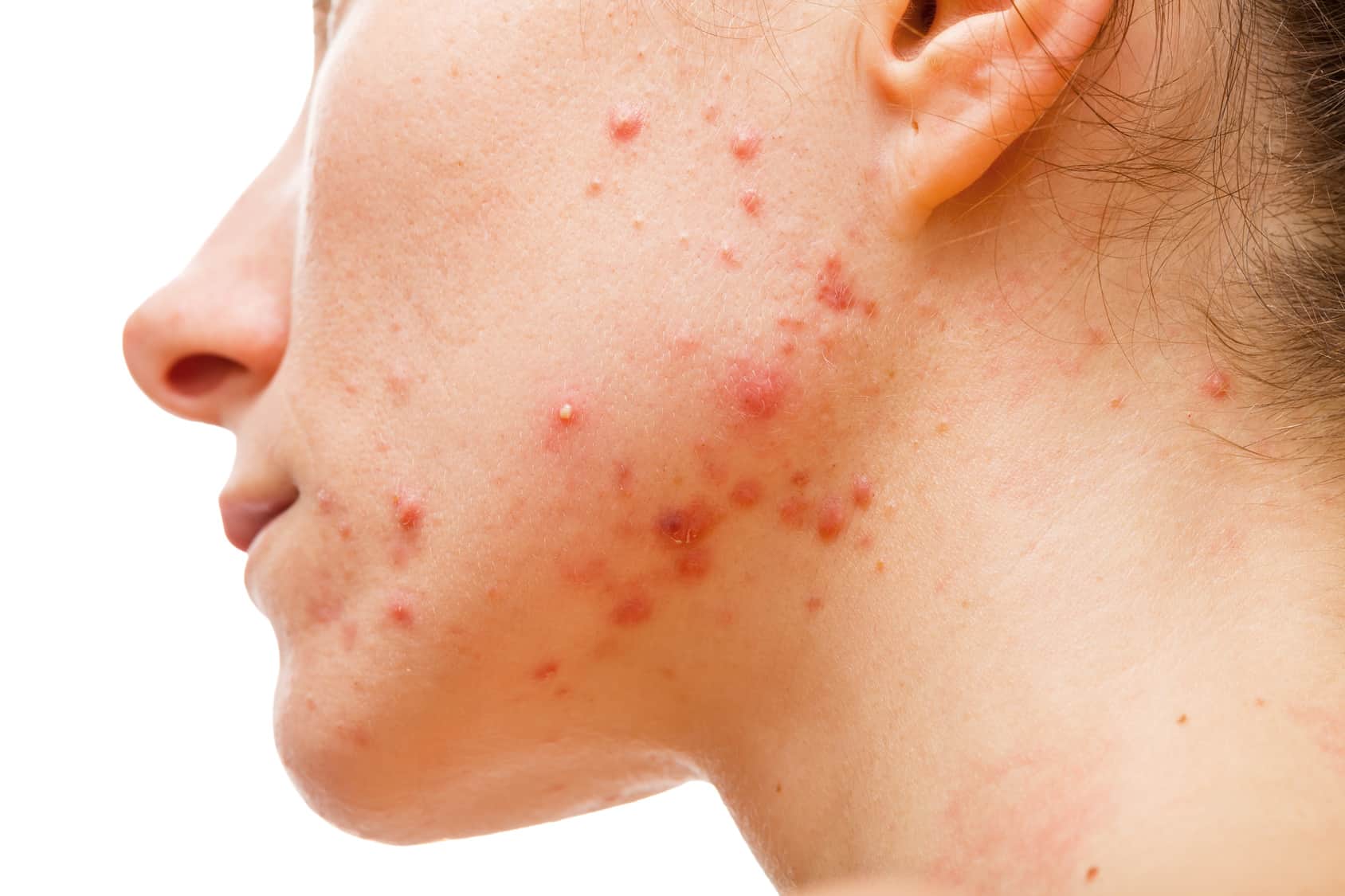
As we all know, fiber is a vital substance for digestive health. A variety of fiber, called psyllium husk, helps to rid the body of fungus and yeast, which prevents them from being excreted through the skin. Fungus and yeast excretion can trigger adverse skin conditions, such as acne and rashes.

The recommended daily intake (RDI) of fiber is 38 grams for adult men and 25 for women. Beans, fruit, nuts, veggies, and whole grains are good sources.

3. Chemical-free products

Many cosmetics include parabens, a synthesized preservative. Certain pharmaceutical products also contain the chemicals. While the “jury is still out” regarding the safety of parabens in the U.S., the compounds were banned by the European Union in 2012 because of health concerns.

 See ‘Green Face Detox’ below for a healthy, natural alternative!

4. Probiotics

It’s evident by now that healthy digestion is a critical factor in skin health. Probiotics are “often referred to as ‘good’ or ‘helpful’ bacteria, because they help keep the gut healthy,” according to worldhealth.net, “They (also) contribute to total wellness, including skin health.”

Yogurt, kefir, dark chocolate (yay!), miso soup, tempeh, and kimchi are all rich sources of probiotics.

5. Sweating!

In Finland, a trip to the sauna after a night boozing is an oft-practiced ritual. Why? Because sweating (yes, that includes exercise) is highly effective in eradicating toxins (booze or otherwise) from the system.

Per Dr. Joseph Mercola, “Sweating (helps) your body to eliminate toxins, which supports proper immune function and helps prevent diseases related to toxic overload.

skin

The ‘Green Face’ Detox

To get started, here’s what you’ll need:

– ½ teaspoon of sea salt

– ½ teaspoon of white or green clay

– Essential oils (eucalyptus and tea tree are recommended)

– Apple juice

– Activated charcoal

Steps:

Exfoliation:

(a) Mix the sea salt and clay. Add a bit of green tea or water to make a paste.

(b) Apply the paste to your skin by thorough rubbing. Wait approximately 3 minutes.

(c) Gently rinse face with lukewarm water and pat dry.


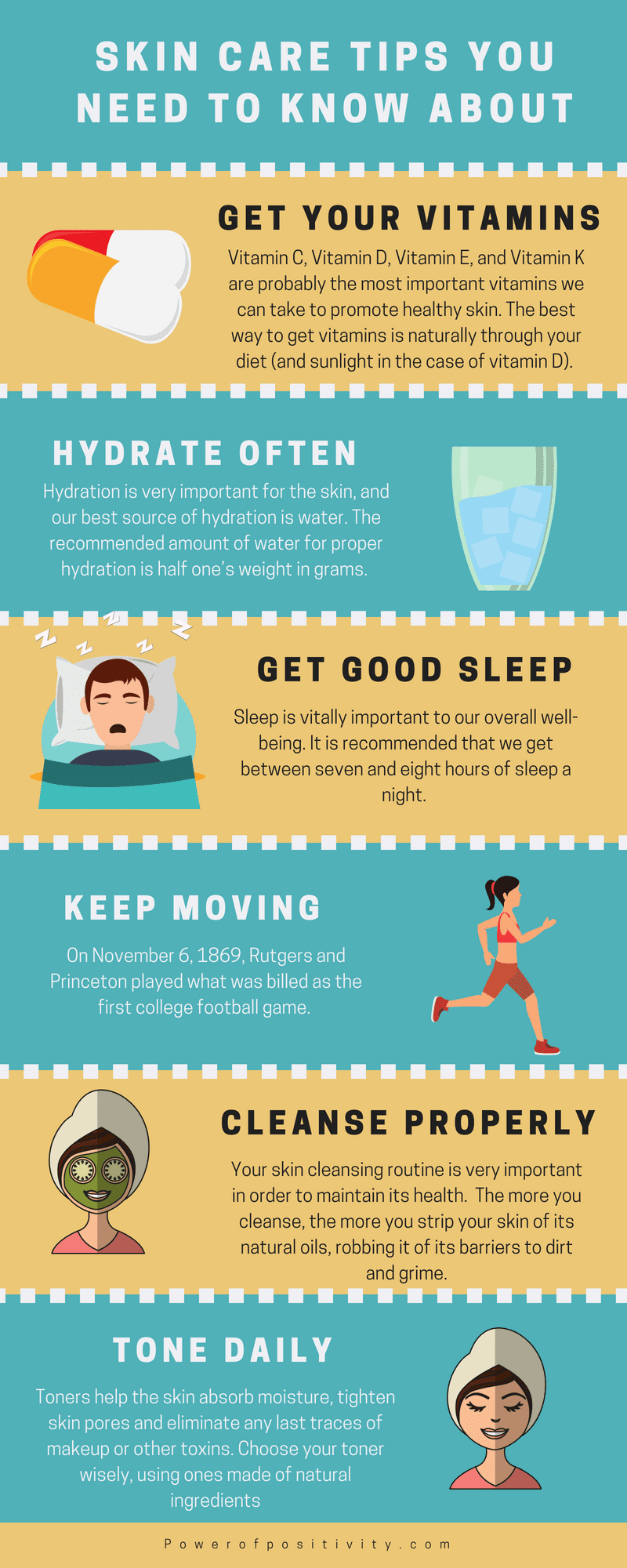
Skin Care Tips You Need To Know About

Steaming:

(a) Fill a basin with very hot water.

(b) Add 2-3 drops of preferred essential oil.

(c) Steam your face for 10 minutes (steaming should be comfortable – don’t burn yourself!)

Masking:

(a) Combine 3-4 capsules of activated charcoal, one tablespoon of apple juice, and one teaspoon of clay. Stir the mixture, creating a paste.

(b) Apply the above ingredients to the face’s surface. Avoid contact with your eyes.

(c) Allow mask to sit for about 10 minutes. Thoroughly rinse with warm water.

References:
Mercola, J. (2014, January 10). Is It Good to Sweat? Retrieved June 16, 2017, from http://fitness.mercola.com/sites/fitness/archive/2014/01/10/sweating-benefits.aspx

What Do You Want Everyone To Know, According To Your Zodiac Sign?

We might THINK we know someone, but in reality, everyone acts differently behind closed doors. Everyone keeps somewhat of a mask on around others, and can finally take it off once they are alone. People are complex creatures, so we might not ever fully know someone, or even totally know ourselves. At some point, we have to accept this fact and love ourselves and others as deeply as we can. But what does your Zodiac sign indicate?

With that said, you can tell a lot about a person by their zodiac sign, such as personality traits, weaknesses, strengths, etc. Now, we aren’t claiming that everyone fits their sign to a T or that zodiac signs are the surest way of getting to know someone, but it can help you know a little bit more about him or her.

If you want to learn more about yourself and others, read on to find out what everyone wants you to know, according to their zodiac sign.

What Every Zodiac Sign Wants You To Know

relationship needs zodiac

Aries

An Aries may get into an argument with you, but they love you too much to stay mad at you for long. They are hot-headed, short-tempered, spirited people, and can let their energy and passion get the best of them sometimes. Aries love a good, old-fashioned competition, and they don’t like losing or being told what to do. However, Aries loves their friends and family deeply, and would protect them at any cost. Despite how overbearing and self-centered they can be, they do have a big heart underneath their tough exterior.

Taurus Zodiac Sign

The bull has a great memory and will never forget you as long as they live. Taurus are loyal friends and partners, and will stand by your side no matter what. They tend to be a bit bull-headed, but it’s only because they feel comfortable doing things a certain way and have quite an aversion to change.

Gemini

Geminis just want to be loved and understood. Even the high-energy, friendly, outgoing Gemini can get down in the dumps when people say she doesn’t care about them or is self-centered. For some reason, Geminis get a bad rap, but we’re here to set the record straight. Geminis care deeply about their loved ones, but they sometimes have difficulty showing their emotions. They live to have fun in life and not take things too seriously, because they know any day could be our last.

Cancer

A Cancer has a really hard time trusting people, so when they do, don’t make them regret it. Cancer wears their heart on their sleeve and gets hurt easily. People take advantage of their kindness quite often, but they want you to know that their kindness isn’t a weakness, and to either be honest with them or don’t bother talking to them. Cancers value loyalty and trust above all else.

Leo Zodiac Sign

This fiery sign doesn’t hold back, and enjoys being in the spotlight and being in charge. However, they also have big hearts and will give more than they take. Leos don’t want people to take advantage of their overly generous nature. They make wonderful friends, but Leos often find themselves in one-sided friendships and relationships due to their kindness.

Virgo

Virgos want extremely loyal friends; they too are extremely loyal. Virgos have a hard time making friends because they want intelligent, deep conversations with people, which is hard to find in our shallow world. Virgos often keep to themselves unless someone captures their mind and heart, and when this happens, they tend to forget all logic and fall deeply for that person.

Libra

Libras know more than you realize and think more than they speak. Libras are natural peacekeepers and humanitarians, and this world full of injustice deeply hurts them. However, they keep most of their thoughts to themselves so that people won’t get too much information from them. They are guarded, but friendly people.

Scorpio Zodiac Sign

Scorpios help others, even when they are secretly dealing with their own problems. A Scorpio might seem mysterious and aloof, but they dearly love their close friends and family and would do anything for them. They can become vengeful, however, if you get on their bad side, so make sure to never cross them.

Sagittarius

Sagittarius will always stand strong in their own views. This is a very free-spirited, passionate sign, and they don’t like feeling tied down or pent up. They like to roam, see new things, and go on adventures. They are not swayed easily and prefer to stand alone than ride in a pack.

Capricorn

When a Capricorn wants something, nothing will stand in their way. Capricorns, like Taurus, are also known for being hard-headed and doing things their way all the time. However, this gets them far in life because they know what they’re after and won’t stop until they have it.

Aquarius Zodiac Sign

An Aquarius does not judge and is more interested in knowing who you really are. They are an open-minded, conversational sign that could sit in a coffee shop for hours with you talking about life and sharing interesting stories. They might not always be around when you need them because they are free-spirited too, but they will always take time to listen to what’s on your mind.

Pisces

Pisces wants peace and will avoid conflict at all costs. The fish is a very sensitive, gentle sign, and doesn’t do well with confrontation. They like to daydream about different lands and worlds and often “check out” of this one when they get stressed, bored, or frustrated with it all.

So, there you have it – a few tidbits about each sign that should give you a better idea about yourself, your partner, your friends, and your family (if you know their signs). Like we said before, zodiac signs don’t tell the whole story, but they certainly can give us a glimpse into someone’s inner personality.

11 Scientifically Proven Foods That Improve Your Mood

Are you under the impression that most healthy food don’t taste good? Well not only do healthy offerings taste great, they can also help to improve your mood.

Wait, what… Confused? You’re not alone.

The “health food” industry floods the market with stale, tasteless items – and still make a huge profit. How? Because they slap the package with some apparent health benefit. These companies have brilliantly marketed their cheaply-produced, tasteless garbage. And, well, we’ve just accepted the notion that healthy foods must taste like crap. The real kicker is that much of this “food” isn’t healthy. A win-win for the greedy health companies – not so much for us.

Here are 11 delicious foods that improve your mood by nourishing the body and mind:

The good news is that there are plenty of healthy foods that improve both our mood and health. Moreover, they’re relatively cheap, taste good, and boost our overall health.

omega 3 foods

1. Artichokes

Artichokes are one of the most versatile and delicious foods. It’s packed with nutrients and offers some fantastic health benefits.

One serving of artichokes provides more antioxidants than any other food – some of which are on this list! Artichokes are also rich in fiber, phytonutrients, folic acid, and potassium.

Artichokes elevate cognitive function by allowing more oxygen to reach the brain. They also contain vitamin K and phosphorous – two nutrients essential for slowing cognitive decline.

2. Asparagus Can Improve Your Mood

Asparagus is loaded with vitamins and minerals, including vitamins A, C, E, K, and B6, as well as calcium, copper, fiber, folate, iron, and protein.

K, B6, iron, copper, and protein contribute to the vegetable’s brain benefits.

3. Bananas

Bananas are rich in vitamins B6 and C. They also contain manganese, potassium, dietary fiber, magnesium, folate, and others.

Eating bananas regularly may help lower blood pressure and reduce the risk of developing asthma and cancer.

4. Dark Chocolate

Dark chocolate is absolutely delicious – and one of the healthiest foods. They are loaded with antioxidants to fight against environmental toxins. Cancer researchers believe that the flavonoids in dark chocolate may reduce cancer risk.

5. Eggs

Eggs are an excellent source of inexpensive, high-quality protein. Half of an egg’s protein is in the egg’s white, which is higher in vitamin B6 than the yolk.

Eggs also contain vitamins B6 and B12, vital to cognitive function. Simply put, when it comes to health cost/benefit, eggs are about as good as it gets.

6. Kiwi

Kiwi is delicious and provides numerous health benefits, from inducing sleep to skin health and protection.

The kiwi fruit is higher in vitamin C than any food (sorry, oranges and lemons!) They also have potent antioxidant properties and help aid digestion, as green fruit is abundant in dietary fiber.

vitamin d benefits

7. Improve Your Mood by Snacking on Nuts

Nuts are loaded with protein and contain omega-3 fatty acids. Protein and omega-3’s are essential to for heart and brain health.

They also contain healthy unsaturated fats, fiber, vitamin E, and L-arginine – a vital building block of protein.

8. Pomegranates

Pomegranates are known for their jewel-like seeds (arils) that have been used for medicinal purposed of millennia. In fact, these fruits are flush with antioxidants and vitamins.

Pomegranates fight inflammation, reduce cancer risk, aid digestion, and reduce the risk of heart disease.

9. Salmon

Everyone knows that salmon is one of the best omega-3 fatty foods, but this freshwater fish has some other excellent health benefits.

Salmon is rich in protein and B vitamins. It is also loaded with selenium, a mineral that acts as an antioxidant, boosts immunity, increases blood flow, regulates thyroid function, reduces asthma symptoms, and may help boost fertility.

10. Sweet Potatoes

Sweet potatoes are scrumptious, but most people overlook the many health benefits.

These creamy orange tubers are rich in vitamins A, B1, B6, and C. Additionally, they are a good source of copper, dietary fiber, manganese, niacin, pantothenic acid, phosphorous, and potassium.

Add a bit of butter or margarine. We won’t tell anyone.

improve your mood

11. Yogurt Is A Healthy Food to Improve Your Mood

Yogurt is rich in protein (about 9 grams per 6-ounce serving), vitamins B2 and B12, calcium, magnesium, and potassium. Additionally, yogurt is rich in probiotics, healthy bacteria, and yeast. These properties help maintain optimal gut health and correct any microbial imbalance within the gut.

(C)Power of Positivity, LLC. All rights reserved

Researchers Explain Why Mental Health Class Should Be Mandatory In School

“Over a 12-month period, 27 percent of adults in the U.S. will experience some sort of mental health disorder, making the U.S. the country with the highest prevalence (of mental health problems).” ~ The World Health Organization

What is mental health? 

The World Health Organization (WHO) defines mental health as:

“…a state of well-being in which the individual realizes his or her own abilities, can cope with the normal stresses of life, can work productively and fruitfully, and is able to make a contribution to his or her community.”

In the event that a person voluntarily or involuntary seeks out treatment, Mental Health America lists 13 professions that qualify as ‘mental health professionals’:

– Clinical Psychologist

– School Psychologist

– Clinical Social Worker

– Licensed Professional Counselor

– Mental Health Counselor

– Certified Alcohol and Drug Abuse Counselor

– Nurse Psychotherapist

– Marital and Family Therapist

– Pastoral Counselor

– Peer Specialist

The following three professionals “can prescribe medication; however, they may not provide therapy:

– Psychiatrist

– Child/Adolescent Psychiatrist

– Psychiatric or Mental Health Nurse Practitioner

(Anybody else see the problem with being able to prescribe medication without the ability to administer therapy?)

Should mental health education be required in schools?

Physical education is compulsory in schools, as we all know. As a society, we’ve determined that teaching the basics of physical health to children is crucial.

Isn’t mental health just as important, if not more so?

Researchers Explain Why Mental Health Classes Should Be Mandatory In School

“Absolutely,” says Stanley Kutcher, a child psychiatrist and chair of adolescent mental health at Dalhousie University in Canada, “Our expectation of the education system is different than it was 50 years ago.”

How is our expectation different? Dr. Kutcher gives his perspective:

“(School education) is a social contract that’s changed. Schools taught reading, writing and arithmetic and parents would handle the children. Now the (burden) is on schools but the resources and structures of schools haven’t changed and they’re struggling.”

Proponents of mandatory mental health education cite a heartbreaking trend – one that is unique to the United States in terms of frequency: mass shootings.

Exhibit ‘A’: School shootings

We’re not going to get into the gun control debate.

We are going to discuss the often unspoken factor of mental illness on one particularly disturbing form of violence: school shootings.

When gun violence strikes elementary schools and college campuses, the public – including politicians, think tanks, and pundits – inevitably raise the gun control issue.

The mental health of the shooter(s) is – for most people – an afterthought.

To illustrate, let’s compare and contrast three decades of gun violence:

In the 1960’s, there were a total of 18 school shootings. The largest death toll came on August 1, 1966, when a 25-year-old engineering student by the name of Charles Whitman opened fire at the University of Texas, killing 17 and injuring 31.

In the 2000’s, 61 school shootings were recorded. The largest death toll came on April 16, 2007, when a 23-year old student by the name of Seung-Hui Cho killed 33 and injured 23 on the campus of Virginia Polytechnic Institute and State University (Virginia Tech).

The U.S. has suffered 133 school shootings so far this decade. The Sandy Hook Elementary School shooter, 20-year-old Adam Lanza, took the lives of 28 people, including 20 first grade children and four teachers. He also killed the school psychologist.

Now let’s now turn our attention to the reported mental health states of Whitman, Seung-Hei, and Lanza.

Whitman complained to psychologists at the University of Texas that he’d “been a victim of many unusual and irrational thoughts.” He’d seen no less than five doctors before the going on his rampage.

Don McElfresh, in a letter to the Dallas News, writes:

“To solve problems in our society, we need to seek the causes of the problems. Charles Whitman was an intelligent, motivated, sick individual who needed help.”

23-year old Seung-Hui Cho “had a record of mental health issues since his adolescent years. In 2005, a Virginia court described Cho as “a danger to himself,” mandating that he receive outpatient psychiatric treatment.

In one instance, Cho was sent to a mental health facility on a temporary detention order from university police. Cho reportedly told his roommate “everyone hates me,” and threatened to kill himself.

Per patient records retrieved from the facility, doctors noted: “Essentially, it does not appear that he had any serious intent when he made the suicidal statement.” “He was counseled about the need to act responsibly.”

Finally, there’s Adam Lanza. Of all three perpetrators, Lanza has the longest trail of mental health records; including recommendations from therapists and doctors ignored by his own mother, who Lanza also murdered.

In an article written for Newsweek, Matthew Lysiak, author of Newtown: An American Tragedy, writes:

“I document (in the book), through almost a decade of his mother’s emails, Adam’s downward spiral as he gradually lost his tenuous connection with reality. In 2010, (Lanza’s) illness became so severe he broke off relationship with almost everyone in his life and secluded himself in his bedroom…”

Lysiak’s most poignant point: “No one said anything, and no one tried to stop him.”

No Easy Answer, But… 

Whenever a tragedy occurs, politicians are always “first at the scene.”

“Gun control!”

“Stronger background checks!”

“Harsher punishments for criminals!”

“Better mental health care!”

One thing we do know is that a child’s brain is continually absorbing and interpreting the world around us – and for a much longer period than originally thought.

Is mandatory mental health education the answer? Would it have stopped Whitman, Seung-Ho, or Lanza?

Sarah Brennan, Chief Executive of YoungMinds, a charity that aims to improve the mental health of young people says:

“Schools are critical in helping prevent mental health problems escalating, in building well-being and resilience and helping young people learn the skills they need to cope in today’s world.”

If there’s one thing we can glean from the records, it’s that some proactiveness on the part of society, as opposed to empty rhetoric, just may have prevented so much needless suffering.

There may be something to the idea, after all. 

Sources:
http://edition.cnn.com/2009/CRIME/08/19/virginia.tech.records/

http://www.mentalhealthamerica.net/types-mental-health-professionals
http://metro.co.uk/2017/04/14/why-we-need-to-make-mental-health-education-compulsory-in-all-schools-6574759
http://www.newsweek.com/why-adam-lanza-did-it-226565
https://en.wikipedia.org/wiki/List_of_school_shootings_in_the_United_States#1960s
https://www.dallasnews.com/opinion/opinion/2014/12/18/ut-shooter-charles-whitman-suffered-from-mental-illness
https://globalnews.ca/news/3047489/tortured-mind-how-mental-health-should-be-taught-in-canadian-schools/
https://www.beyondbooksmart.com/executive-functioning-strategies-blog/what-factors-influence-executive-function-development
https://www.nytimes.com/2014/11/22/nyregion/before-newtown-shootings-adam-lanzas-mental-problems-completely-untreated-report-says.html

How to Use The “Happy Chemicals” In Your Brain To Improve Your Mood

“When your brain releases one of these chemicals, you feel good: dopamine, serotonin, oxytocin, endorphins.” Loretta G. Breuning, PhD

Thanks to the Heavens and Universe above for advances in neuroscience. Did you know that Aristotle, who is widely considered one of history’s greatest philosophers, believed the brain was “a secondary organ that served as a cooling agent for the heart?” In fact, Aristotle believed that all intelligence came from the heart.

Indeed, more has been discovered about the brain in the last two decades than in all previous years combined. And there’s still more to learn.

One particularly exciting field within the realm of neuroscientist is the study of brain chemicals, or neurochemistry. Neurochemistry is defined as “the study of neurochemicals, including neurotransmitters and other molecules.”

When we discuss our “happy chemicals,” we’re referring to four neurotransmitters: dopamine, serotonin, endorphins, and oxytocin.

We’re going to have a lot of fun in this article (I know I had a great time writing it!) because we’re going to talk about naturally increasing these chemicals. (As a side-note, I’ve tried some of these “experiments” myself and have felt much better as a result!)

To perhaps a bit of chagrin, we’re not going to delve too much into the science of it all – something that would take closer to 800,000 words than 800. Nope, we’re going with the always reliable K.I.S.S. approach.

Let’s get after it!

A (super) brief look at the four chemicals

Serotonin is a neurotransmitter made up of the amino acid tryptophan – and it’s commonly found in turkey. Serotonin helps to regulate appetite, learning, mood, sexual drive, and sleep.

Dopamine is a neurotransmitter that’s also synthesized from tryptophan (it’s a good day for turkey lovers!) Dopamine influences emotional responses, the brain’s reward and pleasure centers, and body movement.

Oxytocin is a brain chemical that is manufactured, stored and secreted by the pituitary gland. Also called the “love chemical,” oxytocin is crucial in developing and maintaining all relationships, from intimate to platonic and everything in between.

Endorphins are the brain’s natural opioids. They are “endogenous opioid neuropeptides” and hormones. Endorphins create feelings of euphoria and are also effective painkillers.

Changing happy chemicals

Changing the chemistry of your brain is not an overnight process. It takes a bit of time to establish new habits. But this period is probably much, much shorter than you think.

Loretta G. Breuning, Ph.D., and author of Meet Your Happy Chemicals advises her clients to allow 45 days before seeing significant changes in their thought processes and behaviors.

A month and a half? Not bad for a happier brain. While a relatively short period, it’s not an easy transformation. Why? Because our brains will resist any attempt to reprogram its innate wiring. Our brain loves habits, even if they’re unhealthy.

So, Dr. Breuning provides three key pieces of advice during this 45-day period:

1. Do not judge yourself

Your brain needs 45 days of repetition for a newly-formed habit to feel “normal.” You will experience discomfort. Breathe deep, practice acceptance, and stay on course!

2. Make peace with your “unhappy” chemicals

“Unhappy” chemicals serve important purposes. Namely, these compounds are responsible for our survival. They also help the brain communicate and are essential to its standard programming.

3. Choose new habits wisely.

Quite naturally, do not develop or continue “illegal, immoral, or fattening” habits. You’ll see what we’re talking about shortly. In short, “Too much of a good thing is often bad. Good and bad feelings flow at once at your brain decides which choice promotes your well-being,” hence the importance of habits.

How to Use The “Happy Chemicals” In Your Brain To Improve Your Mood

You’re all probably wondering “What do I need to do?” Great question. We’re going to make it super simple! Using research (which we cite at the end of each article), we’re going to discuss how to increase these happy chemicals with nutrition, and other lifestyle choices.

Let’s go one-by-one.

Serotonin

Diet and Nutrition: Eggs, cheese, tofu, pineapples, salmon, nuts and seeds, turkey, leafy greens, and cruciferous veggies. Vitamins B6, B12, C and D; folate, magnesium, DHA.

Lifestyle: Practice gratitude to serve as a reminder that you’re valued. Make sure to get a some “fun in the sun,” even if it’s for just 10 minutes at a time.

Dopamine

Diet and nutrition: almonds, avocados, bananas, beef, chicken, eggs, red meat (in moderation.) Vitamins B6, A and C, protein, folate, copper, DHA, magnesium.

Lifestyle: Take on a new challenge, and make small progress on it every day. Refrain from excess alcohol, caffeine, and nicotine, as these are akin to a cheat sheet on a final exam. Moderation is key.

Oxytocin

Diet and nutrition: (Research is skimpy here). Comfort foods (e.g., chocolate), if anything.

Lifestyle: Touch, warmth, massage, aromatherapy (potentially), intimate behaviors, sexual intercourse, gift-giving, charity.

Endorphins

Diet and nutrition: (Questionable), but may include some chocolate and a big of ginseng.

Lifestyle: Exercise (e.g., “runners high”), scented oils, sense of humor, and plenty of laughing!

Other great ideas

As this is an article and not a research paper, we couldn’t include everything that releases our “happy chemicals.”

Meditation (which may be the best practice), having hobbies, mindfulness, getting “out of your comfort zone,” and many other things boost certain chemicals within the brain.

(There is plenty of published stuff online [see Pinterest!] that describes how to influence your brain chemicals – just make sure to double-check the sources!)

To your continued happiness!

References:
http://www.raysahelian.com/oxytocin.html

https://www.psychologytoday.com/files/attachments/59029/happy-chemicals.pdf
https://web.stanford.edu/class/history13/earlysciencelab/body/brainpages/brain.html

Burn Fat Quickly With This Workout That Takes Less Than 5 Minutes

“In a time where most people are searching for an efficient and effective workout, high-intensity interval training (HIIT) techniques such as Tabata are ideal.” – Kristina Earnest, PT, NASM

There have been so many “cutting-edge” workout routines produced in the last decade-plus that it’s hard to keep track. Most of these routines – usually sold as some type of product for a profit – soon head into the “bargain bin.”

Then there are fitness methods developed using on actual, objective science; high-intensity interval training, or HIIT, is one such method. CrossFit is perhaps the most universally recognized name that incorporates HIIT training, and the company has been a tremendous success.

CrossFit was also developed 20-plus years after Dr. Izumi Tabata, a Japanese scientist at the National Institute of Fitness and Sports in Tokyo, discovered a superior method of HIIT. It wasn’t until 2013 that Dr. Tabata licensed-out his method for commercial use – a home workout DVD simply coined “Tabata.”

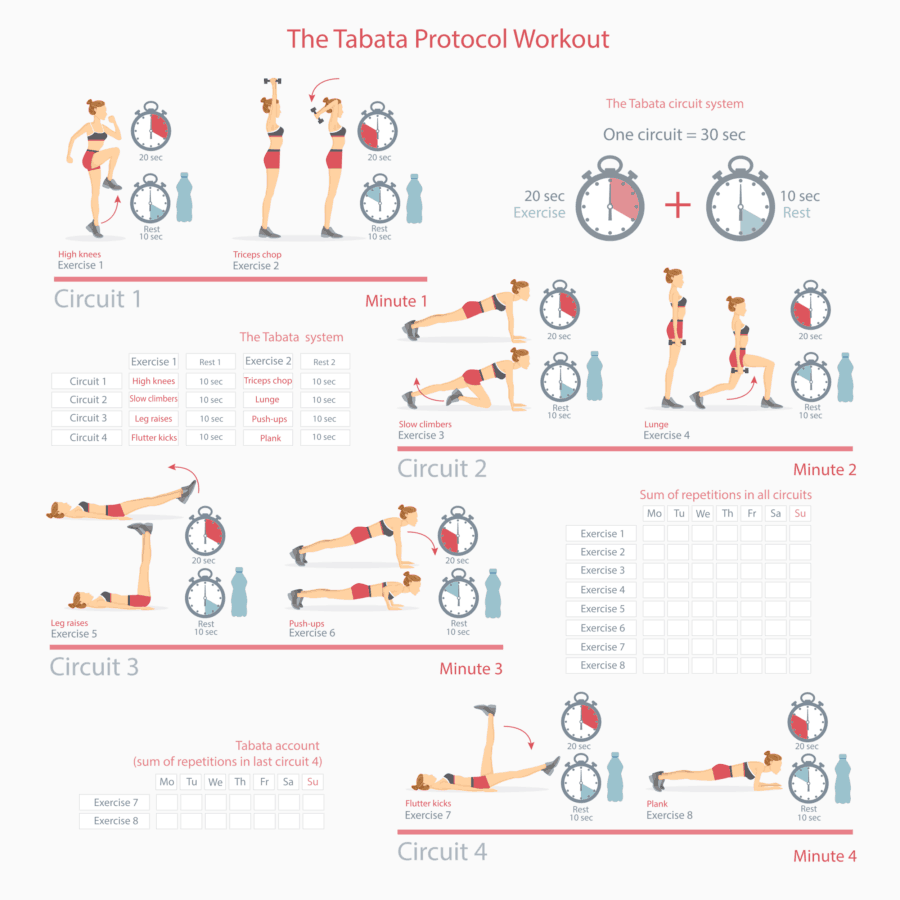
The Tabata Method

The Tabata Method can be explained using a few bullet points:

  • Only one exercise is required, though you may choose to combine exercises.
  • Both strength and aerobic exercises are used.
  • The method integrates more intensity than traditional cardio.
  • The method targets more muscles groups than traditional cardio.
  • One workout takes four minutes.

The basic idea behind a 4-minute Tabata workout is:

– Choose any exercise (or combine exercises)

– Work out as hard as possible for 20 seconds, and rest for 10 seconds (this is one set)

– Complete eight sets

Research shows the effectiveness of just one 4-minute Tabata workout:

Tabata and his team conducted research on two groups of athletes. The first group trained at a moderate intensity level while the second group trained at a high-intensity level. The (first group) worked out five days a week for a total of six weeks; each workout lasted an hour. The (second group) worked out four days a week for six weeks; each workout lasted four minutes and 20 seconds (with 10 seconds of rest in between each set).

The results: Group 1 had increased their aerobic system (cardiovascular), but showed little or no results for their anaerobic system (muscle). Group 2 showed (a much higher growth) in their aerobic system than Group 1, and increased the anaerobic system by 28 percent.

In other words, a regular 4-minute Tabata regimen demonstrated greater aerobic and muscular benefits than a 60-minute regiment – all while exercising one less day per week.

Workout options

Another terrific aspect of Tabata’s method is in its flexibility; allowing the individual to choose which exercise(s) to perform.

As your fitness level improves (which it will), you may want to increase from four minutes to eight minutes; 8 to 12, 12 to 16, and so on. No problem. Simply add another exercise to your routine, and you’re good to go.

Here are a couple of pieces of advice before you get started:

(1) Choose an exercise that you’re comfortable with (have done before)

(2) Have a good, quality timer to keep track of seconds

(3) This workout is difficult – even at the 4-minute level. Your body will be “screaming” for you to stop. It helps to have a mantra/saying/quote to remember to keep yourself motivated.

Burn Fat Quickly With This Workout That Takes Less Than 5 Minutes

As mentioned, you can choose pretty much any activity you’d like. Pushups, mountain climbers, bodyweight squats, and burpees are all favorites. If you’re a lifter, you may incorporate weights into your workout; the same goes for kettlebell users. (Note: if lifting, choose a lighter weight as you’ll fatigue quickly).

First, choose whether you want to do cardio or lift. Second, get your circulation going by doing a light 5 to 10-minute warmup on a stationary bike (optional, but recommended); if no access to a bike, do some dynamic stretching or light calisthenics.

Here are some basic exercise recommendations:

Pushups

– Mountain climbers

Bodyweight squats

– Burpees

Jump squats

– Lunges

Kettlebell swings

– Sprints

Here are some intermediate-to-advanced exercise recommendations (as these are easier to perform following video instruction, we recommend using a search engine to see appropriate technique):

Lateral lunge to knee drive

– Lunge Chop

Mountain climber to single leg pushup

– Skater to curtsy lunge

Squat thrust to lunge jump

– Russian twist

Plank with Row

As always, please be safe when attempting any new exercise program. Checking with your family doctor before beginning HIIT training is a good idea, as well.

tabata

Remember:

– Please perform a light 5 to 10-minute warmup routine (stationary bike or light calisthenics), if possible.

– Hydrate before, during and after exercising.

– STOP if you feel pain (not explainable by muscle fatigue or “burn”)

– Go at your own pace. Start at 4 minutes and increase intervals when comfortable (if desired).

6 Warning Signs You’re In A Toxic Relationship

Toxic relationships can come in all shapes and sizes. Some of them are easy to let go – you recognize the signs and you end it, and that’s that. Other times, a toxic relationship can grow so sneakily and steadily that before you realize it, you’re in a relationship that’s detrimental to both your physical and mental health.

Oftentimes, you may be thinking to yourself that a toxic relationship would never happen to you – that you would know immediately what’s wrong and be able to end the relationship. However, it’s not always that simple. Toxic relationships can happen to anyone, and sometimes there are signs that the relationship is not only unhealthy, but harmful.

6 DANGEROUS SIGNS YOU’RE IN A TOXIC RELATIONSHIP THAT’S HURTING YOU

1. YOU CAN’T BE YOURSELF

Relationships are about loving your partner for who they are, without wanting to change them. A sign of a dangerous and toxic relationship is that you feel like you can’t be who you are. You may find yourself putting on a persona, or changing your personality until you don’t recognize yourself. This is a sign that you need to get out. Your partner should never make you feel like you can’t be who you are, or like you have to change to be with them.

2. YOU’RE NEVER GOOD ENOUGH

Your partner has high standards, and it’s impossible to meet them. You never feel like you’re enough for your partner, and you never feel like anything you do is worthwhile. If you find yourself constantly thinking of ways to appease your partner, your relationship is already unhealthy. A dangerous relationship is one where one partner manipulates and controls the other – and it’s always easier to control people who have a low self-esteem. Don’t allow yourself to be brought down – you are good enough, and someone out there will be able to see it.

toxic relationship

3. YOU’RE CONSTANTLY BEING PUT DOWN

Relationships are about uplifting one another. If your partner is constantly degrading you and talking down to you, then you’re not in a healthy relationship at all. Sometimes, this particular sign can be so slight you don’t even notice it. This can come in the form of constantly criticizing the things you do, like your house work or how well you cooked dinner. If your partner is unable to appreciate you or the growth that you go through, then they’re not worth staying for.

4. YOU FIGHT TO WIN

Arguments happen in relationships, even the healthiest of relationships. However, arguments are often meant to work something out and to come to some kind of compromise. In your relationship, however, you may find yourself fighting to “win”, rather than trying to come up with a solution to the problem. This means that you’ve become full of resentment for your partner – and resentment cannot build a happy relationship.

5. YOUR PARTNER WON’T COMPROMISE

Instead of compromising and working out any issues that the two of you may have, you find that your partner would much rather shirk responsibility and shift the blame onto you. The end of every discussion always has you being the one to bend to your partner’s wishes and demands, or worse, apologizing for trying to come up with a compromise in the first place. Nothing about your relationship is working, but your partner refuses to work on it in any way. This is a sign that it’s just not working.

6. Abuse (mental, emotional, physical or sexual)

Whether it’s verbal, emotional, mental or physical, once your partner starts abusing you, it’s time to go. This can be anything from gaslighting you, calling you names, manipulating you and messing with your head, or physically harming you. If you’ve reached the point where you’re not longer safe with your partner, it’s time to leave. Even if your partner promises never to repeat the abuse, it can be a sign of further incidents down the line. You’re worth more than being abused, and taking yourself to a safer place is your top priority.

Sometimes, it’s so hard to see when a relationship that we once enjoyed has become a source of strain, stress and pain. It can even be tempting to want to try and work it out, even if every time you’ve tried, your partner has been uncooperative. Some toxic behaviors in a relationship can be worked on and fixed, and both partners can grow and move on from the experience.

Other times, a relationship can become dangerous to your well-being – and that’s the time to gather your resources and leave if it’s safe to do so. Build a support network of friends and family, people who can help you when you come to terms with the toxicity in the relationship. After all, you deserve someone who loves and cherishes you and brings nothing but positivity into your life.

Skip to content