Weekly tips, affirmations, and small actions to feel your best.

Experts Explain 5 Habits You Need To Be Successful In 2018

The Ole’ New Years Resolution, 2018.

It doesn’t matter your occupation, obstacles, or goals. If you want to be a better, happier, and more successful person in the New Year, it is essential to (a) prioritize and (b) put in the effort.

The New Years Resolution is a well-known tradition in the United States. It’s also a tradition that over 90 percent of people fail. This isn’t because people aren’t well-intentioned, it’s because they’re human! Ok, there’s more to this – and we’ll discuss things in a bit more detail later.

It’s painless to spout off a tear-jerking resolution when you’ve put away six vodka martinis and a pound of guacamole dip. It’s hard when you (grudgingly) wake up the next morning and realize it’s time to get to work!

To start off, we’ve got some good news, and we’ve got some bad news. Nobody ever wants the good news to be spoiled by the bad, so we’re going to pour in the salt early. (Please don’t shoot the messenger.)

In a 1,129 person survey, just over 9 percent of respondents succeeded in fulfilling their previous year’s resolution. Furthermore, over 42 percent of interviewees report “never succeeding/failing on their resolution each year.”

Here’s the (VERY) good news: “People who explicitly make resolutions are 10 times more likely to attain their goals than people who don’t explicitly make resolutions.”

If there’s one bugaboo common among those making resolutions, it’s lack of staying power. Consider this: nearly 45 percent keep their resolutions for up to six months! Why go halfway and throw in the towel?

Were their plans “explicit”? Did they have a support system? Did they accommodate for a life-changing event (a promotion, moving, etc.)? All of these things must be taken into account.

First and foremost, the plan must be specific. It bears repeating this statistic:

“People who explicitly make resolutions are 10 times more likely to attain their goals than people who don’t explicitly make resolutions.”

Write this down on a Post-It. Fold that piece of paper and stick it in your wallet. Memorize it. Then re-write it on 20 Post-Its. Stick ‘em anywhere and everywhere – at work, at home, at your desk, on the refrigerator, wherever.

Say it loud and proud when you feel like giving up.

We’re going to list five positive habits that will improve the odds. BUT, it’s up to you to come up with the “explicit” plan that will help you reach your goals.

Let’s do this thing!

Here are 5 positive habits you need to be successful in 2018:

Habit #1: Be Humble in 2018

Regardless of any successes you achieve, maintain an attitude of humility. Take the creed of the U.S. Navy SEALs, possibly the greatest special forces unit in the world, as a reminder of when feeling boastful about anything:

“My loyalty to Country and Team is beyond reproach. I humbly serve as a guardian to my fellow Americans always ready to defend those unable to defend themselves. I do not advertise the nature of my work, nor seek recognition for my actions.”

Don’t advertise or seek recognition for anything. Let the results speak for themselves.

Habit #2: Bear Down

Angela Duckworth, Ph.D., psychologist and best-selling author of Grit: The Power and Passion of Perseverance, says that grit is the most important characteristic in achieving any goal.

Dr. Duckworth adds “Accomplishing anything worthwhile is almost by definition to attempt what is difficult. Otherwise, someone would have done it by now!”

Consider any bumps and bruises sustained when marching towards your goal as a badge of honor.

Habit #3: “Diligent Practice”

In his book Talent is Overrated, author Geoff Colvin delves into the minds of people who’ve accomplished great things in their chosen field of endeavor. Among the individuals studied include Ben Franklin, Tiger Woods, Warren Buffet, and Chris Rock.

In the Book, Colvin asks an important question:

“Do you believe that you have a choice in the matter? Do you believe that if you do the work, properly designed, with intense focus for hours a day and years on end, your performance will grow dramatically better and eventually reach the highest levels? If you believe that, then there’s at least a chance you will do the work and achieve great performance.”

“Diligent Practice” > IQ score

success

Habit #4: Eliminate distractions in  2018

There’s no way to put this lightly, so we’re not going to try.

Distractions are achievement killers.

It requires a day-by-day, hour-by-hour approach to achieve anything noteworthy. New Year’s resolutions tend to fall into the “noteworthy” category.

You must eliminate distractions wherever and whenever necessary. If you’re trying shed weight, stick with your eating plans and ride out that unscheduled fast food impulse. If you’re trying to finish your degree, that T.V. needs to remain off on the weekends.

You needn’t deprive yourself, but habitual distractions will cause failure.

 #5 Be mindful in  2018

Did you know that human beings are born with a negativity bias?

Our brain is more affected by things of a negative nature (bad news, unpleasant thoughts, unhealthy emotions, etc.) than we are by things that are neutral or positive.

So when we let ourselves down, the feeling of failure is ready and willing to make an unwelcome appearance. Here’s where it helps to understand the brain and go easy on yourself.

Dr. Rick Hanson, author of Buddha’s Brain: The Practical Neuroscience of Happiness, says “To keep our ancestors alive, Mother Nature evolved a brain that routinely tricked them into making three mistakes: overestimating threats, underestimating opportunities, and underestimating resources.”

Dr. Hanson’s advice? Mindfulness.

“The mindfulness of both the inner workings of your brain and the outer mechanisms of fear-promotion can by itself make you less prone to needless fear.”

Researchers Reveal 5 Early Warning Signs That Heart Patients Have In Common

19 percent: The percentage of people who contact emergency medical assistance (‘911’ in the U.S.) after experiencing potentially life-threatening heart symptoms.

19 percent. So, roughly four out of five cardiac arrest patients never call for an ambulance. That’s not good.

Dr. Sumeet Chugh, associate director of the Heart Institute and director of the Heart Rhythm Center at Cedars-Sinai Medical Center in Los Angeles, explains why:

“Most people who have a sudden cardiac arrest will not make it out alive. This is the ultimate heart disease, where you die within 10 minutes. And less than 10 percent actually survive.”

Heart attack? Cardiac Arrest?

“Roughly half of cardiac arrest patients experience telltale warning signs that their heart is in danger of stopping the month preceding their attack, new study findings suggest.” ~ Alan Mozes, Health.com

Here’s something for all of us to keep in mind: despite the majority’s tendency to label a cardiac arrest as a heart attack, the two conditions are different.

A heart attack occurs when there is an arterial blockage, which restricts blood flow to the heart. A cardiac arrest is when the heart’s electrical system goes haywire.

(Good to know!) Half of all annual heart-related deaths in the United States (approx. 350,000) are attributable to cardiac arrest.

It’s not their fault.

It goes without saying that nobody in their right mind would willfully ignore the symptoms of cardiac arrest. So why do 80-plus percent of cardiac patients not call 911? Why do 50-plus percent who experience telltale symptoms of cardiac arrest do nothing?

Because for years we’ve been told that a heart attack is an unexpected – and in many cases, asymptomatic – health problem. Further, it’s easy to attribute acute signs, e.g., shallow breathing, to anxiety or some other condition.

In other words, it’s not their fault.

heart

Dr. Chugh explains:

“For years we have thought that (cardiac arrest) is a very sudden process, But with this study, we unexpectedly found that at least half of the patients had at least some warning signs in the weeks before.”

Chugh goes on to say that this study may “open up a whole new paradigm” in how people react to possible cardiac symptoms. “And this is important because those who react by calling their loved ones or calling 911 have a fivefold higher chance of living.”

About the Study

Here’s are the main findings of the study:

  • Demographic data: 840 cardiac arrest patients, aged 35 to 65.
  • Percentage who experienced warning symptoms: 50% of men and 53% of women.
  • The ratio of patients who experienced symptoms within 24 hours of heart failure: 9 out of 10.
  • The most commonly-cited symptom among men: chest pain.
  • Most commonly-cited symptom among women: shortness of breath.

5 Early Warning Signs Of Heart Problems To Watch For

Per the study, published by the American College of Physicians, and per information derived from the American Heart Association (AHA) website, here are five possible indicators and symptoms of cardiac arrest:

1. Shortness of Breath

In the study, shortness of breath was the most commonly experienced symptom among female cardiac patients. Per the Mayo Clinic, shortness of breath is a feeling of “intense tightening in the chest, air hunger or a feeling of suffocation.”

Besides heart abnormalities; strenuous exercise, high temperatures, massive obesity, and high altitude can cause shortness of breath in an otherwise healthy individual.

2. Chest Pain

Chest pain was the most frequently reported symptom of cardiac arrest among male patients.

According to the Cleveland Clinic, certain types of chest pain warrant an immediate visit to the emergency room. Here’s what doctors from the Clinic  advise:

“If you experience pain, pressure or discomfort in the center of your chest or in your arms, back, jaw, neck or stomach – along with shortness of breath (for) a least five minutes, call 9-1-1.”

3. Flu-like Symptoms

Flu-like symptoms, including abdominal pain, back pain, nausea, and vomiting may arise. When these symptoms concurrently surface with chest pain, shortness of breath, or health palpitations, call 9-1-1 or your local emergency services.

Having flu-like symptoms for longer than two weeks is another cause for concern.

4. Loss of consciousness

If either you or someone you know suddenly collapses from an unconscious state, the first thing to do is call an ambulance.

Per Healthline: “people who become unconscious don’t respond to loud sounds or shaking. They may even stop breathing, or their pulse may become faint.”

People suffering from a potential heart problem will often become temporarily unconscious, also known as fainting.

5. Other signs

Dr. John Day, president of the Heart Rhythm Society and director or Heart Rhythm Services at Intermountain Medical Center Heart Institute in Murray, Utah cites other possible complications that may increase the risk of cardiac arrest:

“(the abovementioned) signs should not be ignored, particularly if you have risk factors for heart disease, such as a family history of heart problems or high blood pressure, cholesterol, diabetes or a known heart condition.”

Heart Health Tips

Check out the following tips for better heart health:

– Get at least seven hours of sleep.

– Control blood pressure by limiting alcohol and sodium intake.

– Eat a diet rich in fruits, lean proteins, vegetables, and whole grains.

– Reduce or eliminate saturated fats (make sure to read the labels, too!).

– Get tested for diabetes.

– Exercise for 30 minutes per day, 5 days per week.

– Don’t smoke or vape.

– Make sure to manage stress in a healthy way (consider exercising, meditation, or yoga.)

And, finally …

– Remember to laugh and have fun! Don’t take life too seriously!

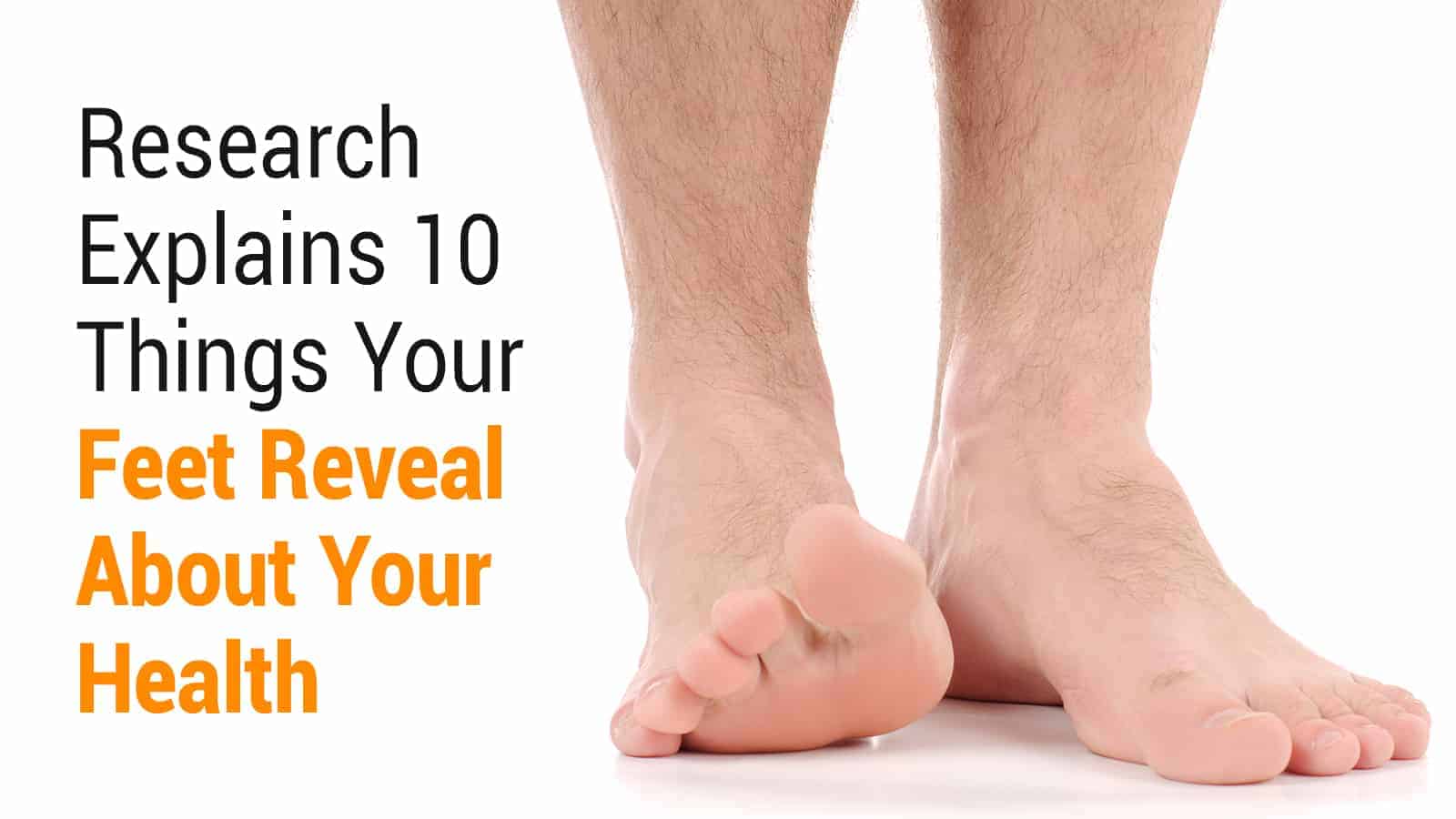
6 Health Warning Signs From Your Feet to Never Ignore

Our bodies will always tell us when something is wrong. Whether or not we know how to listen is another matter entirely! Sometimes, we can pinpoint when something is seriously wrong because of changes in our body, but other things are more subtle or easy to brush off. Our feet, for example, are a great indicator of health. They can tell us all kinds of things that could be wrong, but we need to know how to listen to them.

In fact, one of the first things that a health care practitioner will look at on an elderly patient is the condition of their feet because it can tell them so much. Your feet do far more than carry you from place to place. They give you a quick way of checking your overall health. They can tell you if you need more nutrients and if a serious medical condition is lurking in your body,” says healthy lifestyle expert Danette May.

Here Are Some Warning Signs From Your Feet That You Should Never Ignore

“I believe that the greatest gift you can give your family and the world is a healthy you.” – Joyce Meyer

1. Hairless feet or toes

Most people would kill to have hairless feet because of all the maintenance needed to remove the hair from your feet. But in actuality, having hairless feet can be a sign of blood circulation problems. If you’ve got heart issues or circulation problems, your body will have to prioritize, and getting enough blood to your feet to grow the hair there isn’t as important as your vital organs. That might also make it challenging for doctors to locate a pulse in the feet.

Orthopedic surgeon Lance Silverman, MD, states, “One cause of insufficient blood supply to the feet and toes is peripheral arterial disease, or PAD for short. When plaque builds up in the arteries of your legs, blood flow can be restricted and PAD can set in. If left untreated, PAD could lead to a heart attack or stroke, or even put you at risk for amputation.

While it may be nice to not have any hair on your feet, you’ll definitely want to keep in mind that it could be a sign of some other issue.

2. Sunken toenails

A lot of people don’t pay enough attention to their toenails. Feet come in all kinds of shapes and sizes. Still, a sunken in toenail, with a spoon-like shape, is a sign of anemia, “hemochromatosis (overproduction of iron), Raynaud’s disease (which affects blood supply to the fingers and toes), and sometimes lupus (an autoimmune disease in which the body’s immune system attacks cells, tissues, and organs), according to Reader’s Digest.

When your body doesn’t have enough iron, you may feel exhausted, weak, short of breath, and other symptoms. Sunken in toenails is a quick way to see if you may have any of the above-mentioned causes. Remember, anemia can be dangerous all on its own, so listen to your feet and get yourself checked out by your doctor.

health

3. Coldness

Do you have chronically cold feet? Are you always the first to break out the fluffy socks, even in the summer? Your feet may be trying to tell you something, namely that your thyroid may not be working correctly. It may also be a sign of poor circulation because you blood isn’t getting to your extremities. You may notice that your hands and fingers are much colder than others. It might be worth checking out if you’ve got constantly cold feet.

4. Yellow toenails

Your toenails should look a lot like your fingernails. If there’s any discoloration, it’s probably a sign that something else is going on. The most commonly discolored toenail is yellow, and a fungal infection usually causes that. You can get this from just about anywhere, from your shoes to the local swimming pool. Thankfully, a fungal infection is quick and easy to deal with. You can get over-the-counter methods of dealing with a fungal infection, or use home remedies so you always have something on hand.

Apart from a fungal infection, thickened or  yellowed nails might also indicate the presence of an underlying disease. Some diseases can include lymphedema (swelling related to the lymphatic system), lung problems, psoriasis, or rheumatoid arthritis.

5. Numbness

It’s never good when a part of your body goes numb, so hopefully, when you feel your feet going numb for no reason, you’re already on your way to the doctor to check it out. Numbness in the feet can be caused by nerve damage, or neuropathy. People with diabetes are at risk of having this numbness of the feet, so keep an eye out and get checked if this happens.

6. Flaky feet

Flaky skin isn’t a good thing, no matter where it is in your body. But for feet, specifically, flaky skin can be a sign of athlete’s foot, especially if the flakiness is coming from between the toes or it can signify problems with your thyroid.

If the skin around your heel or on the ball of your foot is dry, cracked, or flaky, it may be a warning sign of a thyroid condition. Your thyroid gland produces hormones that control your metabolic rate, blood pressure, tissue growth, and nervous system functions,” adds Dr. Silverman.

Athlete’s foot is a very common, but also contagious, fungal infection. Thankfully, it’s also one that’s pretty treatable, so make sure you look into over-the-counter methods for getting rid of athlete’s foot.

feet

Final thoughts

Our bodies always try to talk to us and tell us what’s wrong. Our feet are no different, but many people neglect them for one reason or another. But checking your feet for signs of abnormalities can be your warning sign to some different kinds of issues that your body can have. Whether it’s something as easy to get rid of as a fungal infection or something more serious like a heart problem, our feet are a great way to make sure our bodies are working right.

(C)Power of Positivity, LLC. All rights reserved

11 Quotes to Remember When You Feel Like Giving Up On Your Relationship

The Power of Words

Have you ever stopped to think about how well phrases have stood the test of time?

Have you ever used one or more of the phrases, “As my _____ used to say,” “In the words of ______,” or “_____ once said” before following up with a quote? How about having one or more quotes that you remember and recite? (Please share!)

Words of the greatest Presidents, athletes, scientists, artists, and philosophers are forever engraved. Why is this? Because all of us need a source of inspiration. We look to the great minds of history with the hope of shaping the present and future.

This segues into today’s topic: quotes that inspire strength during relationships.

Here are 11 such quotes:

1. “There is no challenge strong enough to destroy your marriage as long as you are both willing to stop fighting against each other, and start fighting for each other.” – Dave Willis

Mr. Willis makes an excellent point. When we’re heated with our partner, our natural tendency is to put up a defense mechanism. We become irritable, unable to think clearly, and devoid of energy.

What if we focused instead on channeling our energies, redirecting them, and forming amicable solutions?

2. “Apologizing does not mean that you’re wrong and the other person is right. It just means that you value your relationship more than your ego.” – Unknown

Apologizing when there’s a good chance you’re right about something takes guts. When you love someone, the need to be right all the time should take a backseat. A healthy relationship is all about compromise, even if you have to take a small hit to your ego every once in a while.

3. “Find joy in everything you choose to do. Every job, relationship, home … it’s your responsibility to love it, or change it.” – Chuck Palahniuk

Notice that Mr. Palahniuk uses the words find joy in everything that you choose. You (and your partner) have a responsibility to iron out the wrinkles in the relationship. Despite your best efforts, if you’re unable to either engage your partner or find joy, time to change things up.

4. “I am not telling you it is going to be easy – I am telling you it is going to be worth it.” – Art Williams

Imperfections prevent us from having a “perfect” relationship. Intimacy does not come easy – it can involve some hard work. What matters is that you keep your eye on the ball – the ball being a happily-imperfect relationship.

5. “You can’t just give up on someone because the situation is not ideal. Great relationships are not great because they have no problems. They are great because both people care enough about the other person to work on solving them.” – Unknown

Though lengthy and a bit confusing, this anonymous person hit us with some good common-sense wisdom. Idealism is a delusion and practicality matters in a relationship. Simplicity matters too. In this case, there’s a two-step process: identify the problem, and diligently work on a solution.

relationships

6. “Relationships end too soon because people stop putting in the same effort to keep you, as they did to win you.” – Unknown

To love someone is to be mindful of their thoughts and feelings. Love is an embodiment of human nature in that it’s dynamic, not static. Becoming smitten with someone is easy; respecting them enough to put forth the necessary effort to keep things going isn’t.

7. “He can’t read your mind. So take a moment to let him know how you really feel.” – Stephen Speaks

Have you ever brooded about your partner without letting them know why? You’re just sort of steaming like a teapot with no spout? Time to put on your big boy pants, do some thinking, and have a real conversation.

8. “It doesn’t matter who hurt you, or broke you down. What matter is who made you smile again.” – Unknown

Some people have a serious problem letting go of the past. It is important to remember that the individual you’re with now is not anyone you’ve been with before. Don’t allow the past to dictate your future.

9. “There is always some madness in love. But there is also always some reason in the madness.” – Friedrich Nietzsche

Let’s face facts: love is not easy. In fact, it can be downright frustrating; even maddening. But remember the reasons why you’re with a person. There is a reason behind the madness, even if it’s difficult to see.

10. “Truth is everybody is going to hurt you: you just gotta find the ones worth suffering for.” – Bob Marley

As we are all imperfect, it’s a certainty that we’ll hurt the people we love at some point, even unknowingly. As the dynamism of an intimate relationship transcends any relationship type, it’s possible you’ll feel more hurt by your partner than anyone else. But if true love is present and felt by both people, it’s definitely worth the suffering.

11. “If you love someone, set them free. If they come back they’re yours; if they don’t they never were.” – Richard Bach

Sometimes we have to cut ties to learn of someone’s true feelings. Is this hard? Absolutely. But, what is the point of holding onto someone if they don’t want to be there in the first place? Let them “test the waters.” If they paddle their way back, it’s probably a good sign.

Words can inspire and words can destroy. Choose yours well. ~ Robin Sharma

https://youtu.be/62pATpBxT7g

(C)Power of Positivity, LLC. All rights reserved
References:
http://www.huffingtonpost.com/dr-nikki-martinez-psyd-lcpc/20-relationship-quotes-to_b_9081776.html

https://www.brainyquote.com/quotes/topics/topic_relationship.html

Should You Follow Your Head Or Your Heart? Researchers Reveal Which One to Pick

For lack of better phrasing, heart-based decisions are those that evoke little resistance from your brain. The inner monologue you have with yourself isn’t based on rational thought. Heart decision-making, therefore, can be described as impulsive.

Compare this with your head, which tries – and often fails – to get us to think logically despite an influx of emotions. We face this situation a lot, but perhaps no more than when we really want something – clothes, electronics, food – whatever.

Here’s something most of us can relate to:

It’s rush hour. You’ve had a long day; you’re tired, irritable – and hungry. You see a billboard for your favorite fast food joint.

Heart: “Oh my GAWD…double cheeseburger…fries…”
Brain: “Terrible idea.”
Heart: “I really don’t want to cook…”
Brain: “We’ve got leftovers in the fridge. We’re trying to eat healthy, remember?”
Heart: “Leftovers suck.”
Brain: “…”

Is “Listen to your heart” the right advice?

“Emotion and time pressure are two important factors affecting risk decision-making … under high time pressure, two distinct cognitive pathways may function in human decision-making.” ~ Hu.Y, et al. “The effect of emotion and time pressure on risk decision-making.”

listen to head or heart

Should You Follow Your Head Or Your Heart? Researchers Reveal Which One to Pick

It’s an all-too-common expression, though most of us haven’t a clue what it really means. “Just follow your heart.” “Let your heart guide you.” “The heart knows.” And so on…

But if we think of the heart as the epicenter of emotion, which many do, such advice can be counterproductive at best, and disastrous at worst.

Perhaps there were instances when you threw caution to the wind, allowed your emotions to lead the way, and things turned out well. Generally speaking, however, this chain of events is the exception and not the rule.
So why do we insist on emotional decision making?

A couple of reasons:

(1) We tend to remember distinguishing events, particularly those when a positive outcome was realized.
(2) Positive outcomes produce positive emotions, which – as a result of cognitive biases – attributes these outcomes to random decision-making.

An interesting study

Scientists from East China Normal University conducted an experiment consisting of 72 college-age participants. The research was designed to mimic real-life scenarios involving the factors of time constraints, emotional arousal, and risk decision-making.

The research team implemented a ‘3×2′ experimental framework, consisting of three emotional states (positive, negative, and controlled), and two variations of time constraints (high time constraint and no time constraint.)
Here’s how the team conducted each experiment.

– Emotion induction: The research team exposed 24 students to positive emotions using a “feel good” motion picture” popular in China; 24 students watched a movie designed to produce the opposite effect, and the remaining 24 students didn’t watch anything.

– Following the emotion-induction phase, all students then took a high time pressure, multiple choice test.

– Lastly, the students took a Chinese version of the PANAS test – a psychometric scale measuring the levels of positive or negative emotions each student felt.

Under the time pressure condition, students were far more likely to make risky decisions when they were feeling happy – and far less likely to make risky decisions when they felt neutral or negative emotions.

With an unlimited time to consider risk, however, emotion made no difference when making risk-taking decisions.


gut instincts

Final Thoughts

Although we’re straying a bit, here’s something fascinating to consider:
Breakthrough research is being (and already has been) conducted on ‘heart intelligence,’ specifically, how the heart and brain work in cohort. As it turns out, the heart has its own neural network that is constantly in communication with the brain and body. (We’ll include a link in the ‘Sources’ section.)

The clever group of folks who made this discovery are quick to point out one thing: our heart isn’t just some “pump” that circulates blood. Indeed, the heart has “a mind” of its own.

So, no, you don’t make bad decisions because you “listen to your heart.” You make bad choices because you’re caught up in a barrage of emotions.

Susan Krauss-Whitbourne, Ph.D., wraps it up nicely:

“Listening to your (“heart) is something that will more likely hurt you than not, especially if you are under any kind of time pressure. Once you’ve had to time to sort through all the factors, both rational and irrational, your judgment should be clearer. Decisions to take risks may in fact benefit you, but just take your time, whenever possible, to gain the most fulfillment from those decisions.”

4 Behaviors A Narcissist Displays That Reveals Their True Colors

A lot of people think they might be able to pinpoint a narcissist if it ever came down to it – after all, they only care about themselves and being the center of attention, right? The thing about most narcissists, however, is that they’re quite able to hide their true nature from people who don’t know the correct signs to look for. In most cases, a narcissist only reveals their true colors when they’re in conflict, from petty squabbles to full-blown arguments.

Learning the key behaviors that a narcissist displays before showing themselves for who they are, can help many people learn when it’s time to stop investing time, money, or emotional energy into this person – because the only thing you’re going to be doing is feeding their need to be the absolute center of attention in any way they can get it. Here are some key behaviors that the person you’re dealing with is a true narcissist.

Here Are 4 Behaviors A Narcissist Displays That Mirrors Their True Colors

narcissists

1. Emotional hot potato

Everyone knows the game “hot potato”. You pass a ball back and forth between a group of people, not wanting to be the last one to hold it when “hot potato” is called out. Narcissists play this same game, but with emotions. Consider, for example, that a narcissist is feeling angry, and getting irrational. Instead of accepting that these are feelings that they have, they assign those feelings onto the person that they’re speaking to – so, now you’re the one who’s angry and irrational, even if that isn’t true.

Author Peg Streep says, narcissists “can play consciously to manipulate you but it can also be unconscious behavior on the narcissist’s part. In any case, what emerges from hot potato is the narcissist’s vision of what really happened and it will all boil down to one basic theme: It’s always your fault and never his or hers. The inability and unwillingness to take responsibility for actions and words under any circumstances are also narcissistic hallmarks.

Therefore, taking responsibility for their own emotions will never happen, but rather they will project those feelings onto you, so they can scold you for how “you’re” feeling.

2. Demand and withdraw

This behavior involves a person demanding something from the narcissist – say, something important in the relationship has to change for them to be happy. At the demand, the narcissist will withdraw emotionally and physically: crossed arms, silent treatment, cold shoulder, stonewalling and ignoring the person issuing the demand. This will cause the other person to get increasingly upset, because the narcissist is refusing to engage with an emotional situation.

In the end, it becomes the other person’s fault for making the demand in the first place. If they hadn’t, then the narcissist wouldn’t be acting this way in the first place. It’s a form of manipulation that makes the other person think that all the problems in the relationship are their fault.

narcissist

3. Vindictive behavior

Get into an argument? The narcissist will spread lies about who was right and who was wrong, eager to paint you as the person who had wronged them in every situation. A vindictive person is always trying to get back at those they have deemed wrong. If you notice this in a person but are lucky enough not to be the target, you may very well be dealing with a narcissist. However, you are not yet on their radar.

But why the lies?

Dr. Joseph Burgo states, “Because of his distorted, defensive relationship to reality, the Extreme Narcissist often believes the lies he tells, both to himself and other people. He doesn’t see himself as a liar but rather as an embittered defender of the ‘truth’ as he has come to see it.

The narcissist is always the one to paint themselves as the victim, no matter what, even if they are clearly in the wrong. Be careful if you are not on the receiving end of a narcissist’s revenge – one wrong move, and you very well could be.

4. Indifference to emotional outcomes

The narcissist doesn’t care about the outcomes of high-stress or high-emotion situations, so long as they come out on top. If some sort of argument or disagreement has escalated enough for them to lose their friends and family connections, it doesn’t matter, so long as they are the ones who are “winning” in the argument. They only want to feel as they have behaved in a way that seems reasonable and fair to them, even if they have done everything in their power to destroy the connections that they have made through life, through either friendships or familial relationships.

Final thoughts

Dealing with a narcissist can be very overwhelming, especially if you’re entirely unaware as to why someone is behaving the way that they are. Keeping an eye out for these behaviors in your relationships can make it easier to arm yourself against the manipulation and emotional abuse that a narcissist is capable of. While being aware of the behavior may not allow you to avoid being caught up in it altogether, it’ll give you a starting point on how to get yourself free of a toxic individual.

“Half the harm that is done in this world is due to people who want to feel important. They don’t mean to do harm, but the harm [that they cause] does not interest them. Or they do not see it, or they justify it because they are absorbed in the endless struggle to think well of themselves.” – T. S. Eliot

References:
https://www.psychologytoday.com/blog/tech-support/201601/4-behaviors-unmask-narcissists
https://blogs.psychcentral.com/knotted/2016/09/4-reasons-ending-a-relationship-with-a-narcissist-is-so-hard/

7 Signs Your Relationship Is Draining You

How do you feel about your relationship? Does it make you feel good? Does it make you feel like you can wake up to a brighter, better day? If so, then this probably doesn’t apply to you. However, if you can’t say the same about your relationship, then it may be that your relationship has a few issues that could be worked on. It may also be a sign that your situation is toxic and it isn’t good for you.

A toxic relationship is “like taking a shot of battery acid every day: The drink itself burns, but the single dose isn’t enough to kill you—it’s only after weeks or months of this poisonous diet that you realize you’ve destroyed your stomach lining and your faith in love,” according to Glamour.com.

You could be in a relationship that is sucking the life out of you without even knowing it. If you find that you are more anxious, depressed, and tired than you used to be before you got into your current situation, it might be a sign that your relationship isn’t working. Look at these signs that your relationship is sucking your life out of you.

 7 Signs Your Relationship Is Draining You

relationship standards

1. They’re hostile

Is your partner angry a lot? Do they seem hostile all of the time? If your partner seems to always be on the edge of becoming furious, and it feels like you’re walking on eggshells to make sure that you don’t upset them, then it might just be a toxic relationship sucking the life out of you.

Life coach Kali Rogers says, “If you feel like sharing your own feelings or relying on your partner emotionally will rock the boat, chances are you feel emotionally drained. If you feel like relying on them in the slightest bit will cause an implosion, it’s best to reevaluate the stability of your relationship.”

Remember, living with a lot of anger and tension can cause a lot of anxiety and depression, which can suck your life out and make you feel worse and worse.

2. They put you down

Your relationships are supposed to make you feel good. Your partner should be supporting you, and when that doesn’t happen, it can turn into your partner putting you down for things that you like, or for your appearance, or for your intelligence. If your partner makes you feel worse about yourself and not better, then it can be a sign that your relationship is truly sucking the life out of you.

“Relationships are supposed to make you feel good. Relationships are not supposed to make you feel bad.” – Laura Bowers

3. They refuse to talk about problems

Communication is one of the most important things in a relationship, and when communication breaks down it can cause a lot of problems. When problems arise in the relationship, it’s important to be able to talk them out. However, when your partner refuses to talk about those problems and work them out, it can be a sign that they don’t want to change or put any effort into the relationship. This can cause the relationship to feel like it’s sucking the life out of you.

Psychoanalyst Sue Kolod, PhD, says, “When it is not possible to discuss the issues in the relationship there’s a huge problem. One patient has told me that if she tries to talk about her expectations for the future with her boyfriend, he disappears for several days. This is a toxic pattern because it results in my patient feeling afraid to bring up concerns with her boyfriend.

bad relationship

4. They fight dirty

There’s no way to avoid arguments in a relationship. Every once in a while, every relationship will experience a disagreement or an argument. However, most couples can settle fights without ‘fighting dirty’. This means you can talk through the argument without name-calling, or bringing up old arguments that have already been resolved. If your partner tends always to call you names, belittle you, or try to gaslight you with things that have happened in past arguments, then it will indeed suck the life out of you.

Ken Page, LCSW, a psychotherapist and author says, “Every couple has what I call a ‘good conflict.’ Don’t run from that conflict. It’s supposed to be there. In fact, it’s your key to happiness as a couple—if you both can name it and commit to working on it together as a couple. If you approach your ‘good conflicts’ with bitterness, blame, and contempt, your relationship will turn toxic.

5. You don’t act like yourself

Did you used to be outgoing, happy, and likeable? Has your personality changed somewhat? Are you more withdrawn, anxious, depressed, and unhappy? It might have to do with the relationship that’s sucking the life out of you. When you no longer act like yourself because of a relationship, it’s a sign that it is not good and toxic to you. Your partner may also have subtly tried to change your personality and how you act, until you don’t even recognize yourself.

If you’re starting to have thoughts like, ‘This is not like it used to be,’ ‘This is not what I signed up for,’ or ‘This doesn’t feel good anymore,’ it is possible that what was a good relationship has turned toxic,” says relationship expert Sofia Milan.

6. They guilt trip you

Everything you do is inconvenient to your partner. They are good at making you feel guilty over staying out late, talking to your friends, standing your ground or trying to assert your boundaries. This is a red flag that your relationship is toxic and that it’s sucking the life out of you.

Toxic relationships ruin your life as they most dangerous poison your self-concept, eroding your self-confidence like drops of rain wear away at a canyon wall,” says communication & relationship expert and author Susie Miller.

Your partner may also use this guilt trip power to remind you of all the lovely things they have done for you to guilt you into doing things for them.

7. Your hide your relationship

Your friends and family don’t like your partner, and it’s probably for a good reason. They don’t like how your partner treats you, and they don’t like how you act when you are around them. Because of this, you may find that you hide your relationship and all of the upsetting details from your friends and family. It might be toxic if you can’t tell your family the truth about your situation.

Final thoughts

Relationships should make you feel good and happy. There’s no reason that your relationship should make you feel anxious or depressed, nor should it make you feel like you can’t tell your friends and family the truth. If you find that your relationship is hitting some or most of these signs, it very well could be that the relationship is sucking your life out of you. Everyone deserves to have a partnership that makes them feel happy and fulfilled in life. Toxic relationships can be hard to spot if you’re in the middle of one, but once you recognize the signs, you can get out and find someone who treats you the way you deserve.

References:
https://www.glamour.com/story/7-signs-of-a-toxic-relationship-with-your-so
https://www.bustle.com/articles/166049-9-signs-your-partner-is-emotionally-draining-you
https://greatist.com/play/best-relationship-advice
https://www.rd.com/advice/relationships/toxic-relationships/
https://www.huffingtonpost.com/susie-miller/5-ways-toxic-relationships-are-ruining-your-life_b_9145078.html

4 Questions Every Couple Must Ask Themselves If They Plan to Grow Old Together

We’re living longer and longer lives. And that’s a good thing. Right? Well, it should be a good thing. Every moment we’re given on this Earth is a gift – but it can be something else if we’re not prepared.  But that also means we need to ask some hard questions for couples who want to age gracefully together.

As a couple, you’re never too young to discuss these topics, especially because, the truth is, most partners do not live to be the same age.

According to a publications archive, “Couples age 65 today have a 97% chance that at least one of them lives another 10 years and an 89% chance that one experiences their 80-year birthday.”

While many people get around to saving enough for retirement, few consider the emotional and lifestyle implications that retirement has on a relationship, according to Miriam Goodman, a San Francisco-based writer who has interviewed couples for seven years.

Since the lack of communication between partners regarding growing old together, is a real problem, we researched four main questions that you and your partner can discuss that will help you to prepare yourself better to grow old together happily.

Discuss these considerations as you (and your relationship) ages…

Question 1. Are we prepared financially?

questions for successful people

RELATED: Financially Successful People Do These Things Differently…

In a world that revolves around money, couples must have their financials in order if they want to grow old together happily. Here are just a few questions you can ask each other to be sure you’re ready.

  • What will be our estimated monthly living expenses?
  • Is an annual budget prepared?
  • Have we settled our pension, social security affairs, and Medicare?
  • Do we each have an updated Will and an Enduring Power of Attorney?

Question 2. How will we occupy our time after retirement?

We place so much emphasis on the financial aspects of retirement that far too few of us consider the emotional implications of such a drastic life change. Here are the questions you must ask…

This isn’t to say financial planning isn’t important, it is, but what about staying busy?

  • What life goals have you set for after retirement years?
  • Do you want to travel? If so, where and when?
  • What activities (hobbies, interests, sports, etc.) will you do to stay active?
  • Do you wish to continue working to some degree?

Question 3. What can we do together to stay healthy?

Preventative care is everything when it comes to health. You absolutely do not want to retire and then fall ill. What can you both do to take care of the temple of your soul right now?

  • When is the last time you both received a thorough physical exam?
  • Have you both undergone the necessary age-related health checks recommended by your doctor?
  • Is there a contingency plan in the event one of you becomes ill for a period?
  • What steps, if any, have you taken to improve your health?

Question 4. What will be our living arrangements?

It is likely that the living arrangements you have now, may not be the same ones you have later on. You may want to downsize into a smaller house, retirement community, assisted living or even an independent living facility. How will you manage this life transition?

Whatever you decide to do, it’s better that you and your sweetie talk about these questions right now so that you are both on the same page when the time comes.

  • What will be the 24/7 living situation together upon retirement?
  • What if someone gets ill?
  • After retirement, which one will handle the day-to-day tasks?
  • Besides each other, who else will be the POA?

questions

Final Thought: Have you and your partner considered these challenges yet?

In closing, if you and your partner are serious about growing old together, it’s important to discuss these retirement questions. You both worked hard and will earn the rewards of retirement. With a bit of planning, negotiating, and the occasional hiccup, you’ll both enjoy happy and peaceful end years together. 🙂

(C)Power of Positivity, LLC. All rights reserved

7 Early Warning Signs Someone Has Hidden Depression

Depression, anxiety, and mental health in general have been a hot topic of discussion in recent times, and for good reason. By being vocal about mental illness, people can see that they are not alone, that others suffer just as they do. Being open about mental health allows people to come together and talk about how they feel, and discuss possible solutions.

This mental illness is not something you can just put a bandage on and call it a day; it sometimes requires years of treatment and soul-searching to cure. Even so, a person may just learn to live with it. It’s a soul-sucking disorder that psychologists and doctors are still trying to understand. However, what makes the disorder even more difficult to live with is the constant shame and judgment people cast upon those suffering, as if they don’t have enough on their plate to deal with.

Because of the stigma surrounding mental illness, or out of embarrassment, many people choose to bottle up their feelings rather than admit that they need help, which can lead to deeper depression, self-harm, and even suicide.

Sadly, many people suffering from it don’t seek treatment and try to deal with the feelings alone. The World Health Organization estimates that approximately 350 million people suffer from depression globally. However, this number is probably even higher.

If you or someone you know has depression, you’ll likely recognize these telltale signs. Remember, getting help doesn’t make you weak – it simply means you’re taking matters into your own hands and taking care of yourself.

Here are 7 signs someone might have depression:

“People think depression is sadness. People think depression is crying. People think depression is dressing in black. But people are wrong. Depression is the constant feeling of being numb. Being numb to emotions, being numb to life. You wake up in the morning just to go back to bed again.” – Unknown

1. Withdrawal from activities they once loved.

A key sign of depression is a loss of interest in activities that a person used to enjoy, because depression tends to zap one’s energy. All the person has energy for is getting up, getting dressed, getting to work, and getting back in bed. When you have it, your brain just cannot handle too many activities at once, so you start dropping one here and one there until all you have left is what’s necessary.

If you notice that you or a loved one is starting to miss out on life, then this is a sign of hidden depression.

2. Lack of energy.

It comes as no surprise that those with depression have very low energy levels. Due to the constant feelings of despair and hopelessness combined with sleep problems, poor appetite, and stress, there isn’t much energy left for anything. Even friendships and romantic relationships can suffer because the person may start to withdraw and spend more time alone.

3. Changes in appetite.

Many people with hidden depression will either have an increased or decreased appetite. Gary Kennedy, MD, director of geriatric psychiatry at Montefiore Medical Center in Bronx, New York, says, “A sudden change in weight, either gaining or losing, can be a warning of depression, especially in someone who has other symptoms of depression or a history of depression.”

If someone eats or doesn’t eat due to emotional factors, this could signal depression.

4. Sleeping problems.

According to WebMD, 80% of adults with depression have trouble falling or staying asleep. Patients with chronic insomnia have a tripled chance of developing depression compared to those without insomnia. Many doctors believe that getting treatment will result in fewer depressive symptoms for those with insomnia. A sleepless night here or there doesn’t mean you have depression, but if you have difficulty falling and staying asleep most nights, it could point to hidden depression.

depression

5. Substance abuse.

Many people with hidden depression use substances such as drugs and/or alcohol as a means to treat their symptoms or to escape the real world and their minds for a while. While understandable, this behavior can lead to addiction, which may cause further problems. However, someone with this diagnosis just seeks an escape from their troubled mind if even for a few moments. Indeed, they might see no reason to stop if they aren’t experiencing any health, work, or relationship problems.

6. Trying to put on a mask.

People with depression have become masters at disguising their emotions. They will fake happiness just to appease others or to cover up their own true feelings. Many with depression don’t want anyone else to know they’re struggling. As a result, they will put up a front to avoid embarrassment or judgment.

7. They put all their energy into their work.

You might not think of this as a common symptom of hidden depression. But those who suffer do so silently and use something in their life as an outlet. They often turn to work as a way to escape, because this way, they have somewhere to put all of those pent up emotions. If you notice a friend or family member staying at the office late into the night most days of the week, they might have concealed depression and not just be workaholics.

Final thoughts

Depression is not easy to deal with, and not easy to watch someone suffer from. No matter if you are going through it or someone else, getting help is vitally important. It’s your life and health. So don’t feel guilty or “lesser than others” for having a condition that you did not ask for but which requires treatment to heal from. We wish you health, happiness, and peace, and hope you find a cure that’s right for you.

Sources:
http://www.who.int/mediacentre/factsheets/fs369/en/
https://www.everydayhealth.com/hs/major-depression/depressions-effect-on-appetite/
https://www.webmd.com/depression/features/sleep-problems#1
https://www.healthyplace.com/insight/quotes/depression-quotes-and-sayings-about-depression
Skip to content