Weekly tips, affirmations, and small actions to feel your best.

5 Goal Management Tricks That Make You More Successful

Achieving your goal doesn’t have to be a scary, daunting process! Sometimes, we don’t do what we really want to do because we’re so afraid of failure. Or, we just don’t know where to start. Winston Churchill once said, “Success is going from failure to failure without a loss of enthusiasm.”

There’s so many people around us that feel the exact same way, but don’t show it. Even if it feels like everyone else has some mystical wisdom on how to achieve their goals, they were just as lost and confused as you at one point in their lives.

That’s why there are a few simple tricks that anyone can follow that can help you achieve your goals – no matter how big or small those goals are. Is your goal to buy a new house before the holiday season? Or maybe your goal is something bigger, like owning your own restaurant, or finishing your master’s degree. Whatever your goal is, these simple tricks will help you achieve it.

Here Are 5 Simple Tricks To Achieve Your Goal In Life

“Happiness does not come from doing easy work but from the afterglow of satisfaction that comes after the achievement of a difficult task that demanded our best.” – Theodore Isaac Rubin

1. Make a list

This is the first step to anything. You have to know what your goals are. Sometimes, those goals consist of smaller goals throughout the way. After all, you can’t own a business without first knowing what to do, and you can finish your master’s degree without first having a bachelor’s.

Clinical hypnotherapist and confidence and intuitive coach Annie Ashdown says, “Mind-map your goals: a) Centre circle: write your specific goal; b) outside circle: chunk down the goal into tasks you will need to accomplish to achieve it; c) spokes: draw spokes radiating out from each mini circle and write out each aspect you want to consider. Leave lots of space to play around and flesh it all out.

Don’t be overwhelmed by the prospect of making a list. Go on instinct. Let your gut and heart decide what your goals are, and list them out so that you can see them all on paper. After you have the list down, you can go back and see what things about your life you’ll have to change to make your goals a reality.

2. Clean your workspace

Chances are, your goals are going to require a bit of work, no matter what they are. Clutter can be both physically and mentally distracting. If you don’t have a clean space to work at, you won’t be able to work at the things that you need done to achieve your goals. Not only will you be physically unable to do so, but your mind won’t be cleared enough with all of the things surrounding you to make good work.

People who work with cluttered desks are found to spend an enormous amount of each working day looking for the materials they need among the clutter around them.  Psychologically, the sight of a cluttered desk or office provides visual subconscious feedback that reinforces your perception that you are disorganized.  It leads to continuous distraction as your eyes and your attention dart from item to item, and back again,” says top sales training and personal success authority Brian Tracy.

Take a few hours to clear out a dedicated space for you to work where you can be both relaxed and focused; not to mention that cleaning is a great way to make you feel motivated and attentive.

3. Keep distractions to a minimum

Having a clean and dedicated workspace is a great step. But that clean and pristine workspace isn’t going to do you much good if you’re distracted by all kinds of things. From your phone, to the radio, to family members, to the television – distractions are all around us, and they can make it just as hard to work on your goals as clutter and mess can. Put your phone on do not disturb, keep the television off, and find a way to keep your family members entertained or busy while you dedicate time to working on your goals.

goals

4. Wake up early

No, earlier. Yes, even earlier than that. Waking up just with enough time to get ready for the day isn’t going to be enough to achieve your goals. You need to wake up with enough time to get ready, as well as some time all to yourself in the early hours of the morning before the rest of your family or household gets up. You need time to yourself to dedicate to your goals without kids, spouses or other family members needing your attention.

Wake up early everyday so that while others are still dreaming, you can make your dreams come true. There is too much life to be lived for you to hit the snooze button. In fact, I believe it is ‘seize the day’, not ‘snooze the day,’” says famous keynote speaker Hal Elrod.

Waking up early will take some getting used to. Start with 30 extra minutes in the morning and slowly work your way up to having a couple of hours all to yourself with no distractions.

5. Stop procrastinating

When there’s something that needs to get done, we often find all kinds of ways to procrastinate doing it. If a report has to be written, we may instead clean the entire house as a way to put off doing it. The best way to achieve your goals is to just go in, and do it.

Start with the toughest action that you fear most. This will make the rest of them so much easier to accomplish. The only way to overcome fear is to walk through it,” adds Ashdown.

It may take some getting used to, because procrastination is a bad habit that requires breaking. But once you’re able to get yourself to stop dawdling and start doing, you’ll find that getting steps ahead on your goals can be one of the most rewarding things out there.

Final thoughts

Achieving goals isn’t always easy, but it’s always possible. No matter how big or large, all it takes is a lot of work and a lot of dedication. It may take some extra steps, but figuring out the best way that works for you will be your first goal to achieving your goals! These simple steps should help you get started with achieving your dreams.

https://youtu.be/xDMlO8nc5_4
(C)Power of Positivity, LLC. All rights reserved
References:
https://www.virtuesforlife.com/5-steps-success-achieving-goals/
https://www.getthegloss.com/behind-the-brand/10-steps-for-achieving-life-goal-success-by-the-end-of-the-year
https://www.briantracy.com/blog/time-management/5-office-organizing-tips-how-to-organize-your-desk/
http://halelrod.com/quotes/

Researchers Explain 5 Reasons to Let Go of Stress Beyond Your Control

“Adopting the right attitude can convert a negative stress into a positive one.”- Hans Selye

We are all subject to worrying over the things in life that are too big for us to control. Many of us often worry about the future, our jobs, money, the state of the world, and how we’re going to keep moving forward. Some things can be easily dealt with: we can put a financial plan in place in case of money issues, and we can make plans in case we lose our jobs.

But for other things, we just can’t control them. The way the future is going to look, for example, or our relationships with other people. We can only control ourselves, and any attempt to control things outside of our control often leads to issues with our own minds and bodies.

5 Reasons To Stop Stressing About Things You Can’t Control

1. Stress worsens your health

Worrying too much about things that you can’t control will, inevitably, stress you out. After all, all that worry isn’t going anywhere. There’s nothing productive that you can do to let it out. So, it tends to manifest into stress. Stress is bad for your health, both mentally and physically. Stress is known to weaken your immune system, which can cause you to fall ill easier.

Dr. Joseph Mercola says, “Stress plays a major role in your immune system, and can impact your blood pressure, cholesterol levels, brain chemistry, blood sugar levels, and hormonal balance, for instance. It can even “break” your heart, and is increasingly being viewed as a cardiovascular risk marker.

So, when you learn to let go of all your stress and worrying, you’ll be able to live a healthier life.

2. Life is short

For a lot of people, worrying can take up all of your attention span. You may think that you’re balancing everything just fine, but it comes to a point where that’s just not happening anymore. Worrying too much can cause you to miss out on the things that are going on around you.

You’re too busy worrying about the bad things rather than allowing yourself to live in the moment and experience all of the good things that this world has to offer. When you stop worrying, you’ll be able to experience life to the fullest, in all of the best ways.

If it helps, here’s what Kai Tracid sang about in his song Life is Too Short, “Life is too short, don’t stress every day, leave your worries behind, go out and play, life is too short, grasp it in your hand, a natural miracle, have fun while you can…”  Couldn’t agree more!

stress

3. You won’t be able to focus on what you can control

With all of your attention being devoted to all of the things in your life that you can’t control, you’ll be more likely to let the things you can control fall by the wayside. This is only going to cause you more stress as you struggle to play catch up – when all you have to do is stay focused on the things that you can control!

When you focus on the things that are under your control, you’ll feel a lot less stressed out and better prepared for whatever life has to throw at you and “Before you know it, you’ll be living your best life ever!” says entrepreneur Catherine Goldberg.

4. Your mental health will suffer

Do you ever find that once you start worrying about one thing, it tends to snowball into an apocalyptic daydream that has your heart racing and your brain feeling like it’s about to crawl out of your skull? Well, that’s what worrying will do to you! When you spend too much time worrying about the things that you can’t control, your mental health will also suffer.

Psychiatrist Dr. Justin Ross says, “When we’re stressed, we tend to shine a spotlight on the stressor itself, or on our reaction to that stressor, which only tends to magnify the response.

You may find that you get anxiety much easier than you used to, or much easier than the people around you. You can also develop depression from spending so much time thinking about the things that are beyond your control. Do your mental health a favor and let some things go.

5. You become a self-fulfilling prophecy

If you become so terrified and worried over messing up at work, you may find that your ability to perform and your concentration will drop drastically … leading to you messing up at work! The more you focus on the bad things, the more likely you’ll be too stressed out and anxious to make the good things in your life happen.

Instead, focus on what you can do. Trust yourself to be competent at your job, and trust yourself to be able to handle any issues that come your way. Letting yourself wallow in anxiety over things that you can’t control will only make it harder for you to handle them when they do happen.

Final thoughts

It’s natural to worry sometimes. We all do it! And we all worry about things that are out of our control. The important thing to know is when to stop worrying, and why it’s important that we worry less. With all of the issues on our mind, body and life that stress can cause, it’s important to know when to let it roll with the punches, and when the appropriate time to worry is.

https://youtu.be/lFdcCXmGpy4

(C)Power of Positivity, LLC. All rights reserved
References:
https://articles.mercola.com/sites/articles/archive/2013/11/07/8-stress-management-tips.aspxv
https://greatist.com/grow/what-you-can-control-for-happiness-success
http://dailyburn.com/life/lifestyle/de-stress-tips-mental-health-experts/

Science Explains What Happens To Your Body When You Control Your Breathing Every Day

“Breathing in… breathing out…”

We humans breathe over 20,000 times a day. Unless our air supply is cut off, we don’t pay this mostly automatic process much attention.

But we should.

Every breath we take supplies every one of our body’s trillions of cells with life. It also removes harmful carbon dioxide (CO2) to help keep us alive.

Controlled breathing is a fundamental element in many ancient traditions, including meditation and yoga.

Ancient yogis, for example, believed in the healing power of the breath. Both Buddhists and Yogis taught their students the precise methodology with which they were to inhale and exhale – along with the rationale behind intentionality.

History’s yogis and Buddhists were way beyond their time. As it turns out, proper breathing “counteracts the adverse clinical effects of stress in disorders including hypertension, anxiety, insomnia, and aging.”

Fast-forward thousands of years, and scientists are just now confirming many of the benefits espoused by Buddha and the Yogis. Pretty fascinating stuff, right?

In this article, we’re going to talk about controlled breathing, what science has uncovered, and how to perform three different methods. All three methods and easy, quick, and life-changing!

Let’s get to it!

Here’s what happens when you practice deep breathing:

“Controlled breathing is one way to trigger your relaxation response, as it activates your parasympathetic nervous system, which in turn may slow down your heart rate and digestion which helps you feel calm.” ~ Dr. Joseph Mercola, “Breathe, Exhale and Repeat: What Are the Benefits of Controlled Breathing?”

Diaphragmic Breathing

Breathing, as you probably already know, is both a voluntary and involuntary response. Provided the heart is pumping blood and the brain is functioning, we will breathe automatically.

However, many of us do not breathe ‘correctly.’ Most of us have the innate tendency to chest breathe – or breathe shallowly.

Instead, we should breathe with the belly – something called ‘diaphragmic breathing.’ When we consciously engage in a diaphragmic breathing practice, this is called controlled breathing.

Controlled breathing

Controlled breathing is to be consciously aware – and control – one’s breathing patterns. It is also a practice with some extraordinary potential health benefits, including healthier organs, a better brain, increased energy, cellular health, and much more.

Most of the health gains from following this practice are a direct result of curbing the body’s fight-or-flight response.

breathe

As you know, your body has a “fight-or-flight” (FoF) mechanism that activates when it’s under stress. Our distant ancestors had to contend with many-a-threat: wild animals, starvation, disease, etc.

Naturally, as humans evolved, we became more of a “thinking” creature. This fact is evident in the development of the prefrontal cortex (PFC) of the brain, which is responsible for decision-making, attention, and resource management.

Of course, we still have the FoF response too. But we can – to a great extent – overrule many FoF annoyances by using our PFC (more on this later on.)

This includes, of course, controlled breathing.

Controlled breathing and the ‘Relaxation Response’

The Relaxation Response is a term coined by Harvard professor, and pioneer in Mind-Body Medicine at Harvard Medical School, Dr. Herbert Benson.

In simple terms, the Relaxation Response is the opposite of fight-or-flight. The fact that such a response exists should get us super excited. We don’t have to be controlled by stress, fear, and anxiety. The Relaxation Response, accomplished through controlled breathing, can help mitigate FoF.

In science-y terms, the Relaxation Response activates the para-sympathetic (pronounced like ‘parachute’) nervous system or PNS.

The PNS is – you got it – the opposite of the autonomic nervous system (ANS)! The PNS is what enables the Relaxation Response. While the ANS is referred to as the “fight-or-flight” system, the PNS is sometimes referred to as the “rest-and-digest” system.

Controlled breathing = PNS activation = Relaxation Response (= Bliss!)

Here are three ways to activate the body’s PNS through controlled breathing:

controlled breathing

The first is called Coherent Breathing, and here’s how to do it:

  • Sitting upright or lying down, place your hands on your belly.
  • Slowly breathe in, expanding your belly to the count of five.
  • Pause Briefly.
  • Slowly breathe out to the count of six.
  • Try and work your way up to 10-20 minutes a day.

The second method is Core Breathing:

  • Sit straight at the edge of your chair or on the floor.
  • Place your hands on your belly.
  • As you inhale, lean forward and expand your belly.
  • As you exhale, squeeze the air out, curling forward. Exhale until you are out of breath.
  • Repeat 15-20 times.

The third and final method is the ‘HA!’ technique:

  • Stand up straight, elbows bent at a 90-degree angle, and palms up.
  • While inhaling fully, draw your elbows back behind you, keeping your palms up.
  • Exhale quickly, thrusting your palms forward and turning them downward; say (or mouth) the word ‘HA!’
  • Quickly repeat 15-20 times.
  • Enjoy your inner peace!

Science Explains How Dancing Can Reverse Your Age

Let’s Dance!

Sometimes we have to stand back in awe of perhaps the most complex and beautiful thing in our universe: the human brain. Our brain is remarkable. As much as we’ve learned about the 3-pound organ between our ears, this study is one example of how we’ve just begun scratching the surface.

As magnificent as the brain is, it’s still an organ – and is prone to diseases and deficiencies. Perhaps the most devastating of all illnesses is dementia.

The term dementia describes “a wide range of symptoms associated with a decline in memory or other thinking skills severe enough to reduce a person’s ability to perform everyday activities.” Alzheimer’s Disease accounts for up to 80 percent of all dementia cases.

But there may be a bright ray of hope.

It was discovered within the last decade that the brain is “plastic.” That is, we can form new neural connections throughout life. Dr. Michael Merzenich, one of the early pioneers in the neuroplasticity movement, explains:

“The predominant belief, not too long ago, was that the brain was similar to a piece of hardwired equipment … that once you reach a certain (stage of development) the only way for your brain to go was downhill … we now know that nothing could be further from the truth.”

In other words, with the right kind of mental stimulation (we’ll provide some examples later) we can slow down – if not halt – age-related mental decline So, what does this have to do with dancing? Everything.

Researchers Explain How Dancing Can Help ‘Reverse Your Age’

Neuroscientists from the German center for Neurodegenerative Diseases in Magdeburg, Germany discovered some pretty exciting stuff. Each participant in a group of elderly volunteers (average age 68) was assigned an 18-month, weekly course in either endurance and flexibility training or learning new dance routines. After completing their respective programs, participants brain activity was measured. Here’s what the research team discovered:

– Both groups “showed an increase in the hippocampus region of the brain.”

This is the most important finding of the study. The hippocampus region is responsible for numerous cognitive functions, including balance, learning, and memory. It’s also the area of the brain that is targeted by Alzheimer’s.

– Dancing had a bigger impact than endurance training.

Dr. Kathrin Rehfeld, the lead author, says “In this study, we show that two different types of physical exercise (dancing and endurance training) both increase the area of the brain that declines with age … it was only dancing that lead to noticeable behavioral changes in terms of improved balance.”

Explaining the disparity

Of the two groups,  dance participants showed the most noticeable differences in their behavior. Scientists attribute this deviation to the additional cognitive challenges of the dance program.

“We tried to provide our seniors in the dance group with constantly changing dance routines of different genres (Jazz, Square, Latin-American and Line Dance),” says Rehfeld, “(Dance movements) were changed every second week to keep them in a constant learning process.”

Also, individuals within the dance group were faced with time constraints and limited instructional cues. This added mental challenge likely stimulated the brain areas responsible for learning and memory more in the dance group.

A more hopeful future

create life

We all want to live a healthy, long, and independent life. We all want to maintain the health of our brain and body.

Ambitious scientists and other dedicated experts are leveraging and combining bleeding-edge technology with rigorous research to make this a reality.

For their part, Dr. Rehfeld and her colleagues are building on this research to create new fitness programs with the potential to maximize anti-aging effects.

One of the projects in the pipeline is a sensor-based program that “generates sounds (melodies, rhythm) based on physical activity.” Dementia patients, Rehfeld notes, often display strong reactions when listening to music. She is hopeful that, by combining physical activity with cognitive stimulation, we may further combat this terrible illness.

We hope so too, Doctor. Great work.

Other stuff you can do!

What if dancing isn’t your forte?

No problem! Try one or more of these recommendations to give your brain a daily challenge:

– Do work puzzles or sudoku.

– Do things you’ve never done before. Try something new every day.

– Do basic math in your head.

– Put away the smartphone and pick up a book.

– Go for a brisk 15-minute walk everyday (Dr. Merzinich’s favorite)

– Take your dog to the park and enjoy the fresh air.

– Listen to a new type of music.

References:
http://www.alz.org/what-is-dementia.asp

https://bebrainfit.com/brain-exercises/
https://www.sciencedaily.com/releases/2017/08/170825124902.htm
https://www.youtube.com/watch?v=qDEwBOqc8nE
(C)Power of Positivity, LLC. All rights reserved

6 Foods That Improve Digestion

“Digestion is important for breaking down food into nutrients, which the body uses for energy, growth, and cell repair. Food and drink must be changed into smaller molecules of nutrients before the blood absorbs them and carries them to cells throughout the body.” – The National Institute of Diabetes and Digestion and Kidney Diseases

A healthy digestive system is a must for the body to function properly. Cellular absorption of nutrients is not as efficient when our digestion system is out of whack; as such, our bodies cannot adequately convert essential carbohydrates, fats, proteins, vitamins, etc.

Per the National Institute of Health, nutrients from food are the body’s primary source of energy, which aids the functioning of our brain as well. Furthermore, cellular growth and repair require a steady and abundant nutritional supply.

The foods we put in our mouths impacts the digestive system’s physiology and functionality. It is important that we understand which foods are and are not conducive to a healthy digestive system.

Here, we describe six foods that promote digestive system health. Bear in mind that this is not a complete list of foods that help this system, but are some of the more potent and scientifically validated foods for this purpose.

Here are six foods that will contribute to maintaining and improving your digestive system:

1. Fermented foods

Fermentation is most commonly thought of regarding alcohol production; however, plenty of fermented foods exist that help the digestive system. Here are some: buttermilk, kefir, kimchi, miso, natto (Japanese soybeans), poi, tempeh, and yogurt.

“Fermentation is almost like the beginning to digestion,” says dietitian Sheah Rarback – a director of nutrition at the Mainman Center for Child Development at the University of Miami School of Medicine – a process that allows individuals, such as the lactose-intolerant, to tolerate milk but not yogurt.

Fermented foods pack plenty of digestive benefits: they “rebalance” the colon, aid in nutrient absorption, and ease foods’ pathway through the intestinal tract.

2. Fiber-rich foods (OZ, BBC)

Simply put, fiber is absolutely critical to a healthy digestive system. Foods high in fiber – split peas, lentils, beans, artichokes, leafy greens, some whole grains – should be a staple of one’s diet.

Functionally, fiber slows digestion and absorption, allowing glucose – an essential energy nutrient – to enter the bloodstream slowly; this keeps blood sugar levels (and our energy) stable.

3. Probiotics (BBC, OZ)

Probiotics are the live, healthy bacteria naturally found in the human gut. These “good bacteria” protect the gastrointestinal (GI) tract by regulating bacterial levels within the gut. Probiotics also ease bowel movements (BM) by “clearing a path” in the intestines.

Nutritionists and other experts recommend, to those experiencing digestive problems, to consume probiotic foods or supplements for a minimum of two weeks. In many cases, this recommendation solves a broad range of gut issues.

Yogurt, kefir, sauerkraut, dark chocolate, miso, pickles, and tempeh are all high-probiotic foods.

4. Low or reduced-fat foods (OZ)

Fat-laden foods create more problems than not being able to squeeze into some old jeans. Fried and other high-fat foods make digestion tough; adversely slowing down the process while disrupting a system that would otherwise run well.

It’s not as easy to acquire low-fat items due to the high amount of processing many foods undergo. However, choosing leaner cuts of meat (chicken, turkey, lean pork); switch to low- or zero-fat milk and dairy products, and mixing more fruits and vegetables into one’s diet are a few easy ways to get the job done.

If researching enough before going shopping, finding products low in fat shouldn’t be too difficult.

5. Hydration

Although hydrating liquids are not solid foods, they are irreplaceable for maintaining and improving the digestive system. According to the Dr. Mehmet Oz (“Dr. Oz”) website, “almost nothing is better for your digestive system and your overall health than water.”

A lack of water consumption (i.e., dehydration) slows down the digestive system and hardens stool, making it much harder to pass. For those that exercise or are physically active, drinking water is all the more important.

digestive system

How can you tell if you’re drinking enough water? It’s quite simple: when your urine appears clear every time you use the toilet.

Aside from water, other electrolyte-heavy drinks include coconut water, sports drinks (Gatorade, Powerade), Pedialyte, and Vitaminwater.

6. Miscellaneous ingredients and herbs

Some foods and ingredients do not fit neatly into one specific category, but can aid digestion nonetheless. Here are a few:

Mint: relieves indigestion and soothes food passage through the stomach.

Pepper: aids various digestion processes.

Turmeric: an anti-inflammatory that also helps ease excess gas and bloating.

Coriander: aids digestion, mitigates nausea and soothes stomach discomfort.

Lime: sour properties may help relieve heartburn and nausea.

https://www.youtube.com/watch?v=yG-G9_LOkLA

References:
National Institute of Diabetes and Digestive and Kidney Diseases. (2013, September). Retrieved February 09, 2017  from https://www.niddk.nih.gov/health-information/health-topics/Anatomy/your-digestive-system/Pages/anatomy.aspx#why

Torrens, K., CNT. (2017). What to eat for… Better digestion. Retrieved February 09, 2017, from http://www.bbcgoodfood.com/howto/guide/what-eat-better-digestion
Vann, M. R., MPH. (2010, July 26). How Fermented Foods Aid Digestion (L. Marcellin MD, MPH, Ed.). Retrieved February 09, 2017, from http://www.everydayhealth.com/digestive-health/how-fermented-foods-aid-digestion.aspx
Stay Hydrated. (2012, December 21). Retrieved February 09, 2017, from http://www.doctoroz.com/slideshow/8-tips-improve-your-digestive-health?gallery=true
(C)Power of Positivity, LLC. All rights reserved

How to Lose Belly Fat, According to Your Stomach Type

Unless you hit the genetic jackpot, the chances are that your tummy isn’t immune to showing its fat gains. Something interesting is that there are different kinds of belly fat, and they all require different techniques for shedding it. Belly fat isn’t merely an issue of appearance. Sure, it looks and feels nice to have a shredded tummy, but more important are the health implications.

Abdominal fat consists of active cells that can produce disease-causing chemicals. Some of the diseases and medical conditions associated with belly fat are breast cancer, colorectal cancer, heart disease, high blood pressure (hypertension), metabolic syndrome, and gallbladder problems.

Belly fat can be tough to lose. Even people who eat well and exercise regularly complain about the stubbornness of belly fat. In fact, abdominal fat is sometimes the last area to become noticeably slimmer. The reason for these discrepancies is that there is more than one body type and each type responds differently.

Before we detail the five different belly types, it’s important to remember that they all share one trait with regards to fat loss: consuming healthy fats and exercising the deep abdomen are the most beneficial in terms of fat burn.

It’s also vital that we recognize the association between belly fat and severe health issues. Research shows that higher levels of abdominal fat are linked to serious health conditions such as cancer, diabetes, and heart disease.

Here are the five different belly types, and the types of belly fat that accompany them:

1. Alcohol Belly

Also known as the “spare tire,” alcohol belly fat isn’t flabby like hormone belly fat, but it’s just as bad, if not worse. Physiologically, drinking slows down your metabolism and increases fat storage. Not to mention that many alcoholic beverages, e.g., beer and wine, contain empty calories – and no nutritional value.

The best ways to shed a booze belly are to:

– Cut down or eliminate alcohol;

– Do some cardiovascular exercise, such as high-intensity interval training (HIIT) or fast-paced walking;

– Eat more fruits, vegetables, and lean proteins.

2. “Full” Belly

Does your belly tend to look noticeably slimmer in the morning? Your eyes may not deceive you, as gas, food allergies and intolerances, imbalance of gut flora, and poor digestion may be to blame.

Another sign of “full” belly is if your bowels frequently feel bloated. Gluten intolerance and lack of fiber are two notorious causes.

The bests ways to shed a “fully” belly include:

– Boost your fiber intake with fresh fruits and vegetables, legumes, and nuts;

– Drink plenty of water (helps promote digestion);

– Take probiotics, which balance out the gut flora;

– Practice deep breathing exercises.

3. Hormone Belly

Hormone levels have a significant influence on weight loss and gain. Ask any person with an underactive thyroid just how hard it is to shed belly fat (it’s v-e-r-y hard.)

For both women and men, low levels of the primary hormones estrogen and testosterone (respectively) can lead to more fat stored in the abdomen. Imbalances of either hormone – too high or too low – can sabotage weight loss efforts.

The best way to shed a hormone belly is to:

– Boost your intake of fiber – beans, fruits, and vegetables;

– Consume plenty of healthy fats, such as omega-3’s and omega-6’s;

Do some light exercise to keep the stress levels (cortisol) low;

– Reduce the intake of foods that cause inflammation, e.g., dairy products.

4. Mommy’s Belly

Although reproduction is a very natural thing, many women wouldn’t know it by looking at their tummy. When the abdomen stretches to house the little one, the belly often doesn’t “return to normal” after giving birth – at least without some serious work.

A post-pregnancy condition called diastasis recti may be to blame. The condition causes the abdominal muscles to separate, which can make the belly appear as if the woman is still carrying.

The best way to shed a mommy’s belly is to:

– First, see your doctor to check insulin levels and rule out diabetes;

– Abstain from crunches or setups, and they can aggravate your abdominal muscles if diastatic recti is present;

– Go for brisk walks;

– Do floor exercises that strengthen the core and pelvis.

belly fat

5. Stress Belly

The stress hormone cortisol can really screw with your belly. The problem with cortisol is two-fold: First, the chemical makeup of cortisol causes the body to store visceral fat. Visceral fat is stored between your main organs and in the midsection and is the most dangerous type of fat. Experts state that visceral fat increases the risk of diabetes and heart disease.

Secondly, cortisol levels spike the more that we’re anxious or stressed which may lead to “stress eating.” It’s a double-whammy, in otherwords.

The best way to shed a stress belly is to:

– Do at least 30-45 minutes of moderate exercise daily;

– Eat a healthy breakfast to evade mood swings and cravings;

– Eliminate junk food;

– Reduce caffeine intake (it raises cortisol levels);

– Stop overeating;

– Practice meditation or yoga to de-stress.

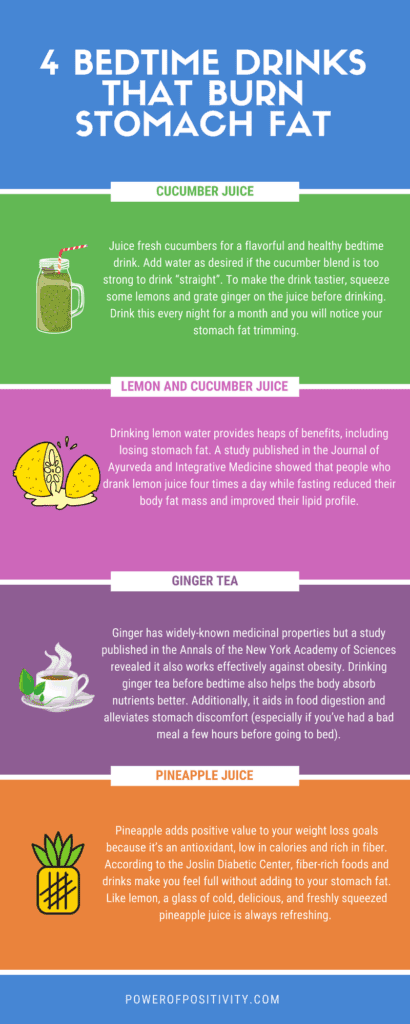
Bedtime drinks that burn stomach fat

Share this Image On Your Site

(C)Power of Positivity, LLC. All rights reserved
Sources:
http://greenhealthyworld.info/5-types-of-tummies-and-the-ways-in-which-you-can-get-rid-of-each-of-them/
http://tiphero.com/5-belly-types/
https://www.livestrong.com/article/118864-different-types-belly-fat/
https://en.wikipedia.org/wiki/Diastasis_recti

Researchers Explain 5 Ways To Reduce Stress And Anxiety

Everyone can experience stress and anxiety every now and then. Some people experience it more often than others. When anxiety and stress start to make our days harder, it’s important to have healthy and appropriate coping mechanisms to deal with the feelings that well up.

“We live in times of high stress. Messages that are simple, messages that are inspiring, messages that are life-affirming, are a welcome break from our real lives.” – Simon Sinek

Knowing how to quickly de-stress will make going about your day-to-day life easier, especially if stress and anxiety is a recurring problem in your life. Sometimes, you don’t have a lot of time to dedicate to yoga or exercise. For those on the go, trying to de-stress can sometimes be even more stressful! Luckily, experts have come together to point out the best ways to deal with stress and reduce anxiety.

Here Are 5 Important And Effective Ways To Reduce Stress And Anxiety

1. Practice deep breathing exercises

This is a classic method that helps reduce anxiety within minutes. According to Robert Cooper, Ph.D., “Breathing from your diaphragm oxygenates your blood, which helps you relax almost instantly.” Perfecting controlled breathing exercises lower blood pressure and allow our bodies to feel calm and relaxed, which can immediately help us de-stress.

The best way to do this is with an exercise known as “Equal Breathing”. When the feeling of anxiety starts to get too much, try inhaling for a count of 4, then exhaling for a count of 4. Do so through your nose, and it’ll help control your breathing and reduce the feelings of anxiety. Continue doing this exercise until you can reach a count of 6 or 8, both inhale and exhale.

2. Just lie down on the floor

While this probably isn’t the best technique for when you’re out and about, this is a good one for when the anxiety and stress trikes while you’re at home. Laying down on the floor allows the body to stretch out and feel grounded. During this time, you can also perform a mental “body scan”, by focusing on each part of your body individually, starting with your feet and working upwards towards your head. Focusing on self-awareness can help reduce the amount of stress and anxiety that you’re feeling and help you focus on overcoming the overwhelming feelings.

3. Focus on an object to help calm your breathing

Quite similar to breathing exercises, focusing on staring at a single object can help calm your breathing, lower your blood pressure and reduce the amount of anxiety and stress that you’re feeling. It doesn’t have to be anything special!

According to Scott McGreal, MSc., “When experiencing day-to-day stress I find it helpful to focus my attention on my immediate surroundings. For example, I may focus on the particular colors and shapes of objects in my environment. Doing this can help shift attention away from “hot” thoughts to “cool” (emotionally neutral) thoughts, to induce a calmer mental state.”

Any old object will do, as long as you’re able to look at it without scanning your eyes up and down. Focusing on the object can help you meditate and calm down your mind and body. You can also pair object focus with equal breathing to really get your body relaxed.

4. Take a break and listen to some music

According to Art Markman, Ph.D., “Music is a great tool for stress relief. Pop in your headphones and listen to something that will transport you somewhere else.  And if you can, learn to play a musical instrument and use that as part of your own personal therapy program.”

Listening to music can boost your mood and give you a hit of dopamine. It also works as a great distraction from whatever the current environmental or emotional stressor may be. Listening to music that you enjoy can break your concentration from the stressful situation and allow you time to relax and decompress. You can also pair listening to music with any of the other techniques on the list to get a double hit of relaxation!

stay calm

5. Smile even when you don’t feel like smiling

Forcing yourself to smile has been proven to reduce the amount of stress that you’re feeling more quickly than if you don’t smile. Not only does smiling automatically release serotonin, it can immediately help with calming you down, reducing your anxiety, and assisting in a de-stressing exercise. It’s also easy, and you can do it anywhere and at any time! No need to set aside a time of day to smile; you can do it whenever you feel the need arise.

Anxiety can sometimes get the better of us, but there’s no reason to let it rule your life. When you find yourself dealing with anxiety and stress, remind yourself of these techniques. Most of them can be done anywhere for a few minutes at a time, so that you can destress and keep moving forward whenever you need to. These techniques will help shift your mood, focus your attention onto your body, and allow you to become more self-aware than you were before. Beating the anxiety can be tough, but it’s easier once you have the tools in your back pocket, ready to use!

References
37 Stress Management Tips From the Experts https://www.scribd.com/document/147374044/37-Stress-Management-Tips-From-the-Experts
17 Psychology Experts Share Their Best Stress Relief Tips https://www.psychologytoday.com/blog/in-practice/201301/17-psychology-experts-share-their-best-stress-relief-tips

7 Reasons to Try Dry Brushing

The skin is indeed a large organ, covering about 20 square feet of the average person. Our skin is the body’s largest organ, and one that performs vital (often unknown) functions. For example, the skin is among the most nerve-dense parts of the body; constantly interacting with the brain and making adjustments to protect you best.

The skin also contains numerous cells and glands that perform a number of jobs: controlling body temperature, protecting against microbial bacteria and foreign agents, and allows for sensations of touch, cold, and heat. Our epidermis also wards off infection and produces vitamin D when exposed to the sun.

Dry-brushing is a skin-care technique that has been around for centuries and is one of the premier methods of maintaining skin health. It is also a remarkably simple practice. Using a large brush, one gently scrubs their body upwards from the feet to the armpits.

Here are some more specific directions:

– Use a brush that is soft to firm (depending on skin sensitivity).

– Brush upwards, starting at the feet, to the chest, and ending at the arms.

– Use circular, smooth, long strokes.

– Areas of cellulite can be focused on, which may help in reducing its presence.

– Areas covered should include all surfaces of skin on the body; the bottoms of your feet, the whole back, and arms up to the face.

– Many people choose to dry brush just prior to showering (more on this a bit later).

– You may choose to dry brush your face, but do so gently (this is not a common practice).

An abundance of skin brushing video or image resources can be found via a quick Google search.

Now that we’ve covered the basics of skin brushing, we’ll turn our attention to the myriad benefits of the practice.

Here are 7 amazing benefits of skin brushing:

1. Exfoliates dead skin

Of course, dry brushing will naturally remove dead skin cells – a process known as exfoliation. As we age, natural exfoliation is a bit less efficient; and dry brushing can help mitigate this somewhat. Exfoliating at least once or twice a week helps produce healthier and more attractive skin.

To avoid tearing the skin, apply a level of pressure that is comfortable. Also, do not exfoliate too much as this can dehydrate the skin.

2. Reduces stress

Dry brushing can feel like a light massage – a wonderful thing to start your day right. Relatedly, dry brushing is effective at relieving anxiety, stress, and tension. According to a study published in the Medical Journal of the Islamic Republic of Iran, a whole body massage “was effective in reducing anxiety and stabilizing vital signs of patients with acute coronary disorders.”

Not to mention, dry brushing is also a way cheaper option.

3. Unblocks pores

Our skin contains a number of tiny openings or pores. As with any opening, elements of the environment can penetrate, clogging the skin’s pores. Unattended to, the accumulation of toxins, pollutants, and dead skin cells requires the body to exert extra effort to get rid of them. Dry brushing helps solve this problem.

4. Can help with cellulite

Cellulite is not only unsightly; it is unhealthy and very hard to get rid of. Cellulite appears “predominantly…on the legs, butt, stomach, and back of arms.”

Increased body fat, fluid retention, and weak circulation all contribute to cellulite’s appearance. Dry brushing can help eliminate underlying toxins while stimulating skin cells, which may make it an effective natural treatment for cellulite.

5. Improved blood circulation and energy

Anecdotal evidence suggests that dry brushing can provide a great energy boost, which makes sense given that the practice improves the circulatory system. Other benefits of dry brushing, such as detoxification of skin cells and unclogging of pores, may contribute to a replenished feeling.

6. Assists the lymphatic system

Put simply, if your skin is clogged with toxins and other “junk,” it makes the body’s job of eliminating waste more challenging. The lymphatic system – responsible for extracting toxins and other waste – is negatively impacted by inflammation buildup in the body.

On the other hand, when the skin is healthy, it directly aids the lymphatic system by naturally removing toxins without requiring the body to overcompensate.

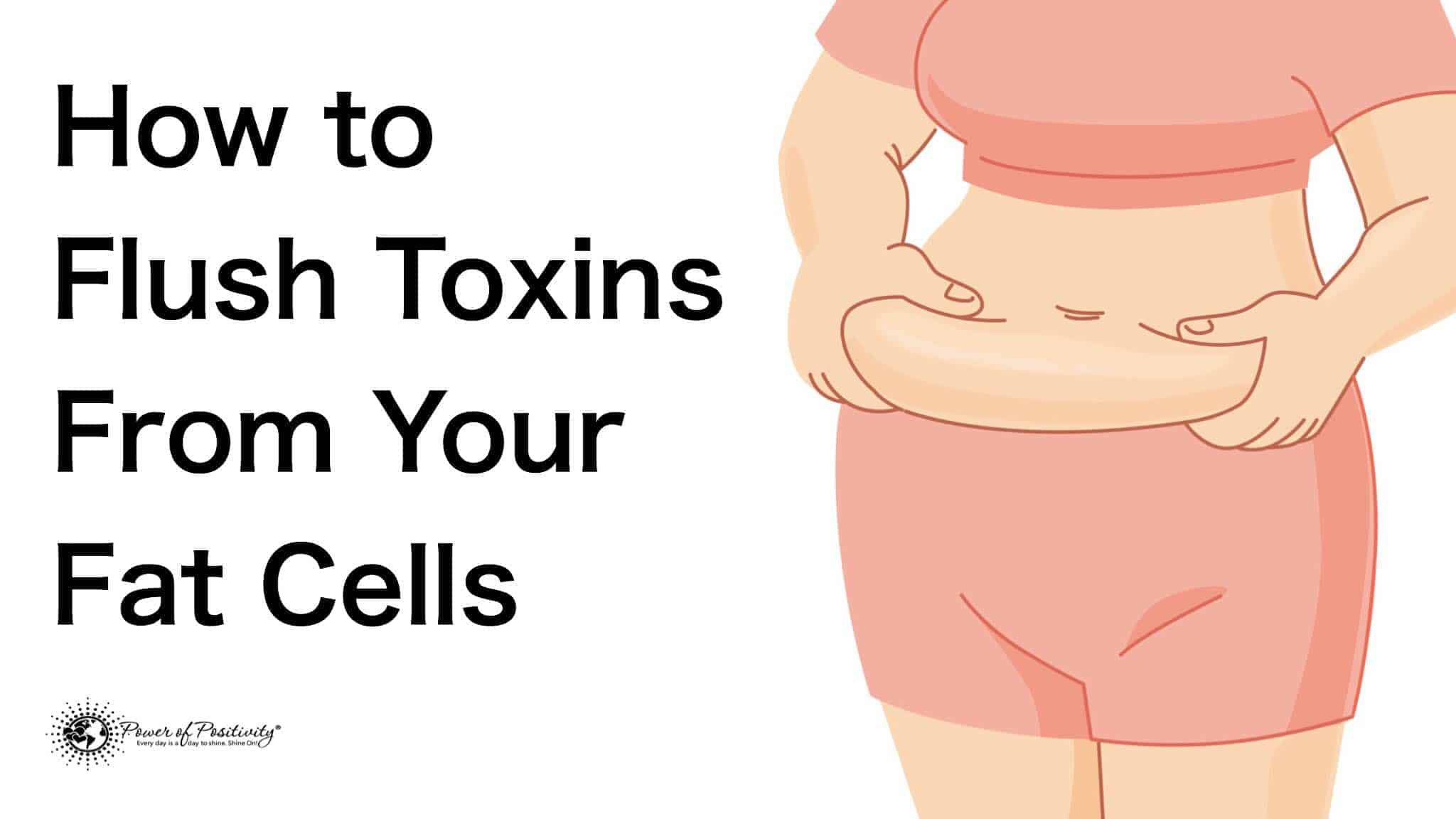
flush toxins fat cells

7. It’s a cheap, easy way to take care of your skin!

As we all know, taking proper care of our skin is an essential component of health and well-being. Some people spend hundreds even thousands of dollars to get “spa-like” products and services.

The above recommendations may just save you some hard-earned money!

It turns out that dry brushing is both a cheap and powerful alternative to detoxify, exfoliate and stimulate the skin. Give it a try!

7 Miracles To Remember If You Have Lost Faith

Miracles are events that occur beyond the realm of our own natural and scientific laws. Miracles have been witnessed throughout history and are often credited to ‘divine intervention’, magic, faith, or a religious deity.

Even Stephen Hawking, a vocal atheist, unabashedly admits that life, as it exists, is a highly improbable occurrence. Regardless of one’s religious or spiritual affiliation, it is undeniable that events defying explanation have occurred and continue to occur. But highly improbable events often give rise to faith in something greater than ourselves.

On that note, we all lose faith occasionally, whether we place our faith in God, the Universe, destiny, humanity, or the greater good. Sometimes, we need something to reignite this flame. Enter miracles.

Here are seven miracles to remember the next time you’ve lost faith:

miracles

1. The Human Brain

That’s right. Perhaps the greatest miracle in the history of the world resides within your skull. The brain is the most unknown and multifaceted part of the human body, helping us to think, reason, remember, learn, and love.

Consider this: a piece of brain tissue the size of a grain of salt contains 100,000 tiny electrical cells called neurons. These neurons are connected by over 1 million specialized connections called synapses. It is estimated that the brain consists of about 86 to 100 billion neurons that process upwards of 50,000 thoughts per day.

2. The Precision of Our Universe

Stephen Hawking was right when he said that our existence is a highly improbable occurrence. Scientists are baffled by the precision of the Universe and how it seems to be designed to allow life to exist.

For example, if the force of gravity is altered by as tiny as 1 part of 10 to the 100th power – an astonishingly large number – life could not exist.

Hawking estimates that the Universe would not have formed by decreasing the Universe’s expansion rate by one part in a hundred-thousand-million-million-million one second after the Big Bang.

3. Consciousness and Faith

Human consciousness has perplexed scientists since the dawn of neuroscience. Some brain scientists attribute consciousness to a tiny area of the brain’s prefrontal cortex unique to humans, an area that doesn’t develop until an infant is five months old.

So, either an infant doesn’t perceive external stimuli (which they apparently do) until after five months of birth, or consciousness resides – at least in part – from somewhere outside the human brain. Fascinating.

4. Superhumans

When Forbes writes an article attesting to the reality of superhumans, we’re either on a different planet, or such people truly exist.

If Sifu Shi Yang Ming isn’t a superhuman, then no one is. Ming is a Chan Buddhist monk with Shaolin warrior lineage. Among some of Ming’s feats:

  • Pressing a razor-sharp arrow into his neck until the staff holding it breaks. – Registering a punch equivalent to the damage of a 30 MPH car accident.
    Having a staff broken over his back – and leaving no visible marks.

The Sifu attributes these and other feats to his Buddha nature and his chi.

5. Near-Death Experiences

Stories abound of doctors declaring people clinically dead (“brain dead”) only to awaken and give a 100 percent accurate account of what happened after they were “dead.”

Others have profoundly spiritual and religious experiences; some undergo a complete identity transformation following their close encounter with death.

Dr. Eben Alexander, a Harvard-trained neurosurgeon, was driven into a coma by a rare form of bacterial meningitis that claimed the lives of 99.9999 percent of those who contracted it. An ardent atheist and hardened skeptic, Dr. Alexander’s life transformed following his NDE.

“Dr. Eben Alexander’s near-death experience is the most astounding I have heard in more than four decades of studying this phenomenon,” says Raymond Moody, M.D., Ph.D., who has studied NDEs for over four decades.

6. Evolution

Contrary to popular belief, the founder of the first evolutionary theory is not Charles Darwin, but Jean-Baptiste Lamarck, who proposed his theory on the transmutation of species in the early 19th century. Darwin, however, was the first theorist to note the heritability of physical and behavioral traits – a cornerstone of the theory of evolution.

Whether one attributes evolution to a creator or some random event, the process of evolution is a miracle in itself. While evolution takes thousands or hundreds of thousands of years for complex organisms (e.g., humans), laboratory scientists can witness the evolution of bacteria and organisms like fruit flies within a matter of weeks or months.

Many believe evolution began approximately 3.5 billion years ago and involved single-celled microorganisms.

how to keep having faith

7. Spiritual Encounters Reveal Faith

There will always be a heavy dose of skepticism towards those who claim to have had a spiritual experience. But for those who have, it leaves an impression that will remain with them throughout their days.

Following is a short story about one man’s experience.

Shortly after his oldest sister, Elisha’s death in October 1993, the encounters started occurring. This devastated his whole family, especially his Mom; so much so that she nearly had a complete nervous breakdown.

Baby sister Tressa was born just a month before Elisha’s death. When she was about three years of age, she took each of them aside and explained her spiritual experience. She had seen, talked to, and played with Elisha – they colored together, Tressa said.

She had seen Ellie – and described their beloved sister down to her hair color and laugh (she always snorted, bless her heart.)

There is no possible way Tressa should have known these things. First, the family removed any remembrances of Elisha – pictures, diaries, etc. – from their home following Mom’s near-breakdown. Second, she was far too young to consolidate any memories.

But there she was, telling each one of them – one by one – the impossible.

Since that day,  he wholeheartedly believes in miracles. Indeed, he believes miracles are not a byproduct of the impossible – but rather our limited understanding of what is.

Skip to content