Weekly tips, affirmations, and small actions to feel your best.

12 Anxiety Relief Techniques That Really Work

If you are currently working a job, raising a family, or over the age of 20, chances are that you have experienced some level of stress at one point in your life. Feeling anxious about things can be crippling and cause severe health problems when left untreated. Stress is a common thing that will hit us all at one point or another and can develop into anxiety if we do not take the time to deal with the situation Luckily, there are several anxiety relief techniques without spending thousands on a vacation to the beach or taking a whole day to relax at a spa.

Finding little ways to reduce your stress and anxiety throughout the day will make you happier and will leave you feeling more in control of your life.

Here are 12 helpful anxiety relief techniques that work

undiagnosed anxiety

1. Spend Quality Time With Your Pet

The saying “A dog is a man’s best friend” is something that people have been saying for years, and for good reason. Having a pet in your life can help you reduce your anxiety because when you spend time with your animal, your brain will release a chemical called oxytocin that leaves you feeling happy. If you are single and living alone, a pet will provide company and allow you to have someone to come home to each and every day.

2. Turn On Some Tunes

If you are feeling anxious, you might want to steer clear of heavy metal or loud rap music, because they can get your heart racing and add to the stress you are already experiencing. Instead, consider turning on some soothing jazz or other calm instrumental music to help calm your heart rate, blood pressure, and hormone levels. If you are not able to find music, simply step outside and listen to the sounds of nature and allow the sounds to soothe your soul.

3. Snuggle With Your Spouse

Physical touch can help release oxytocin as well as lower your blood pressure, heart rate and leave you feeling relaxed. Intimacy is a great way to feel relief from anxiety, but the cuddling that comes afterward is where you will find comfort, security, and peace. It is interesting to note that animals, such as chimpanzees, will cuddle when a fellow chimp is feeling stressed out, so it should come as no surprise that humans need this closeness as well.

4. Go To A Yoga Class

Yoga is a great way to relax your mind and body by helping you become aware of your breathing and your body. Some studies have been done and report that taking a yoga class can have the same effect on the body as taking an anti-anxiety or anti-depression medication does. If you are about to have to add a medication to your daily routine, try taking a yoga class first and see if it helps your hormones, anxiety, heart rate, and overall mood.
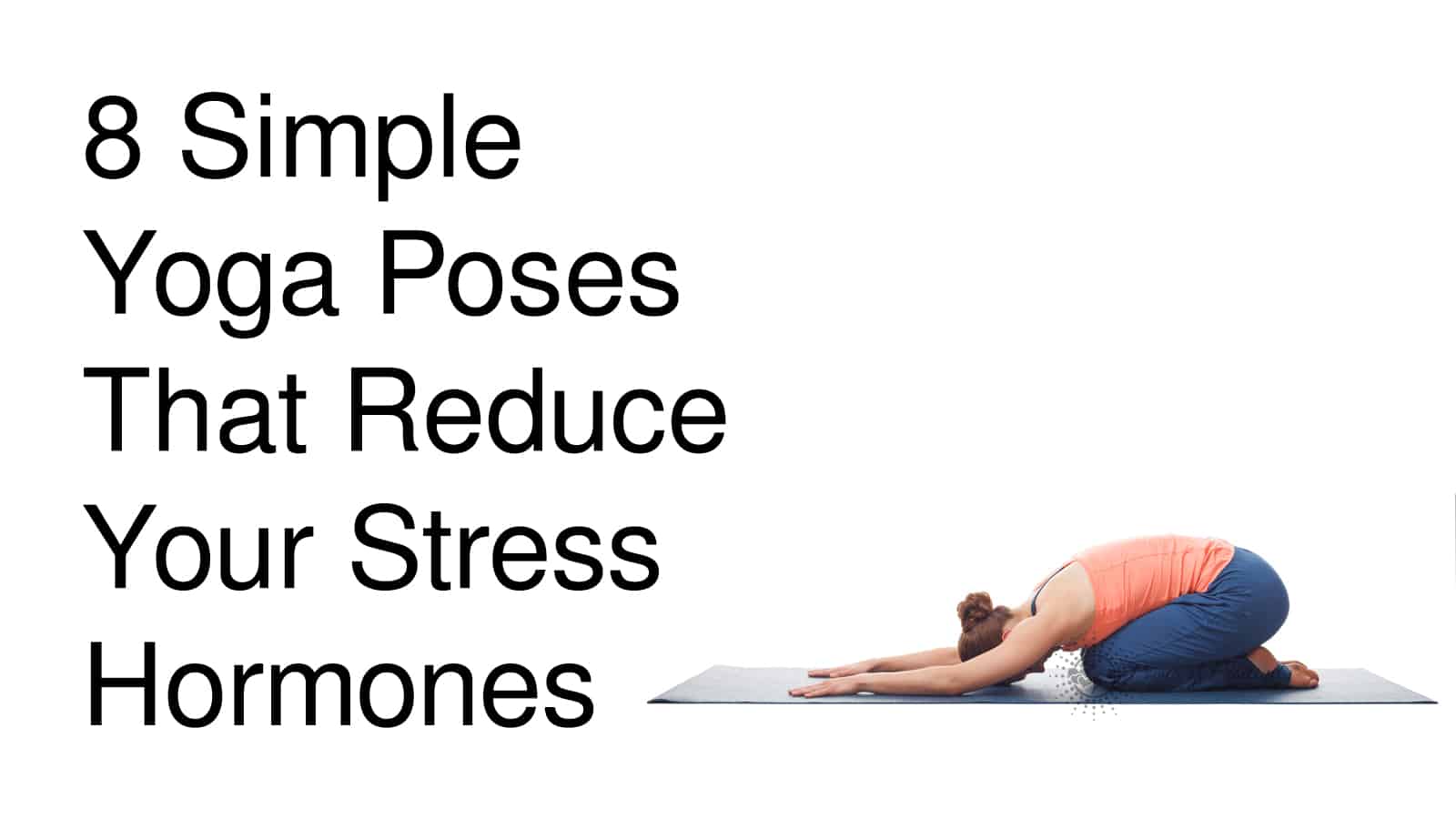
Anxiety Relief Techniques

5. Be In Control Of Your Life

Anxiety is often times an unavoidable circumstance many people have to learn how to navigate through life with. There are a few situations, however, where we can cause anxiety to occur by simply not saying “no” when we need to. We are often trying to be everything to everyone, and we forget to take time to care for our own well-being. Be in control of your life, cut back where you need to, and don’t be afraid to tell people when it becomes too much for you to handle.

6. Laughter Is The Best Medicine

Anxiety is not present when you are filled with laughter. When you are laughing, oxygen can better travel to your lungs and other organs which will, in turn, help relieve anxiety. If you live alone, you can still find ways to laugh by watching funny videos on YouTube, indulging in a great TV show, or spending time with your closest friends. The more you laugh, the less room there will be in your life for stress and anxiety.

7. Be With Those You Love

Surrounding yourself with loved ones will help provide you with a support system and a group of people who can help you through the tough times. Everyone can benefit from having friendships in their lives because nobody wants to be alone.

8. Chewing A Piece Of Gum

If you are in a bind and your stress and anxiety are taking over completely, stick a piece of gum in your mouth and allow the magic to happen. As you chew gum, your brain has a similar effect as when you are in your most relaxed state and you will relieve anxiety. When you chew gum, the blood flow to your brain is increased and you are able to feel more relaxed. Keep a pack of gum on you at all times and don’t be afraid to use this little secret weapon to help you through those hard times.

9. Cut Back On Caffeine

When you drink a lot of caffeine, your heart rate is increased. The less you consume on a daily basis, the better off your anxiety (and overall health) will be.

anxiety relief techniques

10. Burn A Candle

Having a candle burning will help with anxiety relief by a method called aromatherapy. Use a calming scent and enjoy the beauty of the flame as your anxiety slowly disappears.

11. Keep A Journal

Some people find the greatest anxiety relief when they take the time to write down what it is that is stressing them out. In your journal, you can also list all of the positive things in your life and you will feel better in no time!
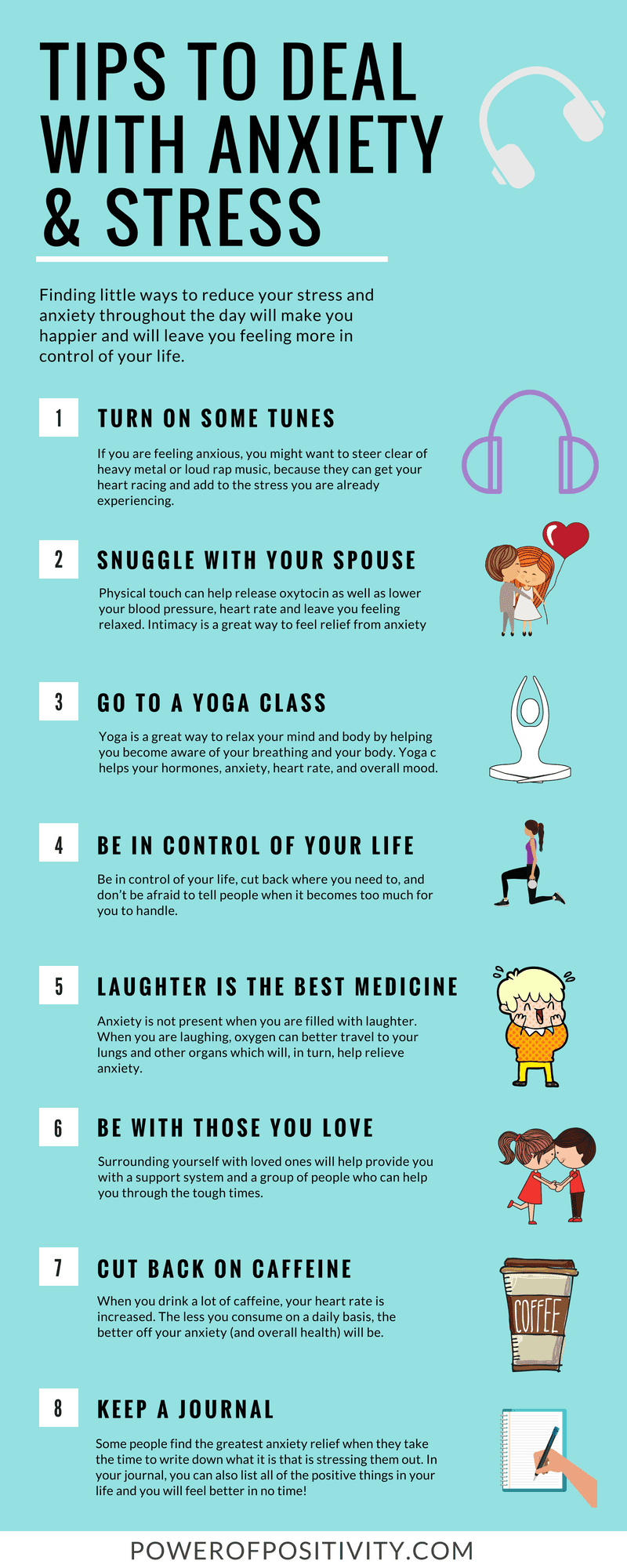
 

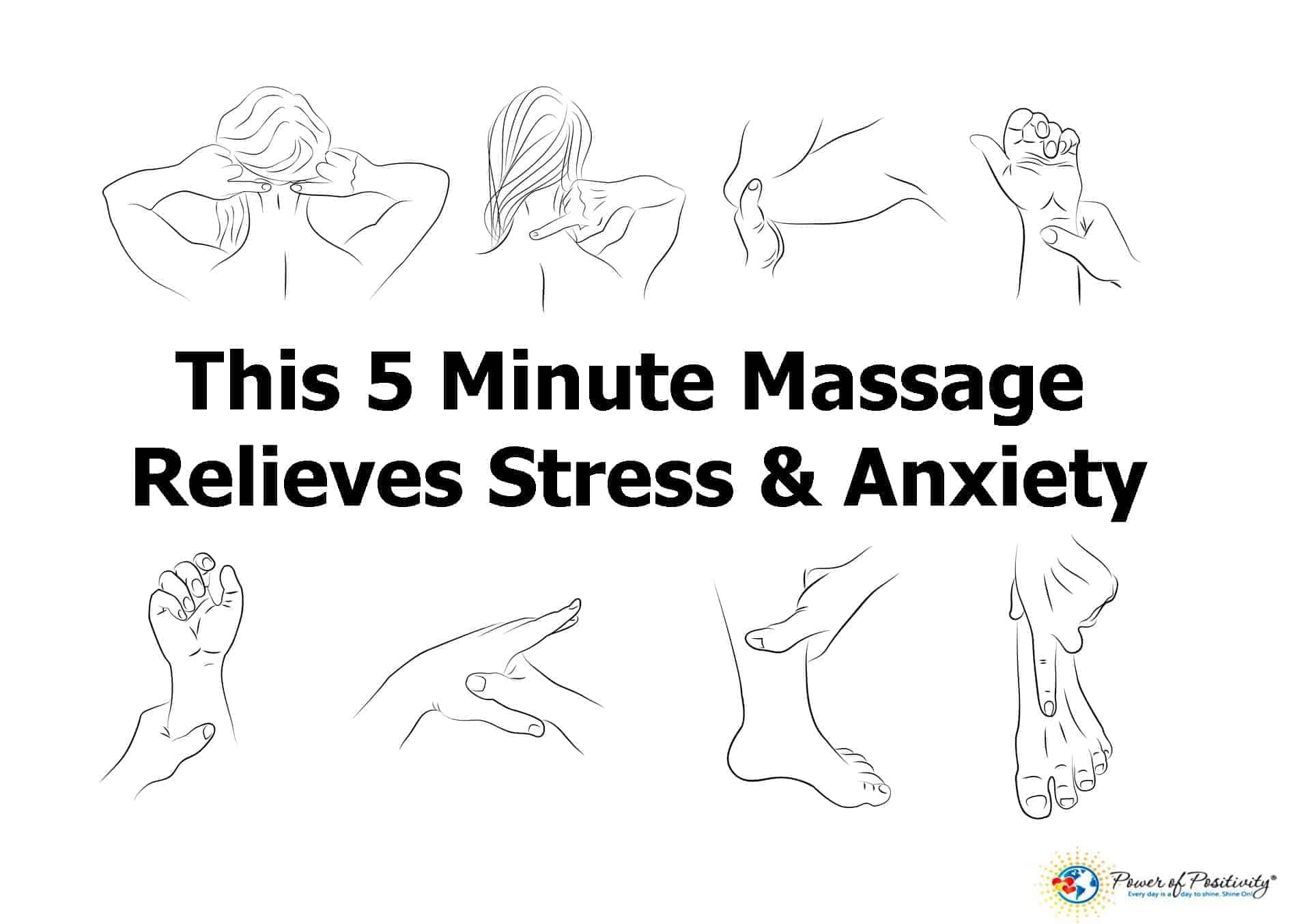
Tips to deal with anxiety & stress infographic

12. Exercise

Another one of the strongly suggested anxiety relief techniques is getting to the gym and staying active. This will keep the endorphins high and your anxiety low.

Anxiety relief techniques done at home can sometimes be a challenging process, but with a few tips and suggestions, you can be feeling better in no time. The best thing to do is always try to get an adequate amount of sleep, surround yourself with happy people, and keep your mind occupied with positive thoughts.

If you do feel like these anxiety relief techniques are not cutting it and you still feel anxious, be sure to seek advice from a medical professional as soon as possible. They can help you get the proper medication and suggest more ideas for you to help conquer your anxiety.


8 Ways To Stop Anxiety From Making You Panic

An anxiety attack can be terrifying. It’s never easy to feel a surge of overwhelming fear, or feel you’re on the verge of passing out from distress. But some 40 million adults in America are believed to struggle with some form of anxiety disorder; you have to wonder how they manage an oncoming panic attack.

So, here’s some good news – there are strategies you can apply to prevent anxiety from making you panic. Because you can feel a panic attack coming on several minutes before it completely hits, you can do something about it and control these attacks.

Here Are Some Techniques to Help Keep Anxiety from Causing A Panic Attack

“Practically everybody knows what it’s like to feel anxious, worried, nervous, afraid, uptight, or panicky. Often, anxiety is just a nuisance, but sometimes it can cripple you and prevent you from doing what you really want with your life. But I have some great news for you: you can change the way you feel.” – David D. Burns

1. Deep breathing will help calm your nerves.

Sit comfortably in a quiet area and close your eyes. Feel the sensation as you inhale and exhale naturally through your nose. Concentrate on your breathing and don’t think about anything else.  Block all thoughts from your mind and focus solely on your body’s rhythm.

Then slowly take deep breaths. Hold those breaths for a few seconds before you carefully exhale. Repeat the process as many times as you need and you’ll feel your mind settling down. If you must, make this a morning daily habit, as it benefits your health and well-being. Deep breathing controls your blood pressure, improves your metabolism, and sharpens your memory.

2. Assess your thoughts and limit your fixation on the worst-case scenarios.

Often, unrealistic fears and worries will trigger a panic attack. The thoughts you create in your head are simply based on what you feel, and feelings aren’t objective, right? So, let’s say you’re too nervous about a presentation and you start thinking about what will go wrong. Why not reframe your thoughts to think positively? You can actually train your brain to optimism, according to experts.

Positive thinking is not about denying that things can go wrong. There will always be stressors around you and that’s a fact. But if you approach your difficulties with positive thoughts first, you can be more proactive and productive about dealing with your anxieties.

3. Recognize that panic attacks are temporary.

Know that this crushing and debilitating feeling won’t last long. If you acknowledge this fact, it might help calm you down. In some ways, becoming more aware of your tight chest, pounding heart, and cold sweats can make the panic attack manageable.

Sometimes you just have to give in. Then, before you know it, you’re free from the discomforts. Ever notice that some things get worse when you fight it? That could also apply to a panic attack. It’s not going to be the end of you if you just ride it out.

4. Learn how to relax your muscles, aside from deep breathing.

Experts call this technique progressive muscle relaxation, which has been done for illnesses and pain since the 1920s. Begin by breathing deeply. Then move on to clenching your toes, flexing your feet, and pressing your heels to the floor for 10 seconds at a time. Do the same clenching and flexing technique for every muscle group in your body, such as your legs, hands, shoulders, abdomen, neck, and face. You’ll find it easier to practice this relaxation exercise every time you do it, and it will grow more natural to relax your muscles and your mind.

5. Eliminate some foods in your diet.

Caffeine, sugar, and processed food can cause panic attacks because these contain components that over stimulate the central nervous system. Try to develop a better diet richer in fruits and leafy greens. Experts from Harvard also suggest eating more foods rich in Vitamin B, magnesium, and zinc to help lessen anxiety. Some of these include spinach, legumes, whole grains, cashews, oysters, egg yolk, asparagus, avocado, and almonds.

6. Keep a journal.

If you have a record of your thoughts, you can more easily do a self-assessment. You’ll learn more about what makes you anxious and stressed and then have the power to challenge your reality. Write down your feelings, problems, and frustrations. Reread your journal after a few days or weeks to make an assessment.

You’ll probably notice that you weren’t objective at the time you wrote down your negative feelings. But with a clearer head – or perhaps once the anxiety-causing episode is over – you’ll have a different perspective. Journaling is a good exercise for mental health because you’ll realize any negative thoughts you wrote can also be uncreated by focusing on more positive thoughts or journaling the happy times as well as the challenging moments.

7. Confide in friends or family.

best friend

Don’t you feel great when you unload your anxieties and worries to a confidante? This is because talking eases those negative thoughts in your head and helps you sort out what you’re really feeling. Sometimes, hearing yourself discuss your worries to a friend also makes it less scary.

Keeping things to yourself can be overwhelming. If you let someone in, this other person might be able to offer you a solution. At the very least, they can help you see the situation with a different insight. Sometimes, however, people with anxiety don’t want to open up for fear of being judged, so pick a trusted person with whom you can discuss your fears.

8. Learn more about anxiety and panic attacks.

They say that knowledge is power, so why not read up on this condition and the symptoms? If you understand what’s really going on in your mind and body when you’re having panic attacks, you won’t be too afraid to deal with it.

Final thoughts

These strategies to stop anxiety from making you panic aren’t going to have results right away. But if you apply them in your life constantly, you’ll experience those attacks less frequently until the episodes disappear altogether gone.

deal with anxiety infographic

Share this Image On Your Site

References:
https://adaa.org/about-adaa/press-room/facts-statistics
https://www.forbes.com/sites/daviddisalvo/2017/11/29/how-breathing-calms-your-brain-and-other-science-based-benefits-of-controlled-breathing/#a02b71d22219
https://www.nbcnews.com/better/health/how-train-your-brain-be-more-optimistic-ncna795231
https://www.verywellmind.com/progressive-muscle-relaxation-pmr-2584097
https://www.health.harvard.edu/blog/nutritional-strategies-to-ease-anxiety-201604139441

How To Deal With A Stubborn Partner In A Relationship

We’ve all dealt with stubbornness at some point in our lives, but we haven’t all dealt with stubborn partners. You’ll have to take some steps to overcome stubbornness if you have a mate or a spouse who refuses to communicate, refuses to compromise or refuses to give up a bad habit or practice. These are some tips for dealing with an obstinate partner in a relationship.

1. First Order of Business: Breathe

The first thing you need to do is make sure that you don’t let this situation stress you out. Take about 10 deep breaths before you approach the lingering problem of that has been plaguing your relationship. It may take a while for you two to find common ground. Getting angry is not going to help, so you’ll want to avoid that by destressing beforehand.

2. Explain Yourself

A lot of stubbornness issues arise because one of the parties doesn’t fully understand the other party’s stance. If you can find a good way to explain your stance in terms that your partner will understand, you may have an easier time with things.

3. Try to Understand His or Her Side

Empathy is a wonderful quality to have, and it can help you to overcome stubbornness in a relationship. It’s the ability to understand how the other person feels in a situation, but you have to listen to that person speak to understand. Sit down with your mate to talk about the issue. Allow him or her to tell you why he or she holds that stance. Try to understand why your mate feels that way and then allow yourself to find an appropriate resolution for the challenging parts.

4. Attempt to Compromise

Many issues will rectify themselves if both stubborn parties compromise. No matter what the issue is, you can both talk to each other and then try to come up with a compromise that fits for everyone. For example, you can alternate holidays if you can’t decide on whose parents’ house you take them to on the next vacation.

5. Time Out From Arguments

Take a time out if you feel like your blood pressures are elevating. Getting angry and fighting is never going to solve anything. It’s just going to compound the original issue. It doesn’t matter which one of you initiates the time-out period, but one of you has to be the rational person and suggest it. Separate yourself for at least 15 minutes. That’s plenty of time to cool off. You can try to start your process again once you’re both “cool” again.

stubbornness

6. Discuss It Debate Style

You can use a diplomatic approach to the matter as a remedy for the stubbornness. The two of you can go back and forth like two politicians and discuss why each of you has the best solution to the problem. That may end the stalemate and actually bring forth some meaningful conversation about the subject. If you can find a way to communicate, you can also find a way to work out your differences and stop being stubborn. Try it. Give each other two minutes at a time to talk with no interruptions. You may be surprised by the outcome of things.

7. Express Your Love

When you are going through a period of stubbornness, it’s important to express your love toward one another. Let your mate know that no matter how this problem ends up, you will still love him or her and keep being with that person. That should be easy for you to do unless the main subject is dealbreaker material. In that case, you can express your love without necessarily promising to stay. Either way, you have to let the other person know that you value the input and respect it.

8. Approach It at the Right Time

Finally, you have to make sure that you pick the right time to approach this matter. You don’t want to go ahead and try to discuss a tough issue when your mate is busy doing work or preoccupied with taking care of the kids or engulfed in schoolwork. Pick a time when you are both well-fed, relaxed and ready to let some new ideas float around in your heads. Go to a quiet place that has no distractions and talk about the issue. You’ll find a happy medium somewhere in there. You just have to be patient.

The list of stubbornness combat methods is not an exhaustive list of suggestions. Many more techniques are available. You’ll think of some of them yourself, and you’ll discover more along the way. Just keep working on your methods, and you’ll get your partner where you want him or her to be eventually.

7 Things That Help If It’s Hard For You to Focus

Has it been hard for you to focus lately? Well, you’re not alone. The problem is apparently common, as there are indeed too many distractions all around. Research shows that a person’s ability to stay focused and pay attention has dwindled with today’s constant digital interruptions. But the good news is that, like a muscle, you can build up your brain’s ability to focus so that it gets stronger and sharper.

So, where do you start working up your mental focus? Here are some tips to guide you if it’s hard for you to focus.

Here Are 7 Things That Help If It’s Hard for You to Focus

“The biggest challenge is to stay focused. It’s to have the discipline when there are so many competing things.” – Alexa Hirschfeld

1. Figure out when your mind is sharpest.

Work around the schedule when your mind’s performance is at its peak. For instance, let’s say you notice that you do tasks faster and more accurately during the late mornings. Maybe your peak focus time is around 10 a.m., but then you feel tired by 2:00 p.m. Your brain is telling you when it is most awake. So, why not work on your most focus-intensive tasks of the day when your brain is at its optimal condition? Then when you lull time strikes, take a break from work and return to do the simpler tasks, or have a final do-over and wrap things up by preparing for the next day.

2. Make sure that your brain is well rested before working.

It could be hard for you to focus if you have internal distractions, such as anxiety, agitation and stress. To deal with these matters, get a good sleep the night before. When you wake up, channel positive thoughts into your mind. Some people do meditation or yoga to draw on positive energy. Experts suggest that doing short breathing exercises and counting as you breathe can boost and refocus your attention span. Others take a 20-minute walk in the morning to clear their heads. You’ll even find people who start their day off by looking at photos and videos of silly pets on the Internet because it helps them with positive thinking. It is advised to kratom buy canada if you need to enhance your mood or improve your focus.

3. Eliminate the distractions.

Though this might be a given, it still needs to be emphasized, especially if you can’t simply turn off the distractions. Gadgets can be put away and the radio or TV can be unplugged, but what if you have kids playing in the room while you work from home? What if you have a co-worker who keeps coming by your desk to talk? A good way to handle these distractions is by setting some structure and limits. Do your work in a place where you know you can’t be disturbed, such as a quiet room in your house with the doors closed. Gently tell the people around you – your co-workers for instance – that you need time alone for a few hours. If you work from home and have young children, tackle your challenging tasks while they are napping or watching a video.

4. Cut down on the multitasking.

Juggling different tasks at the same time might be counterproductive, according to a study. The thing is, your mind can only properly focus on one task at a time. Multitasking forces your brain to keep switching attention. This requires mental energy that can easily deplete your concentration. If it’s hard for you to focus, here’s what you should do instead of multitasking: come up with a list of things you need to do for the day. Do one item on the list at a time and give it your full attention before moving on to the next task.

tasking

5. Divide larger tasks into smaller jobs.

If you’re in the middle of a big project, split the tasks into smaller goals that are easier to approach, tackle, and complete. Often, big tasks can be overwhelming, creating the tendency to put them off. This only causes delays and decreased productivity. So, look at your to-do list and see which ones you’ve been procrastinating. Figure out how to break them down into simpler but more specific tasks. If you’re working with a team, figure out which tasks to delegate as well.

6. Have a cup of coffee or take a tea break.

Countless of studies have attested the brain-boosting powers of caffeine, as it keeps you alert and awake. However, it’s also important to take note that some caffeinated drinks might have high sugar content that’s bad for your health, so drink just the minimum amount while you work. Taking breaks in between work, by the way, can help replenish your focus and energy. If you’re not up for a caffeine fix, use the time to do stretches or walk around the block. If you work near a park, go out and enjoy the greenery. Studies also say that if it’s hard for you to focus, exposure to trees and natural surroundings can boost productivity.

7. Train your brain.

Now, here’s where having those gadgets can be of great benefit to your focus and attention span. You can download digital gaming apps to give your brain a workout. Sciences say that those who do brain-training games have improved memory, better processing speed, and sharper executive functions. Some of these recommended games include “Lumosity: Colorful and Fun,” “Elevate,” “Peak,” “FitBrains,” and “CognitFit.” These apps have a free feature, but you can pay extra for an upgrade. Use the gaming app when you’re on a break, or have free time, or when you’re on the subway going to work.

Final thoughts

Learning to focus is crucial to critical thinking, which affects how you develop plans and strategies, as well as execute and complete your goals successfully. Remember though, that building your mental muscles takes time, but if you keep working on these tips, you will soon find yourself able to accomplish more at work.

https://www.youtube.com/watch?v=-Ty8g6C2tBY

References:
http://time.com/3858309/attention-spans-goldfish/
https://www.spring.org.uk/2016/04/how-distracted-people-increase-focus.php
https://www.huffingtonpost.com/2011/08/13/multitasking-is-bad-for-you_n_925958.html
https://ehp.niehs.nih.gov/EHP694/
https://www.medicalnewstoday.com/articles/316684.php

8 Things That Relieve Depression Naturally (Without Medicine)

Many people are affected by depression. Depression isn’t just temporary sadness. It affects every area of one’s life. The relationships, job, and physical health are affected. If not careful, depression can be so bad that it even feels like a chore to get out of bed or worse.

Some people suffering from this don’t require a psychiatrist for medicine to treat their symptoms. These people only have to make some adjustments to overcome their symptoms. And even those who need a prescription to treat their symptoms need to make some adjustments to get the best results in overcoming them.

Eight Ways to Relieve Depression Without Medication

The following list includes eight powerful tips to help deal with depression:

1. Go outside to get some sunshine

Getting some exposure to natural sunlight goes a long way to stay healthy. Sun exposure assists in regulating the person’s internal clock and getting a good night’s sleep.

2. Exercise

It’s always imperative to consult your physician first before starting an exercise regime. Secondly, walking is always a great exercise. It’s inexpensive and low impact. You should walk at least 30 minutes a day and at least three times per week.

3. Get sufficient amounts of Omega 3 fatty acid

This supplement assists in the neuron connectivity of the body. Also, it comes from fatty fish, such as certain types of eggs and salmon.

4. Obtain enough sleep

Making changes to the environment and routine will assist in getting more sleep. Other key factors include the following: Avoid drinking alcohol, avoid drinking caffeine drinks in the late afternoon or later, go to bed every night at the same time, eliminate noise and clutter in the bedroom and surrounding areas, and perform pre-bed relaxing activities, such as reading or a warm bath.

5. Have fun

keeping in contact with friends and making new friendships. Regularly go places to mingle and have fun together. No deep conversation is needed, just enjoying other people is sufficient to remove feelings of isolation.

6. Adjust your physiology

Scientific evidence shows that physiology affects one’s mood. The depressed person may act out in certain ways, such as making the shoulders slump forward, breathing shallowly, having a soft and monotone pitch in talking, having little movement, not being very animated, and looking down a lot.

The passionate and more upbeat person will act the opposite of the depressed person. He/she will stand up or sit straight with the shoulders back, take deep breaths, smile more often throughout the day, have variety in pitch, and more. Thus, changing one’s physiology into the acts of someone more passionate and energetic will help one deal with depression.

7. Continual tracking of one’s thoughts

Doing self-evaluation of one’s thoughts when he/she feels like crying, laying in the bed all/most of the day, and having no motivation will assist the person to adjust his/her own thought process. Observing whether or not thoughts about the past or future, instead of the present is key. Also taking note of the things going on in the surroundings and being grateful goes a long way in overcoming depression.

depression

In observing the thought process, ask whether or not assumptions and judgments are being made. Assumptions make a huge mess for people. Thinking that a person doing something means he/she doesn’t care isn’t necessarily the case many times. It could be a terrible thing to assume this when in actuality no one but the person knows what is going through his/her head. People process situations differently as they filter all their sensory input through their beliefs, past experiences, and perceptions. So, thinking an act of person shows he/she doesn’t care could harm relationships with someone who truly does care.

When it comes to making judgments, it’s best to accept something without the attachment of a story. It’s dangerous to assign “shouldn’ts” and “should’s” to people and events in one’s life. In standing in one small spot in time and space, a different perspective can develop than the present perception from a different standpoint throughout the years. So, it’s vital to just observe, and don’t judge.

8. Do something different

A breeding ground for loneliness and depression is maintaining a stale routine with no adventure. Thus, pushing oneself beyond the comfort zone for a little adventure will eliminate depressed symptoms. Just going to a nearby park or store is a wonderful first step in changing the old, worn-out routine. Other small, but effective steps just to get out of the ordinary include joining an online forum on a self-interested topic along with reaching out to someone in the forum, going to the library, and more.

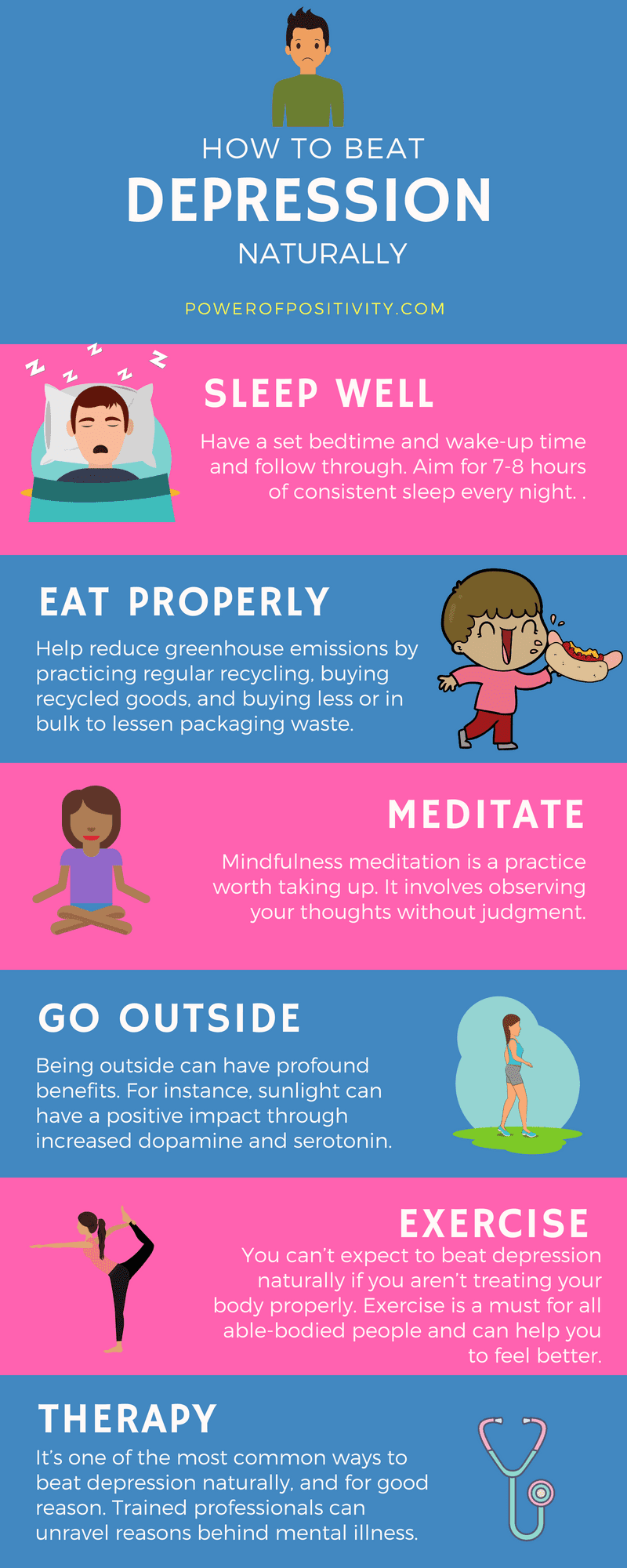
How to beat depression infographic

Final Thoughts on Dealing With Depression

Suffering from depression can wreak havoc in one’s life. This is the case even if medicine is needed or not. This is also especially true when life throws some hard and unexpected blows.

All-in-all, it’s imperative to take the bull by the horns and proactively apply the steps above to overcome these symptoms. In doing so, life and the quality thereof will get back on track and improved tremendously.

Dieticians Explain The Weight Loss Benefits of White Tea Leaves

Tea has been touted for its many health benefits for centuries, including weight loss. Although its existence is certainly not new, awareness has begun to increase regarding the heightened benefits of white tea leaves. Ongoing studies suggest this tea may be the superior choice for day-to-day use.

Most nutritionists will agree: the less processing, the greater nutritional benefits of most any food. Of all the pure tea products currently offered on the market, white tea is the least processed, thus retaining more of its nutrients. It also contains less caffeine. The result? A better balance of nutrition and sustained energy.

Where Does White Tea Come From?

Healthy tea, either green or white, are both harvested from the same plant. White tea leaves are harvested at an earlier stage of growth, then steamed and dried quickly, enabling greater retention of nutritive qualities. The tea is named for the coating of fine silver fibers found on the young leaves and buds. This tea is harvested primarily in China along with a few other Asian countries.

Benefits of White Tea Leaves

All tea leaves contain several naturally-occurring nutrients believed to boost metabolism and aid in meeting weight loss goals. Dietitians and nutritionists agree that white tea leaves can be beneficial for whole body health as well as weight goals.

Catechins:

Among the different tea varieties, white tea leaves contain a high concentration of catechins, flavonoids believed to help improve memory function, especially if ingested consistently over time. Catechins are also believed to help fight heart disease. The longer you steep your tea, the more healthful catechins are released. For maximum benefit, dietitians suggests drinking three cups per day.

Catechins also help increase metabolism and provide anti-depressive qualities. When consumed daily, tea can help prevent cognitive dysfunction. This tea’s smooth, almost sweet taste makes it palatable without added sugar or milk, meaning fewer empty calories. Also, it provides more energy to keep you active longer and your body fighting the production of new fat cells.

Amino Acids and Caffeine:

Included in white tea benefits is the presence of the amino acid L-Theanine, which relaxes without adverse drowsiness. L-Theanine, combined with the lower amount of caffeine in white tea leaves, helps to reduce mental fatigue and increase general alertness and attention.

While green tea also contains these same components, white tea benefits from the early harvest and quick processing time by having a better balance between energy and stress relief. Taken together, these ingredients can help make your body a fat-fighting machine while regulating blood pressure and even assisting in the prevention of cancer.

Antioxidants:

Antioxidants boost the immune system. They also battle the effects of aging. A proper balance of these strong nutrients is known to boost cardiovascular health and increase energy levels. White tea leaves are an excellent source of these key health requirements.

The antioxidants in tea may also help to reduce bad cholesterol and even help fight against harmful bacteria in your mouth, reducing tooth decay which affects your general health. So you can both look better and feel better able to face each day with confidence and renewed vigor.

Assists With Weight Loss:

When added to a healthy diet and exercise, tea helps to restrict fat formation and absorption. If you drink it daily, it stimulates metabolism and helps to curb hunger pangs. The antioxidant EGCG found in tea is attributed with many of these weight loss benefits.

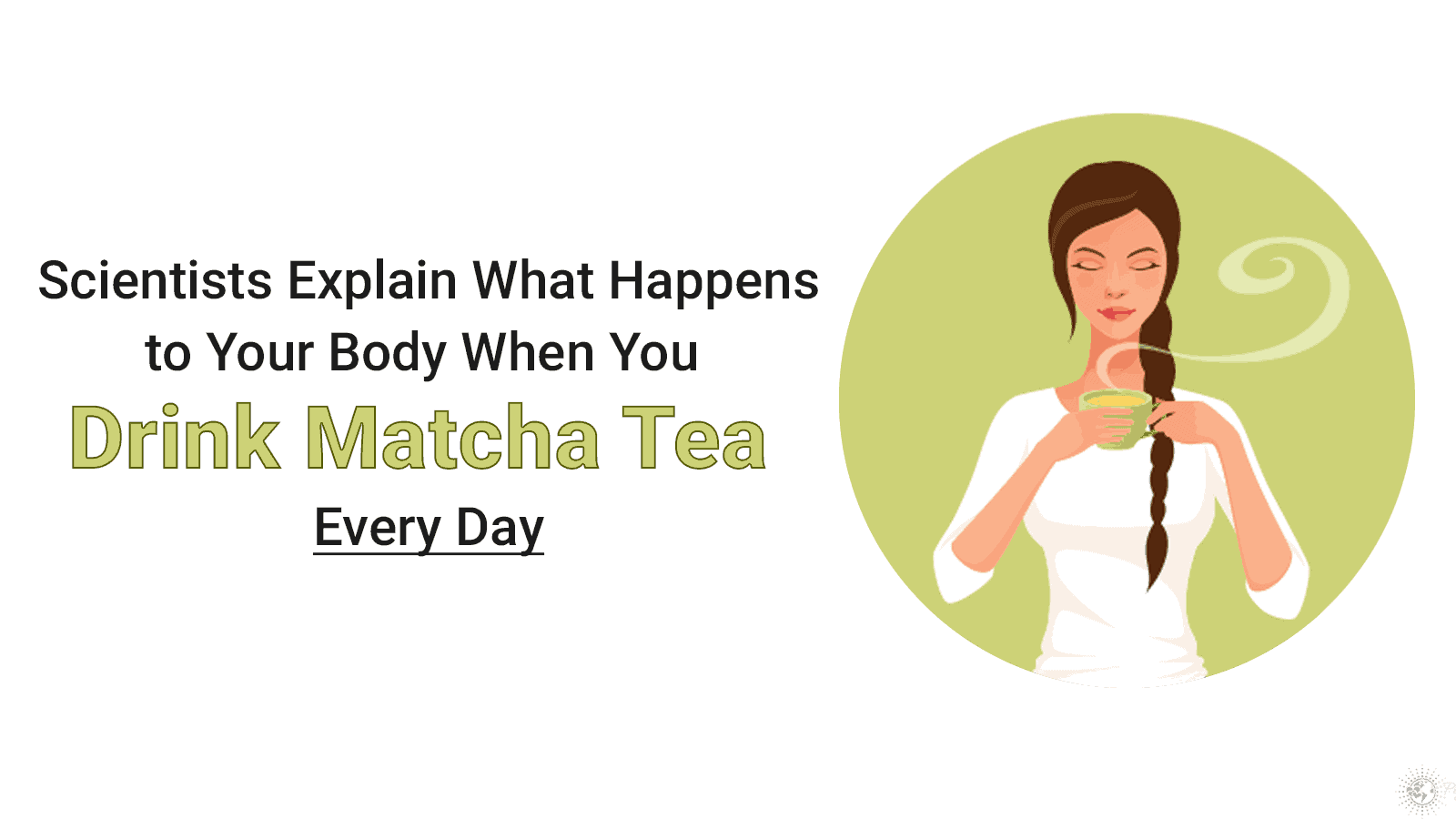
Of course, tea alone cannot meet your weight loss goals. But with an increase in metabolism and alertness, you will be more motivated to include those fat-burning workouts into your busy schedule. With fewer hunger pangs, it will be easier to resist tempting sweets and snacks.matcha tea

Final Thoughts

Adding tea to your daily routine can certainly benefit you in many ways, both now and into the future. Combined with a positive outlook and creative, nutritional meals, you can be on the road to your own mental and physical well-being. Many easy steps will move you ever closer to your weight-loss goal. You can take one step just by drinking white tea on a daily basis.

You may also find it beneficial to write out your long-term goals, outlining small steps that will add up to big success. Near the top of the list, place be a relaxing cup of tea with your meals or as a high-metabolic start to your day.

Since tea contains caffeine, it is not recommended you drink it too close to bedtime. However, the benefits will continue to act by reducing the production of new fat cells while burning off those unwanted fat deposits. Taking such simple steps will keep you checking off goals and creating your own weight-loss success story.

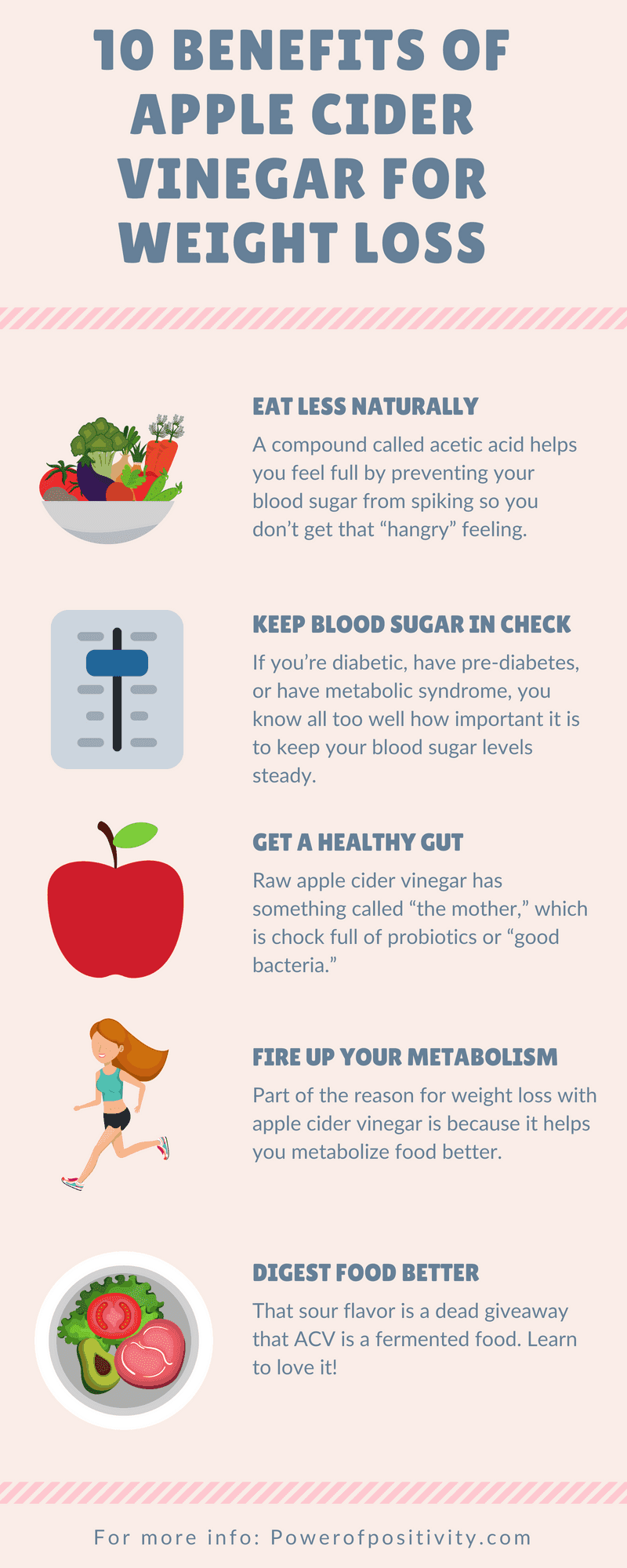
apple cider vinegar weight loss

Share this Image On Your Site

References:
https://www.huffingtonpost.com/toffler-niemuth/tea-brain-health_b_7851072.html
https://www.healthline.com/nutrition/white-tea-benefits
https://en.wikipedia.org/wiki/White_tea
http://www.stylecraze.com/articles/effective-benefits-of-white-tea-for-weight-loss/#gref
https://www.bodyandsoul.com.au/nutrition/nutrition-tips/white-tea-vs-green-tea/news-story/a27f847726b55a0756375fa4eebeac47
(C)Power of Positivity, LLC. All rights reserved

Strong Women Quotes That Will Change your Life

Harper’s Bazaar opened up 2017 with a fragrant list of strong women quotes, for strong women. Now, snowballing into mid-2018, strong feminine influence is flooding the globe, raining movements and igniting fierceness.

“The question isn’t who is going to let me; it’s who is going to stop me.” – Ayn Ran — Objectivism philosopher, scientist, and playwright.

From the #metoo movement to the Women’s March and beyond, the divine feminine has awakened, and progression is a compassionate momentum of female empowerment and equality.

Best Strong Women Quotes

strong women

Words of Resilience

Past and present, strong women are loud and usually come in large groups. They enforce the empowered woman’s manifestation into future leadership positions, nurturing change.

Combining their voices makes this storyline of strong women quotes worthy of comment.

Historical Strength

  • “What you do makes a difference, and you have to decide what kind of difference you want to make.” – Jane Goodall
  • “Learn from the mistakes of others. You can’t live long enough to make them all yourself.” – Eleanor Roosevelt
  • “In politics, if you want anything said, ask a man; if you want anything done, ask a woman.” — Margaret Thatcher
  • “I know God will not give me anything I can’t handle. I just wish that He didn’t trust me so much.” — Mother Teresa
  • “When a man gives his opinion, he’s a man. When a woman gives her opinion, she’s a bitch.” — Bette Davis
  • “It was we, the people; not we, the white male citizens; nor yet we, the male citizens; but we, the whole people, who formed the Union…. Men, their rights and nothing more; women, their rights and nothing less.” – Susan B. Anthony
  • “To the wrongs that need resistance, to the right that needs assistance, to the future in the distance, give yourself.” — Carrie Chapman Catt, 1919’s president of the National Woman Suffrage Association who helped uphold the 19th amendment giving women the right to vote. — which was, less than 100 years ago?

Gaining Momentum

  • “In order to be irreplaceable one must always be different.” – Coco Chanel “Prejudice is a burden that confuses the past, threatens the future and renders the present inaccessible.” — Maya Angelou, civil rights activist and poet.
  • “I’d rather regret the things I’ve done than regret the things I haven’t done.” – Lucille Ball
  • “Turn your wounds into wisdom.” — Oprah Winfrey
  • “The greater your capacity to love, the greater your capacity to feel the pain.” – Jennifer Aniston
  • “You can’t please everyone, and you can’t make everyone like you.” – Katie Couric “… women ARE complicated. Women are multifaceted. Not because women are crazy. But because people are crazy, and women happen to be people.” –Tavi Gevinson
  • “When there are no ceilings, the sky’s the limit. So let’s keep going — let’s keep going until every one of the 161 million women and girls across America has the opportunity she deserves to have.” —Hillary Clinton

In the Moment

  • “Always speak your mind, and be bold, and be obnoxious and do whatever you want and don’t let anyone tell you to stop it.” – Chelsea Handler, activist and comedian.
  • “We need to do a better job of putting ourselves higher on our own ‘to do’ list.” — Michelle Obama
  • “Doubt is a killer. You just have to know who you are and what you stand for.” – Jennifer Lopez
  • “Women will be hidden no more. We will not remain hidden figures. We have names…It was Woman that gave you Dr. Martin Luther King, Jr. It was Woman that gave you Malcolm X. And according to the Bible, it was a woman that gave you Jesus. Don’t you ever forget it.” —Janelle Monáe
  • “Giving up doesn’t always mean you’re weak. Sometimes you’re just strong enough to let go.” –Taylor Swift
  • We won’t ask men to change the world, we’re going to do it ourselves. We’re going to stand up for ourselves, we’re going to raise our voices and we’re going to change the world,” — Malala Yousafzai, youngest Nobel Peace Prize recipient and world human rights activist

Living Inertia

When you have a 20-year-old woman leading The World Economic Forum, schooling prominent world leaders on basic human rights, this is proof that progress is a verb.

All women are a living representation of the law of inertia — “… an object in motion stays in motion…”.

Moreover, women also show to be an exception to this rule, repeatedly proving that when acted upon by an unbalanced force(8), they will use it to their advantage.

“Power is not given to you; you have to take it.” – Beyoncé Knowles

7 Home Remedies That Relieve Lower Back Pain Naturally

Lower Back: The Arch You Lean on
Lower back pain is an unfortunate reality for most people at some point in their lives. The lower back, also known as lumbar spine, is the arched column that supports the torso and upper body. It endures the greatest amount of stress from motion, rotation, bending, twisting and all the weight-lifting you do in a day. Lower back pain is the most frequently reported disability that causes absence from work, according to the National Institute of Neurological Disorders and Stroke.

The lumbar spine has a complex network of muscles and ligaments that support it. The process of aging, as well as wear and tear from daily activities frequently causes muscle strain which triggers pain. Sedentary occupationswhich involve sitting all day can be equally damaging to the spine. Spinal discs perform the role of shock absorbers in the spine. They can rupture from excessive pressure or improper use causing them to bulge, commonly known as herniated discs.

7 Ways to Help Your Lower Back Pain Naturally

1) Improve your posture: Poor posture negatively impacts the arch of your backbone. Slouching, while seated or standing, is one of the most easily corrected, yet often the most neglected, posture problem. By reminding yourself not to slouch until it leads to consistently good posture, you will do your spine a favor.

2) Gentle exercises: Yoga is great for stretching and toning those tense muscles and ligaments, or get into the ritual of exercises recommended by physical therapists and medical experts to accomplish the same goals. Staying active and incorporating a form of light aerobic exercise, as much as the level of pain will allow, releases endorphins, a chemical produced in the brain which is the body’s own natural pain and stress fighter.

3) Heat/Cold Therapy: When pain is acute, use heating pads or ice packs to reduce inflammation where it hurts and provides lower back pain relief.

4) Massage: Many therapeutic massage therapists offer targeted therapy for lower back pain relief and they can be quite effective when combined with other treatments. Massage helps in two ways: it eases the taut, painful muscles and calms the mind, thereby alleviating anxiety. Pain causes anxiety, and anxiety can worsen pain, as many studieshave increasingly suggested.

lower back pain

5) Maintain a healthy weight: With all the weight bearing the lumbar spine has to do, it helps enormously to eat healthy and stay trim to the extent possible.

6) Regular sleep: Never underestimate the value of a good night’s sleep. Rest and good sleep promote healing, but it can be challenging to find a painless sleep position when you have lower back pain. Using a support pillow under your knees if you’re a back sleeper, or placing one between your knees if you sleep on your side can help decrease pain. Over-the-counter painkillers, if your doctor permits, reduce pain when it is severe and enable you to sleep.

7) Soak in the bathtub: Relaxing and invigorating, a good soak in warm water will loosen the muscles. Add a few drops of your favorite essential oil to the water and the scent will relax your mind and body through aromatherapy.

Sometimes, medical or surgical intervention becomes necessary for lower back pain treatment. A good chiropractor performs spinal manipulations that help restore the normal alignment of the vertebral column. Severe pain going down the legs, and/or numbness and tingling in the feet could be an indication of a pinched sciatic nerve that a spine physician or a neurosurgeon can diagnose and treat.

True of almost everything, how you nurture and care for your spinal health throughout your life will determine the state of it when you are older. The healthier and fitter you are in your overall health, exercise regularly, listen to your body, practice relaxation in some form, the more successful your lower back pain treatment will be. Chronic lower back pain can often be prevented, or at least reduced, and can be managed at home using techniques that are quite simple once you get into the habit of paying attention to the very first symptoms of lower back pain.

https://www.youtube.com/watch?v=cHeI3Y_CfMo

8 Easy Ways To Get Rid Of Acne Naturally

Acne. Pimples. Zits. No matter what you call them, the feelings that you experience when you have an outbreak are the same. Discomfort. Embarrassment. Frustration. But you’re not alone. Nearly 85% of people get acne at some point in their lives, usually their teen years, though it doesn’t always end there. As such, there seems to be a never-ending quest to find out how to get rid of acne.  Some even run to their doctor to get prescriptions for treatments like benzoyl peroxide, according to Dr. Josh Axe. Fortunately, many natural remedies exist that often work just as well.

If you want to learn how to get rid of acne the natural way, here’s a look at eight remedies that many turn to get rid of acne for good.

1. Change Your Diet

Fighting acne starts with changing your body’s internal environment. Oftentimes, the foods that we eat trigger acne for a variety of reasons. You can’t get rid of acne without addressing the nutritional aspect of it.

For one thing, many of the foods we eat, like processed foods and sugar, cause inflammation in the body. Many types of acne come from the body being in an inflamed state, according to the Journal of Clinical and Aesthetic Dermatology. Sticking to a more plant-based diet will reduce inflammation in the body.

The other reason is that some of the foods we eat inherently have extra hormones in them. For example, cow’s milk has a number of hormones in it because it naturally has the growth hormones baby cows need to grow. Those hormones can cause hormonal imbalances in the human system, leading to acne, according to Mind/ Body/ Green. As these two statistics demonstrate, it’s nearly impossible to learn how to get rid of acne, without acknowledging the food side of the issue.

2. Apple Cider Vinegar

In order to rid yourself of your acne, you need to address the pH levels in your skin. Dr. Axe recommends using apple cider vinegar as your toner. It has a variety of helpful things in it, including enzymes, magnesium, and potassium. This combination kills the bacteria and fungi on the skin that can cause acne breakouts. Just dab a cotton ball soaked in apple cider vinegar on the affected areas.

3. Tea Tree Oil

Tea tree oil contains some important properties that fight two of the types of bacteria that can cause acne, S. epidermidis and P. acnes. This natural remedy comes from the Outback, that is to say, Australia. Five percent tea tree oil applied to acne has been shown to be as effective at treating acne as the same amount of benzoyl peroxide.

To make an anti-acne potion, combine one part tea tree oil, with nine parts water. Apply to a cotton ball and dab on your zits. You can do this a couple of times a day.

4. Honey and Oatmeal

Don’t be fooled by honey’s sweetness. It has numerous antibiotic properties that fight conditions like acne. To make an acne-fighting paste for your skin, Reader’s Digest suggests making a mixture consisting of 1/2 cup of the sweet stuff, combined with 1 cup of plain oatmeal. Apply it for half an hour.

It’s also important to note that honey can get rid of acne scars, so if you’re particularly plagued with acne scars, definitely try honey.

5. Honey and Cinnamon Mask

This facial mask brings another potent acne-fighting ingredient into the mix, cinnamon. Honey and cinnamon together have some very strong antioxidants and antibacterials, as well as being anti-inflammatory. To make this mask, combine 1/2 teaspoon of cinnamon, with coconut oil and raw honey.

how to get rid of acne

Apply to the face for about 10 minutes. Wipe the mixture off with a damp washcloth, taking care to be gentle in the process. You don’t want to damage the skin further. Be aware as well that cinnamon can irritate the eyes, so be sure to keep this mask away from the eye area.

6. Green Tea Wash

Green tea’s antimicrobial and antioxidant compounds do more than keep your insides healthy. They help you get rid of acne. To make the most of this remedy, steep your green tea as usual and allow to cool. Once it is, use it as a face wash.

7. Aloe Vera

Don’t let aloe vera’s gentle healing properties fool you. Aloe can not only help you get rid of acne, it can get rid of acne scars, too. It’s so healing, you definitely don’t want to overlook it as a remedy as you learn how to get rid of acne. Just apply some of the plant’s gel directly on your face, either at the pimple site or as an overall moisturizer. And side note, aloe is also an excellent way to get rid of acne scars.

8. Take a Probiotic

Here’s the final recommendation in your quest to learn how to get rid of acne, and it’s from Dr. Axe again. Taking a probiotic supplement helps you to fight acne naturally by keeping your immune system and your digestion healthy. It also improves the skin from the inside out.

Final Thoughts on How to Get Rid of Acne

In this post, you’ve learned much about how to get rid of acne naturally. Natural remedies like tea tree oil have been proven to be just as effective as some prescription medications like benzoyl peroxide. Others, like honey and aloe, not only fight acne but do away with of acne scars as well. One thing is for certain, all the remedies on this list are effective natural treatments for your acne.

Learning how to get rid of acne naturally is a process, one that requires you to learn a bit about nutrition, as well as skin health. But when you do, you’ll see that fighting and beating acne is well within your grasp.

Skip to content