Weekly tips, affirmations, and small actions to feel your best.

8 Differences Between Destructive Rage and Healthy Anger

Many folks use the words anger and rage interchangeably, but that is a mistake. While there are some similarities, there are several distinct differences between these two emotional occurrences. It’s commonplace to think that when anger is intensified, it becomes rage, but this is not the case. Understanding the differences between healthy anger and destructive rage is key to gaining emotional intelligence.

The reality is that these two events describe specific phenomena within a person’s emotional field, and anger and rage are vastly different. Both reactions show an outward display, but what occurs on the inside is what differentiates one from the other.

Think of rage as a giant iceberg floating in the water. All you see is the top of the ice or the exposed parts. What you don’t see is the massive structure underneath the water that’s holding everything in place.

With rage, there’s underlying issues that are at the core of these intense feelings. While you may not see genetic links, personality disorders, or substance abuse, these may be some of the driving factors to the outbursts.

Eight Key Differences Between Rage and Healthy Anger

It doesn’t take a trained eye to notate the differences between anger and rage, as rage always comes with violent and destructive behaviors. Controlled and healthy anger can resolve situations or challenge someone to make changes in life. But it still comes with some issues. Here are some ways that anger and rage differentiate.
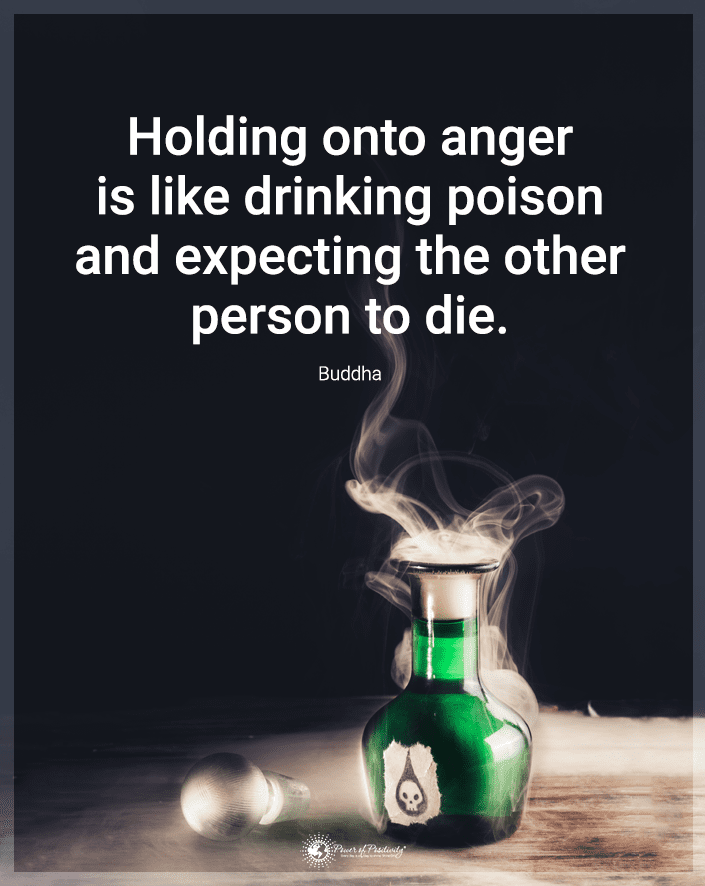
healthy anger

1. Rage Causes People to Disassociate

When you have an episode of destructive rage, you disassociate from reality. Many folks say they lose touch with reality for a moment, though this is not an excuse for violent behavior. Healthy anger will not make a person disassociate and have a temporary lapse of judgment, as they remain in control.

2. Rage Episodes Often Causes Amnesia

Consider Tommy. He had a rage episode where he busted a hole in the wall. After the incident, he had no memory of what occurred. His wife was visibly shaken by his actions. But he could not understand her reaction.

It’s not the first time Tommy has had such an episode, but he never remembers any of these phenomena. It’s not uncommon for people to have amnesia after these events happen. Since rages are closely linked with dissociative disorder, the mind goes into a separate area during these reactions to protect itself.

According to the Mayo Clinic, DID is the absence of continuity between feelings, recollections, environments, actions, and self. It’s extremely dangerous because a rage fit causes an individual to lose sight of what’s right and wrong.

3. Rage Causes Blinding Sensations

Rage causes blinding sensations, as the emotions and feelings within the body reach explosive rates. Have you ever felt so angry that you went blind?

This is a common phrase used to discuss waves of anger so intensifying that a person sees red or becomes blind. They lose all sense of boundaries and take out their violent feelings on anyone or anything around them.

4. There’s No Emotional Intelligence During Rage

An anger episode is quite different from rage because you don’t lose touch with logic. Healthy anger can be controlled, and you won’t do things that could be harmful to yourself or those around you. Someone in a rage can’t rationalize such things.

During the fits of rage, they don’t have the emotional intelligence to know that if they punch someone, they will likely face assault charges. The person with healthy anger recognizes they will face such charges, so they learn to use restraint.

5. Rage May Come From a Serotonin Disruption

Another way that rage varies from healthy anger is that a chemical imbalance is often the root cause. It’s often the underlying problem in a mental health diagnosis. For instance, people with bipolar and explosive disorders are more prone to rage than those with anxiety or depression.

Intermittent explosive disorder is becoming a more prevalent diagnosis in the mental health community. There are more than 200,00 cases diagnosed each year, according to MSN Health. The violence that comes with rage is really what separates it from anger, as you can have healthy anger where you don’t raise your voice, call names, or break things.

Emotional intelligence allows a person with healthy anger to keep from going off the deep end, but there’s no rationale for rage.

healthy anger

6. Rage Can Cause Seizures

In some instances, rage can be so intense that it can cause a person to have a seizure. Now, you should know that this is rare, but seizures can happen when your emotional stance is over the top and causes complete psychological distress. These are focal emotional seizures, which are pseudo in nature.

Pseudo means that they don’t originate in the brain, as these are seizures that are emotionally based. To help you understand this phenomenon, think of a surge protector you use to plug in many electronics.

The surge protector is overloaded, and you plug one more thing into it, and it blows. The surge turns off because the power load you’re asking it to supply is unfeasible. It can’t handle the intense current being pulled, so it shuts down to protect itself from catching on fire.

The same thing happens when someone has a pseudo-seizure. Since these are behavioral-based occurrences, the person experiencing them isn’t in danger of brain damage like those with epilepsy. Consequently, they still feel and look like an epileptic seizure, but the origins are different.

If you were to hook someone up having a rage seizure on an EEG machine, it would not show any electrical activity like a traditional seizure. Still, it’s a very shocking instance that can happen when the emotions overload a person. The brain is shutting down because it can’t take the stress of the situation. Regardless of the origin of the seizure, it’s still devastating.

7. Rage Lasts Up to 30 Minutes – Healthy Anger is Intermittent

A person can be angry for years over a situation, or they may get mad about something and be over it in five minutes. Conversely, rage is quite different. These attacks can last up to thirty minutes and dissipate as quickly as they come.

According to Cedars-Sinai, these fits can be unpredictable, as they can happen whenever something triggers them. In many instances, the person experiencing the rage does not know what set them off. Something triggers the intense feelings deep inside and causes them to reach an explosive level.

8. Rage is Never Productive – Healthy Anger Brings Resolve

Healthy anger can be productive, as it can help a person get rid of the negative emotions on the inside that are troubling them. Rage doesn’t resolve anything and only causes greater issues for the person. Someone who can’t control their rage has trouble in relationships, holding a job, and even going to the store can be challenging.

The Rage Cycle

Unlike healthy anger, rage is destructive and hurts other people. Since the person experiencing these extreme emotional outbursts is blind to them, it’s not uncommon for their fury to be taken out on a helpless child or someone they love. It is hard to channel rage once it starts.

Think of a pipe freezing and busting during the winter season in your home. Once that water is pouring out, it’s challenging to get it to stop. In a human being, these feelings occur when someone feels that others challenge their power.

These outbursts are often seen in dissociative cases because the person has no judgment, and their emotional intelligence does not engage. Rage can damage any relationship. If you’re with a partner with such explosive episodes, you walk on eggshells around them for fear you will set them off.

Since rage is violent, they will have no problems kicking, punching, pulling hair, or even harming someone in a moment when they lose all their boundaries. The person will usually return and be remorseful later, but the damage is already done. While the rage may decrease, the desire to control lingers.

If the person is unwilling to discuss the events after their fit of blind rage, it’s a tell-tell sign that they don’t want to get help. So the “cycle of violence” continues. When you accept someone’s apology repeatedly after a violent outburst, yet nothing changes, they will keep doing it until one of you bails on the relationship or gets help.

emotional intelligence

Final Thoughts on Building Emotional Intelligence by Discerning Between Destructive Rage and Healthy Anger

The Merriam-Webster Dictionary describes rage as violent fits that result in insanity. Unlike healthy anger, there’s no resolve. Someone who has such a violent outburst often has a chemical imbalance caused by heredity, trauma, or a mental health issue like a narcissistic personality disorder.

Treating rage disorders requires finding the root cause and addressing the underlying issues. The best course of treatment is to use a counselor to help uncover the reasons behind these intense feelings and work on improving emotional intelligence.

10 Ways Journaling Leads to Emotional Release

Try a happiness journal to foster a more joyful outlook.

It’s never too late to discover the joys and benefits of keeping a happiness journal. You can save a record of your daily activities and how you feel about them. Journaling can be fun and offer a genuine picture of your thoughts, ideas, and greatest dreams. Besides that, the emotional release is cathartic.

How Keeping a Journal Supports Emotional Release

Many people use their souls as a sealed warehouse for their hurts and unsettled emotions. If these feelings are left to fester, they can adversely affect your entire well-being. Here are ten ways to experience emotional release and healing using a journal.

1. Identifying Your Feelings for Emotional Release

Remember in grade school when you studied emotions and had to color faces that displayed each emotion? Today, kids would be coloring a few more faces. According to an article published by UCLA, researchers have identified at least 27 human emotions.

Most of the time, you know how you’re feeling. However, sometimes you’re perplexed, and your emotions are whirling. Journaling offers you an emotional release and a way to label your feelings.

For example, you may be angry when writing a journal entry. When you later reflect on your writing, you might realize your emotions were more profound than anger. Anger is often the easiest to show, hiding hurt, fear, and grief.

emotional release

2. Discovering Patterns in Your Life

Various patterns in your life aren’t always apparent at first. Some of these patterns are beneficial, while others may not be in the long run. One of the benefits of journaling is that you can gain more clarity and distinguish patterns and how they affect you.

Let’s say you’re on a weight-loss journey, and journaling is one of your tools. Past entries can reveal your thoughts and actions about losing or gaining a few pounds. Once you’ve identified a pattern, you can modify your behavior and see how it benefits your goals.

3. Reducing Your Stress

Humans would have become extinct millions of years ago if it weren’t for the primal survival response. Your brain perceives any stressor as a threat and immediately goes into survival mode to protect you. The problem is that the brain can’t differentiate between harmless and life-threatening stress.

If your stress levels are high, your body stays in survival mode, which can be detrimental to your health. An article published by the University of Michigan suggests that journaling may reduce stress by providing emotional release of negativity.

Instead of bottling your emotions, writing in your journal can give voice to what you’re feeling. You record all the things that are making you anxious. Reviewing what you wrote can provide clues for possible solutions to a problem.

4. May Boost Your Gratitude

For most people, joy and gratitude go hand-in-hand. The art of being grateful helps you transcend the fickleness of happiness to enjoy absolute pleasure. While it doesn’t mean your life will be without pain and sorrow, it gives you more strength to cope.

Journaling is an ideal way to count your blessings. You may see countless reasons for gratitude when you add to your list and review it daily. You may experience an emotional release to free you from jealousy, envy, and depression.

happiness journal

5. Emotional Release from Journal Writing Increases Your Optimism

To be an optimist, you needn’t believe your life is the perfect bowl of cherries. Positive thinking is based on reality and has nothing to do with delusions. It means you can find a hidden blessing even in your darkest hours.

You’ll see the law of attraction at work when you’re determined to be positive. As you keep a record of your thoughts and feelings in your journal, the silver lining may be more evident. You send positive affirmations into the Universe, it agrees, and you attract more positive energy.

The more positive results your way, the more optimistic you become. Of course, it’s not a magical spell that will make your life perfect. However, you’ll attract more positive energy and have less negativity to battle.

6. Solidifying Your Identity

It almost seems clichéd when people say they don’t know who they are or need to “find” themselves. The truth is that most people long for the answers to the classic existential questions of identity and purpose.

Trauma and other adverse experiences can sometimes leave you wondering who you are. Keeping a journal can remind you of who you were and are now. It’s continuity and flow of thought that can give you emotional release. You remember your dreams and focus on your path for the future.

7. Identifying Your Triggers

Triggers are words, actions, or things that cause you to experience a particular emotion. For example, seeing a tempting plate of cookies in a magazine may trigger your emotional eating habit. On a positive note, seeing a rose might bring back the same infatuation you had on your first date.

Depending on your emotions and reaction, your trigger may be beneficial or harmful. Reflecting on your journal entries may help you identify these triggers and how to minimize them. You can also work on ideas of how to act instead of reacting and cope with your challenges better.

8. Boost Your Confidence

Having faith in your abilities isn’t always a given. Often, you need to be your cheerleader and use past examples. What are some of your most significant accomplishments or significant adversities you’ve overcome? Journaling can be your key to saving all these memories when you need them most.

journaling

9. Encouraging Your Ability to Forgive

When somebody betrays or hurts you, the offense is carved indelibly in your heart and mind. If you continue to meditate on it, you forge chains of bitterness that shackle your soul. The offender still has power as the raw emotions keep repeating in your mind like an endless nightmare.

Forgiveness is the key that will unlock those shackles of anger and resentment. As you write in your journal, it can be an emotional release that leads to healing. You can’t forget the hurt the person caused, but you can choose to forgive and move on.

Even more importantly, writing down your feelings can encourage you to forgive yourself. Maybe there are things in your past that you need to put behind you. Being honest with your emotions might be your first step.

10. The Emotional Release Helps to Develop Your Intuition

Since your emotions and intuition are connected, putting your feelings into words can allow you to hear your inner voice. You may be surprised at how this small voice speaks to your current situation. The more you journal and develop your intuition, the more you learn to trust yourself.

How to Keep a Journal

Isn’t it refreshing that the only rule to keeping a journal is that it’s up to you? Your journal can be a powerful tool to help you record daily events, your thoughts, and dreams and provide emotional release. Try these helpful hints to get you started.

1. Decide Your Writing Medium

People kept loose-leaf paper journals in the past, and evolved into bound notebooks. Your journal can be as simple or elaborate as you want. Some people prefer plain notebooks, while others love fancy inscribed journals.

If you want, you can even journal on your computer. Use colorful pens or pencils and embellish your writing with your artwork if you like. Whichever style resonates with you is the best one to choose.

An essential part of keeping a journal is your privacy. Every entry you make is for your eyes only; you’re not obligated to show it to anyone. However, it’s also your right to choose to share it with someone you love as you see fit.

2. When to Journal

There are also no steadfast rules regarding when and how often you write in your journal. Many people like to record the events of the day and their thoughts in the evening. Everything is fresh on your mind, and you’ll have a more accurate account of posterity.

You can also feel free to write in your journal anytime you feel inspired or overwhelmed. It’s your outlet for emotional release without pressure or outside judgment. Whether you write daily or weekly, the idea is to write as it benefits you.

3. Where to Journal

Your journal is about you; you can write wherever you feel most comfortable. If you’re like most folks, you probably prefer a quiet, secluded place where you can be alone with your thoughts. It can be in your peaceful sanctuary at home or while enjoying the natural inspiration of the outdoors.

emotional release

Final Thoughts about Emotional Release and Keeping a Journal

Reflecting on your innermost thoughts and feelings can be revealing. You’ll discover more about yourself and may see ways to improve your mindset. It won’t be an instant miracle, but writing in your journal can be the emotional release you need.

7 Exercises for Carpal Tunnel Syndrome to Do at Home

Have you ever noticed tingling and numbness in one of your hands? Maybe you experience hand and wrist pain during and after activities. These symptoms relate to carpal tunnel syndrome, which can cause tremendous hand pain.

You’d be amazed when you consider all the daily chores your hands do. Each hand is a complex system of muscles, connective tissue, and bone. They work with your fingers, wrists, and lower arms to complete simple, complicated tasks.

According to an article published by the National Library of Medicine, you have approximately 30 muscles in your hand. Your hands contain about one-fourth of all of your body’s bones. Eight of these bones compose the carpus of your wrist.

Your Wrist’s Many Movements (and the Causes of Wrist Pain)

Not only do you use your hands for work, but they also are essential for your sense of touch. The American Physical Therapy Association publication describes three major peripheral nerve branches responsible for movement and communication in your hand. The ulnar nerve branches toward each pinky finger, and the radial nerve branches toward your thumb.

The median nerve runs right through the center of your hands and wrists. Through a carpal tunnel protective passageway, it converges with blood vessels, ligaments, and tendons. They protect these crucial components as your hands and wrists constantly move.

carpal tunnel syndrome

What is Carpal Tunnel Syndrome?

Your median nerves can be affected when your hands and wrist make repetitive motions for extended periods. The same can happen if you have rheumatoid arthritis or have injured your wrist. Your carpal tunnel can become inflamed, causing median nerve compression and pain.

According to statistics published by the National Library of Medicine, this condition affects at least one to three in every 1,000 Americans. If you’re a woman, you’re ten times more likely than a man to develop carpal tunnel syndrome. According to the article, it can lead to irreversible median nerve damage if not treated.

Signs and Symptoms of Carpal Tunnel Syndrome

Here are some common signs of issues with the carpal tunnel in your wrist.

  • Tingling or numbness in your finger and thumb, but not so much in your pinky.
  • The symptoms may worsen at night, and the hand and wrist pain may interfere with sleep.
  • You notice a gradual weakness in your hand and have less grip strength.
  • Ordinary tasks like carrying or holding objects become challenging and sometimes painful.
  • In more severe cases, your ability to sense hot and cold temperatures in your hand may be affected.

Easy Exercises to Cope With Carpal Tunnel Syndrome and Wrist Pain

You may wear a brace on the affected hand if you’ve been diagnosed with carpal tunnel syndrome. You can also do some easy hand exercises to relieve some symptoms. Here are eight activities you can do at home or work.

1. Wrist Flex

If you’re working and feel hand pain or wrist pain, this simple exercise can help. It stretches the muscles toward the outer top of your forearms. Try to make the movements as smooth as possible. Here’s how:

1. Stand in a relaxed position and stretch your right arm until aligning with your shoulder, palm facing down.

2. Let your elbow relax, and try not to lock it while stretching.

3. Now, bend your wrist gently until your fingers point toward the floor. Hold this position for about five breaths.

4. Place your left hand on the front of your right fingers. Gently and smoothly pull your bent right hand back toward your body. You should feel a slight stretch on the outside of your forearm. Hold this position for ten to fifteen breaths.

5. Release the hold and return your hand to the starting position. This back-and-forth movement equals one set; you want to do five repetitions.

6. Switch to your left arm and repeat the steps for another five repetitions.

2. Wrist Extensions

The gripping motions can cause burning pain when you have carpal tunnel syndrome. This exercise stretches and strengthens the inner muscles of your forearm. Consider doing a few repetitions before you do any lifting or working with your hands. Here’s how:

1. Stand or sit relaxed and extend your left arm straight before your body. It should be level with the height of your left shoulder. Keep your elbow relaxed without locking it.

2. Next, back your left wrist until your fingers point straight toward the ceiling. It’s the same position as if you were signaling someone to stop.

3. Place your right palm on your raised left fingers and gently grip them. Pull your left hand backward toward your body just until you feel a slight stretch. Be careful not to overextend your hand, as it can cause pain or possible injury.

4. Hold this position for at least ten to fifteen breaths. Release your hand and return to the starting position.

5. Repeat these steps at least five times.

6. Switch to your right arm and repeat the steps.

3. Hand Clenching

The tendons running through your carpal tunnel are responsible for several movements, such as clenching your fists. An article published by the National Library of Medicine suggests that exercises like these may ease carpal tunnel syndrome. They are also called tendon glides. Here’s how:

1. First, bend your right elbow up at a 90-degree angle. Stretch your fingers and thumb, and they should be pointing up toward the ceiling.

2. Twist your fingers at the middle joint until they form a hook. Hold this position for three breaths.

3. Bring your bent fingers into the palm of your hand to make a stiff fist. Your thumb should be on top of your clenched fingers. Hold this position for three breaths and slowly return to the starting position.

4. Your goal is five to ten repetitions, then switch to your left hand and repeat the steps for another five to ten repetitions.

4. Wrist Lift

When you strengthen your lower forearms, you may have less hand pain and wrist pain from carpal tunnel syndrome. You’ll need a table or another flat surface for this easy exercise. It’s ideal to do while you’re working at a desk. Here’s how:

1. Put your right hand right on your desk or table.

2. Next, put your left hand across your right knuckles to form a 90-degree angle.

3. As you gently lift the fingers and wrist of your right hand, press down on it with your left hand simultaneously. Be sure to use gentle pressure. You will feel some opposition and stretching in your right upper forearm.

4. Hold this position for five breaths, then relax.

5. Aim for five to ten reps, switch to your left hand, and repeat the steps.

5. Hand Squeezes

You probably have a colorful rubber stress ball at work or home to relieve stress. Did you know this exercise can also help minimize pain from carpal tunnel syndrome? If you don’t have a stress ball at your place, roll a clean sock into a ball. Here’s how:

1. Hold the ball in your right hand.

2. Squeeze the ball tightly for five seconds and then release it.

3. Repeat this step at least ten times.

4. Try to do three sets of ten repetitions.

5. Now, take the ball in your left hand and repeat the steps.

6. Median Nerve Glide

When your median nerve becomes compressed from carpal tunnel syndrome, you may battle constant hand and wrist pain. This easy-glide exercise can help improve the nerve’s mobility, reducing pain. You can do it often during the day when your hands are their busiest. Here’s how:

1. First, draw your right hand into a fist with your thumb outside against your forefinger.

2. Uncurl your right fingers and stretch them out straight while keeping your thumb in the same position against your forefinger.

3. Next, bend your right hand gently toward your forearm and stretch your thumb to the side. Turn your palm to face you.

4. Use your left hand to apply gentle pressure on your right thumb to stretch it more.

5. As you change each position, hold it for three to eight seconds.

6. Release your right hand and repeat the steps for your left hand.

7. Wrist Weight Lifts

For this exercise, you’ll need a light hand weight or a can of food. The goal is to stretch and strengthen your forearms’ flexor muscles. As you get more comfortable with the exercise, you can increase your weight. Here’s how:

1. Hold your weight in your left hand and stretch your arm straight out with your palm facing down.

2. Raise your hand and weight slowly toward your arm by bending your wrist.

3. Then, lower it back to the first position.

4. Try to do ten repetitions at least three times.

5. Switch to your right hand and repeat the steps.

wrist pain

Final Thoughts on Exercises for Carpal Tunnel Syndrome and Hand and Wrist Pain

The wrist and hand pain of carpal tunnel syndrome can affect your daily activities at home and on the job. If you periodically rest your hands and do these exercises as a routine, you may minimize the symptoms. It may make a big difference in how you feel and work.

7 Causes of Dry Lips and How to Make Them Kissable 

Dry lips can occur for many reasons, such as chilly weather, dehydration or allergies. Most of the time, a high-quality lip balm can fix the problem and add moisture to your lips. However, chapped lips don’t always have such a simple solution. Sometimes, medical conditions or vitamin deficiencies can cause dry lips, which require hydration or supplements to treat.

Most people think of dry lips as an annoying, yet tolerable issue. However, some people may feel pain or discomfort due to having chapped lips, depending on the severity. Luckily, plenty of remedies exist to treat dry lips and make them more kissable!

7 Common Reasons For Dry Lips

Below, we’ll delve deeper into the causes of dry lips, how to prevent them, and the importance of increasing hydration.

hydration

1.     Dehydration

Not drinking enough water causes dry lips more than anything else, believe it or not. Did you know that around half of Americans suffer from chronic dehydration? A survey by CDC revealed that 43% of Americans drink three cups of water or less per day. 7% reported drinking no water whatsoever, while 36% drank 1-3 cups daily.

However, experts commonly recommend drinking at least two or three liters per day to maintain adequate hydration. When you’re dehydrated, dry lips are often one of the first warning signs.

2.     Sunburns

Getting a sunburn can lead to dry lips for several reasons. For one, the sun’s powerful UV rays can easily damage the thin skin of the lips. The lips also have less melanin than other parts of the body. Additionally, most people forget to apply sunblock to their lips, increasing their chances of getting sunburned as the UV rays zap your lips of the protective hydration.

The lower lip is especially vulnerable since it receives more sun exposure than the upper lip. In fact, 90% of skin cancers develop on the lower lip.

3.     Cold or Hot, Dry Weather

Extremely frigid or oppressively hot weather can also result in dry lips. Wind and cold temperatures can suck the moisture out of the skin, including the lips. Also, hot, dry weather leads to a loss of moisture, which impacts every area of the body. Plus, we typically spend more time outdoors during the summer months, which increases the sunburn risk.

If you’ve ever traveled from a humid climate to an arid desert, you may have noticed your lips started peeling. This provides the perfect example of how weather impacts our bodies and may even cause dry lips.

4.     Licking Your Lips Too Often

If you have a habit of licking your lips frequently, you may want to stop since it causes dry lips. Licking your lips reduces the natural oils present in the lips, leading to dryness. Also, if you pick or bite pieces of peeling skin on the lips, it can make the problem worse. Since your lips have thin, delicate skin, licking or picking at them will only make them more chapped.

5.     Medical Conditions Such as Allergies

You might be surprised to learn that certain conditions like allergies or autoimmune diseases can cause dry lips. For instance, if you have an allergy to certain ingredients in cosmetics, toothpastes, or sunscreens, it could cause chapped lips. Known as allergic contact cheilitis, the condition can lead to symptoms such as itchy, inflamed, dry lips. It may also cause patches of scaly skin or rash on the lips.

Also, other medical conditions like lupus, Crohn’s disease, Celiac disease, and Sjögren’s Syndrome, may present with dry lips.

dry lips

6.     Vitamin Deficiencies

Experts say that deficiencies in zinc and B vitamins can cause lips to peel and become dry. Since these nutrients are crucial in supporting healthy skin and nails, a deficiency can cause cracked lips. Iron also aids in oxygen transportation, so inadequate intake of this nutrient may affect the lips.

Finally, chapped lips could signal a thyroid disorder, which can also result from nutrient deficiencies.

7.     Reaction to a Medication

Lastly, the side effects of certain medications can make the lips appear dry. Medications and supplements are known to cause chapped lips to include Vitamin A, chemotherapy drugs, and lithium. Other medications may result in dry lips as well, so make sure to ask your doctor about potential side effects.

How to Make Your Lips More Kissable

Now that we’ve gone over a few reasons for dry lips, we’ll tell you how to prevent them. The American Academy of Dermatology Association recommends these tips:

  • Use high-quality, non-irritating lip balm or other lip cosmetics. If you feel a burning or tingling sensation after applying lip products, this means you may have an allergy to certain ingredients. Or, the ingredients may just irritate your skin. If you have chapped lips, avoid using products containing camphor, eucalyptus, fragrance or added flavoring. Opt for hemp seed oils, mineral oil, and shea butter
  • Apply a thick ointment like white petroleum jelly a few times a day to prevent dry lips.
  • Use a lip balm with at least SPF 30 before heading outside.
  • Make sure you stay hydrated by drinking plenty of water. To make it easier, carry a water bottle with you to work or school that you can refill often.
  • Avoid licking, picking, or biting at your lips. When saliva evaporates, it only dries out your lips even more.
  • Keep metal items away from your lips. Paperclips, jewelry, and other metal objects may cause dry lips for those with sensitive skin.
  • Use a humidifier. If you live in a dry area, add moisture to your home with a humidifier. This hydration will keep your skin, hair, and lips feeling more healthy and youthful!

dry lips

Final Thoughts on Causes of Dry Lips and How to Prevent It

Most of us have had dry lips at some point in life. While it’s an uncomfortable feeling, it usually passes by applying lip balm or drinking more water. Sometimes, consuming more foods with zinc or B vitamins will do the trick.

However, we can’t control every reason for having dry lips, such as dry weather or certain medical conditions. In those cases, it’s best to increase hydration and practice preventive measures or ask your doctor about proper treatment for the condition. Either way, dry lips don’t have to ruin your day, since you can take steps to avoid them in most instances.

5 Easy Yoga Poses for Beginners to Try

Have you been looking for easy yoga poses to try? If so, we have a few suggestions for you to get started. Yoga can seem intimidating for beginners, but no one learns to do a headstand overnight. Remember that the practitioners doing advanced postures have likely been practicing for years to get to that point.

So, no need to compare yourself to others or feel frustrated when you can’t hold a particular pose. In reality, yoga isn’t about the poses but about balancing your mind and body. If it brings you peace and happiness, you’re doing something right.

Yoga means the union of the little self to the universal consciousness. That’s why the journey of becoming one with the universe looks different for everyone. Some people may prefer doing yoga as a workout to build muscle or enhance stamina. While it has physical benefits, yoga also offers healing on a much deeper level.

Studies show that yoga can reduce anxiety, depression, insomnia, tension, and other negative mental states. Other benefits of yoga include alleviating chronic pain, improving digestion, and lowering blood pressure. Yoga offers rejuvenation and restoration to the mind, body, and soul. Everyone should practice it to restore balance and enhance their quality of life!

If you’re new to the practice, we will go over a few easy yoga poses to try. You only need a yoga mat, yourself, optional yoga blocks, or a blanket to begin.

5 Easy Yoga Poses For Beginners

easy yoga poses

1 – Downward Facing Dog

This easy yoga pose forms the foundation for many yoga practices. It’s a vital component of a Sun salutation, one of the most popular poses in vinyasa yoga. To get started, begin on your hands and knees. Place your hands slightly in front of your shoulders, keeping them straight.

Relax your upper back and put your knees directly below your hips. Now, exhale and move your knees off the ground. In this same movement, lift your hips and buttocks as high as possible toward the ceiling. Make sure to keep your knees slightly bent during this easy yoga pose.

Stretch your heels toward the floor and push your hands away from your body. Also, keep your head in line with your shoulders to reduce tension. If you feel comfortable, you can keep your legs straight instead of bent to deepen the stretch. However, beginners should always maintain a knee bend to avoid rounding the spine.

Hold the position for five breaths, lengthening your body on inhales and deepening the posture on exhales.

yoga for beginners

2 – Upward Facing Dog (Cobra Pose)

This easy yoga pose also comprises an essential part of Sun salutations. To do this pose:

  • Lay flat on your stomach and keep your legs straight. The tops of your feet should touch the floor during this pose.
  • Bend your elbows and straighten your forearms.
  • Tense your stomach muscles and move your shoulders away from your ears.

Keeping your legs and pelvis grounded to the floor, lift your head and torso as high as possible. Make sure to lengthen your neck to get the most out of this pose. Hold it for five breaths as well.


3 – Warrior I

Another easy yoga pose, Warrior I, involves keeping an upright posture as you align your body. To begin, keep your feet hip-distance apart and arms by your side. Then, place your right foot back and turn it 45 degrees outside the mat. Your left foot should be at a 90-degree angle at the front of the mat.

Square your hips to the front of the mat and keep your feet about four or five feet apart. Your front heel should align with the arch of your right foot. Now, bend your body toward your front knee, keeping the knee directly above your ankle.

When you feel stable, move both arms over your head, and relax your shoulders. Now, tilt your head back and look up toward the ceiling. Inhale and exhale slowly during this easy yoga pose.

Warrior pose

4 – Warrior II

Warrior II looks a lot like Warrior I, except you, will face sideways on your mat this time. For this easy yoga pose, take a big step forward with your left foot until it’s at the tip of your mat. Keep it straight in front of you and bend your left knee slightly. Position your right foot so that it’s perpendicular to your left foot.

Your front heel should align with the arch of your right foot. Now, bending through your left knee, extend your arms, so they’re parallel to the floor. Twist your torso to the right to maintain an upright posture and keep the hips aligned. Make sure your left knee doesn’t move over your ankle. Hold the pose for one to five complete breaths.

warrior pose

5 – Cat-Cow Pose

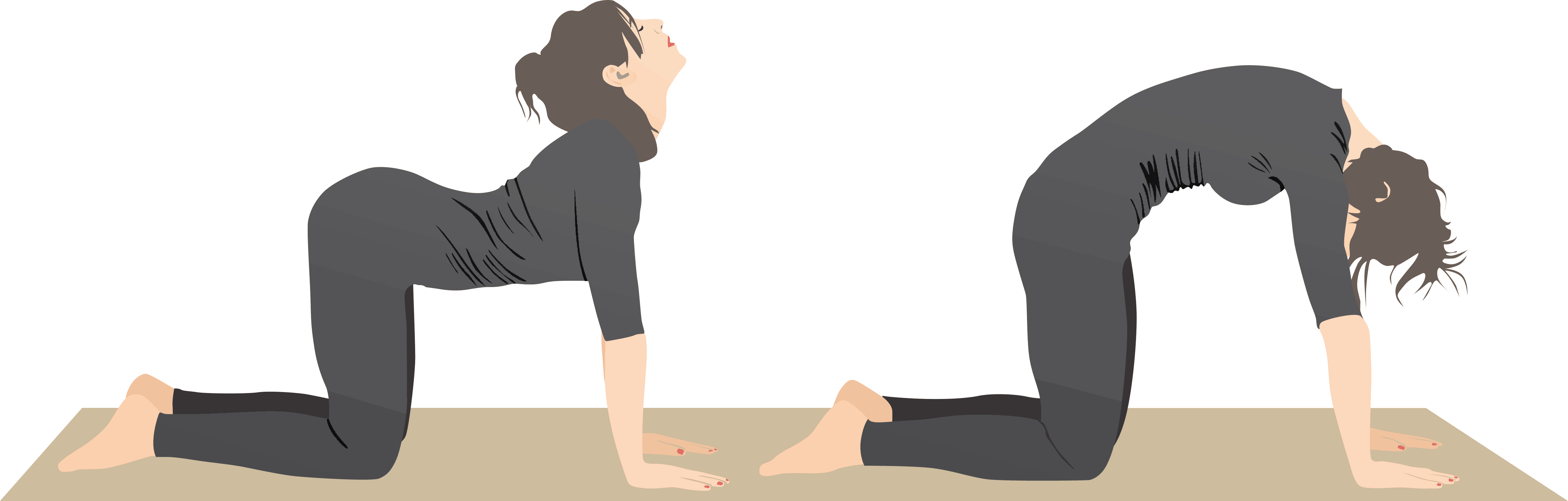
You can finally take a break from standing with this pose. Get on all fours and place your hands beneath your shoulders. Your knees should be directly below your hips. Press your hands to the floor and maintain equilibrium on each side of your body. With your fingers spread out, inhale and drop your belly towards the mat, ensuring your back is arched. Lift your chin and chest, keeping your gaze toward the ceiling.

Keep your shoulders at a broad stance away from your ears. On the exhale, bring your belly upwards into your spine, tucking your chin into your chest. Round your back toward the ceiling, just as a cat does while stretching its back.

sciatica lymph flow

Repeat this movement about five to ten times.

yoga postures

Final Thoughts on These Easy Yoga Poses For Beginners

Hopefully, you will try these easy yoga poses you can do in thirty minutes or less. You can practice these anywhere if you have a quiet, peaceful space. Yoga isn’t just about postures. But most people begin with the poses to strengthen their bodies. It also helps to instill discipline and improves concentration while meditating. No matter your reason for practicing yoga, everyone can receive benefits from it.

5 Reasons Someone Loses a Sense of Purpose (and How to Fix It)

Have you ever wondered why you’re here? What is your reason for being alive right now? Without a sense of purpose, are you living? Humans need a reason to wake up in the morning and have some satisfaction in their day–that’s the essence of a purpose-driven life.

Sadly, for many folks, they’ve lost their purpose. It’s not that they abandoned ship without good reason, but the cares of living can choke the life out of you. Do you still believe that you can conquer life’s mountains?

Five Reasons Why You’ve Lost Your Sense of Purpose

If you were to attempt to pinpoint the exact reason why you’ve lost your sense of purpose, what would you say caused it? Have you weathered some health battles that nearly took you out?

Perhaps you’ve had financial struggles that made you nearly lose everything. Here are some common reasons why people lose their sense of purpose and ways you can get back to a purpose-driven existence.

sense of purpose

1. Your Anxiety is Ruining Your Life With a Lost Sense of Purpose

An anxious life is one of fear and not faith. Anxiety can make you think and feel things that aren’t true. It’s easy to lose your sense of purpose when stuck in fight or flight mode. When you’re struggling with anxiety, nothing in your life makes sense.

Your mind feels that you’re always in danger, and these overwhelming feelings can dominate your life. How can you live with purpose and conquer your goals when you’re in constant fear? Anxiety comes in many different forms.

Some will have post-traumatic stress disorder, while others will struggle with a generalized anxiety disorder. Regardless of which type you struggle with, none of them are easy. How can you live life to the fullest if anxiety is holding you back?

How to Fix It:

While anxiety is a genuine problem, it’s also a difficulty that’s treatable. Many people don’t get help because their afraid, but things like cognitive behavioral therapy can be of benefit. The type of anxiety you struggle with will dictate the treatment, but there are many ways to deal with chronic angst and take control of your life.

2. You’ve Stopped Dreaming

Life would be pretty dull if you didn’t have a dream. Remember when you were eighteen and the world was your oyster? You had so many plans for your life that you would conquer the world, as you were purpose-driven.

Now, you’ve lived in the adult world for a few years, and the dreams and plans you once overshadow your reality. Do you remember how exciting it was to lie on the ground and look up at the stars realizing that your possibilities were endless? What happened to that person who dared to dream?

Regardless of your age, you must have a vision. It would help if you had something to look forward to and a person to aspire to be. Whether you’re 25 or 80 doesn’t matter; everyone needs to have a dream and a sense of purpose.

How to Fix It:

At the core of someone who stopped dreaming is likely some depression or upsets in your life. If you’re struggling and going through the motions of living, you need to find your purpose again.

A purpose-driven life can mean all the difference between living and existing. Sit down and make a goal list of where you want to be in the next year, and you should start a vision board to watch your dreams turn into reality.

You can change this dynamic by simply starting the dreaming process again. If there’s an underlying mental health concern, fixing it can help you on your path.

3. Success Seems Unachievable When You Lose Your Sense of Purpose

Everyone has limitations. There are things you can’t do because of physical or mental restrictions. However, sometimes the limits are just perceived and not based on reality.

Additionally, sometimes you need to exercise your faith to push yourself forward. Did you ever dream of attending law school, becoming a doctor, or a teacher? Yet, the years of college and the cost of the degree made you feel it was unachievable.

It’s all about your mindset. Remember the old saying, “Can’t, can’t do anything?” Jilumol Mariet Thomas was born without arms. It would seem to the world around her that she couldn’t drive, go to school, or do many things other people do daily.

Imagine the look on the faces at the Bureau of Motor Vehicles when she applied and obtained her driver’s license. The 28-year-old uses her feet to drive her modified car. She even stops for fast food and uses her feet like hands to get the order.

Ironically, she didn’t care how grim it looked and never took no for an answer. Everyone has this drive inside them, but you must learn how to release the inner power you hold. Finding your sense of purpose may require you to step out of your comfort zone and try new things.

purpose-driven

How to Fix It:

The first place to start is to adjust your mindset. Stop thinking you can’t do something and start focusing on what you can do. Even the things that seem unreachable might be more obtainable than you think.

Why not listen to some Ted Talks or other podcasts where people have overcome insurmountable odds? Hearing these stories of how others overcome can compel you to push yourself a little more. Hiring a life coach is another good move to help you realize your potential.

4. A Lack of Focus Reveals You Lack a Purpose-Driven Life

If you seem stagnant, it’s likely due to a lack of focus. Let’s assume you wanted to finish college and get your degree. However, three kids later, you don’t have the time or money to accomplish this task.

Your focus has been shifted to more pressing matters, as your children are only little for so long. How can you focus on schooling and getting good grades when you’re so preoccupied with your chaotic life? One lady faced insurmountable circumstances when her husband left her with four kids.

She was naturally upset, but she decided she would make something of her life. She went to law school, worked a full-time job, and raised all four kids. Was it hard for her to accomplish this? Yes!

However, she was a judge on the show Divorce Court for 17 years. Mablean Ephriam was a force on the bench, but she was an overcomer in life.

How did she accomplish so much as she only had 24 hours in the day like everyone else? She got her focus right and had an inner drive that wouldn’t let her fail. She refused to be another statistic of someone who lived less than because of her circumstances, as she found her sense of purpose.

How to Fix It:

It’s challenging to keep your focus when you’re being pulled in 150 directions. Thankfully, there are some simple things that you can do to help enhance your attention. Try doing something like meditation or yoga that can help you purge all the negativity and things from your mind that keep you from focusing.

Try mindful living, where you learn to focus on the present and worry about yesterday or tomorrow. If you want to bring your attention to where you can accomplish things, you must let go of the chaos that fills your mind.

5. You Haven’t Found Your Calling

Some people say your sense of purpose is your calling in life. Each person on planet earth has unique gifts and callings. Look at the works of Picasso or Rembrandt. Can you imagine being able to create such masterpieces with your hands?

What about Beethoven? He was one of the greatest composers of all time, yet he was deaf. How can you possibly play music when you can’t hear it? According to The California Symphony, he used vibrations and memories from before he lost his hearing to compose.

What gifts and callings do you have to offer the world? Maybe you can’t play like the great Beethoven or paint like Picasso, but you can show love and kindness to people down and out. Part of a purpose-driven life is finding the thing that makes you feel alive and fulfilled.

How to Fix It:

Matthew 6:21 states where your heart is. There you will also find your treasure too. What makes you happy? Life is too short to be miserable, so you need to find your niche and the things that bring you joy.

sense of purpose

Final Thoughts on a Purpose-Driven Life

Sometimes it’s challenging to have faith in yourself when you’re surrounded by fear. If you’ve lost your sense of purpose, the cares of this life may have become so heavy you can’t get beyond your troubles. Today is a new day, and it’s time for you to live the purpose-driven life you’ve always imagined.

You can do anything you want, but sometimes you need a little push. Where do you see yourself five or even ten years from now? Remember, all it takes is one small step to restore your sense of purpose, and it’s time to make a move!

 12 Ways to Be Happy Around Hurtful People

It’s difficult dealing with hurtful people and their negativity. They feel unsafe and downright mean. You might feel they suck the air out of you when you try to be happy. Whether you’re dealing with unkind family members, co-workers, or neighbors, staying optimistic despite these people is possible. We will explore some suggestions that may help you.

Twelve Ways to Be Happy, Even When Someone Is Hurtful to You

hurtful

1 – Resist the urge to think about the hurtful person all the time

This restraint can be easier said than done, especially if you must deal with toxic people all day at work. Still, when you’re thinking about them, it gives them power over you. Instead, choose to show them respect, but keep your distance. To preserve your mental health, resist the urge to let your mind drift to them and their antics. Replace the negativity with positive thoughts about what you’re grateful for in your life.

2 – You can’t control their actions, but you can manage your reaction

As you know, you can’t control hurtful people or their negativity. But you have the power to prevent your reaction to them. Sometimes it’s best not to respond to their snide remarks. Other times, it’s best to speak up and tell them to stop being rude. Don’t get emotionally charged up by them or become overly accommodating to appease them. Instead, try to disengage and remain calm as you control your reactions.

3 – Don’t let their negativity change your view of life

It’s easy to allow hurtful people to overshadow your life. Please resist the urge to let them dictate your happiness. Your self-worth isn’t dependent on their acceptance of you. No matter what toxic people think or do, you can remain happy with your life. Your worldview mustn’t be based on what they believe but on your values and beliefs. No matter what these toxic people do, you can find joy in your life.

4 – Be respectful towards them, despite the hurtful words

They may not deserve your respect, but it’s not about them. It’s about who you choose to be despite their behavior. If you respond to them in a hurtful, mean way, you’re acting like them. Treating them respectfully is treating them like you would want someone to treat you. You can feel happy that you’re offering them respect not because of them but because of who you choose to be. Some simple ways to show respect could be:

  • Say good morning: It’s okay if they don’t respond. It is not about them. It’s about how you want to live your life.
  • Acknowledging anything good: Without being overly accommodating, mention something good you notice about them. Maybe they’re always on time at work or keep their yard neat. Whatever it is, be kind even when they are not.
  • Respect what they were: Although they’re mean and hurtful, they probably didn’t start their life like this. Who knows what’s happened in their life to make them unfriendly?
  • Respect that they’re a human: Even the most challenging person has worth as a human. Give them this benefit and show respect.

5 – Remind yourself of your brokenness

So, you may not be as hurtful as the mean people around you, but you have your shortcomings. Maybe you’ve been angry and said unkind things to your kids or partner. Considering your brokenness helps you keep perspective when thinking about the hurtful person. It doesn’t change the circumstances, but it could help you be more understanding when dealing with them. You can shrug off their offenses and not let them steal your happiness.

6 – Ignore the negativity

Of course, you can ignore the hurtful person in your life when all else fails. Sometimes, this is the best course of action when dealing with toxic people. If their negativity is getting to you, steal your joy, and distance yourself from them in the best way. If avoiding them isn’t possible, don’t converse with them. Walk away if they say mean things. You can also tell them you refuse to talk with them anymore. They may not like it when you tell them this, but that’s okay. You’ve at least been honest with them. Your happiness doesn’t depend on them enjoying you or talking to you.

negativity

7 – Be compassionate towards them

Hurtful, toxic people aren’t born that way. There’s usually a reason someone acts like this. Perhaps they’ve had something terrible in their lives and are angry at the world. Good chance, the way they treat you has nothing to do with you,  but it could simply be they’re just reacting out of their pain. You can maintain your happiness no matter how they react towards you. It may be helpful to do these things when the toxic person is getting to you.

  • Remind yourself you’re not the problem, nor am I their solution
  • Stay busy filling your life with positive people
  • Find joy in your family and friends
  • Practice relaxation techniques to let go of tension
  • Think about things you can be grateful for in your life

8 – Don’t let someone hurtful control you

Good chance the person’s hurtful demeanor has nothing to do with what you’ve said or done. Don’t feel responsible for their actions. You don’t need to tiptoe around them. Be yourself, and don’t let them control you with their anger. Please resist the urge to soothe them or accommodate them. This behavior reinforces their rude behavior. Stay your joyful self. Remember, they don’t control you.

9 – Stay Calm

Dealing with hurtful people can be exhausting. You may feel a little beat up by a co-worker that constantly gossips about you or a neighbor who cusses you out if you don’t park your car precisely right.  Try to stay calm and release the stress of the situation. You may want to

  • Do yoga to relax your mind and body.
  • Write in a journal to help release your anxiety about these situations.
  • Go for long walks to relax and release tension.
  • Listen to calm music that lifts your heart and mind.
  • Talk to a friend about what’s going on. Just talking about it can help you let go of the stress.

10 – Resist giving in to anger

Researchers say there’s a connection between psychosocial anger and heart disease. Those individuals who get angry a lot have more incidents of heart problems. When you’re mad, your blood pressure goes up. High blood pressure stresses your blood vessels, causing them to constrict and narrow so blood and oxygen can’t flow through them. This may lead to a heart attack or stroke. Anger is never productive. If tempted to be angry at the hurtful person, pull back and get yourself under control. Keep your heart and mind calm, so you aren’t endangering yourself.

11 – Don’t get manipulated by the negativity

Sometimes hurtful people like to play off of other people. They manipulate people to get what they want. If you sense this, refuse to get pulled into their manipulation. Don’t show that you’re interested in their gossip sessions. They’ll eventually give up trying to pull you into their schemes.

To remove yourself, you can say something like this:

  • Sorry, I’m too busy to talk right now.
  • Got to get home to help the kids.
  • Life is so busy that I’m not free to chit-chat.

Of course, you may end up being the topic of the gossip session when you use these excuses, but that’s okay. For your happiness, it’s good to avoid getting manipulated and used by these folks.

12 – Set some boundaries

If you can’t avoid being around the person every day, you can still set some boundaries. If you have a co-worker who insists on making snide remarks about you or someone else. Tell them to stop because you’re not interested in talking about people like this. Then get up and walk away. If they keep doing this, you may need to tell them honestly that you aren’t comfortable being around them when they talk like this. Be firm but kind when you tell them this. They should get the message loud and clear.

hurtful

Final Thoughts on Avoiding Unhappiness Despite Hurtful Actions of Others

It’s difficult dealing with hurtful people. Whether you experience individuals like this at work, in your neighborhood, or your family, dealing with these toxic people can steal your happiness. It’s possible to stay positive despite their hurtfulness. Resisting the urge to think about them all the time, acknowledging that you can’t control them, and showing respect despite their behavior can help you hold on to your happiness. It’s also good to remind yourself that you aren’t part of their problem and you are their solution.

Indeed, the negativity and bitterness have nothing to do with you. This doesn’t change the situation but can help you have compassion.  Don’t appease them or accommodate their behavior for the sake of peace. Be yourself, and don’t let their hurtful words take away your happiness.

10 Yoga Poses for Better Digestion

Everyone experiences times when their digestion doesn’t seem to move along. It can be annoying, uncomfortable, and sometimes painful. Yoga poses can improve your digestive health and help you feel better.

These poses help massage and twist your abdomen in ways that support healthy digestion. You’ll feel more relaxed and better able to eliminate waste from your body.

Yoga offers quick digestive relief, making it the perfect remedy. The gentle movement of yoga is a safe and effective way to get things moving.

How Yoga Helps with Digestion

Digestion involves breaking down food to eliminate waste and absorb nutrients. If you’re having digestive issues, it can cause symptoms including:

  • Bloating
  • Discomfort
  • Gas
  • Constipation
  • Stomach aches
  • Nausea
  • Changes in appetite

These issues often stem from stress, lack of circulation, or not having enough physical movement. Yoga can help by reducing all these issues and allowing you to eliminate waste before experiencing issues. If you already struggle with digestion, yoga can help you find relief.

People with irritable bowel syndrome (IBS) can also find relief from doing yoga. IBS triggers overactivity of the nervous system, increasing stress. When you do yoga, it reduces stress and improves IBS symptoms.

Ten Yoga Poses for Better Digestion

poor digestion

Some yoga poses are better than others for improving digestion. Try these poses for the best results.

1. Seated Side Bend for Digestive Health

The seated side bend stretches your obliques, belly muscles, lower and upper back, and shoulders. It helps with bloating and gas while improving your digestion.

  • Start by sitting cross-legged on the floor.
  • Put both hands on the floor beside you.
  • Raise your left arm into the air and lean to the right, using your right arm for support.
  • Breath in and out four or five times.
  • Switch sides and repeat the steps.

2. Knee-to-Chest to Improve Digestion

This gentle movement relieves lower back strain while also massaging the large intestine. It promotes bowel movements, easing digestive issues.

  • Start by lying on your back, facing upward with your legs straight and arms at your sides.
  • Slightly tuck your chin and exhale as you slowly bend your knees.
  • Use your arms and pull your knees up toward your chest.
  • Keep your back and shoulder blade flat on the floor or mat.
  • If you can, wrap your forearms around your legs and grab opposite elbows.
  • Take four or five deep breaths before lowering your legs.

3. Downward-Facing Dog

This yoga pose helps nourish the intestines, promoting digestive health. While in this pose, remember to breathe deeply and fully exhale to help massage internal organs.

  • Start on your hands and knees.
  • Keep your hands in front of your shoulders and knees directly below your hips.
  • Spread your palms, placing weight on all four corners of your hands.
  • Turn your toes under to support your lower body.
  • Rotate your upper arms, hang your head, and move your shoulder blades away from your ears.
  • Exhale and lift your knees from the ground, keeping them bent slightly.
  • Don’t let your heels touch the floor as you lengthen your tailbone away from your pelvis.
  • Lift your tailbone toward the ceiling, keeping your inner legs tight.
  • Push your thighs back and stretch your heels toward the floor.
  • Straighten your knees, but don’t lock them.
  • Keep your arms firm while leaving your fingers on the floor.
  • Hold the pose for ten breaths (or more).
  • Bend your knees as you exhale and lower your body.

4. Bow Pose Supports Digestive Health

This pose resembles the shape of an archery bow. As it stretches your back, it supports digestion and alleviates constipation.

  • Lie on your stomach, keeping your legs straight and arms at your sides with palms up.
  • Bend your knees and pull your feet near your bottom.
  • Grab your ankles with your hands while keeping your knees aligned with your hips.
  • Lift your thighs off the floor as you pull your feet toward your body.
  • Simultaneously, lift your chest and head from the floor while keeping your pelvis flat.
  • Hold the pose for four to five breaths.

5. Triangle Pose

The triangle yoga post promotes digestion and gut health because it helps compress and release the colon. This process flushes toxins from the body, allowing for improved digestive health.

  • Start in a low-lunge position with your right leg forward.
  • Straighten the leg, keeping your foot in the same place.
  • Bring your left foot forward about six inches and turn it to a 45-to-60-degree angle.
  • Keep your heel flat on the floor.
  • Place your right hand on your right shin and raise your left hand toward the ceiling with your palm facing outward.
  • Keep your arm straight with your shoulders stacked on one another.
  • Stretch your head forward and lower your tailbone toward your left heel.
  • Hold the post for three to six breaths before repeating on the other side.

6. Seated Twist Can Help Improve Digestion

This pose promotes digestive health and bowel regularity. The twisting motion helps the small and large intestines move food and waste. It also alleviates bloating.

  • Sit on the floor and bend your left knee.
  • Cross your left foot over the top of your right thigh.
  • Place the left foot on the floor, and keep it planted throughout the movement.
  • Lean on your right hip and bend your right knee, facing the sole of your foot inward toward your bottom.
  • Place your right elbow next to the outside of your left knee.
  • Rotate your trunk to the left, placing your left palm on the floor next to the left of your bottom.
  • Turn your neck and look back over your left shoulder.
  • Hold the position for four to five breaths, elongating your spine as you count.
  • Switch sides and repeat the pose.

7. Supine Spinal Twist

This yoga pose stretches the lower back, increases spinal mobility, and alleviates constipation and bloating. It also supports general digestive health.

  • Lie flat on your back with both arms at your sides.
  • Bend your knees and place the bottoms of your feet flat on the floor.
  • Lift your hips a couple of inches and shift them to the right before lowering them back to the ground.
  • Straighten your left leg while bringing your right knee toward your chest.
  • Rotate to the left, bringing your right knee over your left knee without touching it to the ground. Don’t bend your left knee as you rotate.
  • Place your right arm straight on the floor perpendicular to your body.
  • Press your right knee with your left hand for a more intense stretch. You can also leave your left arm straight if you prefer.
  • Hold the position for four to five breaths and repeat on the other side.

8. Extended Puppy Pose for Improved Digestive Health

The extended puppy pose stretches your belly, relieving cramps after a large meal. It also promotes digestion and eases bloating.

  • Get on your hands and knees to begin the extended puppy pose.
  • Keep your hips where they are, and walk your hands forward as comfortably as you can.
  • Lower your head to the floor, letting your neck relax and opening your heart.
  • Stretch your spine by stretching through your arms and pulling your hips toward your heels.
  • Hold the pose for 30 seconds to one minute.

9. Cat-Cow Pose

This pose transitions from the cat pose to the cow pose and stretch your back and belly muscles. It improves circulation, massages your organs, and promotes gut health.

  • Start on your hands and knees with your back and neck flat.
  • Alight your knees with your hips and your wrists with your shoulders.
  • Enter the cow pose by tilting your pelvis and raising your tailbone toward the ceiling.
  • Your belly should move down, engaging your core.
  • Roll your shoulders back and look toward the ceiling without overextending your neck.
  • Hold the pose for four to five breaths before returning to the starting position.
  • Enter the cat pose by placing the tops of your feet on the floor. Your soles should be facing upward.
  • Turn your tailbone and draw your belly button toward your spine.
  • Arch your back by rolling your shoulders forward.
  • Lower your head and hold it for four to five breaths.
  • Repeat the cat-cow pose two or three times before resting.

10. Bridge Pose

This pose is a type of backbend that compresses the digestive organs. It also delivers blood to the heart and relieves fatigue caused by poor digestion.

  • Start by lying on your back with your knees bent and your feet flat on the floor, a hip distance apart.
  • Move your feet up closer to your bottom and press down with your feet to raise your hips.
  • Lift your pubic bone instead of your navel.
  • Put your hands together beneath your back on the floor.
  • Broaden your collarbones and roll to the top of your shoulders.
  • Roll your thighs inward and press down through your heels to lift the backs of your thighs.
  • Lift your bottom even higher and keep your thighs parallel.
  • Hold the pose as you count ten breaths.
  • Exhale, release your hands, and lower your body to the floor.

Final Thoughts on Yoga Poses for Better Digestion

Yoga can help improve many areas of your life, including better digestion. It helps with digestive disorders, constipation, and other problems. You’ll feel better and experience minor discomfort, gas, and bloating.

These yoga poses can quickly help you feel better. If you make them a regular part of your routine, you’ll notice a drastic improvement in your digestive health.

Psychology Explains Why People Treat Their Fur Babies Like Humans

Perhaps you’ve noticed how many people treat their pets like little humans. It’s a growing trend in the United States. Pet owners treat their fur babies like children researching the best foods to feed them, using unique bowls to enhance the enjoyment of their pet’s meal, or signing up their pet for doggie day classes while at work. According to psychologists, it’s a unique moment in human history.

Science explains why people treat their fur babies like little humans.

Why Some People Treat Their Fur Babies Like Actual Humans

fur babies

1 – Fur babies make cuddly companions

Pets are cuddly little companions. They love to be held, scratched, and tickled. There are many benefits to having a pet in your life. Researchers found when you hang out with your pets, it lowers your blood pressure and decreases your cortisol levels. So take some time to cuddle with your cute kitty or snuggle with your Schnauzer. It’ll boost your mood, so you feel happier.

2 – Animals make you feel needed

Your pets need you. Caring for your pet triggers a protective, nurturing instinct inside of you. When you provide food, exercise, and housing for your pet, you feel needed by them. It validates who you are in a certain way. According to psychologists, validation is essential for humans. You need to know someone in your life requires you. Except for your relationship with your parents or other family members, your human relationships may change. But pets give you a sense of unconditional love. Once you have a bond with your pet, it lasts.

3 – Fur babies ease your loneliness

Your fur babies keep you company. People with a pet feel less lonely than those who don’t have a pet. More than half of pet owners say it’s easier to socialize when they have their pets with them. Your four-legged friends give you someone to “talk” to when you’re alone. They interact with their body and face. Having fur babies for company can chase away your loneliness and increase your well-being.

4 – It runs in your family

Have you ever noticed that keeping a pet runs in families? If you had pets growing up, there is a good chance you’ll own a pet as an adult.  Your parents often hand down pet keeping. Being raised with animals helps you feel comfortable around them. You develop intuitiveness about what they need or want. Having a furry buddy in your life may be so natural that you can’t imagine life without your little fur babies.

5 – Or love for furry, feathered, or finned friends could be in your genes

Some people seem predisposed to enjoy being around animals. While others naturally love animals no matter how they were raised or taught as a child. Researchers think there could be a genetic link between people who naturally love animals. They aren’t sure which genes are responsible for making you feel a special love for animals, but genetics and the environment play a part in your feelings. No wonder you treat your little fur babies like little humans. It’s in your DNA.

6 – It’s a great habit to have

Maybe you’ve always had a pet in your life. Pet keeping may be a habit for you. This is because you feel most comfortable around pets. You may have experienced the many benefits of having a dog or cat in your life, and it’s caused you to naturally choose to always have a pet or two or three around your home.

7 – Dogs are a natural alarm system

If your dog barks when someone comes to your door, they act as a natural alarm system. They’re trying to let you know there’s an “intruder” in their territory. Although this can be annoying when it’s just your neighbor stopping in to say hello, you’ll be grateful for your noisy pet if it’s a burglar. Burglars say that giant dog breeds that bark loudly cause them to avoid a home when they choose a place to rob. When you know your pet is protecting your home, it makes you to treat them like family.

8 – Fur babies are sometimes a trade-off for parenting kids

Studies found that people’s investment in their pets is like how parents invest in their kids. Non-parents nurture their fur babies as a trade-off for parenting children but don’t see them as substitutes. According to researchers, this is a novel application of parenting. Researchers say this is a unique evolutionary puzzle.

9 – Lifestyle choices

Globally, fertility rates are down. Urbanization and an increased interest in education contribute to this phenomenon.  These significant changes in how people work, live, and socialize have created new values of individualism over family choices.  Many people find fur babies good companions for their flexible lifestyle choices.

10 – Fur babies help you prepare for kids…sort of

Pet owners of young kids compare raising a child and a pet. They may see both roles as nurturer, protectors, and providers to their children and pets. But those same parents expressed surprise that caring for kids was much more involved than caring for a pet. Humans aren’t as easy to deal with compared to animals.

So, the ways you love your sweet pet may help you, to some extent, get ready for a human baby, but in other ways, fur babies aren’t as much work as a child.

11 – Pets bring joy to parents of older kids

People with older kids don’t relate to their pets like people without kids. They have fewer concerns about disciplining or training their pets. They also don’t focus on the similarities of raising kids and pets. Interestingly, it seemed like this group had the most joy and satisfaction from having a sweet pet and children. Raising them together seemed to bring a sense of satisfaction and happiness into their lives.

pets

Should People Treat Fur Babies Like Humans?

Treating your sweet pet like a baby is much fun, but it’s probably best to let them be. Animals are unique; if you humanize them, you’re taking away their origin. Forcing animals to do things they wouldn’t usually do may be helpful and stress them.

Here are some mistakes to correct when rearing a dog or cat.

Love isn’t food.

Seeing food as love isn’t healthy for humans or dogs. Obesity is a growing problem for dogs and cats. Your pet may gobble up your gooey ice cream treat, but it’s not healthy for them. Don’t cave in even if they stare at you while you’re eating. Please give them a treat especially made for them, not humans.

Skip the pet clothing.

Don’t dress up your cat or dog. It looks funny to you, but it causes stress to your animal. Be aware of your pet’s language. Skip the hats, capes, and raincoats that you think look so sweet on your pets. Many pets suffer silently while their owners laugh at their cute looks. This practice isn’t kindness. Even if your pets seem okay dressing up, avoid clothing. Let them be animals.

Let them sniff stuff.

Dogs and cats instinctively need to smell. It’s how they understand the world around them. Give them time outside to sniff the grass, other dogs, and the pavement.

It’s okay for them to obey their instincts.

It’s easy to get so caught up in treating your pet like a fur baby that you forget to allow them to obey their instincts. Cats like to stalk and hunt. They need to be allowed to do this. Dogs like to hunt and protect. Honor their instincts.

Your pet doesn’t think like you.

It’s easy to assume your dog or can thinks like you. Animals evolved from animals, not humans.

Dogs and cats can learn when it’s time to be fed, exercised, or go to bed. This isn’t because they decided this is a good idea. Because they’re creatures of habit, you establish these times for them. Be sure you allow them to be the beautiful animals they are. Avoid projecting human thinking abilities on them.

Train your pet.

Pets, especially dogs, need training. Fur parents who train their dogs have a stronger bond with their furry friends than with untrained dogs. If you’re treating your dog like a baby, you may not set boundaries for them. If you don’t punish your dog when misbehaving, you’re not teaching them. Some researchers say that humans putting “too much” love onto their pets can put too many expectations on them. This puts pressure on the animal and can confuse them.

fur babies

Final Thoughts on People Treating Fur Babies Like Actual Infants

Pets have a special place in our lives. You may love cuddling with your cat or playing ball with your dog. It’s essential to figure out the balance between loving your pet unconditionally and treating them like animals. They are a different species than human beings and value being who they are without needing to be turned into little humans. Treating your fur babies like little humans may not be wrong if you learn to set boundaries and avoid feeling like they think and do things like you.

Skip to content