Weekly tips, affirmations, and small actions to feel your best.

5 Life-Changing Things That Happen When You Downsize

In our reality, we are bombarded with messages of rampant consumerism, accumulation, money, and advertisements at every turn, because our economy thrives off of people buying things they don’t really need. The concept of “downsize” is something we rarely consider.

But why?

We have been tricked into believing that the key to happiness lies within our purchases. However, it really begins within ourselves.

Lately, though, minimalism seems to be gaining traction as more people realize that they have no use or interest in participating in conspicuous consumption anymore. If you have had enough of the idea that more stuff equates to more happiness and want to downsize,

Here are 5 life-changing things that happen as you downsize:downsize

1. You will have less to worry about if you decide to downsize.

As you detach yourself from the endless, unsatisfying paradigm of getting into debt to buy things you don’t really want or need, you will find a very welcoming reality on the other side of that – one of sheer peace and bliss. In the end, you don’t really own the stuff you buy; it ends up owning you instead. So, as you reduce the amount of clutter in your house and focus more on lasting sources of happiness that lie within you, you will eliminate a big source of stress and anxiety from your life.

Many people report that finances are a major source of distress in their daily lives, so by drastically cutting back on your consumption, you will feel a huge weight lifted from your shoulders.

2. You will feel liberated from the expectations of others

Many people buy new things that are out of their price range to simply impress others. They want others to notice them, praise them and feel happy for them. However, that temporary satisfaction you gain from other’s acknowledgment quickly fades, and you will always need to buy more, have more, and be more in order to keep their attention.

When you adopt a minimalist lifestyle, however, you start to remember what really matters in life. You see that you don’t need to impress others; all you need to do is feel content with yourself, and that comes from your own heart. As long as you love yourself and stay true to your character, no one else’s opinion really matters. You could have one outfit to wear and a mattress to sleep on, but as long as you feel fulfilled at the end of the day, no amount of money or possessions could ever replace that feeling.

3. You will have more money to spend on experiences rather than things.

Another bonus to living a simpler life is that you will have a newfound interest in spending your money creating memories rather than stuff. After all, studies have shown that people who spend money on experiences rather than things are much happier at the end of the day. Minimalists value a trip across the world more than buying a new suit, and it’s easy to see why.

We all just want to feel something, and find real meaning in life. Meeting new people, exploring uncharted territory, and growing as a person offer a chance to feel alive, but can you really say the same thing about new clothes, houses, and other material items?

4. You can focus more on your own passions rather than possessions.

By spending less time worrying about buying new items to replace ones that aren’t “trending” or fashionable anymore, you can put your attention toward what you feel passionate about. Maybe you have been wanting to train for a marathon or go exploring in your state, or take up a painting class at your local museum. The possibilities are endless when you strip away what weighs you down and put your energy into your personal interests and desires.

We have a limited time here in this current existence, so many of us have realized that we must truly seize the day and focus on what brings us value, not what adds superficial value to a broken system.

5. You create more physical space, as well as mental space when you downsize.

Minimalism goes far beyond clearing up space in your home or apartment. Indeed, it cleanses the soul and revitalizes the heart. Plus, it makes you feel empowered and liberated, leaving behind ideals that only lead to disappointment and stress from trying to make it in the rat race. Finally, it gives clarity, and a chance to start anew with fresh ideas and inspirations about what you want to accomplish, and offers a wellspring of opportunities for how to capture the true essence of life.

A downsize isn’t just about a reduction of physical stuff; it’s about a worldwide revolution, an expansion of consciousness that will help humanity thrive, not just survive. Detachment from possessions means you can see beyond this superficial reality created by people only interested in profits into one that you have created from your soul.

This journey will help you break your chains to the modern way of living, and enter a new, exciting world that you manifest from your highest desires – and no one can take that away from you.

Money and possessions are temporary, but memories and experiences make an everlasting imprint on your soul.
4 Lifehacks From Historic Philosophers That Will Change Your Life

When we think of ancient philosophers, we tend to think in terms of long-winded, overly-complex and mostly non-relatable advice that was appropriate for the day but has no relevance now.

Well, that is not entirely true. While some of their advice might be a bit long-winded, it is very relevant to today. It is also far from complex and, in fact, much of the advice is specific and basic. We are the ones that make it complex by our interpretation of their advice and how we go about implementing it into our lives.

These 4 life hacks from historic philosophers will change your life:

socrates-quote-picture

1 – For your life to be long and happy, you must use it well.

“It is not that we have a short time to live, but that we waste a lot of it. Life is long enough, and a sufficiently generous amount has been given to us for the highest achievements if it were all well invested. But when it is wasted in heedless luxury and spent on no good activity, we are forced at last by death’s final constraint to realize that it had passed away before we knew it was passing. So it is: we are not given a short life, but we make it short, and we are not ill-supplied but wasteful of it… Life is long if you know how to use it.” – Seneca (native American philosopher)

There are plenty of activities that make up our day that do not contribute to the fullness of our life. Some, we must do like driving to work. However, we choose to waste our time, as well. Think of activities like binge-watching your favorite program on Netflix.

When you begin to realize that how you spend your time affects how you view your life and your happiness levels, it is easier to choose things that lend value to it. You can even improve the things you are required to do by doing something to enhance your life. For instance, you might listen to a positive, uplifting podcast on your way to work instead of the local news station.

Don’t let life pass you by because you choose activities that add no value. That doesn’t mean giving up House of Cards altogether, but balance it with meaningful life activities.

2 – A happy life is one without judgment.

“To accuse others for one’s own misfortunes is a sign of want of education, to accuse oneself shows that one’s education has begun. To accuse neither oneself nor others shows that one’s education is complete.” – Epictetus

Living without judgment is easier than it sounds and rarely completely conquered. We judge because we want to know the answer before understanding the challenge. The first step in moving past judgment is releasing the need for an answer.

Instead of judging, form an opinion. Judgments are assumptions that usually do not change. An opinion, however, is an isolated view of the world that can change with discovery new information. Recognizing the difference is the first step to changing judgments into opinions.

3 – Happiness exists in our thoughts.

“The happiness of your life depends upon the quality of your thoughts: therefore, guard accordingly, and take care that you entertain no notions unsuitable to virtue and reasonable nature.” – Marcus Aurelius

No surprise here that our happiness is a byproduct of our thoughts. What might be surprising is that this is not a new idea or the latest fad.

When you read the quote, you can see that Aurelius mentions not to entertain thoughts that aren’t worthy. Of course, you cannot fail to have negative thoughts, However, you must choose never to get caught up in them.

The lifehack here is to work on your thinking. Don’t focus on only having positive thoughts because that is unrealistic. Instead, focus on not dwelling on the negative ones.

philosophers

4 – Our habits fuel our happiness.

“Excellence is an art won by training and habituation. We do not act rightly because we have virtue or excellence, but we rather have those because we have acted rightly. We are what we repeatedly do. Excellence, then, is not an act but a habit.” – Aristotle

Aristotle understood that we are creatures of habit. Whether those habits serve or hinder us is the difference between being happy or being stuck in a life where we merely exist.

Choosing the right habits is the ultimate life hack to help you be happier. Recognize, though, that choosing can be difficult. Everyone professes to have the best habits for happiness, but the best habits for happiness are the habits that work for us as individuals, and that may be different for each of us.

Some of our greatest life lessons come from ancient philosophers. Their teachings have stood the test of time, and it is worth it to pay attention to what they said. These philosophers are the greatest source of wisdom we have.

Surprising Study Reveals Why Gut Health Affects Mental Health

Believe it or not, tiny microbes lining your gut actually send signals to your brain. Thus, they influence human psychological and neurological behavior. These little organisms make a tremendous impact on our health.

A revolutionary study performed by UCLA researchers lends further evidence to the strong connection between good bacteria in the gut and healthy brain functions.

Regarding this study, Dr. Emeran Mayer, a professor of medicine (digestive diseases), physiology and psychiatry at the David Geffen School of Medicine at UCLA and the study’s senior author, stated:

“There are studies showing that what we eat can alter the composition and products of the gut flora — in particular, that people with high-vegetable, fiber-based diets have a different composition of their microbiota, or gut environment, than people who eat the more typical Western diet that is high in fat and carbohydrates,” Mayer said. “Now we know that this has an effect not only on the metabolism but also affects brain function.”

Many scientists still have questions about how this occurs. However, some believe that the gut microbiome release signaling molecules into our gut. Therefore, they affecting our dietary decisions. Since the gut links to the immune system, endocrine system, and nervous system, these signals consequently impact our physiological and behavioral reactions.

health

The behavior of your gut’s microbiome

Just as the bacteria can influence our behaviors, we can influence them by changing what we consume. That would then alter what the bacteria signal us to eat.

The research proposes that gut bacteria might influence what we eat by manipulating signals in the vagus nerve. That’s the nerve that connects 100 million nerve cells from the digestive tract to the base of the brain.

“Microbes have the capacity to manipulate behavior and mood through altering the neural signals in the vagus nerve, changing taste receptors, producing toxins to make us feel bad, and releasing chemical rewards to make us feel good,” said Athena Aktipis, co-founder of the Center for Evolution and Cancer.

The gut profoundly influences mental health in humans. Thus, many people call the intestines “The Second Brain.”  That’s because the microbes found throughout our bodies actually weigh twice as much as the human brain. Experiments that test the impact of gut bacteria on mental health are just beginning. However, a team of researchers found a clear link between having more robust gut bacteria and having a healthier brain.

Our current diet doesn’t promote good health

Our society is inundated with heavily processed, over-stimulating, nutrient-poor foods that wreak havoc on the digestive system and send mixed signals to the brain, in turn. These toxic foods may explain why Western societies, in particular, have such high rates of anxiety, depression, bipolar disorder, and other common mental disorders.

So, what changes can you make in order to promote healthy gut bacteria as opposed to bad bacteria?

Changes that enhance your gut health

Eliminate, or severely reduce, processed foods in your diet.

Consuming whole, fresh, healthy foods in their most natural form will promote healthy bacteria in your gut because your body actually recognizes the nutrients in these foods. The body does not, however, recognize foods that have been severely altered, such as fast foods, boxed foods, and foods with lots of added chemicals.

Introduce more fermented, unpasteurized foods into your diet.

Fermented foods contain lactic acid bacteria, beneficial bacteria that promote good microbes within the gut. Examples of fermented foods that you can eat include the following:

  • tempeh (made from fermented soybeans)
  • miso
  • kefir
  • sauerkraut
  • kimchi
  • kombucha
  • yogurt

Eat fiber-rich foods for better health.

A study released by Professor Andrew Smith at Cardiff University in 2002 revealed that eating more fiber results in higher energy levels, more clarity, and a more positive mindset as opposed to eating a diet very low in fiber. Also, high fiber diets can reduce fatigue and lessen the risk of developing bowel disorders, including cancer.

High fiber foods basically include three food groups: fruits, vegetables, and starches such as rice, potatoes, pasta, and other grains.

12 Habits That Block You From Happiness

In our quest to live a happier life, we find ourselves doing more. We know staying focused on our goals and getting more done will make help us reach the most happiness we’ve ever felt. Or will it?

Sometimes we think we are doing all the right things only to stray further away from the happier life we crave. So how do we know if our habits are serving us or hurting us? The simple answer lies in how you feel.

“Rationalization is a process of not perceiving reality, but of attempting to make reality fit one’s emotions,” – Ayn Rand

How we feel at any moment is an excellent guide as to whether our actions at that moment are right for us or not. It seems so simple, yet we often go through our day, ignoring our gut instincts.

To help you recognize everyday things that might be hurting you, here are habits, that if left unchecked, could actually block you from happiness:

1. Being Extremely Honest

Of course we’ve all heard the saying “honesty is the best policy.” Well, it isn’t always. Sometimes being honest is used as a disguise for complaining. So while honesty can be the best policy, make sure it is serving everyone.

2. Taking on Multiple Projects

Our sense of productivity can mistakenly lie in how many projects we take on at once. It is a fallacy that doing more, or multi-tasking, makes someone more productive. The opposite is exact. Tackling one project at a time will not only result in better work, but you will also get more tasks done.

Related article: Why You Should Stop Multitasking

3. Working Through Lunch

Our mind and our body require breaks to keep performing optimally. A working lunch to clear our to-do list may be doing us more harm than good.

4. Eating 3 Meals a Day

Eating three meals a day may seem like a good idea, and for some, it might be. Don’t mistake eating three squares with proper nutrition. Limiting your eating to specific periods may lead to overeating during mealtime because you begin the meal hungrier than if you eat smaller meals more frequently.

Studies show there are benefits to eating more regularly, including more energy and better sleep. Of course, the best plan is the plan that benefits your body the most.

5. Constant Cleaning

There is a big difference between being clean and continuous cleaning. Being focused on a spot-free environment takes us out of living in the moment and puts our attention on something that isn’t really achievable (especially with kids!)

6. Staying Focused on the Goal

When we are too focused on the goal, we become indifferent to what is happening around us. Working towards our goals is admirable and even needed to live a life that involves more happiness, but doing so at the cost of enjoying life itself is counterproductive.

7. Helping Your Friends Without Them Knowing

Sometimes we think we know what is best for a friend, but only they truly understand what is best for them on their path. Our time would be better spent talking to our friend about how we can help them achieve happiness and creating a plan together, rather than merely trying to rally the troops behind their back.

8. Sharing Credit for Your Successes

In an attempt to be humble, we often share the credit for our successes with others. It seems the admirable thing to do, after all. However, we must remember that it’s important to accept responsibility for the decisions and choices we make to honor our truth.

9. Never Giving Up

Perseverance is a trait of successful people, but successful people also know when to cut their losses. When you stay focused on a specific result without constant evaluation, you may miss out on valuable opportunities and happiness along the way. Persevere when it makes sense, otherwise move on.

10. Loyalty

Being loyal is an essential trait in developing a robust social network. Blind devotion, however, is another matter. It isn’t uncommon to grow apart from people that once mattered. Yet, staying in relationships out of commitment, we are depriving ourselves of happiness by not spending time with people that can provide a more positive impact.

11. A Strong Sense of Right and Wrong

A community of people with a reliable moral compass is what helps societies function, but living in a black and white world can erode that very foundation. When we stand so firmly in our beliefs that we can’t compromise and find the gray, we end up putting our relationships and own happiness at risk.

happiness quotes12. Being Helpful

Being helpful is one thing. Being kind at the cost of taking care of yourself is another. We all want to show compassion and kindness to those in need, but we must make ourselves the priority to truly achieve happiness. By taking care of ourselves first, we will be better positioned to help others.

Do you want to be closer to happiness each day? It’s time to listen to how your body responds. Do more of the things that make you feel good and stop doing the things that don’t – it seems easy, but once you master it, you will see remarkable changes happen in your life.

What Your Life Path Number Reveals About You

Numerology and can tell us in-depth information about our unique life paths which will enable us to realize our purpose and live it on a daily basis. All numbers carry with them a certain vibration that affects everything from your perception of life to your personality to what kinds of clothes you like to wear.

Your life path number is no different. It can assist you in knowing your strengths and weaknesses and ultimately guide you to make choices in your life that align with your best interests.

Here’s how to calculate your life path number

If your birthday (the day life began outside the womb) was on July 18, 1991; to calculate your life path number, you would add up all the digits until you end up with a single digit.

For example:

7 + 18 +1991 = 2,016

2 + 0 + 1 + 6 = 36

3 + 6 = 9

So, your life path number would be a 9. There will be more explanation as to what that means, along with all other life numbers, below.

Here’s What Your Life Path Number Reveals About You:

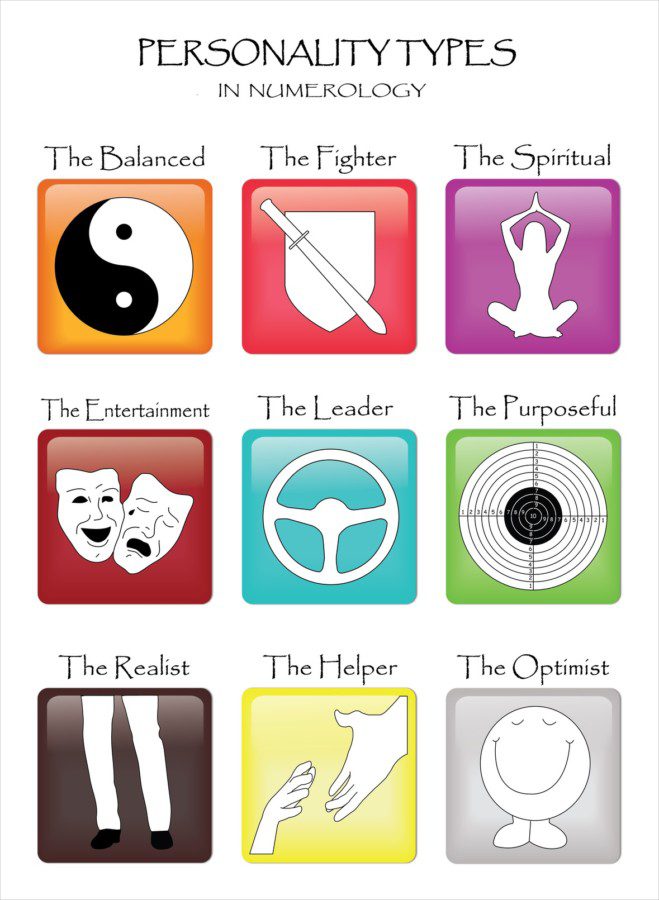
number-numerology

1. The Purposeful

1’s are the type of people who love coming up with new inventions and ways of doing things, and ideas just seem to come to them effortlessly. However, they like to do things their way and can have trouble tolerating other people’s lifestyles and decisions.

Well-Known 1’s: Tom Hanks, Hulk Hogan, and Wynona Judd

2. The Helper

2’s might identify with the term “empath” because they often put other’s needs above their own, and care deeply about the well-being of others. They can’t stand isolation, and probably have a tight-knit circle of friends to keep them company. While they might not warm up to others easily, their shyness melts away when they find friends who really understand them.

Well-Known 2’s: President Bill Clinton, Madonna, Mozart, and Whoopi Goldberg

3. The Spiritual

Also known as the life of the party, 3’s love any chance to have the spotlight on them and enjoy the attention of others. They have a certain charm about them and know-how to carry a conversation. However, they often talk more than they listen, though, and can seem a bit insensitive at times. Also, they have a big heart but are frequently misunderstood.

Well-Known 3’s: Melanie Griffith and Jodi Foster

4. The Balanced

4’s have been known to stick to balanced routines, and rarely step outside their comfort zone or adopt new principles of living. They often have conservative values and believe in the idea of hard work to earn their place on this Earth. 4’s enjoy time spent in nature and tend to shy away from modern entertainment. Their weakness is that they can sometimes be stubborn and closed off to new ideas.

Well-Known 4’s: Oprah Winfrey, Neil Diamond, and Arnold Schwarzenegger

5. The Fighter

They don’t like anyone telling them what to do, and steer clear of anything encouraged by the mainstream. They have fierce independence about them and have a hard time understanding modern society. 5’s are drawn to the arts, as creative expression serves as an outlet for them. They may have been called “problem children” in the past due to their adamant opposition to authority and rules.

6. The Optimist

An eternal optimist, the romantic lives with their head in the clouds, dreaming of a perfect world and wanting to offer a positive contribution somehow. They sometimes focus too much on what they can’t change, though, and the state of affairs in the world can bring them down if they don’t divert their attention. An Optimist has a close relationship with their family, and make a very loyal friend or partner.

They might consider becoming a teacher to share their wisdom about the world and help them feel like they’re making an impact on society.

Well-Known 6’s: Albert Einstein, Christopher Columbus, and Meryl Streep

7. The Realist

A natural-born intellectual, 7’s are highly analytical and logical. The Realist makes decisions based on their thoughts, not emotions. They love doing research and learning about exciting new topics. They might seem cold and unfeeling to others, but they just don’t wear their hearts on their sleeves. However, they still care underneath the surface.

Well-Known 7’s: William Shakespeare, Lucille Ball, and Michael Jackson

8. The Leader

Always wanting to accomplish more, go one step further, and reach a higher rung on the ladder, 8’s are definitely Type A people. They have great ambition and willpower and don’t like leaving a job unfinished. Leaders like to tackle big challenges and solve problems, and would do well in a leadership role. However, they need to take heed not to let their power go to their heads.

Well-Known 8’s: Barbara Streisand, Picasso, and Aretha Franklin

9. The Entertainer

Very gregarious and sociable, 9’s love to make people laugh and show them a good time. They make friends easily, and have an irresistible charm about them. They would do well as a comedian or some sort of performer, as they enjoy entertaining others.

Well-Known 9’s: Jimmy Carter, Elvis Presley, and Harrison Ford

number-numerology

6 Things Sensitive People Do Differently

Sensitive people, or empaths, identify deeply with the emotions and vibrations of other beings, both human and non-human. They can instantly read a person upon meeting them, and have an innate intuition about others.

In short, sensitive people can understand other people on a deeper level than most humans. Besides that, their friends and family that know them well may often call them “too sensitive.”

Empaths are said to be more psychic than their less sensitive counterparts due to their close ties to the spiritual realms. Sensitive people also make some of the best spiritual healers due to their uncanny ability to relate to others on such a profound emotional scale.

Science continues to show that humans are hardwired for empathy. A study performed by researchers from the University of Virginia aimed to measure the brain activity of 22 participants who were under the threat of receiving mild electric shocks to either themselves, a friend, or a stranger. All of the volunteers were monitored with fMRI scans during the experiment, and the results were astounding.

The researchers found that when the participants’ friends were threatened, their brains responded in an almost identical fashion to the direct threat of shock.

Even though most humans can empathize with the pain of others, some people just have more finely tuned senses when it comes to understanding the emotions of their fellow humans.

But what do sensitive people do differently than other people, exactly?

1. They have an intrinsic desire to communicate a more positive world.

Empaths are highly inquisitive people and want to get to know others on a deeper level. They don’t have much tolerance for small talk. Instead, they want to talk about more pressing and relevant matters, such as how to impact the world positively, why we’re here, the possibility (and probably the reality) of life on other planets, etc.

They also have a yearning to connect with others outside their culture, religion, or race, because they can absorb a taste of others’ perspective and background through the other’s emotion about it.

2. They see everyone as equal, no matter their race, size, ethnicity, etc.

They see past the worldly labels we place on everything. Plus, they know that the spirit of love transcends all physical boundaries. They see a janitor, successful businessman, scientist, mother of five, and everyone else in the same light. At the end, we all go back to the same source, so sensitive people know that our titles or occupations here on Earth don’t mean much in terms of our character.

Sensitive people seek out the similarities in people rather than their differences, and don’t judge anyone for how they live their life, how they appear outwardly, or what opinions they may have.

3. They listen more than they talk.

Many sensitive people don’t really enjoy talking about themselves, and would rather listen to others speak about their lives. Sensitive people usually have a quiet, introverted nature, and don’t like to take the spotlight. People often come up to them at random to share their life story. However, sensitive people don’t really get surprised when this happens to them. Others can just sense their compassionate, kind nature, and feel comfortable opening up to them. Because of this, empaths do best when listening to others and giving short pieces of advice rather than talking too much.

They also go within frequently to regain balance after taking on the energies of everyone around them, and naturally have a quieter nature due to this.

4. Sensitive people listen to gut instincts.

Sensitive people are ruled by emotions, not thoughts, and listen to their gut instincts when making important decisions. While they do tend to overthink quite a bit, their thoughts usually center around how they feel, or how they think others may feel. Empaths often act on impulse and are seen by others as sporadic, even irresponsible at times. They may feel misunderstood and isolated since their friends and family usually can’t relate to their deep understanding of the spiritual world, but they never stray from their true nature.

5. They put themselves in other people’s shoes.

They enjoy living life through other people’s eyes, wanting to understand as many people as possible. Additionally, they may even try out a totally different life. That decision will help them to really appreciate what others have been through. And, it helps them to connect with people on an even deeper plane. As they say, to really know someone, you have to walk a mile in their shoes. And a sensitive person may take that literally.

6. They spend a lot of time in solitude to recharge and reconnect.

Highly sensitive people (empaths) might be seen as loners or outcasts living on the fringes of society. However, they know that to cleanse themselves of the energies they accumulate, they must recharge often. They truly enjoy spending time in nature. While they have an infinite love for other beings, they can best express that if they take the time to decompress.

They also have a knack for creativity and use their time alone to further develop their imagination. So they might live in the clouds. However, sensitive people make the world a more beautiful place through their originality and care for all creatures.

Join the discussion in the comments below. Can you relate to this personality type? How has being a sensitive person changed your life?

5 Ways To Humble Your Ego

The ego, also known as the “false self,” wants you to believe that you are a separate entity from the rest of your reality. It must maintain control and power at all times in order to survive. And this attitude is why we see so much destruction and pain in this 3D paradigm. As a collective, we still allow our egos to dictate our lives, and as such, we see the same patterns repeating themselves over and over.

One of the hardest battles you will fight in life is the one against your own ego. That’s because it constantly needs attention and validation. The ego, ruled by the mind, tricks you into thinking your identity is built on your worldly labels. It hangs your worth on factors like your job title, how much money you make, what religion you follow, the color of your skin, your ethnicity, your political views, etc.

Everyone is born from the same consciousness, only knowing love and compassion for others. However, at an early age, most people are taught that their worth lies in other’s opinions of them. This leads people to seek attention, love, and acceptance outside of themselves. That shift in thinking means they are operating on the terms of the Ego.

ego-selfieRelated article: 9 Signs Your Ego is Running Your Life

So, how can you humble your ego so that you can start living through your higher, more conscious self? Truthfully, it takes consistent commitment and practice in order to truly master yourself, but these tips can get you started on the right foot:

1. Ask yourself who you are outside of your earthly labels.

When you first wake up in the morning or before you go to sleep at night, sit quietly in your room and just ask yourself “Who am I?” Allow your thoughts and feelings to come to the surface, and don’t judge them. Just observe what comes up, and notice if most of your thoughts center around your job, possessions, money, or other things you’ve accumulated. You see, your thoughts don’t represent you, because you don’t own your thoughts. We don’t even truly own our bodies; we simply borrow them in this lifetime.

As you delve deeper into your true identity, as you strip away every false layer of your old self, you will find that you are simply the universe expressing itself through form. You are a fragment of this grand consciousness, swirling through space with endless possibilities. We are all Light in pure form, and as you realize and accept this truth, all the outdated beliefs and thought processes that stem from fear will melt away.

2. Help others often.

The Ego gains even more power as one obsesses over him or herself and attaches those thoughts or beliefs to his or her identity. However, when you volunteer or just lend a helping hand to others, you forget about your Self for a while and instead shift your attention outward to your fellow humans in need. This paradigm shift going on is about releasing our obsession with “I” and instead focusing on “We.” Offering your hands and heart to others will help you dissolve your ego and feed your soul, an ever-lasting body of energy, instead.

3. Listen more, talk less.

Another habit of those who live through their egos is talking more than they listen. The ego always wants to be heard, and it won’t let others take center stage. The false self wants all the limelight and praise and finds it difficult to let others have attention for any length of time. One way to overcome this is to develop a new habit: listening more than you talk. Allow others to fully finish what they have to say before you respond or bring up a new topic; this way, you will learn to have a balanced relationship with others rather than one solely built on an out-of-control ego.

This will also help you relax and go with the flow rather than always having to control a situation and overtake the conversation.

4. Make meditation a habit.

Now, with all this talk of the ego, you might think you should fight the ego since it constantly wants control of you. However, resisting the ego will only cause more problems, because as you might know, what you resist persists. There’s nothing inherently wrong with the ego; after all, we must have some sense of self in order to ward off predators, establish relationships, develop self-worth, etc. It becomes an issue when you allow your ego to take control and dictate your whole life; when you believe that your ego IS you.

Meditation can help you see past your ego and get in touch with your higher self, the one that most accurately represents your soul. Breathe deeply and just let go – explore yourself beyond your thoughts and feelings, and you will get to know a whole world that exists inside yourself, where you can run and play freely without any attachments or limiting beliefs.

5. Resist the urge to always be right.

A trademark of the ego is that it always wants to have the last word. Furthermore, it can’t handle being wrong in any way. It must always fight back until others see through it’s eyes, but this can never happen. When the ego rules, it’s a classic scenario of the revolving door; it must repeat itself infinitely because it will always need validation. It cannot survive without this, and any opposition causes the ego to go on a rampage.

To overcome this, remember that others will always have different opinions than you. Realize that their opinions don’t invalidate yours; they simply see things from a different point of view, and they’re entitled to that. Once you allow others to express themselves and be themselves without feeling offended, you have made a marked step on the path to becoming humble and dissolving the ego.

5 Negative Emotions That May Be Stuck In Your Body

As you may already know, all thoughts. emotions and feelings carry with them a certain vibration or energetic frequency.

Positive thoughts can increase your frequency by 10 Hz. On the other hand, negative thoughts decrease your energy by 12 Hz or more. That’s according to Dr. Gary Young, an expert on essential oils and how they can heal the body.

If your “frequency” becomes too low, your body becomes the perfect environment for dis-ease to thrive. And this can manifest in the form of depression, anxiety, irritable bowel syndrome, and candida, just to name a few. Disease simply cannot exist in a body and mind that operates on a higher frequency. That’s because expanded, oxygenated cells stave off disease.

Conversely, deoxygenated, contracted cells feed disease. With such a high rate of illness and disease, it’s important for all of us to raise our energetic frequency. That balance is needed so we can bring our physical, emotional, and spiritual health back into alignment.

Your mind can, in fact, make you sick, and holding in emotions allows the disease to spread because of the lower energies associated with these thoughts and feelings.

So, what are the main negative emotions you should look out for, and how can you release them?

Here are 5 Negative Emotions That Might Be Trapped In Your Body (And How To Release Them)

1. Anxiety

Anxiety occurs when we focus too much on the future, leading us to feel afraid of the unknown, and a sense of foreboding often overtakes those who feel anxious. When you fixate on the future, it manifests as an overwhelming state of worry and pensiveness within the body, and this can cause a slew of diseases, including COPD and heart disease.

Related Article: 7 Ways to Turn Anxiety Into Positive Energy

Remedy: Movement.

Simply moving your body and mind and allowing yourself to flow with the universe can release any built-up tension and allow your soul to heal. You can do some form of exercise you enjoy, such as yoga or biking, or even just walk around your neighborhood with a friend. Many studies found that exercise works as well as anxiety medication at alleviating symptoms and reducing stress.

2. Sadness and emotions that cause depression

Contrary to anxiety, sadness often gets lodged in our cells when we ruminate on the past, whether that includes grief about lost loved ones, sadness about a breakup, or anything else that causes us to feel depressed. Many times, people actually don’t even know they harbor these feelings because they haven’t given themselves a chance to acknowledge them. For example, you may still feel pain about a past breakup but never gave yourself the opportunity to go through the grieving process because of life responsibilities and demands.

Remedy: Smudging.

Smudging is actually an ancient practice used by indigenous cultures in order to cleanse the energy in a room or person. You can opt to perform a whole ceremony, or simply do a quick waft of the area if you think it doesn’t need that much attention. It consists of burning a bundle of sage or other herbs in order to clear out negative energy and invite more uplifting energy into the room or body.

You can read more about how to perform a smudging ceremony here.

3. Anger

Anger can stick to our energetic fields when we hold back our feelings, hold a grudge, or feel resentment toward a person or situation. Wrath can overtake our minds and bodies, disturbing our peace and distorting our view of the world. It can lead us to engage in unnecessary and even violent conflicts with people if these deep-seated feelings of hate and fury are not resolved.

Remedy: Voice your feelings or write them down.

Anger can easily build up if you don’t express how you feel in a calm manner. Once you have calmed down, make sure you talk to the person you had a disagreement with and explain rationally and logically how you feel. Or, if you can’t talk to the person directly, or the feelings aren’t directed toward a person, write them down in a journal. Always make sure to breathe deeply and think about what you say before you speak, though, to ensure that the conversation goes smoothly and conflicts get resolved.

Related article: 5 Ways to Manage Anger

4. Self-loathing

Hatred towards oneself usually results from negative self-talk and neglecting one’s needs. It can also be the product of a difficult or traumatic upbringing, where one didn’t get the attention and love that they needed in order to establish self-esteem. So many of us allow others to define our worth, which means we only see our value through other’s eyes.

emotions

Remedy: Positive affirmations.

In order to remove these lodged emotions like of worthlessness, you must counter any negative thoughts with positive ones. So, if you wake up saying that you hate yourself most mornings, start saying “I love myself” instead. Or, you could even say, “I am worthy,” or whatever statement makes you feel good about yourself.

Related Article: How to Transform Your Life with Simple Positive Affirmations

5. Humiliation

This feeling also stems from putting too much value in other people’s opinions of you. Maybe you had an embarrassing experience in years past and allowed the remnants of that situation to stick with you. Humiliation is a loss of pride or dignity that results from trying to live up to society’s expectations. The outcome makes people feel like a failure when they don’t measure up.

Remedy: EFT Tapping.

The Emotional Freedom Technique, or EFT, works to remove negative energy. In it, you practice tapping with the fingers on the meridians or energy pathways in the body. It’s very similar to Chinese acupuncture, just without the use of needles. Studies have shown that EFT can remove psychological stress by getting the blood flowing again within the body. Before EFT, the cells are often clumped together, but after, they move freely and independently once again. Studies have shown significant reductions in cortisol and emotion responses in the brainwaves of those that have undergone EFT.

15 Things to Remember When You Don’t Believe in Yourself

Even the most positive people need encouragement and support. No one is immune to periods of self-doubt, so here are quotes to help you believe in yourself.

15 things to remember when you don’t believe in yourself.

1. Belief in yourself begins within.

“A successful man is one who can lay a firm foundation with the bricks others have thrown at him.” – David Brinkley

There will always be haters and naysayers in life, and they become more apparent when we are feeling down. Don’t look outside for approval or validation, all we need to do is look inside our heart.

2. You are not your successes or failures.

“Remember that failure is an event, not a person,” – Zig Ziglar.

Who we are as people is based on our character, not on an outcome. We should make a point to remember the times you helped someone in need, cheered up a friend and hugged your kids. These are the acts that shape us.

3. It’s your life. Live your truth.

“I know where I’m going, and I know the truth, and I don’t have to be what you want me to be. I’m free to be what I want.” – Muhammad Ali

It’s hard to believe in ourselves when we spend our time trying to live up to other people’s expectations. Living your truth is the ultimate belief in yourself.

4. Keep moving forward.

“Opportunity does not knock; it presents itself when you beat down the door.” – Kyle Chandler

There are always times when giving up seems to be the only option. However, it rarely is. Trust that you are where you are meant to be and keep taking small steps forward.

5. You are closer than you think.

“Many of life’s failures are people who did not realize how close they were to success when they gave up” – Thomas A. Edison

There will always be tests on our way to doing something great. It’s as if the Universe wants to see how badly we want it. Success is found when we persevere.

6. You can become better.

“Big shots are only little shots who keep shooting.” – Christopher Morley

It’s hard to be the best at something right out of the gate. People become the best because they keep working at bettering their skill.

7. Do not define yourself by one moment in time.

“The first step toward success is taken when you refuse to be a captive of the environment in which you first find yourself.” – Mark Caine

Who we are and what we are capable of is not reflective of our current circumstances. Let’s not allow what happens in any given moment shape how we think of ourselves.

8. You are evolving.

“It is never too late to be what you might have been.”  George Eliot

The beautiful thing about life is it gives us opportunities to evolve and continue to grow into our best selves. Know that every day contributes to the process of becoming who we are meant to be.

9. Break the big goals down.

“The man who moves a mountain begins by carrying away small stones.”  -Confucius

Self-doubt can creep in when we are overwhelmed by big goals. Big goals seem unattainable but when we break them down and focus on one thing at a time, they become achievable.

10. Find the courage.

Man cannot discover new oceans unless he has the courage to lose sight of the shore.” — Lord Chesterfield

We have to want to move through what is causing our self-doubt more than we want to stay where we are. Don’t dwell in the moment and instead, find the courage to face the fear that is holding us back.

11. You control the narrative.

“I can be changed by what happens to me. But I refuse to be reduced by it.”  Maya Angelou

Our internal dialog handles how we look at ourselves and how we feel. Be thoughtful in your response to current circumstances and begin a dialog that is supportive and nurturing.

12. To win at life, you must get in the game.

“You can’t expect to hit the jackpot if you don’t put a few nickels in the machine.” – Flip Wilson

Just remember you win at life in one day, but the actions you take today will affect how you’ll look at tomorrow. Do something, anything, to stay in the game.

13. Focus on the good.

“I honestly think it is better to be a failure at something you love than to be a success at something you hate.” – George Burns

Always seek out a good lesson. Then, you can live your truthful, more authentic life. When we choose to do things that make our heart sing, success will find its way to us.

14. Find the lessons.

“Character cannot be developed in ease and quiet. Only through the experience of trial and suffering can the soul be strengthened, ambition inspired, and success achieved.” – Helen Keller

When we focus on the lessons, we can move forward confident in our abilities and knowing we are learning what we need to learn to keep living our best life.

15. Celebrate your uniqueness.

“Be yourself; everyone else is already taken.” – Oscar Wilde

Let’s allow ourselves to be who we are without comparison to others. Celebrate all that makes us who we are because there is only one of each of us and our gifts are needed in the world.

Skip to content