Weekly tips, affirmations, and small actions to feel your best.

Science Explains The Cause of Nightmares (And How to Stop Them)

Nightmares affect people of all ages, even adults. They’re actually quite common in adults, with nearly 70% of adults having nightmares.

“Nightmares are a cry for resolution for finding a way to incorporate the terrible experience into our lives. Occasional nightmares are normal. But not nightly, and not over and over again,” says Rosalind Cartwright director of the sleep disorder service at Rush-Presbyterian-St. Luke’s Medical Center in Chicago.

So, what causes adult nightmares, and how do we deal with them? Sleep doctors have already answered these questions for us, and given us some ideas on how to help the sufferers.

What Causes Nightmares?

“A nightmare is a dysfunctional dream.” – Rosalind Cartwright

1. Medications

A lot of people have them start suddenly after they start a new medication. They’re a common side effect for many medications.

“A number of medications also are known to contribute to nightmare frequency. Drugs that act on chemicals in the brain, such as antidepressants and narcotics, are often associated with nightmares. Non-psychological medications, including some blood pressure medications, can also cause nightmares in adults,” adds WebMD.

If you’re struggling with them and sleeplessness from your medication, you may want to talk with your doctor about switching medications if you can. If you’re not able to change your medication to help with nightmares, there are other ways to stop your nightmares.

2. Traumatic events

People who suffer from trauma may often find that they also suffer from nightmares. Traumatic events can vary, from the death of a family member to experiencing abuse of some kind. Even just getting into a traumatic accident can cause them. Therapy can be a great help in working through a traumatic event and stopping nightmares.

3. Food

If you’re generally a fan of spicy food, you may find that you get bad dreams after eating it. Scientists aren’t entirely sure why the correlation with food and nightmares happens, but it happens often enough that many people are aware that spicy dinner the night before is bound to cause bad dreams.

“A related possibility is that food influences dreams indirectly due to poor metabolism or digestive intolerances. For instance, eating too late at night could negatively affect metabolism and sleep quality, thence seeping into your dreams. And, of course, dairy,?most often cited as altering dreams, is a very common dietary sensitivity,” says researcher Michelle Carr, Ph.D.

Switching out what you eat right before bedtime is a great way to make sure you’re having better dreams and less nightmares.

4. Stress

Stress is another common factor of nightmares. If you’re suffering from different kinds of stress, either life events or internal stress, you’re more likely to suffer through bad dreams as well. Your emotions often tend to work themselves out in your subconscious, and nightmares are far more likely if you’re under daily stress. Understanding when you’re under more stress than usual can be the easiest way to figure out where your bad ddreams are coming from.

Here Are 4 Ways To Stop Nightmares
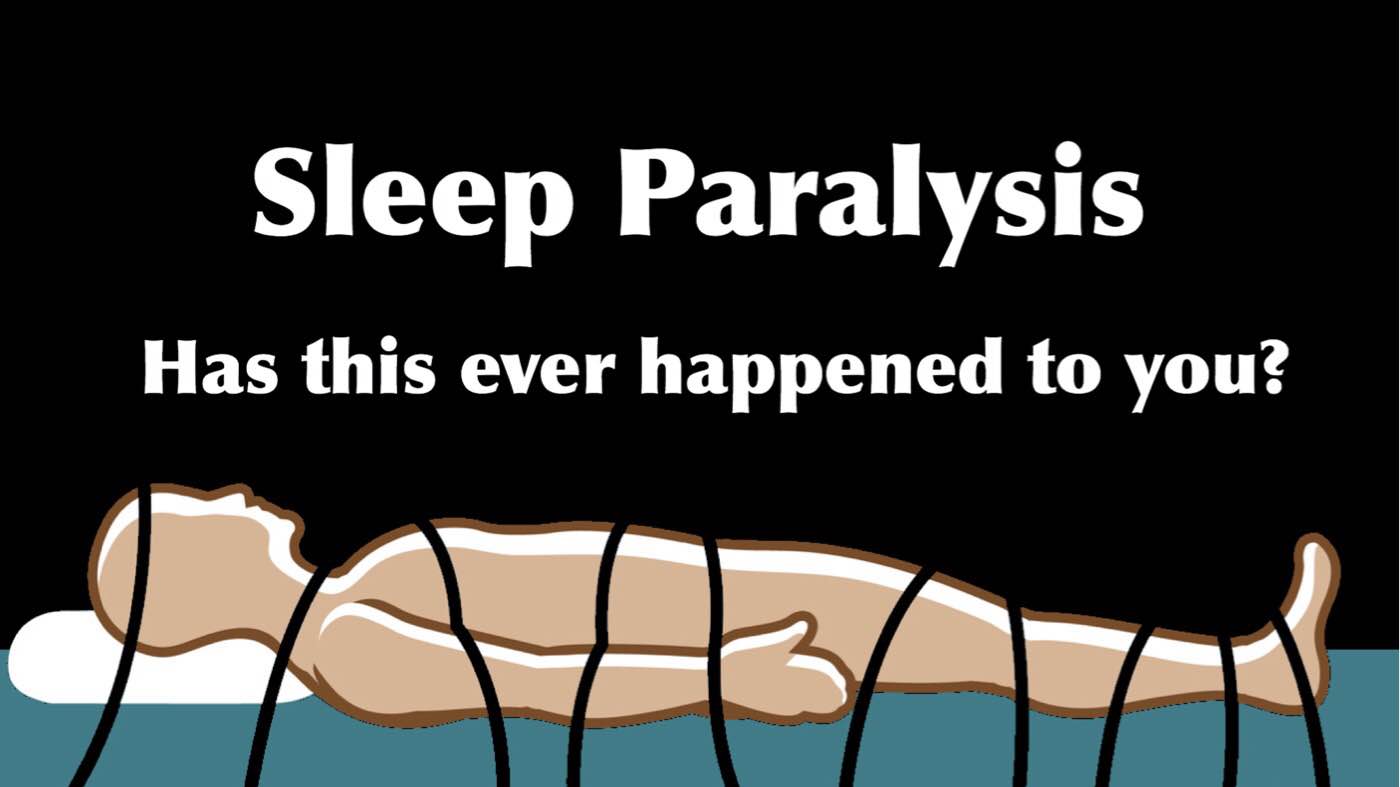
sleep paralysis

RELATED: Have You Ever Woke Up In The Middle of The Night Unable To Move? This May Be Why…

Many people struggle nightly, with some people getting woken up by their bad dreams. But you don’t have to suffer through them each night. It may seem like an impossible feat to stop having bad dreams without some medical intervention, but it can be done. All you have to do is dedicate yourself to stopping those stressful dreams. If you’re struggling, here are some tried and true methods for getting them to stop.

1. Realize it’s just  a bad dream

When you’re asleep, it might be hard to recognize when you’re having a nightmare. However, this isn’t impossible. You have to dedicate yourself to realizing you’re having a nightmare before you actually fall asleep. It may take a few attempts, but you’ll eventually be able to recognize when you’re having a nightmare.

2. Stop your dream

Again, this is going to take several failed nights of practice before you get the hang of it. People are actually capable of stopping their dreams right in their tracks. Once you recognize that you’re actually dreaming, you become able to control the way your dream plays out. This includes stopping the nightmare.

3. Change your dream

A nightmare can’t continue if you’re no longer having it. Once you’re capable of recognizing when you’re having a bad dream and stopping the dream, you’ll be able to entirely change the ending of your dream. Conjure up images that are calming or happy, so you’re able to continue on having your dream without all of those stressful visions.

4. Keep a dream diary

Keeping a journal beside your bed to write down your dreams will give you a better understanding of when you have bad dreams, and what surrounds your life when these happen. You’ll be able to develop a pattern of what’s happening in your life that causes these nightmares. You may find that stress is the major factor, or a new medication is what’s causing your nightmares.
(C)Power of Positivity, LLC. All rights reserved
References:
https://www.rd.com/health/wellness/why-you-have-nightmares/
https://www.webmd.com/sleep-disorders/guide/nightmares-in-adults#1
https://www.psychologytoday.com/blog/dream-factory/201501/do-certain-foods-really-cause-bad-dreams

5 Text Messages to Never Send Your Partner

“Most of us still haven’t grasped the fact that everything we commit to the digital space – not just our public blogs and broadcast tweets, but every private text message, email, and voicemail is likely to be stored and accessible. Forever.” – Douglas Rushkoff

Texting is how so many of us communicate nowadays that it seems just as normal as talking on the phone. It’s quick, it’s easy, and you don’t have to stop what you’re doing to answer a phone call. For a lot of people, communicating with their significant other through text is pretty commonplace. When we’re not together, we tend to text back and forth throughout the day. This goes double for people who are in long distance relationships. However, texting isn’t the same as talking on the phone, or talking back and forth.

Online dating expert Julia Spira says, “I’ve seen someone pen paragraphs of a ‘Dear John’ letter via text. If you were close enough to be naked with someone and talk about the future at some point, have the courtesy to call or meet in person. Sometimes there’s just a misunderstanding that could prevent a breakup.”

Therefore, make sure you don’t test these things to your significant other.

Here Are 5 Things You Should Never Do To Your Partner Via Text Message

goodnight texts

1. Sending emotionally loaded texts

You can’t accurately read emotions over texts. We have managed to figure out some ways to express emotions, but for the most part, tone gets lost through text messages. So, when you send your partner an emotionally loaded text, your partner may not get the full implication of the message. This can cause a lot of frustration and hurt feelings. This also leaves the message open to incredible misinterpretation.

“Some studies suggest that up to 93% of communication is non-verbal. So if you are sending an emotional message with a limit of 140-160 characters, this increases the chances of misunderstandings,” adds relationship counsellor and Gestalt therapist Clinton Power.

If you’re sending a text with strong emotions, ask yourself why. If it’s something that can better be communicated through a phone call or face-to-face where your emotions can be better expressed, then it might just be better to forgo a text message.

2. Reading between the lines

As dangerous as sending an emotionally loaded text can be, projecting emotion onto a text can be equally frustrating for both you and your partner. When your partner sends a text message, it’s important to just read the words that are there and try not to interpret things that aren’t there. If you’re not sure what a text message is supposed to mean, it’s better to just ask to clarify. You can do this either through text message or by giving them a call so you can hear the emotion in their voice. Projecting emotion into a text that isn’t there can cause a lot of frustration and hurt feelings that don’t need to be.

3. Venting via text

If you have a lot of pent up emotions, like anger or frustration, you might be tempted to vent to your partner via text. Especially if you’re upset with them, venting or dumping your emotions through texts can be pretty tempting. But this is another thing you want to avoid when texting your partner. Text messages aren’t secure and anyone can read them if the person happens to allow others to see it.

Nikki Martinez, PsyD says, “Never have an important, in-depth conversation via text because of tone—we are too easily misunderstood, and take the very large chance of making the problem worse than it was in the first place.”

Not all relationships last forever, and your partner may have ill intentions with your venting texts. Make sure you’re careful about what you say via text message. It’s better to just vent to your partner face-to-face, or wait for yourself to calm down.

“Not only are you stirring up old dirt, you’re doing it in a passive aggressive way that prevents someone from responding in any meaningful sort of way. Things get misunderstood over text all the time since there is no tone of voice or body language to gauge, making a text the worst possible way to bring up an old issue,” lifestyle coach Jaya Jaya Myra

4. Ending a relationship

When it’s time for a relationship to end, it can be both sad and freeing. Depending on if the end of the relationship is amicable, both you and your partner can have a lot of feelings that need to be processed. Ending a relationship with a text message can be cold, callous, and make your partner feel like you don’t really respect them or care about their feelings. Imagine how you would feel on the other end, and realize that your partner deserves to have a face-to-face conversation about the end of your relationship.

texting in relationship

5. Sexting

Who doesn’t like a little sexy texting? A lot of people feel like it’s a lot of fun and a way to spice up a relationship. Unfortunately, it might be something you want to reconsider doing. Sending a flirty message is okay, but when you send a photo of yourself, either scantily clad or completely naked, you’re giving your partner a lot of power over you. Sure, we all want to trust our partners with the pictures we send them, but you might not be with them forever. If you end up breaking up, your pictures will still be on their phones.

“The issue here is if you choose to send a sexually explicit message to someone, even your partner, once that message has been sent it is out of your control. You have no say in where it goes, who sees it and where it is posted,” adds Power.

Keep those sexy pictures to yourself and let your partner enjoy the real thing.

Final thoughts

Texting can be a great way for couples to communicate throughout the day, or when they’re spending time apart. But texting isn’t always the best way to communicate some things. Keep these things in mind when texting with your partner and make sure you don’t make these common mistakes.

References:
https://www.rd.com/advice/relationships/things-never-do-text-message/
https://clintonpower.com.au/2010/02/avoid-relationship-breakdown-social-media/
https://www.bustle.com/p/13-things-you-should-never-say-over-text-message-7571635

6 Signs Someone’s Relationship Is Falling Apart (And They Don’t Know It)

No one wants to admit that their relationship is falling apart, and that it might be time to move on. Many people often deny the obvious signs that their relationship is coming to an end. After all, we put so much of our time and energy into cultivating these relationships, it can be hard to admit when they’re no longer good for us.

“Some of the insurmountable ‘deal breakers’ in a relationship are one person pushing to make a more formal commitment and the other not being ready. Another is partners of two different faiths refusing to come to a compromise about what religion(s) to raise children in. Other common areas are when a spender marries a saver, and one partner is not willing to work on this issue to where both partners are comfortable,” says psychologist Nicole Martinez, Psy.D., LCPC.

Learning the signs of a failing relationship is important for everyone, and it can save people a lot of heartbreak in the end. Someone’s relationship might be falling apart, and they don’t even know it! That’s how subtle these signs can sometimes be. Here are ways to tell when a relationship is falling apart – even if no one else can tell.

Here Are 6 Signs Someone’s Relationship Is About To End

“It is always important to know when something has reached its end. Closing circles, shutting doors, finishing chapters, it doesn’t matter what we call it; what matters is to leave in the past those moments in life that are over.” – Paulo Coelho

1. Lack of communication

Relationships need communication like we need food and water. When there’s no more communication, a relationship starves. While couples may be talking every day, they’re not communicating like they used to. This means that arguments go on longer than they used to, misunderstandings are happening every other day, and people’s feelings are getting unintentionally hurt because they can no longer communicate with one another.

Sexologist and sex coach Amy Levine says, “Avoiding the conversation, whether it’s about sex or something else, can lead to one or both partners feeling a range of negative emotions even if on a sub-conscious level. And if they are in La La Land and putting up a front that all is OK at home, playing this game in and of itself can be exhausting and take its toll.”

When the communication starts to go, it’s a big sign that the relationship is falling apart.

2. Not spending time together

People are supposed to enjoy spending time with their significant other – that’s kind of the whole point!

“Arguments over how time is spent, is fairly common in relationships. But it becomes a problem when quality time is eliminated from the relationship. A lack of quality time over a period of months or years can lead to frustration, resentment and withdrawal. It can also cause feelings of neglect, which creates further emotional and physical distance,” says author and marriage and divorce transformation specialist Nicola Beer.

Sure, we all have our own lives, and often spend time apart with other friends and family members. But when partners aren’t seeing each other as much as they used to, and no life event has mandated they spend time apart, it can be a red flag that the relationship is falling apart. Especially if the time apart doesn’t bother them!

signs of failing relationship

3. Lack of affection

Affection and intimacy is kind of the reason that people decide to become significant others – otherwise, we’d all just be hanging out with our best friends. When the affection starts to go, the relationship can also begin to starve and fall apart. Affection is a great way to connect with our partners and let them know they’re loved and wanted. If the affection begins to wane, it can mean a disconnection.

4. Keeping secrets

Our partners don’t have to know every little detail about our lives and day – if they don’t know about that time you broke your leg in 3rd grade, it’s probably not a huge deal. However, when we start feeling like we don’t want our partners to know about certain parts of our lives, and start actively keeping secrets from them, it might be time to take a long hard look at the relationship and see what’s up.

“While trust is an essential element of an intimate relationship, it can be easily broken and hard to repair. When your partner withholds important information from you regardless of their reasons, it’s normal to feel betrayed. For many people any form of deceit can be a deal breaker. In other words, by keeping secrets or lying to your partner, you run the risk that you will lose their trust and put your relationship in jeopardy,” adds clinical social worker and college instructor Terry Gaspard, MSW, LICSW.

A big part of any relationship is trust, and when that trust starts to fade, secrets start to come out to play.

5. No more patience

The things that our partners did at the beginning of the relationship used to be so charming! The way they were a picky eater, or the strange rituals they had before bed time. It was all new and exciting and charming and every little thing got us to fall more and more in love. But, once a relationship is at its end, those little habits start to become more and more annoying. As a result, we no longer have the patience to deal with them. When the patience runs out, partners start to argue more and more, and it can only turn into a disaster. If the things about your partner you once loved now annoy you, it might just signal that the relationship is falling apart.

6. Escape plans

When an escape plan becomes fully formulated, from either one or both partners, this is a time to step back and realize that the relationship is no longer healthy, and is falling apart at the seams. When there’s a clear strategy of getting out of the relationship, along with a whole break-up speech and having a place to stay if there’s cohabiting involved, then there’s a reason for it.

“It’s easy to get enveloped in these thoughts — sometimes they are escape outlets when you feel particularly trapped. But if such fantasies arise more and more frequently, and with greater detail, your subconscious may be sending you strong messages that it’s time to get out,” says Robert Taibbi, L.C.S.W.

People don’t make escape plans for relationships that they’re happy and committed to. This is a red flag that the relationship is in trouble.

Final thoughts

Watching a relationship fall apart, especially if it’s your own, can be frustrating. Sometimes, it’s best to let that relationship come to its natural end. Other times, these red flags can be just the wakeup call we need in order to become a better partner, or to demand the respect we deserve out of a relationship. Either way, these signs will let anyone know that a relationship is falling apart before they even realize it.

References:
https://www.bustle.com/articles/164703-11-signs-your-relationship-might-be-falling-apart-its-time-to-move-on
https://www.today.com/series/one-small-thing/5-relationship-warning-signs-couples-should-never-ignore-t33981
https://www.huffingtonpost.com/terry-gaspard-msw-licsw/how-keeping-secrets-can-trust_b_5656669.html

Doctors Explain How OCD Is Caused By Inflammation In The Brain

Inflammation is the body’s defense mechanism that is meant to protect us from internal and external threats. We are exposed to a myriad of potentially damaging toxins daily–food, water, cigarette smoke, polluted air, dtc.–and it may cause OCD, say doctors.

And we produce toxins internally. Chronic stress, anxiety, negative thinking, bacteria, and viruses – all of these things contribute to the toll that toxins take on our bodies and minds.

Well, the inflammation response helps to heal these things. In fact, without the inflammatory response, we wouldn’t last very long!

Here are a few quick facts on inflammation:

  • The body attempts to self-heal and is designed to eliminate harmful stimuli.
  • Inflammation is part of the body’s immune response.
  • Inflammation heals bruises, cuts, infections, tissue damage and wounds.

Things start to become a problem when the inflammation response becomes long-term – otherwise known as chronic inflammation. Chronic inflammation causes the following health disorders:

  • active hepatitis
  • asthma
  • chronic peptic ulcer
  • Chron’s disease
  • periodontitis
  • rheumatoid arthritis
  • sinusitis
  • tuberculosis
  • ulcerative colitis

OCD

Dangers of Neuroinflammation

Neuroinflammation is  “inflammation of the nervous tissue,” and can be stimulated “in response to a variety of cues, including infection, traumatic brain injury, toxic metabolites or autoimmunity.”

Per Medical News Daily, “Growing evidence suggests that certain psychiatric conditions may involve neuroinflammation, some of which include major depressive disorder, schizophrenia and bipolar.”

And, according to a recent study, scientists may soon add Obsessive-Compulsive Disorder, or OCD, to that list.

What is Obsessive Compulsive Disorder (OCD)?

OCD “involves unwanted and disturbing thoughts, images, or urges (obsessions) that intrude into a (person’s) mind and cause a great deal of anxiety or discomfort, which the (person) then tries to reduce by engaging in repetitive behaviors or mental acts (compulsion).”

OCD is more common than most people think. The website beyondocd.org estimates that the condition affects 1 in 40 U.S. adults and 1 in 100 children. These numbers add up to about 2.3 percent of the U.S. population – or roughly 7.4 million children and adults.

Cognitive behavior therapy (CBT) and prescription medication are the two most common treatments for OCD. Currently, prescribed treatments are successful at about a 70 percent clip.

How OCD connects to inflammation:

In a research study, subsequently published in the Journal of the American Medical Association: Psychiatry, scientists discovered a link between brain inflammation and OCD.

The team recruited 40 participants for the study, comprised of 20 individuals diagnosed with OCD, and 20 non-OCD participants.

To test their theory, the research team had to have a way to measure inflammation activity in the brain. Eventually, the team was able to effectively “color code” the brain cells responsible for immune defense (Microglia) by using dye.

After administering the dye, the team measured microglia activity within six regions of the brain thought to be responsible for OCD using Positron Emission Tomography (PET scan).

After analyzing the differences between OCD and non-OCD PET scans, researchers found that those with OCD had 32 percent more inflammation in the six brain regions associated with the disorder.

Dr. Jeffrey Meyer, head of the Neuroimaging Program in Mood and Anxiety at the Center for Addiction and Mental Health in Toronto, Canada – and the study’s lead author – says, “This finding represents one of the biggest breakthroughs in understanding the biology of OCD, and may lead to the development of new treatments.”

relationship

       RELATED: 6 Signs Your Partner Has Relationship OCD

From OCD Research to Treatment

Given that inflammation is the cause of numerous diseases, plenty of drugs – both over-the-counter and prescription – exist to correct it.

Non-steroidal anti-inflammatory drugs (NSAIDs) like ibuprofen (Advil, Aleve) cross the blood-brain barrier, which, instinctively, would make the drugs at least marginally effective in reducing inflammation within the brain.

Whenever the brain is the subject of a research study, scientists, public health officials, and physicians demand additional proof – including verification of treatment efficiency.

Meyer, of course, understands this. “Medications developed to target brain inflammation and other disorders could be useful in treating OCD.” Meyer cautions, “work needs to be done to uncover the specific factors that contribute to brain inflammation, (and) finding a way to reduce inflammation’s harmful effects and increase its helpful effects could enable us to develop a new treatment much more quickly.”

Scientifically validated treatments may be a way off, but Meyer’s study provides hope to those suffering from a problematic mental condition.

Sources
http://beyondocd.org/ocd-facts
https://bodyecology.com/articles/top-5-sources-of-toxins.php
https://www.medicalnewstoday.com/articles/248423.php
https://www.medicalnewstoday.com/articles/318036.php

7 Early Warning Signs of A Bad Thyroid to Never Ignore

The term “bad thyroid” refers to an underactive thyroid gland known as hypothyroidism. The thyroid gland is a small butterfly-shaped organ in the neck that produces hormones that regulate metabolism and other critical bodily functions. When the thyroid gland is not functioning correctly, it can produce too little of these hormones, leading to a condition known as hypothyroidism.

Diagnosis of hypothyroidism is typically made through a blood test to measure levels of thyroid hormones and the pituitary hormone TSH. Treatment involves taking a daily hormone replacement pill, typically levothyroxine, which replaces the hormones not being produced by the thyroid gland. With proper treatment, most people with hypothyroidism can lead productive and healthy lives.

What is the Thyroid?

thyroid

Our thyroid gland, a butterfly-shaped organ at the base of the neck, releases hormones that help regulate our metabolism. Other vital functions the thyroid influences include the following:

  • Body temperature
  • Body weight
  • Breathing
  • Central and peripheral nervous systems
  • Cholesterol levels
  • Heart rate
  • Menstrual cycles
  • Muscle strength

Lying near the front of the throat and beneath the Adam’s apple, the thyroid comprises two sides called lobes. These lobes are connected by a strip of tissues called the isthmus.

The total size of this glandular powerhouse? Two inches.

How Does the Thyroid Gland Work?

Thyroid: a large ductless gland in the neck that secretes hormones regulating growth and development through the rate of metabolism. ~ Oxford English Dictionary

The thyroid is a constituent of the endocrine system – a collection of glands responsible for producing, storing, and releasing hormones into the bloodstream. The thyroid gland uses iodine from our foods to manufacture two critical hormones, ‘T3′ and ‘T4′.  (‘T3’ hormone is short for the hormone Triiodothyronine; ‘T4’ for Thyroxine.)

Thyroid hormone production is regulated via a feedback loop between the thyroid gland, hypothalamus, and pituitary gland – two deeply entrenched, tiny brain areas.

The production of T3 and T4 hormones is a complex process. And as with anything complex, it’s not uncommon for thyroid problems to surface.

Seven Early Signs of Thyroid Troubles

It’s estimated that as many as 25 million Americans have a thyroid issue. Of this 25 million, roughly half (12.5 million) don’t realize it. Hypothyroidism, or an underactive thyroid, accounts for 90% of all thyroid conditions.

Here are seven of the most common symptoms of hypothyroidism–if you have these ongoing symptoms, reach out to your doctor for testing and guidance:

thyroid

1. Fatigue

Our body’s energy production requires a certain amount of thyroid hormones. Therefore, a significant drop off in this production leads to diminished energy levels, producing a strong sense of fatigue and weakness.

2. Weight gain

A shortage of thyroid hormones slows the body’s metabolic rate. When this happens, we don’t digest as many foods. As a result, fewer calories convert into energy. A lack of or insufficient treatment makes weight loss nearly impossible for many thyroid patients, even with proper diet and exercise.

3. Recurring sickness

Hashimoto’s thyroiditis, an autoimmune disease, is the most common type of hypothyroidism. As we all know, a suppressed immune system makes it much more difficult to ward off harmful viruses and bacteria; this results in more frequent illness. Most worrisome is that Hashimoto’s causes the immune system to attack otherwise healthy organs and tissues.

4. Loss of coordination

Hypothyroidism that goes untreated can damage the peripheral nerves. These nerves relay information from the brain and spinal cord to the rest of the body, including our arms and legs. As a result, damage to these nerves may cause numbness, pain, and tingling in the affected area(s).

5. Brain fog

Our brain houses a particular type of immune cell called microglia. 10-15% of all brain cells are microglia, stimulating the body’s immune defense within the central nervous system (CNS). Brain fog stems directly from brain inflammation, a byproduct of irritated microglia cells. So forgetfulness, an inability to concentrate, and diminished cognitive ability are all telltale signs of brain fog.

6. Anxiety or depression

The brain is susceptible to inflammation. Besides experiencing a general loss of mental acuity (“brain fog”), our neurochemicals, i.e., neurotransmitters, are thrown out of whack. As the human brain is already susceptible to anxiety thanks to the fight-or-flight response, further imbalances increase the risk of anxiety and depression.

7. Various “under the surface” symptoms

Sometimes we intuitively know when something is wrong with our bodies. Relatedly, thyroid troubles are notorious for creating a mess of subtle yet distracting symptoms.

Here’s a “short list”: mood swings, excessive sleep, muscle and joint pain (including tendonitis and carpal tunnel), cold hands and feet, brittle nails, dry skin, hair loss, constipation, and neck swelling.

Maintaining Thyroid Health

Being the intelligent people you are, you quickly grasp the importance of thyroid health. But the truth is that many people downplay the importance of a healthy thyroid gland. Some are utterly unaware of what the thyroid is and what it does.

Here’s one case in point for why thyroid health is critical:

Myxedema, an advanced form of hypothyroidism, is rare, but it can be life-threatening when it occurs. Signs and symptoms include low blood pressure, decreased breathing, decreased body temperature, unresponsiveness, and even coma. In extreme cases, myxedema can be fatal.

thryoid

Final Thoughts: Ten Things You Can Do to Improve Thyroid Health

Dr. Amy Myers, a board-certified physician and a survivor of Grave’s disease, recommends the following ten things to improve thyroid health.

  1. Make sure you take a high-quality multivitamin with Iodine, Zinc, Selenium, Vitamin D, and B vitamins.
  2. Take a tyrosine supplement such as this one by Thorne Research to help with the FT4 to FT3 conversion.
  3. Go gluten-free! If you have Hashimoto’s, try going ultimately grain and legume free.
  4. Deal with your stress and support your adrenal glands. That’s because the adrenal glands and thyroid work hand and hand. So try restorative yoga and adaptogenic herbs (which) support the adrenal glands in coping with stress.
  5. Get eight to ten hours of sleep a night.
  6. Have a biological dentist safely remove any amalgam fillings you may have.
  7. Watch your intake of raw goitrogens. There is a bit of a debate surrounding this.
  8. Get fluoride, bromide, and chlorine out of your diet and environment.
  9. Heal your gut. A properly functioning digestive system (gut) is critical to good health.
  10. Find a functional medicine doctor in your area, have them run the above laboratory test. Then ask them to work with you to find the root cause of the thyroid imbalance.

Incorporating the right amount of iodine in your diet also helps! So eat iodine-rich foods, including sea vegetables, cranberries, yogurt, fish, eggs, whole-grain products, and unpasteurized dairy products.

5 Differences Between A Relationship Partner and A Life Mate

Many people go through different kinds of relationships in an effort to find the one person that they truly want to be with for the rest of their lives. It can be hard to tell who is supposed to be your life mate, and who is simply supposed to be a relationship partner. Sometimes, we confuse the two and spend longer than we need to in a relationship that isn’t meant to last forever.

There are key differences between a simple relationship and a relationship with your life mate.

Once you know the difference, finding that special someone to spend your whole life with will be a much easier. Not only that, but you will be able to pinpoint relationships that aren’t working much more effortless.

Here Are 5 Differences Between A Relationship Mate And A Life Partner

relationship

1. You feel like you’ve known them forever

When your life mate walks into your life, it can suddenly feel like you’ve known them your entire life. While you may find out new things about them every day, they don’t feel like a stranger to you. You’re immediately comfortable around them and feel you can tell them anything.

Soulmates often feel a sense of the familiar and a sense of comfort around each other. Many people say it’s easier to relax into that person and allow themselves to be vulnerable,” says wedding officiant and author Rev. Laurie Sue Brockway.

With relationship partners, it can take a while to start to trust them and get to know them. But your life mate will feel like you’ve known each other from the moment you were born. It’s an amazing feeling.

2. Your attraction is physical, spiritual and emotional

When you meet your life partner, everything about them is attractive to you. Not only will you be physically attracted to what they look like, but you’re also going to be spiritually and emotionally attracted to them. When it comes to simple relationship partners, you may find them attractive, but not everything else lives up to the idea of a life mate. You may get along well, and have a good time together, but it’s not quite the same as being spiritually and emotionally attracted to someone.

3. They know you intuitively

When you’re with your life mate, it’ll almost feel like they can read your mind. While that’s not actually possible, they will be much more highly attuned with your emotions and your personality to feel like they’re able to read your mind. Relationships can often falter with communication because we’re not actually mind readers.

“It seems like your senses and perceptions are feeding off of each other so much so that one or both of you often say, “I was just thinking that”, “You read my mind”, or?”How did you know?” They see you on a deeper level and can sometimes do it early on in your relationship,” adds speaker and presenter Lori Peters.

The deep spiritual and emotional connection you share with your life partner, vs. just a relationship partner, will make communication flow much easier. This isn’t to say you won’t have your moments, but you’ll be able to work them out much quicker.

4. You keep falling in love

With relationships, people can sometimes feel their love plateau – or worse, they can feel themselves falling back out of love with the person that they were with. When you find your life mate, you don’t have that problem. In fact, you keep falling deeper and deeper in love with them. It doesn’t seem to end. There’s a never-ending well of love inside your heart for this person. All of their flaws and quirks are just a part of them and they make you love them even more. Every day you find something new about your life mate that makes you love them more than you already did – even if you didn’t think it was possible.

signs of soulmate

5. You feel secure and protected by the relationship

In a normal relationship, you might feel comfortable and happy. This is good and normal. You should feel relaxed in a relationship. However, these feelings seem to compound when you’re with your life partner. You feel secure and physically and emotionally protected from all of the stressors in the world. You know that your partner has your back through anything.

Author, clinical psychologist, and relationship expert Dr. Carmen Harra says, “Regardless of the gender of your partner, he or she should always make you feel secure and protected. Your soulmate will make you feel like you have a guardian angel by your side. A person who plays on your insecurities, whether consciously or subconsciously, is not your soulmate.”

No matter what comes up, they will instinctively have your back and be on your side – even if you’re in the wrong. But they’ll be there to help you through anything, and you’ll never have to worry about not having someone in your corner.

Final thoughts on knowing the difference in your relationships

Relationship partners and life mates are two different types of emotional and physical relationships. We have many relationship partners, but only one life mate. You may not realize you’ve found your life mate until you’re already caught up in their love. However you find them, they will be by your side through everything, loving you in ways you never knew were possible.

5 Signs Your Partner Is Ghosting You

What is “ghosting?” This is a term that’s risen to popular usage in recent years to describe a phenomenon of when a potential partner suddenly stops speaking to you. No more texts, no more messages, no more calls – and they suddenly seem to always be busy when you’re trying to get them to hang out with you.

“Silent treatment is nothing unusual when it comes to long-term relationships – ‘ghosting’ can happen after just the first date or sometimes many dates,” says relationship counsellor and Gestalt therapist Clinton Power.

Some people are ghosted by their partners, which is a way for one person to try and end a relationship without doing any of the hard, emotional work. If you’re worried that your partner is starting to ghost you, have no fear. There are some telltale signs that your partner is ghosting you. Once you know the signs you’ll be able to confront them, or end the relationship on your own terms.

Here Are Five Telltale Signs Your Partner Is Ghosting You

“When you get ghosted, be happy they’re on a one-way ticket with no return address.” – Julie Spira

1. They cancel plans and don’t reschedule

A big sign that your partner is going ghost is when they suddenly start cancelling your plans to hang out together. It can be anything from planning to go to the movies together, to hanging out at your apartment. Whatever the plan, big or small, it seems like they always have a reason to cancel.

“Men who are checking out on you and on the verge of disappearing for good tend to be unable to simply tell the truth: ‘I’m just not that into you.’” But if you try to bring it up with them, they’ll probably give you excuses they think sound “good”: Work is so busy now. Traveling nonstop with work. Pressure from my family to come visit more often. Watch for these lame excuses. They usually are a harbinger of things to come,” says dating expert and author of Smoke Drink F*#k, Esme Oliver.

They’re always busy, or working, or have something else important that they need to be doing. And they never seem to be able to offer a definite reschedule date. In fact, sometimes they won’t even offer vague dates like “next week”. This leaves you left feeling like they don’t really want to hang out with you all that much.

2. They go silent on social media

Social media is a great way to stay connected with everyone in our lives, even our significant others. It’s also a good measure on whether or not you’re being ghosted by your partner. A major red flag to potential ghosting is when your partner stops interacting with you on social media altogether. Either they unfriend you or soft block you (blocking and then immediately unblocking so you no longer follow them), and you’re left wondering where they disappeared to. This is usually coupled with them still texting you and stringing you along in other ways. If their social media goes dark, this is probably a red flag that you’re about to be ghosted.

3. You don’t have any friends in common

Someone who plans on ghosting their significant other sometime in the future is probably not going to invest in introducing that person to their friends. If for whatever reason, you two don’t seem to have any friends in common whatsoever, it’s probably because they’re not that invested in your relationship. It also means that they’re probably preparing to ghost you so that you don’t have any contact with their friends to find out what happened. If they’re adamant that you don’t need to meet their friends, this is a red flag to someone who isn’t going to treat you the way you deserve.

4. They take forever to get back to you

In the beginning, things are great – you’re messaging all the time, seeing each other a lot, and enjoying being together. But now, it seems like the conversations lag and drag on.

“A good indicator of a classic ghost would be when someone is ALWAYS on their phone, yet when you’re not with them it seems like you’re rarely getting that text or phone call,” says Melissa Rogers, a professional matchmaker.

You can’t seem to get a quick text out of them, and they take forever to get back to you about plans, or just in general. People can get busy, but we usually make time for our significant others. Even on our busiest days, sending a message telling your partner you’re thinking of them only takes a minute. When it seems like they no longer want to take the time to get back to you, it’s probably a sign that they’re getting ready to disappear like a ghost.

“They don’t feel obligated to answer you until they ‘feel’ like it, which can be hours or days,” adds author and sex therapist Dr. Gloria Brame.

5. They don’t have anything to say

When you finally get ahold of them after days of not speaking, are they bursting to tell you everything that’s been happening? Or do they seem like they haven’t got anything new to tell you? Usually, when you’re being ghosted, your partner isn’t going to put that much effort into the conversation that you do have.

“He is no longer engaged in conversation or previously shared interests. And while his behavior is noticeably different, if he is confronted, he denies that anything is wrong,” says Teresa Solomita, a psychoanalyst and relationship Therapist.

This is a red flag that they’re not really all that invested in you anymore. Where you used talk for hours on end, it may now seem like getting them to talk is like pulling teeth.

Final thoughts

Getting ghosted isn’t fun! Knowing the signs can prepare you for when it happens. Taking control of the end of a relationship can be a powerful thing. If your partner seems to be ghosting you, it might just be time to take control and end it before they disappear into smoke. You’ll be able to find someone who appreciates you when you’re not hung up waiting on them.

(C)Power of Positivity, LLC. All rights reserved
References:
https://clintonpower.com.au/2015/07/ghosting-ultimate-silent-treatment/
http://bestlifeonline.com/ghost-signs/
https://www.glamour.com/story/7-signs-of-a-toxic-relationship-with-your-so

10 Things to Remember Before You Discipline A Child

(***Acknowledgement…) Being a parent is hard work. If you’re a parent, you know this. It’s hard. Unfortunately, parents sometimes let their emotions get the better of them and dish out discipline that is neither in the parent’s or the child’s best interest.

Be the parent TODAY that you want your kids to remember TOMORROW.

To all current and future parents, please go back and re-read the above quote again. In fact, do yourself a favor and memorize it. The quote isn’t long, so it shouldn’t be too hard. Most importantly, understand that these words are 100 percent true.

What kind of parent is your child going to remember? What kind of influence are you going to leave with them? And what will you teach them? Parents are a huge influence on a child’s personality.

Parents help determine what kind of person that child will become.

Enter discipline.

The word ‘discipline’ stems from the Latin word disciplina ‘instruction, knowledge’ from discipulus ‘learner’, from discere ‘learn.’

While many of us attach a certain degree of harshness to the word ‘discipline,’ the word was born from the ideas of instruction, knowledge, and learning.

This isn’t to say that firmness in the application of discipline isn’t necessary; sometimes it is. In the military, firm discipline can save lives. In the classroom, steady discipline maintains order. And in our daily lives, self-discipline can lead to achievement, financial freedom, and happiness.

Discipline can make us better people.

Discipline can make our children better people.

Child Discipline: 10 Things To Know

“Discipline isn’t just about giving kids consequences. Instead, it ensures children are gaining the skills they need to become responsible adults.”

The above is a quote by Amy Morin, a renowned life coach and discipline expert. In one of her posts, Morin describes four ways in which proper discipline benefits children:

1. Discipline helps kids manage anxiety.

Morin states that kids test the patience level of caregivers to ensure they’re able to keep them safe. When positive and negative consequences are offered, children learn and grow. On the flip side, overly-permissive parents convey a lack of guidance and leadership, which is a source of anxiety for youngsters.

2. Discipline teaches kids to make good choices.

child discipline

Morin states that temporary suspension of a child’s privileges, or “play time,” provides the child with the incentive to make better choices. Healthy discipline helps children learn impulse control, self-control skills, and problem-solving skills.

3. Discipline teaches kids to manage emotions properly.

Morin uses the discipline of “time-out” to illustrate this next point. “When a child receives a time-out after hitting his brother, he learns skills that will help him manage his anger better in the future.”

Morin also describes the benefits of positive discipline strategies, such as praise: “When you say ‘You are working so hard (even) though it is really hard to do. Keep up the good work,’ your child learns the importance of tolerating frustration.

4. Discipline keeps kids safe.

Teaching children to look before they cross the road – and administering positive discipline if they fail to do so – can ultimately save a child’s life. While children will inevitably get hurt, a necessary foundation of self-control, achieved through discipline, benefits the child in both the short and long-term.

5. Positive discipline is paramount.

Dr. Jane Nelsen, a distinguished educator, psychologist, and mother of seven states “The key to positive discipline is not punishment, (but) mutual respect.” While the specifics of Nelsen’s discipline framework is beyond this article’s scope, positive discipline teaches rather than punishes; encourages rather than praises; focuses on identifying and correcting the behaviors rather than the child.

6. ‘Negative Discipline’ is real – and it’s pointless

Negative discipline is counterproductive and potentially harmful psychologically. Striking, admonishing, or otherwise mismanaging one’s emotions while issuing discipline has been shown – in study after study – to be ineffective and possibly damaging to the child.

7. ‘Logical Discipline’ is real, too – and it’s effective

WebMD explains ‘logical consequences’: “The consequence is directly linked to the behavior. For example, you tell your child that if he doesn’t pick up his toys, then those toys will be removed for a week.”

8. Taking away privileges is another way

Temporarily removing privileges is another effective means of discipline. If the child doesn’t do their homework on time, for example, taking away their television privileges provides an incentive for them to act responsibly. Timeouts are another means of removing privileges.

9. Natural conseqences may prove more effective

When your child does something wrong, and you let them experience the consequences of that behavior, there’s little need for your intervention. For example, if you’ve told them the importance caring for their toys and they break one, they simply don’t have that toy anymore.

Experience is sometimes the best teacher.

10. Setting the right example beats discipline

As mentioned, children learn from what they see and hear. Parents who set a good example often find that they needn’t frequently discipline their child. After all, the child doesn’t do many things wrong.

They’ve been taught the right way.

Does this mean the child is perfectly behaved? Of course not! All children will get into mischief – that’s part of being a kid! But you can bet that your words and actions directly affect the child’s behavior – and the need for discipline.

Sources:
https://www.oxfordlearnersdictionaries.com/definition/english/discipline_1
https://www.positivediscipline.org/about-positive-discipline
https://www.verywell.com/why-it-is-important-to-discipline-your-child-1094790
https://www.webmd.com/parenting/guide/discipline-tactics#2

5 Signs of Stroke That People Ignore

Just 15 years ago, stroke was the third-leading cause of the death in the United States. Rapid advances in neuroimaging technologies and pharmaceuticals have significantly reduced the number of deaths from cerebrovascular causes.

Today, people are 4.5 times more likely to die from heart disease than stroke – one of the widest discrepancies between the two conditions in history.

Time is of the essence. For each minute that a stroke goes untreated, a person loses about two million brain cells. In another hour, that same person’s brain will age nearly four years.

Stroke conditions worsen rapidly. That’s the bad news.

Denial or ignorance?

silent stroke

The good news – great news – is that strokes are both preventable and treatable.

But far too many people delay treatment, according to Carolyn Brockington, MD, director of the Mount Sinai Stroke Center in New York City.

“Stroke is scary. (For that reason) Denial is the biggest factor in delaying treatment. When I ask stroke patients in the ER why they waited to call 911, the most common response is that they wanted to see if it would go away.”

But most people aren’t idiots – nor are most people crazy. So why would someone see if a stroke would go away?

The only plausible answer is that the person thought their symptoms arose for some other reason.

Masquerading Symptoms

“Silent strokes are real. They’re caused when blood flow to a part of the brain is cut off. But you may not notice anything out of the ordinary. Typically, you learn when you had one when permanent damage is found on a brain scan that you may have for some other reason.” ~ WebMD

Let’s discuss five symptoms of stroke that people commonly mistake for a different condition (which are in parentheses.)

Signs of stroke most people ignore

1. A vicious headache (migraines)

For people diagnosed with migraines, this makes sense. However, if you’re not prone to these particular type headaches, it’s entirely possible that something else is going on.

Ralph Sacco, MD, professor of neurology at the University of Miami North School of Medicine, says “Migraine headaches can masquerade a stroke because they have the same neurological symptoms. I tell people to treat it like a stroke and call for help; let us figure it out.”

Symptoms of a migraine, along with their frequency, include:

Throbbing, pulsating pain – 85 percent.
Light sensitivity – 80 percent.
Sound sensitivity – 76 percent.
Nausea – 73 percent.
Pain on one side – 59 percent.
Vision changes, blurred vision – 44 percent.
Aura – 36 percent.
Vomiting – 29 percent

2. Abrupt thinking problems (fatigue or exhaustion)

Sudden cognitive deficits are common in today’s fast-paced society. We’re working longer hours, commuting more, and taking on additional responsibilities.

In other words, we’re tired.

And fatigue begets thinking problems. However, overtly noticeable cognitive impairment – such as having “tip of the tongue” moments over and over – isn’t the norm.

Dr. Brockington adds, “You might struggle to think of a word every once in awhile, but there shouldn’t be a long period where you can’t think of anything to say or be unable to speak.”

3. Slurred speech (medications)

As you’re probably aware, America (and many other countries) is contending with an anxiety epidemic. Perhaps not so coincidentally, we’re also battling a widespread opioid problem.

Oh, and we’ve got a massive problem with doctors overprescribing the hell out of prescription drugs.

Slurred speech is a side effect of many medications, including some that fall into the categories listed above. And many people chalk up speech problems with prescription drugs.

But if slurred speech isn’t usually a problem after taking medication, it’s best to be safe and seek immediate help – especially if joined by other stroke-related symptoms.

4. Numbness (compressed nerve)

After waking up, it’s not unusual to have a limb or two that’s “fallen asleep,” also known as a compressed nerve. However, Dr. Sacco says, “Don’t feel like a hypochondriac. If your arm is suddenly numb or weak, and it doesn’t go away in a few minutes, call 911.”

If you’re experiencing prolonged numbness or weakness on one side of the body, and want to avoid overreacting, the Mayo Clinic provides the following advice: “Try to raise your arms over your head at the same time, if one arm begins to fall, you may be having a stroke. Similarly, one side of your mouth may droop when you try to smile.”

5. Vision problems (exhaustion, old age)

Yes, exhaustion can cause distortions to our vision.

Old age? Perhaps, if you’re not wearing your prescription eyewear.

But vision problems that include haziness, double vision, or loss of sight can be a sign of stroke. Dr. Brockington says “Seeing two images is very unusual for just being tired…”

An obstructed blood vessel leading to the brain can cause visual distortions.

Preventing stroke

stroke

As always, prevention is the best medicine. Harvard Medical School recommends seven preventative measures for diabetes:

– lower your blood pressure
– lose weight
– exercise more
– drink in moderation
– treat arterial fibrillation (a form of irregular heartbeat)
– treat diabetes
– stop smoking

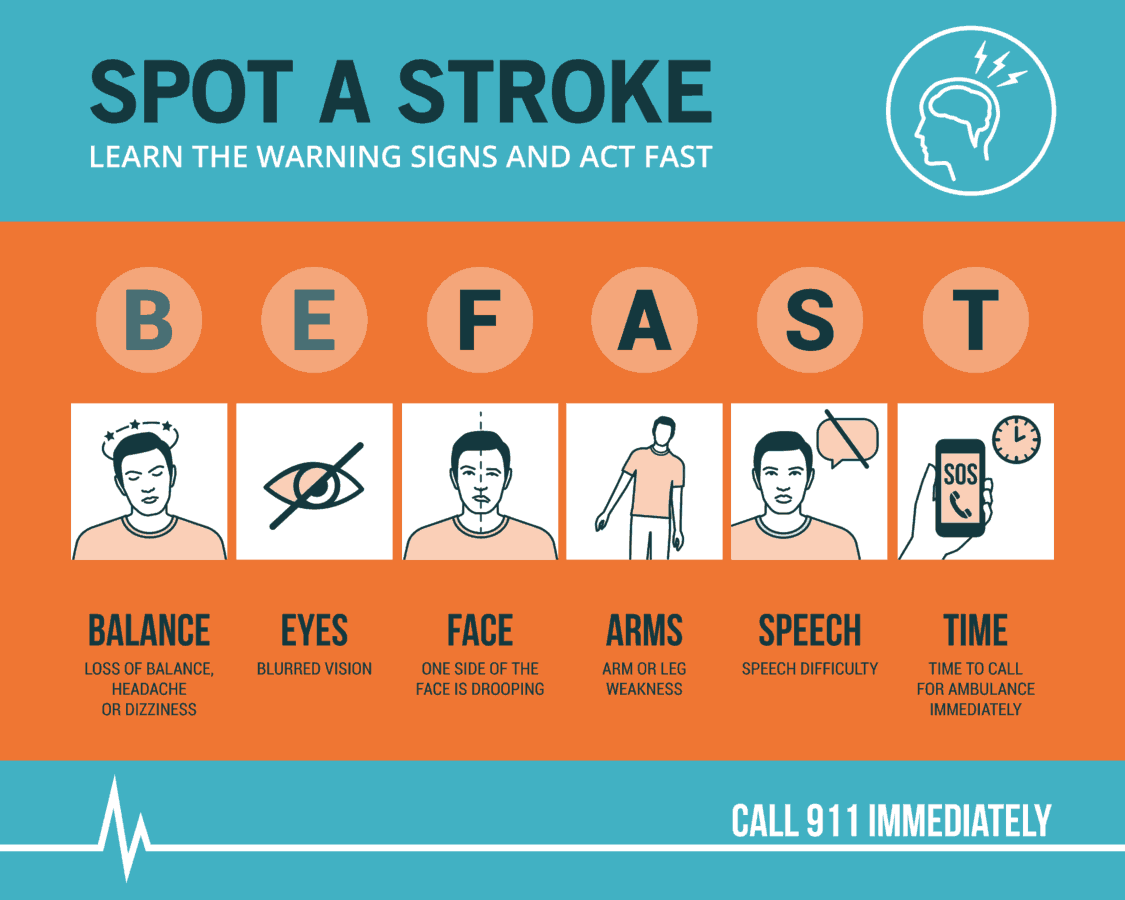
The National Stroke Association recommends the F-A-S-T technique for identifying a possible stroke.

– (F)ace: “Does one side of your face droop when you smile?”
– (A)rms: “When you lift both arms, does one arm drift back down?”
– (S)peech: “Is your speech slurred or does it sound odd?”
– (T)ime: “If you see any of these signs in yourself or someone else, call 911 right away.”

Sources:
https://migraine.com/migraine-symptoms/
https://www.cdc.gov/nchs/fastats/leading-causes-of-death.htm
https://www.health.harvard.edu/womens-health/8-things-you-can-do-to-prevent-a-stroke
https://www.mayoclinic.org/diseases-conditions/stroke/symptoms-causes/syc-20350113
Avoid A Heart Attack Or Stroke: 8 Habits to Never Ignore
https://www.webmd.com/stroke
Skip to content