Weekly tips, affirmations, and small actions to feel your best.

Researchers Explain Why You Need Someone Who Accepts You Completely In A Relationship

Acceptance is extremely important in every relationship we have with another person. We always seek acceptance, even if we like to tell ourselves that we don’t. But seeking acceptance is a natural part of being human. We seek acceptance from our friends, our families, or coworkers, and even from strangers.

Researchers have long been putting in the work to understand why we need acceptance from people, especially from people in our romantic lives. Being with someone who accepts you completely will make changes to your life that you may never have guessed.

Here Are 6 Reasons Why You Need Someone Who Accepts You Completely In A Relationship

1. Less resentment

When we are met with a lack of acceptance from people who we love, this can slowly grow resentment in our minds. Having a partner who accepts you completely, no matter what, means that you won’t have any resentment.

Accepting people does not itself mean agreeing with them, approving of them, waiving your own rights, or downplaying their impact upon you. You can still take appropriate actions to protect or support yourself or others,” says neuropsychologist and author Rick Hanson, Ph.D.

However, no one likes to be told what to do, how to do it, or be told that the things they do or like are unacceptable – especially if they’re not harming themselves or others. Resentment can cause a number of different mental and emotional problems, from anxiety to depression. It can even irreparably damage relationships. Relationships should be about acceptance of one another, not fostering resentment.

2. It brings closeness

Acceptance fosters closeness between both partners.

We have all had moments when we wished our partner was thinner, wealthier, more romantic, and so on. Take a look at your expectations and ask yourself how realistic they are. Unrealistic expectations lead to chronic frustration, which my study found is the main reason relationships fail,” says relationship expert, author, professor and therapist Dr. Terri L. Orbuch.

Being with someone is often a learning curve, and learning to trust someone can take a while. When you’re with someone who accepts you for who you are, completely, then it brings both partners close together. Being aware that your partner accepts you for who you are opens up trust that allows partners to connect and grow closer together. It can even improve a relationship when acceptance replaces nonacceptance.

accepting someone completely

3. Personal growth

When you are with someone who doesn’t accept you for who you are, your personal growth is stunted. When someone doesn’t accept you, even when they never say it, they will still act and behave towards you in a way that shows that lack of acceptance. On the other hand, when you find someone who accepts you as you are, your personal growth expands. You are capable of learning new things and experiencing growth as a person. You’re able to foster your own unique abilities and skills without judgement.

It’s good when someone encourages you to be the best you can be. As long as you still get to be you. Pushing our loved ones to be better is part of what a successful relationship entails. However, if your loved one asks you to be things you’re not, or compares you unfavorably to others, then you should hear warning sirens in your head,” says translator Carolina June.

4. Letting go of control

We can’t control everything. When we try to control everything around us, especially other people, we’re left feeling frustrated and anxious.

When we start a relationship we like to feel in control, powerful even – to protect ourselves from the vulnerability that comes with opening up to a lover. We may carry the hurt from past relationships, so we protect ourselves by trying to appear in control. Yet no relationship was ever deepened by lovers’ attempts to assert themselves over each other – rather, it is through the mutual exploration of their imperfections, fears and anxieties that true connection occurs. It may sound counterintuitive but it’s true,” says couples’ counsellor David Waters.

Having someone who accepts us for our flaws and uniqueness means that we have the ability to let go of that need for constant control.  We want to control everything that we do, and we want to control how people see us. But since we can’t control how other people feel about us, we are often left feeling upset. Having at least one person who accepts us completely begins to free us from that need of control.

5. Peace and serenity

Being surrounded by people who don’t accept us, or parts of us, can leave us feeling like we’re caught in a world of anxiety and chaos. We don’t feel good about ourselves, and that can harm so many different facets of our lives. The importance of peace in our lives shouldn’t be overlooked. When you have someone who accepts you completely, you’ll be able to find an easier peace and serenity that you may not have known before.

When we accept something just as it is, without judgment, without manipulating it to be something else or without a label, we experience peace. We can have the same peace in our relationship when we learn to accept our partner’s behavior without judgment or without trying to change them in some way. Letting go of our expectations of how we think they should be sets us free and we experience peace,” says therapist Tara Mills.

We all deserve to have a place in our lives where we know peace, and being with someone who accepts you completely can be that place.

6. Great self-esteem

Self-esteem shouldn’t be overlooked when it comes to mental and emotional health. With a lack of self-esteem comes a lot of depression and anxiety.

People with low self-esteem tend to have “lower quality relationships” than people with healthy self-esteem. Their relationships have less love and trust, and more conflict and ambivalence. People with low self-esteem’s relationships are also less stable (more likely to break up),” says psychologist and author Alice Boyes, Ph.D.

“The greatest gift that you can give to others is the gift of unconditional love and acceptance.” – Brian Tracy

When we are with someone who doesn’t accept us completely, our self-esteem can drop drastically. On the other hand, having someone who can support you and accept you completely will raise your self-esteem, even when other people in your life don’t show you that same support or acceptance.

Final thoughts

Acceptance is a part of human existence. We seek acceptance from all kinds of people in our lives. Not everyone we come across will accept us for who we are, or accept us completely. However, being with someone who accepts us can drastically change our mental and emotional health, and researchers have agreed that acceptance is important to our well-being.


References:
https://www.lifeadvancer.com/date-person-accepts-the-way-you-are
https://www.psychologytoday.com/blog/your-wise-brain/201410/accept-them-they-are
https://www.huffingtonpost.com/dr-terri-orbuch/9-new-ways-to-deepen-your-relationship-bond_b_6144640.html
http://www.telegraph.co.uk/women/sex/relationship-advice-and-romance/11016984/Relationship-advice-five-experts-reveal-the-secrets-to-long-term-love.html
http://forgoodloving.com/should-you-accept-your-partners-bad-habit-how-accepting-your-partner-benefits-you.html
http://www.aliceboyes.com/low-self-esteem-and-relationships/

5 Phrases Highly Confident People Never Use

Self-talk can have a great impact on your confidence. The effect can be good or bad, depending on whether your self-talk is positive or negative. ~ ReachOut Australia

There are ways for us all to become more confident people – and we should take full advantage. First, It’s important to acknowledge the person we speak to the most – ourselves.

Even though you may not know it, you are engaging in self-talk all the time.

Self-talk is your inner voice; it’s usually so subtle that we don’t pay much attention to it unless we directed.

Positive self-talk starts with merely observing what you routinely say to yourself.

Do you direct positive or negative thoughts and feelings towards yourself?

Do you monitor these thoughts and feelings or are you on autopilot most of the time?

Positive self-talk also boosts your confidence. With a confident mindset, you are far less likely to say something that will come back to bite you. You’re also less likely to hurt someone else with your words.

Again – and this is worth repeating: how we speak to ourselves directly influences how we speak to others.

It’s helpful to start by being kind to yourself.

Moving on…

Things confident people don’t say

1. “I’m sorry…” (When it’s not your fault)

Follow an insecure person around long enough, and you’ll probably hear them apologize to someone for something that isn’t their fault. This apology doesn’t come from a sense of remorse. It comes from being overly passive.

It’s essential that we show others respect – but we must first respect ourselves. Save the “I’m sorry” and say something a bit more genuine and impactful.

“Thank you for your time,” “I’ll let you get back to work,” or “I appreciate your help” will stick with someone – and you’ll appear much more self-assured.

2. “You see, what happened was…”

Unless the absolute truth is about to exit your lips, don’t utter these words. “You see, what happened,” or “What happened was” are two well-known phrases of storytellers.

You know what? Forget this phrase altogether. If something happened that threw you off course, just come right out with it. Forget about prefacing the truth with something that sounds inherently untruthful.

Instead of sounding like you’re hiding something, be confident with how you explain situations!

3. “It’s their fault…”

Here’s some truth for all of us: cowards blame other people.

While something may very well be someone else’s fault, confident people don’t name drop someone to take the fall. By all means, explain what happened! Don’t be the target for someone else’s mistakes. But don’t “rat” on someone out of fear, either.

The most confident people own their worlds. Even if you aren’t a very confident person right now (and that’s okay!), start acting with unfiltered integrity and inner strength.

4. “I don’t feel like it…”

Yes, we’ve all uttered this useless, weak, and self-defeating phrase.

Yes, we’ve all felt the pain of regret by choosing the easy way.

But confident individuals, unsurprisingly, are very self-disciplined – including in how they speak to themselves and others. Though they very well may not feel like doing something, they won’t utter this defeating phrase.

While this isn’t to say that confident people always do what needs to be done, it is to say that highly self-assured people monitor and choose their words carefully.

5. “I can’t…”

difficult roads quote

something but are unable to. Do you where this is going?

Let’s say ‘John’ has committed to a morning workout with his best friend, ‘Dave.’ He oversleeps one morning when all of a sudden the phone rings.

“Hey, John, you ready to go? I’m almost there.”

John, feeling the warmth of the bed calling out to him, says, “I can’t…” He hangs up and goes back to sleep.

What John did was cowardly, selfish, and weak. First, Jon breaks his commitment to his best friend. Second, he seemingly doesn’t give Dave a second thought. Third, he lies.

Confident people tell it like it is. If they “can’t” do something, they will explain the situation – even if it hurts their ego or disappoints someone else.

Final Thoughts

No person is confident all of the time. All of us have said things that are less than truthful and negative.

What’s important is that we make an effort to be more assertive, forthright, and positive individuals.

Making an honest effort to act with self-confidence in areas of your life where its necessary is – by its very definition – confidence and courage.

And for that, you should be very proud.

Sources:
https://au.reachout.com/articles/developing-positive-self-talk
https://www.workandmoney.com/s/phrases-to-avoid-exude-confidence-get-ahead-97a57e7cc7094fbf

10 Behaviors A Sociopath Displays In A Relationship Before Revealing Themselves

Sociopath: a person with a personality disorder manifesting itself in extreme antisocial attitudes and behavior and a lack of conscience. ~ Oxford English Dictionaries

Although today’s medical community doesn’t officially diagnose someone as a sociopath or a psychopath – at least, not anymore – there are individuals among us who fit the bill.

A sociopath can be defined as someone who “typically has a conscience (“what’s right and wrong), but it’s weak.” For example, someone with a proclivity for stealing may feel a pang of guilt after stealing your wallet – but it’s not enough to stop his or her behavior.

The defining characteristic of both psychopaths and sociopaths is their lack of empathy. They don’t have the ability to stand in someone else’s shoes and understand how they feel.

To clear up a gross (but common) misconception: not everyone who fits the bill of a psychopath or sociopath is violent; some are, but most are not. Both groups of characters have a penchant for taking advantage of people to get what they want.

Sociopath ? Relationship

According to Harvard University psychologist Dr. Martha Stout, as many as 25 percent of the U.S. population possesses sociopathic tendencies.

Think about this: One in every four people you’ve met – or will meet – has at least some characteristics that define a textbook sociopath. Colleagues. Friends. Family. Lovers.

It’s not so strange, then, to date, love, and (God forbid) marry a sociopath. For obvious reasons, a sociopath doesn’t make for an ideal lover. While not all dangerous criminals, sociopaths possess antisocial behavior, or, “actions that harm or lack consideration for the well-being of others.”

Here are 10 behaviors that a sociopath may reveal in a relationship:

1. A Huge Ego

The Diagnostic and Statistical Manual of Mental Disorders (DSM-V) notes that one characteristic of a sociopath is “an inflated sense of self.” Sociopaths are extremely narcissistic about their internal and external “gifts.” They’ll prance, brag, showboat, and generally annoy the hell out of anyone unfortunate enough to be in close enough proximity to their overinflated ego.

2. They’re Manipulative

When you (truly) love someone, the last thing you wish to do is mislead them for your personal gain. In fact, the opposite is true – you’ll willingly sacrifice your happiness for theirs. Sociopaths will try to mislead you, and they don’t care about your happiness.

3. They’re Irresponsible or Impulsive

Sociopaths really don’t commit to anything – personally or professionally. When it comes to decision-making, sociopaths don’t think things through. It’s unsurprising, then, that many-a-sociopath are careless criminals who make dumb mistakes.

sociopath

4. They Have No Friends

Sociopaths don’t have friends – at least, not authentic ones. The only use that a sociopath has for someone they call a “friend” is to get something they want. Sociopaths don’t have friends; nor do they want to have friends.

5. They’re Chronic Pleasure-Seekers

“If it feels good, I’ll do it. If I can get away with it, I’ll do it.” This, ladies and gentlemen, is the source of sociopathic joy.

6. They Ignore Social Norms

“The rules of ______ don’t apply to me.” Yep, just fill in the blank. Unless said behavior carries a high risk of landing the sociopath behind bars (and even then, in some cases), they simply ignore the widely-accepted “social contract.”

7. Prolonged Eye Contact

Or the “creepy guy stare.” Whatever you may call it, sociopaths have it down. And it’s bizarre. Sociopaths (and other unnatural personality types) use constant eye contact to show aggression or seduction.

8. Superficial Charm

M.E. Thomas, a self-described sociopath, writes in Psychology Today: “You would like me if you met me. I have the kind of smile that is common among television show characters and rare in real life, perfect in its sparkly teeth dimensions and ability to express pleasant invitation.”

While there are certainly a fair share of moronic sociopaths with zero social intelligence, some can be aptly described as a master of disguise.

9. Lack of Remorse or Shame

Have you ever said the wrong thing to the wrong person at the wrong time? How did you feel afterward? Guilty? Ashamed? Embarrassed?

Most (all?) of us have been in this situation and felt its lingering after-effects. Sociopaths act in a remorseful, shameful way all the time: they just don’t feel any of the emotions.

10. They Break Boundaries

Sociopaths don’t respect the rights of others; so we can’t expect them to understand the notion of “personal space.” Perhaps you’ve tried setting boundaries by telling your partner what you like and dislike; what’s acceptable and unacceptable. Chances are that your efforts mattered little.

(C)Power of Positivity, LLC. All rights reserved
Sources:
https://www.huffingtonpost.com/2013/08/23/11-signs-dating-a-sociopath_n_3780417.html
https://www.webmd.com/mental-health/features/sociopath-psychopath-difference#1

10 Anxiety Management Tricks That Make You Feel Calm Again

“Life is ten percent what you experience and ninety percent how you respond to it.” – Dorothy M. Neddermeyer

Anxiety is much more common than people want to believe. If you suffer from anxiety, don’t worry. You’re not alone, but do not repress anxious thoughts. “Repressing anxious thoughts won’t work; they will just pop up again, sometimes with more intensity,” says psychologist, life coach and author Melanie Greenberg, Ph.D.

There are ways to help yourself feel calm again when you feel overwhelmed with anxiety. Here are some of the best anxiety management tricks to help you calm down, approved by therapists and mental health experts.

Here Are 10 Anxiety Management Tricks To Help You Feel Calm

1. Breathe

This may seem like a no brainer, but when the anxiety hits, it can be difficult to remember to breathe. Focusing on your breathing is a sure-fire way to help yourself calm down when you’re feeling anxious. Author Robert Cooper, Ph.D. says, “Breathing from your diaphragm oxygenates your blood, which helps you relax almost instantly.

Breathing in for a count of five and then out for a count of seven will help you focus your mind and relax your body. Deep breathing will also help get rid of the flight-or-fight response that anxiety often triggers in our bodies.

2. Find a support system

Anxiety is hard to deal with on your own. It’s best to make sure that you have people in your life who will support you when the anxiety gets to be overwhelming. “Research shows that people who encounter major life stresses, such as the loss of a spouse or job, come through the ordeal more easily if they have an effective network of friends or family for social support,” says psychotherapist Ben Martin, Psy.D.

A support network of people can help distract you, calm you down, or give you a reality a check when you really need it. You don’t have to deal with anxiety alone. There will always be people who are going to love you and accept you, so make sure you reach out to them during your time of need.

3. Think positive

Anxiety can occur when negative thoughts start to seep into our day-to-day lives. Stopping those thoughts before they cause anxiety is the key to staying calm. One of the best ways to stop negative thoughts in their tracks is by focusing on the positive.

Purposely focusing on positive thoughts will help you calm down by keeping the negative thoughts at bay. The power of positive thought shouldn’t ever be underestimated. It can even help to write out all of the positive things you experienced that day, or the positive things happening in your life.

positive-thought

4. Avoid caffeine

If you’re prone to anxiety and also drink a lot of caffeine like coffee or soda, you may want to cut back on those types of drinks. “If you’re feeling keyed up all day and having trouble sleeping, look at your caffeine intake,” says wellness expert and health coach, Dr. Susan Biali Haas.

Since caffeine is a stimulant, it’s prone to making anxiety disorders worse. Keeping your caffeine intake to a minimum will help you deal with flairs of anxiety when they do happen. Instead, make sure you’re drinking enough water and staying hydrated. Speaking of…

5. Stay hydrated

When anxiety starts to spike, make sure you’ve got a glass of water nearby. Oftentimes, our bodies have what’s called a “diving instinct” that will calm us down so we don’t drown when we are submerged under water. Like with diving! Many people with anxiety have found that drinking a cool glass of water can have the same effect when they’re feeling anxious. Not only that, but staying hydrated is good for your body and your brain, helping your anxiety.

6. Learn your triggers

Anxiety usually happens for a reason, with what mental health professionals call “triggers.” A certain situation or event can trigger you into feeling anxious. One of the best ways to handle your anxiety is to learn exactly what those triggers are. If you don’t know what you’re anxious over, it can be harder to calm yourself down. But once you learn your triggers, you’ll be much more likely to be able to calm yourself down when the anxiety starts to spike.

7. Maintain good sleep habits

Getting a good night’s rest will help you combat your anxiety before you even start to feel the symptoms.

If you’re sleeping less than 6 hours a night, you’re probably looking at a prime cause of your anxiety. True, anxiety can make it hard to sleep, but if there’s any way you can get eight hours of sleep a night you should notice an immediate difference in your mood,” says Dr. Haas.

Getting ahead of the game is a great way to make sure that you can find ways to calm yourself down again once anxiety starts up. When you’re sleeping well, you’ll be able to stay calm and keep your head clear.

8. Exercise

Yes, exercise can help deal with anxiety. It can help you before the anxiety hits, but it can also help you even out your anxiety when it starts. Go for a jog, or even just a brisk walk around the neighborhood if you can.

The key is to get up and move,” says Dr. Cooper. Sometimes, all you need to do is get your blood pumping so that you can give all that excess energy some place to go.

9. Accept what you can’t control

There’s only so much that you can control in life. You can’t control other people, or most situations. Instead, you can only control your own actions, and your response to situations.

Recognize that, sometimes, all you can control is your effort and your attitude. When you put your energy into the things you can control, you’ll be much more effective,” says psychotherapist and author, Amy Morin, LCSW.

Anxiety often happens when we feel out of control. Take what you can control and allow yourself to let go of the things that you can’t. Doing this can help calm you down when anxiety gets to be too much.

10. Find a coping mechanism

Coping mechanisms can help with anxiety, and many mental health professionals swear by them. A coping mechanism is something that you can do when you start to feel anxious that can help you ground yourself and deal with the anxiety. “Engage in an activity that brings you joy or requires all of your attention,” says Rallie McAllister, MD, MPH.

Some coping mechanisms include writing, drawing, singing, exercise, talking to someone, cooking – anything that doesn’t include maladaptive activities is a good thing when it comes to anxiety.

Final thoughts

Anxiety is no fun, but no matter what, you will be able to find a way to calm yourself down when it starts to happen.

Learn how to recognize worry, and then replace it with thinking. Worry is when your thoughts are stuck on the problem. Thinking is when you are focused on finding a solution. Worry is useless and counterproductive—thinking is progress,” says time-management coach and author, Kimberly Medlock.

Keeping a positive outlook and learning how to deal with the physical symptoms of anxiety will lead you to be able to deal with the mental symptoms. And don’t forget, your support system is always there to help you.

https://youtu.be/FWMSYeRHWU4

(C)Power of Positivity, LLC. All rights reserved
References:
https://www.psychologytoday.com/blog/the-mindful-self-express/201506/9-ways-calm-your-anxious-mind
https://www.rd.com/health/wellness/stress-management-tips/
http://psycnet.apa.org/record/1985-25966-001
https://www.psychologytoday.com/blog/prescriptions-life/201709/7-ways-calm-your-worried-mind-and-reduce-anxiety
https://www.psychologytoday.com/blog/what-mentally-strong-people-dont-do/201705/how-stop-worrying-about-things-you-cant-change
https://www.prevention.com/mind-body/emotional-health/proven-ways-control-stress-and-anxiety

Science Explains How Licorice Root Can Heal Liver Damage

“ Licorice is said to be one of the most extensively researched medicinal plants, and it has a lengthy list of versatile uses to match, including on the liver. ” – Dr. Joseph Mercola

Licorice root is a plant that mostly grows, naturally, in Asia, Turkey, and Greece. Dr. Joseph Mercola says, “The scientific name for licorice root, Glycyrrhiza, comes from “glukos” (sweet) and “riza” (root). This “sweet root” contains glycyrrhizin, a compound that can be up to 50 times sweeter than sugar.

Licorice is a plant most often used as a dietary supplement rather than something to sweeten the taste of licorice candy. Doctors and scientists have been working on the health benefits of licorice root for a while now, and one of the most amazing things they have found is that licorice root is beneficial for your liver.

If there is any damage to someone’s liver, either from excessive drinking or other harms, licorice root may heal it. Science comes through to explain how, exactly, this miracle plant helps your liver.

Here’s How Licorice Root Can Heal Liver Damage

liver

1. Licorice root stops the damage

When we drink alcohol, our liver produces enzymes to help repair the damage that the alcohol does. When you drink in moderation, these enzymes do their job and repair the liver without any problem. However, people who drink in excess are often found with a lot more of these enzymes in their liver because the damage can’t be repaired.

Science has found that licorice root actually stops the damage from occurring in the first place. A group of researchers concluded in one of their studies that, “These results suggest that consumption of the proprietary glycyrrhizin study product [licorice extract] during alcohol consumption may support improved liver health compared with drinking alcohol alone.

2. Licorice root repairs and improves liver enzymes

A study that was done on mice who were fed an alcohol-diet for 4 weeks found that the hepatoprotective effect of licorice actually helped repair the damage that was already there. The scientists concluded that, “On the basis of our recent findings that licorice protects cells against inflammation and oxidative stress, we hypothesized that licorice would alleviate alcohol-induced fatty liver injury.

Also, according to the University of Michigan, “Licorice flavonoids, as well as the closely related chalcones, help heal digestive tract cells. They are also potent antioxidants and work to protect liver cells. In test tubes, the flavonoids have been shown to kill Helicobacter pylori, the bacteria that causes most ulcers and stomach inflammation.”

So, not only is licorice root capable of stopping the damage from occurring in the first place, but it can also be used to repair any damage to the liver that has already occurred.

But what else can licorice root do for you? Science has been testing out the health benefits of licorice root for a while now, and it’s good for you in more ways than one. While licorice root can help repair liver damage and keep your liver healthy, it can also help with other ailments in your body.liver

Here Are 4 More Benefits Of Licorice Root

1. Skin treatment

Science suggests that when you use licorice root in a topical extract, it can help some skin conditions. According to an article medically reviewed by Dr. Debra Rose Wilson on Health Line, “Topical gels containing licorice are recommended for treating eczema. Licorice can be a successful dermatological treatment due to its antibacterial properties. For that reason, holistic health practitioners often suggest applying licorice to tooth decay to kill bacteria.”

Therefore, topical licorice root treatment for your skin can help put that all back in order if there is any redness, itching, or rashes. While you may like smelling like licorice, it will certainly help your skin.

2. Heartburn

When used in a product mixture, licorice root has been found to help heartburn. Researchers found, in a study, that taking a combination product that included licorice root helped reduce heartburn symptoms 40% more than those who had participated in the study with only the placebo.

Dr. David Williams says, “The suggested dose of DGL (deglycyrrhizinated licorice root) is two tablets, chewed about 20 minutes before meals, three times a day, or it can be taken shortly before bedtime if you suffer mostly from nighttime acid reflux.

3. Coughing and sore throats

Lozenges containing licorice have been used for patients with tubes inserted down their throats during surgery. Researchers have quoted, “Incidence of post intubation cough and sore throat can be decreased with the preoperative use of one licorice lozenge. This low dose is an effective, cost-limited, and ready-to-use method for decreasing the distressing symptoms of POST.”

4. Hot flashes

Most menopausal women swear by licorice root to reduce the intensity and number of hot flashes they experience. Some research has suggested that licorice root does, indeed, help with hot flashes in women who have gone through menopause. However, other research has found that licorice root doesn’t reduce hot flashes. Still, some women wouldn’t go without it.

Final thoughts

Like most things, licorice root is deemed safe for oral and topical use in small amounts. Talking with your doctor before using licorice root is a good idea. That’s because your doctor will likely know what’s best for you! For the liver, licorice root has science on its side regarding its health benefits. Licorice root benefits can extend from stopping the damage to the liver, all the way to repairing it. As for the rest, research and science is still exploring all of the possible health benefits of licorice root. It’s always good to know the health benefits that the natural world around us has to offer.

References:
https://articles.mercola.com/sites/articles/archive/2016/03/21/licorice-root-uses.aspx
https://www.ncbi.nlm.nih.gov/pmc/articles/PMC4722619/
http://onlinelibrary.wiley.com/doi/10.1002/ptr.5699/abstract
https://www.ncbi.nlm.nih.gov/pmc/articles/PMC3123991/
https://www.drdavidwilliams.com/acid-reflux-natural-treatments
https://www.ncbi.nlm.nih.gov/pmc/articles/PMC3832176/

10 Ways to Lose Weight Without Going to The Gym

A trip to the gym seems like a good idea, doesn’t it? Sure. But there are plenty of reasons why heading to the gym isn’t always ideal: lousy weather, costs, distance, etc.

A hike to the gym, while ideal for some, is not the only means of getting a workout. A 10- to 15-minute at-home sweat session is all you need.

Now, when it comes to at-home gyms, there are three trains of thought:

– An at-home gym (or workout) can replace a trip to the local sweat farm.

– An at-home workout is far inferior to the one you can get at the gym.

– An at-home gym/workout is great as a supplementary means of getting your sweat on.

That said, one indeed can get a great workout from home. In fact, here is an exercise routine consisting of 10 movements that will get you sweating fast.

Here’s the gist: perform each move for 30 seconds, and rest for 30 seconds. (Please use your common sense here. If you need less rest, move at a faster pace. If you need more, move slower.)

Here are the 10 ways to do it ( without going to the gym ):

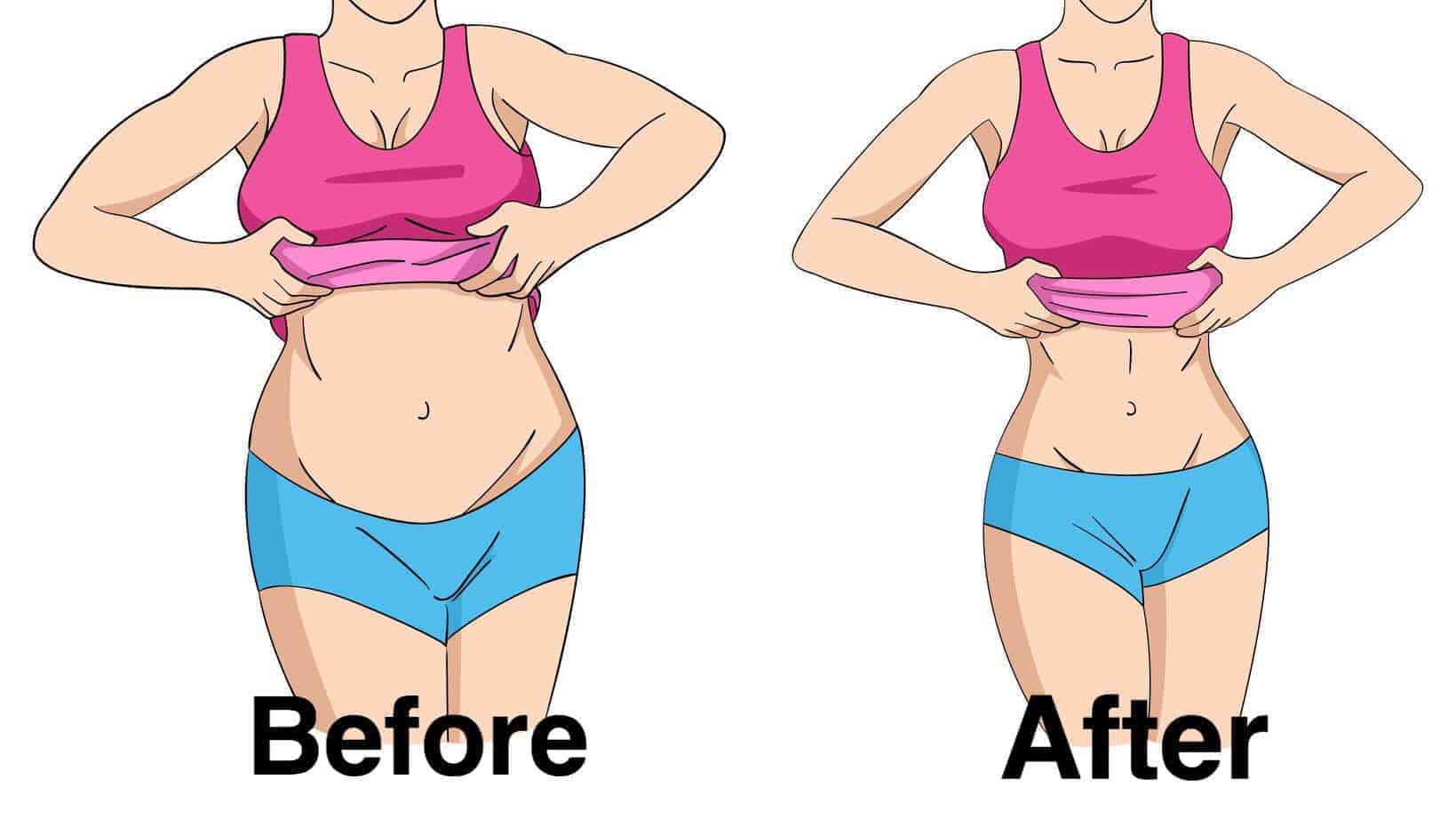
lose weight exercise

1. Sprint In Place

Use this quick movement as an expedient way to get your blood flowing.

(1) Stand in an upright, neutral position.
(2) In a fast motion, bring your knees to your waist while swinging your arms.

(Note: Do not stop during this movement unless absolutely necessary. It is crucial to elevate your heart rate at the beginning phase.)

2. Jumping Jacks

(1) Stand with feet together, knees slightly bent, and arms to sides.
(2) Jump while raising arms and separating legs to sides.
(3) Land on the forefoot with legs apart and arms overhead.
(4) Jump again while lowering arms and returning legs to mid-position.

3. Rear Lunge

(1) Step back with one leg while bending opposite leg.
(2) Plant forefoot far back on the floor.
(3) Lower body by flexing knee and hip of supporting leg until knee of rear leg is almost in contact with the floor.
(4) Return to standing position by extending the hip and knee of the forward supporting leg.
(5) Return rear leg next to supporting leg.
(6) Switch and repeat.

(Note: Keep torso as upright as possible; doing so will maximize the flexibility of your hip flexors.)

4. Body Squat

(1) Stand with feet shoulder-width apart. With your hands interlocked, hold them at the back of your head. (You may also keep arms outstretched in front of you if this helps maintain balance.)
(2) Begin the movement by flexing your knees and hips, sitting back with your hips.
(3) Lower your torso as much as possible.
(4) Reverse the motion until you return to the starting position.

(Note: Please keep your head and chest up throughout the movement.)

5. Standing Calf Lift

(1) Using a block or step to keep your balance, position both feet on the object up to your arches.
(2) Slowly raise your heels as high as possible.
(3) Pause, and then slowly lower your heels back to the starting position. Repeat.

(Note: Do not pause at the bottom of the movement. Immediately start the next repetition.)

6. Pushup

(1) Lie prone on the floor with hands slightly wider than shoulder-width apart.
(2) Lift body off the floor by extending arms.
(3) Keeping your body straight, lower it to the floor by bending your arms.
(4) Push body to starting position until arms are fully extended.

(Note: Please modify using your knees, if necessary. The most important thing here is keeping your body straight and fully extending your arms.)

7. Dips

(Note: Please be careful throughout this exercise; making sure to stabilize your body. As dips can be challenging for some, please remember that technique is more important than speed.)

(1) Position your hands shoulder-width apart on a stable bench or chain.
(2) Slide your butt off the bench with your legs extending out in front.
(3) Straighten your arms, keeping a little bend in your elbows to keep tension on your triceps.
(4) Slowly bend your elbows; lowering your body towards the floor until they’re at a 90-degree angle.
(5) At the bottom of the movement, press down into the bench, returning to the starting position. Repeat.

8. Lying straight leg exercise

(1) Laying down, place your hands underneath each buttock to support the pelvis.
(2) Keeping your knees straight, lift your legs until the hips are fully flexed.
(3) Lower your legs until they’re approximately 6 inches from the floor. Repeat.

(Note: To fully benefit from this exercise, make sure to keep your legs straight throughout. Also, do not rest your feet on the floor at any time.)

(Note #2: Leg lifts are quite possibly the best overall exercise for targeting your entire abdominal region! Give them your all!)

9. Mountain climbers

(1) Get into a push-up position: arms straight and body in a straight line from head to ankles.
(2) Maintaining the starting position, quickly raise your right knee towards your chest. Alternate.

(Note: This movement should be performed as quickly as possible without breaking form. Remember: technique is more important than speed.)

10. 60-second plank hold

(1) Begin this static movement by lifting your upper arms and elbows until they’re at a 90-degree angle relative to your shoulders. Back, butt and legs should be straight as possible.
(2) Tightening the core muscles, hold this position for 60 seconds.

(Note: This “movement” is strenuous, but an excellent method for tightening your abdominals. To achieve the best results, keep your body in a 180-degree position throughout.)

In the end, grab a towel and a glass of water (You’ll want both!). Then give yourself some mad props for putting in the effort. Well done!

https://youtu.be/yG-G9_LOkLA

(C)Power of Positivity, LLC. All rights reserved
Sources:
http://www.exrx.net/WeightExercises
https://www.bodybuilding.com/exercises
https://www.popsugar.com/fitness/How-Do-Triceps-Dips-1055754
https://www.womenshealthmag.com/fitness/circuit-workout

Researchers Reveal 4 Ways Social Media Can Hurt Your Relationships

Over 3 billion people use social media worldwide. 3 billion. As a result of this widespread use, the ways that we communicate – with friends, family, coworkers, strangers – have changed forever.

We’re not going to get into a discussion of whether social media is good or bad. Social media, as with pretty much every other technology in existence, is used for both.

Let’s look at Facebook. To give you an idea just how much Facebook has penetrated our social fabric, consider this statistic: approximately 90 percent of all 18-29 year old’s have a Facebook account. That’s an extraordinary number.

This age range also happens to be when the vast majority of us:

– start college
– graduate college
– look for a life partner
– begin our career
– change jobs
– get married

It’s no surprise, then, that social media can profoundly influence our relationships, both personally and professionally.

Again, we’re not here to debate the pros and cons of social media. That said, dimwits the world over have been sacked from jobs, served divorce papers and had their reputation destroyed – all because of some silly social media shenanigans.

Here are some things to do and not to do on social media if you’d like to keep your relationships intact, according to experts:

1. Don’t get overly emotional

Okay, quick question: have you ever misinterpreted the meaning or tone of a text or email? Probably. The reason: all of us have a difficult time understanding emotional nuances behind a text, email, or post. Technology requires people to communicate their intent completely differently than they would during a conversation, where they would use words, tone, and body language. At times, your brain’s filter will inaccurately signal an emotional undertone to a message where there is none. This can get us into trouble.

Hence, the advice here is two-fold. First, do not post to social media when you’re in an emotionally vulnerable state. Second, do not reply to someone else’s emotional post. Seek clarification if a response is required before posting anything.

2. Assume the message will be widely dispersed

Sure, that naughty post or tweet may just be read by your target audience, but it may not be. “Likes,” “Shares,” and “Comments” on your post will likely scatter the contents of your message outside the reach of your social circle. (Even when you post to just ‘Friends.’)

The inconvenient truth is that internet communications, particularly those on social media, are becoming less private. The social media giants’ uber-complicated privacy policies – and the lack of adequate oversight – doesn’t instill much confidence.

Here’s kind of a weird but useful ‘hack’: imagine that what you’re about to write will be written on notebook paper and stuck to your back (kind of like a ‘Kick Me’ sign). In actuality, the consequences may be just as bad or worse. So don’t do it!

3. Leave the personal stuff alone

Why do people air their dirty laundry on social media? No really, why? In all likelihood, they seek validation, sympathy, or closure.

Regardless of individual motive, griping about one’s girlfriend/boyfriend, manager, colleague, or someone else is an awful idea. Hoping to gain sympathies or validation by hastily posting to some social media outlet is an act of extreme immaturity – and one that may just come back to bite.

If you have an issue with someone, address it directly with them. Give him or her the courtesy of a phone call, or arrange a meeting in person. Not only will you have a much better chance of resolving the issue, but you’ll also stop yourself from making a whimsical mistake.

smartphone addiction

4. Don’t ‘friend’ co-workers or acquaintances

There’s a caveat to this one. If you’re really good friends with someone you work with and you both act responsibly on social media (i.e., you don’t do any of the things listed here), then by all means ‘friend’ away. Otherwise, just don’t do it. Err on the side of caution.

How many of you receive invites from someone you either don’t recognize or barely know? They probably have good intentions, but the only question that comes to mind is “Why?” That is unless you ‘accept’ – then a follow-up question surfaces: “Why did you do that?”

Final Thoughts

Social media, when used appropriately and maturely, can be an incredible tool to keep up with friends and family members. Sadly, it’s misuse can, (and has) led to the demise of a countless number of relationships.

We all have an innate craving for immediate gratification, and this is something that social media sites can provide plenty of. It’s also a good reason not to do it.

Here are a few key takeaways to bear in mind concerning social media conduct:

– Don’t get personal.
– Be selective with friend requests.
– Don’t post when in a negative state of mind.
– Separate your personal and professional lives.
– Understand the potential reach of your words.
– And finally, some old-school advice: “If you can’t say something nice, don’t say anything at all.” (Thanks, Mom!)

https://youtu.be/Q9es9gvnkU0

(C)Power of Positivity, LLC. All rights reserved
Sources:
http://circaedu.com/hemj/how-social-media-changed-the-way-we-communicate/
https://clintonpower.com.au/2010/02/avoid-relationship-breakdown-social-media/
https://www.statista.com/topics/751/facebook/
https://www.theguardian.com/technology/2016/dec/12/facebook-2016-problems-fake-news-censorship

Sociologists Explain 5 Ways to Avoid Toxic Behaviors

Avoiding toxic behaviors, either from other people or yourself, is an important skill to learn. Starting over from toxic behavior is a part of growing up, and it shows that you’re ready to move forward into a more positive life. Sociologists have come up with the best ways to avoid toxic behavior in your life. Even if you have been toxic in the past, or let someone else get away with toxic behaviors, you can always turn your life around and start new.

Here Are 5 Positive Ways To Avoid Toxic Behaviors

1. Set goals

Starting over from toxicity can be difficult if you don’t know where to begin in the first place. The first thing you’re going to want to do is to set goals for yourself. Setting goals for your own behavior, as well as expectations for the behavior of other people in your life, is a way to avoid toxicity.

Make a plan of action. This could mean cutting off toxic people in your life, or apologizing to people that you have been toxic to. Whatever you need to do, visualize it and set a goal for yourself. Not everything has to happen right away, but even just acknowledging that something needs to be done is the best first step.

2. Accept the past

Moving on can only happen when you accept that the past is already in the past. Even if things in the past hurt you, they can’t hurt you any longer. Moving forward requires that we no longer allow ourselves to continue living in the past. Accepting the past also means accepting that you may have had toxic behaviors before, too. Maybe you were toxic to someone in your life, but now know that is no longer how you want to live and behave.

The moment you begin to accept the past is the moment you begin your healing journey. This is the start of letting go, moving on, and living more for the present. Give yourself time. Remember that this is a process, not a race or a competition,” says artist Elysia Bullen on Tiny Buddha.

Accepting that the past is in the past will make it easier for you to move forward and forge new and healthy relationships.

toxic people

3. Commit to change

Accepting that you want to move on from toxic behavior requires a commitment to this kind of change. You may find that you allow toxic people back into your life because they are familiar.

One very effective way to get toxic people out of your life is to simply stop spending so much time around them.  By creating distance from the other person, we are sending the unspoken message that their behaviors are not something that we want to be around,” says self-love coach and teacher Jennifer Twardowski.

You may also find yourself falling back on toxic behaviors because it has become a habit. However, the only way to move on from toxicity and move forward into a new life is to be committed to this kind of change.

If we wish to be respected by others, then we have to be willing to be completely honest with ourselves by recognizing our own toxic behaviors and to actively change those behaviors,” adds Twardowski. You can do it, you just need to keep yourself held accountable and keep moving forward from toxicity.

4. Focus on the positive

When you’re trying to avoid toxic behaviors, it’s important to focus on the positive behaviors that you have. Make a mental note of all of the positive interactions you have with other people, and make that the focal point of your interactions. Even when you have to have an unpleasant conversation, find a way to focus on the positive aspects.

Keeping positive behavior in the forefront of your mind will help you avoid toxic behavior in yourself, as well as recognize it in others.  Make a list of the positive interactions you have with other people each day so that you can continue making that the focus of your behavior.

5. Don’t normalize toxic behavior

When something happens a lot, either to you or to the people around you, it can be pretty easy to explain away that behavior. However, it’s important to step back and see toxic behavior for what it is. Allowing yourself to normalized this behavior is only going to perpetuate it more.

You can establish a boundary, but you’ll have to do so consciously and proactively. If you let things happen naturally, you are bound to find yourself constantly embroiled in difficult conversations. If you set boundaries and decide when and where you’ll engage a difficult person, you can control much of the chaos,” says author and cofounder of TalentSmart, Dr. Travis Bradberry.

So, don’t allow people to behave towards you in a toxic manner, and don’t allow yourself to perpetuate toxic behavior, either. This is the final step in making sure that you avoid toxic behaviors. Moving on from toxicity is possible, and it starts with making sure that other people cannot perpetuate toxic behaviors.

Final thoughts

Sociologists have been working for a long time to help make sure that toxic behaviors are unlearned in many different kinds of people. It requires all of us to stand up and hold ourselves and other people accountable for their behavior. There’s always hope and always a way to move forward and leave toxic behavior behind. All you have to do is recognize the behavior, either in yourself or in other people, and work on making sure the behavior doesn’t go unrecognized. Bringing positivity into the world and moving on from toxic behavior is possible for everyone.

https://youtu.be/qWkzCo0h0Ok

(C)Power of Positivity, LLC. All rights reserved
References:
https://tinybuddha.com/blog/accept-the-past-embrace-the-future-and-live-in-the-present/
https://www.huffingtonpost.com/jennifer-twardowski/5-ways-to-stop-attracting_b_6155236.html

Sleep Scientist Explains 5 Ways to Beat Insomnia Forever

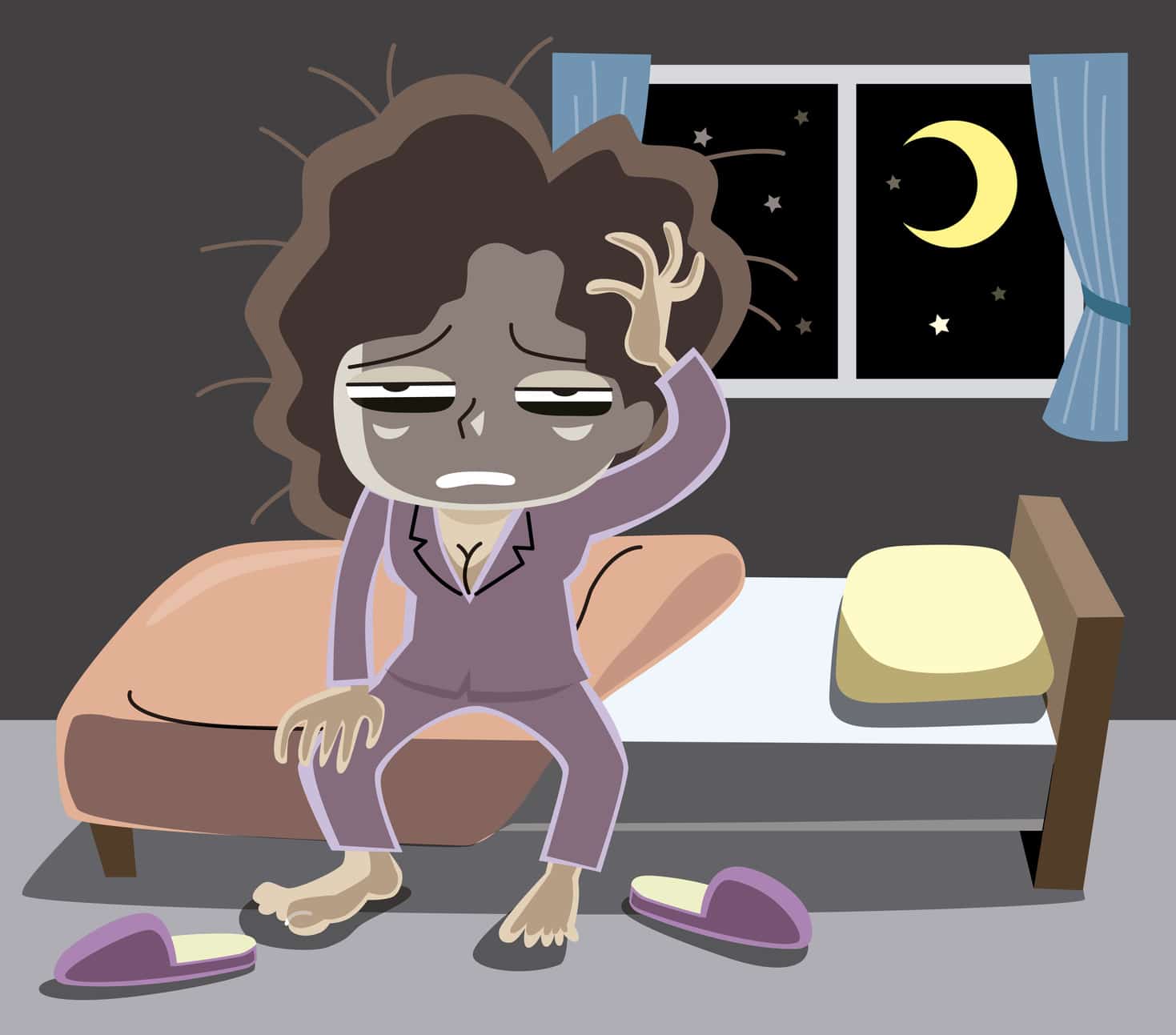
Does insomnia ever seem to find you in the middle of the night? Do you have trouble falling asleep and staying asleep? Does it sometimes feel like you might never get to sleep? If so, insomnia might be the reason for your troubles.

Insomnia is a sleep disorder that causes difficulty falling falling asleep and can also erode sleep quality.

For a lot of people, insomnia creates havoc in their day-to-day lives, making them exhausted and making it impossible for them to fall asleep at night. This often leaves them with only a few hours of sleep every night. Thankfully, scientists have broken the secret to insomnia, and there are ways for everyone to get the good night’s sleep they need to function during the daytime. Scientists explain how to make insomnia a thing of the past.

Here Are 5 Ways To Beat Insomnia Forever

insomnia

“Insomnia is a vertiginous lucidity that can convert paradise itself into a place of torture.” – Emil Cioran

1. Put away your screens

When it’s time for bed, many instinctively reach for the television remote, the tablet, or phones. We scroll mindlessly through our smartphones and tablets in order to help us fall asleep. Of course, we don’t know how many screens make it impossible to fall asleep.

Scientists and researchers have found that the blue light from our phones and tablets interrupts the hormones our bodies naturally make that tell us it’s time to fall asleep. When you reach for your phone to help you fall asleep, you’re telling your brain it’s time to stay awake.

Anne-Marie Chang, Ph.D., corresponding author, and associate neuroscientist, said, “We found the body’s natural circadian rhythms were interrupted by the short-wavelength enriched light, otherwise known as blue light, from these electronic devices. Participants reading an LED-eBook took longer to fall asleep and had reduced evening sleepiness, melatonin secretion, later timing of their circadian clock and reduced next-morning alertness than when reading a printed book.

Instead, turn your screens off a half an hour before bedtime, and do a relaxing activity like meditation or reading – but not on a tablet!

insomnia

2. No caffeine or alcohol

You want to stay away from coffee and tea before bedtime. The caffeine will make it hard for you to fall asleep and may disrupt your sleep cycle and wake you up if you do fall asleep before the caffeine hits. However, alcohol is something else that you should stay away from if you want to get a good night’s rest.

Studies prove time and again that alcohol “produces biphasic effects of both stimulation and sedation”, therefore, it doesn’t actually help put you to sleep, but rather “sedates” your brain.

Dr. Matthew Walker, director of the Sleep and Neuroimaging Laboratory at the University of California, Berkeley says, “Alcohol is a class of drugs that we call, “the sedatives.” And what you’re doing is just knocking your brain out. You’re not putting it into natural sleep.”

When you fall asleep due to alcohol, you spend less time getting good REM sleep and more time closer to the surface with a lot of restless sleep.

3. Don’t stay in bed while you’re awake

Get out of bed if you’ve laid there for at least twenty minutes and are no closer to falling asleep than you were at the beginning. “The reason is that your brain very quickly starts to learn the association between your bed being about the place that you’re awake rather than your bed being about sleep,” adds Dr. Walker.

Therefore, if you’re not sleeping, it’s best to get up and try to do a relaxing activity like reading a book or meditating. Don’t eat food, don’t check your email, and definitely don’t turn on a phone or computer screen. After a while, go back into your bedroom and try to fall asleep again.

4. Go to bed at the same time every night

Yes, this even includes the weekend. When you’re trying to beat insomnia, you have to make sure your body’s schedule clock goes back into alignment. Until you’ve successfully made it so that you can fall asleep and stay asleep, there shouldn’t be any late nights at the bar or partying with friends.

Director of sleep services at the Pritikin Longevity Center & Spa, Sam J. Sugar, MD, FACP says this:

The idea is that you’re creating a habit that the body then wants to stick to, so it tells you that it’s tired at the chosen time.

Therefore, every day, even on weekends, go to bed at the same time.

5. Sleep in a cool bedroom

If your bedroom is too hot, you’re not going to get the good night’s rest that you crave. According to studies, the perfect bedroom temperature is about 68 degrees Fahrenheit, or 18.5 degrees Celsius. Dr. Walker says this:

The reason is that your brain and your body need to drop their core temperature by about two or three degrees Fahrenheit to initiate good sleep.

Therefore, if the room is too warm, then it prevents our bodies from getting a good night’s sleep. Sleeping in a room that’s slightly cooler with a big blanket makes us fall asleep faster and stay asleep.

sleepless

Final Thoughts on Beating Insomnia for Good 

Insomnia isn’t forever; you don’t need medication to fix this issue. Once you can get your body on the right track, you can deviate from strict bedtime schedules. However, these are the best ways to ensure that your body gets the sleep it needs to have a productive and positive day.

On a final note, follow the words of clinical nutritionist Shawn Stevenson:

Unless you give your body the right amount of sleep, you will never have the body and life you want to have.

You still have a lot of hard work to do. However,  getting a good night’s sleep will take you a step closer to beating insomnia for good.

(C)Power of Positivity, LLC. All rights reserved
References:
http://uk.businessinsider.com/get-a-good-nights-rest-sleep-expert-fall-asleep-quicker-tips-health-science-2018-1?r=US&IR=T
https://www.huffingtonpost.com/2013/08/27/sleep-better-expert-advice_n_3804979.html
http://www.dailymail.co.uk/health/article-3763806/Want-best-sleep-life-bed-NAKED-Expert-reveals-10-easy-ways-banish-insomnia.htm
Skip to content