Weekly tips, affirmations, and small actions to feel your best.

7 Habits of Couples That Don’t Argue

Have you ever heard of a relationship void of arguments? Yeah, we didn’t think so. All relationships go through ups and downs. Every couple has their fair share of arguments. Disagreements tend to happen when two people merge their personalities and interests together and have to overcome the challenges of daily life. However, just because life throws us curveballs does not mean we have to fight all the time with our partner. While healthy relationships do have disagreements, these tiffs shouldn’t become so commonplace that a couple forgets why they even got together in the first place.

Here’s how to reduce arguments with your partner:

1. Don’t get worked up over little things.

In other words, “Don’t sweat the small stuff.” We have all heard this phrase before, but how often do we practice it in our daily life? This advice can apply to pretty much any situation, but in a relationship, it means to forgive and forget. It means not expecting perfection from your partner, and learning to let things slide.

Of course, you shouldn’t allow behavior that actually hurts you emotionally or physically, but if your partner forgets to start the dishes or leaves laundry on the bathroom floor, don’t sweat it. Give them a chance to apologize and explain why they forgot. What is more, tell them you understand. Maybe they got caught up with work or it just slipped their mind; it happens. If you let the little things go, you’ll notice a lot less arguing between you and your partner.

2. Listen to understand, not to reply.

Otherwise known as active listening, much of society could benefit by utilizing this forgotten skill. Most people hear what another person is saying, but they don’t really listen. What is the difference, you ask? Well, “normal” listening usually involves hearing the other person while focusing more on distractions such as a phone or TV show, and not giving the speaker the full attention they deserve – or half-heartedly engaging while really just waiting to talk.

Active listening means really trying to understand the other person and giving meaningful responses throughout the conversation. Practicing this skill with your partner will surely reduce arguments because your communication will improve and you’ll understand each other better.

3. Don’t have unrealistic expectations.

Sure, we would all like a fairy-tale relationship, but those only exist in movies and books. When you factor real life into the equation, the story shifts a little. It becomes more about two people taking on the battles of life and overcoming them together. As we touched on in the first point, don’t expect from your partner what you can’t give yourself. Yes, you should expect basic things like respect, honesty, and communication; if you aren’t receiving those, you need to have a discussion with your partner.

At the same time, it wouldn’t be wise to let an idealistic view of relationships cloud your vision and cause you to argue with your partner more than you need to. Changing your expectations a bit to match to reality can help reduce arguments with your partner.

4. Remember your common goal.

No one wants to fight all the time; it adds so much unnecessary stress and strain to a relationship. Remember that your partner doesn’t want to argue with you every day either, so keep that in mind next time an argument begins. If you both navigate the argument with a common goal of peace and understanding, it will make it a lot easier to settle the disagreement.

5. Don’t attack their character.

This is also called an ad hominem argument. It means avoiding the real topic of discussion by attacking someone’s personality and character. Making insulting comments about your partner will only make them defensive and even angrier. A verbal attack like this can also do lasting damage in a relationship.

Instead of saying things that you probably don’t mean, reduce arguments by focusing on the subject at hand, or the behavior they displayed that hurt you. This way, you can have a mature discussion instead of resorting to name-calling and insults.
argument

6. Never assume.

Assumptions cause a lot of misunderstandings in relationships. If you don’t know what someone means or you’re unsure of something, simply ask for clarification. Gaining clarity about a matter can stop an argument in its tracks because you might realize you have no reason to be mad in the first place! Perhaps you have the wrong perception of what happened or what your partner meant.

It’s always better to ask questions than make assumptions.

7. Focus on finding a solution, not “winning.”

A lot of couples lose sight of the “we” in their relationship and instead focus on “me.” Arguments quickly become more about winning than about solving the problem at hand. You have to remember that you’re a team and that no one wins if both people aren’t happy. If you approach a disagreement with the common goal of finding a solution that works for you and your partner, this can help to reduce future arguments. What is more, it can make your relationship stronger.

Final thoughts

“Say what you mean, but don’t say it mean.” – Andrew Wachter, marriage counselor

All relationships deal with arguments at times, but that doesn’t mean you should lose sight of the positive partnership you have. If you remember to work together instead of trying to win the battle, you’ll reduce arguments with your partner and develop a deeper bond together.

(C)Power of Positivity, LLC. All rights reserved

References:
http://www.huffingtonpost.in/entry/8-things-successful-couples-do-differently-during-arguments_us_569fd4f0e4b0875553c2a5e0
https://www.psychologytoday.com/blog/rediscovering-love/201403/write-anger-speak-love-end-bickering
https://www.psychologytoday.com/blog/understand-other-people/201210/don-t-assume-i-know-what-you-mean
https://www.psychologytoday.com/us/blog/emotional-fitness/201209/10-tips-help-avoid-ugly-arguments
https://www.huffingtonpost.com/margaret-paul-phd/love-and-relationships_b_4309353.html

How to be Healthy in 10 Easy Steps

Striving to be healthy may seem intimidating and almost impossible at first. Fortunately, living a healthy lifestyle is not as hard as it seems! With a few simple adjustments and a positive mindset, you can change your lifestyle and nurture your body and mind. Follow these guidelines on how to be healthy and you’ll be amazed how easy it is!

How to be Healthy in 10 Easy Steps

1. Avoid processed foods and artificial sweeteners

The Canadian Medical Association journal warns, “Artificial sweeteners may be associated with long term weight gain, increased risk of obesity, diabetes, high blood pressure and heart disease.“ Processed foods and artificial sweeteners can be hard to avoid when living a fast paced lifestyle, but reading labels and prepping your meals at home is the best way to prevent unknowingly consuming artificial sweeteners, sugar, and excess salt.

2. Drink water

Drinking plenty of water is one of the easiest ways to maintain a healthy lifestyle. Without proper hydration, your kidneys will have a difficult time filtering toxins from your body. Furthermore, ample hydration gives you more energy, clearer skin, and improve cognitive performance. Aim to consume half your body weight in ounces of water a day, and always keep a bottle handy.

3. Get more sleep

The average adult requires 7 to 10 hours of sleep each night to maintain optimal performance. Sleep is as important to your body as food and water, so make sure to make it a priority! Ample sleep improves brain performance, reaction time, and even your metabolic rate. Sleep also gives your body the opportunity to repair any damage done to your body throughout the day. Think of sleep like your own personal mechanic. Avoid electronics two hours before bed, and keep your bedroom at a cooler temperature for productive sleep.

4. Meditate

Even just five minutes a day of meditation reduces stress, and increases patience and mindfulness. A consistent meditation practice has even been proven to alter your brain. Long-term meditators have more gray matter in their brains, resulting in improved memory, decision-making, and even sensory enhancement.

5. Have a morning routine

The path to healthy living is building good habits, and a morning routine accomplishes exactly that. When you follow a consistent pattern, such as meditation upon waking, breakfast, and morning reflection, it prevents decision fatigue and allows an easier start to your day. An unhurried morning will reduce stress, increase positivity, and improve your performance for the rest of the day.

6. Exercise

Along with diet, exercise is the best weapon against risks such as cardiovascular disease and obesity. However, don’t be intimidated. Even a brisk 30 minute walk three times a week will improve your cardiovascular and respiratory health and keep you limber. Exercise also releases endorphins, which significantly improve your mood.

7. Choose friends wisely

A positive atmosphere will lead to a positive you. Be selective with who you spend your time with, because they have a profound ability to influence your mood and your decisions. Friends who make good choices will inspire you to do the same, and those friends who always complain may cause you to eventually do the same. Your friends reflect who you are.

8. Omega-3s

Omega-3 fatty acids are crucial for healthy organs, and if you fear that you are not consuming enough through regular food, you can simply take a supplement. Omega-3s benefit heart health and lower your triglyceride levels. Aside from cardiovascular health, omega-3s improve your memory and your mood. Don’t want to take a supplement? Grill some salmon and eat a Mediterranean style diet.

how to be healthy

9. Go outside

We’re not just talking about the benefits of Vitamin D from the sun. Spending time in nature increases energy and lowers stress. A study even shown that time spent in nature can reduce inflammation and ease hypertension. A Japanese practice known as shinrin-yoku or “forest bathing” takes advantage of these benefits, and is an important component of Japanese medicine. Walk through the woods once in a while. You’ll enjoy it!

10. Eat vegetables

Finally, the most basic practice of all. Vegetables are the cornerstone of a healthy diet and help combat or prevent numerous chronic illnesses such as cardiovascular disease or type 2 diabetes. Eating vegetables rich in potassium helps lower blood pressure and prevent kidney stones. Aim for half a plate’s worth at dinner, and buy frozen for convenience and ease of preparation.

While these tips on how to be healthy are easy, do not be afraid to take small steps each day in order to foster good habits and consistency. Attaining one goal a day is better than not achieving one at all, so don’t give up when you have a bad day! Remember that you are capable of achieving anything if you take it one day at a time.

10 Traits of Someone With True Integrity

Integrity, as defined by the dictionary, is “the quality of being honest or having strong moral principles.” People with integrity are generally known to be trustworthy, honest, and kind. This is a quality that everyone should strive for.

Everyone should strive to surround themselves with people who have true integrity. How can you tell that someone has what is considered true integrity?

It isn’t something that can be faked, but there are some ways to tell that someone has real integrity and are not just faking it.

10 Behaviors That Signify Someone Has True Integrity

Here are the main behaviors that reveal if someone has the kind of integrity you want in a friend or coworker.

true integrity

1. Taking responsibility for their actions

Integrity is all about having a high level of honesty. When someone takes responsibility for their actions, you know that they are an honest person. It’s not always easy to take responsibility for things that happen, but it is the right thing to do.

People with integrity choose to do the right thing, even when it’s hard.

2. Putting others’ needs above their own

In a world that is so focused on individualism, it can be rare to find someone who focuses on what’s good for the collective community. People who put the needs of others above their own needs or desires show true integrity. Of course, they don’t do this simply to get praise and recognition. Someone with true integrity is only interested in doing the right thing.

3. Offering to help others in need

Seth Meyers, Psy.D, says that volunteer work is a great place to find people who have integrity. This is because people with true integrity have no qualms offering their time to help people in need. They want to help those who are less fortunate than themselves. What is more, they do so happily.

Whether it’s working with others to build a house in a developing country, or helping out at the local food bank, someone with true integrity will be found helping those in need.

4. Giving others the benefit of the doubt

Seth Meyers also says that someone with integrity doesn’t jump to conclusions. They always give others the chance to explain themselves, and move forward considering those other points of view. Someone with integrity knows that things aren’t always as they seem and that each person has a unique point of view that deserves to be heard. As such, they choose to give the benefit of the doubt instead of doubting.

5. Choosing honesty in all things

Little white lies can be tempting, but someone with true integrity doesn’t give in to this particular impulse. Integrity means being honest, and someone with true integrity will live this quality every day.

You can always trust these kinds of people to give you their honest opinion, and it will be a point of view that you can value.

6. Showing respect to everyone

Respect is often considered something that must be earned, but someone with integrity gives respect to everyone they meet. Someone with true integrity knows that everyone deserves respect and deserves to be treated like a human being.

People with true integrity will never be caught being rude to waiters or customer service workers.

7. Manifesting humility

A person with integrity will be proud of their accomplishments, but they will at the same time be humble. In other words, they know the difference between confidence and arrogance. A person with true integrity will know their strengths as well as their shortcomings. They recognize their strong points, yet they’re always striving to better themselves in some way.

8. Being able to admit they’re wrong

Who likes to admit they have been wrong? It isn’t fun, and it can be a humbling experience. But a person with true integrity has no problem admitting when they’re wrong, or when they made a mistake. You will find they are always the first to stop, admit their mistakes, and apologize if need be.compassion for mental illness

9. Showing regular reliability

A person with true integrity will always show up to an obligation. When they say you can count on them for something, you know they will keep their word. Integrity is all about being the best person you can be, and reliability is part of that. People with true integrity will never flake on you if they can help it. You can confidently rely on them.

10. Conveying true kindness

Above all, people with integrity are kind. They’re not the type of person to say something they don’t mean. They won’t say something nice to your face and something cruel to your back. A person with true integrity knows that there is strength in being unrelentingly kind.

Final Thoughts on Identifying True Integrity

“Real integrity is doing the right thing, knowing that nobody’s going to know whether you did it or not.” – Oprah Winfrey

Integrity is a trait that everyone should strive for. These traits and behaviors will help anyone move towards becoming a person with true integrity. Of course, people with true integrity do these things because it’s the right thing – not to be praised for their integrity! That is part of the beauty of someone who lives a life of integrity.

How To Be Positive In 10 Easy Steps

When it comes to learning how to be positive, you may think that you should be happier more often. However, being happy and being positive are not always the same thing. There are several ways you can practice positivity even when you’re going through a challenging time in life. Researchers even suggest that we can cope with life more effectively by thinking positively and managing our emotions. It’s also important not to suppress your feelings and to work through negativity in order to live a more positive life. Here are some tips that could prove helpful when learning how to be positive.

1. Learn to Accept Things 

Address the issues that you’re facing in life and accept where you are. Be honest about your negative feelings or thoughts and if you don’t enjoy what’s going on in your life, make the decision to change things.

Try not to be hard on yourself when you don’t feel your best. While you can’t control all the things that happen to you, you can control the way you respond to life’s situations. Become aware of the ways that you reduce stress and practice healthy habits. For instance, if you find that meditating or spending time alone is helpful, make time for this. If you are able to gain new perspective when you spend time with loved ones, make your social life a priority.

2. Set Goals

When you want to have a more positive outlook, it’s important to set goals. Making goals can make you feel hopeful about the future and will give you confidence about your purpose. This is especially true if you set goals that are in line with your values. Be as detailed as possible with your goals and remember to start small so that you won’t get overwhelmed. For instance, if your goal is to eat healthier, start by adding one vegetable side dish to your meals per week, then increase your intake of nutritious foods from there.

3. Meditate

Compassion meditation, known as “metta bhavana”, will help you to see the positivity in various aspects of life. With this form of meditation, you’ll be utilizing the love you feel for those who are important to you to others in the world. You’ll also learn how to effectively recover from tragedy or negative circumstances and you’ll likely see an improvement in your relationships after only a few weeks of practicing metta bhavana.

Meditation is good for your mental state as well. Studies have proven that meditation can help to reduce depression symptoms, and being compassionate toward others can help you to show yourself more compassion.

4. Write In a Journal

According to research, you need to balance your thoughts by having three positive thoughts each time something negative comes into your mind. Maintaining a journal can help you do this. Writing in your journal regularly will also make it easier for you to focus your energy on the positive things in your life. Writing things down will also help you to remember them.

Even if you write about negative experiences in your journal, don’t focus so much on the experiences themselves. Instead, write about your emotions regarding the situation as a way to help you process your feelings without holding on to the negativity.

5. Be Grateful

Remember that gratitude is an action word and isn’t just an emotion. Gratitude helps you to have a healthier mindset and can even improve your relationships, since you’ll learn how to see the bright side of things and become more patient with the people you love the most.

You can practice more gratitude by not feeling or behaving as though you are entitled in your relationships. Be grateful for the time that your friends and relatives invest in you, and do your best to show them mutual love and respect. It’s also helpful to be grateful for the little things in life so you’ll learn not to take the great things in your life for granted.

6. Affirm Yourself

It may seem a little corny to talk to yourself or to be your own cheerleader, but this can definitely help you to be more positive and feel happier day by day. However, when you speak positive words, you are more likely to think fulfilling thoughts. The more you affirm yourself, the stronger the “short-cut” in your brain, which means you will be more likely to default to positive thinking instead of having to work hard to make yourself see the bright side of life.

When learning how to be positive, repeating affirmations to yourself can also reduce depression and anxiety and enhance the function of the immune system. So, when you remind yourself that you are smart, capable and able to conquer anything that comes your way, you are actually improving your health.

7. Be Optimistic

Research from the 1970s found that people who were lottery winners weren’t any happier than people who didn’t have such good luck. This is due to the fact that humans have a happiness baseline, which means that after extremely happy or sad events take place in our lives, we return to our comfortable state of happiness.

It has also been proven that even if you have a naturally low baseline, you can learn to develop the power of positivity. When you learn how to be positive and are optimistic, you are likely to have a more enhance sense of well-being and increased self-esteem. This also changes the way you look at the world, and keeps you from blaming yourself for things that you can’t control. However, it’s important not to adopt blind optimism, since this could lead to disappointment later. For instance, when you’re just starting a new career or creative venture, don’t expect to be an expert right away. Rather, be upbeat about your potential and do your best, while being focused on your goals and being patient with yourself.

how to be positive

Change Your Negative Outlook to Positive

When learning how to feel happier and more positive, don’t use avoidance as a way to cope with negative experiences. While this may be natural to do because tragedies are painful and embarrassing, but when you ignore these situations, you cripple yourself and become less able to deal with the ups and downs of life. By adopting positive thinking, you can learn from your past and avoid certain mistakes in the future. Thinking about failures as an opportunity to try again and developing a positive attitude can also make you more determined, and you’ll be even more fulfilled when things actually work in your favor after you’ve put in the hard work.

8. Get Active

When learning how to be positive, it’s important to realize that your body and mind are very closely connected. If you have a hard time feeling positive on a regular basis, try getting more physically active. According to Amy Cuddy, a social psychologist, your posture can even change the way your body processes stress hormones. Try the “power pose,” in which you stick your chest forward and hold your shoulders back, looking straight ahead.

9. Smile More

Research suggests that when you smile, even if you don’t feel happier, your brain gets the message that you’re in a good mood and motivates you into having a positive attitude. When you engage in the duchenne smile, which activates the mouth and eye muscles, you’ll get even more benefits. People who spent more time smiling while undergoing uncomfortable or painful medical treatments were even reported to feel less pain.

10. Look Your Best

Did you know that according to a study, people who put on lab coats before performing a simple scientific experiment did better on the experiment than people who didn’t? This means part of the power of positivity is finding clothing that makes you look and feel great to give yourself a boost of creativity and positivity. It’s also important for you to take care of your body to increase your confidence, but don’t get stuck on trying to reach a certain weight. As you see your body change for the better, remember that a number is not indicative of your worth.

Working  Out makes you feel happier

Your body releases endorphins when you exercise, and these chemicals make your mind and body feel great. Exercise also helps you to rid your mind and body of anxiety and depression. Even if you exercise moderately for about 30 minutes on a regular basis, you’re likely to feel calmer and more relaxed. Even tending to your garden can have this effect, of you can engage in practices like tai chi, yoga and meditation.

8 Sciatica Stretches That Prevent and Relieve Hip and Lower Back Pain

If you have lower back pain, you are not alone. Most people, especially those with sedentary lifestyles, sometimes experience lower back pain. In some cases this might be a result of sciatic nerve pain. This often leaves people debating the question, what is the most effective pain relief for sciatica? The best thing to do is talk to your doctor about various pain relief methods and physical therapy, but many stretches and sciatica exercises can significantly lessen sciatic pain.

The enjoyment of stretching may amaze anyone who has never tried it. The intense pain of sciatica may inspire a willingness to experiment with a new approach to pain relief. Your body’s longest nerve is the sciatic, extending from the spine through the buttocks and legs. Usually affecting only one side, it reacts negatively to tight and stiff muscles that press on it. These sciatica stretches make your muscles feel good, but you must stop doing anything that hurts.

1. Sciatica Mobilizing Stretch

sciatica

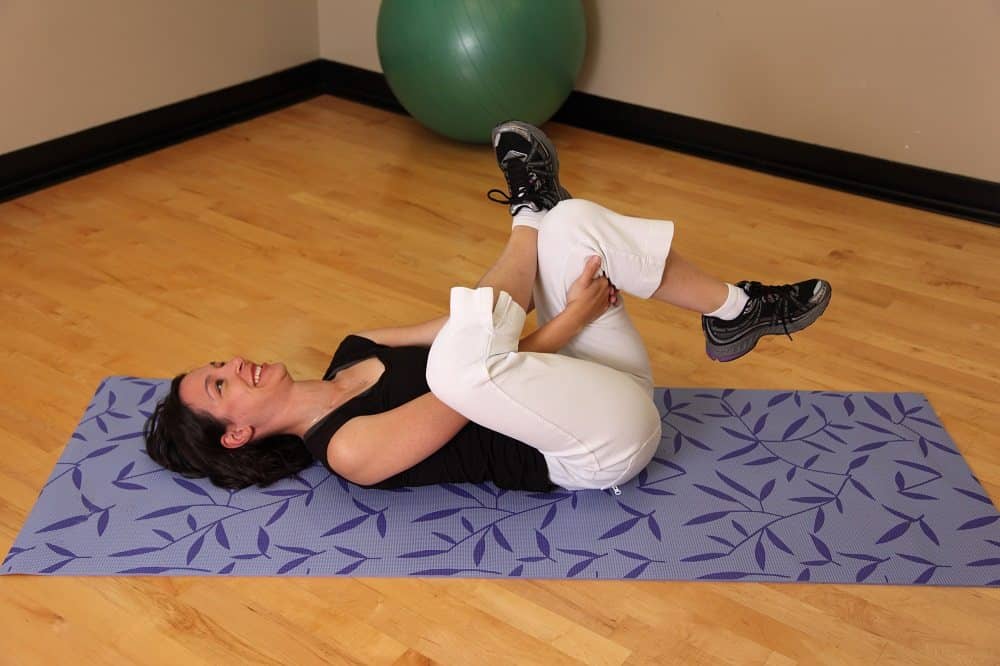
The first of these sciatic nerve stretches is sciatica mobilizing stretch. Lie on a yoga mat with your knees bent and a cushion or hard pillow under your head. Bring one knee toward your chest and hold it with both hands. Slowly extend your leg upward for a count of 30 and return to original position. Straighten the leg that remains on the mat as much as you can comfortably do, or you may put a pillow under that opposite knee for support. Repeat three times for each leg while taking deep breaths throughout the exercise.

2. Both Knees to Chest Sciatica Stretches

sciatica stretch

Lie on a yoga mat with a cushion or firm pillow under your head. Place your hands on both knees and slowly bring them toward your chest. Hold the stretch for a count of 30 and return to the original position. Repeat the exercise three times, and make sure to take deep breaths throughout your exercise period.

3. Piriformis Muscle Stretch

piriformis stretch

Lie on your back on a yoga mat with comfortable support for your head. Bring both legs into a bent-knee position. Cross one leg on the opposite knee. Grasp the thigh of the leg that has a foot on the floor. Exert a gentle pull to move it toward your chest until you feel a stretch in your butt on the side of the elevated leg. Hold the stretch for a count of 30 and return to the original position. Perform this stretch three times for each leg.

4. Cat-Camel Poses

sciatica

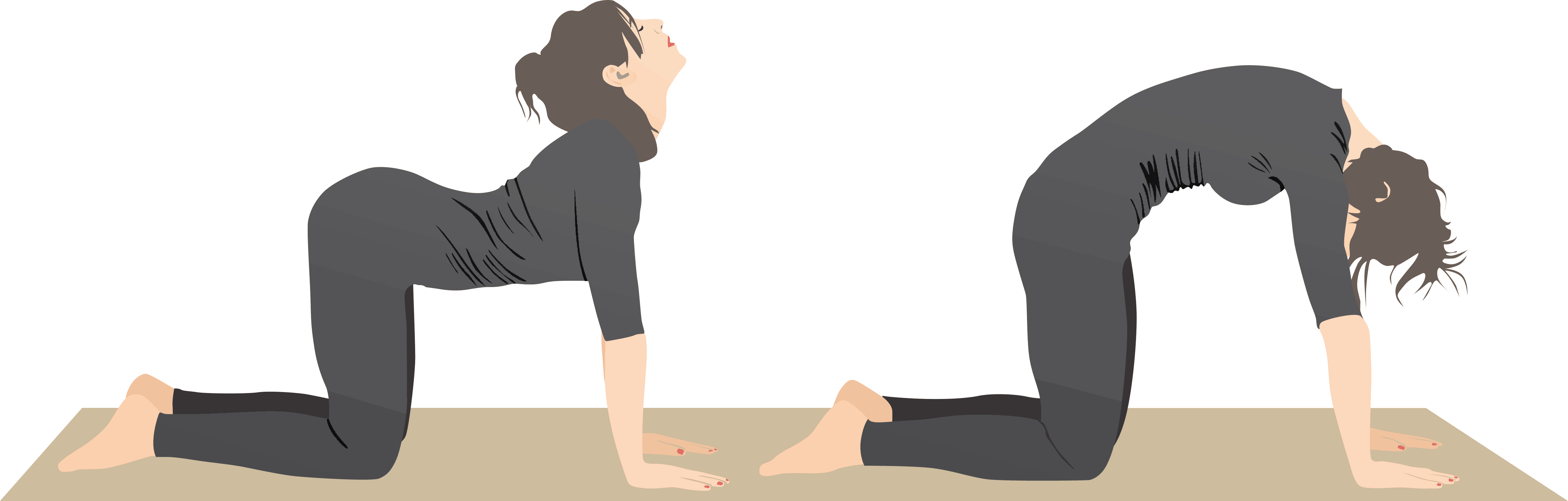
Straighten your arms directly below your shoulders from a position of all fours on your yoga mat. Align your knees with your hips. Exert pressure on your abdominal muscles and gently push your back upward to create an arch like a cat for the first part of the exercise. The stretch works best when your head points downward toward the mat. Maintain the pose for a count of 10 and return to the original position.Lower the middle of your back into a reversed arch for the second part of the stretch. Keep your head up to help deepen the stretch and hold the pose for a count of 10. The up and down movement of your spine provides the stretch, and you need to keep your arms straight. Repeat the cat-camel stretch 12 times.

5. Standing Hamstring Sciatica Stretches

sciatica stretches

The next of our sciatica exercises is a standing hamstring stretch. From an erect starting position with your feet together, stand in front of a sturdy table, bench or ledge that is about hip-width high. Lift one leg and let your heel rest on the object before you. You need to keep your legs straight without locking your knees. Bend forward at your waist while keeping your spine straight. You reach the right level when you feel a stretch in the back of the elevated leg. Maintain this pose for 30 seconds and then release to the original position. Repeat the exercise three times for each leg.

6. Frog Pose (Advanced)

sciatica stretch

Start by getting down on all fours on the width instead of the length of your yoga mat. Place your hands on the floor as you slowly widen your knees. Keep the inside of the calf and foot of each leg touching the floor. Gradually lower your body down to your forearms. Hold the pose for 30 seconds for a series of three stretches.

7. Two Knee Twist

sciatica

Lie on your back on your yoga mat with your knees bent and a pillow to support your head. Spread your arms to each side to form a T shape and keep your shoulders flat. Slowly rotate your knees to the left and hold for a count of 60 before switching sides. Repeat the stretch three times.

8. Child’s Pose

sciatica

Get down on your hands and knees with your hands out in front of the yoga mat. Slowly extend your hands forward as you lower your body into a crouch.

These top 8 sciatica stretches should help you with your sciatica pain, whether it is hip pain or lower back pain, if you maintain your stretching routine.

sciatica stretches back pain

Related: 5 Signs Your Back Pain Is Actually Sciatica Pain (And How to Reverse It)


5 Things You Should Keep Secret About Your Marriage

Some things that happen in a marriage should stay in the marriage. In other words, other people don’t need to be privy to the details. Sure, it can be tempting to tell your friends everything that happens in your marriage; however, sharing the secrets of your marriage can cause undue stress. It can even put an unhealthy strain on your marriage. Relationship experts have a helpful list of “secrets” in your marriage. These are things that should always stay between you and your spouse.

“The secret of a happy marriage remains a secret.” – Henny Youngman

Here Are 5 Marriage Secrets to Never Tell Anyone

marriage

1. Private Photos

This one should be self-explanatory, but some people don’t realize that revealing photos should never be shared outside your marriage. Even if you think your spouse looks really good in the sexy selfies they send you, you shouldn’t be showing them to other people. There should be certain boundaries that you have with your spouse, as well as with other people. Secrets that should be kept between you and your spouse include anything that has to do with their body, especially on an intimate level.

2. Money problems

Nothing can put pressure on a marriage faster than money problems. Most people don’t want to admit that they’re having money problems. Even though it might be tempting to complain about financial issues to your friends, try to keep such matters to yourself. You and your spouse can work out a financial plan without having other people inject their opinions on your financial situation. While you might want to vent to your friends about money problems, this can cause more issues than it solves. Terri Orbuch, Ph.D., says that talking to your spouse about money issues is the best way to release related tensions. Set aside “neutral time” to talk about money problems, rather than setting aside “friend time” and discussing something that should remain confidential in your marriage.

3. Details of arguments

Arguments and disagreements are entirely normal in a relationship. You’ll likely agree that sometimes the arguments aren’t even worth the breath we use to fight them. But, that’s just life! The important part is knowing how to compromise and work through a disagreement. Once the fight is over, there’s no reason to drag it back to the surface. That includes talking about the argument with your friends and family and hashing out the details of the disagreement. Not only will it probably upset you all over again, but if your partner isn’t there to put up any defense, you could be giving the wrong perception of your spouse to friends and family.

4. Your sex life

Maintaining boundaries within a marriage is crucial for fostering trust and intimacy. While some might be tempted to discuss personal matters with friends, it’s important to prioritize your spouse’s feelings and privacy. Instead of oversharing, couples might consider ways to strengthen their connection privately. Exploring new ways to connect, like open communication or even watching content such as watch live sex responsibly as a couple, can help enhance intimacy. The key is ensuring that both partners feel comfortable and respected in any shared experiences, reinforcing trust rather than risking it. If you and your spouse face issues in your sex life, Laurie Wilson, a certified sex therapist, suggests seeing a counselor for help. Sex therapy can be beneficial, as it is a form of talk therapy that can help couples navigate problems in their sex lives.

5. What your partner really thinks of them

marriage quote

If you’re in a relationship that your family might not approved of, there’s no reason to fuel the fire by sharing how your spouse really feels about them. The same goes for your friends. In a perfect world, everyone would get along with your spouse. But with different personalities clashing from time to time, it’s just not realistic that everyone will “just get along.” If your partner and one of your friends generally don’t see eye to eye, you probably don’t want to tell your friend what your partner said in confidence about them. The same also goes for keeping quiet about what your friends and family think of them. There’s only going to be unnecessary drama when that happens.

Final Thoughts on the Things to Keep Secret in Your Marriage

Secrets aren’t always a bad thing. Keeping them between yourself and your partner can ensure the relationship doesn’t face any more outside stress factors that will naturally arise in any committed relationship. Your friends and family don’t have to know every detail of your marriage. Some things are better left unsaid!


5 Behaviors That Reveal You’re Putting Too Much Pressure on Yourself

Are you putting too much pressure on yourself?

“Those parts of yourself that you desperately want to hide and destroy will gain power over you. The best thing to do is face and own them, because they are forever a part of you.” — Janet Mock

Let that quote sink in for a second. The world’s obsession with scrutiny and perfection can become quite a damper on our self-esteem. We strive for perfection, yet can’t see the flawed logic in doing so. We can never achieve perfect flawlessness simply because humans were made to be fallible. We learn by making mistakes; if we never failed, we couldn’t absorb the lessons or grow from our experiences.

By design, humans are imperfect, so please stop being so hard on yourself! Yes, you should have goals and standards for your life, but beating yourself up for mistakes will only set you back. Putting too much pressure on yourself only adds stress to your life, which can easily lead to a nervous breakdown if you continue to see yourself in a negative light.

Below, we’ll discuss some key behaviors that signify you’re being way too hard on yourself. If you recognize these behaviors in yourself, you can start today with changing your thinking patterns to more positive ones.

Here are 5 behaviors that reveal you put too much pressure on yourself:

1. You let your failures stop you from trying

We all have to fail at some point. In fact, failing is perfectly normal and healthy! Without failures, we wouldn’t know success. No one achieves their goals and dreams by snapping their fingers. Sometimes we need to put in high levels of hard work, dedication, and perseverance.

True success also requires a certain level of risk-taking. Limiting yourself to the familiar won’t get you beyond your comfort zone, and it is only beyond that where you can see a limitless horizon. So many people live within the limitations they set for themselves, and therefore see limited results. If you’re only looking at where you’ve failed and not maintaining healthy pride in how far you’ve come despite the setbacks, then you’re putting too much pressure on yourself.

Remember: failure is nothing to be ashamed of. Just because you didn’t hit a home run this time doesn’t mean it won’t happen next time. If you keep trying, your efforts will be rewarded in due time.

2. You don’t think you’re good enough

In an article from Psychology Today, Andrea F. Polard Psy.D., says that we often lose our ability to extend compassion when it comes to ourselves. In other words, we talk down to ourselves all the time but would never utter those same words to a good friend. We truly are our own worst critics at times, failing to give ourselves the love we so easily give to others. Why is self-love so darn difficult?!

Well, take a look around you. As we touched on in the beginning of this article, society seems to thrive on negative judgment of ourselves and others. Many businesses would literally fail if we all decided to love ourselves. The beauty industry, for example, couldn’t survive if people didn’t believe their appearance was flawed somehow and that a cream or a surgery could make them more beautiful.

However, just because the world runs on negativity doesn’t mean that you should constantly berate yourself and put so much pressure on yourself. So many people think they’re inadequate and deeply flawed, largely because the consumerist culture in which we live profits from our self-doubt. So, be a rebel and love yourself!

relationship quote

3. You feel stressed out all the time

Stress levels around the globe have reached an all-time high. Some stress can help us achieve our goals and keep moving when we feel like quitting. However, too much stress can literally kill us. Stressing about anything will not solve the problem; in fact, it usually just makes the problem worse.

Stress often arises from overthinking, which also has become quite an epidemic. If you fixate on all your perceived flaws, you will only feel worse about yourself and start stressing out about all the things you think you need to change. Practice being gentle with yourself. Learn to take things one day at a time, which is all we can really do anyway.

4. You have unrealistic expectations

Putting too much pressure on yourself will cause you to have unrealistic expectations, and when you don’t meet them, you’ll only harbor self-hatred. This quickly develops into a vicious, negative cycle. We all let ourselves down from time to time, but feeling disappointed in yourself the majority of the time isn’t healthy for your self-esteem.

If you want to start a business, for example, don’t expect to have it up and running in a month. You have to set small, achievable goals and break things down into smaller steps if you want to succeed. If you tend to set a high bar for yourself and then get angry when reality doesn’t match your dreams, you are probably placing too much pressure on yourself.

5. You always want more

Wanting more for yourself is commendable, but losing sight of all the good in your life by focusing solely on what you don’t have is a recipe for disaster. The world never seems content, and this angst can cause us to view ourselves and our lives as inadequate. If you never feel satisfied in life, this means you’re putting too much pressure on yourself.

Final thoughts

Just because modern society operates in a constant state of dissatisfaction doesn’t mean you have to follow suit. If you notice the above behaviors in yourself, take a step back and really find out why you put so much pressure on yourself. Once you get to the root of the problem, extending love and compassion toward yourself will become second nature.

https://www.youtube.com/watch?v=T1ke5KbOAZs

References:
https://www.psychologytoday.com/us/blog/unified-theory-happiness/201703/are-you-too-hard-yourself
https://www.psychologytoday.com/us/blog/shyness-is-nice/201109/why-is-self-acceptance-so-hard

11 Secrets That Can Change Your Life

Emotions in are mysterious things in life. They’re fallible, yet always in-flux. They make life worth living, yet can claim a life. They’re fleeting, yet can form our inner world. Emotions can be the source of a breakthrough, or a breakdown (including in logic.) Emotions are also contrasting. Love, hate; happy, sad; joyous, sorrowful. Love, our most precious emotion, forms our best memories.

When it comes right down to it, this article’s foundation can be aptly summed up in four words: humans are emotional creatures. You’ll notice, as you peruse through these words, that emotion has to do with just about every part of our experience, both good and bad, on this beautiful planet.

With that said, here are eleven things to know that may just change your life:

“Your assumptions are your windows on the world. Scrub them off every once in a while, or the light won’t come in.” ~ Isaac Asimov

1. Pain is not (necessarily) your enemy

A minority of creatures, including us homo sapiens, experience two types of pain: physical and emotional. With all the splendor our species’ highly-evolved brain has bequeathed, we’ve stumbled into a couple of blind spots.

One such blind spot is the notion that all pain is bad. It isn’t. (Stress isn’t, either.) Pain is simply there to remind us of one of two things: (1) something is amiss, or (2) something is changing.

Pain from a stab wound is bad. Pain from a workout is (or can be) good.

Pain from a partner’s emotional abuse is bad. Using that pain to find your true love is good.

You get the picture.

2. We’ve got things pretty good

Shake our heads we may, but the truth remains: most of us are pretty damn spoiled.

Don’t think so? Let’s try a 2-part experiment:

(1) Go and get a glass of water.
(2) Get back to reading this article.

Now, consider this:

– 1 in 9 people lacks access to safe water. (1 in 3 have no access to a toilet.)
– 1 BILLION people on this planet cannot read (three-quarters are women.)

Perspective matters. Gratitude matters.

3. Focus of attention is key

There are three kinds of attention: inner, outer, and other. Inner focus provides intuition and self-awareness; outer, interaction with the environment, and other, healthy friendships and intimacy.

Being able to switch between these three modes of attention voluntarily is critical to a well-lived, balanced life.

4. Pleasure can quickly become pain

Socrates said, “Worthless people live only to eat and drink; people of worth eat and drink only to live.” This is Socrates way of saying that to live for pleasure is a fool’s errand.

Ever wonder why so many rich people are unhappy? It’s because success without meaning is worthless.

5. Discipline needn’t be harsh

We read the words ‘self’ and ‘discipline’ – and immediately, we cringe. Why? Because we’ve programmed ourselves to believe that discipline is rough and punitive.

Mindful self-discipline – or gently re-directing our attention and actions to where they need to be – is the only type of discipline needed.life quote

6. True love is the answer

Who doesn’t know the famous Beatle’s chorus:

All you need is love, all you need is love…
All you need is love, love…love is all you need

Think about this: love is the answer to nearly every problem the world has ever faced or ever will face. Now, if we would only have the courage to end war, hunger, poverty, discrimination, and hatred…

7. “Evil” is the absence of understanding and/or love

When you think about the worst atrocities in history, the common threat in all of them is an intense hatred – or the absence of understanding and love.

When you think about the evilest people in history: Hitler, Stalin, Mao; all were driven by an intense hatred – an absence of understanding and love.

8. You are never alone

No matter what you may be going through, you are never alone. Whether your source of companionship comes from someone else, a spiritual guide, or the Universe, never feel as if you must navigate this life alone. These feelings are simply not true.

Also, it’s essential to fully understand that someone, somewhere ,wants to hear when things are going wrong. Make sure to reach out.

9. Ignorance is not bliss

Ignorance is not bliss; ignorance is ignorance. Ignorance fuels hatred and causes wars. Ignorance breeds racism. Ignorance pits our human brothers and sisters against each other. Ignorance is corruption and deceit.

Ignorance is many things – bliss isn’t one of them.

10. “It’s the destination…”

“It’s the destination, not the journey.” A bit cliché, yes, but among life’s most invaluable words of advice. None of us get into a good book only to skip to the end. None of us get drawn into a soul-touching, enthralling movie and think “When’s this gonna end?”

So, why the heck treat our precious life any differently?

11. Death may not be the end

The French Philosopher, Pierre Teilhard de Chardin said: “We are not human beings having a spiritual experience. We are spiritual beings having a human experience.”

While de Chardin may not have known some of the things humans have in common with the Universe: stardust and human composition; the brain and quantum activity … he may be (probably was?) onto something.

https://youtu.be/eltx2WGABkw

(C)Power of Positivity, LLC. All rights reserved

Sources:
https://theunboundedspirit.com/insights/
https://www.psychologytoday.com/blog/inviting-monkey-tea/201507/spiritual-beings-human-journey-remembering-our-stardust

5 Habits That Improve Your Communication Skills

“Take advantage of every opportunity to practice your communication skills so that when important occasions arise, you will have the gift, the style, the sharpness, the clarity, and the emotions to affect other people.” – Jim Rohn

Communication is key to navigating life’s many challenges. Everyone should know how to communicate effectively, from romantic relationships to friendships to work situations. Not everyone is the best at communicating. This is because communication is a skill that needs to be developed and practiced.

If you find you’re a little lacking in the communication department, have no fear. Developing a few simple habits can help you become a better communicator. Here are some of the best ways to learn and foster your communication skills.

Here Are 5 Habits That Give You Better Communication Skills

undersharing

1. Start asking questions

Communication is about listening just as much as it is about talking. When someone is speaking, you want to take note of what they’re saying. No, you don’t need a clipboard or a notebook and pen. A good way to do this is to ask questions about what the other person is saying. Of course, you don’t want to bombard them with questions about every detail of what they’re saying. At the same time, when you identify parts of the conversation you want to know more about and ask follow up questions, you are on the way to better communication.

2. Say what you mean and mean what you say

Margarita Tartakovsky, M.S, says that having a more precise vocabulary will help you improve your communication skills. You want to make sure you’re not leaving room for misinterpretation when you speak. Two good rules to stand by are: don’t say things that you think other people want to hear, and don’t say things that you don’t want to stand behind. Part of having good communication skills is saying what you mean and meaning what you say. You will be able to communicate your ideas much more clearly when you use precise language and don’t waffle on what you mean.

3. Use your body language

Body language is an amazing tool when it comes to communication. Thankfully, our bodies are usually pretty good at communicating on their own. Still, if you want to have better communication skills, you should have an idea of what types of body language will help you express yourself clearly. For example, try to avoid crossing your arms when talking. This can make you seem very closed off, and not open to new ideas. Another way to use body language is to subtly copy the person with whom you’re speaking. It helps put the other person at ease and develop a rapport.

4. Listenlife quote

You really want to actively listen when other people talk. Listening is key when it comes to becoming a better communicator. Don’t just wait for your turn to talk. A lot of people confuse “listening” with “hearing.” Sure, you hear what another person is saying, but are you taking in what’s being said? What is the emotional state of the person talking? Can you tell the things they’re not saying, despite what they are saying? It’s important to learn how to listen if you want to improve your communication skills. After all, you need to be able to respond accurately in order to communicate in the first place.

5. Acknowledge first; speak second

When it comes to communicating, a good communicator always knows to acknowledge what has just been said before taking the opportunity to speak. For example, you can simply say, “Yes, I hear what you’re saying…” And then go on to speak. Better yet, acknowledge specific parts of what the other person has said to show that you’ve been utilizing your listening skills. “I understand that…” or, “So, what you’re saying is…” are good phrases to practice when it comes to this part of communicating.

Not only will the other person feel heard, but they will more likely to listen to what you have to say as well. When communicating, it’s important to make the other person want to listen to you as much as they want to speak.

Final thoughts

These are some of the best habits to practice when you’re trying to become better at communication. They’re all things that are practical in every conversation, especially debate or arguments. Finally, one of the most important habits is practice. You always want to practice your communication skills. Luckily, you can do this daily, with people that you talk to throughout your day! No need to wait for a special moment to freshen up your good communication habits.

https://youtu.be/vJc5VeId_Lc

(C)Power of Positivity, LLC. All rights reserved

References:
https://psychcentral.com/blog/6-strategies-to-become-a-better-communicator/
Skip to content