Weekly tips, affirmations, and small actions to feel your best.

20 Salt Substitutes to Reduce Blood Pressure

Too much salt may lead to heart disease, high blood pressure, and stroke. Sodium causes your body to lose calcium pulled from your bones. Salt substitutes are a great way to lower your sodium consumption. Using them in place of salt could help reduce your blood pressure and prevent other heart-related diseases. 

How much salt should you eat? 

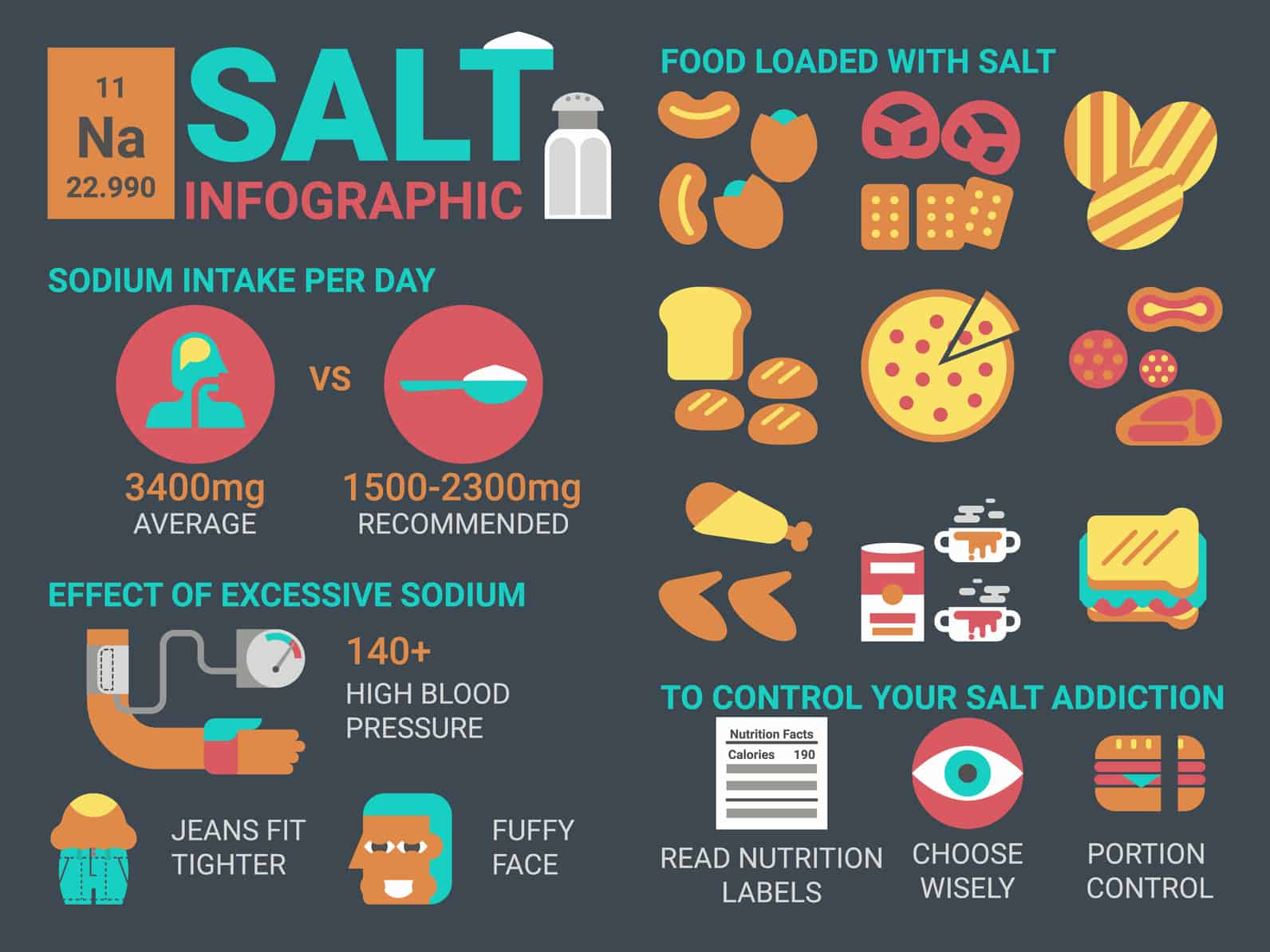
The 2020-2025 Dietary Guidelines for Americans recommend eating less than 2,300 mg of sodium daily. This amount is about one teaspoon of salt. However, most Americans consume as much as one and a half teaspoons of salt daily. 

Foods with a lot of salt include these:

  • Frozen meats, prepared dinners, pizzas, and burritos. 
  • Smoked meats, canned chicken, bacon, and cold cuts.
  • Canned chili, ravioli, or other canned entrees
  • Salted nuts or seeds
  • Canned beans
  • Canned soups
  • Buttermilk
  • Cottage cheese
  • Prepacked mashed potatoes, rice, or pasta
  • Salad dressings, ketchup, and other condiments
  • Butter or margarine

salt substitutes

How do you know if you should switch to salt substitutes? 

You should look for these symptoms if you’re overeating salt. 

  • You feel thirsty
  • Puffy face or hands
  • Swollen feet or ankles
  • Headache
  • Bloating
  • High blood pressure
  • Weight gain
  • Not sleeping well
  • Pee a lot
  • You feel weak
  • Upset stomach

20 salt substitutes to improve your blood pressure

Here are twenty different salt substitutes to help you cut back on your salt intake.

1. Lemon juice and zest

Lemon juice can perk up any dish. The acidic flavor of lemon juice is so delicious that you may not even notice the swap. Squeeze lemon juice in your brown rice, salads, soups, and stews. Use the zest in mashed potatoes, roasted veggies, and grilled meats. 

2. Nutritional yeast

Nutritional yeast is a popular salt substitute. It has a cheesy flavor that tastes great in baking, casseroles, and meats. Sprinkle it on popcorn, salads, or oven-roasted vegetables. Besides its salt-replacing flavor, nutritional yeast contains healthful B vitamins, which boost your mood. So nutritional yeast is a good start if you want a healthy sodium replacement. 

3. Seaweed flakes

Any sea veggies, such as seaweed, kelp, or algae, can work as a salt substitute. These dried flakes have a brine flavor and 96% less sodium than regular salt. Seaweed flakes are a good source of nutrition, such as

  • Magnesium
  • Iron
  • Fiber

Sea veggie flakes aren’t everyone’s favorite. So you may need to use them only on certain foods for the flavor you want. 

4. Liquid amino acids

Liquid amino acid comes from soybeans treated with an acidic solution. Sometimes they’re made from fermenting coconut sap with water. Amino acids have a savory flavor similar to salt. It’s suitable for veggies, stews, or meats. Be sure to check the label of the brand of amino acids you’re using. The soy versions can have a lot of salt. Coconut amino acids have less salt than soy. Amino acids have a unique flavor. Not everyone likes the taste, so try it to see if it’s for you. 

5. Infused oils

Here’s another popular sodium substitute–infused oils. There is a wide variety of flavored oils to choose from. These infused oils are usually extra virgin olive oil infused with lemon, cayenne pepper, garlic, or herbs. These yummy salt substitutes are healthy choices to avoid hypertension or high blood pressure. For example, you can make an herb-infused oil like this:

  • Run your bottles or jars through the dishwasher to be sure they’re clean and sterilized. 
  • Fill these jars with herbs like rosemary, dill, or thyme. 
  • Slowly pour the extra virgin olive oil into jars. Add enough oil to cover them completely. 
  • Put the lid on the jar. First, make sure it’s tight. Then, set it in a cool place in your kitchen. 
  • Every couple of days, shake the jars to mix the oil and herbs. 
  • Let the infused herbs set for three to six weeks. 
  • Strain the oil through cheesecloth into another clean bottle. Squeeze the herbs to remove all the oil. 
  • Put the lid on the jar. This infused oil should last up to a year if you keep it at room temperature. 

6. Chili pepper

Your dishes can taste good without salt. Low sodium doesn’t mean your food will lack flavor. Add chili pepper to your meals if you crave spicy and well-seasoned foods. Chili peppers add flavor to popcorn, salads, and soup. You’ll get the bold taste without the unhealthy side effects. 

7. Dill 

Dill is a flavorful alternative to salt. It’s delicious on salmon, squash, or potatoes. Dill weed herb is related to celery. Dill seeds replant themselves and can take over whole herb beds. You can use dill seeds to add flavor to pickles, egg salads, or cucumber salads. 

8. Smoked paprika

Smoked paprika spices up any dish. Its smoky flavor works well in items that generally call for salts, such as tacos, stews, chili, or salsa. Smoked paprika contains vitamins E and C. It’s good protection against heart disease, high blood pressure, and stroke. This delicious salt alternative also has phosphorus, potassium, iron, and magnesium. 

9. Mushrooms

You may not have thought of using mushrooms as a salt substitute. That’s okay; not many people do. Mushrooms add a meaty flavor to your vegetable dishes. You can caramelize them and put them on meats or savory rice dishes. Combine your sauteed mushrooms with balsamic vinegar for unique flavors in your favorite dishes. 

10. Vinegar 

Vinegar adds zing to salt-free dishes. All types of vinegar are versatile. Use apple cider vinegar in salad dressings. Try balsamic vinegar in sauces or gravies. Red wine vinegar works well in marinades or reductions—champagne vinegar spices up chicken, shrimp, or fish. 
sodium

11. Beer or Wine

Beer or wine is another flavorful salt substitute. Either libation works well in soups, pasta sauces, meat marinades, or stews. Beer adds an earthy flavor to your dishes, while wine adds sweetness and acid. If you’re cooking for your kids, don’t worry about the alcohol, it evaporates during cooking. 

A note about sodium in alcohol: Beer and wine contain some sodium, so check the label if you must follow a sodium-free diet. So while they may help lower salt from your cooking, they do not wholly eliminate it.

12. Salsa 

Salsa made with tomatoes, jalapenos, cilantro, and lime is a great salt substitute for omelets, fish, meat, appetizers, and more. However, store-bought salsa may contain a lot of salt, so it’s best to make your own or seek a low-sodium canned version.

13. Cinnamon

Cinnamon is a common ingredient in baked goods, but it’s a great alternative to salt. It has a warm and spicy flavor. Many cultures mix ground pepper with cinnamon to spice up savory dishes such as these:

  • Soup
  • Stews
  • Curries
  • Meat marinades
  • Savory rice dishes
  • Chicken
  • Turkey

14. Garlic powder (one the easiest salt substitutes)

Garlic powder adds flavor to dishes. It blends in better than chopped garlic. It’s good in cases where you want just a hint of garlic. Add it to salads, mac and cheese, and salad dressing to replace salt. 

15. Fresh ground pepper

Salt and pepper usually go together, but ground pepper can go solo and still give your food great flavor. Be careful to go slow when it comes to black pepper. It can hurt your stomach and change the taste of your dishes. However, a few shakes of ground pepper will flavor salads, soups, sauces, casseroles, or stews. 

16. Oregano

If you’re cooking Italian or Greek food and want to skip the salt, add oregano to the dishes to add flavor. Use oregano in pizza, red sauces, chicken, or fish Using this delightful herb is a flavor way to eliminate salt without losing flavor. 

17. Low-sodium broths

Store-bought broths are high in sodium. The salty flavor can overpower the flavor of your dish. If you don’t have time to make broth, try the low-sodium version to keep your salt levels down. These broths work just as well as the high salt versions. Use low-sodium broth in mashed potatoes, sauces, gravies, or when you cook brown rice. 

18. Turmeric 

Turmeric has become famous for its anti-inflammatory properties, but it’s a good salt alternative. It’s good in curries, roasted vegetables, stews, and egg dishes. It’s best to buy organic turmeric at your local store. This guarantees there aren’t additives in the spice. 

19. Parsley (if you prefer lighter-tasting salt substitutes, make this herb a go-to)

Fresh parsley adds a bright flavor to various dishes. Its fresh taste adds a little zing to your rice, savory sauce, stews, and pasta dishes. Parsley has vitamins K, C, and A. It’s a healthier choice than salt and can help reduce your risk of these conditions:

  • Stroke
  • Heart disease
  • High blood pressure
  • Diabetes
  • Cancer
  • Kidney problems

20. Coriander

This somewhat unknown spice has a mild citrus flavor. It’s often paired with chicken or beef. Many Indian or Mexican dishes contain coriander. Besides being a great salt alternative, coriander has other health benefits, such as:

  • Help lower blood sugar
  • Boost your heart health
  • Rich in antioxidants
  • It helps digestion and gut health
  • Protects your skin
  • Fights infections

Are commercial salt substitutes healthy? 

You may have seen salt substitutes at your local grocery store. Many of these contain a lot of potassium chloride instead of sodium. However, potassium isn’t safe for everyone. 

Indeed, too much potassium can cause kidney problems. If you have kidney, liver, or heart disease, check with your doctor before you use one of these salt substitutes. Better yet, skip the store-bought brands and use a natural alternative to reduce your sodium. 

salt substitutes

Final thoughts on using salt substitutes to manage your sodium intake

Overeating salt is dangerous to your health. Overconsumption of sodium can lead to hypertension or heart disease. You may not salt your food, but salty pre-made foods, ketchup, and store-bought salad dressings provide you with more salt than you need. These twenty salt alternatives could help reduce salt, get healthy and feel better. 

13 Reasons Someone Avoids Socializing

Some folks are social butterflies and never meet strangers, while others find socializing quite overwhelming and exhausting. Where do you fit on this spectrum? If you find that you avoid social gatherings and prefer to spend time alone, you may be an introvert.

Socialization is an integral part of your life, as you need some interaction with other people. Some reclusive individuals prefer to be alone, but it’s not a healthy lifestyle. You need to see and experience relationships and be surrounded by people who love you.

The greatest relationships you miss out on are the ones you never allow to form. While you need a healthy balance to ensure that your life isn’t all about socializing and parties, you must find some trusted friends to allow into your inner circle.

Why Do Some People Avoid Socializing?

Do you tend to be a bit of a recluse? Do you have introverted ways that make you avoid parties and shopping centers? Here are some of the most common reasons why people avoid socializing.

introvert

1. You Might Be an Introvert

There are common misconceptions about an introvert. It’s not that this individual doesn’t like people or socialization, but they prefer to do it on their terms. These people tend to have a short “battery life.” Once their energy depletes, they must recharge, which is why they like going off alone to regroup.

These folks listen more than they speak, and they’re some of the best friends you can have but don’t expect them to be the life of the party. They’re just as comfortable at home with a good book and relaxing as having an active social calendar.

2. Low Self-Esteem Causes People to Avoid Socializing

People with low self-esteem usually aren’t big into socialization. According to the National Library of Medicine, folks with a low view of themselves often struggle to make friends and with things like eating disorders.

When you see yourself as less than everyone else, you will often avoid interactions that might make you the center of attention. These folks prefer solitude and staying within their comfort zone. What you see when you look in the mirror is likely a skewed perception.

You’re always your harshest critic, and people won’t judge you nearly as hard as you do yourself. Counseling can help you work on your self-esteem and understand your self-worth.

3. Social Anxiety Disorders

Social anxiety is a significant problem in this country. The National Library of Medicine states that social phobias affect more than seven percent of the population. There are different degrees of this anxiety disorder, but some folks refuse to drive, go to stores, or even step foot beyond the threshold of their home.

When a social anxiety disorder affects the ability to leave home, it morphs into agoraphobia. Thankfully, these mental health concerns can be treated, and a person can learn to put some socialization into their life.

4. Socially Awkward

Some folks are just socially awkward. It’s not that there’s anything wrong with them, but they seem to say and do all the wrong things. They may have some introverted personality characteristics or be uncomfortable in crowds.

Some people learn to be socially shy from family members because of how they were raised, which can be genetically linked. Perhaps your awkward nature caused you to have an embarrassing incident. You were on a date and walked into the restaurant to meet this person at the table.

On your way through the eatery, you tripped and face-planted right in front of them. The past can undoubtedly leave an impression on your mind, as you never hear from this individual again. Sadly, the chances of history repeating itself are slim, and you’re letting your fears of one awkward moment hold you back from having the life you deserve.

5. Someone Who Avoids Socializing Might Be Stressed or Depressed

No one feels like going out and socializing when stressed or depressed. It’s normal to feel like running away and shutting yourself off in a room alone in these times.

While socialization is essential, taking care of your mental health is even more critical. If you feel overwhelmed by anxiety, stress, and depression, you must find healthy outlets to relieve these feelings.

6. Reclusive Personality

A reclusive personality is part of schizoid personality disorder. These folks work hard to avoid people, and they organize their entire lives so that they can thrive as a party of one. It’s common for these individuals to prevent meaningful romantic relationships, and many of them will live with their parents throughout their lives.

According to the Cleveland Clinic, some reclusive people fall into the arena of avoidant personality disorder. The fear of being rejected by the outside world or not fitting in keeps them from living or getting the socialization they need.

socializing

7. Ongoing Health Problems

You may not feel like socializing if you have ongoing health issues like cancer, diabetes, chronic fatigue syndrome, or others. Illness often brings overwhelming fatigue, the need to be close to a restroom, and the fear of acting like a fool in front of others.

While others might think you’re an introvert, it has nothing to do with your personality. You feel more comfortable in your home while you battle your health.

8. Introverts Keep a Close, Small Circle of Friends

When you’re in school, it seems easy to make friends. You’re surrounded by kids all day long, so you can pick and choose those you want in your inner circle. However, as you age, it becomes more challenging to have healthy friendships.

Most adults work long hours and have family responsibilities, and the time to socialize and hang out with friends is lacking. Additionally, you may struggle to meet people if you work from home or have a job where there are not many coworkers. It’s not that socializing isn’t essential to you, but you don’t know how to make friends now that you’re grown.

9. Fear of Rejection May Cause Someone to Avoid Socializing

The fear of rejection is something everyone has to some degree, as it’s ancient and primal. Did you know that people’s judgments mirror their insecurities? This fear causes you to avoid others, as you dread being humiliated, judged harshly, isolated, or excluded from your peers.

If you fear rejection, you’ll go to great lengths to blend in and not stand out from the crowd. For example, a coworker invites you out for drinks after work. You’re excited that you were asked, but you’re terrified too. While you want to go, your mind is racing about what if you look like a fool and spill food on yourself, laugh too loud, don’t know what to say, and are miserable company.

There’s some anxiety talking as well as fear of being rejected. These fears can hold you back from having great relationships and unforgettable experiences.

10. No Time

It’s entirely possible that it’s not socializing that’s the issue as much as your time. You may enjoy a good party like the next person, but you work so much or have so many irons in the fire that you don’t have time for such luxuries.

Everyone needs healthy social outlets, as a life that’s all work is quite miserable. Even if you just set aside a couple of hours a week to be out and mingle with others, it can help you immensely.

11. No Motivation

Many people are not motivated to go out and have fun. It all comes down to one’s perception, and some folks think having fun is going through the drive-thru for a burger and watching a movie.

Going out and socializing means making yourself presentable, leaving the comforts of home, and spending money. The whole thought seems overwhelming to some folks, so their lack of motivation keeps them from a healthy social life.

12. An Introvert Partner Could Limit Socializing Opportunities

You like to do things together when you’re in a committed relationship. If your partner doesn’t want to socialize, you might feel you can’t leave them behind.

It’s often a delicate balance because you want to go out and be with friends, but you feel guilty when you leave them behind. Some people develop a click of two, and they don’t do much socializing beyond this group.

13. Bad Experiences

Some folks don’t like to form meaningful relationships and socialize because they’ve been burnt in the past. If someone hurts you deeply, it leaves a profound scar on your heart. You can’t let the past hold you back from having a great future, as relationships come with risks. You’re missing out on great things due to wounds that haven’t healed.

introvert

Final Thoughts on Why Some People Avoid Socializing (It Is Not Only Your Favorite Introvert!)

When you find social encounters draining or don’t know how to make the first move, you must push yourself, as you need to have healthy relationships in your life. You’re not dull, and there is someone who would love to hang out with you and hear what you have to say.

If you find that socializing is challenging for you, take baby steps to ease yourself back into society. Whether you have an anxiety disorder or an introverted personality doesn’t matter, as you can overcome whatever you face and find ways to mingle with others on your terms.

12 Reasons People Live in Fear and 12 Ways to Fix It

Fear is a primal emotion that evolved as a survival instinct. When you feel fearful, your brain kicks into high gear, and your body prepares to fight, flee, faint, or freeze. But what if this paralyzing emotion is negatively affecting your life?

Worrying about everything can put your life on hold. This adverse emotion can stand between you and fulfilling your dreams. Do you long for a meaningful relationship or a rewarding career and are too scared to take the first step?

What are some of the things that make you a bundle of nerves? Are there any ways that you can overcome these emotions? Your first step is to understand what causes you to be afraid, and then you can learn how to deal with them effectively.

Twelve Reasons That Explain Why People Live in Fear

What makes one person afraid may be nothing to another individual. While everyone can be fearful, some people are imprisoned by it. Here are twelve reasons why many people live in fear and how you can fix it.

fear

1. Generalized Anxiety Disorder

Generalized anxiety disorder is one of the most common mental illnesses. Fortunately, mental health specialists help people recover every day. You may fear simple things like going to the store when suffering from this condition. Some folks find that their anxiety controls them and may engage in routines like locking and unlocking the door.

How to Fix It:

If you’ve been diagnosed with GAD, several lifestyle changes can help. Staying physically active and following a healthy diet can make a difference. Also, consider relaxation techniques like yoga, meditation, and visualization.

2. Fear Due to Job Stress

Whether you’re an employer or work for yourself, you’ll always have stress. The constant push to deliver a superior product or service makes your customers happy. In that sense, job stress can be a positive motivator to urge you to do your best.

However, pressures from work can also turn to overthinking and anxiety. Perhaps you become fearful that a project will fail, your clients will leave, or you’ll be fired. The pressure snowballs, and you’re afraid you’ll lose your income and can’t support your family.

How to Fix It:

It’s a given that some jobs are more stressful than others. Try to keep a healthy balance between work and leisure time. You may consider another career path if your career becomes so stressful that it affects your well-being.

3. Financial Struggles Can Cause Someone to Feel Fearful

The fear of financial ruin is just as natural for wealthy people as for poor ones. Recent statistics published by USA Facts say that 11.4 percent of Americans live in poverty. Rising living costs and substandard pay are enough to keep your nerves frazzled.

Worrying and overthinking finances can contribute to anxiety, depression, and relationship problems. It gets even worse if you are straining under a mountain of debt. You fear losing your home and everything you’ve worked hard to obtain.

How to Fix It:

If you’re not making enough money, maybe you need another job. Consider furthering your education and learning new skills. Many social service organizations offer free credit counseling, tips on living within a budget, and job training opportunities.

4. Perfectionism Causes Fear

You might be constantly worried if you strive to ensure everything is perfect. It’s scary to think about rejection or not being good enough; if these thoughts rule your head, then so will fear. The downside of perfectionism is that it’s not reality, and you may never get anything done if you can’t do it flawlessly.

How to Fix It:

You want to do your best and gain more knowledge and skills. Realize that everybody makes mistakes, and if you’re worrying or overthinking about being perfect, it wastes time. Smother your unrealistic expectations and fear; you must be proud of your accomplishments.

5. Fear and Control Issues

Deep down, those with control issues fear losing control of their lives. One of the dark sides of perfectionism demands order in your personal and professional relationships. Unfortunately, this fear-based control can alienate family, friends, and coworkers and worsen your anxiety.

How to Fix It:

There’s a relief in knowing that if you died tomorrow, the sun would still rise, and the world would continue as always. Concentrate on the things you can control in your life, and stop worrying about everyone else.

6. Abandonment Worries

Some of your basic human needs are to be wanted and loved. Many people develop abandonment issues because of trauma in their childhood. Divorce, the death of a parent, or being taken from your home as a child can cause abandonment fear for a lifetime.

Children in the foster system often don’t bond appropriately with others because they’re afraid of being hurt. It’s called reactive attachment disorder, or RADS.

Many adults are fearful of abandonment because of a past toxic relationship. Maybe a partner in the past suddenly left, and you’re afraid to trust anymore. You may feel any prospective love will also abandon you, so you build walls in your heart for protection.

How to Fix It:

There’s no easy fix for abandonment issues and being afraid to trust a relationship again. Your first step is to identify when someone abandoned you, in childhood or as an adult. Once you identify the pain, you can learn coping tools to help you have loving relationships today.

fearful

7. Fearful About Relationship Troubles

It’s not unusual for people to fear that their relationships will sour. Overthinking what your partner says or does can easily make you uneasy and paranoid. Are you constantly worrying that they will find another and leave you on the curb?

How to Fix It:

Countless issues can jeopardize a relationship. If you spend every moment overthinking and worrying, you’ll lose quality time with your lover, family, or friends. No relationship is perfect, but you can still enjoy the beautiful imperfection.

8. Fearful of Rejection

Since acceptance is a basic human need, being fearful of rejection is understandable. Overthinking other people’s opinions and people-pleasing habits often develop because you want to be “liked.” The repercussions of these habits are that they only hurt you in the long run.

How to Fix It:

Your best weapon against fear of rejection is building healthy self-esteem. You are beautiful and complete in yourself. If somebody doesn’t like you, they are the one with the problem, not you.

9. Fear of What Other People Think

Many folks spend so much time worrying about what others think that it causes chronic anxiety and depression. While you should put your best foot forward, it’s impossible to please everyone, and you needn’t try. Overthinking people’s thoughts and reactions can stress you to give up on everything.

How to Fix It:

At the end of the day, you are responsible for your happiness. If you are doing your best to be a compassionate and moral person, you answer to yourself. If something or someone in your life brings you joy and makes you a better person, it’s nobody else’s business.

10. Overthinking Causes Fear

Worrying about forgetting something or making a mistake can cause you to overthink. No matter how hard you’ve worked, you’re afraid something is missing. Do you toss and turn at night, replaying every action and every conversation in your mind?

How to Fix It:

Sometimes, you need to take a deep breath and know you’ve got this. Consider meditation or mindful exercises like yoga to give you peace and clarity. Don’t allow overthinking to interfere with your relationships and daily activities.

11. Chronic Sickness

There are a plethora of reasons that can make you feel sick or develop a disease. Worrying about your health and the fear of death is universal. Chronic sickness can exacerbate those feelings and maybe make the condition worse.

How to Fix It:

When you’re sick and in pain, it’s understandable that you’re afraid for the future, especially if it’s a terminal illness. Talking to a trusted friend or spiritual leader can be comforting to you. Learning to cope when you’re afraid may help ease your mind and the symptoms of your illness.

12. Fear Resulting From Past Failures

If you research some of the most successful people in history, you’ll discover they made many mistakes. Worrying about failing can prevent you from achieving your goals. You can’t go forward and be successful if you’re stuck in the past.

How to Fix It:

Use them as teaching tools instead of beating yourself up about your past blunders. Learning from your mistakes can prevent you from repeating them. There’s no shame in admitting that you made a mistake; just let it be an incentive to improve.

fear

Final Thoughts on Living in Fear and How to Break the Cycle

It’s only human to be afraid occasionally. However, you can use that negative emotion as a ladder to succeed and bring joy to your life. While unsettling, fearful feelings will come, you needn’t allow them to control your mind. You can put fearful feelings in their place to live life to the fullest.

Manager Closes Restaurant to Protect Staff From Abusive Customers

Many restaurants stay open well into the night, but one Michigan eatery closed its doors early due to abusive patrons. Larah Moore, the general manager of East Park Tavern in Charlevoix, called it a night when a server broke down in tears. Customers, including tourists, had been unruly that night, and the employee couldn’t take any more abuse.

“She was crying. And I just kind of took my kitchen manager to the side, and we both decided we had enough,” Larah Moore told TODAY in an interview.

Even though it was the restaurant’s busiest week of the year, Moore put her employees first and protected them from abusive customers. Nearly 100,000 tourists (whom Michigan natives call “fudgies”) from around the globe arrived in town for the annual Venetian Festival. The eight-day-long celebration includes food, games, rides, fireworks, a parade, and other festivities. Usually, it’s an exciting, happy time for customers and employees at the tavern.

“Everybody in town is there to celebrate and have a good time, and it usually rubs off on your restaurant staff or, you know, just about any other business in town. We all try to keep good spirits up. It’s a fun time for everybody, or at least it’s supposed to be,” Moore said.

Locals and “fudgies” rave about the East Park Tavern, describing it as a “down-to-earth neighborhood haunt.” It’s a popular spot to grab delicious food and drinks during the festival. As a twelve-year veteran in the food industry, Moore knows that tourists can get pretty rowdy. However, she had never before encountered so many abusive, rude people at the eatery.

After talking with the staff, she decided to close shop at 9 PM on a Saturday evening, one hour earlier than usual. She hung a sign on the host stand explaining why they stopped serving patrons.

Manager Closes Restaurant to Save Staff From Abusive Patrons

abusive

It read:” Due to mistreatment of our servers, our kitchen is closed.” She also shared a photo of the sign on Facebook and wrote a detailed post about the closure.

“I’ve worked in downtown Charlevoix most of my adult life during Venetian. It’s usually great, busy, but fun and worthwhile,” wrote Moore. “I’m so incredibly disappointed and embarrassed by the Fudgies we have this year. My staff took a BEATING all week. Last night was our last straw. Too many rude comments, too many arrogant individuals acting like they can throw money at us to get their way. Too many cocky jerks.”

“No one gets to treat my staff like trash,” she continued. “They are the absolute shining stars in my life, and I love and appreciate the hell out of the few of them that I am lucky enough to have. If you push your servers, watch them start to push back. We are here to ensure great food, drinks, and quality of your time spent with us. We are not here to be abused, we will not tolerate that anymore.”

However, Moore said that not all the patrons were abusive toward staff. Many of the customers acted friendly and treated the servers with respect. She decided to share a note that one of the kind patrons left for their waitress.

“Thank you so much for being such a phenomenal waitress, even though you had so many other tables. Have a blessed night. We really appreciate all you do!” the message for one of the servers read.

The post went viral a few days after the incident, amassing over 9,000 shares and 6,000 likes. Many Facebook users said they supported her decision to close the restaurant early. Several locals even agreed that the Venetian crowd seemed more disorderly than usual.

Moore Hopes the Incident Reminds People of the Golden Rule

“We have had a really difficult tourist season here too. People have just been a whole different breed this year! It’s insane,” one person said about the abusive patrons.

“I’m angry/sad for you and your coworkers, embarrassed for Charlevoix, and completely enraged that grown adults think they can act like children with daddy’s money throw fits and get what they want. You’ve put up with so much already I can’t imagine how truly awful it was to make this decision!!” another user wrote.

But not everyone sympathized with the staff at East Park Tavern. Some commenters called Moore and her staff lazy for closing up early. Of course, Moore vehemently disagreed, saying they gave 100% that night as they always do.

She told TODAY that many factors contributed to her refusing service to abusive customers. Patrons had been discourteous all week, and when one of them made a server cry, it was the last straw.

“People need to realize how much the service industry folks give up to be there to perform that job,” said Moore, reminding patrons that servers are human too. “To do it every day with a smile on their face, even when they feel like nobody cares and nobody appreciates them… Somebody cares about that person that’s waiting on you just as much as you care about the people you have at your house. And I don’t feel like you would go to your mom’s house and treat her like trash when she serves you a meal,” she added.

Moore hopes that if the public learns any lesson from the incident, it’s to treat everyone with basic decency.

“The ‘professional’ choice probably would have been to simply have a sign that said: ‘Our kitchen is closed for the evening,'” Moore told TODAY. “But I felt like people needed to be aware of what was happening. People needed to be aware of their actions and how they impact others.”

tourists

Final Thoughts on a Michigan Restaurant Manager Protecting Staff from Unruly Tourists

The East Park Tavern in Michigan sees a huge uptick in business thanks to the yearly Venetian Festival. It’s normally a memorable time of year as the celebration puts staff and patrons in good spirits. However, customers seemed more unruly and abusive toward servers this year. Their behavior prompted the restaurant’s general manager to close early one Saturday evening. She hopes the unfortunate scenario will remind the public to treat service workers kindly.

10 Symptoms of IBS and 10 Ways to Heal

Irritable bowel syndrome, or IBS, is a group of symptoms that cause pain in your gut and changes in your bowel movements.

The American College of Gastroenterology estimates that around 10% to 15% of adults in the United States have IBS, and a smaller percentage get an IBS diagnosis. So if you’re having digestive issues, it could be irritable bowel syndrome. This article will provide the ten frequent symptoms of IBS and some suggestions for finding relief.

What is irritable bowel syndrome?

IBS is a disturbance or change to your bowel function. For example, you may have stomach pain or changes to your bowel movements such as constipation, diarrhea, or even both. Depending on your symptoms, doctors refer to IBS using different terms.

  • IBS-C-IBS with constipation. It’s poop that is hard and lumpy.
  • IBS-D is IBS with diarrhea-lose watery bowel movements.
  • IBS-M is IBS mixed bowel symptoms. You can have loose, watery diarrhea and hard, lumpy bowel movements during a single day.

What triggers IBS?

Doctors don’t know what triggers irritable bowel syndrome. It’s most common in your late teens to early forties. Women are twice as likely to get IBS than men. Certain foods trigger your symptoms. You may also notice that stress makes it worse. Researchers think that IBS could be your gut reaction to stress.

ibs

You may be at risk for IBS if you have:

  • Family members who have irritable bowel syndrome
  • Lots of emotional stress or anxiety
  • Food intolerances
  • A history of sexual or physical abuse
  • Digestive tract infection

Ten Frequent Symptoms of IBS

1 – Abdominal pain or cramps

Abdominal pain is frequent when you have irritable bowel syndrome. Your brain and gut work in coordination to control your digestion. Your hormones and nerves cause good bacteria to enter your gut. But with irritable bowel syndrome, the signals get distorted. As a result, the muscles of the digestive system get tense. This imbalance causes pain– usually in your lower abdomen. After you have a bowel movement, you may feel better. But the pain will return over time.

2 – Constipation

IBS causes constipation in some people. Your body experiences disrupted communication between your brain and bowels. This interruption slows down your body’s regular bowel movements. Three bowel movements a week or less are considered constipation. You may have gut pain associated with constipation. Conversely, you may feel incomplete bowel movements–even after you finish.

3 – Diarrhea

Diarrhea is another common symptom of IBS. It affects around one-third of those with irritable bowel syndrome. Adults with IBS-D, on average, can have approximately twelve or more bowel movements a week.

Typically, a person has around six bowel moments a week, which is twice as many. In addition, IBS-D may cause a sudden urge to have a bowel movement. This condition can be stressful and embarrassing when you’re in social situations. If your doctor isn’t sure you have IBS, these symptoms usually clinch the diagnosis.

4 – Gas and bloating

Bloating and gas are uncomfortable symptoms of irritable bowel syndrome. These symptoms are most common for those with IBS-D or mixed types, IBS-M. If you have IBS, there is a good chance your body isn’t absorbing carbs properly into your small intestine. So when they arrive in your large intestine, they break down, causing gas and bloating.

5 – Alternating Constipation and Diarrhea

Some people experience both constipation and diarrhea with irritable bowel syndrome. This occurs with intermittent abdominal pain. Never ignore gut pain. Gut pain may mean you have an infection or something else. IBS-M varies from person to person.

6 – Trouble sleeping

Studies found that half of the people who suffer from IBS have trouble sleeping. In addition, IBS sufferers also reported insomnia or poor sleep. Overall, insufficient sleep is often associated with gut problems.

7 – Food intolerance

Many people with IBS say that certain foods trigger their symptoms. They also say that they eliminated these foods to avoid IBS symptoms. This could be due to food intolerance. Food intolerance is different than an allergy. They are trigger foods that cause changes to your digestion. These foods can cause gas, diarrhea, bloating, or constipation:

  • Milk products
  • High fructose corn syrup
  • Caffeine
  • Carbonated drinks
  • Sugar-free foods, gums, or drinks
  • Gluten: Wheat gluten is a problem for many people with IBS

8 – Depression and anxiety

Irritable bowel syndrome closely connects to anxiety and depression. However, it’s unknown if IBS symptoms happen due to mental stress or whether the stress of having IBS causes people to feel anxious and depressed. Whichever it is, anxiety makes irritable bowel syndrome symptoms worse. Besides that, individuals with IBS experience more significant changes in their cortisol levels. Increased cortisol causes more stress.

9 – Fatigue

Over half of the people with IBS say they experience fatigue. Some say they had lower stamina when doing work, exercise, and social outings. How bad the severity of their fatigue determined their IBS symptoms.One reason that people with IBS experience fatigue is that they have nutritional deficiencies. These can leave you feeling unwell and exhausted. Also, harmful bacteria in your gut metabolize vitamins too quickly, causing you to feel run down and tired. Some vitamins metabolize too fast, including vitamins B12, D, E, and A.

Another theory about why people with IBS feel so tired is that chronic stress is exhausting and could be part of the cause of the fatigue.

10 – Restless leg syndrome

Studies found that restless leg syndrome (RLS) is common in individuals with IBS, especially those with IBS-D. It’s a curious connection between these two conditions,s, but researchers think it could stem from a neurological disorder associated with IBS. Restless leg syndrome is a condition that causes an uncomfortable urge to move your legs. These symptoms show up when you’re resting or sitting, disrupting your sleep ability, especially at night. Moving your legs relieves the urge, but you feel like you need to move your legs again. RLS affects women more than men, usually found in adults.

irritable bowel syndrome

10 Ways To Heal IBS

Fortunately, there is hope for those with IBS. There are actions you can do to take to heal your gut. Here are ten ways to heal your IBS.

1 – Dietary changes

Dietary changes are one of the most significant things you can do to get relief from irritable bowel syndrome. Changing what you eat will help reduce your symptoms of diarrhea, gas, bloating, and abdominal pain. Here are some fundamental changes that will ease your IBS symptoms.

  • Eat more fiber. Eat more nuts, vegetables, and fruits.
  • Drink lots of water
  • Avoid caffeine in coffee, tea, and sodas
  • Limit milk products. Lactose intolerance is common for those with IBS.

2 – Eat a low FODMAP diet

FODMAP is fermentable oligosaccharides, disaccharides, monosaccharides, and polyols. These are all sugars that your small intestine doesn’t absorb well. As a result, people may experience digestive problems after eating these types of sugars. When you eat a Low FODMAP diet, you go through three phases.
You stop eating certain foods that are high in FODMAP
Then you slowly reintroduce these foods back into your diet.
If they cause problems again, you know to avoid them or limit how often you eat them.

3 – Exercise

It’s essential to get regular exercise if you have IBS. It helps reduce stress, which could cause some of your IBS symptoms. In addition, exercise can help reduce your bloating and improve your bowel function.

4 – Don’t smoke

Nicotine found in cigarettes increases stomach acid. Extra stomach acid makes your IBS worse. Smoking also increases your risk of damaging your stomach lining and getting ulcers, and the chance of perforating increases.

5 – Lower your stress

Stress is a significant factor in irritable bowel syndrome. Therefore, you must reduce stress with relaxation techniques, deep breathing, or yoga.

6 – Drink herbal teas

Drinking herbal tea may ease your IBS symptoms because they’re associated with relaxation at the physical level. For example, they work by relaxing the abdominal muscles to ease cramps. In addition, regularly consuming tea boosts your fluid intake, improving digestion. Some teas also contain components that relieve stress and anxiety.

The best herbal teas for IBS are the following:

  • Mint
  • Fennel
  • Anise
  • Turmeric
  • Chamomille

7 – Try therapy

Many people have gotten help through biofeedback, cognitive behavioral therapy, and hypnotherapy. These therapies have proven helpful in controlling symptoms and diminishing their severity. Find a trained therapist who does these types of treatments.

8 – Take probiotics

Probiotics are good live bacteria that are beneficial to your digestive system. They boost your gut microbiome and may help your guy function better. Increasing the good bacteria in your gut has other health advantages, such as these:

  • Boost your immune system
  • Improve your digestion
  • Help alleviate postmenopausal symptoms
  • Help reduce diarrhea
  • It may help with depression or anxiety

Eat fermented foods like yogurt or kefir for natural probiotics.

9 – Try acupuncture

Acupuncture is a treatment where thin needles are inserted into your skin at strategic places on your body to alleviate pain or help your system heal. Acupuncture helps people with IBS symptoms significantly.

10 – Increase your vitamin D

Vitamin D is essential for good digestive health. One study found that vitamin D deficiency is prevalent in people with IBS. Vitamin D regulates gastro inflammation. Researchers suggest that people with a higher vitamin D level have lower IBD occurrences. You can boost your vitamin D by being exposed to sunlight for at least fifteen to thirty minutes every day. You can also take vitamin D supplements. These are helpful during winter months when they might be less sunshine where you live. Add this vitamin D rich foods to your diet:

  • Salmon
  • Egg yolks
  • Canned tuna
  • Sardines
  • Shitake mushrooms

ibs

Final thoughts on managing your IBS

Irritable bowel disorder symptoms can be disruptive to your life. Gut pain, gas, bloating, and sudden bowel movement urges are embarrassing and interfere with your social life. Getting a proper diagnosis can be difficult, but if you have several of the ten symptoms listed in this article, there’s a good chance you have IBS. However, it is possible to get control of your irritable bowel syndrome. You may want to try some of these ten suggestions to heal your gut and find relief.

Study Says Nuclear Power Might Be the Cheapest Way to Zero Emissions

New research shows that nuclear power may play a vital role in our quest to lower emissions. To prevent catastrophic damage from climate change, we must keep global average temperatures below 1.5 C relative to pre-industrial levels. Scientists have found that energy production must reach zero emissions globally by 2050 to achieve this goal. 

 Solar and wind power can significantly reduce emissions, but they may not provide enough energy for a zero emissions future alone. 

 “Renewable energy sources like wind and solar are great for reducing carbon emissions,” said Lei Duan, lead author of the study and researcher from the Carnegie Institution for Science. “However, the wind and sun have natural variation in their availability from day to day, as well as across geographic regions, and this creates complications for total emissions reduction.”

 Natural gas can make up for shortfalls in wind and solar energy production. However, to generate zero-emission electricity, humanity needs another energy source to rely on for cloudy or windless days.

 Prior studies have found that expanding solar and wind power installations could curb 80% of carbon emissions. However, we would need drastic infrastructure changes to accommodate the variability in these natural resources. 

 Producing clean energy with wind and solar alone would require enormous expansions in energy storage, transmission technology, and energy-generating infrastructure. While the costs of wind and solar continue to decline, investing solely in these energy sources doesn’t seem wise. We need other zero emissions electricity supplies to fall back on, such as nuclear power plants.

 “To nail down that last 10 or 20 percent of decarbonization, we need to have more tools in our toolbox, and not just wind and solar,” Ken Caldeira, another lead author of the research from Carnegie’s Department of Global Ecology, explained.

Nuclear Power Could Propel Us to a Zero Emissions Future

nuclear power

 Duan and Caldeira, along with researchers from TerraPower LLC and Gates Ventures LLC, wanted to assess the feasibility of nuclear power. To do this, they researched the wind and solar output of 42 countries. Next, they used this data to determine if nuclear power could replace natural gas as an affordable, alternative energy source. 

In their analysis, researchers focused on identifying the countries that would benefit from installing nuclear power sooner rather than later. The team found that countries like the U.S. wouldn’t need to deploy nuclear power immediately. 

The country boasts the perfect climate and geographic conditions for wind energy generation. So, nuclear power would only comprise a small portion of its energy mix. 

Therefore, the U.S. should focus on ramping up wind and solar production and utilize nuclear only when necessary. However, nuclear power could facilitate a swift transition from fossil fuels in countries with poorer clean energy infrastructure, like Brazil.

“Under strict greenhouse gas emission controls, reliable power generation provided by nuclear power has a lot of potential value in the electricity grid for most nations,” Duan said in a statement.

“Places with poor wind resources can benefit from nuclear earlier in the path to zero emissions, whereas places with very good wind resources would only need it to get rid of the last traces of carbon emissions,” he added.

The team found that, along with being dependable, nuclear power could provide a low-cost alternative to other energy sources. 

“Our analysis looked at the cheapest way to eliminate carbon dioxide emissions assuming today’s prices. We found that at today’s price, nuclear is the cheapest way to eliminate all electricity-system carbon emissions nearly everywhere. However, if energy storage technologies became very cheap, then wind and solar could potentially be the least-cost path to a zero-emission electricity system,” added Caldeira.

Their research appeared in the journal Nature Energy. 

Why Nuclear Power is An Ideal Energy Source

 • Surpassed only by hydropower, nuclear power generates the most low-carbon electricity worldwide. In the U.S., atomic energy comprises the largest share of carbon-free electricity, according to the U.S. Department of Energy (DOE). In fact, nuclear produces more than 50% of the nation’s zero-emissions energy.

• According to the Nuclear Energy Institute (NEI), the nuclear industry helped to avoid over 476 million metric tons of CO2 emissions in 2021. That equates to removing more than 100 million vehicles from roadways.

• Nuclear energy plants require significantly less land than solar and wind farms. According to the Department of Energy, a typical 1,000-megawatt atomic facility in the U.S. only requires about one square mile to operate. Compare that to wind farms requiring 360 times more land and over 430 wind turbines to generate equivalent electricity. Solar plants need 75 times more space and over 3 million solar panels to produce the same amount of energy as one nuclear reactor.

• Nuclear power doesn’t produce much waste. Nuclear fuel is about one million times denser than traditional energy sources. Because of this, spent nuclear fuel (the amount used to produce energy) equals about 2,000 metric tons per year. That may sound like a lot, but the materials produced over the last 60 years could fit on a football field at a depth of fewer than 10 yards. 

• Nuclear technicians can also recycle used nuclear fuel to produce new power and byproducts. The U.S. does not currently recycle atomic byproducts, but some countries in Europe do. Nuclear technicians in the U.S. store used fuel rods securely at 76 reactor sites across 34 states. The spent fuel can remain at these sites safely until the government decides on a permanent, secure disposal solution.

zero emissions

Final Thoughts on Study Showing Nuclear Power Can Provide Affordable Clean Energy

According to Carnegie’s Department of Global Ecology research, nuclear power could be the cheapest path to zero emissions. In their study, researchers found that atomic energy could fill gaps in wind and solar electricity production. On cloudy or windless days, wind and solar power aren’t reliable. In these scenarios, nuclear provides a feasible contingency plan and may reduce the costs of clean energy. However, the team noted that future emissions-free electricity sources would depend on infrastructure advancements and energy storage capabilities.

10 Signs of Loneliness and 10 Ways to Fix It

Do you pretend to be happy to the outside world while loneliness causes pain behind the scenes? You may go as far as to make up fake stuff to post on social media so that people think your life is fantastic. Almost everyone will experience lonely spells. In fact, you can only understand it entirely if you experience the pain yourself.

You can tell the world that everything is great, and a good family and friends surround you, but you know you’re not at your best. It’s likely that life handed you a few blows and threw things at your front door that knocked the desire to socialize out of you. At some point, you must learn to get out and mingle again and get the life you so richly deserve.

Ten Frequent Signs of Loneliness

It’s possible that being lonely has become part of your life, and you don’t know it’s happening. You’ve hidden these feelings for so long that you think it’s normal to feel this way. If you’ve wondered what happened to the life you once had, it may be time to fight the inner demons that keep you isolated. Here are ten signs that you’re lonesome and how you can fix it.

loneliness

1. You Tell People You Are Busy to Conceal the Loneliness

How often have you told someone that you’re busy but don’t have anything to do? Many folks try to make it seem to the outside world that they have a hopping social life, but the truth is you’re lonely and bored out of your mind.

How to Fix It:

Start being honest with people about your lack of things to do. Chances are you’re bored because you’re coming across to people that you have no time to do anything. People will invite you to parties and other outings when they think you have free time to go.

2. There’s No Downtime

Everyone has some downtime, but what you do with these time frames counts. You can work until you have only a few hours to sleep a day, but you’re only isolating yourself from the life you want. When you do have time off from work to sit and think, you’re spending it on how you can make others believe your life is so amazing.

How to Fix It:

You must take time for yourself and engage in self-care. According to Harvard Health, when you take time to nourish your body and soul, you will feel and function better.

Experts further state that this is an excellent way to help with physical and mental health disorders, which can be behind much of your loneliness. If you have social anxiety or paranoia, you may avoid going out at all costs.

3. Loneliness Contributes to Irregular Sleeping Habits

If you’re lonely, chances are you’re not sleeping very well. If you’ve ever dealt with a child with ADHD, you know that you must wear them out before they can fall asleep at night. The same principle applies to adults, too, whether you have a neurological disorder or not.

You need to have a full day where your body craves rest. If you lounge on the couch watching TV, you may sleep off and on during the programs and have a hard time sleeping that night.

How to Fix It:

Loneliness can cause poor sleeping habits for many reasons. If there’s depression in the mix, you may find that you sleep more than you should. However, others find they can’t get their eyes to stay shut. Becoming more active will tire your body and make rest easier.

4. You Make Things Up on Social Media

One significant indication that someone is lonely is that they will invent stories for social media. If your life isn’t interesting enough, then making up something good and juicy will make people pay attention.

This is attention-seeking behavior and can lead you down a toxic road. These stories are a cry for help from a place of loneliness, and you don’t have to live this way.

How to Fix It:

If you like making up stories to make your life seem more interesting, it’s time to get out and start living. Try to connect with people in some chat rooms in your local area. You’ll have more stuff to do when you make friends and put yourself out there.

5. You Flirt a Lot

Did you know that lonely people tend to flirt a lot? They do it for attention, as it soothes the loneliness they feel inside. There’s certainly nothing wrong with some harmless flirting, but if this isn’t your style, you may be craving attention so bad that you will stop at nothing to get it.

How to Fix It:

If people notice that your flirting has become ridiculous, it indicates something deeper is going on inside. The loneliness you feel can drive you to do acts of desperation, and sometimes these acts can get you in serious trouble. It’s time for some healthy outlets to eliminate these intense feelings.

lonely

6. You Pretend You’re Happy to Hide the Loneliness

Many folks act like everything is excellent in their world, and they would never dare tell someone how they feel on the inside. Perhaps, the greatest struggle is not being honest with yourself or others about the conditions of your life.

How to Fix It:

Loneliness can only be cured by engaging in social activities and finding your purpose. Put yourself out there and let people know you’re looking for things to do. If you keep closing yourself off from the world, they will leave you alone, thinking you are content as a party of one.

7. You Engage in Seasonal Relationships

Perhaps part of the reason why you’re so lonely is that you treat your friends like seasonal parts of your life. You only call them when you need something and don’t check in regularly. Friendships need nourishing to keep them healthy and growing, and if you’re not putting the time or effort into them, it could be why loneliness has found you.

How to Fix It:

If you want people to be in your inner circle and help you fight the feelings of being alone, you need to acknowledge their existence. While you’re sending the message to them that you’re too busy, what’s happening is that you’re too afraid to admit that there’s an issue with loneliness inside.

8. You’re Always on Your Phone When You Feel Lonely

Your phone is glued to your side, and you check your email and social messaging a hundred times daily. You’re so afraid you will miss something that you’re addicted to this device. You wait for someone to post on social media so you can read their story, and you answer emails within minutes.

How to Fix It:

To be successful in business and life, you don’t need to be on electronic devices. You might have an easier time finding the social life you want if you get off your phone and talk to people face-to-face.

9. Loneliness Often Leads to Impulse Purchases

Did you know that many people use shopping as a type of therapy? Loneliness can temporarily ease when you have a new outfit, some great kitchen gadgets, and the pair of boots you’ve been waiting to purchase. Have you heard people say they need retail therapy?

A study in 2014 by the Journal of Consumer Psychology states that there’s some truth to shopping being therapeutic. The study found that shopping does alleviate sadness and helps lonely folks as it causes a surge of dopamine in your brain. Sadly, the intense feelings are short-lived, which is why it often becomes a huge problem.

How to Fix It:

Retail therapy can be just as addicting as gambling. If you are spending money you can’t afford or running up debt to make yourself feel better, you need to get help. A therapist can help you find social activities in your area and explore why you’re so lonely at this stage.

10. Messing Things Up is a Habit

You can be surrounded by people and still feel all alone. Part of the issue with the lonely crowd is that they tend to mess things up frequently. Maybe you engage in self-sabotaging relationships as you can’t imagine those good things will happen to you.

How to Fix It:

You need to seek counseling to see why you’re self-sabotaging good relationships. You may have paranoia and relationship anxiety, so you need to find coping skills for these flaws.

loneliness

Final Thoughts on Identifying Loneliness and How to Overcome the Lonely Feelings

If you feel lonesome, you may be dealing with something more profound. Many mental illnesses like anxiety and depression cause you to isolate and close the world off from around you. It’s not healthy to remain alone when there are people that will love and support you.

While it’s okay to spend time alone to process things that happen to you, you must remember that you can’t lock yourself away forever. It will only worsen things if you’re in denial about the situation. The sooner you admit that you have a problem and are lonesome, the quicker you can get help and resolve the core issues.

10 Daily Stretches to Help Fix Back and Neck Pain

If you experience back or neck pain, you know it is some of the worst agony possible. Doing everyday things like vacuuming or doing the dishes can be overwhelming when your body is so uncomfortable. Thankfully, you don’t have to take this pain sitting down. Pain relief might be as easy as mastering a few daily stretches.

You can do many exercises to strengthen your spine and muscles and reduce the aching you experience. Neck and spinal pain can happen to anyone. Even infants and children are not immune. Here are some of the most common causes of this common ailment.

  • Age
  • Excess body weight
  • Weak or unused muscles
  • Genetics
  • Abnormalities
  • Degenerative diseases
  • Arthritic conditions

If you live with this intense pain, you may feel like you’re all alone. However, according to the Mayo Clinic, back and neck pain is the most common cause of disability in this country. Additionally, it’s the most common reason that people seek medical help. Since it’s a common problem, you need to know how to get relief to sleep, work, and go about your life.

You can never be too careful when it comes to your back. Doing things like lifting inappropriately or too heavy can cause strain. However, spinal and neck pain is often unavoidable, even if you’re careful.

Some think ice or heat is the answer, while others turn to rest as a solution. However, exercising is one of the best ways to relieve pain. Even a mild workout can help to strengthen those muscles and keep everything in its proper place.

neck pain

Stretches for Back and Neck Pain

Are you tired of dealing with tired and achy joints and muscles? Doing chores at home and work is a total nightmare. Here are ten stretches you can try to help alleviate pain while offering more strength and flexibility.

1. Cat-Cow

Yoga poses are ideal for relaxing and relieving pain in your muscles, joints, and bones. Both classic positions work your spine and surrounding muscles. They’ll also be helpful if you have neck pain.

How To Do the Cat-Cow Pose to Relieve Neck Pain:

  • The starting stance is on all fours on your mat, with your neck in a neutral position.
  • Align your knees directly under your hips with your palms lined up under your shoulders.
  • As you inhale through your nostrils, pull behind in an arch to the center of your spine, like a cat.
  • Pull your tummy toward your spine and allow your head to droop and relax.
  • Hold this position for three to five breaths.
  • Next, exhale slowly through your lips and return to the starting position.
  • Go into the cow position by turning your face toward the ceiling.
  • Sink your belly slowly toward the mat, so your middle back is concave. Hold this pose for three to five breaths.
  • Finally, return to the starting position. This completes one set, and your goal is at least five repetitions.

2. Arm Circles

Have you ever noticed that you often have neck pain when your shoulders are tense? These gentle arm circles help release the tension and ease the pain in your neck and upper back. Some people also call this exercise “airplanes.”

How To Perform Arm Circles:

  • Stand comfortably on your mat with your arms stretched straight out from both sides, palms facing downward.
  • Gently move your arms forward, making small circles and gradually bigger ones. Breathe deeply as you are moving and feel the muscles relaxing.
  • Do these circles for fifteen to twenty breaths.
  • Now, repeat the steps in the opposite direction for another twenty breaths.

3. Shoulder Roll

Here’s another simple exercise that can ease neck pain. You can even do these while seated at home at your desk. Do these rolls whenever you feel the tension in your neck or upper spine.

How To Do a Shoulder Roll for Neck Pain Relief:

  • Stand straight with your arms relaxed at your sides. You can use a chair for comfort while doing this neck exercise.
  • Gently raise your shoulders and roll them backward five to ten times in a circle.
  • Then, repeat the steps and roll them forward five to ten times.
  • Try to do at least two to three sets, each going frontward and backward.

4. Neck roll

An article published by John Hopkins Medicine explains that neck pain is expected because of your neck’s location and range of motion. Doing these neck rolls periodically can alleviate aches and stiffness. They can also keep your neck and upper back limber to prevent pain.

How To Do the Neck Roll Correctly:

  • Stand comfortably or sit with your spine straight and facing forward.
  • Gently tilt your neck toward your right shoulder. You’ll feel a stretch in your neck and across your left shoulder.
  • Hold this position for two breaths, then slowly roll your head counterclockwise.
  • When your head reaches your left shoulder, hold for another two breaths.
  • Continue circling your head until you return to the starting position.
  • Repeat the steps toward your left side and roll your head clockwise. This completes one set.
  • Your goal is to do two to three repetitions.

5. Overhead Arm Reach

Spinal and neck pain often radiates in your arms and hands. This sitting exercise benefits your arms as well as your upper body. If you prefer, you can also do it standing.

How To:

  • Sit in a comfortable chair with your feet on the floor, or stand in a neutral position.
  • Stretch your left arm over your head and reach toward the right.
  • Twist your torso gently until you feel a stretch in your left side and shoulder.
  • Hold for two to three breaths and return to the starting position.
  • Repeat the same steps for your right shoulder.
  • Try to do at least five repetitions.

6. Knee to Chest Lift

When you have pain in your middle and lower back, it makes sitting or standing difficult. Try this exercise that helps align your spine and relax those aching muscles.

How To Perform a Knee to Chest Lift for Pain Relief:

  • Lie comfortably on your mat face up. If needed, you can use a small cushion under your hips.
  • Bend your right leg, raise it toward your chest, and hold for five breaths.
  • Release and return to the starting position.
  • Now, repeat the steps with your left leg.
  • See if you can do at least three to five repetitions.

7. Shoulder Blade Squeeze

Do you often feel the tension between your shoulder blades when stressed? Here’s a simple exercise to ease tension and relax your shoulders and upper spine. You can do these standing or sitting whenever you feel that familiar pain.

How To Relieve Neck Pain With the Shoulder Blade Squeeze:

  • Stand or sit comfortably with both arms at your sides.
  • Gently squeeze your shoulder blades together, hold for five breaths, and release.
  • Repeat the steps three to five times.

8. Snow Angel

Remember lying in the snow as a kid and making snow angels? The same movements can strengthen your muscles and soothe the pain. If you want, you can do these movements while leaning flat against a wall.

How To Do the Snow Angel Exercise:

  • Lie flat on your mat or stand with your spine flat against a wall.
  • Stretch your arms into a “T” shape and bend your elbows at a 90-degree angle.
  • Slowly and gently move both arms up and down above your head as if you’re making a snow angel.
  • Try to keep your body flat against the mat or wall.
  • Continue the motions for fifteen to twenty breaths.

9. Superhero

Since you have so many responsibilities with family and work, you’re already a superhero. However, superheroes sometimes overwork their bodies and battle painful muscles and joints. This classic exercise can be your superpower.

How To Take Superhero Power to New Heights to Beat Neck Pain:

  • Lie comfortably on your stomach and stretch your arms and legs above your head, keeping your neck relaxed.
  • Use your glutes and back muscles to do the lifting.
  • Hold the position for one to two breaths, then return to the starting position. Your goal is at least ten repetitions.

10. Butterfly

The butterfly is another easy exercise that can relieve shoulder and neck pain. You’ll feel the pleasant stretching throughout muscles in your upper body. They are especially beneficial if you do a lot of lifting or carrying things.

How To Do the Butterfly:

  • Stand or sit comfortably and place your right palm on your left shoulder.
  • Cross your left arm over and place your left palm on your right shoulder.
  • Bring your elbows together until they touch or get as close as you can without pain.
  • Hold this position for ten to twenty breaths, then release it to the starting position.
  • Repeat this sequence three to five times.

pain relief

Final Thoughts on Back and Neck Pain

These stretching exercises aim to minimize your pain, not worsen it. If you feel any pain while doing these, stop immediately. You can also consult a certified fitness expert for exercises tailored to your needs.

It’s exasperating to spend a day with spine or neck pain. Consider trying these helpful exercises or adding them to your usual fitness routine. They can make your muscles and joints more robust, more flexible, and provide a reasonable measure of pain relief.

Study Explains the Likely Cause of Mental Exhaustion

Many people today suffer from mental exhaustion due to the mounting pressures of modern life. Manual labor can drain your energy from physical exertion, but what about complex cognitive tasks? Thinking for hours can make you feel as much fatigue as running a marathon. 

Researchers have found new evidence to explain why thinking causes mental exhaustion. And they also discovered that intense concentration leaves less brain power for making decisions. 

For instance, you may opt for a microwave dinner instead of cooking after a long day after you come home from work. Since you have limited energy, your mind naturally gravitates towards the easiest option.

The research reported in Current Biology delves deeper into why people feel mental exhaustion after periods of intense focus. Researchers found that several hours of intense cognitive labor causes a buildup of toxic byproducts in the prefrontal cortex. This accumulation of toxins can inhibit your decision-making skills, making you choose low-cost actions that require little effort. 

“Influential theories suggested that fatigue is a sort of illusion cooked up by the brain to make us stop whatever we are doing and turn to a more gratifying activity,” says Mathias Pessiglione of Pitié-Salpêtrière University in Paris, France. 

“But our findings show that cognitive work results in a true functional alteration — accumulation of noxious substances — so fatigue would indeed be a signal that makes us stop working but for a different purpose: to preserve the integrity of brain functioning.”

Pessiglione and his colleagues wanted to understand the mechanisms causing mental exhaustion. While the brain resembles a highly complex machine, it cannot compute endlessly like a machine. 

So, researchers wanted to find out why the brain has limited thinking capacity. They hypothesized that the brain’s need to recycle potentially toxic byproducts of neural activity might explain its limitations. 

Study Proves What Causes Mental Exhaustion 

mental exhaustion

To prove this hypothesis, the team used magnetic resonance spectroscopy (MRS) to measure brain chemistry throughout the workday. They analyzed two groups of people: those who had to think intensely for work and those who had comparatively undemanding mental tasks.

The team only observed obvious signs of exhaustion, such as pupil dilation, in the group doing hard mental labor. People in that group also tended to seek instant gratification after completing work. 

They also showed higher glutamate levels in the brain’s prefrontal cortex synapses. Combined with prior evidence, the authors believe this supports the idea that glutamate buildup slows brain activity. In other words, toxic substances in the brain make cognition more challenging and energetically costly after a mentally demanding workday.

Could we somehow circumvent these constraints on our cognitive abilities? Unfortunately, researchers believe the brain’s computing powers have hard limits–for a good reason.

“Not really, I’m afraid,” Pessiglione said. “I would employ good old recipes: rest and sleep! There is good evidence that glutamate is eliminated from synapses during sleep.”

The authors offered additional advice on avoiding mental exhaustion. They believe that monitoring prefrontal metabolites could help identify extreme cognitive fatigue. Detecting these toxins in the brain may encourage employees to take breaks more often, thus avoiding burnout. Researchers also suggest people refrain from making critical decisions when feeling mentally exhausted. 

In follow-up studies, the team hopes to discover why the prefrontal cortex seems particularly vulnerable to glutamate buildup and mental exhaustion. In addition, they want to explore further research on glutamate recovery levels during sleep or rest. Finally, they’re interested to learn whether the same fatigue markers in the brain could improve treatments for conditions like depression or cancer. 

Tips on Avoiding or Limiting Mental Exhaustion or Fatigue

In our overly stressed world, more people have reported feeling burnt out than ever before. In a 2021 Indeed survey, 52% of Americans said they felt burnt out, with millennials being the most affected generation at 59%. So, what can we do to combat this ever-increasing mental exhaustion? Below, we’ll provide a few tips on improving your mental stamina. 

• Protect your energy. We have endless distractions in our modern world, all demanding our attention. However, you don’t have unlimited energy, so use it wisely. You don’t have to agree to work longer hours or respond to text messages when you feel the impact of mental exhaustion. Take your power back by setting clear boundaries with yourself and others. Give yourself a time limit to catch up with friends on social media, and then give technology a break. Our brains need rest, especially in our “always on” society.

• Avoid multitasking. Did you know that our brains can’t multitask? We may think we’re accomplishing more by multitasking, but the brain can only complete one task simultaneously. Therefore, multitasking slows us down since the brain must switch rapidly between tasks. Researchers have found that attempting to multitask can reduce productivity by up to 40%!

• Choose what to care about. It seems evident that we have a problem with overthinking in society. Smartphones and technology have likely played a significant role in the epidemic of overthinking. Our brains haven’t evolved to handle the inundation of stimuli and inputs in modern society. To minimize the thoughts in your mind, try to simplify your life as much as possible. When the mind isn’t stretched so thin, it eliminates some cognitive stress many of us experience. 

• Meditate. Studies prove that regular meditation can improve focus and reduce distractibility by altering alpha wave activity. Try meditating for at least fifteen to thirty minutes daily to eliminate mental exhaustion.

fatigue

Final Thoughts on Study Showing What Causes Mental Fatigue 

A recent study by researchers from the University of Paris revealed what causes mental exhaustion. The team found that intense mental labor for prolonged periods results in toxic byproducts such as glutamate in the brain. These toxins accumulate in the prefrontal cortex, which can reduce decision-making abilities and cause cognitive decline.

They hope further research will reveal why the prefrontal cortex seems especially susceptible to mental fatigue. A few ways to avoid mental tiredness include taking breaks, setting boundaries, and meditating. Remember, taking care of your needs before catering to society’s demands isn’t selfish.

Skip to content