Weekly tips, affirmations, and small actions to feel your best.

12 Signs of Bipolar 1 to Never Ignore

Bipolar 1 disorder, or manic-depressive illness, is a severe mental health condition. It affects a person’s mood, energy, activity levels, and ability to function in daily life. The disorder is characterized by alternating episodes of mania and depression, varying in severity and duration. During a manic episode, a person may feel extremely happy, euphoric, or irritable.

You can have an inflated sense of self-esteem, engage in impulsive behaviors, and experience a decreased need for sleep. During a depressive episode, people may feel sad and hopeless and lack energy or interest in activities they once enjoyed. Bipolar 1 disorder affects approximately 1% of the population worldwide and can significantly impact a person’s life, relationships, and career. However, with early diagnosis and proper treatment, people with bipolar 1 disorder can begin improving their quality of life, lead fulfilling lives and manage their symptoms effectively.

That is why it’s crucial to recognize the symptoms of bipolar 1 disorder. It’s vital to seek professional help if you or a loved one experience them. By knowing the signs of bipolar 1 disorder, you can seek early diagnosis and treatment, improving your quality of life. This article will explore the signs and symptoms of bipolar 1 disorder. We will also discuss how early diagnosis and treatment can help manage the condition.

Manic Episode Symptoms of Bipolar 1
bipolar 1

One of the hallmark symptoms of bipolar 1 disorder is a manic episode. A manic episode of bipolar 1 disorder lasts at least one week (or less if hospitalization is necessary). People with bipolar 1 disorder may feel intense energy during a manic episode. This can lead to increased activity levels. They may engage in multiple activities at once, often without completing them. They may find it challenging to sit still or relax. During a manic episode, individuals may experience a heightened sense of happiness or euphoria.

They may feel like they are on top of the world and that nothing can bring them down. They may be excessively optimistic and have a grandiose sense of self-importance. Also, they often exhibit behaviors such as rapid or racing thoughts, rapid speech, and impulsivity. These thoughts may be challenging to keep up with. They may jump from one topic to another without warning. Individuals may also speak very rapidly and have difficulty controlling the speed or direction of their speech. This can lead to difficulty in communication and a lack of coherence in their speech.

Manic episodes in bipolar 1 disorder can be intense and disruptive. Mania causes a wide range of problems in a person’s life. These issues include difficulty functioning at work or in social situations, strained relationships, and risky behavior. Individuals experiencing manic episodes may feel invincible or believe they can accomplish anything. As such, they’ll engage in impulsive and often dangerous behavior. The euphoria and high energy levels of a manic episode can also lead to a lack of sleep. This can further exacerbate symptoms and make it difficult for the person to function. Therefore, it is crucial to recognize the signs of a manic episode.

Depressive Episode Symptoms

In bipolar disorder, depressive episodes are periods when individuals experience symptoms of depression. Depressive episodes in bipolar disorder are like those in major depressive disorder. These episodes can last several weeks or longer and are characterized by extreme sadness. Individuals with bipolar disorder may experience intense sadness, hopelessness, or worthlessness. They may feel hopeless about the future and have negative thoughts about themselves, their abilities, or their accomplishments. During a depressive episode, individuals may lose interest in activities they usually enjoy. They may lack the motivation or energy to participate in social activities or hobbies they once found fulfilling. People with bipolar disorder may experience changes in their appetite and sleep patterns during a depressive episode. They may eat more or less than usual and have trouble falling asleep or staying asleep.

These changes can lead to weight gain or loss and exacerbate other symptoms of depression. Individuals in depressive episodes may feel very tired or lack energy. They may struggle to complete once-easy tasks. They may have difficulty concentrating or focusing on work or school assignments. In severe cases, individuals with bipolar disorder may experience suicidal thoughts during a depressive episode. It’s essential to seek professional help immediately if you or someone you know is experiencing suicidal thoughts or tendencies.

Mixed Episode Symptoms

A mixed episode in bipolar disorder is when an individual experiences mania/hypomania and depression simultaneously or rapidly. It’s a severe form of bipolar disorder where the person experiences symptoms of manic and depressive episodes simultaneously. This means a person can simultaneously feel high and low or rapidly switch between the two moods. Mixed episodes are more common in bipolar disorder type 1 but can also occur in bipolar disorder type 2.

Having symptoms of both mania and depression present simultaneously is a real struggle. Individuals in mixed episodes may experience rapid mood swings. They go from feeling very high and manic to feeling very low and depressed quickly. This can be confusing and overwhelming for the individual and those around them.

People in a mixed episode may feel agitated, irritable, or restless. They may have trouble sleeping or may experience racing thoughts and speech. During a mixed episode, individuals may be more impulsive than usual. They usually engage in dangerous behaviors such as excessive spending, substance abuse, or unsafe intimacy. They may have an increase in energy and activity levels. But this energy may be directed toward negative behaviors such as agitation, irritability, or impulsivity.
depressive

Other Symptoms of Bipolar 1 Disorder

Besides the common symptoms that appear during episodes, people may experience various other symptoms. In some cases, people with bipolar 1 disorder may experience psychotic symptoms such as hallucinations and delusions. Delusions are false beliefs that a person holds firmly, even in the face of evidence to the contrary. For example, a person with bipolar 1 disorder may believe they are a celebrity or have superhuman abilities.

These delusions can be grandiose, persecutory, or referential. Hallucinations are sensory experiences that seem real but are not occurring. For example, a person with bipolar 1 disorder may hear voices that aren’t there or see things that others cannot see. These hallucinations can be auditory, visual, or tactile.

Grandiosity is a common symptom of bipolar 1 disorder during a manic episode. It refers to an exaggerated sense of self-importance or inflated self-esteem. An individual may believe they have special powers, abilities, or talents. This belief can be so strong that the person may act recklessly or even dangerously. For example, people with bipolar 1 disorder may believe they are invincible, leading them to engage in risky behaviors. They may also believe they can accomplish great things, leading them to take on multiple projects simultaneously. This leads them to work long hours without rest.

While feelings of grandiosity may initially feel upbeat or euphoric, they can quickly become problematic and may interfere with daily functioning. Grandiosity can cause individuals to disregard the consequences of their actions. As such, they may lead to losing relationships, jobs, or financial stability. Additionally, there are other symptoms to be aware of, like changes in sleep patterns and engaging in immoral behaviors.

Importance of Seeking Professional Help

Seeking professional help is crucial for individuals with bipolar 1 disorder. A proper diagnosis from a mental health professional is necessary to develop an effective treatment plan. It’s the only way to manage the symptoms of the disorder. Bipolar 1 disorder is a complex condition. It requires specialized treatment from mental health professionals, such as psychiatrists, psychologists, or licensed therapists. These professionals can provide a comprehensive evaluation to diagnose the disorder. Plus, they can develop an individualized treatment plan tailored to the individual’s specific needs.

Treating bipolar 1 disorder often involves a combination of medication and therapy. Medications, such as mood stabilizers and antipsychotics, can help to manage symptoms of both mania and depression. Therapy, such as cognitive-behavioral therapy (CBT) or interpersonal therapy (IPT), can help individuals learn coping skills to manage their symptoms. This can help them improve their overall quality of life.

But not everyone has access to medicine. And even if you do, lifestyle changes can help just as much. Maintaining a regular sleep schedule is particularly important, as sleep disturbances can trigger manic or depressive episodes. This means aiming for the same bedtime and wake-up time daily, avoiding naps, and creating a calming bedtime routine. Exercise can also help manage bipolar 1 disorder. Regular physical activity can improve mood, reduce stress, and help regulate sleep patterns.

Even a short walk or gentle yoga session can be beneficial. Stress reduction techniques, such as meditation or yoga, can help. These techniques can be helpful during high stress, which often triggers episodes. It’s also essential for individuals with bipolar 1 disorder to avoid drugs and alcohol. This is because these substances can interfere with the effectiveness of medication and trigger episodes of mania or depression.
bipolar 1

Final Thoughts on Recognizing the Signs of Bipolar 1

It’s essential never to ignore the signs of bipolar 1 disorder. Early intervention can improve treatment outcomes and quality of life. Some key signs to look out for include manic episodes characterized by increased energy and activity or excessive happiness or euphoria. Racing thoughts and speech are also signs of a manic episode. Depressive episodes are characterized by sadness, loss of interest in activities, and changes in appetite and sleep patterns.

Other symptoms of bipolar 1 disorder may include psychotic symptoms, grandiosity, and reckless behavior. If you or someone you know is experiencing symptoms of bipolar 1 disorder, it’s essential to seek professional help. Bipolar 1 disorder is a treatable condition. Early intervention can make a significant difference in managing symptoms and preventing future episodes. Overall, mental health awareness is crucial in recognizing the signs of bipolar 1 disorder and seeking appropriate help. By understanding the symptoms, individuals with bipolar 1 disorder can receive appropriate treatment and improve their quality of life.

4 Ways Past Trauma Hurts Relationships

Past trauma can impact every facet of life, including relationships with loved ones and colleagues. When you’ve faced distressing situations in the past, it can affect your thoughts and feelings in current relationships. If you don’t heal from the mental and emotional damage, you may find it challenging to connect deeply with others. Trauma can make you distrustful and closed off from others because you see your pain reflected in every situation.

In other words, past trauma can haunt you long after you’ve experienced an upsetting or frightening event. Any unresolved emotions or lingering memories of what happened can make moving on with your life difficult. Even if you try to drown out those feelings by getting involved in relationships, they will always surface again if you haven’t fully processed everything.

However, you can heal from the past by practicing self-love and compassion and seeking professional help such as counseling. By understanding how past trauma can affect relationships, you can take steps to recover and create healthier and more fulfilling connections.

How Past Trauma Affects Relationships

Childhood trauma can impact adult relationships because it makes you wary and distrustful of others. Physical, verbal, and emotional trauma causes chemical alterations in the brain that trigger a heightened fear response. You may feel like you’re always on high alert and can’t relax if you’ve experienced past trauma. Enduring constant traumatic situations can cause chronic stress, which makes your nervous system work on overdrive.

In addition, trauma can impact your attachment style in relationships, making you anxious and fearful that the person will abandon you. You might become clingy and have trust issues, worried that the slightest problem will make your partner grow distant. Also, you may struggle with emotional regulation and become hypersensitive to your partner’s words and actions.

If you grew up in a volatile, unpredictable household, you might not feel secure being vulnerable in romantic relationships.

past trauma

1. Lack of Emotional Intimacy

Past trauma can impact relationships because it makes you uncomfortable with emotional intimacy. If your parents or previous partners didn’t value your thoughts and feelings, you might develop an avoidant attachment style. People with this attachment style tend to have a dismissive attitude toward relationships and become highly independent. They would not rely on others for anything, including emotional closeness.

If you’ve experienced emotional neglect in the past, you may have a fear of vulnerability and rejection. In your eyes, it makes more sense to avoid relationships entirely to protect yourself from further pain.

2. Communication Breakdowns

Past trauma can lead to communication issues in romantic partnerships if you feel uncomfortable with vulnerability. You may struggle with defensiveness if your partner brings up a triggering topic, such as past relationships. For example, you may avoid talking about your parents if you have rocky relationships with them. You instantly shut down or lose your temper when your partner mentions them.

Traumatic experiences can also make you hypersensitive to criticism and people’s perceptions of you. In turn, you may feel paranoid about what your partner thinks of you and struggle with low self-esteem. Unstable relationships early in life can cause you to assume the worst and resort to mind-reading techniques to avoid being blindsided. While accurately gauging your partner’s emotions can increase relationship satisfaction, it can also create disharmony if your partner senses your insecurity.

3. Difficulty with Trust

Another way past trauma impacts romantic partnerships involves difficulties with trust and boundary issues. You might struggle with attachment anxiety if your parents didn’t give you enough love, attention, or emotional support. Parents should nurture and guide their child’s development, encouraging them to form an independent, stable identity.

However, childhood trauma often leads to codependent relationships and total reliance on partners for emotional stability. They want to feel close to their partner but also have an intense fear of abandonment, making them seem distant or flaky.

In addition, you may deal with betrayal trauma in partnerships and struggle to trust your partner. A small argument or mistake can put your partner in the hot seat if you feel deceived by them. They might feel like they must walk on eggshells around you or question everything they do to avoid confrontations. Your partner probably doesn’t want to mislead you or have bad intentions, but your mind might make you assume the worst due to past trauma.

4. Conflict Resolution Issues

Finally, past trauma can result in conflict resolution issues in relationships. During arguments, you may struggle with emotional dysregulation and lose your temper quickly when you feel threatened. Conversely, unhealed trauma can lead to avoidance and an unwillingness to address ongoing relationship problems. You may resort to passive aggression and shut down when your partner tries to smooth things over.

You may have a short fuse and feel emotionally raw if you have an overworked nervous system because of repeated negative experiences. As a result, minor annoyances or disagreements may cause you to explode and release your anger onto your partner.

Healing and Moving Forward From Past Trauma

While healing from past trauma may seem overwhelming or hopeless, combining therapy and self-care can pave the path forward. There’s no shame in seeking counseling or professional support to help you process painful emotions and experiences. Millions of people go to therapy for various reasons, and many find it helps them feel more positive and capable of handling life’s pressures.

Self-care and self-compassion can also help you achieve emotional healing, as there’s no relationship more important than the one you have with yourself. By extending love and gratitude to yourself first, you can enjoy more profound, fulfilling relationships. Studies show that couples who practice mindfulness and non-judgment toward themselves have more satisfying relationships and experience less conflict.

So, work from the inside out and focus on healing yourself; the rest will fall into place naturally. The world can wait, but your inner child cannot. Unhealed trauma and internal disharmony indicate that your soul desperately needs love, support, and attention. So nourish your higher self and watch as your life becomes a magical dance rather than an endless struggle.

relationships

Final Thoughts on Healing Past Trauma for Healthier Relationships

When people experience conflict and discord in their relationships, they may overlook the impact of past trauma. Lingering emotional damage from prior experiences can carry over into every aspect of life and cause even further pain. Arguments, misunderstandings, trust issues, and struggles with emotional vulnerability may result when trauma goes unchecked.

It’s vital to nip these issues in the bud and seek help before committing to a serious relationship. All your connections will become more satisfying and harmonious if you try to process painful emotions and heal from the past. Rebuilding trust and intimacy after trauma may seem scary, but you can mend relationships by taking that first step.

Emotional healing and growth for better relationships lie in your hands, but you must first believe you deserve to feel happy. Remember your self-worth and extend love toward yourself; you will find the healing and comfort you seek.

Science Explains What Happens to Your Body When You Do Yin Yang Yoga

Yin yang yoga incorporates the slow pace of yin yoga with the traditional practice of yang yoga. It blends two yoga styles, promoting passive and dynamic poses for a physical and spiritual balance.

This type of yoga originated from the slower Yin yoga practice, where you passively hold poses for longer timeframes. You’ll maintain the poses longer, focusing energies on the deep connective tissues and joints.

It also involves the active practice of Yang Yoga, working your muscles and stimulating blood flow. The Yang style boosts stamina, strength, and flexibility.

Yin yang yoga is a unique and powerful practice that offers many benefits for the body and the mind. The balanced yoga practice involves different elements that promote restoration. It improves all aspects of your body, allowing for a full-body yoga session.

The Yin and Yang Elements of Yin Yang Yoga

Yin yoga brings balance to organs through energy channels. It helps you balance elements to promote mind-body balance and harmony. Yang yoga encourages physical activity, reduces stress, and improves heart health.

Studies show that yin and yang relate to the following elements:

  • wood
  • fire
  • earth
  • metal
  • water

Combining yin and yang for yoga is complementary as the elements come together. It balances your physical and mental health, improving your overall well-being.

yin yang yoga

Benefits of Yin Yang Yoga

Yin yoga can help relieve stress and anxiety, calm your mind and body, and improve focus and concentration. This type of holistic wellness promotes a mind-body connection that allows for balance.

Yang yoga increases strength and tones your body. It helps boost circulation and flexibility while increasing overall stamina.

During yang yoga, you must synchronize your movements with your breathing, helping you calm your mind. It also eases tension, allowing air to flow throughout your body.

Yin Yang Yoga Poses

Yin yoga is more meditative and involves moving less, relaxing into the poses, and stretching. Yang yoga is better for strength-building as it involves more movement while targeting your muscles.

Yin yang yoga begins with the more active yang poses. You’ll then transition to the passive yin poses that help slow your body. You can incorporate yin yang poses into a yoga practice by finding ones that work for you, including the following:

Examples of 3 Yin poses

Heart-melting Pose

This pose opens your chest, mid, and upper back. It relieves tension in your shoulders and back while opening up your heart chakra. Here’s how to do it:

  • Start on your hands and knees in a tabletop position with the tops of your feet resting on the ground.
  • With your knees hip-width apart, walk your hands forward while sinking your chest to the floor.
  • Place your chin or forehead on the floor, depending on what’s easier for you.
  • Draw your navel toward your spine and firmly press your palms into the ground.
  • When finished, lift your chest and walk your hands back until you’re in the starting position.

Butterfly Pose

This pose improves flexibility and reduces body tension. If you sit often or perform high-intensity workouts, it can help with tight hips or pelvic pain. It also targets the lower back and thigh muscles, reduces pain, promotes flexibility, and improves your range of motion.

The butterfly pose also encourages calm and a sense of inner awareness. To do this pose, follow these steps:

  • Start in a seated position, and bend your knees while bringing the soles of your feet together.
  • Place your fingers around the side of your feet on the pinkie-toe side. You can put your hands on your shins or ankles instead if it’s easier.
  • Sit up straight, lengthening your spine and broadening your chest.
  • Pull your shoulders back and down.
  • Hold the position for five minutes before extending your legs to release the pose.

You can make this pose easier by sitting on the edge of a cushion or folded blanket. Another idea is to sit against a wall so it’s easier to keep your spine straight.

Sleeping Swan Pose

This pose is a backbend that opens your hips in a relaxing way while also targeting your quads. It increases mobility and strength while stimulating meridians. Here’s how to do it:

  • Start on your hands and knees.
  • Pull your right leg out in front, with your right knee behind your wrist and your right ankle in front of your left hip.
  • Keep your weight on your hips with minimal pressure on your knee.
  • Slide your other leg back until it’s flat on the floor.
  • Slowly lower your chest toward the floor, holding the pose until you’re ready to return to the starting position.
  • Repeat these steps on the left side.

Examples of 3 Yang poses

Goddess Pose

Start in the center of your mat, and step both feet out to your sides until they are wider than your shoulders. Turn your heels so your toes point outward, then bend your knees until they’re above your toes. Bring your palms together in front of you, and take several deep breaths.

Sun Salutation

The sun salutation is part of a sequence, and here’s how to do it:

  • Begin in a mountain pose, standing with your palms together near your heart. Inhale as you bring your arms to the side and toward the ceiling, bringing your palms together above your head. Look up and let your shoulders naturally move upward.
  • The next part of the sequence is Uttanasana to flat back pose. Exhale while releasing your arms to the floor in front of you. Once you’re in a forward bend position, inhale as you lift your head and straighten your back.
  • The third step is a plank pose. Your shoulders should be over your wrist and body in a straight line.
  • Next is the knees, chest, and chin pose, where you lower each body part to the floor. Lower your knees first, then your chest and chin. Keep your butt high during this pose and your elbows close to your ribs.
  • The cobra pose is next, a back band that requires anchoring your pelvis and tops of the feet to the floor. You’ll place your hands flat on the floor beneath your shoulders and raise your chest while looking straight ahead.
  • Next is the downward-facing dog pose that requires walking your hands forward on the floor and your feet backward. You’ll keep your bottom high, your toes forward, and your spine straight.
  • Finally, you’ll exhale as you jump into a forward bend pose. With your hands already on the mat, you’ll jump forward so your feet meet your hands. Then, inhale as you raise your head and draw your shoulders back to flatten your back.
  • Finish the sun salutation by returning to the mountain pose.

morning-exercise

Warrior Series

The warrior series involves a sequence of standing yoga poses. You’ll start in the mountain pose before beginning the series. Here’s how you do it:

  • Warrior I: Step back with your left foot as far as possible, and bring your heel to the floor. Turn your toes about 45 degrees, bend the right knee, and ensure it stays above your ankle. Inhale as you bring your arms above your head, opening the heart and looking up at your fingertips. Hold the pose for 10 seconds.
  • Humble Warrior Pose: Start back in the mountain pose before walking your left foot back as far as possible. Bend your right knee, keeping your thigh perpendicular to the floor. Bring your arms behind your back and interlace your fingers at the bottom of your back before puffing out your chest. Then, bend forward, bringing the crown of your head toward the floor and pulling your arms straight toward the sky.
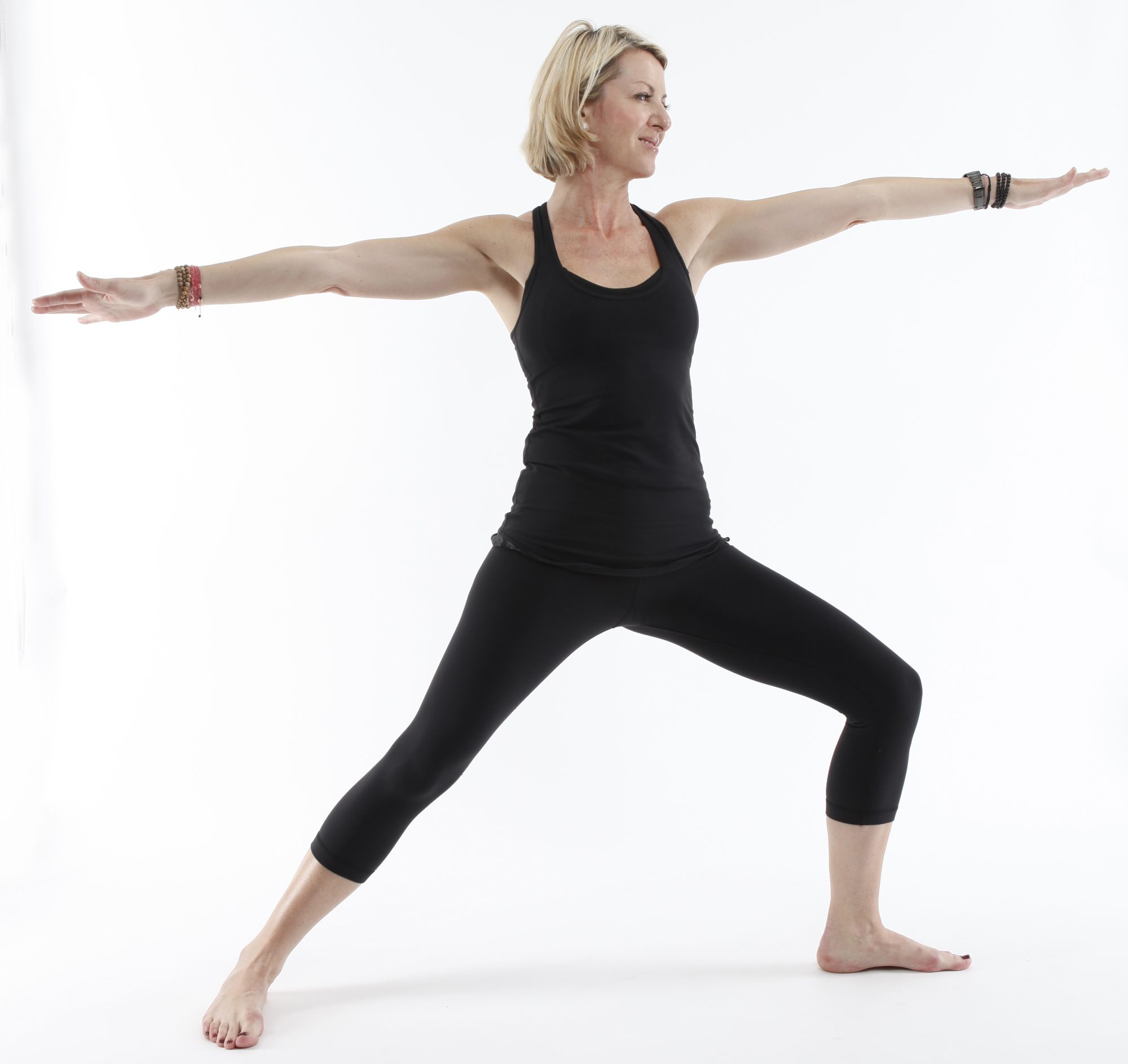
  • Warrior II: Walk your right leg forward and your left backward, opening your hips. Bring your right arm forward, straight in front of you, and your left one straight out behind you. Bend your right knee deeply over the right ankle while engaging your quads and sinking your hips low.
  • Reverse Warrior: You’ll walk your right leg forward and left backward, just like with the Warrior II step. However, you’ll raise your right arm overhead while sliding your left arm down the back of your left leg.
  • Warrior III: Lift your left leg straight behind you as you lean your upper body forward, keeping both parallel to the floor. You can also put your arms above your head, aligned with your torso.

warrior pose

Preparing for Yin Yang Yoga

Yin yang yoga is perfect for beginners because you can use variations that work best for you. It’s a gentle practice, including both active and slower movements.

It’s best to check with your healthcare provider before implementing a new exercise, but once they clear you, it’s time to prepare your mind and body for Yin Yang Yoga.

Some tips for beginners include:

  • learning deep breathing exercises to help you relax
  • setting intentions
  • wearing comfortable clothing
  • use yoga props for safety and comfort
  • entering each yoga pose slowly to avoid pain or discomfort

Yin Yang Yoga and Traditional Chinese Medicine

Traditional Chinese Medicine involves the idea that humans are connected to the world and must find equilibrium. Chinese Medicine indicates that a balance of yin and yang is essential to your health and well-being.

Yang indicates more dynamic and activity. These opposite forces combine to balance one another and promote health and well-being. As energy channels balance, it helps clear blockages to improve the energy flow of Qi along the meridians.

Yin yang yoga and acupuncture both improve flow and clear energy blockages. Acupuncture points are along the meridians, so clearing them with yin yang yoga can offer the same benefits.

yin yang yoga

Final Thoughts on Yin Yang Yoga

Using yin yang yoga in your routine can help you relax your mind and body while strengthening your muscles. It offers many physical and mental benefits that help you achieve your goals.

You’ll achieve optimal health and clear thinking with balance and harmony from holistic wellness. Remember to slow down, focus on your breathing, and be open to embracing balance.

Doctor Explains the Link Between Vitamin D and Depression

Did you know that Vitamin D deficiency can lead to poorer mental health? Well, it can, and you must stay on top of your levels, especially in the wintertime when the sun is not out as much. Your body needs optimal levels of Vitamin D to function correctly. When your levels are too low, it can lead to seasonal affective disorder, schizophrenia in adults, and depression.

These are the most common types of mental health issues that can occur from low levels of Vitamin D. There is a multitude of other health conditions that can present themselves when Vitamin D is too low, including heart disease, rickets (in children), issues with low bone density and bone softening, and cancer.  

What is Vitamin D?

Even though it’s referred to as Vitamin D, it acts as a hormone in the body. It’s processed by the kidneys and liver and converted to an active hormone. The brain has Vitamin D receptors like your heart and immune system. Researchers have found that many people with depression have insufficient Vitamin D levels in their blood, which also links to postpartum depression. 

 Sun exposure is the most natural way your body can acquire Vitamin D. Since it is a fat-soluble vitamin, you must supplement it with a healthy fat such as nuts or avocado for it to be adequately absorbed. If you choose not to take it with healthy fat, it won’t be absorbed nearly as well, and you won’t get the most out of your supplement.  

There are Vitamin D receptors in four different places in our bodies: the brain, the heart, the muscles, and the immune system. This vital nutrient goes to the liver and the kidneys, converting it into an active hormone. When it’s in the active hormone form, it helps the body to absorb calcium. So as you can see now, the importance of optimal Vitamin D levels is multifaceted. 

vitamin d

People with Depression Have an Increased Chance of Having Vitamin D Deficiency

Did you know that someone who is depressed has a higher chance of having a deficiency than someone who is not depressed? In some cases, Vitamin D deficiency is the only cause of depression. But in most cases, it’s multifactorial, with multiple reasons that someone suffers from depression. So it’s essential to address the whole person to treat it holistically. Anyone who attempts to treat depression should always know the Vitamin D levels of the person they are treating.  

If you haven’t had your levels checked in a while, it’s essential to know the symptoms of Vitamin D deficiency:  

  • Forgetfulness  
  • Hair loss  
  • Bone pain  
  • Trouble sleeping 
  • Loss of interest in activities once enjoyed  
  • Increased anxiety  
  • Fatigue  
  • Mood changes 
  • Feelings of hopelessness 
  • Feelings of sadness  
  • Suicidal thoughts  
  • Decreased appetite or loss of appetite  
  • Excessive weight loss or weight gain  
  • Muscle weakness  
  • Getting sick more easily  

See your doctor if you see any of these symptoms, especially if you experience them in multiples. They can test to ensure that isn’t the cause because it’s such an easy fix. In addition, it’s also important to be aware of foods that are naturally high in vitamin D, including:  

  • Egg yolks  
  • Fish liver  
  • Beef liver 
  • Canned fish like sardines  
  • Fish: tuna, trout, salmon mackerel, swordfish  
  • Cod liver oil  

Some orange juices, plant and dairy milk, and cereals are fortified with Vitamin D and can be an excellent way to get Vitamin D through food.  

Supplementation Guidelines

Vitamin D toxicity typically occurs from taking supplements. The lower levels of Vitamin D found in food are less likely to reach any level of toxicity. Even with supplementation, toxicity due to Vitamin D is rare, but it’s still something to be aware of.  

The two primary forms of D are D2 and D3. Studies show that D3 is more effective at raising Vitamin D levels in the body, so D3 is the choice of most health practitioners when suggesting supplementation. Unless specifically recommended by a trusted healthcare professional, avoid taking more than 4,000 IU daily, which is considered the safe upper limit.  

The RDA for children, teens, pregnant women, and adults nineteen years and older is 600 IU (15 mcg) daily; for adults over seventy, it’s 800 IU (20 mcg) daily. Therefore, it’s easy to remember since anyone less than 70 years of age should supplement with 600 IU, and seventy and over, bump it up to 800 IU.  

depression

Supplement Quality

Many people think that because they buy a supplement, it will automatically do what it says it does and have a therapeutic effect on the body. This is not necessarily the case, and sometimes they can cause harm. Avoid low-quality supplements. It’s better not to take them than to take them because they can be tough on the liver and cause toxicity. Many are buying supplements from Amazon, which are not regulated at all, or lower-priced discount supplements from the drug store. Many times lower quality supplements say they have x amount of whatever vitamin or nutrient. But that’s inaccurate. Besides that, they generally have lots of fillers which can also be harmful.  

Every supplement you put in your body must be third-party tested. Instead of researching yourself, ask your physician, pharmacist, or mental health provider for a specific product recommendation.

Why is professional guidance important?

Supplements are not regulated by the FDA as drugs, only as food, and therefore need to be third-party tested. When supplements are third-party tested, you can ensure that the supplements you’re buying have what they claim to have in them. Third parties that test the various supplements have no relation to the company or incentive to misreport. 

Advice From Harvard on Selecting Supplements (Vitamin D or Any Others)

Below is an excerpt from Harvard Medical School explaining what you should know when considering a supplement.  

“It’s often hard to balance sober scientific judgments against simple, forceful claims for health in a pill. If you are considering taking a supplement, here are a few cautions: 

  • Beware of extravagant claims; if it sounds too good to be true, it is usually not true. 

  • Beware of testimonials and endorsements, especially from celebrities. Even the most sincere, well-meaning success stories offered by friends and relatives without financial incentives can’t establish a product’s safety or efficacy. 

  • Beware of the idea that if a little is good, more is better. Although vitamin A is essential for health, for example, doses that exceed the RDA (3,000 IU a day for men, 2,330 IU for women) increase the risk of fractures. And as noted above, a high intake of folic acid may increase the risk of certain tumors. 

  • Beware of meaningless terms. The list includes all-natural, antioxidant-rich, clinically proven, anti-aging, and other vague but seductive claims that a product will promote heart health, prostate health, sexual prowess, energy, weight loss, fat loss, muscle power, and the like.

  • Beware of interactions between supplements and medications. A survey of over 3,000 people ages 57 through 85 found that 49% used at least one supplement, 81% used at least one prescription medication, and 37% of men over 74 used five or more prescription drugs. Always tell your doctors and pharmacists about any supplements you take and ask specifically about potential interactions with your prescription and over-the-counter medications. 

  • Beware of adulterated products. The FDA has withdrawn over 140 products that were laced with undisclosed pharmaceutical ingredients. Products touted for sexual performance, weight loss, and athletic performance are the most likely to be contaminated with medications. 

  • Beware of products that contain less — or more — than they claim. Since you won’t have the protection of FDA oversight, it’s hard for you to know what you’re actually getting. In general, products that are voluntarily submitted for approval by private organizations like the United States Pharmacopeia (USP) or NSF International are your best bet.” 

vitamin d

Final Thoughts on Vitamin D and How It Can Impact Mental Health

Vitamin D deficiency can cause depression and other mental health issues, so you must be aware of your levels and that even if you do have low levels of Vitamin D, that likely isn’t the only cause of the mental health concern. Age can contribute to a deficiency because older adults generally spend less time in the sun, and the skin becomes less efficient at producing it. If you or anyone you know is suffering from depression or any other mental health concern, reach out to a holistic provider and make sure you know your Vitamin D levels.  

Always remember to take Vitamin D alongside a healthy fat and don’t exceed over 4000 IU daily without getting tested and explicit instruction from your mental health provider. Only consume high-quality, therapeutic-grade supplements, third-party tested, so you know they’re safe.

8 Behaviors That Reveal Someone Has Mild Depression

If you have mild depression, you may not recognize the signs immediately. Often, people with low-grade depression, or dysthymia, brush off feelings of hopelessness or fatigue. They may attribute minor depression to a particular event, such as a divorce, job loss, or other distressing situation. However, depression isn’t a passing mood but a serious condition requiring proper treatment and care.

Recognizing the signs from the start can help prevent mild depression from turning into major depression. People with low-grade depression experience many of the same symptoms as someone with severe depression. However, the symptoms are often much less intense and more subtle. Dysthymia may cause the following symptoms:

  • anger or frustration
  • hopelessness and despair
  • self-hatred
  • loss of interest in hobbies or activities
  • feelings of guilt or shame
  • cognitive problems such as distractedness and memory loss
  • low motivation
  • social withdrawal
  • body aches that have no apparent cause
  • sleeping more or less than usual
  • changes in appetite
  • rapid weight loss or gain
  • reckless and impulsive behavior

Remember that these symptoms don’t always signal a mental disorder like depression. But if they persist for months, seeking professional help is vital. You can intervene to prevent long-term mental health issues when you know the signs of mild depression before it becomes more pervasive. Let’s review the behaviors someone with low-grade depression may display so you know what to watch for in yourself and others.

Eight Common Behaviors of Someone With Mild Depression

mild depression

1. Persistent Sadness or Low Mood May Reveal Mild Depression

The most common sign of depression includes a consistent lack of energy and feelings of despair. Someone with a depressed mood may also withdraw from activities they once enjoyed due to a lack of motivation. Feeling down occasionally is normal, but people with depression struggle to feel joyful or content daily.

2. Changes in Appetite and Sleep Could Reveal Minor Depression

Another telltale sign of depression involves changes in sleeping habits and appetite. Depression often co-occurs with insomnia since it disrupts neurotransmitters involved with mood regulation and the circadian rhythm. A low mood may trigger other sleep disturbances also, such as oversleeping or undersleeping.

In addition, many people with mental illnesses have trouble maintaining a healthy appetite. Therefore, changes in appetite, such as overeating or undereating, are hallmark signs of depression. That’s because depression triggers abnormal activities in the brain’s reward and interoceptive neurocircuitry.

3. Decreased Concentration and Memory May Indicate Mild Depression

If you suffer from a depressed mood, you may experience cognitive impairment, forgetfulness, and difficulty concentrating. Many people with low-grade depression notice subtle changes in their memory, such as forgetting important details or appointments. They may also become more distracted and have difficulty focusing on work or school assignments. Finally, depression may result in diminished problem-solving and decision-making skills.

4. Loss of Interest in Hobbies and Activities

Sadly, depression can lead to anhedonia or a reduced ability to experience satisfaction from activities and relationships. This lack of pleasure can affect every facet of life and potentially snowball into major depression. Not being able to enjoy life can lead to apathy and hopelessness, causing social withdrawal and extreme isolation.

minor depression

5. Neglecting Responsibilities and Self-Care Can Reveal Minor Depression

Procrastination, self-neglect, and poor hygiene represent classic symptoms of dysthymia. People with depression often don’t have the energy to devote to proper self-care. Of course, they don’t want to neglect their well-being and responsibilities, but the pressures of daily life may overwhelm them. Therefore, they might procrastinate or avoid tasks to prevent further burnout and mental distress. In addition, their academic or work performance may suffer because of their mental health.

6. Social Isolation and Withdrawal May Result From Mild Depression

Unfortunately, people with depressive disorders often feel like a burden or inconvenience to others. They don’t want their painful emotions to affect people, so they engage in avoidance behavior and social isolation. Also, depressed people may find comfort in loneliness because it’s a reprieve from the constant chatter of modern life.

They may want to socialize but struggle to find genuine connections in the hustle and bustle. Because they feel disconnected from the world, they may avoid contact with even close friends and family.

7. Negative Thinking Patterns

Rumination, negative self-talk, and self-criticism may accompany a persistent low mood. Usually, people who suffer from depression have unrealistic expectations for themselves. When they can’t meet these standards, their self-esteem takes a nosedive, and they judge themselves harshly. If you experience repetitive, intrusive thoughts and feelings of worthlessness, it may indicate depression.

8. Self-Medicating Behaviors May Reveal Mild Depression

Unfortunately, many mental health disorders often coexist with substance abuse and addiction. It’s a vicious cycle since self-medication can temporarily numb mental distress but can cause irreparable psychological harm. Without proper coping skills, people with mental disorders may use alcohol or drugs to escape the pain. In addition to excessive alcohol consumption, some take prescription medications to relieve stress or discomfort.

The U.S. Department of Health and Human Services (HHS) Substance Abuse and Mental Health Services Administration (SAMHSA) reported sobering findings on drug use and mental illness. In 2021, nearly 17% of U.S. residents aged 12 and older met the criteria for having a substance use disorder. 13.5% of young adults aged 18-25 experienced co-occurring substance abuse and mental illness in the past year.

If you have depression, you may feel hopeless about your ability to recover or manage symptoms. Fortunately, you can improve your mental health with lifestyle changes and a traditional treatment plan. Exercising, prioritizing sleep, practicing stress-management techniques like meditation, and eating a balanced diet can help you feel better. Also, getting plenty of sunshine, laughing with friends and family, and using positive thinking will enhance your mental health.

mild depression

Final Thoughts on Early Intervention for Mild Depression

Recognizing mild or minor depression in yourself or others isn’t always easy since the signs are often subtle. However, being able to spot the symptoms before they worsen could potentially save lives. Typical signs of a depressive disorder include a persistent low mood, lack of motivation, fatigue, and social withdrawal. Also, changes in appetite and sleeping habits, neglecting self-care, and self-medicating could signal depression.

If you’re experiencing signs of a mental illness, never feel guilty or ashamed about asking for help. Proper treatment will improve your quality of life and give you the tools to succeed. Supporting mental health with mild depression involves seeking professional support and incorporating positive habits. By prioritizing self-care and creating balance, you’ll start feeling rejuvenated and have a new lease on life.

Study Reveals Why Narcissists Are Usually Physically Attractive

Most people want to avoid narcissists because of their toxic behaviors and abusive tendencies. However, studies show many physically attractive people have narcissistic traits, so you may find them appealing before they show their true colors. We’re biologically wired to seek out good-looking people because it gives us an evolutionary advantage. Our primitive brains see beautiful people and associate them with better genes, intelligence, and other positive traits.

Unfortunately, being physically attractive has its pitfalls, as scientists have found that alluring, seductive people display more selfish behaviors. They may not have a full-blown personality disorder, but they often put themselves first and have an inflated ego. But many people still consider narcissists more desirable because of their charm, quick wit, and physical appearance.

If you find someone physically attractive, get to know them before you unwittingly fall for a potential narcissist. They may have a pretty face, but it’s not worth the heartache and pain you’ll inevitably experience. Below, we’ll explain why we tend to find narcissists so tantalizing, despite all the warning signs.

Here’s Why Narcissists Are So Attractive, According to Science

narcissists

According to a meta-analysis published in Evolution and Human Behavior, physically attractive people tend to be more selfish. Because of fitness and evolutionary advantages, good-looking people believe they deserve whatever they want. Therefore, they display more self-centered behaviors to achieve their goals and retain their spot in the social hierarchy.

Prior studies have proven that people treat physically attractive individuals more favorably. However, scientists have performed little research on the behaviors and actions of good-looking people. Currently, two prevailing theories on attractiveness exist: the “what is beautiful is good” theory and the evolutionary theory of beauty.

The former posits that people treat handsome or beautiful individuals more approvingly, positively influencing their behavior. Contrastingly, the latter theory states that attractive people tend to have narcissistic traits and feel entitled.

Since these theories are opposites, researchers wanted to investigate several studies to uncover the truth. Do narcissists behave selfishly because of fitness advantages, or do they act benevolently in response to how people treat them?

First, we’ll discuss what these two theories suggest before explaining the study.

Are Physically Attractive People Self-Serving or Altruistic?

Previous studies show that beauty has many advantages, including improved mental health, relationships, and social status. In evolutionary terms, physically attractive people tend to have healthier, more robust genes that benefit potential mates. People usually perceive them as more mentally healthy, intelligent, and resourceful, reinforcing their inflated egos.

However, in the “what is beautiful is good” theory, gaining people’s approval makes narcissists more selfless and generous. In other words, even if a person displays a self-important attitude, they keep their ego in check and have empathy. When they receive positive feedback from others, they feel motivated to share that kindness and affection. They internalize these supportive, pleasing opinions and make them part of their personality.

narcissists

On the contrary, the evolutionary theory suggests narcissists act more selfishly because of their good looks. They know people see them as superior and physically attractive, so they behave accordingly. That attitude colors their entire persona, making them believe they deserve preferential treatment.

Narcissists know they have certain fitness advantages that make them appealing and desirable to potential mates. Because they have greater bargaining power, they often put themselves first in relationships. From a young age, narcissists believe they deserve the world and will manipulate others to obtain their desires.

They use their charm, intelligence, and power to attract mates who might otherwise find them intolerable. However, their beauty and irresistible energy draw people to them like a moth to a flame. They realize their influence on others and only pursue those reinforcing their inflated self-image.

As you might expect, the authors concluded that narcissists behave more selfishly because of their physical advantages.

The Study on How Physically Attractive Narcissists Manipulate People

The scientists conducted five studies to analyze whether beauty results in altruistic or entitled tendencies. Their studies included over 1,300 people, comprising four samples with American Amazon workers and one with Chinese undergrads. The researchers measured self-centered intentions and behaviors in both public and private settings. Also, they either measured or manipulated psychological entitlement.

The researchers discovered that self-perceived attractiveness made participants feel more entitled. Narcissists set aside more resources for themselves, believing their social status made them more deserving. Also, the scientists found that manipulating participants into feeling entitled led to more egotistical intentions. Even if participants didn’t feel physically attractive, they responded positively to the researcher’s opinions.

Finally, when researchers made participants feel more attractive, they displayed heightened self-absorbed intentions and behaviors. In public settings, narcissists put their good looks aside and focus more on making a positive impression. Behind closed doors, they used their attractiveness to obtain more control and power.

However, in group settings, they considered how their behavior might influence their social status and future privileges. So, they wanted to win people over as a means to an end, usually to gain access to more abundant resources and opportunities.

Overall, researchers confirmed prior studies’ conclusions about the relationship between good looks and narcissism. Physically attractive people usually gratify their egos by pursuing relationships and opportunities that enhance their status.

They tend to act more selfishly since they believe they can offer exclusive benefits to their partner. Narcissists also think they deserve certain privileges and treatment because of their beauty, intellect, and social prowess. Finally, they seek rewards to fulfill their needs, regardless of how their behavior impacts others.

physically attractive

Final Thoughts on Why the Good Looks of Narcissists

Have you ever noticed that physically attractive people act more entitled or self-absorbed? You do not imagine this behavior; science shows that narcissists use their beauty to manipulate and control people. They know they’re irresistible and can get what they want without trying. Narcissistic people view others as a means to an end and have no problem trampling people to increase their power and status. So, don’t allow someone’s beauty to cloud your judgment €” they might not have your best interests at heart.

30 Affirmations for Men to Make Women Fall in Love

Affirmations for men can help you in many life areas, including building an emotional connection with your partner. They can help you develop and maintain a meaningful relationship full of love and happiness. By using positive affirmations in their daily routine, men can improve their relationships and deepen their connection with their partners.

Affirmations for relationships are positive phrases that improve your relationship quality. Besides that, they help you build healthy ideals and behaviors. They can promote healthy communication, trust, and respect to form an ideal connection.

Positive affirmations for men can help make women fall in love with them. That’s because they encourage better relationships, helping you nurture your romance.

Affirmations for Men to Strengthen Emotional Connection

Using affirmations for emotional connection inspires vulnerability and positive communication. It can also help build emotional intimacy, allowing you and your partner to have a fulfilling bond. Some affirmations for men to use in this situation include:

affirmations for men

1 – I show my appreciation daily.

Showing appreciation for your partner is one of the best ways to build and maintain a connection. When she knows that you appreciate what she does and who she is, it can strengthen your relationship. Your bond will deepen, and she’ll want to keep doing the things you love.

2 – I show respect to my partner when I communicate with them.

You won’t always agree with your partner, and disagreements will happen. However, showing respect despite the topic shows her that you’re good for her. It will make her comfortable communicating and working through anything.

3 – I express my needs to my partner even when it leads to vulnerability.

You might withhold things from your partner to avoid vulnerability, but it’s necessary for a stronger relationship. When you open up and help her understand what’s on your mind, it can take your romance to the next level.

4 – I am honest with my partner about everything.

Honesty is essential for a healthy, strong relationship. Even small lies can cause irreparable damage. This affirmation for men can help you remember to be honest despite how hard or uncomfortable it is.

5 – I communicate with love even when going through hardship.

Communicating with love can make a difference in strengthening your relationship. Overcoming problems is necessary, and it can make you and your partner closer than before. Repeat this affirmation for men before discussing issues or hardships with them to ensure it lasts.

6 – I nourish this relationship by expressing frequent gratitude.

Telling your partner how grateful you are is one way to nourish your relationship. Repeating this phrase reminds you of that daily, continually allowing you to build a bond with your love. Consider showing her your gratitude while also vocalizing it so you can be sure she doesn’t miss it.

7 – I am considerate and kind when I speak to my spouse.

Arguments can make you want to say things you don’t need, but giving in can destroy what you have with your partner. When you tell yourself you’re considerate and kind, you act that way when communicating with the woman you love.

8 – I listen to what my partner needs to say without interrupting.

One way to build and maintain a connection is to listen. Don’t comment on what she says until she’s finished speaking so she knows you hear her. Otherwise, she might think you were planning a response rather than listening.

Affirmations for Physical Attraction

These affirmations for men can help foster physical attraction from their partners. Some ideas include:

9 – I am happy and confident with who I am.

Being happy and confident with yourself can increase physical attraction. People notice when you feel good about your appearance, and positivity attracts others. This affirmation for men can make your partner feel physically drawn to you.

10 – I know what my partner wants and strive to provide it. 

Awareness of what your partner wants is one of the best ways to promote attraction. It’ll strengthen your relationship when she sees that you pay attention and want to give her what she desires.

11 – I prioritize passion and attentiveness with my partner.

Prioritizing passion and attentiveness is one of the best things you can do to strengthen your relationship. You’ll continually deepen your bond and build an unbreakable connection.

12 – I am a loving and positive partner.

Telling yourself that you’re loving and positive will help you behave that way toward your significant other. It’ll be in your mind, encouraging you to do things to promote a healthy relationship.

13 – I am finding ways to have quality time and perform romantic gestures toward my partner.

Spending quality time together and doing romantic things is a beneficial way to build physical attraction. When your partner feels good about the relationship, they’ll be more attracted to you. You don’t have to plan anything extravagant because quality time could involve simplicity and intimacy.

14 – I attract love from my partner.

Telling yourself that you attract love will make it possible in your life. You’ll subconsciously do things that your partner likes, encouraging sexual chemistry.

15 – I am grateful for the pleasure my body provides me.

Physical attraction involves pleasurable thoughts and sensations. When you’re grateful for the experience, you’ll embrace it more often.

affirmations for men

Affirmations for Partnership and Equality

These affirmations for men encourage a healthy partnership and equality. It’s an essential aspect of developing a stronger connection. You can start with the following phrases:

16 – I am comfortable setting boundaries and respect my partner’s in return.

Setting and implementing boundaries is essential to building a healthy relationship. When your partner knows your limits, it’s easier to communicate and interact positively. Respecting your partner’s boundaries is necessary to build a stronger relationship.

17 – I accept my partner’s opinions, even when they differ.

Having different opinions and ideas is common, and that’s okay. Part of developing a strong and healthy relationship is accepting it respectfully.

18 – I help my partner reach their goals and succeed in life.

Having a partnership requires helping your significant other when necessary. Your partner might ask for help, or they might not, but stepping in with support when you see a need can strengthen your bond.

19 – I am open to my partner’s differing perspectives.

One of the best things about being in a relationship is having someone you trust to weigh in with differing perspectives. It can also help you see things differently and make better life choices. Strengthening your relationship requires being open to their mindset and appreciating their differences.

20 – I balance my and my partner’s needs.

You and your partner will often need different things. A successful partnership requires finding a balance that allows both of you to get what you want and need.

21 – I value my partner as an equal.

Valuing your partner and viewing them as an equal contributor to the relationship is essential. This affirmation for men reminds you that it helps build a healthy bond.

22 – I am on a team with my partner as we go through life.

Being teammates is the best way to go through life with a partner. Working together allows you the best opportunities and strengthens your bond. You’ll feel closer when you view one another as a teammate rather than separate forces.

Affirmations for Men for Long-Term Commitment

Affirmations for men who want a long-term commitment can help them prioritize strengthening the relationship. Some ideas include:

23 – I am happy to put in the effort because I know it’ll be worth it.

When you want a lasting relationship, you will want to put in the effort it takes. You’ll be happy to do it because you know it’s what you want long-term.

24 – I am nurturing my relationship to build a strong and healthy connection.

A strong, healthy romantic connection requires nurturing the relationship. So do things that make your partner happy and avoid anything that creates irreparable damage.

25 – I am choosing a happy, long-term relationship.

Every relationship involves a choice because you don’t have to stick around. Using this affirmation each morning can encourage you to consciously decide to do things to promote happiness and a lasting connection. It also encourages loyalty and faithfulness to ensure the relationship last.

26 – I am dedicated to building a strong and successful relationship.

With dedication, you can continually strengthen your relationship. It leads to a lasting connection and long-term commitment.

27 – I am committed to continually learning to understand my partner.

No matter how long you’ve been with someone, there’s always more to learn. People constantly change and grow. So a long-term commitment requires a willingness to keep learning.

28 – I am working on self-growth to bring my best qualities to my relationship.

Committing yourself to a relationship is easier and more beneficial when you strive for self-growth. While you’re great as you are now, you can keep learning and improving your skills. In fact, self-growth allows you to be the best version of yourself for your partner.

29 – I love my partner unconditionally as we work through challenges and conflicts.

A long-term commitment requires unconditional love because no one is perfect. Your partner will make mistakes, annoy you, and have conflicts with you, but that doesn’t mean you must end things. Instead, use this affirmation to remind yourself of the way you feel about them.

30 – I am happy to be committed to my partner.

When you’re happy to be in a committed relationship, you’ll have an easier time doing what’s best for your partnership. Using this affirmation for men encourages you to prioritize your relationship and remember how happy it makes you.

love

Final Thoughts on Affirmations for Men to Find Love

Using positive affirmations for men in your daily routine makes it easier to do what’s best for you and your relationship. That’s because it reminds you of what you and your partner want, allowing you to put in your best effort.

These affirmations for men in relationships help build a deeper emotional connection with your partner. As a result, your relationship will be stronger and healthier. Indeed, these statements help you set the optimal conditions for a long-term romance.

She Realized She Was Good Enough and It Was Time to Walk Away

Leaving a bad relationship can be difficult and painful for many women, even after they realize they’re good enough. This can be due to the inability to release feelings of attachment, fear of being alone, or lack of self-confidence. Women often find themselves stuck in toxic relationships that drain them emotionally and mentally.

The truth is, walking away takes courage, self-awareness, and the belief that you are good enough and deserving of better. If you’re a woman struggling to leave a bad relationship, know you’re not alone. Many women have been where you are and have found a way to break free, let go, and move forward.

It’s essential to recognize that being in a bad relationship can have severe consequences for your emotional and physical well-being and let go. A toxic relationship can cause stress, anxiety, and depression and can even lead to physical abuse. When you’re in a bad relationship, it’s easy to lose sight of your value and worth as an individual. You may begin to doubt yourself and believe you’re not good enough or deserve love and respect.

But the truth is, you are good enough. You deserve to be in a relationship that brings you happiness and fulfillment. Leaving a bad relationship can be long and complex, but it’s worth it. When you walk away from a toxic relationship and past trauma, you’re allowing yourself to heal and find happiness. You’re reclaiming your power and taking control of your life.

6 Ways to Realize You Are Good Enough and It’s Time to Walk Away

good enough

1. Recognize your self-worth

Recognizing your self-worth is essential to building a healthy relationship with yourself and others. It’s about accepting yourself for who you are, embracing your strengths, and acknowledging your flaws without judgment. When you recognize your self-worth, you develop a sense of self-respect and confidence. This can help you make better decisions and form healthier relationships.

It’s easy to fall into the trap of believing you’re not good enough or don’t deserve to be treated with respect and kindness. This can happen for many reasons, such as past experiences, societal pressures, or negative self-talk. But the truth is, you are inherently valuable. Your worth does not depend on external factors like appearance, achievements, or relationships.

When you recognize your self-worth, you set a standard for how you want to be treated by others. You begin to demand respect, kindness, and love from those around you, and you won’t settle for less. This can help you form healthier relationships and leave behind those that do not serve you. By recognizing your self-worth, you take the first step toward letting go of a bad relationship. That way, you can start building a happier, more fulfilling life.

2. Identify the signs of a bad relationship

Identifying the signs of a bad relationship is crucial to protecting your mental, emotional, and physical well-being. It’s not always easy to recognize when you’re in a toxic relationship, especially if you’ve been in it for a long time. However, identifying warning signs can help you act and release the relationship before it does more harm. And you should remember that you are good enough, and you should never accept toxic behavior.

The most common signs of a bad relationship include emotional abuse, physical violence, manipulation, and controlling behavior. Emotional abuse can include insults, name-calling, and belittling, while physical violence involves hitting, slapping, or other forms of physical harm.

Manipulation can take many forms, including gaslighting, guilt-tripping, and playing mind games. And controlling behavior can include monitoring your movements, isolating you from friends and family, or making decisions for you. It’s important to note that these behaviors are unacceptable in any relationship. If you experience any of these warning signs, you should take action to protect yourself–release it.

This might mean seeking help from a trusted friend or family member or contacting a therapist or counselor. You can even try contacting a domestic violence hotline. Remember, you deserve a relationship built on love, trust, and mutual respect. You should never settle for anything less.

3. Surround yourself with positive people

A support system of people who uplift and support you is vital to maintaining a positive mindset and building self-confidence. When you surround yourself with people who love and respect you, you’re more likely to feel validated and appreciated. This can help you feel more confident in yourself and your decisions. It can also help you recognize your self-worth.

Friends and family who uplift and support you can be a great source of comfort and encouragement. This is especially important when you’re going through a difficult time, such as leaving a bad relationship. They can remind you of your strengths, offer a listening ear, and provide practical help when needed.

They can also help you remember you are good enough and encourage you to pursue your goals and dreams. If you don’t have a robust support system, there are many ways to build one. Consider joining a support group, volunteering for a cause you care about, or taking a class or workshop that interests you. These activities can help you meet new people who share your interests and values.

They are the people who can offer support and encouragement as you navigate life’s challenges. Remember, having a support system doesn’t mean you’re weak or dependent. It means you recognize the importance of human connection and are willing to ask for help when it’s time to release the past.

good enough

4. Practice self-care and release self-neglect

Taking care of yourself physically, mentally, and emotionally is essential to maintaining a healthy and balanced life. Engaging in activities that make you feel good about yourself can help you relax. It can also have a positive impact on your mental and emotional well-being. In addition, engaging in hobbies and activities that bring you joy and fulfillment is also an essential part of self-care.

You may enjoy gardening, painting, reading, or playing an instrument. These activities and many others can help you recharge your batteries. While doing something you enjoy, you can feel more connected to yourself and the world and release past trauma.

Self-care helps you realize that you’re good enough by showing you are worth investing time and effort into. When you prioritize your well-being, you tell yourself and others that you value yourself. It’s a way to start believing that you deserve to be taken care of. Engaging in self-care activities can also help you build your self-confidence and self-esteem.

When you care for your health, you’re more likely to feel good about yourself and your abilities. This can help you recognize your self-worth and believe in yourself more deeply. Self-care is a powerful tool for building self-worth and avoiding bad relationships.

5.  Set boundaries

Setting boundaries is an essential aspect of maintaining a healthy and respectful relationship. Boundaries help you communicate your needs and expectations to your partner. They also help you maintain your sense of self and personal integrity. If your partner is not respecting your boundaries, it’s a sign that they may not value you as a person.

There are many signs, such as not listening to your needs, ignoring your requests, or acting in ways that make you uncomfortable. Staying firm and sticking to your boundaries in these situations is essential. This can be difficult, especially if you care deeply about your partner or feel guilty for setting boundaries. However, it’s important to remember that you have the right to be treated with respect and dignity. Your boundaries are there to protect your well-being.

If your partner disregards your boundaries, it may be a sign that the relationship is not healthy or sustainable. Evaluating your options and considering whether staying in the relationship is in your best interest is essential. Remember, you deserve to be in a relationship where your needs and boundaries are respected and valued.

6. Focus on your future and release the past

Focusing on your future is essential to moving on from a bad relationship. Walking away from a toxic relationship can be difficult. But it’s important to remember that you’re taking the first step toward a better future. Instead of dwelling on the past, shifting your focus to your goals and dreams is essential. What do you want to achieve in your life? What steps can you take to make those goals a reality?

By focusing on your future, you can begin to build a life that’s fulfilling and meaningful to you. It’s important to remember that you deserve to be happy and fulfilled in your life, and you don’t need to be in a toxic relationship to achieve that. You can create a life full of joy, love, and positive relationships. It may take time and effort, but it’s worth it.

One way to focus on your future is to set goals for yourself. These goals can be related to your career, relationships, hobbies, or personal growth. By setting clear goals, you can create a roadmap for your future and work toward achieving the life you want. In addition to setting goals, it’s essential to surround yourself with positive and supportive people. Friends and family can help you stay focused on your goals. They can provide a source of comfort and support during difficult times.

release

Final Thoughts on Ways to Realize You Are Good Enough and It’s Time to Walk Away

Realizing that you are good enough and walking away from a bad relationship can be challenging but ultimately rewarding. It requires self-reflection, self-care, and the willingness to prioritize your well-being. Remember that you deserve to be in a healthy and respectful relationship. You have the power to create a life that’s fulfilling and meaningful to you.

This journey is complex and may require support from friends, family, or a professional counselor. But by taking the first step and prioritizing your well-being, you can begin to build the life you want. Walking away from a bad relationship is not a sign of weakness. On the contrary, that release is a sign of strength and self-respect. You deserve to be in a relationship that supports and uplifts you; you need to release the toxicity.

Psychology Explains Why Micro-Dates Create Happier Relationships

In today’s fast-paced world, finding quality one-on-one time with your partner for happier relationships can be challenging. It can be easy to let your relationship take a back seat between work, family obligations, and other commitments. This is where micro-dates come in. Micro-dates are short, low-pressure outings that allow couples to connect more systematically and meaningfully.

Micro-dating allows couples to spend quality time together in small doses that easily fit into busy schedules. You don’t have to wait a whole evening or weekend to spend time with your partner. Micro-dates allow you to connect with your partner during lunch breaks, after work, or even on your commute home. Incorporating micro-dates into your routine can create a stronger bond with your partner and maintain a sense of closeness and intimacy. This can be done even if you have limited time to spend together.

One of the critical benefits of micro-dating is that it allows couples to enjoy a variety of experiences together. Micro-dates can take many forms, from a quick coffee break during the workday to a visit to a nearby museum. Whether trying a new restaurant or taking a short hike, micro-dates allow mixing things up.

This can help to keep things fresh and exciting in your dating and relationships. They give you more to talk about and bond over. Additionally, the lower pressure of micro-dates can create a more relaxed and enjoyable atmosphere. This can help couples connect more deeply and form a stronger emotional connection. Micro-dates can be a powerful tool for building happier and more satisfying relationships.

7 Reasons Why Micro-Dates Create Happier Relationships

micro-dates

1. More Frequent Connection

One key benefit of micro-dates is that they help create a more frequent connection between partners. They allow for more manageable and flexible scheduling. Traditional dating, such as an entire evening or weekend getaway, can be challenging to plan and schedule regularly. This could be due to busy work schedules, family obligations, and other commitments.

Micro-dates, however, can be planned and executed quickly, providing couples with more opportunities to spend quality time together. Because micro-dates are shorter and less involved than traditional dating, they can also be more casual and low-pressure. This can make them easier to schedule on short notice and more conducive to spontaneous moments of connection. For example, a quick coffee break or a walk around the block can be scheduled during lunch or after work.

This makes it easier for couples to stay connected throughout the day. While micro-dates may be shorter in duration, they can offer a deeper connection between partners. This is because micro-dates tend to be more frequent, allowing couples to check in with each other more regularly. This regular communication and connection can create a sense of intimacy and understanding that can strengthen the bond between partners.

2. Lower Pressure

Micro-dates are typically lower pressure than traditional dates because they are shorter, less formal, and require less planning. Traditional dates, such as a fancy dinner or weekend getaway, can pressure couples significantly. They may feel like they need to make everything perfect and create a memorable experience.

This pressure can sometimes lead to anxiety and stress, especially if the couple has limited planning time. In contrast, micro-dates are designed to be low-key and low-pressure. They can take many forms, such as a quick coffee break, walking around the park, or visiting a nearby museum.

Because they are shorter and less involved, they require less planning and preparation. This can make them easier to schedule and execute. This lower pressure allows couples to relax. They can enjoy each other’s company without worrying about creating a perfect experience or meeting certain expectations. This can help them connect more deeply and form a stronger emotional bond.

3. Variety Means Happier Relationships

Variety is often something that couples struggle to find on traditional dates. Micro-dates offer couples more variety in their experiences because they are flexible and can take many forms. Unlike traditional dates, which often involve a specific activity or location, micro-dates can be tailored to each partner’s preferences.

For example, one micro-date might involve trying a new restaurant, while another might include attending a local concert or art exhibit. One of the great things about micro-dates is that they don’t have to follow any particular format or structure. They can be as creative and varied as the couple’s imagination allows. For instance, a micro-date could involve visiting a nearby park, having a picnic, or attending a cooking class together.

Others might include taking a dance class, visiting a local farmers’ market, or taking a scenic drive to explore new areas. Additionally, micro-dates are shorter and less involved than traditional dates. So, couples can have more of them and try a broader range of activities. This can help keep the relationship fresh and exciting. At the same time, it allows each partner to explore new interests and hobbies.

happier relationships

4. Less Stress

Micro-dates can be less stressful than traditional dates because they are shorter, simpler, and require less planning. Unlike traditional dates, which can involve a lot of preparation, micro-dates can be more casual and spontaneous. This can make them less intimidating and stressful for couples. Since micro-dates are shorter and less involved, they don’t require as much planning or preparation.

Couples don’t need to worry about finding the perfect outfit or reserving something weeks in advance. Instead, they can choose an enjoyable activity and go with the flow. This lack of pressure and planning can help couples relax and enjoy the moment without feeling stressed or anxious.

Another reason why micro-dates can be less stressful is that they allow couples to connect more naturally. Traditional dates can sometimes feel forced or artificial, with couples trying to impress each other or create a perfect experience. In contrast, micro-dates are more spontaneous and organic, allowing couples to connect authentically and relaxedly. This can make the experience less stressful and more enjoyable for both partners.

5. More Spontaneity

As mentioned before, micro-dates are more spontaneous. They are often planned on the spur of the moment and do not require a lot of pre-planning. Usually, traditional dates may take weeks of planning and preparation. But micro-dates can be organized quickly and easily, often with little to no advance notice. Since micro-dates are shorter and less involved, they allow for greater flexibility and can be arranged with minimal effort.

Couples can decide on a fun activity they would like to do together, such as bike riding or grabbing a coffee. And they can head out whenever they have a free moment. This spontaneity can be exciting and add an element of surprise and adventure to the relationship.

The less formal nature of micro-dates also contributes to their spontaneity. There is less pressure to create a perfect experience. So, couples can be themselves and let their personalities shine. They can also be more open to new things and explore new places. This makes each micro-date a unique and spontaneous experience.

6. More Focus on Building Happier Relationships

Micro-dates allow couples to be more focused on their relationship. They provide a dedicated time for partners to connect without the distractions of everyday life. With busy schedules and competing priorities, it can be challenging for couples to find quality time to spend together. Micro-dates provide a focused time for partners to be fully present without the distractions of work, family, or other obligations.

Because micro-dates are shorter and more frequent, they can help couples stay connected regularly. This consistent connection can help partners stay engaged and invested in their relationship. They can be connected even when busy with other aspects of their lives. By prioritizing regular micro-dates, couples can ensure that their relationship remains a priority and avoid taking each other for granted.

The simplicity and ease of micro-dates can also contribute to a more focused and intimate experience. Couples can create a shared experience that strengthens their bond by choosing meaningful and enjoyable activities for both partners. The more focused and intentional nature of micro-dates can also encourage partners to be more open and communicative. This leads to deeper connections and stronger relationships.

7. Easier to Fit into a Busy Schedule

With the fast-paced nature of modern life, finding time for an entire evening or weekend date can be challenging for many couples. However, micro-dates can be planned and executed quickly without significant time or effort. They are easier to fit into a busy schedule because they need less time commitment than traditional dates.

Micro-dates can be planned during a lunch break, after work, or even during a free hour in the middle of the day. They are shorter and require less preparation. So couples can fit them into their busy schedules without feeling overwhelmed or stressed. This flexibility can particularly benefit couples with demanding work schedules or family obligations.

The lower pressure and more straightforward nature of micro-dates can make them easier to fit into a busy schedule. Traditional dates may require a lot of planning and preparation. But micro-dates can be as simple as grabbing a coffee or walking around the park. This simplicity can make it easier for couples to execute a date without feeling like they need to go all out.

happier relationships

Final Thoughts on Why Micro-Dates Create Happier Relationships

Micro-dates offer a simple, low-pressure way for couples to connect and strengthen their relationship. With the fast-paced nature of modern life, sorting priorities and finding time for quality one-on-one time with your partner can be challenging. Micro-dates effectively solve this problem by allowing couples to fit short, low-stress outings into their busy schedules.

The benefits of micro-dating are numerous, from providing a more frequent connection to offering more variety in your experiences. They can also help reduce stress, increase spontaneity, and demonstrate the value you place on your relationship.

Couples can stay engaged and invested in their relationship by prioritizing regular micro-dates. This can happen even when they are busy with other aspects of their lives. Ultimately, incorporating micro-dates into your relationship can help create a happier, more fulfilling partnership that lasts for the long term.

Skip to content