Weekly tips, affirmations, and small actions to feel your best.

5 Ways to Protect Yourself From Energy Vampires

An energy vampire, or psychic vampire, literally feeds off the energies of those around them. They attach to a host and attempt to suck the person dry. When the person supplying the energy comes into the full realization of the situation at hand, they will usually either ignore the person or let them go. Then, the cycle continues, as the energy vampire survives off of other people’s emotions.

Now you know why happy, vibrant people can sometimes attract those with self-serving motives. Energy vampires operate on such a low frequency that they must turn to people with high energy levels to survive.

In today’s society, you have likely encountered people like this numerous times, but you may not have known how to best deal with them in order to shield yourself from their own draining energies. Next time you come across an energy vampire in the flesh, try these tactics to ensure that you maintain a healthy frequency:

5 Ways to Protect Yourself From Energy Vampires
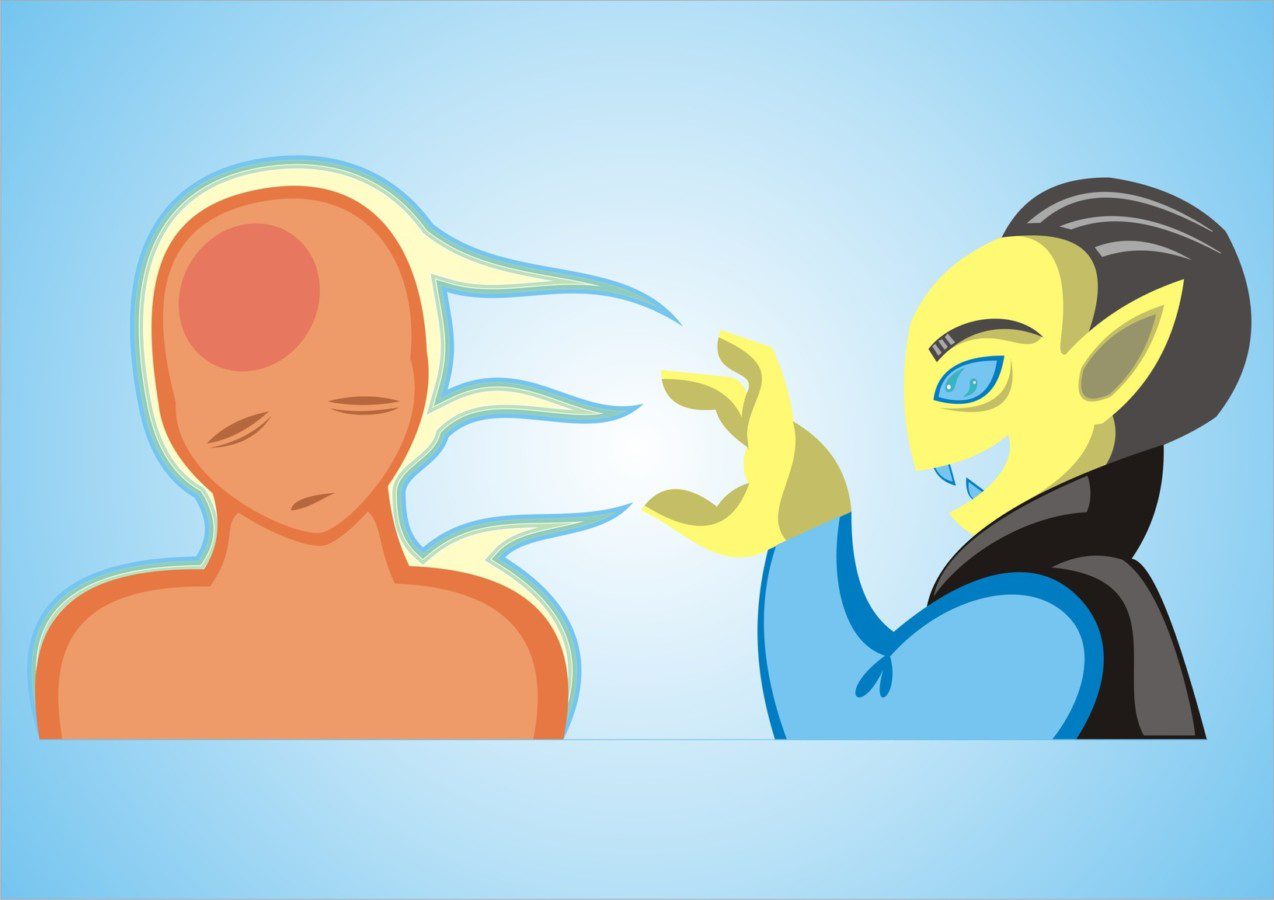
energy-vampires

1. Maintain positive energy by trying to uplift the energy vampire’s own vibration.

Not every psychic vampire steals other people’s energy knowingly or maliciously; maybe they just need a little guidance and support along their journey. In a short excerpt from Dr. Judith Orloff’s New York Times Bestseller, “Emotional Freedom: Liberate Yourself From Negative Emotions and Transform Your Life,” she says,

“Some are overbearing and obnoxious; others are friendly and charming. For example, you’re at a party talking to a perfectly nice person, but suddenly you’re nauseous or weak. Or how about the co-worker who drones on about how she broke up with her boyfriend for the tenth time? Eventually, she feels better, but you’re spent. The bottom line is that on a subtle energy level these people suck you dry.”

So, for these types of energy vampires, often called “poor me” types, you could easily change the subject or offer a few positive words about her relationship. This type of energy vampire usually doesn’t have underlying intentions, but may just need some assistance in getting back on a path toward uplifting their own energy. We all need help from time to time, so don’t automatically dismiss those who exude negative vibes. They may have just had a bad day, and need someone to talk to. As long as you can reach within and easily access your own positivity, this person’s energy should not affect you psychically.

2. Say a few positive affirmations when in the presence of an energy sucker.

Sometimes when you walk in a room full of people, you instantly feel blanketed by the overwhelming negativity in the room. It can feel suffocating when in the company of so many unconscious people. So just remember to silently cite some of your favorite positive quotes or mantras to keep yourself balanced. You can also imagine yourself being bathed in white light from the Divine. Or picture being shielded in a protective bubble of positive energy to not be brought down by the discomfort of others.

3. Distance yourself from the person.

If they continue with the manipulative or self-pitying behavior without making any indication that they want to take responsibility for their own energy, you will need to contemplate letting the person go. Even if it’s a close friend or family member, you cannot have a healthy relationship with someone who refuses to take control of their life and at least work on becoming a more positive, independent person. Don’t feel guilty for wanting to leave an unhealthy relationship; sometimes, no other options are available, and you can’t carry their burdens on your shoulders forever. Allowing the behavior to continue only enables them to keep functioning as a victim, but cutting ties with them will force them to find the strength within to both uplift themselves and others.

You will be doing them a favor, so try not to feel too much remorse, especially if you’re an empath.

4. Make sure to meditate daily, if even for 10-15 minutes.

One of the best ways to protect yourself from emotional manipulation and being taken advantage of is to go deep within and channel more Source Energy into your body and mind. That way, you have a higher tolerance for dealing with the wide variety of energies you will encounter, and won’t be phased by the clever, devious tactic of energy vampires.

As you tap into more of your own spiritual powers and the universal consciousness grid, you will notice that other people’s behaviors won’t affect you as much.

energy vampire squash positive vibes5. Smile at them.

How will this benefit you? Well, a smile carries with it a high vibration, and when you share it with others, they too feel the effects of your positive energy. Think of how you feel when a stranger smiles at you on the street or in the grocery store; you instantly feel happier, right? Well, it works in the same fashion when you pass the smile on to others; ripples create waves, so make sure to keep the positive energy flowing by giving away your own happiness to others!

This doesn’t mean to let others walk all over you and deplete your energy stores. But just give off good vibes so that others may benefit from them, and even start to use these tools to enrich their own lives.


10 Sabotaging Thoughts Your Mind is Trying to Tell You

Our mind is designed to protect us. It is good at painting the picture it thinks we want to see, not knowing if that is helpful or harmful. While painting the picture, the mind comes up with all sorts of thoughts designed to give us an out.

It is up to you to decide how important something is and then question the excuses that are preventing it from happening. Chances are when you begin to question the excuse, you will realize there isn’t one that should stand in your way.

You can overcome your mind’s tendency to make excuses by recognizing the sabotaging thoughts your mind is trying to tell you. Here are some common ones.

10 Sabotaging Thoughts Your Mind is Trying to Tell You

1. It’s not possible.

It’s like you’ve given up before you started which is the mind’s way of trying to protect you from failure. Remember, failure is often a necessary step towards success. Tell yourself, “it is possible.” You might need to do some research and foster positive thoughts but “where there is a will, there’s a way.”

2. I’m not capable.

This excuse is fear talking. It is trying to help you save face.

Steven Pressfield said the following in his book The Art of Work:

“The amateur believes he must first overcome his fear, and then he can do his work. The professional knows that fear can never be overcome. He knows there’s no such thing as a fearless warrior or a dread­free artist.”

Don’t let fear win. Keep telling yourself you are capable, and you are able and do the work to make it so.

3. It’s easier for them because they have money and know the right people.

Everybody has to start somewhere, and it is often those that start something with very little resources that make the biggest differences. Why? Because when you have to figure things out, you think creatively. And creative thinking leads to innovation.

4. I don’t have the time or money.

This is just your way of trying to talk yourself out of doing it. Time and money are rarely the real reasons keeping you from doing what you want to do. There is usually some other underlying issue. Figure out what that issue is and you will have already won.

5. One day, when (insert negative thoughts).

One day when … the kids are grown, the house is paid off, or you get that promotion are common excuses preventing you from taking the next step.

You can “one day, when…” yourself right out of achieving your dreams. There is never a perfect time to take a chance, so you might as well take the first step today.

6. It’s just not working.

This is a way of giving up. Sure, there are times when closing a business or stopping work on an idea is appropriate but it is very rarely because it isn’t working.

It is time for a real assessment of the situation, remembering that success usually follows some dip in momentum. Find the real reasons for why it isn’t “working” and then evaluate your next steps.

7. It’s too late.

Too late for whom? It is NEVER too late.

According to the Kauffman Foundation’s annual Index of Entrepreneurial Activity, just over one ­quarter of all entrepreneurs in 2017 were between the ages of 55 and 64, and that number is on the rise.

So, if a 60­ year old is willing to do all that is necessary to start a business, what is it that is too late for you to start?

8. I need a paycheck.

Don’t use your existing job as an excuse to stop doing the things that matter to you. Yes, it is important to put food on the table but if something resonates with you, you owe it yourself to find the time.

You can accept the status quo, or you can spend a little time every day doing something that feeds your soul. The choice is yours, make sure and choose wisely.

9. It will take too long.

What is too long, really? Sure everyone wants happiness, abundance and tranquility right now, but all good things are worth the effort and the process. Anything worth having is worth pursuing, regardless of when it will arrive.

“Rivers know this: there is no hurry. We shall get there someday.”  –A.A. Milne, Winnie­ the ­Pooh

10. I won’t have any free time.

It’s time to figure out what you value most. Whenever you take on something new, it will infringe on your free time. If that something new is important enough though, you realize giving up your free time is only temporary. If the risk is worth the reward, then your free time is best spent on making something great happen.

positive thinkingFinal Thoughts on Freeing Your Mind of Excuses

It’s time to stand up to the “excuse ­making” machine called your mind. Challenge it and take back control. So, what excuses does your mind give you?

10 Things to Look for in a Life Partner

We enter into a relationship because of chemistry, but we should stay in a relationship because it feeds our soul. It’s often hard to overlook the passion of a new partner and focus on the qualities needed to help the relationship last beyond the intense physical attraction phase.

We may not exactly know who we are going to marry, but we should have a good idea of the characteristics our future spouse should have. These characteristics have nothing to do with looks and status and everything to do with what is needed for you and your partner to live happily ever after.

There are definite characteristics that indicate your partner may be a keeper…

Here are 10 things to look for in a life partner:

spouse or partner

1 – They Believe in Something

Whether they pray to God, honor the Universe or is a scientist at heart, it is important that your future spouse believes in something. And that something should be compatible with your beliefs. Our beliefs are who we are at the core, and we can’t build a long-term partnership when our beliefs are in conflict.

2 – They Demonstrate Compassion

Being able to empathize with people says a lot about the character of a person. Showing compassion shows kindness and caring. If our partner treats others well, there is a good chance that kindness and compassion will be evident in our relationship. A kind heart tells us that our partner’s priorities are in order and that our relationship will be honored.

3 – They Love Openly

Our future spouse should be proud of our relationship and if he (or she) is then he will respectfully demonstrate his love for you openly and without reservation.

There will be no hiding, no shaming, and no secret love affair. Your partner enthusiastically introduces you to his friends and family and feels like the luckiest guy (or gal) in the world.

4 – They Fight Fair

Fighting fair is a necessary component of successful relationships. It is inevitable that disagreements will happen. Knowing we can work through them respectfully and honestly will allow us to communicate from a place of truth. Fighting fair requires listening and accepting feedback with the intent of solving disagreements not placing blame.

5 – They are Forgiving

Nothing erodes a relationship like holding a grudge around past mistakes. A future spouse is someone who can understand that mistakes happen and be willing to let it go. Moving past the mistake and leaving it in the past, where it belongs, is important to the growth of any relationship.

6 – They Exercise Emotional Intelligence

Being emotionally stable means being secure in the relationship, being content at work and basically limiting the amount of drama and chaos they allow into their life. Surely, everyone has moments where emotions run amok, but being able to handle such times in a healthy way is essential.

Living in a state of chaos and out of control feelings means the relationship will be in a state of roller-coaster emotions. A graceful recovery from an emotional situation is a clear sign of a healthy, well-adjusted partner.

7 – They Have Ambition

Having ambition is as vital to a relationship as it is to a career. Ambition happens when you really want something. No one wants to be in a relationship with someone who is happy with the status quo. For the relationship to evolve, the people in it need to evolve as well, and that takes ambition.

8 – They are Financially Mindful

Money might not be able to buy happiness, but money can certainly cause unhappiness, discontent, frustration, and anger. Entering a relationship with clear financial awareness benefits everyone. Understanding debt, prioritizing spending and saving for the future is meaningful and necessary. Aligning financial goals helps to provide a sense of security to the relationship so it can thrive.

9 – They are Non-Judgmental

Nobody wants to be in a relationship where they fear being judged. Being able to be truly authentic and feeling safe doing so will only strengthen the bonds that are holding the relationship together. Knowing we are loved and cherished for who we are, not how we look or how we dress is fundamental.

10 – They Practice Gratitude

It’s important to align our practices with those of our future spouse. There isn’t a better practice to set as a foundation for a relationship than that of gratitude. When partners practice gratitude together, they are making a happy life together a priority, one that will stay focused on the positive and creating an abundant future together.

Be smart when it comes to determining what you need from a future spouse. What are the characteristics that you know someone must have to make you happy and make you want to build a life with them?

Create this list from a logical place that speaks to your heart. Using pure logic or pure emotion and feeling will not be able to give you a complete picture. Once you create the picture, honor it. Remember, every wrong partner brings you one step closer to the right one.

And remember: These traits are not only important to find in someone else, but are also important to practice in your own life.  Your partner will ultimately be a reflection of you, and it’s essential to also be someone who has lasting potential.

11:11 Is it Happening to You?

What does it mean if you keep seeing 11:11? Your Spirit Guides, angels, or higher self like to speak to you through various methods. You might notice a recurring song on the radio that may have special significance, answering a prayer, flipping to a certain page in a book as you are reading, or even directing your attention to repeating numbers on a clock or sign, such as 11:11.

At first, this occurrence might seem like a silly coincidence. But by looking further into it, you will find that it has a powerful spiritual message hidden within.

More and more people seem to notice this repeating numerology on the clock, on roadside billboards, signs, emails, and other places lately. In fact, this only provides further truth that a massive shift in consciousness and awareness is taking place. Sometimes these 11:11 occurrences even happen on November 11th — the 11th day of the 11th month. So what does 11:11 mean? 

This phenomenon basically occurs to remind one of the profound synchronicities and cosmic shifts occurring during this beautiful time on the planet. Also, it brings your attention to your present thoughts and feelings. Yur angels’ underlying intention bringing our awareness to 11:11 is to make us more conscious of ourselves. Plus, it serves to remind each of us that we always have guidance and greater wisdom when we feel stuck, scared, or frustrated.

Let us look together to further understand the significance of seeing these numerals.

What is 11:11?

According to Doreen Virtue, a well-known angel therapist and psychic medium between the spirit world and the human world, seeing repeating numbers, especially these angel numbers, 11:11, means you should focus on keeping your thoughts positive. That’s because your desires will manifest instantly into form. Put all your attention on what you desire instead of what you fear. And soon, your angels will continue to reward you.

The more 1’s you see on a clock, sign, or anything else with numbers, the stronger the connection between yourself and your spirit guides or angels. Millions of people all over the whole world can attest to seeing these numbers more often, which only suggests that more of us have begun our own journeys to becoming Lightworkers, or healers for the planet, as is our spiritual purpose. The Earth is in such a state of disarray outwardly. Thus, many humans are called upon in order to bring back peace and harmony to the planet, making our Earth a true Garden of Eden on which we can all thrive and enjoy the human experience.

The Mayan Connection

According to the Mayan Calendar, the turning of ages began on December 21, 2012 at 11:11. This marked a New Age on our planet. It denoted a literal shift in consciousness from the Dark Age to the Golden Age.

Another interesting thing about 11:11 is that the numbers add up to four. That number indicates transformation and the dissolving of the ego. Many healers and spiritual leaders on Earth interpret 11:11 to mean that the ascended masters are on the planet to aid us in this grand healing and help bring Earth back into alignment once again.

Any time you see numbers repeating themselves, specifically 11:11, your angels want you to know that you are on the right path and that they will protect you no matter what adversities you face. During this time, we must become masters of ourselves, instead of succumbing to the negativity and chaos around us. We have literally created this world due to a lack of self-control. So now, our masters remind us that we must reclaim our internal power and once again learn to govern ourselves. Furthermore, we must strive to learn to coexist with all beings on the planet.

patience and finding guidanceFinal Thoughts on Seeing 11:11

This is an exhilarating time here on Earth, despite what you may see going on around you. As the grand healing and transformation continue to unfold, small changes will soon amount to much more significant changes as the veil is lifted and more people are awakened to our Oneness. It might seem difficult right now, but continue to trust in the angels. Additionally, know that they have your best intentions at heart.

We are all one family, and we are in this together. So next time, don’t look outside yourself for any answers; it will only lead to more confusion and feelings of disempowerment. Pay attention and trust in the power of the universe and planetary energy to help you heal. Anytime you notice 11:11, monitor your thoughts, and ensure that your vibration matches positivity or whatever you want or need to see in your physical reality.

10 Ways to Manage Self Doubt

“Erase self doubt by working to build your strengths instead of focusing on your weaknesses.” – Rodolfo Costa

It’s easy to give in to self-doubt when challenges arise because it takes little effort to quit. It is scary to go the other route, which is to take a risk and continue moving forward despite the doubts.

Self-doubt is normal, and believe it or not, even healthy at times. It’s our body’s way of providing an assessment of our actions to make sure we are proceeding in a way that supports our values and our intention. The difference between people who achieve their goals and those who struggle to live a life they want is the ability to keep self-doubt in check.

Here are 10 ways to manage self doubt and keep moving forward

1 – Recognize It

It’s impossible to manage self doubt if we don’t know what it looks like or even if we have a hard time acknowledging that it exists. The better we become at knowing our thought patterns and recognizing hidden doubts, the easier it will be to develop a plan to deal with them.

2 – Do Something

The best thing we can do to manage our self-doubt is to take action. Self-doubt is usually temporary and relates to the fears we are having at that moment. Stepping into the doubt by taking action will help it subside. Stay on the path, follow the plan and ask for help if needed.

3 – Trust Things Will Work Out

Trusting things will work out doesn’t necessarily mean they will work out the way you want them to. Instead, it’s important to know it will work out as it’s meant to.

It is important to believe our self-doubt will cease. That happens when we understand that no matter the outcome, there will be a lesson to be learned. And applying the lesson is the only way to reach the next step of the journey.

4 – Choose Your Friends Wisely

The people we spend time with influence our thoughts, whether we are aware of it or not. In fact, according to Dr. John Kounis from Drexel University, the pathways in the brain can change after a short 20-minute conversation. If you are spending time with doubters, chances are you will begin to doubt. Evaluate your conversations, and ask yourself if they leave feeling better or worse?

5 – Stop Talking About Your Goals

There is research is out there that if you state your goals you are more likely to achieve them. And while affirmations and self-talk are absolutely fantastic in achieving them, you may actually be less likely to do so by talking about them too much with others.

It doesn’t seem logical does it?

What’s happening is our brain mistakes talking about them as the positive feedback we receive, and the gratification of accomplishment as if the task happened. This type of gratification reduces the motivation to move forward.

6 – Anticipate Challenges

One of the best ways to manage self-doubt is to anticipate the challenges that might appear along the way. If you anticipate that challenges happen, you will be better prepared when they do. Being prepared eliminates the fear and doubt that can sneak up on us when things don’t go according to plan.

7 – Stop Seeking Approval

Seeking other people’s input and advice is a natural part of doing business. The problem lies when our decision-making ability is hampered by the advice and input we receive.

Getting varying opinions can create doubt in the plans we have in place and may end up causing overwhelm. Stand firm in the plan and seek information, but stop seeking approval.

8 – Be Self-Compassionate

We are much more likely to be compassionate towards others than we are towards ourselves. Studies show that there is a direct correlation between being kind to oneself and a positive state of mind.

Be kind and be aware that imperfection is normal and part of being human. It’s important that we forgive ourselves for the mistakes we make so we can learn from them and use them for our personal growth.

9 – Stop Making Excuses

When we are doubting, we are trying to figure out a way to make a situation fit our emotional state. Fear of failure and even success manifests itself through excuses. Stop making justifications and finding reasons to avoid the risk. Say yes and know you will figure the rest out as you go along.

10 – Breathe

When all fails and self-doubt is still lingering, breathe. Our breath is the body’s way of regulating emotions and negativity. It helps to clear out toxic thoughts while putting things into perspective. It releases stress and returns us to a place of calm. Breathing is a powerful weapon against any negativity but especially self-doubt.

Find the ways that most effectively help you manage your self-doubt. Keep questioning until you use your self-doubt in a way that is helpful and not debilitating.

“If you hear a voice within you say you cannot paint, then by all means paint and that voice will be silenced.” – Vincent van Gogh

Are you able to successfully manage self-doubt? Tell us how you do it in the discussion below…

5 Types of “Friends” You Don’t Need In Life

As we go through life, we learn and grow – and so do our friends. As we continue to evolve into the best version of who we can be, it is important that we surround ourselves with friends who support us. We don’t need support in the space where we once were, but rather where we are now and where we are going. Because of the changes we make, it might be time to evaluate our friendships and determine which ones are still serving us.

Here are 5 types of “friends” you don’t need in life:

friend

1 – The Complainer

It is exhausting to live in the world of a constant complainer. Something is always wrong, out of place or not up to impossibly high standards. When we spend too much time with a complainer, it becomes easy to start complaining too.

In fact, a recent study of college roommates found that over the course of the school year, students starting the year in a positive frame of mind developed more negative thought patterns when living with a negative roommate.

The problem with keeping chronic complainers in your life is there isn’t anything you can do to help them see the problem. They tend to not view themselves as complainers, and they are resistant to positive reinforcement or advice. The chronic complainer is happiest when the glass is empty.

2 – The Naysayer

Naysayers are all around us. Whether it’s an acquaintance, friend or even family, naysayers live in a constant state of “nay” or “no.” Whatever the suggestion, the idea or the goal, the naysayer responds automatically with “no” and a list of reasons why.

The hard part is figuring out who is a naysayer and who has our best interest at heart. The first step is to be aware that there is such a thing as “naysayer syndrome.”

Naysayer syndrome is the act of verbalizing one’s fears rather than expressing genuine concerns about another person and their situation. Once we know it exists, we can begin to determine who around us needs help.

Naysayers are just afraid. They don’t understand how we do what we do, because they are too afraid to take risks. If you spend too much time surrounded by naysayers, you will soon find yourself with naysayer syndrome.

life

3 – The Doubter

The doubter is even more dangerous than the naysayer because the doubter appears to be supportive but undermines our efforts by creating doubt in our abilities to complete or tackle the challenge.

The biggest cause of setbacks, failure, or quitting is self-doubt. We begin a project believing that we can do it, that we will be wildly successful, and that if we can’t do something we will figure it out.

Doubters lurk around missteps and hover to quickly point out what went wrong and why it’s best to give up. What’s dangerous is they do it in a way that appears to be supportive but is actually attacking our character, drive, and ambition.

Keep the doubters at bay and surround yourself with friends who believe in you more than you believe in yourself.

4 – The Bragger

We dislike excessive bragging yet when we are proud of an accomplishment, we are excited to share it with our friends. The occasional sharing of personal achievements is normal but when it is extreme, it can be draining on a relationship.

The constant need to brag is often an indication of low self-esteem. While it is necessary to support our friends, we can’t handle providing the attention the bragger needs to feel worthy of our friendship. They need to find that within themselves.

Our role as a friend is to help them by being supportive but not getting caught up in the need to reassure them constantly. If you find yourself paying too much attention to someone else’s accomplishments instead of achieving your own, it might be time to cut the bragger loose.

5 – The Flake

Being a flake is more than standing someone up once, twice, or ten times. Being a flake means putting more importance on posting a picture to Instagram, answering the phone in the middle of a conversation, interrupting someone when they are speaking and all sorts of other disrespectful behaviors.

A relationship with a flake can often feel insignificant, as if it doesn’t matter, because of their behaviors. We owe it to ourselves to surround ourselves with people who show up and stay in the present moment with us.

We have all acted “flakey” at one time or another. However, it is the constant flakiness that will have you doubting the importance of your relationship.

We all need different types of friends who serve us and whom we can serve. When you surround yourself with people who bring different attributes to the table, their and our lives become richer through shared experiences.

friendsBottom line: Make sure the experiences you have in friendships are empowering, not draining.

5 Memory Exercises That Boost Your Brain Power

[dropcap]M[/dropcap]ost people think their ability to remember things is static – either you are good at it or you aren’t. Well, the good news is memory can be improved. Building your memory is like any skill you develop, it takes some effort and continual practice.

This next statement might seem obvious, but your memory is a function of the brain and anything that supports brain health will help boost memory too.

There are two types of memory, long-term and short-term. The short-term memory stores information you learn or need right away like the items you need to complete dinner. While long-term memory is the memory you don’t need to access right now but will access over time like birthdays and phone numbers.

Studies show that your short-term memory is capable of holding about seven items. As you keep filling your short-term memory with information something is going to be forgotten. And that explains forgetting one of the items on that short-term shopping list.

Are you ready to improve your memory? Here is an easy and effective memory exercise you can do right before bed that will help boost your brain’s power.

One Simple Exercise to Boost Your Memory

At the end of your day while lying in bed but before lights out, review your entire day. Try to remember everything thing you did from the moment your feet hit the ground in the morning until you jumped into bed at night.

As you go through your day in chronological order, try to remember visually as many details as possible. Initially, you might be surprised by how few details you remember. Over time, though, you will begin to remember more and more.

Of course, there are other brain-boosting exercises that will help improve your memory. Remember, anything you can do to improve your brain health will also improve your memory. Here are some more tips to help you remember better.

4 More Tips for Improving Your Memory

1. Use Your Senses

When you use as many senses as possible, memories can form more easily. When we are learning something new, it is helpful to notice what is seen, smelled, heard, touched and tasted. Of course, it is not always appropriate to use all the senses, but use as many as possible.

For instance, when you are meeting someone and learning their name, shake their hand, look them in the eye and notice what is around you. What do you hear, is there music playing?

Using four of the five senses and creating a visual picture will help you cement the meeting into memory.

2. Chunk It Up

As mentioned earlier, our short-term memory can only hold seven pieces of information at a time. So how do we remember things that have more than seven pieces of information? We break it down into chunks of information.

Take a phone number for instance. Instead of seeing ten numbers, we break down into three separate chunks of information, the three-digit area code, the three-digit prefix and the four-digit number making it easier to remember.

Chunking works for all types of information, just divide the bigger picture into smaller chunks and memorize the chunks versus the individual pieces.

3. Repeat It

An obvious memorizing technique is to repeat the information over and over again until it is easily recalled. Most people repeat the item in a short period, but it has been proven that repetition spaced over a longer period is most effective. For optimal memorization, it is advised to repeat, wait a bit, repeat, wait a bit and repeat.

4. Form a Connection

It is easier to memorize when you associate information to other pieces of information you already have learned. Find some commonality between what you are learning and something you have already learned. Research has shown that memory for the new and already learned information is enhanced when you link them together and form a connection in your mind.

As an adult, the way we memorize, recall information and solve problems automatically happens because we have already established our mental habits. In order to continue to improve our memory, we must continue to stimulate our brain by developing new habits to keep the mind sharp.

The best thing anyone can do for their brain is to shake things up by trying new things, solving problems differently, taking different routes home and doing anything that forces you to put some thought into your actions. Keeping your brain sharp will help your memory.

Improving your memory is something anyone can achieve using some simple techniques and giving your brain a workout. Whether you are stay-at-home mom, working outside the home, a retired person, or a student, putting the time in now to enhance and build on your memory skills, will continue to serve you throughout all stages of life.

What techniques do you use to improve your memory? Share in the comments below!

10 Questions To Ask Yourself Before Ending A Relationship

We’ve all been there at some point or another. We wonder if we should call quits on a relationship, or just stick it out in hopes that things will improve eventually.

Ultimately, it comes down to asking yourself a few key questions first before you make a firm decision; a little introspection and talking through the situation with yourself can go a long way in helping you make the right choice for your life.

Here are 10 important questions to ask before ending a relationship:

1. Does this relationship bring out the best in me?

Do you feel like the best version of yourself, or a less-than-stellar version of yourself? The right person should encourage you, support you, and feel a shared happiness when you reach a new goal or simply evolve more on your life path.

If the person drags you down, brings out negative emotions in you, or just doesn’t fulfill your needs and desires, you really need to stop and ask yourself where things are headed between the two of you, and if you would be better off flying solo for a while.

2. Do I feel happy or upset the majority of the time?

Of course, no relationship comes without some trials and tribulations, and oftentimes the struggles that people face together make their relationship stronger. However, the dark clouds shouldn’t totally mask the sun – meaning that you should still feel overall happiness in the relationship, even when life throws you a curve ball. According to Mark D. White, Ph.D., you should never stay in a relationship just because you feel you “should” out of a sense of obligation – if you don’t feel happy, you have every right and responsibility, actually, to disclose your feelings to your partner.

“No relationship is terrific at every moment; one reason commitment is so valuable is that it carries us through the less-than-terrific times. It’s when the less-than-terrific times become the norm, and you don’t anticipate any terrific ones in the near future, that you naturally (and justifiably) start to think of alternatives. Commitment can carry the weight of keeping a relationship together once in a while, but it can’t do the job on an ongoing basis—there has to be something of value to a relationship itself to support the partners’ commitment to it,” says White.

3. Am I having to sacrifice more than I should for the relationship?

A relationship should never feel like a burden in your life; if it does, you need to question what they’re bringing to the table, and how much you have to sacrifice in order to make the relationship work. You can only give so much in a relationship before you feel taken advantage of and neglected, so you really need to ask yourself if you feel satisfied in the relationship or not.

If the other person doesn’t pull their own weight and make you feel special and wanted, you should probably go your separate ways.

4. Do we share the same passions and goals for our future?

In any committed relationship, talk of the future will inevitably come up at some point. In most cases, two people going in completely opposite directions won’t have much of a chance at keeping the flame alive way down the road, so you need to ask yourself this question early on.

Two people can absolutely have different goals in life, but if you feel that your visions for the future just don’t mesh well together, you might need to wait it out for someone who shares more of your own passions.

5. Are we fighting more than we’re laughing?

Relationships shouldn’t feel like a chore or dreadful part of your life; they should inspire you, uplift you, and just make you feel alive in general. Disagreements will occur in any relationship, but if you spend the majority of your time arguing rather than enjoying life in one another’s presence, this should be a red flag for you.

Keep the company of those who ignite the light within your soul, not those who put a damper on your spirit.

6. Do we make time for one another?

All of us have many obligations in the modern world, and life can get pretty hectic from time to time. However, no responsibility should take precedence over the love you have for one another. People either make time, or excuses, so if it seems that your partner often makes the latter, do you really want to continue the relationship feeling like you’re constantly put on the back burner?

7. Do I really love him/her, or just the person I want them to be?

Oftentimes, we convince ourselves that people will change as long as we give them time and support, but honestly, people will only change if they truly want to. Plus, if you can’t love the person as they are right now, will you really love them at some point in the future once other conditions have been met?

If you can’t say with certainty that you really love them, you owe it to your partner to tell them the truth – it might hurt, but the pain of staying in a false relationship is far greater – for both of you.

8. Would I regret it later if I didn’t end the relationship today?

Five years from now, would you look back and wish you had moved on from the relationship? Living with regrets will always leave a deeper wound than getting out of an unfulfilling relationship, even if that means you have to be single for a while. Stay true to your heart, and never stay in a relationship just because it feels comfortable, or because you feel like you’d be letting the other person down.

9. Do they add value to my life?

Do they truly enhance your life, adding color and vibrancy, or make you feel drained and uninspired? If you start seeing everything in black and white once you’re with them, is the relationship really worth sacrificing your happiness for?

10. Would my life be better without them in the picture?

This is really the million-dollar question – what would your life look like without them around? If you imagine yourself as a happier, freer, more peaceful person, you need to sit down with your partner and come clean about your feelings. Breakups can cause a temporary upheaval and emotional tidal wave in your life, but you will feel much better following your heart and cleansing your life of any negativity.

10 Signs It’s Time to Change Your Life

There is usually some catalyst (or several of them) that leads someone to decide that some profound change is in order. Unfortunately, it is easy to live with these signs for a long time before even noticing what they are trying to say. The key to understanding what is going on in our life is recognizing how we feel. If we are feeling anxious, discontent, or bitter, it could be our body’s way of telling us it’s time to try to change our lives.

Here are ten signs it’s time to change your life:

Watch for these red flags.

1. You dread going to work more days than you don’t.

So much of our day and week is spent at work. That feeling of dread when you wake up or as the weekend nears its end is a sure sign that something is not right. Take some time to figure out what it is about your day at work that you dread and devise a plan for changing it.

change your life

2. You are living in the past or dreaming about the future.

Staying focused on better times, whether the past or the future, might be a sign of trying to escape the now. It is not uncommon to dream about a better life, and dreaming can be good. It’s when dreaming takes the place of doing that a problem exists.

3. People are constantly telling you to relax.

If the same message keeps appearing from friends and acquaintances alike, it might be time to figure out what is behind it. “You need to relax” is slang for “get over it” in today’s world. So when we hear it repeatedly, we are probably holding onto something we need to let go of.

4. You are jealous of other people’s successes.

Jealousy is a sign of discontent with our lives and has nothing to do with the other person’s accomplishments. It is hard to be happy about other people’s successes when we are feeling stuck in our life. It is time to ask ourselves what jealousy is telling us.

5. You wake up tired.

Waking up tired is a sign of discontent, not necessarily with work but with life in general. It is hard to get proper rest with worry and angst in our lives. When we live in a constant state of tiredness, it can signify struggle and strife in our life. It also indicates we are tired of fighting and are ready to admit defeat. Instead of giving up, figure out what you can do to get back on track. Life is meant to be lived happy, and happy isn’t tired.

6. If you are restless, it’s time to change your life.

The feeling of the need to do something or go somewhere is a clear sign that creativity is being stifled, and something must change. The inability to be content and sit still can suggest there is something else you are meant to be doing. If you are antsy, it’s your job to figure out what your body is telling you.

7. You gossip.

Gossiping is a way of deflecting the work we need to do in our lives to someone else. It is avoidance at its best. When we find ourselves gossiping, it is important to ask what we are avoiding in our life and then realize that facing it is the best thing we can do.

8. Everyone seems to annoy you.

Having a hard time living by the “don’t sweat the small stuff” motto might indicate some extra angst and negativity around. Nitpicking and always finding something wrong with what everyone is doing is a hint that there are some underlying issues. The issues can be anything, but it usually somehow indicates unhappiness with your life.

9. You have a constant sense of foreboding.

Waiting for something terrible to happen will eventually lead to something wrong happening. The other shoe doesn’t always have to drop, and knowing that can go a long way. Stop the worry and the predictions and start focusing on what you are doing right now.

10. You keep thinking, “there has to be something more than this.”

Thinking there is something more or something bigger usually means new opportunities are on the horizon. Be open to the things stirring up passion and creativity and follow them. The destination will most likely be precisely what you need.

15 Hacks to Create New Habits to Change Your Life

If you identify with any of the signs, it’s time to change your life. There are plenty of new habits you can form. Everyone needs a little motivation to keep their good habits going, and these tips will help. These hacks will help you create new habits that will change your life for the better.

1. Identify Triggers and Other Things Getting in the Way

Figuring out what’s getting in the way of sticking to good habits can make a difference in your life. Determining what’s hindering your progress allows you to decide what your first step must be. You can change your life to help avoid or ignore the things that could interfere.

Additionally, identifying triggers helps you interrupt your conditioned reactive response. You can develop new ways to handle triggers, making the best decisions for your new habits.

Sometimes the trigger can be as simple as needing a soda when you feel tired and thirsty. When you have the thought, your brain might think caffeine will help. Whatever your habit is, there will be at least one trigger linked to it.

However, implementing new habits means you’ll ignore your typical response and choose something helpful and healthy. Whatever your routine regarding cues, you must learn to reward yourself differently. As you identify your triggers and reward yourself differently, you’ll quickly change your life for the better.

change your life

2. Schedule Your New Habits on a Calendar

Life gets busy, making it hard to stick to new habits. When you run on autopilot, you’ll resort to your old habits instead of your new ones. By scheduling your new practices on a calendar, you’ll be more likely to stick to them.

Every hour of your life should have a purpose, including scheduled time for self-care and other things. When you want to implement new habits, put them on your schedule, and don’t bump it for anyone else. Plan at least a week ahead to ensure you accomplish everything and build discipline.

3. Focus on Things You’re Grateful For

Spend some time each morning thinking about why you are grateful. When you start your day with gratitude, it’ll help you make better choices throughout the day. It might help if you take a few minutes to write down what you’re thankful for.

When you have the good things in your life on your mind, you’ll feel more relaxed and healthier. You’ll be happier, and research shows that happiness changes your brain for the better.

4. Get It Over with Early On

If you do hard things first, you’re sure to get them done. If you struggle to stick to beneficial habits, make sure you save the easy tasks for last. Procrastination stands between developing better habits, but you can easily change your life.

When you want to stick to new habits, get them over with instead of saving them for the end. Take the action that improves your life before doing anything else. It might be challenging, but it’ll become easier as you practice doing the daunting things first.

 5. Don’t Give Up If You Make a Mistake

Sometimes you’ll forget or give into temptation, but that doesn’t mean you should give up. If you miss an opportunity to implement your new habit, you can still stay on track. Start again at the next opportunity because research shows that it won’t hinder your progress.

6. Make Time for Meditation

When you meditate, it promotes mental health. Take a little time each day to focus on your breathing and draw your attention to the present. It’ll dramatically improve your life, reducing stress and negative emotions.

Meditation also improves your memory, promotes emotional control, and changes your brain for the better. With these positive changes, you’ll have an easier time sticking to new habits.

7. Only Compare Yourself to Who You Used to Be

Comparing yourself to others is detrimental, but comparing who you are now to who you used to be is beneficial. Think back a year or two and acknowledge how far you’ve come. It’ll give you more motivation to stick to positive habits.

Your goal in life should always be to become a better version of yourself. The only way to make it happen is to change your life.

8. Hold Yourself Accountable

Holding yourself accountable is one of the best hacks for creating new habits. Create a tracking system and set goals to help you stay motivated. Tracking your progress will help you want to accomplish your goals.

When you hold yourself accountable, it sometimes helps to include other trusted people. Set up regular check-ins with people who want what’s best for you.

9. Determine Your Reason

Start by figuring out why you have bad habits right now. Think about why you turn to unhealthy options when you could make another choice. When you know your reasoning, it’s easier to change your life.

Identifying why you want to improve your life can help you stick to the changes. Before deciding to change your life, determine your reason. It gives you motivation, and you can easily recall it during moments of weakness.

You don’t want your reasons to be vague or revolve around what you think you should do. Instead, they should revolve around specific ways you can improve your life. Make your habit part of a bigger goal worth the struggle and effort.

Without a focused reason, you’ll only force yourself to do things you don’t want to do. This method isn’t usually effective because it’s hard to find motivation. Instead, determine why you want to change your life, and you’ll have something to work toward.

10. Get Plenty of Sleep

Getting enough sleep is essential to your overall well-being and ability to form new habits. Don’t skip out on a night of sleep, even when you have things to get finished. It’ll help you think clearer, promoting productivity and beneficial habits.

11. Use Visualization to Change Your Life

When you want to buy something you don’t need, use visualization to reel in your frivolous spending. Imagine the item you wish to buy on the one hand in the money it costs in the other. It helps you determine if the money is worth the thing, giving you a chance to decide against spending.

When you figure out if you’d rather have the money or the item, it can help you cut back on impulse purchases. If your new habits revolve around spending, this is the perfect hack. No matter what practice you want to form, visualization can help make it happen.

Another way you can address the issue is by visualizing the amount of work you must do to pay for the item. Determine how many hours you’d have to spend working to regain the amount you’d spend. When you think of your spending this way, it’ll help you determine if each purchase is worth your time.

12. Mentally Practice

Research shows that mentally practicing a task can improve your performance. Mental practice can help you implement new habits because it makes your brain stronger. When you mentally practice, you can also give yourself a pep talk. Remember that you can do anything you set your mind to, and encourage yourself to give your best effort.

13. Use a System

Stopping a bad habit and implementing a better one both require a plan. You can’t rely on willpower and motivation because it won’t always make it happen. If willpower and motivation are your only plans, you’ll give in during moments of weakness.

Instead, develop and use systems to help you stick to your life changes. Your routines should include outside forces, making it easier to build new practices.

One system you can implement includes removing steps necessary to complete bad habits. Or make it harder to give in to temptation by adding additional steps to accomplish your bad habit. Additionally, you can eliminate steps to make beneficial habits easier to get done.

Other systems include:

  • Adding positive habits to your daily calendar
  • Tracking your daily progress
  • Journaling your journey

14. Give Yourself Time

Many people falsely believe that it takes 21 days to form new habits. However, studies show that it can take two months or longer to make a habit stick. Everyone is different, and you never know how long it will take to form automatic behaviors.

Be patient with yourself if it doesn’t happen right away. It’s hard work to change your life, but stick to it, and it’ll all pay off. Expecting immediate change or striving for the 21-day mark can set you up for failure, so remember that it could take longer.

15. Create Smaller Goals

You likely have your long-term goal in mind, but you must focus smaller than that. Break your goal down into smaller goals that are easier to accomplish because each victory will make a difference.

For example, if you want to eat healthier, set your first goal is to buy healthy foods. Determine which healthy foods you enjoy and how you can make them into a meal. Then, your second goal could be to prepare the food.

Setting these smaller goals makes you more likely to accomplish your long-term desires. You can use this method for any habit because there are always steps to take when achieving your dreams.

change your life

Final Thoughts on Knowing It’s Time to Change Your Life

Deciding to change your life can be immediate, but the change itself doesn’t always happen that fast. Don’t let that stop you from moving forward. Even the most minor steps can help reduce the negative feelings and keep the motivation for change high.

The important thing is to do something right now because your only options are to embrace change or accept things.

Either way, it is crucial for us to pay attention to how we feel and do more of what makes us feel good.

“We must let go of the life we have planned, so as to accept the one that is waiting for us.” ~ Joseph Campbell

Skip to content