Weekly tips, affirmations, and small actions to feel your best.

5 Types of Pain You Should Never Ignore

We all deal with minor aches and pains in everyday life, from dull headaches to joint pain to sore muscles. Unfortunately, we can’t avoid pain altogether during our human experience. But luckily, most pain doesn’t signal anything wrong going on beneath the surface.

However, you should take the following types of pain seriously. And it is imperative to seek advice from a wellness professional as soon as possible to get it checked out.

Five Types of Pain Many People Ignore, Even Though They Shouldn’t

Here are five types of pain you should never ignore. If you experience these symptoms, you need to seek medical attention.
pain1. Chest pain

Heart problems most commonly cause chest pain. However, it can also signal problems with the lungs, esophagus, ribs, muscles, or nerves. Approximately 25% of the U.S. experiences chest pain unrelated to the heart, but you shouldn’t take any chances upon feeling a sharpness in your chest. Pain in this area can point to a severe, life-threatening problem, such as a heart attack, coronary artery disease, myocarditis, or other serious health problems. Other common causes of chest pain include pneumonia, a pulmonary embolism, acid reflux, muscle strain, and pancreatitis.

2. Middle back pain along with a fever

Experts also warn that experiencing pain in the middle of your back, fever, vomiting, chills, and confusion, can signal a kidney infection. If the pain persists during urination, this strongly suggests a kidney infection. Because the kidneys are located in the back of the abdomen, back pain usually accompanies the infection. The kidneys filter blood, remove waste, and balance fluids and electrolytes. Bacteria in the urinary tract cause a kidney infection, so if you feel middle back pain and experience fever along with it, see a doctor as soon as possible.

3. Pain on the lower right side of your abdomen

Feeling a sharp, stabbing pain on the lower right side of the abdomen usually signals one thing: appendicitis. While we don’t need our appendix to function properly, appendicitis can be fatal if not treated promptly. The appendix extends from the large intestine, and if left inflamed, it will eventually burst, leaking toxic fluids into the abdominal cavity. In turn, this can lead to the inflammation of the abdominal cavity. That dire situation can be fatal unless treated with powerful antibiotics.

If you feel pain in this area of your abdomen, loss of appetite, vomiting or nausea, a high fever, an inability to pass gas, and abdominal swelling, see a doctor immediately.
pop meme

4. Splitting headaches that come on without warning

We all get headaches occasionally, usually from work strain, a hard workout, not eating enough, or dehydration. These headaches tend to go away after we relax, take a quick nap, or take pain medicine.

However, feeling unbearable, blinding sensations in your head suddenly can signal something more serious. Called thunderclap headaches, they can point to many severe health problems, including an aneurysm, a blood clot, meningitis, a rupture of the blood vessel in the brain, a tumor in the brain, or a tear in the lining of an artery.

If you experience severe pain in your head for more than a few days and notice nausea, vomiting, and neck and lower back pain, consult your doctor as soon as possible.

5. Tooth or jaw discomfort that wakes you up at night

According to reports, between 50 to 96 percent of adults experience teeth grinding or bruxism. Since it’s such an expected behavior, many people think nothing of it and ignore the symptoms associated with tooth grinding. However, leaving it unchecked for an extended period can lead to severe tooth and jaw problems, such as fracturing or total loss of teeth, as well as changing the appearance of your face.

It can be difficult to find out if you grind your teeth during sleep if it doesn’t wake you up at night. Common signs of teeth grinding include a dull headache and sore jaw upon waking in the morning. Most of the time, tooth grinding indicates underlying stress. But you can combat this unconscious behavior by using a nightguard while you sleep.

pain

Final Thoughts on Identifying Pain and Understanding What Causes It

Pain is a signal or message from your brain and body. It alerts you that something inside you is awry. This signal from your body is not something to take lightly. So this information is imperative–don’t ignore it if it persists for a short time. If the pain becomes severe or lasts for a short while, contact your doctor. A medical professional can give you the proper guidance and advise you of whether you can treat the issue at home or seek treatment immediately.


15 Reasons You’re Always Tired

At some point in our hectic schedule, we sometimes are so tired that we want nothing more than to crawl back under the covers for the rest of the day. It’s no wonder that we feel this way… Feeling this way from time to time is perfectly normal. We inevitably get tired from doing errands, being at work eight hours a day, picking up our kids from school, and all the other responsibilities we have.

However, feeling tired most of the time can signal something deeper than just drowsiness. According to the Centers for Disease Control and Prevention, more than one million Americans suffer from chronic fatigue.

Suppose you feel tired more often than not and can’t pinpoint if you engage in the following everyday habits. Indeed, this information could give you the answer you’ve been looking for.

Here are 15 reasons you’re always tired

Once you understand why you feel fatigued, you will be able to plan your recovery.


tired
1. You’re dehydrated

According to studies conducted at the University of Connecticut’s Human Performance Laboratory, even mild dehydration can lead to a significant drop in energy levels, mood, and cognitive abilities.

In the studies, dehydration affected those who had just walked for 40 minutes on a treadmill and those who sat at rest equally.

This data means that humans need to stay hydrated during any activities.

“Even mild dehydration that can occur during the course of our ordinary daily activities can degrade how we are feeling – especially for women, who appear to be more susceptible to the adverse effects of low levels of dehydration than men,” says Harris Lieberman, a co-author of the study and a research psychologist with the Military Nutrition Division, U.S. Army Research Institute of Environmental Medicine in Natick, Massachusetts.

“In both sexes, these adverse mood changes may limit the motivation required to engage in even moderate aerobic exercise. Mild dehydration may also interfere with other daily activities, even when there is no physical demand component present.”

To figure out how much water you should drink, take your weight, divide that number by half, and drink that number of ounces of water per day.

2. You skip meals, which makes you tired

We need constant energy throughout our day. This need is especially true for those who work highly demanding jobs and have other responsibilities outside of work.

We obtain our energy mostly through the nutrients in our food, so when you skip meals, your body’s energy stores become depleted, leaving you feeling lethargic.

Make sure to eat small meals throughout the day full of healthy, whole foods such as fruits, vegetables, nuts, seeds, and grains to keep your energy levels high and get all the nutrients you require.

3. You get on your phone or laptop right before bed

Unfortunately, much of our society keep their phones and laptops almost permanently attached to them, staying on them most of the day. We check our emails and Facebook notifications first thing in the morning. Then we repeat this ritual right before bed each night.

However, various studies have proven that exposure to the harsh blue and white lights emanating from digital devices can disrupt the chemicals in our brains, specifically the hormone melatonin. Melatonin helps control waking and sleeping cycles.

So any imbalances in this vitally important hormone can cause you to lose a significant amount of sleep.

Try coming home from work and reading books or playing board games with your family instead of automatically scrolling through Facebook or playing Candy Crush. In fact, you will find you’ll feel a lot more relaxed, and therefore able to sleep better at night.

stress meme4. You eat a diet high in fat, making you tired

Studies have shown that consuming a diet high in fat can lead to daytime drowsiness and an inability to concentrate. A diet high in carbohydrates has the exact opposite effect. Ensure to eat plenty of healthy carbohydrates such as fruits, brown or wild rice, and sweet potatoes.

On the other hand, you should avoid foods cooked in grease and heavy oils. While fats should make up a portion of your diet, opt for nutritious sources of fat like avocados, nuts, and seeds.

5. You drink alcohol before going to bed

Many people think that drinking a glass of wine or two before bed will help them fall asleep faster. Although it initially works, it spikes your insulin levels eventually. Then it causes you to toss and turn in the middle of the night.

Researchers at Brown University found that drinking alcohol in the evening hours stimulates the body and mind much more than at any other time of the day.

Therefore, if you do drink alcohol, make sure to consume it earlier in the day. That way, you can have a restful night’s sleep.

6. Lack of exercise

A sedentary lifestyle will make you feel sluggish and constantly tired. When you are physically active, your body releases endorphins, which are chemicals that make you feel happier. You’ll feel motivated to stay physically active because of how much energy you’ll have more energy and feel better.

7. Anemia

Anemia causes fatigue and tiredness. This condition is the lack of red blood cells that carry oxygen to your tissues. It’s sometimes called low hemoglobin. Low iron levels can cause anemia. A simple blood test will determine if you’re deficient in iron and anemic.

8. Insomnia causes someone to be always tired

Insomnia is a sleep disorder that prevents falling asleep or staying asleep. It is a common cause of fatigue. Be sure to avoid caffeine some hours before bed and try to wind down before bed. Turn off your smartphone and computer at least one hour before you go to bed. Blue screens from electronic devices disrupt sleep.

9. Diabetes

If you’re always tired, it could signify that you have diabetes. Diabetes is an ailment where your body can’t make enough insulin. This condition causes high blood sugar. High blood sugar causes the following:

  • Fatigue and always tired
  • Lack of concentration
  • Irritability
  • Weight gain

If you have unexplained fatigue for an extended period, be sure to talk with your doctor.

10. Thyroid disorder

Thyroid disorders can have a significant impact on your energy level and mood. Two common thyroid conditions are:

  • Hypothyroidism-This is an underactive thyroid, feeling sluggish, constantly tired, depressed, and weight gain.
  • Hyperthyroid-Anxiety, insomnia, irritability, and restlessness

11. Depression

If you feel depressed, you will lack energy and feel always tired. If you think you’re suffering from depression, be sure to talk to your doctor. Many helpful treatments available can improve how you feel and get you back on track with your life.

12. Low-grade infection

Your tiredness could be because of an infection, especially if you have symptoms like a low-grade infection, loss of appetite, or shortness of breath. If your fatigue worsens after a week, be sure to talk with your doctor. They will run blood tests to check for infections or other illnesses. Don’t ignore a low-grade infection. It could be a symptom of a severe condition, such as these:

  • Bone infection
  • Appendicitis
  • Meningitis
  • Sinus infection
  • Mononucleosis
  • Leukemia
  • Urinary tract disease (UTI)

13. Stress Causes People to Feel Always Tired

Stress can cause fatigue. When you’re experiencing stress, your body releases extra cortisol and adrenaline. In small amounts, having excess cortisol and adrenaline in your body is okay, but if you’re constantly in a state of stress, your body will high alert. You’ll always feel tired. If your stress levels continue at this rate, it can lead to an autoimmune condition called Addison’s disease, where your body no lower produces enough adrenaline or cortisol. People who have Addison’s disease must take a corticosteroid to make up for the lack of corticosteroids in their bodies.

14. Medications

Certain medications cause you to feel constantly exhausted. If you started taking a new medication, be sure to read the side effects. Fatigue is a common side effect of various over-the-counter and prescription drugs. Medicines that cause tiredness include:

  • Antihistamines
  • Antidepressants
  • Muscle relaxants
  • Beta-blockers
  • Narcotics
  • Benzodiazepines

emotionally stable

15. Too much caffeine, a surprising reason for being always tired

Even though caffeine perks you up in the morning, drinking too much can have the opposite effect. Too much caffeine leaves you with side effects such as

  • High blood pressure
  • Insomnia
  • Anxiety
  • Racing heart
  • Jitters

As the caffeine wears off, you’ll feel a physical crash, making you feel fatigued. Remember, numerous soft drinks contain caffeine as well as some sports drinks.

(C)Power of Positivity, LLC. All rights reserved

10 Ways To Avoid Mental Burnout

According to the American Institute of Stress, job stress comprises most of the mental stress that adults feel in today’s world, and this stress costs U.S. industries $300 billion a year.

However, on top of keeping our jobs, we have many other responsibilities on our plates, too. We must take care of our kids, do household chores, pay bills, and somewhere in the mix, find time to take care of ourselves. After a while, we tend to get lost in this vicious cycle of life, our brains feel like zombie mush, and we simply feel that we can’t do it anymore.

If you have felt this way, don’t worry; many people get “mental burnout” at some point in their lives, but you can take a few precautions against feeling like this in the future.

Here are ten ways to avoid mental burnout:

1. Start making to-do lists each day.

No one can get everything done in one day, so start assigning tasks to each day of the week so that you can spread them out. Obviously, you need to factor in deadlines when you make your to-do list, but aside from that, make your lists according to convenience. Are you doing any errands that are in close proximity to each other? If so, you can knock those all out in one day, most likely. Are some errands going to take longer than others? If so, you probably don’t want to schedule too much on days when you have more tedious errands.

Simply make schedules that work for you, and don’t try to cram too much into one day.

2. Don’t take on more work than you can reasonably handle.

Don’t try to please everyone; if you can’t get something done, let them know, and don’t feel bad about it. While we might feel like superheros at times, we can’t possibly keep going at such a rapid pace without burning out eventually. In order to keep your mental health intact, you need to learn how to say no sometimes. It doesn’t make you a bad person; it makes you human. If you don’t think about your health, no one will, so make sure to turn down anything that doesn’t align with your highest truth.

3. Delegate tasks to others when you can.

Expanding on the last point, you can always ask others to take on work that you can’t. People usually love to help others out, because it makes them feel useful. Maybe one of your coworkers can write that memo instead of you, or maybe your kids can help cook dinner a few nights a week. Remember, no one person can do everything all the time, so don’t stress yourself out by trying to control and take charge of every aspect of life.

4. Make some “you” time each day.

Without making some time for yourself, you will find that you feel disconnected and downright lost in life. You need some time to go within and recharge your batteries, so allow yourself that time to just do nothing. Take a relaxing bubble bath at night, or curl up with your favorite book. Don’t bend over backwards so much for others that you forget to make time for the person that needs you the most – yourself.

5. Use some of your time to give to others.

Although “Me” time is important, we can’t lose sight of our true mission on Earth: to give love to others, and offer a helping hand to those who need it. If you have some spare time during the week, maybe try volunteering a few of those days. Not only will it bring you fulfillment, but it will give you time to connect with others in a positive way, which will alleviate stress.

6. Have a regular exercise routine.

Nothing tells stress to hit the road quite like exercising. It gets your blood pumping, your heart racing, and those endorphins rushing through your body. Without exercise, we lose our mental clarity, feel lethargic, and in general, get stressed over the littlest things. Make sure to incorporate some sort of exercise into your daily routine, so your stress doesn’t build up inside of you.

7. Have a healthy outlet for your stress.

In addition to exercise, you can also utilize other methods for controlling stress. You could write in a journal, meditate, do some gardening, get some coffee with friends, or whatever activity makes you feel good. It helps to have something to do outside of work, because we obviously didn’t come here to just put in hours at our jobs. We came here to embody pure joy, so make sure to find activities in your life that bring you that feeling.

8. Make time to spend with your friends and family.

Our friends and family keep us grounded, make us feel protected, and give us a safe place to run when life gets too overwhelming. Schedule some time during the week to catch up with the people who truly care about you.

9. Don’t put unreasonable demands on yourself and others.

This can apply to anyone, but mostly, the perfectionists, the Type A’s, and the overachievers need to hear this more than anyone. Remember, you don’t always have to be productive in order to feel worthwhile. You don’t always need to take charge of everything in order to validate your existence. Let go a little bit, and take some time to have fun and relax. Do what you can each day, but don’t overwork yourself (or others). Loosen the reigns, and you will find that mental burnouts are fewer and farther between.

10. Choose a job that matches your interests and passion in life.

Since our jobs account for most of our stress, it would make sense to choose one that brings us fulfillment. If we must work 40+ hours a week, do we really want to spend all that time doing something that we dread? Try to pick a career that doesn’t really feel like work, and this will go a long way in alleviating mental burnout.

11 Signs It’s Time For A Relationship Makeover

Your relationship is stuck in a rut, wearing old habits and worn out arguments. Time to makeover your relationship if it’s showing some of these 11 signs.

11 Signs It’s Time For A Relationship Makeover

relationship

1. You’ve stopped listening.

Where did your partner say they were going to be tonight? You don’t know because you were tuning them out while they were speaking. Misunderstandings and miscommunication lead to hurt feelings. By not listening, you are inflicting hurt on your partner.

Michael P. Nichols, author of The Lost Art of Listening: How Learning to Listen Can Improve Relationships, says that ‘We hurt each other unnecessarily by failing to acknowledge what the other one has to say.’ Nichols says that it can be a burden at times to sustain the attention that is required to deeply listen, but that is all part of a healthy relationship.

2. You’re emotionally cheating.

You might need a relationship makeover if you have kept in touch with past romantic partners or are checking out potential new ones. You haven’t actually done the deed with anyone yet, but you’re keeping your options open. If you have a friend to whom you confide things that you wouldn’t tell your current partner, and who you think has romantic possibilities, you are an emotional cheater.

Cyber infidelity is a high tech way to cheat on your spouse, and social media makes this easy. If they find out about your online fling, your partner may be just as upset as if you had actually hooked up. A study in the Journal of Couple and Relationship Therapy found that only 2.9% of people who read a story about an online fling would not consider it to be cheating on a relationship.

3. You can’t picture the future with your partner.

Where will you be in 5 years? Maybe single, but probably not with your current partner. If you can’t imagine your future together then it’s possible that you don’t want to have a future in this relationship.

4. You’re planning for the end.

It’s not over yet, but you’re already wondering about the next phase of your life after this relationship is over. If you’re not the bread winner in the relationship, you may have even started stashing money away, knowing that you’ll need it for when you two separate. The fact that you’re planning for when, not if, you even ever would break up, is a sign that it’s time for a relationship makeover.

5. You’re physically unavailable.

Your libido is either dead or on life support. You can’t remember how many days, weeks or months it has been since you had sex. The last time your partner acted romantic toward you, you either weren’t in the mood or you turned them down because you were upset about something that they had done earlier.

6. Communication has broken down.

Your relationship is due for a makeover if you’re not able to express your feelings to your partner without an argument. If you say that you’re hurt, they get defensive. If your partner says that they’re stressed, you respond with anger. Emotions are all over the place and no one is feeling supported.

7. You have changed.

Talk about a makeover; if you think back on who you were in the beginning of your relationship, that person is not who you are now. You’ve changed in significant ways and your partner either hasn’t changed or has grown apart from you.

8. You’re an emotional wreck.

Negative emotions that you used to experience less often have been much more common. Depression, anxiety, anger, fear, frustration and/or stress have become feelings that you’re way too familiar with now.

Related article: 5 Signs You Need Emotional Healing

9. You spend less time together.

You used to go everywhere together, but lately your partner and you head off somewhere on your own. If you’re enjoying time away from your partner rather than time with them, it’s a sign that it’s time for a relationship makeover.

10. You keep score.

Every time your partner says or does something to hurt you, you make a mental note; Partner 1, Me 0. Every time you feel neglected, unappreciated, or unloved, your partner racks up another point. This is not a game. Your partner doesn’t win by racking up points, you lose by counting them.

For that matter, why are you only scoring the negatives? It’s definitely time for a relationship makeover if you never score the hugs or compliments. Or maybe the problem is that you haven’t received any lately?

11. You’ve thought about going to a counselor.

Do you need a professional to help you? It could be the step that gives your relationship a makeover. Many couples who seek out a therapist regret not having done so earlier.

If the previous ten signs are pointing to something needing to change, seeking the help of a therapist is a good solution. Couples can get expert guidance in person, or even in a confidential online therapy session.


New Study Confirms: Excessive Worrying Linked To High Levels Of Creative Intelligence

In today’s society, there is so much to worry about. There’s an increase in violence, the global economy is in turmoil, we seem to be falling behind in educating our youth, and for many us, we are struggling just to put food on the table and keep our lights on. It’s no wonder we are a worrying society.

Have you ever noticed that some people tend to overthink more than others? They contemplate every decision for fear of making the wrong choice. And when they finally decide, they worry they made the wrong one.

Here’s why worrying is a sign of high creative intelligence

worrying

There is worry surrounding meeting our basic needs, and then there is worrying about the impact of every decision we make. Believe it or not, one is better than the other.

Worrying about the impact of every decision we make may be an indication of a high level of creative intelligence. It’s a sign of empathy, problem-solving and next-level thinking.

A recent study found a relationship between excessive worrying and creativity. Personality Neurobiology expert Dr. Adam Perkins says this about that relationship:

“It occurred to me that if you happen to have a preponderance of negatively hued self-generated thoughts, due to high levels of spontaneous activity in the parts of the medial prefrontal cortex that govern conscious perception of threat and you also have a tendency to switch to panic sooner than average people, due to possessing especially high reactivity in the basolateral nuclei of the amygdala, then that means you can experience intense negative emotions even when there’s no threat present. This could mean that for specific neural reasons, high scorers on neuroticism have a highly active imagination, which acts as a built-in threat generator.”

Basically, he’s saying if we are an excessive worrier; we are also more likely to be imaginative, creative, and an overall high-level thinker.

When looking at these findings, it makes perfect sense. Just think about it. Most entrepreneurs are solving a problem they or people they know are worrying about. Most innovators create products that solve a particular issue. And most artists use their worry and heartache to fuel their work.

Worry is what encourages forward motion and creativity. It’s the overthinking, the pondering, the wondering about something that generates theory and ideas. Think about it, if we were 100% content in our lives, what would there be to solve or fix?

Dr. Perkins also had this to say:

“Cheerful, happy-go-lucky people by definition do not brood about problems and so must be at a disadvantage when problem-solving compared to a more neurotic person. We have a useful sanity check for our theory because it is easy to observe that many geniuses seem to have a brooding, unhappy tendency that hints they are fairly high on the neuroticism spectrum. For example, think of the life stories of Isaac Newton, Charles Darwin, Vincent Van Gogh, Kurt Cobain, etc. Perhaps the link between creativity and neuroticism was summed up most succinctly of all by John Lennon when he said: ‘Genius is pain.’”

There is a lot of discussion around the power of positive thinking, but it seems there is also some power in what may be perceived as a negative thought.

Try thinking of negative thoughts as an alarm clock. It is waking us up to the fact that something is going on that needs our attention. It’s important to embrace our negative thoughts as warmly as we embrace the positive ones. We should question them, understand them, and use the information to make better decisions.

The problem with excessive worry, or any negative thought for that matter, is found when it consumes our every waking moment. We should begin to fear worrying when we allow it to keep us from connecting with the people in our lives that matter, taking action toward achieving our big goals, and being contributing members of our community.

When worry might be healthy

Using worry as a catalyst for change is healthy and encouraged. Using worry as a shield to avoid dealing with challenges can be detrimental to our mental health. Our job is to understand when our concern is fueling our creative intelligence and when it is standing in the way of us taking action toward personal growth. When we can understand the difference and use the information to choose our next step, we can truly begin to create the lives we were meant to live.

stop worrying

Final Words: The creative genius behind the worry…

There are creative geniuses among us. We should remember that the next time we are in the presence of someone who seems distracted and is brooding over the same problem as yesterday. He’s probably creating a solution to something we worried about at one time or another. And when he solves it, we will wish we had thought of it.

This Is What Happens When You Touch This Point On Your Knee

Acupressure is an ancient technique for healing by using the fingers to press on key points in the body, which stimulates the body to heal itself. Acupressure originated around 5000 years ago in Asia, and has been adopted by many Western clinicians who want to offer their patients non-traditional medical options.

According to traditional Chinese medicine, there are twelve energy meridians in the body. Applying pressure at specific points along these meridians releases blocked energy which travels throughout your body. The energy flow is necessary for balance and harmony within the system.

This is What Happens When You Massage This Point On Your Knee

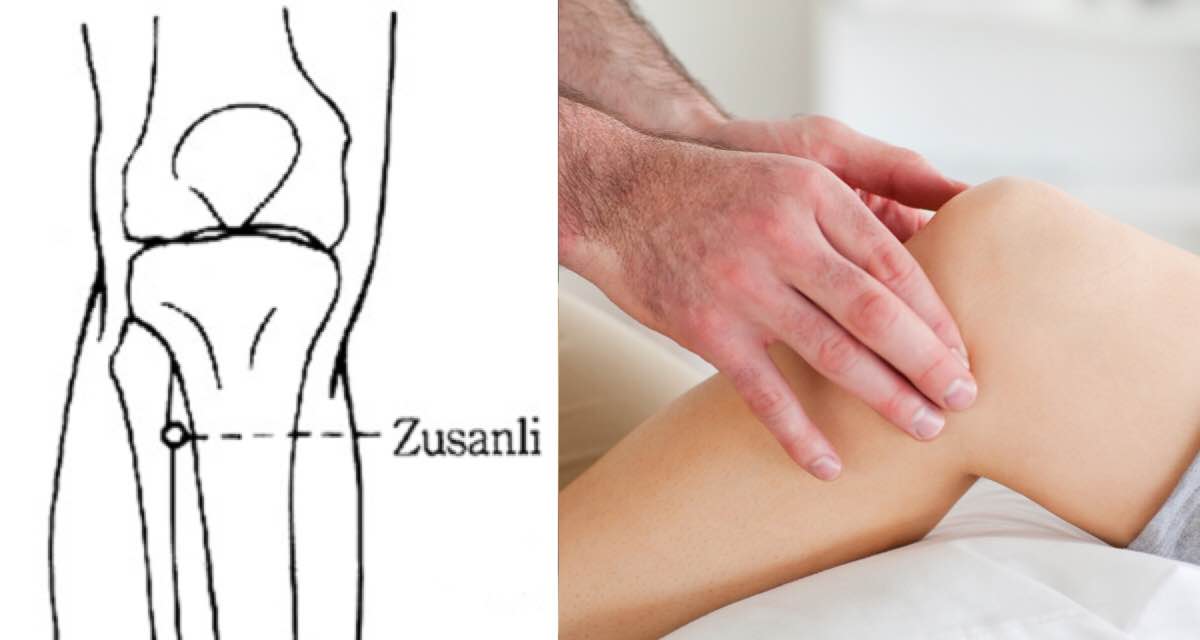
zusanli

According to Dr. Michael Reed Gach, author of Acupressure’s Potent Points, acupressure is beneficial because it releases tension, increases circulation, reduces pain, and develops spirituality and vibrant health.

You should seek the help of a medical professional if you have any pain that becomes severe or illness associated with a high fever.

Specifically, touching the Zusanli point on your knee helps with patients who are experiencing digestive system problems such as:

  • Diarrhea
  • Gastroesophageal reflux disease (GERD)
  • Bloating
  • Constipation
  • Abdominal pain
  • Vomiting
  • Hiccups
  • Appendicitis

In addition to helping with digestive issues, an acupressure specialist might use the Zusanli spot on the knee to treat these conditions:

  • Immunity problems or chronic illness
  • Fatigue
  • Diabetes
  • Low metabolism
  • Poor appetite
  • Breast problems
  • Lower leg pain
  • Dizziness
  • Breathing problems such as asthma
  • Menstrual cramps and PMS
  • Insomnia
  • Temporomandibular joint pain (TMJ or jaw)
  • Psychological disorders, for example depression or anxiety

As you can see from the extensive list of ailments, touching this specific point on your knee can benefit several bodily functions. The use of touch on the Zusanli point is also reported to be good for overall health and well-being.

Where to Locate This Point on Your Knee

The specific acupressure energy point on the knee that is beneficial for multiple health problems is called Zusanli, or stomach meridian 36 (ST36). In English, Zusanli is Leg Three Li.

In traditional acupressure, this energy meridian runs the entire length of the body from head to toe. It passes through the diaphragm, stomach and spleen. Manipulating the energy points is done in order to balance the Qi, or vital energy in the body.

You can locate this point on your knee by starting four finger widths down from the bottom of your knee cap. Find your shin bone, then move one finger width to the outside of your shin bone. You can make sure it is the right point by flexing and pointing your foot and feeling the muscle move.

You can watch Dr. Wei Yuan, an acupuncturist at TCM (Traditional Chinese Medicine) Works, demonstrating how to locate the Zusanli point on your knee in this video.

The Science Behind Touch

Scientific studies support the use of acupressure for digestive concerns as a non-invasive drug-free treatment. Researchers used electrical stimulation of the Zusanli point on the knee and found it effective in treating gastrointestinal motility disorders and GERD.

Another study in the Journal of Traditional Chinese Medicine found that treating this spot with acupuncture reduced gastric spasms in 59 out of 60 patients treated. Although this treatment was with acupuncture, deep acupressure is able to activate the same pressure spot.

How to Touch Your Knee

Acupuncturists use needles to reach the Zusanli point deeper than you can achieve with touch alone, however, you should never attempt to needle yourself. You can locate an acupuncture practitioner through the American Association of Acupuncture and Oriental Medicine.

Since we are discussing a self-help technique, we will use deep pressure to reach this specific energy point in the body. Use your thumb since it is the strongest digit on your hand. Press into the Zusanli point on your knee with firm pressure.

If possible, elevate your leg to make it easier to reach and keep your foot pointed, not flexed so that the muscle is not raised up. This will allow you to achieve deeper pressure on the Zusanli point. You may vary the amount of time up to 45 seconds of pressure.

You may find that moving your thumb in small circles as you apply pressure feels more comfortable or achieves better results. Ideally you should apply pressure close to the bone and use the fingernail or thumbnail.

More Touch Points

In addition to acupressure, you can try other reflexology points on the knee for relief of knee pain. The outer side under the knee cap is a place to rub with circular motion to relieve knee stiffness and pain. This point is called Calf’s Nose in reflexology.

Another reflexology point on your knee to work with is called Nourishing Valley. This point is found in the outer upper edge of your knee cap. Touch the place in the hollow between the tendons and rub up and down for a few minutes. This helps with knee tension as well.

By simply giving yourself a massage on these touch points on your knee, can find relief from many ailments. Remember to seek the help of a medical professional when pain is severe or does not show improvement within a few days.

How to Spot a Wolf In Sheep’s Clothing

In everyday interactions with people, you will likely come across those who perpetually advance their own agenda, and aren’t afraid to hide their true identity to do so. These certain characteristics often make up a wolf in sheep’s clothing. Sometimes they can be exposed, but other times they are sly enough to get away with things by playing on other people’s emotions, lying, and manipulation.

One thing is for sure, a wolf in sheep’s clothing is good at hiding their true intentions.

Maybe you have someone in your life who you have always had an uneasy feeling about, or you just can’t ever get a good read on them, no matter how many times you meet them.

What does a wolf in sheep’s clothing mean? The warning regarding the wolf references a sermon often taught by Christian leaders, from Jesus Christ “beware of false prophets, which come to you in sheep’s clothing, but inwardly they are ravening wolves.” (Gospel of Matthew 7:15, King James Version) the message is to beware of false teachers in the last days. However, the message has since evolved beyond its origins in the church to serve as a warning not to trust someone in a friendly disguise who may not be a good person.

What is the moral of the wolf in sheep’s clothing? Generally, a wolf in sheep’s clothing will display “red flags” that can potentially unveil its true intentions. To find out if they may have secretly been pulling the wool over your eyes, look out for the following signs next time you see them in person.

Here’s how to spot a wolf in sheep’s clothing

wolf in sheep's clothing

They’re playing on your emotions.

Emotionally, spiritually, physically; emotional manipulation is a primary tool of the wolf. They like to play on heightened emotions to engage you in behaviors that benefit them. They gather people that will serve their need to be in control, whether this is through a romantic relationship, a close friendship or a strategic partnership. The wolf in sheep’s clothing makes being with them fun and exciting at first, and then they shift the focus of the relationship onto them and their needs.

A wolf in sheep’s clothing moves too fast.

A wolf in sheep’s clothing will try to hook you with sweet talk and a false sense of interest. That is how they build trust and form a bond. It enables them to use us emotionally once the real motive of the relationship becomes clear.

Among the simpler ways to find a wolf in sheep’s clothing is to look for simple signs that show somebody only appears worried if something or someone will affect their desired outcome. They struggle with maintaining the “right kind” of associations because desired outcomes are everything to them, and they care about the way other people think in order to have control.

Take note of your friends’ feelings when you recommend something. If they harshly react when they don’t agree with you or when criticized, the wolf may be hiding underneath.

Things about their story just don’t add up.

After you hear their story, you intuitively feel that they have embellished major parts of it or just fabricated the entire thing altogether. For example, maybe you feel that your friend stole money from your wallet when you set down your purse to throw something away. While you can’t really prove it, you remember taking $100 out of the bank, and not being able to find $60 after hanging out with her. When you accuse her of stealing from you, she insists that someone else came up and took the money. But, why didn’t she ever tell you about this incident after it happened? Wolves in sheep’s clothing usually don’t have very good cover-ups for their stories, because they have to come up with a fictional tale on the fly.

They look troubled about something.

A wolf in sheep’s clothing will tend to not smile as much as people who live authentically and tell the truth no matter the consequences. There is a huge strain on their conscience, and consequently makes them feel like they have two tons of bricks weighing down on them.

This enormous pressure must come out somehow, and it usually reveals itself on their face. Watch the person in question’s facial expressions – you will probably notice that they don’t really show much emotion. Stories eventually eat people up on the inside. But their usual temperament is a telling sign of how they really feel.

wolf in sheep's clothing

They quickly grow impatient.

Impatience can be defined as the following:

  1. Irritable behavior that results from delays
  2. A restless need for change and excitement.

The display of impatient behavior often ties into someone’s goals; specifically, anything that hinders or aggravates the person in active pursuit of these goals. These goals could range from getting ahead of you at the drive-thru to getting that promotion at work.

As with stubbornness, we all have the tendency to be impatient at times. However, there are some individuals that take impatience to the extreme. These individuals detest being held up at any time, anywhere, for almost any reason, and as a manipulator, know how to get will manipulate any situation to suit them in order to come out on top.

Impatience is a trait that develops from early negative experiences, misunderstanding the nature of self and others, and a persistent sense of insecurity. The early negative experiences often happen during childhood. In many cases, the child was often barred from having a normal social experience resulting in a sense of “missing out”.

When dealing with an impatient person, it is important to understand how they “tick.” For example, these individuals prefer to be in control. When they are not in firm control, they become angry, annoyed and frustrated. The best way to deal with the behavior is to be polite but direct. Do not beat around the bush with impatient people; this will get you nowhere.

10 Ways To Build Inner Strength

“Strength does not come from winning. Your struggles develop your strengths. When you go through hardships and decide not to surrender, that is strength.” – Arnold Schwarzenegger

There is only one certainty in life, and that is change. Circumstances arise, either good or bad, which require a response. How we respond, especially to adversity, depends upon our character and resolve. On our inner strength. Like many habits, inner strength can be attained.

It doesn’t matter if someone is thought of as weak or timid; they can still grow and achieve the inner strength necessary to overcome any of life’s challenges. But it’s not easy.

Inner strength, resilience, wherewithal, whatever one calls it, must be forged. The only way it can be forged is through conscious effort. Challenges must be thought of as opportunities, because that is exactly what they are. One cannot attain inner strength without challenges. This makes challenges vital to growth. When we give into challenges without a fight, we become weaker. When we resolve to overcome any obstacle, we become stronger. It’s simple to understand, but difficult to achieve.

There are things that we can do to build upon our inner strength. Before we get into the list, there are a couple of things to keep in mind. First, nobody is going to be strong 100% of the time. Second, failure on the path to achieve inner strength is inevitable – it’s the response that’s important. It’s essential to get back up, and resolve to do better. There’s only one roadblock to achieving inner strength, and that is complacency.

Here are 10 ways to build inner strength:

inner-strength

1. Learn to relax

Building inner strength does not mean rushing around and draining ourselves. To build inner strength, it’s important to have some energy. If there are difficulties – with finances, family, work, etc. – find a way to recharge the batteries. If that means going for a run, meditating, taking a bath, reading, do it. When we prioritize and choose our battles wisely and take the time to recharge, we’re in a much better position to handle whatever comes our way

2. Spend time with positive, productive people

Again, personal energy reserves are important to cultivating inner strength. Spending time with people who care for themselves and others is a terrific way to gain and maintain energy. Negative people are energy sappers; they have a tendency to complain and make other’s lives more difficult. When trying to build inner strength, this is an unnecessary burden. Also, spend time with people who are productive and accomplished – energy flows this way also.

3. Forgive ourselves

When trying to cultivate and carve out a new, stronger identity, it’s possible that we’ll reflect on times that we may have come up short. It cannot be emphasized enough: the past is the past. Again, this is a difficult thing to do. However, when we’re actively trying to improve ourselves, especially our character, it’s very important that we have the ability to forgive ourselves from any and all past mistakes that we’ve made.

4. Build confidence

If we’re going to build upon our inner strength, it’s helpful to be in a confident state of mind. There are a couple of ways to achieve this. First, reflect upon any and all past accomplishments and ask if there were any roadblocks that needed to be overcome at the time. This is important because it reinforces that objectives can be achieved despite of difficulty. Second, remember that nobody is perfect. Even people who we think are successful still have difficulties in life. It’s often inner strength that is the deciding factor.

#5 Try using affirmations

Many people have found affirmations to be an important part of their being. When trying to cultivate a new, stronger self, come up with some affirming phrases to state (even if it’s to just us) throughout the day. Maybe try saying a few affirmations first thing in the morning and a few when going to bed. It’s important to remind ourselves that we’re valuable and each brings something unique to this world. Add in some affirmations that include phrases on inner strength.

#6 Create outer strength

Developing a strong inner self is actually more holistic than it may sound. It’s important to have a strong foundation by taking care of our physical needs. We should be taking the time out to get in some kind of physical exercise – running, biking, yoga, etc. – to build upon and maintain this foundation. Also, make a conscious effort to eat healthy food and get an adequate amount of sleep each night.

#7 Watch or read something motivational

There are people, past and present, who have achieved extraordinary success mostly because they were exceptionally strong of mind. Some suggestions for people to listen to are: Stephen Covey, Brian Tracy, Zig Ziglar, Jim Rohn, Wayne Dyer, Oprah and Tony Robbins. Some of the people on this list overcame some very difficult circumstances on the way to achieving what they have.

#8 Take responsibility

Here’s something very important: we cannot (cannot!) build inner strength by making excuses. If there is a situation that we’re responsible for and we fail, we must own up to it. Is it uncomfortable? Yes. But it’s absolutely necessary to take responsibility for our actions. Mentally strong people do not make excuses for themselves. If we want to cultivate a core of inner strength, we must follow their examples. If a mistake is made, admit it, forgive, and move on.

#9 Work towards short and long-term goals

One terrific way to gain inner strength is by achieving our goals step by step. Notice the three words “step by step.” Sometimes, we have a tendency to want things now. This cannot be so with anything worthwhile, but here’s what we can expect: we can expect to earn inner strength with every step that we take towards the achievement of our goals. Nothing breeds confidence, accomplishment and inner strength like progress. Progress is one of the keys to building stronger versions of us.

#10 Celebrate success

This success doesn’t have to be money or status; in fact, it probably won’t be. But if we consistently apply principles to build a stronger person, we’ll see definite results. In being stronger people, we can expect to earn rewards that others will not. When things begin to come to fruition, make sure to savor moments like these. All of that hard work in developing character has paid off and will continue to do so.

10 Signs You’ve Found A True Gentleman

Gentlemen used to be defined by their aristocratic birth, but these days they are often thought to be a dying breed. From James Bond to Prince Charming, true gentlemen are often the stuff of fantasy.

Think you might have found a true gentleman? Your man might not be born into the life of a gentleman, but if he shows these signs, then he’s on the right track.

10 Signs You’ve Found a True Gentleman

gentleman

1. His heart is in the right place.

He might not always succeed, but your gentleman has good intentions. Doing the right thing isn’t his motto, it’s his way of living. He’s kind even to strangers and inspires kindness in return.

2. He puts others at ease.

People find it easy to talk to him and feel better around him. He can make people comfortable even in the most awkward social settings. Meeting the parents for the first time? Don’t worry, within a half hour; they’re already calling him ‘Son.’ You’ve never waltzed before? He makes you feel like you’ve got moves like Cinderella.

He’s charismatic, and people are drawn to him. He likes to make people laugh and is usually smiling himself. A true gentleman doesn’t have to take a class in etiquette because he can teach it himself.

3. He respects your needs.

He could hold the door for you every time, but if you’ve chosen to show your independence by getting it yourself, he’s supportive of that too. Chivalry isn’t dead to him, but he also knows you can slay a dragon all by yourself.

He cares about you and demonstrates that with his actions. You’ve found a true gentleman if he takes the time to learn what pleases you. Sex with him is more about your pleasure than his. He takes pleasure in doing what makes you happy.

4. He has interests outside of work.

Your gentleman has found a hobby or craft that he’s passionate about. It stimulates his mind and gives him an outlet for his creativity. He could be a culinary genius or a wine aficionado, but something is fascinating to him. He loves sharing his passion with others.

5. He takes pride in his appearance.

You’ve found a true gentleman if he never offends you with his odor or appearance. He combs his hair, shaves or styles his facial hair, he doesn’t wear stained clothes, and he takes care of his physique as well.

He has a unique style that sets him apart from the crowd. He’s more likely to pass on trends in favor of classic styles. His Throwback Thursday photos look just as stylish as the picture you took of him yesterday.

6. He knows himself.

A true gentleman is opinionated but not forceful. He just knows what he likes and doesn’t like. He’s decisive and always stands up for his core values when someone challenges him.

He has conviction in his beliefs, and his moral character is unquestionable. According to The Gentleman’s Journal, a true gentleman says what he means and means what he says. He’s confident without being arrogant.

7. He makes you a priority.

You’ve never felt like he just doesn’t have time for you. Your true gentleman makes eye contact when you speak, and he stops what he’s doing to listen. He makes you feel fascinated by the level of interest that he shows.

8. He likes to learn.

A gentleman never acts like a know-it-all. He gets excited about learning a new skill because he’s happy when his brain is active. He likes to engage with people from other cultures. Thus, he enjoys traveling to new places, discussing politics, or debating. He is open to differing opinions.

He might have a formal education. But it’s just as likely that your true gentleman learned from the School of Hard Knocks. He has a wonderful imagination and can be creative too. He’s likely to be an expert at something.

9. He is honest.

You’ve found a true gentleman if he is true to himself and anyone he’s just met. He has nothing to hide because he’s authentic and real. Lying just isn’t in his character. The only thing a true gentleman would conceal is a surprise for you.

10. He is always in control.

A true gentleman isn’t controlling of others. He maintains control of himself. He knows that emotions can run high at times. But he never lets them see him sweat. He could be stressed, but he looks cool under pressure.

He rarely raises his voice or gets physical when angry, and you’ve never heard him curse. He’s in control of his temper, in fact, you wonder if he even has one.

Final Thoughts on Finding a Gentleman

“I can make a lord, but only God can make a gentleman.” – King James I

If your gentleman has these traits, consider yourself lucky to have found him. He’s a rare one, and all these signs indicate a happy you.

Skip to content