Weekly tips, affirmations, and small actions to feel your best.

Relationship Experts Reveal 4 Reasons Why People Stay In Abusive Relationships

Abusive relationships are a pattern of abusive and coercive behaviors used to maintain power and control over a former or current intimate partner. Abuse can be emotional, financial, sexual or physical and can include threats, isolation, and intimidation. – Center For Relationship Abuse Awareness

“Why don’t you leave?”

People who’ve experienced domestic abuse are often asked this question. No matter the context or tone in which it’s asked, “Why don’t you leave?” is a futile inquiry.

Let’s think about this question a moment, shall we?

Human beings have evolved to be social creatures. We survived by forming groups, sharing resources, and establishing bonds. We’re uniquely capable of reciprocating love and care while sacrificing ourselves for the good of others.

Abuse, of any kind, goes against the fabric of our very design. As with all things our brain encounters that are foreign and aggressive, abused individuals are prone to mental disturbances.

The Mental Effects

Kathryn Patricelli, a psychologist and grief counselor, writes:

“Victimized people commonly develop emotional or psychological problems secondary to their abuse, including anxiety disorders and various forms of depression, (substance abuse disorders), or posttraumatic stress disorder [PTSD].”

When our mental faculties are severely affected, it’s difficult to make any decision. It’s difficult to summon the capacity to do anything. So, how hard must it be, then, for someone who’s being abused to think her way out of an abusive situation?

The mental effects of abuse leave a marked impact on a person’s mind. These effects also help explain common reasons given by people who stay in abusive relationships. Fear is a byproduct of abuse, and it’s a tremendously powerful one.

This article discusses some of the reasons why people stay in an abusive relationship. You’ll undoubtedly notice that “choice” isn’t something that applies. Finally, we’ll provide some resources that may help someone in an abusive situation.

Here are the reasons why people stay in abusive relationships, according to experts:

Conflicting Emotions

A person betrays their partner’s trust the moment they become abusive. However, this betrayal (naturally) is not enough for most people to stop feeling love for their partner. The abused, initially, will warn their partner of the consequences if they continue the behavior. Sometimes, the abuser apologizes and promises to change. Unfortunately, they often don’t, and the abused becomes trapped in a “But I love them” situation.

Sometimes, the abused is very close to the abuser’s family or friends – this further complicates the situation. The thought of losing people they’ve come to love is dreadful.

Feeling Obligated

A person may feel obligated or pressured to stay in an abusive relationship.

Having children, of course, is sometimes enough for a person to stay around. This situation is challenging, particularly when children aren’t privy to the abuse, or if they “side with” the abusive parent.

Finally, there are religious or cultural pressures with which some must contend. In the Philippines, for example, divorce is illegal; restricted to annulment or legal separation. In some predominantly Muslim countries, physical separation from a spouse is punishable by law regardless of the reasons given. Extreme gender inequality, e.g. laws and regulations that overwhelmingly favor men, are common.

Lack of Resources

Finances can also get in the way of exiting an abusive relationship. If the abused is financially dependent on their partner, it may seem impossible for them to leave. Indeed, without some source of funds, it’s easy to contemplate why one would feel this way.

The abused may also think they have nowhere to go. For some, finding shelter may be a phone call or two away. Others either don’t have a support network or don’t want to depend on someone else’s help (something that is strongly encouraged.)

Absent money or a support system, the last option is to reach out for public assistance. Again, the abused may or may not have access to such resources, not want to use them, or is unsure how to go about seeking help.

Finally, they may feel fearful of their partner discovering their intentions. This fear can feel so overwhelming as to “paralyze” the abused from taking any action.

Help

First, it is important to understand that abuse is not the victim’s fault. Abusers can be very manipulative in this way. The ability to shed the burden of responsibility often makes the difference between seeking out help or not.

Second, most states and jurisdictions have stringent laws against abuse. The legal actions one can take depends on their situation, but authorities could issue a restraining order  – barring the abuser from contact lest they incur substantial penalties.

Lastly, there are good people waiting to help. If you’re uncertain what to do or what your options are, contact the National Domestic Violence Hotline at 1-800-799-7233, or visit their website at www.thehotline.org. A chat option is also available.

Canadian citizens have a plethora of options available through various institutions. Please see www.dawncanada.net for more details.

There are community-based domestic violence programs in every U.S. state. Some states offer temporary financial assistance. A counselor at the National Domestic Violence Hotline will provide specifics on resources available in your state.
(C)Power of Positivity, LLC. All rights reserved
References:
http://www.dawncanada.net/issues/issues/we-can-tell-and-we-will-tell-2/crisis-hotlines/
http://stoprelationshipabuse.org/educated/what-is-relationship-abuse/

http://www.loveisrespect.org/is-this-abuse/why-do-people-stay/
https://www.mentalhelp.net/articles/effects-of-abuse/

Here’s How Much Exercise You Need To Burn Fat All Day, According to Science

“Studies show that high-intensity interval training (HIIT) increases cardiovascular fitness and can promote healthy blood glucose levels. The short workouts also increased endurance, and a recent study shows why HIIT has more endurance benefits for couch potatoes (than) for pre-trained athletes.” – Bethany Brookshire, Ph.D.

“No pain, no gain.”

No kidding. High-intensity interval training, called ‘HIIT’ for short, is hard. Study after study concludes HIIT is a winner. More endurance, better cardiovascular and heart health, lowered risk of disease. Check, check, and check.

Oh, and HIIT also happens to be a fabulous fat torcher -if you can manage to stick with it. Here’s what you can expect when beginning an HIIT regimen:

“Every square inch of my body is sweating. I’ve been working out for only 15 minutes, and I’m not sure my legs can take any more. They are shaking uncontrollably. Later, I sit down to dinner, and my arms are so exhausted I can’t seem to pick up my spoon.”

The good news (which you’re probably waiting for) is this: an HIIT session can be over and done with in a much shorter period than traditional workouts.

Another great benefit of HIIT is the flexibility. Dr. Weston cites her own experience: “I hate the treadmill, personally. There’s a misconception that (treadmill or cycling) is the only way HIIT can be done. It could be stair climbing, or boxing drills, football drills, dance drills, gym equipment,” she says. “As long as you can get that cardiovascular response that shows you’re working hard, it doesn’t matter so much about the mode of exercise.”

Also, you can (and should) adjust workout intensity to your current level of fitness. Kathryn Weston, an exercise scientist at Teesside University in Middlesbrough, England, states “It’s all about relative intensity to the individual, not absolute intensity.”

In other words, HIIT sessions should push your limits, but not exceed them.  Many people begin an exercise regimen with the best intentions, but once the dreaded exhaustion kicks in, they’re done. Of course, this produces less-than-desirable results.

Before describing the 18-minute exercise session that may very well torch fat, here are some other benefits of HIIT exercise:

– Increases muscle endurance

– Lowers risk of type II diabetes

– Less stressful on the muscles, joints and tendons than traditional endurance exercise

Here’s How Much Exercise You Need To Burn Fat All Day, According to Science

18 minutes

18 minutes and four exercises – that’s all you need.

Jeremy Scott, the owner/trainer at Jeremy Scott Fitness in Arizona, says, “(The workout) will send your body’s repair cycle into overdrive.” To understand what Mr. Scott is talking about, it’s necessary to briefly touch on what happens to the body during and after working out.

During exercise, the muscles (a) “Burn available fuel for energy” and (b) Contract in response to electrical signals from the brain. This process “stimulates the breakdown, repair, and growth of muscles, ligaments, tendons, and bones in the process of creating a stronger and more resilient body.”

(“Fuel” that the body burns during exercise includes glucose [carbs], fatty acids [from fats], and amino acids [from protein.])

The Routine

Scott recommends memorizing the four exercises in order: high-knee sprints in place, running mountain climbers, skater hops, and plyo-clap pushups.

While you can see video depictions of each exercise on the web, here’s a brief rundown:

(1) High-knee sprint in place: Exactly what it says. Stand in one position and run in place. Pump your arms in a “sprinter like” motion and keep your knees at or slightly above the waist.

(2) Running mountain climber: Assume a pushup position with your arms straight; tighten your core muscles (like you’re going to get punched in the gut.) Keeping your back parallel, quickly lift your foot off the floor while driving the knee toward your chest. “Run” back and forth rapidly as possible while keeping good form.

(3) Skater hop: Stand with your weight on your right foot, with your right knee bent. Lift your left leg off the floor. Hop to your left by pushing off with your right leg, landing on your left foot and lifting the opposite leg. Continue hopping back and forth, rebalancing yourself when necessary (which it probably will be!)


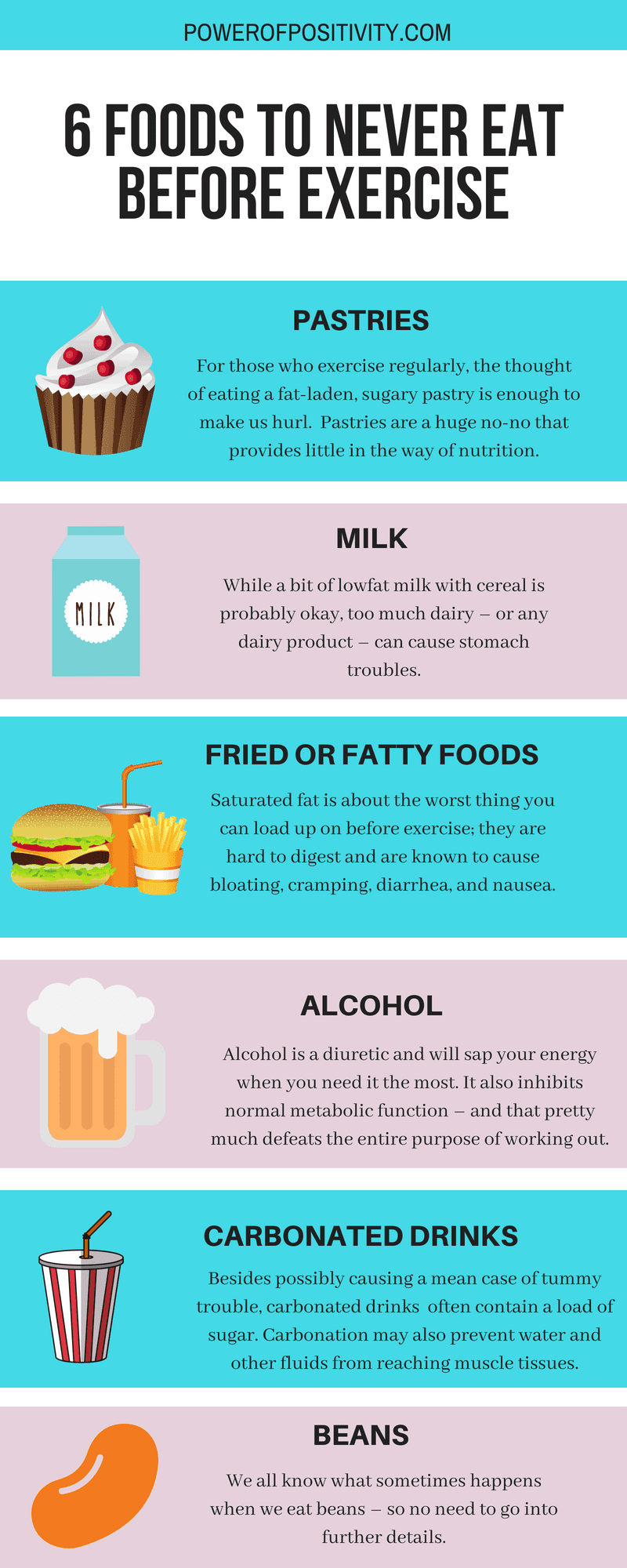
Foods to never eat before exercise

(4) Plyo-clap pushup: First, it’s important to evaluate your pushup mechanics. Can you do a good, solid set of pushups? (If not, don’t worry – see below).

“Plyo-” is short for plyometric, which simply means that the movement – in the case a pushup – is more explosive (which burns more calories.) A plyometric pushup is performing a pushup while exploding upwards off of the ground.

A plyo-clap pushup is an advanced movement. As the name indicates, this pushup variation includes a quick clap of the hands after lifting off of the ground.

For pushup beginners, the most important thing to remember is proper form. Most beginners use a support, such as a kitchen counter, bench, or their knees, to acquire the upper body strength necessary to perform a regular pushup. There’s no shame in prioritizing form and doing the exercise right – even if it means using a support.

Now that we’ve memorized the routine and practiced the movements, the rest of the instructions are easy.

– Perform each exercise, in order, for 10 seconds.

– Rest for 10 seconds between each move.

– Repeat the cycle.

– Rest for 60 seconds (after the second set.)

(It’s important to evaluate your current health and fitness levels before beginning any exercise routine. Please be safe and aim for incremental progress.)

Stay healthy!

How to Sense Positive And Negative Energy Around You

Few people are able to sense negative vs. positive energy in others or in themselves. However, your body is a living energy field that has the power to energize electronic devices by the voltage that it generates. A German study reviewed several techniques that can harvest energy from the human body, for example, through our pulse or movement, and convert it in energy to be used by electronic systems. Humans have a remarkable ability to generate energy. And now this human power is being harnessed with technology that can run micro-electronic systems.

Person-to-person connectivity of positive vs. negative energy exchange is often overlooked, but mastering your ability to sense energies will help you in all of your personal relationships. No matter how negative the energy may feel coming from another person, you can ultimately make a choice to sense only positive energy around you. There are various ways to heighten your sense of positive vs. negative energy, and practicing positivity is making a conscious choice to reject negativity.

How to Sense Positive Vs. Negative Energy

1. Stack the deck in favor of positive.

Surround yourself with uplifting people. They won’t always be happy, but on average, they send out more positive energy vs. negative. Researchers in Barcelona Spain reviewed 16 studies where positive psychology techniques were used for breast cancer patients. The research found that “mindfulness-based approaches, expression of positive emotions, spiritual interventions, hope therapy and meaning-making interventions” were helpful for the health of the patients.

Breast cancer patients who used the positive energy therapy techniques showed enhanced quality of life, well-being, hope, and feelings of optimism in spite of a serious health concern.

Remove negative people but add plenty of positive and inspiring ones to improve your mood and increase your ability to recognize positive energy vs. negative.

2. Learn from non-humans.

Animals give off positive energy that we can feel as we pet Fido or Felix. That happy feeling you get from your pets is a positive energy exchange between you. Animals can anger and lash out, but mostly they are content with the present moment and that contentment is expressed and released as positive energy which we can sense as we spend time with them.

3. Trust your instincts and go with what feels light.

Researchers studying positive psychology found that helping patients to focus on “positive aspects, such as creativity, optimism, resilience, empathy, compassion, humour, or life satisfaction” improved mood for those who had previously experienced negative emotions. The research found that using positive psychology as a therapeutic intervention “shows promising results for reducing depression and increasing well-being in healthy people and those with depression.”

Embrace what is uplifting you in your life and add more of it to better sense positive energy.

4. Practice receiving positive energy

If you are sensing negative instead of positive energy, it may be that you are not letting positive energy past your protective aura boundary, but somehow, plenty of negative energy is getting through. Love and positive energy really is all around, it just takes practice to see it. Try looking at a bad situation from another perspective as one technique.

positivity - negative

A therapist tells a story of a distraught husband whose wife had disappointed him by cancelling on an important dinner with his boss because she couldn’t find a sitter for their child. In his anger, he was near to deciding to divorce his wife when the therapist asked his patient to retell the same story where the end result was that his wife wasn’t wrong for doing this. The man wept as he retold the story. He realized that his wife taking care of their child w–an act of love that he lacked the ability to perceive. Instead of seeing and magnifying the positive, as we should strive daily to do, he had learned to only see the negative.

What Causes Tingling and Numbness (And How to Reverse It)

Have you ever sat with your legs crossed for a while and then when you stand up, one of your feet feels numb? Everyone is probably familiar with the pins and needles feeling of your leg, arm or foot “falling asleep”. That feeling is referred to as “paresthesia”. It is categorized as tingling or numbness that appears in a part of your body without warning.

The sensitivity to the affected area is usually decreased as it starts to go numb, however, there are also causes when the sensitivity is increased and even a light touch can feel like pain to our brains. The most common type of paresthesia is called “transient paresthesia”, and it last from a couple of seconds to a few minutes.

This pins and needles feeling can be caused by any number of things and, depending on whether or not there’s an underlying health concern, can be relatively harmless. However, when there is another health concern, paresthesia can also become chronic. Let’s examine some of the causes of the tingling or numbness.

5 Causes Of Paresthesia And How You Can Fix It

1. OBDORMITION

This is what causes the feeling of pins and needles when your arm or leg has fallen asleep. The cause is a prolonged pressure against the nerves, which then starts to slowly cut off feeling. This type of paresthesia decreases and disappears altogether once the pressure is relieved, such as well you uncross your legs after sitting for a while.

The feeling slowly and gradually returns to the affected area.

2. PANIC ATTACKS

When you have a panic attack, your body often isn’t getting enough oxygen as you tend to hyperventilate. When this happens, your brain isn’t getting enough oxygen for your nerves to fire off correctly. This can cause your limbs to slowly lose feeling and experience paresthesia.

This is temporary, and once the panic attack fades and you’re able to breathe normally, the pins and needles feeling will gradually remove from your limbs. Panic attacks can be combated by removing yourself from a distressing situation as well as breathing exercises that focus on getting the oxygen flowing.

3. DEHYDRATION

When your body isn’t getting enough water, nothing is going to be working right. Dehydration can cause all kinds of unpleasant side effects, and a pins and needles feeling is one of them. If you’re experiencing transient paresthesia and the nerves on the affected area haven’t been recently compressed, make sure that you’re getting enough water.

Drinking the daily recommended amount of water can reverse the pins and needles feeling, and keep further paresthesia at bay.

4. WHIPLASH

Everyone has had that uncomfortable moment where they turn their head too quickly and sharp pain blossoms in the side of their neck. Whiplash happens when the muscles in your need speed up and slow down at a high velocity. That is why you often feel it when you’re turning your head quickly.

Paresthesia can occur directly after whiplash. Sometimes, the feeling can subside within a few minutes. However, whiplash can be a potentially dangerous injury to your muscles, so see a doctor if you experience pain, dizziness and numbness.

5. NUTRITIONAL DEFICIENCY

Our bodies are always only as healthy as the things that you we give it. Paresthesia can be caused by certain deficiencies in the nutrients that we put into our bodies. A healthier and more inclusive lifestyle can turn this around in the long term, however, doctors may suggest supplements such as vitamin B12 to help with the immediate paresthesia.

Transient paresthesia can be relatively harmless, if not slightly annoying. There are plenty of ways to reverse the feeling if you have a quick and easy case of transient paresthesia. On the other hand, chronic paresthesia maybe something a little more serious.

If you experience the symptoms of numbness and tingling in your limbs or other parts of your body for long periods of time, you may want to see your doctor. They will make sure that you don’t have a more serious, underlying condition, such as a brain or spinal cord disorder, or connective tissue and autoimmune disease.

As always, make sure you keep your doctor informed on what changes your body is experiencing so that you can stay happy and healthy.

5 Promises Every Strong Woman Has Made Herself

Strength is often born out of pain or even trauma. Strong women have often, during times in their lives, felt weak and helpless. The strength that they carry inside of them now wasn’t just born out of thin air. Instead, that strength was cultivated and nurtured, and cared for.

That strength resulted from weeks, months, or even years of allowing herself to be treated as less than she was worth for fear of backlash or being alone. Every strong woman has earned this strength, and bears scars that aren’t always visible to the naked eye.

Every strong woman has also made promises to herself. These promises serve as a reminder to never allow herself to go back to the weak girl that she had once been.

Here Are 5 Promises Every Woman Has Made To Herself

Don’t compromise yourself. You are all you’ve got. There is no yesterday, no tomorrow, it’s all the same day. –Janis Joplin

SHE PROMISED TO GIVE UP PIECES OF HERSELF NO LONGER TO APPEASE HIM

A strong woman has often faced the challenge of giving up pieces of herself that she holds dear to appease someone who doesn’t appreciate her as a whole human being. Whether she gave up her interests, her friends, her job or her ambitions, a strong woman has promised herself never again to let parts of herself go. She is a whole person, and she will never allow another person to pick her apart to the pieces that they find acceptable.

SHE PROMISED SHE WOULD NEVER WAIT FOR HIM TO CHANGE

Hoping that she could change him if only she loved him the right way is a mistake every strong woman will never make again. People can only change if they want to. No amount of love in the world will be able to change someone into something better. Waiting for someone to change is only going to bring disappointment and frustration. Every strong woman knows it’s not worth the upset to try to love someone into a better person.

strong woman

SHE PROMISED NEVER TO SETTLE FOR LESS THAN SHE DESERVED

Every strong woman has gone through a period in her life where she thought that she saw something good in another person, and allowed herself to suffer because she thought she could cultivate that goodness. In the end, she would discover that you could not love a flower to life when all it was being watered with was vinegar. Strength comes when a woman realizes that she deserves someone who is good on their own, without needing to go digging for that goodness. When the strength came to her, she promised herself that it would never happen again.

SHE PROMISED HERSELF SHE WOULD NEVER BE CAUGHT UP IN HIS GAMES

A strong woman once struggled to understand the mind games that had no rules and were designed for her to lose. And after this, she would promise to walk away from those types of games no matter what. Every strong woman has had to learn how to live by her own rules and not allow someone else to make them for her.

SHE PROMISED HERSELF SHE WOULD NEVER AGAIN BE USED

Every strong woman has had to learn that strength one way or another. After she let others use her- for emotional labor, for convenience -she promised herself that she would never put herself in that position again. She learned that she was worth more than what she was being used for, and once she discovered and tended to her self-worth, she became stronger than ever. She promised herself that no one would ever make her feel so helpless.

Even though strength often comes from having once felt weak and helpless, that strength will stay with women for the rest of their lives. Life lessons can be difficult to swallow, but once they’re learned, they will serve us well for as long as we live.

Every strong woman has a list of promises that she’s made to herself, and they’re what keeps her emotionally and mentally healthy. Strong women have learned not to settle, and not to allow themselves to be cheated or lied to.

They have learned that they are whole human beings, people with a great capacity for both love and compassion, but only to those who deserve it and treat her well. With strength, comes a great understanding of the world.

3 Habits That Sharpen Your Gut Instincts

A quick, heartwarming story that shows why you should trust your gut instinct.

Who says that a bank – and its customers – can not be inspirational? Banks aren’t thought of as the most trustworthy institutions in the world, and for a good reason (see the recession of 2009.)

Hancock Bank isn’t near as big a name as Chase or Wells Fargo, which makes for a better story. And what they did for desperate people in desperate circumstances was nothing short of heartwarming.

Hurricane Katrina, one of the costliest and deadliest natural disasters in U.S. history, hit Gulfport, Mississippi especially hard. One of the biggest problems people were having was, of course, lack of electricity. Lack of power impacts social infrastructures, including banks.

People couldn’t access their money. Hancock Bank’s management decided to do something about it.

Representatives set up folding tables all around the city, giving $200 to every person who asked; provided they were willing to write down their name, address and social security number on a piece of scrap paper. Over $40 million was distributed. The percentage of people who paid back their debt: 99.5 percent.

No collateral, no paperwork, and no credit checks. Just trust, a virtue that can be described as a “gut instinct.”

The power (and science) of instinct

“It’s great to have a bright, analytical brain, but at the end of the day, the stomach is the smartest organ in the body.” ~ Shelly Levitt

Melody Wilding, a licensed therapist and professor of human behavior at Hunter College, says, “Trusting your gut is trusting the collection of all your subconscious experiences.”

For some people, the notion of “going with your gut” is the antithesis of rationality. However, this is a gross misperception. Acting on gut instincts is a reflective behavior. Again, it is a reflective behavior, not an impulsive one.

Gary Klein, Ph.D. and author of Sources of Power: How People Make Decisions, defines gut instinct as: “(The) way we translate our experience into judgment and actions.”

Wilding explains, “You have to create space to listen to what your gut is saying.”

How, then do we sharpen our gut instincts? By incorporating three habits:

gut instinct

1. Self-awareness

Self-awareness is defined as “conscious knowledge of one’s own character, feelings, motives, and desires.” Going a step further, it’s having a clear perception of strengths, weaknesses, and motivations.

Self-awareness is essential for developing keen gut instincts. For without self-awareness it is impossible to interpret the meaning behind your thoughts, emotions – and, yes – your instincts.

Which begs the question, how do you develop self-awareness?

“Do a body scan of what’s going on for you. You may think ‘I feel nervous right now,’ or ‘I feel like I’m (unsure) what’s coming next.’ Use these skills of emotional labeling to get in touch with what you gut might be saying to you,” says Wiling.

2. Have time to reflect

According to science, our feelings are not random. Instead, they originate from a construct of something observable. To convert this construct into something measurable and actionable, we must reflect.

In other words, instincts are often messy pieces of information. They must be “mined” to determine their worth.

“What we label a gut feeling is always based on a set of variables that we haven’t spent time articulating,” explains Bruce Pfau, a psychologist and senior partner at KPMG. “Only when you bring those facts into the light of day can you analyze them objectively and dispassionately and move on to making a good decision.”

3. Be honest

David Desteno, Ph.D., and author of The Truth About Trust says “You’re not as trustworthy as you think. Neither am I. I know because we ask everyday folks in our lab studies if they consider themselves honest. Almost everyone says yes, but his or her actions don’t sync up.”

For your instincts to produce good results – or, at the very least, prevent bad ones – you must overcome the natural tendency of wishful thinking. Some of us have a devious talent for rationalizing our own bad behavior. Marriages, careers, lives, have been ruined because the individual coaxed themselves into thinking their faulty instincts actually had merit.

We’re all good people at our core. In fact, this positive human trait is what makes instincts so valuable. This good nature makes us feel guilty when we think about doing something dishonest – and then change our course of action.

Desteno explains the positive side of this trait: “Recognizing feelings of shame and guilt – instead of brushing them aside – can give us the opportunity to resist the fling in the moment. Close your eyes, take a deep breath, and listen to what your emotions might be telling you.”

When we hold ourselves accountable for being honest, our thoughts, feelings, and instincts are more valuable; making it possible that we’ll create something wonderful.

References:
http://www.rd.com/health/wellness/sharpen-trust-instinct/2/

http://www.success.com/mobile/article/go-with-your-gut-the-science-of-instinct
https://www.fastcompany.com/3058609/the-hidden-power-in-trusting-your-gut-instincts

The Two Faces Of Each Zodiac Sign

In life, nothing can exist without both light and darkness. We can’t have happiness without sadness, life without death, success without failure, good without evil…I think you get the point. So, the same can be said about your zodiac sign. Each of us possesses both positive and negative qualities, but we must learn to use both our strengths and weaknesses to grow and prosper in life.

Throughout this article, we will call the two sides to each zodiac sign either “the two faces of each zodiac sign” or the “light and shadow traits” of each sign. So, let’s get to it! We hope you will learn some valuable information about your sign so that you can use your strengths to shine some much-needed light in the world. As for your weaknesses, we all have them, but what we choose to do about them matters in the end.

The Two Faces of Each Zodiac Sign

zodiac sign

Aries

Aries has an abundance of energy and a zest for life. They are driven, passionate, motivated, and ambitious. Aries light up the room when they walk in. They are confident, courageous, and strong-willed individuals who can stand up for themselves and not back down from challenges.

However, on the flip side, Aries can become easily irritated, moody, domineering, and aggressive. They get angry if things don’t go their way, and have trouble listening to others without butting in sometimes. However, if Aries can learn to tame this side of themselves, they can use their fire to shine the light on others.

Taurus

Taurus the Bull works very hard to keep stability in his/her life, from getting a well-paying job to choosing a partner that will keep them grounded. Taurus is devoted to the one they love and will remain faithful in a long-term relationship. The bull loves the finer things in life, and work extremely hard to ensure they can provide for themselves and their significant other. They are lovable, reliable, and down-to-earth.

However, just like your typical bull, a Taurus can be stubborn, rigid, and uncompromising. They also have a tendency to become possessive in relationships and may overindulge from time to time.

Gemini Zodiac

Geminis are the epitome of what it means to have two sides to one’s personality. Known as “The Twins,” Geminis literally seem to have two polarizing personalities sometimes. One on hand, Geminis are known for being friendly, open-minded, outgoing, and social butterflies who never seem to have a frown on their face. As Gemini is an air sign, these folks don’t ever allow themselves to get bogged down in life. They seem to float through it, not letting anything weigh them down. Geminis have tons of friends and are usually up for any adventure.

However, the other twin gets restless easily, can seem superficial sometimes, and makes impulsive decisions. The dark side of this sign comes out when the Gemini is under stress, depressed, or anxious about something. Geminis tend to feel restless often because of this “split” in their personality.

Cancer

Cancers have many positive traits, even though they tend to have low self-esteem and forget about what makes them amazing people. They are endlessly caring, empathetic, devoted, loyal, deep souls. They are also excellent listeners and will let you cry on their shoulders even if they barely know you. Though they have problems opening up to people, they will sit and listen to you all afternoon and drop what they were doing to help you. Cancers are very creative, genuinely kind, sensitive, beautiful people who are often misunderstood and treated like a doormat due to their purity and giving nature.

However, this sign deals with a lot of demons that most people don’t know about. Because of their hypersensitivity to the world around them, they are very prone to anxiety, depression, and other mental disorders. They just feel as though no one understands them, which leads to isolation and self-pity. Many people view this sign as self-absorbed, and this may be true to an extent. However, Cancers are not obsessed with themselves in a prideful way, but rather, a deeply contemplative, even overly judgmental way. Cancers have very turbulent emotions that weigh them down often, so they have to take quite a bit of a breather just to get by in life. Being a crab can be quite tiring, as many people know from personal experience.

Leo

Leo the Lion is a natural-born leader and excels at anything where they get to have the spotlight. Leos are also ambitious, outgoing, funny, charming, and confident people, much like their fellow fire sign, Aries.

However, Leos can seem quite self-absorbed, boastful, overly dramatic, and pretentious if they don’t learn to work well with others and reach out every once in a while. Leos are very friendly people but can seem superficial at times.

Virgo Zodiac

Virgos have an eye for detail and will overanalyze something to death if it means finding a solution. They are methodical, meticulous, analytical, and logical. Virgos are wonderful problem-solvers and listeners. They also have incredible patience.

However, Virgo tends to analyze things a little too much and take life too seriously. Virgos have trouble “letting loose” and just going with the flow. They always need a plan or routine of some sort in order to feel balanced and grounded. Furthermore, this makes them seem rigid and inflexible, not to mention a bit cold and uncaring due to always living in their head. They tend to be overly critical of themselves and others.

Libra

Libras, the next air sign on our list, have a knack for keeping the peace in life and treating everyone they meet with respect and kindness. They love helping others, and make great humanitarians. Just like the symbol for their sign (the scales), they do their best to keep balanced in life and allow their gentle nature to lead the way.

However, keeping the scales balanced at all times just isn’t practical. Libras tend to avoid conflict at all costs due to their peaceful nature. This could be a great quality in some situations, but sometimes confrontation is necessary in life, and Libras have to learn how to stand up to others. Libras can also appear indecisive and aloof, which makes it hard to get close to them.

Scorpio

Scorpios, the next water sign on the list, have a quick wit and sarcastic sense of humor, making them irresistible to those who understand how their mind works. They are also deeply emotional signs that often hide their feelings so people don’t exploit them. Scorpios are passionate, organized, resourceful, and independent. They are loyal and dependable people if you get on their good side.

However, if you get on a Scorpio’s bad side, you’ll see just how manipulative, vindictive, and vengeful they can be. Scorpios do not like feeling betrayed or challenged, so instead of losing their temper and yelling, they simply walk away and start plotting revenge. Watch out if you know a Scorpio, because it can get ugly fast once you cross them.

Sagittarius Zodiac

Like any fire sign, Sagittarians have an intensity that draws people to them like a moth to a flame. They are optimistic, adventurous, fun, outgoing, and inspiring.

However, Sagittarians have difficulty focusing on the task at hand and will flit from one thing to another without clear direction. They also have an explosive temper, and get easily annoyed. Without a clear goal, they tend to get restless and bored. Also, they don’t have a filter, especially when agitated, so you never know what you’ll get with them.

Capricorn

Capricorns are easily the hardest workers in the zodiac. They’re driven by wealth and success and have a strong drive to do their best in life. They are highly intelligent, motivated, philosophical, logical, practical, and organized. They make great leaders because they can see the big picture and deliver on their promises. Their work is one of the most important things to them in life.

However, Capricorns tend to be stubborn, boastful, uncompromising, and overbearing. They have a hard time listening to others’ ideas due to their pride issues, and they can quickly become workaholics if they don’t learn to keep a balance in life. They also have a bad temper and can get annoyed too easily.

Aquarius

Aquarians are some of the most exciting people in the zodiac. They love travel, new cultures, meeting new people, and anything that challenges their intellect. Besides that, they can hold conversations for hours because they have such diverse interests and enjoy trying various activities. They are humanitarians as well, and have a quick wit about them. They also are great visionaries and leaders.inspiration meme

However, Aquarians can seem aloof, flighty, and emotionally unavailable. They tend to look at things practically, and while this isn’t a bad thing, it can make relationships difficult if they don’t learn to tap into their emotional side.

Pisces

Like Cancer, Pisces is a deeply emotional, sensitive, caring sign with a knack for creativity. Pisces are very empathetic and make wonderful friends and partners because of this. They are loyal to their loved ones and will do anything for them.

However, Pisces have difficulty dealing with reality and often look for a way to escape. They tend to be loners as well, due to their need for a lot of alone time.

Do You Feel Tired When You Wake Up? You May Have ‘Morning Fatigue’

What is ‘morning fatigue’?

In simple terms, morning fatigue is a tired feeling and lack of energy early in the day. It is an “umbrella symptom” that encompasses many other symptoms. It is not a disease or illness, per se.

That said, constant morning fatigue – defined as fatigue lasting at least two weeks – is cause for concern. Fatigue during the morning hours is a symptom of certain diseases and is something that should be discussed with your doctor.

Further, morning fatigue impacts your personal and professional life, as a lack of energy makes it difficult to fulfill your obligations.

Constant morning fatigue is usually a sign of some underlying illness, condition, or disease. If you struggle with morning fatigue, you likely experience the following symptoms:

– Chills

– Dizziness when arising from bed

– Dry mouth

– Dryness in the eyes

– Extreme tiredness, which usually improves as the day goes on

– Gastrointestinal discomfort

– Incapable of “getting going”

– Low blood pressure (hypotension)

– Subtle muscular pain

What causes morning fatigue?

As a reminder, morning fatigue is not a medical condition in itself, but a defined set of symptoms that something is wrong – it may be a defective organ or gland, a psychological condition, or something else.

Here are five common reasons for morning fatigue:

mental fatigue

1. Problems breathing during sleep

Breathing difficulties may stem from nasal congestion, sinusitis, and allergies, to obstructive pulmonary diseases such as bronchitis and emphysema.

One commonly ignored symptom is sleep apnea, a condition that causes a person to stop breathing for a short period during sleep. The effects of sleep apnea often wake the person, who may or may not remember being woken. Nonetheless, sleep apnea impairs the quality of sleep.

2. Nighttime hunger

An evening meal void of nutrition takes its toll on the body. Your body – although operating at a lower metabolic rate – still requires fuel when you are sleeping.

Try eating 2-3 hours before bedtime. This is a perfect time window, as its not (or shouldn’t be) long enough to make you feel hungry. You can also try drinking a glass of water, wait 15-30 minutes, and reevaluate your hunger level.

3. Using alcohol or stimulants before bed

A glass of wine or a beer, when accompanied with nutritious food, shouldn’t be enough to disturb your sleep cycle. However, alcohol does nothing to aid your sleep. (You may fall asleep quicker, but alcohol disrupts the brain’s natural circadian rhythm.)

Stimulants, such as caffeine or nicotine, rev up the nervous system. The brain and body must be in a relaxed state to ensure quality sleep. Stimulants produce the opposite effects.

Sedatives and drugs (prescription or illicit) may also adversely affect sleep.

4. Snoring

Snoring can impact your sleep in subtle ways that may not be noticeable at first. Your partner’ sleep quality may also be negatively affected without realizing it.

Relating to breathing disorders, snorers account for a disproportionate number of sleep apnea sufferers. It is a good idea, therefore, to consult with a physician to rule out the condition.

Try losing some weight if you’re heavy. 10 pounds may be the difference between high quality and poor quality sleep. Also try sleeping on your side, as sleeping on your back makes you more prone to snore.

5. Acid Reflux

When stomach acid flows backward into the esophagus, it can produce acid reflux. If this occurs often, it’s possible that you suffer from gastroesophageal reflux disease, or GERD, which is a prevalent condition.

GERD can interrupt sleep because stomach acid production increases during the nighttime. Further, lying flat eases the passage for acid to travel into the esophagus, producing heartburn. Alcohol, overeating, sleeping before your scheduled bedtime (aside from short naps) and nighttime snacking can worsen GERD, as can certain foods, e.g. spicy or salty foods.

Other medical conditions

As mentioned, it is possible that a serious illness may cause morning fatigue. Per the UK’s National Health Service, several medical conditions may contribute to morning fatigue:

– Coeliac disease: “a type of food intolerance where your body reacts badly when you eat gluten.”

– Anemia: “one of the most common medical reasons for feeling constantly run down is iron deficiency anemia.”

– Chronic fatigue syndrome): “a severe and disabling tiredness that goes on for at least six months.”

– Underactive thyroid: “when you have too little thyroid hormone (thyroxine) in your body. This makes you feel tired.”

– Diabetes: “a long-term condition caused by too much sugar in the blood.”

– Depression: “It can stop you falling asleep or cause you to wake early in the morning, which makes you feel more tired during the day.”

– Restless legs: “(When) you get uncomfortable sensations in your legs, which keeps you awake at night.”

– Anxiety (specifically, GAD): “generalized anxiety disorder (affects) around 1 to 20 people in the UK. As well as feeling worried and irritable, people with GAD often feel tired.”

– Glandular fever: “a common viral infection that causes fatigue, along with fever, sore throat and swollen glands.”

Possible solutions for morning fatigue

As a general rule of thumb, here are some changes that can be made to promote quality sleep:

– Do not use alcohol/stimulants

– Sleep in a comfortable environment

– Eat a well-balanced diet

– Maintain a healthy weight

– Establish and stick to a regular sleeping schedule

If morning fatigue is a recurring problem, a consultation with a licensed physician may be necessary.

10 Signs Someone Deserves to Be Your Partner

First dates can either be magical, embarrassing, or a little bit horrifying. It’s always scary to put yourself out there as a potential romantic partner for someone new. For most people, first dates tend to be two people who are both equally nervous and equally awkward, which means that you’re not always getting the correct impression that the person wishes to leave.

When someone is more relaxed, they may be a completely different person than when they’re nervous and anxious. The real question is: how do you know whether or not that first date should become a second?

“If you spend too long holding on to the one who treats you like an option, you’ll miss finding the one who treats you like a priority.” – Unknown

Here Are Some Signs Someone Deserves To Be Your Partner

partner

1. There’s a reason you’re unsure about this new prospective partner

If you find yourself trying to decide whether or not you should take them out for a second date, that’s almost always a sign that you should. Knowing whether or not someone will work with you is kind of instinctual. You won’t need that second date to know you two won’t work. But if you’re just a little bit curious what they might be like the second time around, booking that second date is always the right choice.

2. Your encounters are respectful.

Although you may be more interested in getting along and have the same taste in movies and humor, think about how much your date showed in terms of signs of respect. For example, did your date show up later, but not apologize? Respecting your time is part of respecting you. If your date was late, but apologized and explained the situation, it shows that they’re respectful and more likely to respect you in the future. Lack of respect is a red flag for an unhealthy relationship.

3. Your mind feels fresh and clear about how you want your relationship to grow.

You may be judging your date unfairly when trying to decide if you should give them a second date. You may also be allowing your feelings about past relationships cloud how you feel about your date. Make sure that you’re looking at things with a fresh and clear mind. The person that you’re dating now deserves a fair chance, and they won’t get that if you’re mentally comparing them against former relationships.

4. There is a good flow of communication with this new potential partner.

This is important when evaluating whether or not you can want to go on a second date (or even a third or fourth!). If the topic of conversation was stagnant, or if your date kept turning the conversation onto themselves rather than sharing the spotlight, you may not want to schedule that second date. On the flip side, if it felt like you were never about to run out of things to talk about, you’re probably going to enjoy a second date.

5. Positive non-verbal communication.

The thing about people is that we have all kinds of ways of communicating with one another, and not all of them are with our voices. Nonverbal communication is just as important in determining how you feel about someone, or how someone feels about you, as verbal communication is. If your date was sending all the right signals, such as leaning forward and looking you in the eyes, this is big sign that you’ll both enjoy a second date together.

6. They are different than past relationships.

Relationships sometimes fail because we keep trying to recreate the relationships that we were in before. One of the best indicators that your date will work out is if they’re obviously different from people you’ve dated before- and this may very well mean avoiding unhealthy or one-sided relationships. Maybe different is exactly what you need to be able to move forward with a new and unique relationship.

7. This new partner does not play games.

Rather than trying to make you guess how they feel, or refusing to text back just to get a reaction, they’re being open and honest with you. People who play games aren’t worth the time it takes to learn the ever-changing rules. If this person refuses to play games, then that means they’re ready for a second date just as much as you are, and they’ll appreciate it way more than anyone who wastes your time.

8. You share values with this new partner.

More important than aligning to compatible interests are your values. If you’re on a date with someone who has completely different moral values than you, then it may be a sign that it’s not going to work. On the other hand, someone whose values align with your own, and who respects the ones that don’t, is someone who’s going to be worth calling for a second date.

9. You want to know more about this special someone.

If you find yourself intrigued, it’s probably a sign that you should have that second date. The people that you’re going to enjoy spending time around and giving your love to are the people who make you want to uncover them. Being interested in other people is an important part of deciding whether or not that second date is around the corner.

10. They were nervous on the first date.

If during the first date, they were a bit nervous, it means that they actually care about what you think of them. Someone who is over-confident and cocky is probably enjoying the attention that you’re giving them, rather than caring about whether or not you like them. Someone who is nervous is going to be truer to themselves.

If you’re still trying to decide whether or not to plan that second date, maybe the items on this list will convince you. A first date isn’t always the perfect picture, and a second one will give you more insight into this new person. And who knows- maybe they’re in the same boat trying to figure the same thing about you!

(C)Power of Positivity, LLC. All rights reserved
Skip to content