Weekly tips, affirmations, and small actions to feel your best.

8 Things In Your Home to Throw Away Immediately For Better Health

Commercial cleaning products can trigger lung conditions, yet most people overlook this common cause.

“Cleaning products are not required to publish a list of ingredients on the bottle, even if they trigger skin rashes, asthma or are linked to cancer.” – Dr. Joseph Mercola

According to Dr. Joseph Mercola, “Household cleaning supplies are one of several products that may increase your exposure to toxins. In the pursuit of cleanliness and sparkling chrome, you may inadvertently increase exposure to indoor air pollution, inhalation risks, and contact absorption.

Most people don’t think about their household cleaning supplies in terms of whether or not they’re healthy for you. Sure, many people know that they should not ingest cleaning supplies , or given to small children or pets. But a lot of people are unaware that the common household products that we use every day to keep our home clean are actually quite dangerous.

After all, we use those cleaning products under the assumption that they will actually make our homes safer. To most people, a clean house is a healthy house. While that may be true in some ways, in others, an overly clean house can mean that the people doing the cleaning are at risk for serious health issues.

The Organic Consumer Association states that, “In 2000, cleaning products were responsible for nearly 10% of all toxic exposures reported to U.S. Poison Control Centers, accounting for 206,636 calls.” Household cleaning products have chemicals in them that can lead to serious lung disease.

It’s important to know which cleaning products cause what problems. Thus, you can avoid them for more healthy and organic, chemical-free options. In addition, if you need expert help to clean your commercial space, check out the commercial cleaning services in Sandalfoot Cove, Florida. They have the best cleaners to assist your needs.

Here Are Some Common Household Products That Can Expose You To Diseases
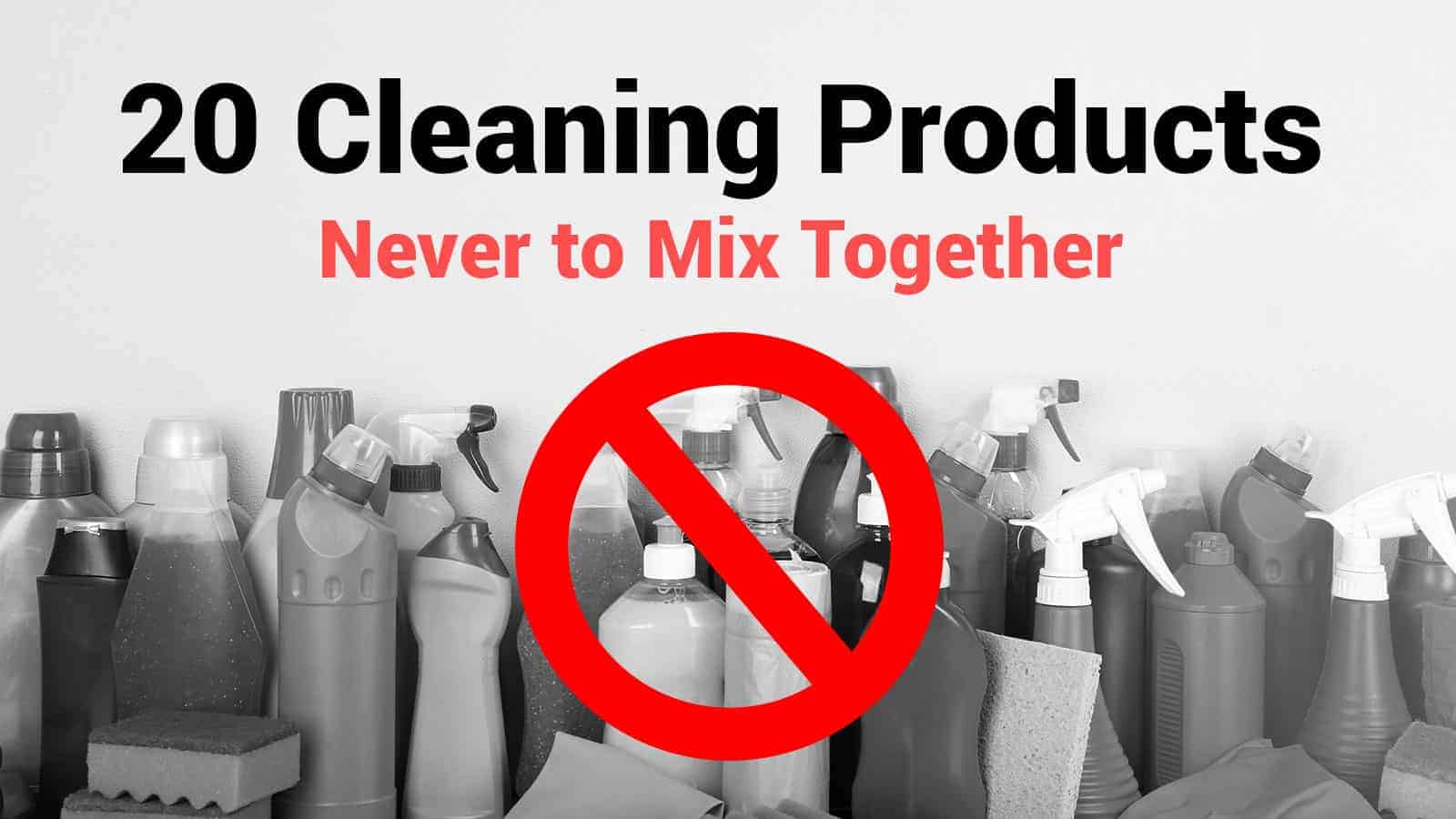
cleaning products

Bleach

Many people know that bleach isn’t something to mess around with, but people continue to take the risk when it comes to using it for a clean house. “Bleach is one of the ingredients with links to lung disease, nervous system disorders, burns, and chemically induced pneumonia; mixing bleach with other cleaners may produce deadly gas,” adds Dr. Mercola.

Bleach may be excellent for disinfecting the problem areas of your home. However, studies prove that regularly breathing in bleach can actually increase people’s risk of developing  COPD – chronic obstructive pulmonary disease.

Dr. Orianne Dumas (Ph.D.) from INSERM states, “We found that nurses who use disinfectants to clean surfaces on a regular basis – at least once a week – had a 22% increased risk of developing COPD. Earlier studies have found a link between asthma and exposure to cleaning products and disinfectants at home, such as bleach and sprays, so it is important to investigate this further.”

This is something you usually hear about in long-term smokers. You can mix a natural alternative to bleach with simply water, lemon juice, and hydrogen peroxide. This can help reduce the number of chemicals that one breathes in while using bleach.

Ammonia

According to this study, “Inhalation of highly hydrosoluble toxicants, like ammonia, can be associated with chronic lung diseases, which have been partially characterized.” Ammonia can be found in many common glass cleaners. It’s a common ingredient due to the nature of the chemical, in that it dries clear and doesn’t often leave streaks on the glass. Ammonia doesn’t have the same long-game that some of the other cleaning products have.

Those that get health issues from ammonia are going to feel it almost immediately. People who notice a reaction often have asthma or other lung problems. Strangely enough, a better alternative for window cleaning that has ammonia is actually … vodka! You can also use toothpaste for things like polishing silver, which is another ammonia based cleaner.

Chlorine

Most people don’t realize how much exposure they get to chlorine through their cleaning products. Chlorine is in toilet bowl cleaners, laundry whiteners, and products that can remove mildews. The problem with chlorine is that people can absorb the chemicals by breathing it in, as well as through their skin.

While the health effects of chlorine are relatively minor in comparison, they can be long-lasting. Chlorine can seriously disrupt one’s thyroid function. The healthy alternatives for chlorine are a mile long: baking soda and vinegar work well for toilet bowls and mildew, while vinegar and borax powder whiten clothes.

Sodium hydroxide

This is a chemical present in drain openers. Everyone deals with clogged sinks and drains now and then, and the easiest way through that problem is to get a chemical that eats right through the clog. Sodium hydroxide is extremely, extremely corrosive, which is why it can clear out clogged drains.

When it gets on the skin, sodium hydroxide can cause severe burns. And when someone breathes it in through the nose or mouth, it can cause discomfort, sore throats, or lung problems. Baking soda and vinegar down the drain is a healthier alternative to using a normal drain cleaner, and a mechanical snake tool can help get out nasty clogs.

Final thoughts

Most of us trust our household cleaners to keep our home safe – and many do! But that doesn’t mean we shouldn’t be wary of the chemicals that come in even the most common of household cleaners. You should examine even the most mainstream and popular cleaning products for chemicals that can cause health risks. The health risks that come with using household cleaners with dangerous chemicals may not always be immediate. However, they can be long-term and chronic if you don’t take proper precautions. Alternative cleaning solutions with natural ingredients and non-harmful chemicals can keep households safe and people healthy.

7 Signs You’re Emotionally Drained By Your Partner

No one wants to consider that their partner might feel drained of their emotional well-being. After all, relationships should be a source of emotional wealth and happiness.

But unfortunately, “People we love can sometimes drain us the most. Our mates may not be trying to do this, but life’s demands add up,” adds psychiatrist, intuitive healer, and author Judith Orloff MD. This feeling happens because relationships don’t always work out the way we had envisioned.

Do you find that you’re not feeling quite like yourself after spending time with your significant other? This drained feeling may be a sign that something’s amiss. Your relationship could entirely consume you without even knowing it. Being too wrapped up in your significant other can make it hard to examine whether or not the relationship is a healthy one. There are some tell-tale signs that your partner is a significant drain on your emotional energy, and that something has to give.

“If your relationship is one sided and one person is doing all the giving, don’t be surprised when the other gets emotionally drained and gives up.” – Unknown

Here Are 7 Signs You’re Being Emotionally Drained By Your Partner

toxic partner

1. You can’t stop thinking about your partner

This isn’t the same as that honeymoon stage, where all you want to do is spend time with your significant other. Instead, when you’re unable to function, and these thoughts consume you every waking moment is when the situation gets dire. You may wonder where they are or what they’re doing. Indeed, the answer you know causes you distress and an inability to think about anything else.

While this isn’t necessarily your partner’s fault, it may be a sign that you’re subconsciously unable to trust them.

2. You feel tired all the time

Using up too much emotion uses up our energies. This fatigue isn’t like the one you feel at the end of a hard day because that “kind of exhaustion can be remedied with a couple of nights’ worth of decent sleep,” says art director and herbalist-in-training Catherine Winter.

Giving too much to one person can leave us feeling drained and exhausted, especially when we’re not getting enough back.

Being with your partner shouldn’t leave you feeling like you’ve got all of the energy sucked. When you feel like that, you’re being emotionally drained. It could either be because of them, or you don’t know when to stop giving.

3. You’re eager to spend time alone

A lot of people understand that feeling of enjoying spending time by themselves. However, you may be facing an emotionally draining partner when you feel a sense of relief, euphoria, and excitement knowing that you will be spending some time away from them.

Relationship expert April Masini says, “If you’re all that excited to have a weekend alone, consider that the reason for your joy is that they’re draining you when they’re around. You should be happy to have a break, but not that happy.”

If you’re not missing your partner when they’re gone, it might be a sign you don’t want them around as much as you thought.

4. Your partner does not give you an emotional boost

One of the earliest signs of being in an emotionally draining relationship is whether or not you feel emotionally lifted when your partner is around. “Healthy relationships are supportive. Those in them don’t always agree on plans or next steps, but they hear each other out respectfully,” says psychotherapist and author Abby Rodman.

Therefore, if you feel happy, relaxed, and eager to spend time together, it’s a sign that your partner is doing their job emotionally. On the other hand, if you’re going through the motions and don’t feel much different than tired, this can mean that your partner is more draining than they are uplifting.

emotionally draining relationship

5. Your partner asks too much

This may not be your partner’s fault entirely, but rather how much you can emotionally handle. As Salama Marine, psychologist and online dating expert, explains, “It’s not about your partner’s behavior, but more about how you feel about it. Everybody has their limit.

If you feel like your partner is asking more than you know that you can give when it comes to emotional support, it’s probably a sign that you don’t have enough in you. This can mean that you’re  emotionally drained while your partner is emotionally starved. It can be a sign of incompatible partnership rather than deliberate malicious behavior by either partner.

6. You walk on eggshells

Suppose you ever hold your tongue in a conversation rather than share your opinion or let your partner win an argument because you would rather keep your feelings private than risk upsetting them. In that case, this is a red flag to an emotionally draining relationship. That feeling of walking on eggshells won’t just disappear if you ignore it long enough.

A healthy, non-abusive relationship is built on support, admiration, empathy, balance, and personal responsibility. These elements add to a love built on a respectful mutuality,” adds Rodman.

Therefore, if your partner can’t handle your emotions the way you to handle theirs, it’s an imbalance in the relationship. In fact, that imbalance can cause an emotional drain.

7. Your partner does not meet your needs

You’re doing everything to meet your partner’s emotional needs But you often push aside your own needs–a definite sign of emotional drain. You’ll want to reconsider the relationship if it seems extremely one-sided, and you can’t get them to communicate. It isn’t fair for either partner if they aren’t getting the emotional support they need.

drained

Final thoughts on an emotionally drained partner

Relationships are all about partnership, communication, and compromise. Emotionally draining relationships don’t always have a specific finger to point when it comes to who’s to blame. It can be two partners with incompatible emotional scales and needs or one partner needing more emotional support than their significant other can provide.

Reaching out for a support network for both partners can help balance the emotional labor and keep the relationship balanced and healthy. Other times, the relationship is simply incompatible, and both partners are better off without each other.  Whatever the choice, knowing the signs of emotional drain can help both partners make the right decision.

What Causes Chronic Inflammation (And How to Avoid It)

Inflammation is a red flag to a variety of diseases, illnesses, and ailments that plague people from all walks of life. Inflammation is the response of a healthy body to cellular damage or a threat to the body. This means that when our bodies are struggling with inflammation, it’s a warning sign of something else. Inflammation isn’t the cause of illnesses or disease; rather, it is our body’s way of telling us that something is wrong or trying to fight back against what is harming it.

Chronic inflammation “occurs when your immune system gets set permanently to “on.” As a result, it constantly releases a flood of damaging chemicals that could sicken your cells. It’s like a forest fire that never goes out,” says naturopathic physician and nutritionist Kellyann Petrucci, ND.

The best way to figure out how to avoid chronic inflammation is to figure out what causes it, and how to avoid the causes of inflammation as best as possible.

Three Major Causes Of Chronic Inflammation And How To Avoid Them

“Lower your body’s burden of toxic chemicals, and you’ll turn down the flame another notch.” – Dr. Kellyann Petrucci

Candida

yeast infection

Candida Albicans are parasites that live inside of our intestinal tract. While the thought of parasites living inside of us seems a little terrifying, these little parasites often hang out with bacteria, creating a balance inside of our bodies. However, imbalance within one’s digestive tract can cause an overgrowth of Candida. When the Candida get out of control, they tend to tear through the intestinal walls and get places in our bodies that they shouldn’t – which, of course, causes our bodies to perceive them as a threat, which causes inflammation correctly.

Candida tends to become overgrown in our bodies when we aren’t getting enough beneficial, healthy bacteria. The best way to avoid an overgrowth of Candida, and thus inflammation, is to ensure you’re keeping your body in balance. Avoiding alcohol can help stop killing off the beneficial bacteria, and avoiding sugars can stop feeding the Candida.

Dr. Carolyn Dean MD ND states, “I have found that reducing sugar intake is one of the most important ways to control hypoglycemia, diabetes, and intestinal yeast.” Other foods that mess with the Candida and bacteria balance in your gut are GMOs, foods covered in pesticides, and refined foods that form acid.

Dr. Amy Myers adds, “I also recommend eliminating all fermented foods. That’s because, while it’s common knowledge that these help to feed the good bacteria, most people don’t realize that bad bacteria feed off of these as well.

Free Radicals

Free radicals happen naturally in our body. Like many things happening within our bodies, they’re generally good. Free radicals are like particles that move around inside a cell, destroying and burning up anything they come in contact with. Our everyday functions create them, and their role in our body is to ensure that our weakest cells are eliminated so our bodies can make new, healthy cells. Like a feedback loop, inflammation causes our bodies to make free radicals, which cause damage to the cells and cause even more inflammation.

Free radicals are highly reactive molecules that are missing an electron. This missing electron makes the free radical unstable. They long to be stable again and go crazy inside the body searching for a spare electron to grab on to. As they bounce around your body, they damage surrounding cells. The spare electron is usually stolen from another molecule. That molecule then steals from another. This creates a chain reaction of free radical damage,” explains Dr. Rebecca Gillaspy

A diet change can help reduce the number of free radicals and inflammation in the body. Diets that include food that is high in antioxidants, such as vegetables and certain grains, as well as food that is high in vitamin E and vitamin C. Nuts and seeds can be a great source of vitamin E, and citrus fruits, spinach, and strawberries are a great source of vitamin C. Lowering the number of free radicals in your body can help lower the amount of inflammation.

Nutrient Deficiencies

The British Journal of Nutrition’s study mentions, “There is a substantial amount of evidence to suggest that many foods, nutrients and non-nutrient food components modulate inflammation both acutely and chronically.”

Nutrient deficiency can be a source of inflammation since your body isn’t getting the nutrients it needs. Too much of things your body doesn’t need and too little of what it does can cause your body to flare up in inflammation as a defense. Vitamin D deficiency is known to cause depression, a weakened immune system, autoimmune disease, and inflammation. Vitamin B deficiencies can both cause or be caused by inflammation as well.

Along with changing your diet to get enough vitamin D and vitamin B, taking extra D and B vitamins daily can help boost your immune system and get your vitamin deficiency back on track. Once the vitamin deficiency is under control, the inflammation will also become reduced, leading to relief in those suffering from chronic inflammation due to a lack of important vitamins.

candida symptoms

Final thoughts…

Our bodies are pretty delicate mechanisms, but they’re also quite hardy at the same time. Inflammation is our body’s way of telling us that something is wrong, and listening to it is the best way to stop chronic inflammation.

Inflammation occurs naturally in your body. But when it goes wrong or goes on too long, it can trigger disease processes. However, you can focus on lifestyle choices that reduce your risk of chronic inflammation — the kind that leads to disease,” says Paul DiCorleto, PhD.

Therefore, removing unhealthy foods, adding foods that are good for our bodies, and ensuring that our bodies are getting enough of the vitamins they need will keep inflammation low, and ensure that our bodies only exhibit it when needed.

References:
https://www.mindbodygreen.com/0-24782/10-signs-you-have-chronic-inflammation.html
https://www.mindbodygreen.com/wc/dr-amy-myers
https://health.clevelandclinic.org/2014/10/why-you-should-pay-attention-to-chronic-inflammation/
http://study.com/academy/lesson/inflammation-oxidative-stress-free-radical-damage-to-health.html

5 Behaviors That Show Someone Is Flirting With You, According to Science

Is someone flirting with you?

Studying human behavior is a complicated endeavor. It’s tricky because, well, we’re complex.

Many scientists consider the human brain “the most complex structure in the known universe.” Containing billions of cells and an immeasurable number of connections, there’s a reason why it’s taken some of history’s most brilliant minds hundreds of years to explain anything about the 3-pound organ.

We now know that the mind-body connection is a real thing. The interactivity between brain, mind, and body cannot be separated more than a computer’s mouse, keyboard, or monitor. We couldn’t function.

Body Language and Flirting: An Undeniable Connection

flirting

What about body language? More specifically, what about nonverbal communication? You’ve probably heard the old axiom “93% of all communication is nonverbal.”

Given what we’ve covered so far about the brain, do you see a potential problem with this number? Trying to measure the immeasurable is pointless. More critically, these percentages are meaningless!

What is essential to understand – and say with certainty – is that most human communication is non-verbal. The Nonverbal Group, an independent academic and research group that focuses on nonverbal communication, says that non-verbal communication, including body language, is the most crucial aspect of communication.

What’s this got to do with flirting? Everything.

If you want to know whether or not someone is attracted to you, understanding the nuances of human behavior – or at least recognizing that they exist – is invaluable.

Here’s an example: a sweet guy or gal often walks by your desk and smiles at you. Does this mean they are attracted? Maybe, or maybe they are just a nice person.

We must investigate. Further, we must understand how the brain and body work together; hence, the quick sociology lesson above!

How many times have you wondered if someone is flirting with you? You catch them looking at you out of the corner of your eye, or they seem to stay close when you’re at a social gathering. Was it just you, or were they subtly trying to get your attention?

It’s common to second guess yourself when it comes to a potential suitor, but if you know what to expect, it’s easy to spot when someone is interested. The last thing you want to do is make a move and find out they’re not interested. So, you need to know how to tell if someone is flirting with you.

Eight Scientific Signs of Flirting

Everyone needs a little help for love and attraction, but did you think science might give you the assistance you need? How many times have you got the courage to make a move on someone, and you fell flat on your face?

Thankfully, there’s a scientific way to tell if someone is into you that can give you the assurance you need. It can help you prevent the sting of rejection or avoid someone with whom you don’t reciprocate their feelings. Here are eight ways to tell if someone is flirting with you, and it’s science.

1. Blushing

Blushing happens quite often for some folks, but there’s science behind this reaction, according to ABC News. When you blush, you’re activating your sympathetic nervous system. There are many reasons why your face can turn red, but anxiety is likely the underlying cause.

Have you ever experienced extreme anxiety, and your face turns red and is hot to the touch? It’s because of the surge of adrenaline that’s released. If someone is embarrassed or feeling the pangs of anxiety, it causes their heart rate to increase. As the heat rises, it causes the blood vessels to dilate, which helps send more oxygen and blood flow to the body.

The facial veins are very susceptible to extra adrenaline. These veins are more vulnerable than others in your body, so you don’t blush all over. When it comes to flirting, it’s only natural for a person to feel a burst of anxiety when experiencing strong feelings.

They can’t help but blush because if they’re trying to get the nerve to come to talk to you or to ask you out, their anxiety is in overdrive. This surge of adrenaline causes the discoloration on their face, and it can indicate that someone is into you. You should note that it can also be caused by makeup, rosacea, social anxiety, and high blood pressure.

2. Feet Placement

The direction of the feet can also be very indicative if someone is flirtatious. Oddly enough, this is something that a person does without even thinking about it. Consequently, their feet will point in your direction if they’re into you.

According to The Telegraph, it’s a subconscious compass that guides them in the direction they desire. Notice your behaviors towards something you want. If you’re in the presence of an attractive person, notice how your feet point.

The next time you want to see if someone is looking in your direction, check their feet. You don’t want to find that their feet are facing toward the door. Sadly, this means they have little to no interest in you.

3. Staring

Staring can be done for many reasons, but they can’t take their eyes off you when someone is into you. It’s also not uncommon for someone to stare if they think your outfit is too loud or your hair is in an odd style, but they will quickly move on to something else. Another interesting fact is that if someone is staring at you because they’re interested, their pupils will dilate.

The next time you catch someone who can’t take their eyes off you, look closely at their pupils. Are their pupils larger and dilated? People who will gaze at you and don’t break their eye contact certainly like what they see.

However, if their eye contact is broken and pupils aren’t dilated, then you need to wait till you see other signs to make a move.

4. Body Language

If a person stands directly in front of you and has their arms crossed, looking at the ground, they’re probably not sending you any flirtatious vibes. You want to see someone with their legs and arms uncrossed, and when they lift their head to look at you, they smile.

According to the National Library of Medicine, when someone wants to engage with you, they will uncross their arms and legs. So, if someone is flirting, their body language will show that they’re open and receptive. If you notice them bring their head up when you look at them and give you a grin, they’re definitely flirting.

5. Rummaging Through Purses or Pockets

You already know that your nerves are in overdrive when you’re strongly attracted to someone. It can cause your face to turn red, but you will also fidget. A woman may go through her purse many times as it’s something to distract and help with her anxiety.

A man may play with his car keys, jingle something in his pockets, or rub his head repeatedly. The difference would be if the woman held her bag close to her, clinching it. That would show closed-off behavior.

When someone is attracted to another person, they don’t want anything to stand in the way, so they will find something to fidget with it to ease their angst. Holding the purse constantly sends a different message than rummaging through it.

6. Voice Tone

Another interesting fact is that a person’s voice is likely to lower when they’re attracted to someone. A woman’s voice may become huskier and more profound as it shows she delves into her loving, sultry, and more passionate side. Men don’t usually experience a drop in their voice, but the same hormones cause their voices to become a higher pitch and softer.

It’s fascinating what this surge of hormones running through your body does to you, but it’s beneficial in determining if someone is into you or not.

flirting

7. Mirroring

When someone’s flirting with you, they might mirror your body positions. Why would someone do this? Well, it’s a subconscious thing, and they’re not trying to copy you, but they want to establish rapport.

The suitor may be using it as a test to see if you pick up on their advances. You can also see if someone likes you back before asking them out. It’s very similar to the positioning of the feet and the subconscious cues they show, as there’s something unique about all these extra hormones surging that make you do crazy things.

8. Expressive Behaviors

Expressive behavior is a vast field that can encompass many things, and there are both discreet and untactful ways of using them. When someone engages in flirtatious body language, they may add in suggestive behaviors to let you know they’re interested. This means they’re taking their body language one step further and exposing parts of themselves to you in a subtle manner.

For instance, women often like to show off their vulnerabilities through their necks or arms. It’s also an odd coincidence that this is where most ladies put their perfume. When a person tilts their head, it exposes their pheromones.

A pheromone is simply a chemical that you produce that profoundly affects another person as it changes their behavior. These behavior-altering agents are potent. Have you ever seen a lady take her hair down, toss it around, or play with her locks?

The female is trying to get attention, and their pheromones are in overdrive. A man may take his shirt off to expose his muscles, as their chest is often a sign of pride. You may also notice a guy lifting the sleeve of his arm to display his muscles.

When a person wants you to notice them, and they’ve taken their flirting to the next level, there will be little suggestive behaviors that prove their interest. Unlike some of the other methods listed, this one is hard to deny.

Five Types of Flirting

Here are the five types of flirting (and some potential signs someone is flirting with you)

1. Physical

As the name suggests, physical flirting is all about contact. It’s also the flirting most popular among women. According to Jeffrey Hall, the study’s lead author, they’re the kind most likely to go alone to a bar or club to find a possible mate.

Potential signs: Touching/rubbing the arm, sitting or standing close in proximity, leaning in during a conversation.

2. Playful

Playful flirts see the act of flirting as something of a game, as harmless fun. They throw caution to the wind and just display interest – and often to multiple people. Men and women use playful flirting at about the same rate. Extroverts, understandably, are more comfortable with this “go with the flow” type of approach.

Potential signs: Physical touch, inattentiveness, darting in/out of the conversation.

3. Polite

Polite flirting entails a mix of compliments, niceties, and standoffish behavior. Introverts dominate this group, while it ranks fourth of five among extroverts. Polite teasers also ensure the use of proper manners and decorum. Unless you happen to stoke a polite flirt’s interests or share the polite flirting traits, it’ll probably be an uneventful meetup!

Potential signs: Shyness followed by sudden attentiveness, various social niceties, moving closer as the conversation progresses, and increasing openness in body and conversation.

4. Sincere

Sincere flirts ‘Strongly Agree’ with the statement, “Showing sincere interest is the best way to let someone know you are interested in them.” They take a more low-key approach to flirting than physical and playful teases and are a bit more outgoing in their process than the polite type. If they like you, you’ll know; if they don’t, you’ll know.

Potential signs: Strong eye contact, active listening, sudden playfulness.

5. Traditional

Traditional flirts are the most likely to agree with the statement “Men should make the first move.”

If you’re going on a first date with a traditionalist, you’re probably not going to a hip bar or club. As with the sincere type, traditional flirts believe firmly in getting to know someone and getting to the point.

Potential signs: Serious attitude, good eye contact, “accidental touching,” respect for boundaries

flirting

Final Thoughts on Knowing the Signs Someone is Flirting

When you have a crush on someone, it’s normal for you to experience butterflies in your stomach. Your heart will race, and your face will blush. Your body gives subtle clues to let you know that you’re falling hard. When two people start a relationship, many fascinating chemical reactions occur with your hormones and throughout your central nervous system.

Oddly enough, these reactions also occur when two people are trying to make a connection with one another. Isn’t your body fascinating? The little things that happen when someone flirts can be backed by science. Now, armed with knowledge, you will know if someone is interested and whether or not you should make the next move.

In keeping with the theme of the introduction, we’re going to throw some science at you. Scientific evidence, while not infallible, is certainly more trustworthy than the “Oh my…Did you see that?!? She SMILED at me, bro! I’m making my move!”

“Good luck, man!” (You’ll need it.)

Researchers from the University of Kansas found five main types of flirting: physical, playful, polite, sincere, and traditional. Interestingly, there were no significant gender differences in any five types. Women, however, did score higher on all styles besides playful.

Your intuition, understanding of human behavior, and flirting methods – yes, flirting (!) – may help someone find the person of their dreams.

10 Signs Your Partner Is Treating You Like You Truly Deserve

Let’s hope your partner is treating you better than you deserve, and at a minimum, they show all of these 10 signs in your relationship.

Here are signs they’re treating you how you deserve:

1. Your partner’s friends know you’re a package deal

Before you met, you each had friends and being included in get-togethers with their friends can be a testing time. Ideally, your partner will make sure that their friends get to meet you in a happy, stress-free atmosphere. Starting things off on the right foot with loved ones means your partner is treating you like you deserve.

2. You are included in future plans

Tomorrow definitely includes you in your partner’s mind, and they show it by involving you in the planning of both little and big daily future events.

3. Trust goes both ways

Your partner demonstrates that they trust you when they are treating you like you deserve. You are able to demonstrate that you trust them as well by not checking up on their actions.

4. Strong communication skills

You feel informed about how your partner feels, their short-term and long-term plans, their special moments that happened in the day and anything else you might want to know.

5. Rarely argues with you

Cooperation is the spirit of working together so both parties feel supported in their needs. If your partner is treating you like you deserve then they are allowing you to express your needs and making sure that they work to meet you at least halfway, rather than explain why they can’t budge.

6. They uplift you rather than bring you down

Everyone hates nagging or criticizing but we are all guilty of doing it anyway. If your partner is treating you like you deserve, rather than nag that you aren’t doing something their way, they accept that your way of doing things is just fine. In fact, they had never noticed how efficiently you fold a t-shirt and they vow to start doing it your way from now on.

relationships

7. Your partner shares

Sharing feelings, their favorite stories, and even their stuff is what your partner does well when they are treating you like you deserve. Sharing is caring, after all.

8. They don’t play favorites

Researchers studying fairness found that equal love, care and support to all members of the family without favoritism and equal treatment were important to how people define fairness in their close relationships.

In partnerships, the researchers say “fairness includes morality and standard of the inner state, also it involves decision making. It includes being equal regardless of socioeconomic status, respect each other and recognizing the rights of individual.” Both men and women in the study agreed that fairness is getting what you deserve and also giving equal consideration to others.

9. Your partner apologizes

Research on forgiveness found that relationship closeness was a predictor of the frequency of apologies. In the study, women were more likely than men to demand an apology. Researchers found that the partner who focused on repairing the relationship versus avoiding blame was more likely to apologize to attempt to regain trust. Apologies seemed to help with forgiveness and how much empathy was used impacted the effectiveness of the apologies. The study also found that the ‘victim’ who wanted an apology wanted to feel assured that the wrongful behavior will not occur again in the future.

10. Loves even the parts of you that you don’t like

Your partner is accepting of the parts of your personality that even you are not so fond of. Those things that you’re working to improve are accepted with love by a partner who treats you like you deserve.

7 Lessons To Learn From Unhappy People

It’s easy for most people to tell an unhappy person fairly quickly. But what can lessons can we learn from them?

“Don’t judge me until you’ve walked a mile in my shoes.” ~ American Proverb

“When there is no enemy within, the enemies outside cannot hurt you.” ~ African Proverb

What this article is not

The last thing he wishes to impart is any sense of superiority or inferiority.

The quote “Don’t judge me until you’ve walked a mile in my shoes” has been around a long time. The wisdom of this old proverb (like so many others) remains today.

The same goes for the second adage, “When there is no enemy within, the enemies outside cannot hurt you.” When we can take the reins of an unwieldy mind, dispel our insecurities, and strengthen our resolve (esp. to the outside world), we then find ourselves in a position of power.

A position of inner strength (above, power) does two things: (1) shields us from many of the causes of unhappiness and discontent, and (2) allows us to have empathy for those in a weaker position.

So, what can we learn from unhappy people? Let’s talk about seven important things:

1. Unhappiness can happen to anyone

That’s right. Unhappiness, whether caused from an outside or inside influence, can happen to anyone. Of course, due to differences in brain chemistry, environment, etc., some people are more susceptible to bouts of sadness and discontent than others.

2. Unhappiness can “rub off”

Going back to the introduction, one needs a thick skin to deal with certain individuals. Have you ever had a chronically unhappy boss? How about a chronically unhappy boss that deliberately sought to make your life miserable? (Share please!)

Cause and effect are a law of nature and certainly applies here.

3. Unhappiness is depression, expressed

What do we mean by this? Simply, when someone is dealing with depression, it’s tough to appear anything less than unhappy. Why? Because of the ways that depression changes the brain. Historically, people diagnosed with depression have low levels of the neurochemicals serotonin, norepinephrine (nor-ep-in-eh-fr-in). The former chemical is responsible for mood stability; the latter for increased alertness (“feeling alive”).

depressed

4. An unhappy person can be disturbing and distracting

There is no way to sugarcoat this: unhappy people can be disturbing and distracting. This is particularly true if we’re both sensitive and observant to the people around us.

5. Unhappiness can be a never-ending search

How many people want to be unhappy? Barring serious emotional issues, the answer should be around zero. Naturally unhappy people search – and search some more. Some people think a fat bank account will do it. Well, there is some correlation between money and satisfaction, much less of a correlation between money and happiness. A University of Illinois study found that “people who earn the most are only a smidge happier” than the average folk.

6. Unhappiness can be subtle

In many ways, our habits define who we are and our happiness. Lifestyle choices – materialism, avoidance behavior, substance abuse, laziness, etc. – all have consequences. Soon, we find ourselves asking, “How the hell did I get myself into this?” Getting to this point can be enlightening, even if it is uncomfortable. More importantly, after kicking ourselves in the rear, we’ll start looking at our life a bit closer. All of which leads to the final point:

7. Unhappiness has a solution

People who’ve suffered with and recovered from bouts of unhappiness often have the same advice: a solution is out there. Second, it’s much easier to see the light with some help from others. There is no “one size fits all” fix to unhappiness. One must find what works for them, do, and repeat.

unhappy

Final thoughts on learning from an unhappy person

If you’re happy with your life, consider reaching out to someone who may be having a tough time. If something is causing you some despair, try to find the root cause. Travis Bradberry, the author of Emotional Intelligence 2.0, says it perfectly:

“Changing your habits in the name of greater happiness is one of the best things that you can do for yourself. But it’s also important for another reason – taking control of your happiness makes everyone around you happier too.”

Scientists Explain What Standing Too Long Does To Your Body

What impact does standing too long make on your body?

“Occupations predominantly standing were associated with an approximately 2-fold risk of heart disease compared with occupations involving predominantly sitting.” ~ Smith, P. et al., “The Relationship Between Occupational Standing and Sitting and Incident Heart Disease Over a 12-Year Period in Ontario, Canada”

Sit, stand, do jumping jacks?

Scientists.

They’re a smart breed for sure. (Just ask ‘em!)

They also seem to write contradictory stuff all the time.

First, it’s long periods of sitting that’s harmful to our health. Now, standing is getting a bad rap.

What the heck?

Don’t worry, dear reader. We’ll clear this conundrum up ASAP!

(Jumping jacks while working is probably really healthy. Not sure how the ole’ boss will feel about it, but whatever.)

Let’s Look First at the Issues from Sitting Too Long

As a super-quick refresher, we’re going to talk about the hazards of sitting. Next, we’ll go over what the study says; and, finally, how we can ensure a healthy, happy, (thus, productive) day at work!

Sitting is bad

Four Scientists Explain What Sitting Too Long Does To Your Body

To be crystal clear, extended periods of sitting is bad. (Mmm-kay?)

Sitting for extended periods, which office workers do, can produce some nasty physical and mental symptoms. Here’s a quick rundown of some:

– Lower back pain

– Neck pain

– Leg pain

– More belly fat (due to inactivity)

– Weaker bones

– Higher risk of depression (the brain/body connection weakens when we’re inactive.)

– Increased risk of diabetes (inactivity hinders insulin function.)

And… here’s some advice on what to do if you’re stuck in a cube:

– Improve your posture: use a keyboard separate from the monitor, don’t slouch, ergonomically position your equipment.

– Take a micro-break every 15 minutes: stand up, change positions, stretch, lean back, deep breathe.

– Reposition your chair and stretch your legs.

– Get some vitamin D and calcium.

– Walk outside when possible: you’ll be surprised at how much a quick open-air breather and a brisk walk will lift your spirits!

– Carry a water bottle with you: try to drink a minimum of 24-36 ounces of water at work. Consuming this amount of water will fight off dehydration, prevent brain fog, and stabilize your blood pressure.

Scientists Explain What Happens to Your Body When You Stand Too Long

The Study

Don’t worry; we’re not going to don a white coat and start lecturing about the study. Instead, we’ll bullet point the important stuff!

– Who?: 7,320 employed Canadians – all working a minimum of 15 hours per week.

– What?: A scientific study, titled “The Relationship Between Occupational Standing and Sitting and Incident Heart Disease Over a 12-Year Period in Ontario, Canada,” which is published in the American Journal of Epidemiology.

– When?: Over a 12 year period. The study began in 2003 and researched followed-up with participants sometime in 2015.

– How?: Patient data points were obtained from the 2003 Canadian Community Health Survey (CCHS), which is linked to one major health insurance provider and a database containing discharge information.

– Why?:

The question “Why?” demands a bit longer of an explanation (sorry!)

First, because cardiovascular disease is the leading cause of morbidity and death in the world. Despite adequate resources, the instances of heart disease in developed countries continues to trend upwards.

The second reason is the vast discrepancy between the amount of research conducted on prolonged sitting versus prolonged standing.

It’s notable that the authors cite eight studies wherein scientists from England, Scotland, and the Netherlands found no relationship between “prolonged occupational sitting, compared with occupations involving standing and walking about, or “occupational sitting time and (heart) disease.”

Regarding the last, the study’s claims about the lack of relationship between prolonged sitting and adverse health outcomes go against those of most doctors and scientists, including the National Health Service of the United Kingdom and the Mayo Clinic.

The Findings

In short, the researchers – after controlling for possible outliers – found that people who primarily stand at work are 232% more likely to develop heart disease than “predominantly sitting populations.”

Of the four types of body posture or movement measured – sitting, standing; sitting, standing, and walking, and ‘other body positions’ – workers who listed prolonged occupational standing as their primary work behavior reported the worst health outcomes.

The healthiest position for working?

That would go to the sitting, standing, and walking crowd! These 2,479 workers – after scientists adjusted for current health conditions – had a whopping 39% lower chance of developing a heart condition.

This finding makes sense, even from a layman’s perspective. Standing, when combined with a bit of walking, increases blood circulation. Meanwhile, a sedentary workstyle – the result of a disproportionate amount of time either standing or sitting on our duffs – isn’t conducive to the body’s physiology.

“A body at rest tends to stay at rest” is a good axiom to remember.

The study’s conclusion, the authors write, “suggests that primary prevention efforts targeted toward reducing occupational standing should be considered…”

Or, in regular terms, more attention and resources should be redirected toward the health consequences about extended periods of standing – not sitting – at work. It also behooves us to include a mix of all three postures and movements when working.

The lesson from all of this? It may be a better idea to incorporate a mix of sitting, standing, and walking throughout our workday. Heading outside during your breaks and lunches sounds pretty good!

Sources:
Smith, P., Ma, H., Glazier, R. H., Gilbert-Ouimet, M., & Mustard, C. (2017). The Relationship Between Occupational Standing and Sitting and Incident Heart Disease Over a 12-Year Period in Ontario, Canada. American Journal of Epidemiology, 1-7. doi:10.1093/aje/kwx298

https://www.rd.com/health/conditions/standing-increases-risk-heart-disease-study/
https://www.rd.com/health/fitness/sitting-disease-recover/

How To Let Go of Hidden Anger (And Feel Happy Again)

Repressing emotions can happen when those emotions make us feel uncomfortable or bring up memories that we would rather leave buried. While emotional repression can help at the moment to relieve stress or allow us to move forward with our lives, it only causes more anger and turmoil in the long run.

According to Dr. Jill Ammon-Wexler, “What repressed anger does is to make its home somewhere in your body and create more stress.”
Repressed anger can especially leave us feeling hollow, stressed, and angry at the wrong targets. The problem happens when we repress this anger to either the breaking point or until it eats us alive. Allowing yourself to let go of this repressed anger is the first step to healing.

“If you carry around a lot of suppressed or repressed anger (anger you have unconsciously buried) you may lash out at people, blaming or punishing them for something someone else did a long time ago.” – Beverly Engel

6 Ways To Let Go Of Repressed Anger And Gain Control Over Your Life

regulate anger

1. Self-reflection Can Help Release Anger

This is the first step to releasing any repressed emotion, especially anger. We can oftentimes brush off self-reflection as something that just doesn’t work. However, being able to reflect on your emotions, thoughts, and reactions can help make releasing all of your repressed anger so much easier. First, you need to figure out how you began to repress your anger in the first place. Perhaps there was a specific event during childhood that taught you to hold your feelings in. Once you pinpoint this, you can learn how that lesson has led you to repress your feelings throughout the rest of your life.

2. Release Hidden Anger Through Forgiveness

According to Professor Robert Enright, “Our science shows that as people make the decision to forgive and follow a valid process of forgiving, then the one who forgives experiences considerable psychological relief such as reduced anger, anxiety, and depression, and an increase in self-esteem.”

This doesn’t just mean learning to forgive others. Learning to forgive yourself is as equally important in beginning to release the repressed anger inside of you. Forgiveness is a powerful tool for self-healing. When you begin to forgive the people who have harmed you in some way, you are able to release the anger that you hold inside of you. Once that anger is released, you’ll find that your mind and body can become healthier as you begin your process of healing.

3. Use Positivity Techniques as Anger Management

When your mind is thinking of negative things, you’re going to feel negative emotions! The best way to combat this, and to begin the road to recovery from repressed anger, is to use positive visualization. Instead of focusing on the people who have hurt you, focus on the people and things that bring you joy in your life, as well as purpose. Release your anger in constructive, healthy ways, like art, music, or exercise. Letting your emotions out and feeling them is an important part of letting them go.

4. Accept the Past

Trying to deny or rally against things that have already happened is a useless effort. The past is the past, and there’s nothing that can be done to change it. You can’t erase the things that happened, but you can learn to accept them and how they affect your life now. Acceptance of the past will allow you to move forward. You can’t look straight ahead if you’re always looking back! Once you learn the power of acceptance, you’ll find that your path to healing becomes much more straightforward.

5. Understand the Other Person’s Point of View

When you began your self-reflection, you may have begun to realize that you hold repressed anger because of someone else. This is a good time to try and reflect on their point of view. Understanding where someone else is coming from can help you process your anger, rather than letting it fester inside of you. Of course, this is only useful if the anger comes from a differing point of view, rather than an expression of violence. In cases like this, it’s important to know that someone’s violence against you was not your fault. Being able to release yourself from the blame can help you move past your anger.

6. Let Go of Anger by Relinquishing Control

Sure, you can control certain things about your life – who you interact with, where you work, how you spend your time, etc. But in the long run, life is going to happen and the most any of us can do is brace ourselves for the ride. According to Dr. Amy Johnson, “I’ve noticed that things go much more smoothly when I give up control—when I allow them to happen instead of making them happen. “

You can’t control other people’s actions. If an ex-partner broke your trust and cheated on you, being able to accept that there was nothing you could do to control their actions can help release your repressed anger at them for hurting you. Once that anger is released, you can start to heal from the incident.

Repressed emotions can cause stress, depression, and anxiety. Repressed anger is no exception! However, it is possible to learn to release that anger. Once you have the tools to work through your own personal healing journey, your body and mind will be at peace. You may even find that your relationships with other people, be they romantic, platonic, or familial, have grown stronger than ever now that you don’t have that anger hanging over your head.

6. Behavior Modification to Manage Your Anger

How often have you told your children that they need to modify their behavior? Well, the same thing works with adults. When you change your thought processes, it will automatically change your actions. Have you ever had to go outside and count to ten before disciplining your kids?

The same principles apply when it comes to anger issues. When you have stress-management techniques you can turn to during times of frustration; you can learn to release the rage you feel and calm yourself.

7. Meditation and Prayer

You can conquer deep emotional work when you delve into prayer and meditation. It’s very beneficial because both practices help you focus on the present moment and alter your thoughts. So many people become distracted by the past, which hinders them in the here and now.

During these calming moments when you’re trying to recenter yourself, there’s a lot of self-healing that takes place. Once you get the hang of these practices, you can learn how to calm your feelings of both anger and resentment. A positive mindset can do wonders, and prayer and meditation can help you achieve it.

master your emotions

8. Creative Visualization

All those self-imposing and restricting thoughts can be released when you utilize visualization. Do you have rage from your past that festers at any given time? Try using a visualization technique to clear these feelings.

Have you ever used a tea kettle to boil water for tea or instant soups? Picture the kettle boiling on your stove. When it starts whistling because it’s screaming hot, this is a good visualization for the rage happening on the inside. Now, turn the kettle off, and the water inside will begin to cool.

As the water cools, this is indicative of your inner thermostat calming. Trying techniques like this can help you relax and bring your emotional temperature back to normal. No one wants to walk around red hot from anger.

9. Journaling for Releasing Your Anger

When you feel irritation inside, you must let it go. Journaling is a beautiful place to start. Getting those feelings down on paper can release them from your innermost being. Some people find it beneficial to just write all their thoughts and feelings down on paper, but others like to write short stories that parallel their emotions.

10. Managing Your Thoughts

According to News Week, the average human being has more than 6,000 random thoughts each day. Your thought processes help to shape your emotional response. Assume that you see something that you feel is frightening.

Your brain registers this event and gives you a specific emotional response to what you’re experiencing. However, when you change how you view things, you’re altering your emotional reaction to it. So, when you stop seeing a situation as rage-inducing, your thought process will alter around your perception.

11. Take A Time Out

Taking a time out is a great way to reset your brain and focus on something positive. When you set your children in time out, you want them to stop, think about what they’ve done, and change their emotional response. When you distract your mind, it helps to make things clearer.

Even if you’ve buried your rage deep inside, there will be times when it comes boiling to the surface. These little segments of “me time” can help you put things into perspective.

12. Talk to Someone About It

If you want to let go of vehemence deep inside, it’s best to get it out by talking to someone. This person can be a therapist, a trusted friend, or the person who offended you. The more you bury it and refuse to speak about it, the more powerful it becomes.

Burying hurts and frustrations only mean that you will have to deal with them another day. Additionally, you can be like a time bomb with rage waiting for someone to detonate you. Get it out, deal with it, and move on.

13. Uses Positive Affirmations

There are a lot of negativities that surround you every day. When you ingest these toxic things, it acts as a large spoon that stirs the pot. For instance, you go to work, and your boss writes you up for a minor infraction. This negative thing sets your mood off, making you see red.

It’s easy to let things that are buried come to the surface during a storm. Remember, when the tide rolls in on the ocean, it brings seaweed, fish, rocks, and shells with it. Essentially everything you have hidden will roll to the surface when things get shaken up. The good news is that you can combat this with some positive affirmations.

You can read or recite affirmations each day to change your mindset. It helps you flush inner negativities to the curb and release the anger that’s holding you hostage.

14. Release Fury Mindfully

Many times, anger is caused by a bruised ego. Maybe you lost the love of your life, a job, or someone said or did something that hurt you deeply. You’re having trouble letting go of the feelings, so this pent-up negativity warrants a ceremonial release.

You can do things like write the problem on a balloon and set it free into the sky. You can watch your frustrations fade into the vast blue above as you do this. You can try writing the person’s name and offense on a card and burning it. Find a way to release the anger by doing these ceremonial acts mindfully.

15. Use Laughter to Let go of Anger and Bitterness

Laughter is very healing. When was the last time that you laughed till your stomach hurt? You’ve heard laughter is the best medicine, but did you know there’s scientific evidence to back these theories?

According to a study conducted by Massachusetts General Hospital and posted on the National Library of Medicine, they used humor on cancer patients to see how it affected them. They found humor lightened the mood, improved the patients’ outlook, and eased their pain.

Since anger on the inside of you can eat and gnaw at your very soul like cancer, it stands to reason that humor can also work for you. The quicker you nip these anger issues, the less likely they are to turn into bitterness.

overcome anger

Final Thoughts on Letting Go of Your Anger

Being furious on the inside can steal your happiness. It will eat at your soul, and it can shatter your mind’s peace. When you allow situations and people to make you angry, you give them control over your life.

By doing some of the actions listed above, you can learn to forgive, put your fury in its place, and start walking with a positive mindset. Be open-minded and find some of these activities that you think will help. Don’t be afraid to try many until you find the one that works.


5 Things To Do If Your Boss Is A Psychopath

‘Corporate psychopaths thrive on thrill seeking, bore easily, seek stimulation, and play mind games with a strong desire to win.’ – FBI psychologists Paul Babiak, Ph.D. & Mary Ellen O’Toole, Ph.D.

Psychopaths in business

What does it take to succeed in today’s highly competitive marketplace? Most rational people would say things like “a motivated workforce,” “innovation,” or “creative thinking.”

Can someone who lacks empathy get ahead in business? Can someone who preys on vulnerabilities? How about a boss who gets some kind of twisted pleasure from abusing their subordinates?

First, a bit of context. Corporate America is an uber-competitive, dog-eat-dog environment. Capitalism on steroids and three cans of Redbull.

Companies are bankrupted, bought out, bulldozed and no one bats an eye. When this happens, of course, most people become worried. Fearful. Insecure. As it happens, psychopaths thrive on such emotions.

The Federal Bureau of Investigation (FBI), the United State’s preeminent law enforcement body, employs psychologists who specialize in examining corporate misfits. They’ve affirmed that companies do have a place for psychopaths, sociopaths, and narcissists. Some sit on the Board. Some are CEOs. These people reach the pinnacle of Corporate America.

Enron, Bernie Madoff, WorldCom, and Lehman Brothers were all led by individuals likely to fall somewhere along the psychopath/sociopath scale.

What is psychopathy?

psychopath

William Hirstein, Ph.D. and neuropsychologist, explains the history of psychopathy:

“In the early 1800s, doctors who worked with mental patients began to notice that some of their patients who appeared outwardly normal had what they termed a “moral depravity” or “moral insanity,” in that they seemed to possess no sense of ethics or of the rights of other people.”

Since then, psychologists have flipped-flopped between using the term “psychopath” or “sociopath” in describing such people.

Hirstein, after researching various sources of psychopathy diagnoses, narrowed the condition down to nine common traits:

– Lack of empathy

– Shallow emotions

– Irresponsibility

– Insincere speech

– Closed attention (only focused on themselves)

– Lack of planning

– Impulsivity

– Selfishness

– Violence

Is your boss a psychopath?

He or she doesn’t need to display all of the traits mentioned above to be a psychopath.

Medical terminology aside, just one of the nine traits Hirstein lists would create a highly uncomfortable working environment. How about working for someone who is irresponsible, selfish, and uncaring?

We’re not psychologists or mental health experts. Even those who are experts have a tough time diagnosing someone with psychopathy, narcissism, and related disorders.

Perhaps the most important takeaway from this article is how to deal with a boss who exhibits such behaviors.

(Readers: have you ever worked for a highly unstable boss or manager? We’d love to hear your story!)

5 Ways to Deal With a “Psycho-Boss”

1. Establish boundaries, if possible

If you work in a large company, it may be possible to distance yourself from your boss. Now’s a time to take advantage of your connections; perhaps you can switch teams or move into another department.

Whatever the situation may be, it is essential to remember your self-worth. If you have no options, it’s time to consider another course of action.

2. Understand that your boss won’t change

Psychopaths do not change their behaviors. Their need for dominance, control, and manipulation is in their DNA. It doesn’t even matter if you’re a high performer; your psycho-boss personality won’t suddenly shift. “They keep using people up until nobody wants to be around them,” says psychologist and author Judy Rosenberg, Ph.D.

behavior

3. Don’t justify their behavior

In other words, don’t make excuses for your horrible boss. Also, don’t misclassify your boss as “tough.” There’s a gaping distance between toughness and psychopathy. Dr. Rosenberg explains, “A tough boss is just somebody who blows up at you, but they don’t cross those lines. Tough is playing fair. (The) four D’s: demean, devalue, destroy, discard – that’s just another level.”

4. Look at your mental health

Working for such a toxic individual would take its toll on even the most thick-skinned person. Be honest about your mental health.

How do you feel when leaving the office? Are you just tired or something else? Is working for this person taking its toll on your personal life? On your off days?

Depression, anxiety, and even post-traumatic stress disorder (PTSD) are a genuine possibility when continually exposed to abuse. And, make no mistake, you are being exposed to abuse.

5. Look for another job or quit

It’s of the utmost importance to understand that nothing is going to change in your current environment. Not your boss, and not your perceptions of them.

If possible, network within the company to find an opportunity. Polish your resume and send it to your connections (there are plenty of excellent, free resources on the web for resume writing). Update your LinkedIn profile, post to job boards, and so on.

Of course, quitting is certainly the last resort for most. We all need money, and we all have responsibilities. But no job and no amount of money are worth your soul. You have options friend!

References:
https://www.psychologytoday.com/blog/mindmelding/201301/what-is-psychopath-0
https://www.psychologytoday.com/experts/william-hirstein-phd
Skip to content