Weekly tips, affirmations, and small actions to feel your best.

What Lessons Can We Learn About Faith from Historical Figures?

Faith has always been a guiding force in human history, often providing the strength needed to overcome immense challenges.

From the ancient stories of religious leaders to the courageous acts of modern-day activists, faith has been the cornerstone of many historical moments.

But what exactly is faith? Is it simply a belief in something greater, or is it a driving force that motivates action and change?

By examining the lives of historical figures, we can see how faith shaped not only their decisions but also the course of entire nations and movements.

This exploration allows us to reflect on how faith can still guide us today, offering us hope and direction in uncertain times.

As we journey through the lessons of faith, we will discover how these figures’ unwavering belief in something bigger than themselves became the catalyst for remarkable change in the world.

have faith

🕊️ The Power of Faith: What We Can Learn from Historical Figures

Faith, in its deepest sense, is not just about belief—it’s about trust, perseverance, and courage in the face of adversity.

Throughout history, many remarkable individuals have shown that faith is often the key to achieving the impossible.

These figures didn’t simply believe in a higher power; they trusted in their purpose, stood firm in their convictions, and let their faith guide them through the most trying circumstances.

Whether it was defying oppressive regimes, leading social revolutions, or standing up for the voiceless, faith was the force that fueled their actions.

Through their stories, we learn that faith is not passive; it’s an active, transformative power that shapes the world.

As we look at these figures and their extraordinary lives, we can uncover lessons that inspire us to cultivate our faith—whether in our personal journeys or in our collective efforts for change.

💪 Lessons from Biblical Figures

Faith in the Bible has always been a powerful theme, demonstrating how belief in a higher purpose can propel individuals to achieve incredible feats.

One of the most iconic examples is Abraham, whose trust in God led him to leave everything behind and journey into the unknown.

Abraham faced immense challenges, but his unwavering faith paid off when he became the father of nations.

Abraham’s story teaches us that faith requires trust in a vision that might not always be clear at the start, but staying true to our beliefs leads us to where we’re meant to be.

Another powerful example is Moses, whose faith in God’s promise gave him the strength to lead the Israelites out of Egypt.

Despite all challenges, Moses steadfastly maintained his conviction that freedom and justice were worth fighting for, thereby inspiring future generations.

His life reminds us that faith can empower us to become leaders, even in the most uncertain or challenging times.

These stories demonstrate that biblical faith is not passive; rather, it inspires action, leadership, and resilience in the face of overwhelming challenges.

“Faith is the strength by which a shattered world shall emerge into the light.” – Helen Keller.

Key Lessons from Abraham and Moses

Benefit
Key Takeaway
🫀 Trusting in a Higher Vision
Faith requires trust in a vision, even when the path is unclear
🔻 Leading with Purpose
Faith empowers us to lead and take action for a higher purpose
🧠 Resilience in the Face of Adversity
Faith gives us the strength to persist and overcome obstacles

🏰 Faith Through the Ages: Medieval to Modern

As time progressed, the role of faith evolved but remained a constant driving force in shaping pivotal historical moments.

⚔️ Joan of Arc: A Faith-Driven Leader

Joan of Arc, a young peasant girl who claimed divine visions, led France to victory in the Hundred Years’ War. Her unwavering faith in her divine mission inspired a nation and remains a symbol of how deep belief in one’s purpose can drive remarkable change, even in the face of overwhelming adversity.

✊ Martin Luther King Jr.: Faith in Justice

Martin Luther King Jr. used his Christian faith to lead the Civil Rights Movement with nonviolent protests. His belief in justice and equality, rooted deeply in his faith, reshaped society and left an eternal mark on the fight for racial equality.

These faith-driven individuals—Joan of Arc and Martin Luther King Jr.—show us that faith is not merely personal; it is an active, transformative power that drives large-scale change and inspires movements that alter the course of history.

✨ Faith in Women: Trailblazing Female Figures

Throughout history, women have been at the forefront of change, often relying on their deep faith to fuel their missions.

🛤️ Harriet Tubman: Faith on the Underground Railroad

Harriet Tubman, born into slavery, used her unwavering faith to escape and guide hundreds of slaves to freedom via the Underground Railroad. Her trust in divine guidance made her a fearless leader in the abolitionist movement. Tubman’s life is a testament to how faith can inspire extraordinary courage and create lasting change in the fight for justice.

💖 Mother Teresa: Faith in Service

Mother Teresa’s profound faith in God motivated her to dedicate her life to helping the impoverished. By serving those whom society often overlooked, she showed that faith can be expressed through acts of love and kindness. Her life proves that even small acts of compassion, when done with faith, have the power to change the world.

These remarkable women, Harriet Tubman and Mother Teresa, exemplify how faith can drive women to take bold actions that shape the world, proving that faith isn’t just a personal journey—it can be a movement that transforms societies.

🔍 Exploring Cross-Cultural Faiths: Unity in Belief

Faith is not confined to one culture or religion; it is a universal force that transcends boundaries, shaping societies and inspiring movements worldwide.

🕊️ Mahatma Gandhi: Faith in Non-Violence

Mahatma Gandhi’s deep faith in non-violence (Ahimsa) and truth (Satya) led him to guide India toward independence through peaceful protests. His unwavering belief that faith could be expressed in acts of non-violent resistance became a powerful tool for social and political change, inspiring movements around the world for justice and equality.

✊ Nelson Mandela: Faith in Reconciliation

Nelson Mandela’s Christian faith played a key role in his journey of forgiveness and reconciliation. His belief in peace and unity, even after years of imprisonment, led to the end of apartheid in South Africa and set the foundation for a new era of inclusiveness and equality. Mandela’s life is a powerful example of how faith can help heal the wounds of division and bring about lasting societal transformation.

These global leaders, Gandhi and Mandela, show us that faith can unite people across cultures, providing the strength needed to overcome injustice and foster societal change.

🤔 Why Faith Matters Today

In today’s fast-paced world, faith remains an anchor for many, helping navigate life’s uncertainties.

Whether it’s belief in a higher power or humanity’s potential for change, faith provides strength in times of crisis.

As we face global challenges—climate change, inequality, and political division—faith in a better future is a driving force. It encourages collective action toward positive change.

On a personal level, faith offers purpose and direction. During struggles, it provides hope and resilience, helping individuals push forward when the path seems unclear.

The historical figures we’ve discussed found their strength in faith. Their examples remind us that faith can empower us to act, build resilience, and make a difference today.

Frequently Asked Questions (FAQs)

What are the key lessons we can learn about faith from historical figures?

Historical figures teach us that faith is not just a personal belief but a driving force for action.

Whether it’s Abraham’s trust in God’s plan or Gandhi’s faith in nonviolence, their examples show how faith can empower us to lead, overcome adversity, and create societal change.

How can I apply the faith of historical figures to my life?

You can apply their faith by trusting in your purpose, persevering through challenges, and using your beliefs to inspire positive change in your life and community. Faith can guide you to act courageously, just as it did for leaders like Martin Luther King Jr. and Mother Teresa.

Which historical figure’s faith inspired major global change?

Figures like Nelson Mandela, Gandhi, and Martin Luther King Jr. used their faith to fight for justice and equality, resulting in significant global change.

Their belief in non-violence, forgiveness, and unity shaped their movements and altered the course of history.

How does faith influence leadership?

Faith can inspire leaders to take bold actions for the greater good. It provides them with the resilience to stay committed to their cause, even when faced with opposition.

Leaders like Joan of Arc and Moses exemplified how faith can drive powerful leadership and transformative actions.

miracles faith believe


💡 Conclusion: Applying Faith in Our Lives

The lessons we’ve learned from historical figures show us that faith is more than just a belief—it’s a powerful, transformative force.

Whether in times of personal struggle or when fighting for social change, faith has the power to inspire action, build resilience, and foster hope.

These figures—ranging from biblical heroes to modern-day activists—demonstrate that faith isn’t passive; it drives us to make a difference in our lives and in the world around us.

As we move forward, we can carry these lessons with us. Like those before us, we can use faith as a tool for growth, a source of strength, and a guide for change.

No matter where we are in our journeys, the examples of faith we’ve explored serve as reminders that, even in the most uncertain times, belief in something greater can light our way and help us shape a brighter future.

These Illustrations Show What It’s Like To Have Social Anxiety

Things to Know About Social Anxiety

Social anxiety disorder affects over 15 million adults in the U.S., according to the Anxiety and Depression Association of America. It’s more than just shyness—it’s an overwhelming fear of social situations. This article covers key facts and things to know about social anxiety, so you can better understand it or help someone who’s struggling.

People with social anxiety experience intense worry in everyday situations such as going to a grocery store, eating at a restaurant, or attending a party. The fear of being judged or embarrassed can cause them to avoid social interactions altogether.

Those who suffer from social anxiety often feel trapped in their minds. Artist Shea Strauss uses humor through her illustrations to express what it feels like to live with social anxiety.

Illustrations That Reveal Things to Know About Social Anxiety

1. Going Out to Eat with Social Anxiety

Going out to eat with social anxiety - illustration by Shea Strauss

2. Going to a Bar When You Have Social Anxiety

Bar scene - Shea Strauss social anxiety illustration

3. Going to a Party

Party anxiety comic by Shea Strauss

4. Answering the Phone

Answering the phone with social anxiety - illustration

5. Coming Home After a Social Event

Coming home exhausted from socializing - Shea Strauss comic

Helpful Things to Know About Social Anxiety and How to Manage It

1. One of the First Things to Know About Social Anxiety: Avoid All-or-Nothing Thinking

Justin Weeks, Ph.D., a psychologist at Ohio University, recommends challenging extreme thoughts. Instead of expecting the worst or unrealistically hoping for the best, try being a “realistic optimist.” It’s one of the most helpful things to know about social anxiety recovery.

2. Gradually Face Social Situations

This method is known as “exposure therapy.” Start by imagining success in a social situation. Then, ease into real interactions—say hello to a cashier, chat with a friend in a public setting, or attend small gatherings. The more you practice, the less fearful social situations will feel.

3. Practice Mindfulness and Deep Breathing

Studies show mindfulness reduces symptoms of social anxiety. Focus on the present moment, your breathing, and your surroundings. Regular meditation can help calm your nerves before and during social interactions.

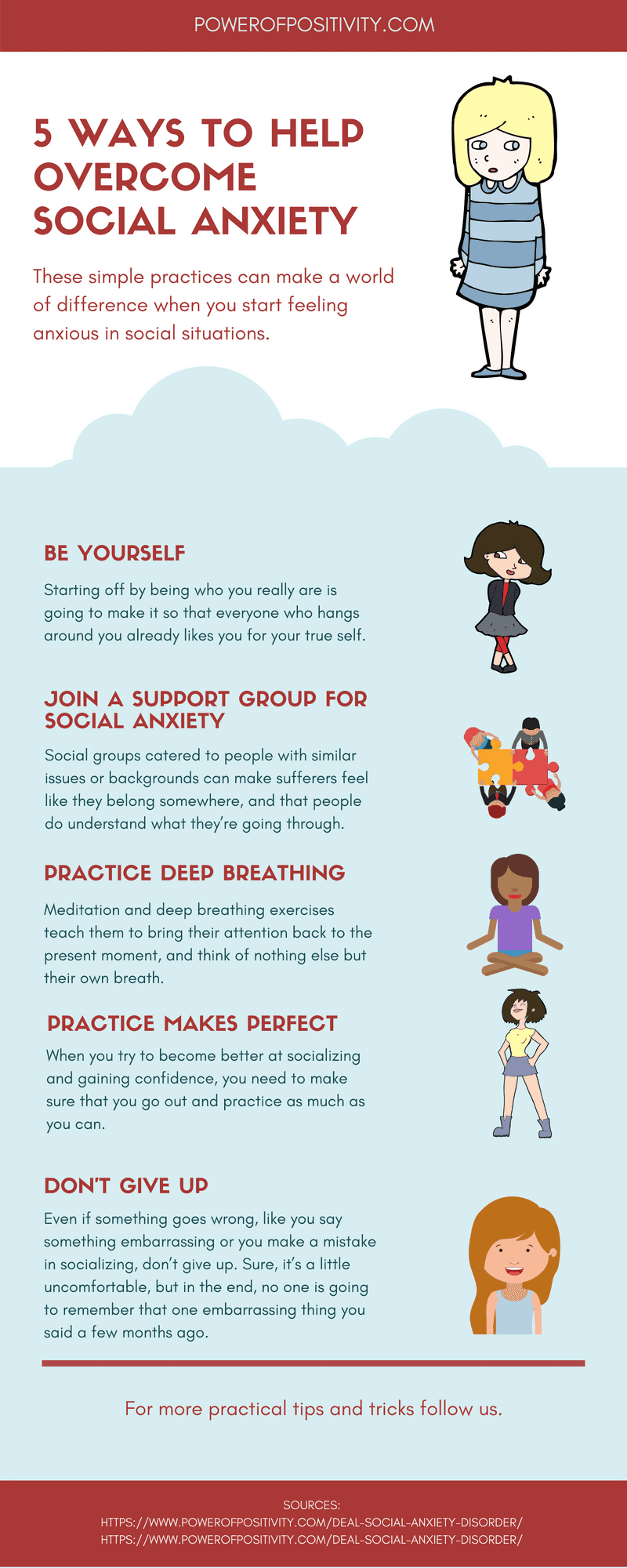
Ways to manage social anxiety infographic

Share this Infographic On Your Site


Understanding the things to know about social anxiety is the first step toward healing. With compassion, patience, and the right tools, it is possible to manage and even overcome it.

How Can We Experience God in Our Everyday Lives?

As men, we sometimes think we have to climb a mountain, attend a powerful revival, or have an earth-shaking spiritual moment to truly encounter God.

But the truth is, He’s just as present in the steady hum of everyday life.

You can find Him in the quiet of dawn, your child’s laughter, or on your way to work.

The question isn’t just how can we experience God—it’s whether we’re willing to slow down enough to notice His presence in the ordinary moments we often overlook.

just breathe and have faith

The Truth About Experiencing God 📖

When we ask, how can we experience God, many of us imagine dramatic signs—a booming voice from the clouds, a vision in the night, or a sudden miracle that changes everything.

While God can speak in powerful ways, more often He chooses the quiet route.

He meets us in the steady rhythm of our daily lives: a verse that speaks directly to our situation, a friend who calls at the perfect time, or a moment of peace in the middle of chaos.

Experiencing Him isn’t about chasing a rare encounter—it’s about recognizing the ways He’s already moving in the small details.

📖 God in the Quiet

When we ask, how can we experience God, many picture thunder or visions. Usually, He meets us in everyday life: a verse that lands at the right moment, a friend who calls when we need it, a calm that settles in the middle of chaos.

🌿 Ordinary Moments, Holy Ground

These simple moments are invitations to notice Him. Slow your pace, pay attention, and you will see that God is already woven into the details of your day.

Cultivating Awareness of His Presence 🌅

Experiencing God starts with learning to notice Him in the middle of your routine.

As men, we can get so focused on what’s next that we miss what’s right in front of us.

Try starting your day with a simple question: “Lord, where are You in this moment?” Ask it while making coffee, walking to your car, or sitting at your desk.

Over time, this practice builds a habit of awareness—training your mind and spirit to see God’s hand moving in even the smallest details.

“The more you train your heart to notice God in the small moments, the easier it becomes to walk with Him in every moment.” 💬

4. Seeing God Through Creation 🌳

Creation is God’s masterpiece on display every day.

The warmth of the sun, the sound of running water, the intricate design of a single leaf—these are not accidents.

They are reminders that God is present, creative, and intentional.

When you pause to admire His handiwork, you’re not just enjoying nature—you’re stepping into a conversation with the Creator Himself.

The more you notice His work in the world around you, the more you’ll feel His presence in your heart.

🌞 God’s Glory in the Sky

A sunrise is more than just a beautiful view—it’s a daily reminder of God’s faithfulness, showing that light always follows darkness.

🍃 God’s Signature in the Small Things

Every detail, from leaf veins to ocean waves, shows the creativity and care of the Creator.

Worship Through Our Work 🛠️

As men, we dedicate a significant portion of our day to problem-solving, meeting deadlines, and providing support to those who depend on us.

This is sacred ground, too. When we offer our effort to God with integrity, excellence, and a servant’s heart, ordinary tasks become worship.

God’s character shows up through your hands in all these ways: answering emails with patience, leading a meeting with humility, fixing what is broken at home, or teaching your kids how to do the right thing.

If you’ve wondered how can we experience God at work, start by inviting Him into the next task and doing it as if He asked you personally. 🙏

Daily Task
Worship Intention

📧 Answering Emails
Respond with patience and kindness, reflecting God’s grace in your words.

🪚 Fixing Something at Home
Work with care, thanking God for the ability to provide and repair.

🧹 Household Chores
Serve your family by creating order and peace in your shared space.

👨‍🏫 Teaching Your Kids
Lead with patience, modeling God’s love through your example.

💼 Leading a Meeting
Lead with humility, putting others’ needs before your own.

🛠 Helping a Neighbor
Act as the hands and feet of Christ by meeting practical needs.

Meeting God in Trials 🌧️

No man wants to face hardship—but every man will.

Whether it’s the loss of a job, the end of a relationship, or a season of uncertainty, trials have a way of stripping life down to what really matters.

It’s in those moments that we often see God most clearly. He doesn’t always remove the storm, but He promises to walk through it with us.

If you’ve been asking how we can experience God when life feels heavy, the answer is often in leaning into Him rather than running away. Pain often serves as a gateway to His presence.

Bible Verses That Illuminate God’s Guidance

Read the Verses Now

Building Spiritual Practices in the Everyday 📜

Experiencing God doesn’t require long retreats or elaborate rituals—it begins with simple, repeatable habits that keep your heart connected to Him.

Read one verse before you check your phone in the morning.

Whisper a prayer while you’re in traffic. Keep a gratitude list by your bed and write down three things before you sleep.

These small practices may feel ordinary, but over time they create a rhythm of awareness that turns your whole day into an ongoing conversation with God.

A Daily Flow to Stay Connected to God ⏳

If you’ve ever struggled to keep your faith consistent, having a simple daily flow can make all the difference.

This isn’t about adding more to your to-do list—it’s about weaving God into what you’re already doing.

By setting small spiritual touchpoints throughout the day, you’ll find it easier to stay aware of His presence from morning until night.

Time of Day
Spiritual Practice

🌅 Morning
Thank God for a new day, and read one verse before starting your tasks.

🕛 Midday
Pause for a quick prayer or moment of gratitude before continuing work.

🌇 Afternoon
Offer your current work to God, asking for excellence and humility.

🌙 Evening
Reflect on your day and write down where you experienced God’s presence.

FAQs About How Can We Experience God in Our Everyday Lives

How can we experience God in a busy life?

You don’t have to wait for a silent retreat to experience God.

Start by inviting Him into small moments—your commute, your workout, even while washing dishes.

When you acknowledge His presence in the middle of your routine, you’ll find that busyness becomes an opportunity for connection instead of a barrier.

What if I don’t feel God’s presence?

Feeling distant from God is something every believer experiences at times.

In those seasons, rely on truth more than feelings. Keep reading Scripture, praying honestly, and surrounding yourself with other believers. Often, God is working in the background even when you can’t sense Him.

Can nature really help me experience God?

Yes. Creation is one of the most direct ways we can see God’s character—His creativity, order, and care.

A simple walk outdoors can become a form of worship if you take time to notice the details and thank Him for them.

How can I make my work a way to worship God?

Do your tasks with excellence, honesty, and love for others. Whether it’s leading a team, fixing something at home, or serving customers, you can turn work into worship by doing it as if God Himself asked you.

How can we experience God during challenging times?

Trials often strip away distractions and make us depend on God more fully. Instead of asking Him to immediately remove the pain, invite Him to walk through it with you. You may find His comfort and strength in ways you never expected.

find faith

Conclusion: Living With God’s Presence in Mind ✝️

As men, we often carry the weight of responsibility—providing, leading, and protecting.

It’s easy to slip into thinking we have to do it all in our strength. But the truth is, God is already walking beside us in every moment, ready to guide, strengthen, and refresh us if we let Him.

Experiencing Him isn’t reserved for Sunday mornings or rare mountaintop moments. We notice His hand in the laughter of our children, the stillness of a sunrise, the challenge of a hard day’s work, and even in the trials that push us to our knees.

The more we train our hearts to see God in the ordinary, the more we’ll live with a steady confidence that we are never alone.

My challenge to you is this: tomorrow, look for Him. Look for Him not only in the “big” moments, but also in the small ones that most people tend to overlook. When we walk with God in the small moments, we discover that He is also faithful in the significant moments.

Is God Relevant in Today’s Fast-Paced World?

Women, burdened with schedules, responsibilities, and quiet hopes, experience the rapid pace of life in our bodies and minds.

Between messages, meetings, and caretaking, it’s easy to slip into survival mode.

This question is not about trends. It’s about whether a living relationship with God brings real help today—clarity for decisions, peace for anxiety, and courage to love well.

If your heart is craving something steadier than the scroll, you’re in the right place.

miracles faith believe


💗 What “Relevance of God” Means Today

For many women, relevance is about connection—does something speak into my actual life, not just an abstract idea?

When we ask if God is relevant in today’s world, we’re really asking if His presence can meet us in school drop-off lines, late-night deadlines, relationship struggles, and moments of self-doubt.

It concerns whether faith can offer guidance during times when our hearts are burdened and our schedules are packed.

God’s relevance today isn’t found only in grand, miraculous moments.

It’s often in the quiet—the gentle nudge toward patience when you want to snap, the strength to make a courageous choice aligned with your values, or the peace that comes when you release something beyond your control.

He meets us where we are, in ways that shape how we think, love, and live.

🕰️ Why This Question Is Rising Now

The pace of life today can feel relentless.

As women, we’re juggling more roles than ever—career builders, caregivers, community leaders, and silent supporters—all while facing a constant stream of news, notifications, and comparisons.

This overload prompts a deeper search for something steady, something meaningful. For many, that search leads to the timeless question: Is God still relevant?

We’re also living in a cultural moment where mental health struggles, social disconnection, and technological change are reshaping how we see ourselves and our future.

The pandemic, economic uncertainty, and rapid AI advancements have caused many women to reevaluate their priorities.

Amid the noise, faith offers an anchor—not to escape reality, but to help us move through it with peace and clarity.

Reason for Asking
Why Women Are Reconsidering Faith

📱 Overwhelm from Constant Connectivity
Faith offers a pause button in a world that never stops scrolling.
🤍 Rising Loneliness & Disconnection
Faith communities provide belonging, support, and authentic connection.
🧠 Mental Health Challenges
Prayer and spiritual practices can reduce anxiety and restore inner calm.
🌏 Seeking Purpose in Uncertain Times
Faith reframes uncertainty as an invitation to trust and grow.

🧠 Does Faith Still Help?

Even in an age of science, therapy apps, and endless self-help content, faith continues to have measurable benefits for women’s mental, emotional, and relational health.

Studies indicate that women who regularly engage in prayer, worship, or Scripture reading often report lower levels of stress, greater resilience during crises, and stronger feelings of purpose.

Faith is not a substitute for professional help or healthy lifestyle habits—but it can be a powerful complement.

It offers a deeper framework for meaning, helps regulate emotions through spiritual practices, and fosters social support through faith-based communities.

In seasons where life feels unstable, these elements can be a lifeline.

🧘‍♀️ Reduced Stress & Anxiety

Regular prayer, meditation, or Scripture reading can lower cortisol levels, helping women feel calmer and more centered during life’s busiest seasons.

💪 Greater Resilience

Faith gives a bigger picture to life’s setbacks, allowing women to bounce back with perspective and inner strength rather than staying stuck in fear.

🤝 Stronger Relationships

Being part of a faith community fosters empathy, accountability, and deeper connections — creating a support system that extends beyond family and work.

💪 Where God Feels Tangibly Relevant

🌦️ Mental and Emotional Resilience

Life throws curveballs—from sudden health scares to late-night worries about our kids.

In these moments, God’s presence acts like a stabilizing weight in the storm.

Prayer, Scripture, and quiet reflection establish a mental space that allows us to process emotions without succumbing to them.

Faith doesn’t erase difficult times, but it equips women with the strength to keep moving forward without losing themselves in the chaos.

🎯 Purpose and Meaning in Chaos

When the calendar is overbooked and priorities feel blurred, God reminds us of what truly matters.

His guidance helps us see beyond the urgency of tasks to the importance of values.

This realignment means the energy you spend every day builds something that lasts—in your family, relationships, and inner life.

🤝 Community, Service, and Belonging

We were never meant to do life alone.

Faith often draws women into communities that provide encouragement, accountability, and a shared mission.

Serving others can turn feelings of isolation into connection, and it often brings unexpected joy.

⚖️ Ethics and Decisions in a Tech-First Culture

In a world where technology evolves faster than our moral conversations, God’s character becomes a compass.

It’s about choosing integrity over shortcuts, compassion over convenience, and truth over trends.

Faith offers principles that remain steady no matter how quickly the digital world shifts.

🕯️ Hope in Suffering and Uncertainty

Grief, illness, and job loss—these seasons test our spirit.

Yet for many women, hope in God becomes the lifeline that keeps despair from taking root.

Faith reframes suffering, showing that pain is not the end of the story and that healing—even if it’s slow—is always possible.

🧩 Common Objections

🔬 “Science replaced God.”

Science explains how things work; God answers why they matter.

Many women embrace both—valuing scientific discovery while recognizing a deeper purpose that facts alone cannot provide.

😔 “If God is good, why is there pain?”

Pain is part of the human story, but it’s not the whole story.

God’s relevance often shows in how He walks with us through suffering, bringing comfort, courage, and sometimes even transformation from the hardest seasons.

🙈 “Religion has hurt people.”

It’s true—some have misused God’s name to control or harm. But this is a distortion of who He is. A genuine relationship with God is based on love, truth, and restoration, not manipulation.

🤖 “With AI and automation, does faith still matter?”

Technology is powerful, but it can’t teach empathy, forgiveness, or integrity. Faith shapes the human heart—something no algorithm can replace.

When Faith Meets Doubt

Read the Full Article

🌼 How to Explore God Today

If the idea of connecting with God feels overwhelming, start small.

Exploration doesn’t have to mean a total lifestyle overhaul—it can be as simple as making space for one intentional moment each day.

🙏 Begin with a 3-Minute Morning Pause

Before checking your phone, take three deep breaths and whisper a short prayer like, “God, guide me today.” This simple habit can shift the tone of your entire morning.

📖 Read One Passage a Day

Choose a short Psalm or a few verses from the Gospels. Ask yourself: What does this reveal about God’s character, and how can I apply it today?

📓 Keep a One-Line Prayer Journal

Each day, write a single sentence to God—a gratitude, a request, or a confession. Over time, you’ll see patterns in how He moves in your life.

🌳 Take a Silent Walk

Spend 10 minutes outside without music or podcasts. Invite God to speak through the stillness and pay attention to the thoughts and feelings that rise.

🫶 Serve Someone Intentionally

Offer help to a neighbor, encourage a coworker, or send a handwritten note. Serving opens your heart to God’s presence in others.

👭 Find a Spiritual Mentor or Prayer Partner

Share life with someone who encourages your faith. Even one conversation a month can strengthen your walk with God.

These ideas don’t have to stay as good intentions—you can turn them into simple, doable habits that fit your current season of life.

Below is a quick guide to help you choose where to start, how much time it takes, and what it will build in your heart and mind.

Practice
Time Needed
What It Builds

🙏 Morning Pause
3 minutes
Calm & focus before the day begins
📖 One Passage Reading
5 minutes
Spiritual insight & guidance
📓 One-Line Journal
2 minutes
Reflection & gratitude
🌳 Silent Walk
10 minutes
Peace & mental clarity
🫶 Intentional Service
Flexible
Connection & empathy

Frequently Asked Questions

Is God relevant in modern society?

Yes. For many women, He provides clarity for decisions, comfort during loss, and purpose that shapes how we love and lead.

How is God relevant to Gen Z and young adults?

He meets their profound questions with belonging, meaning, and a mission beyond social status or success.

Can I be spiritual without religion and still discover God?

Many begin with curiosity and prayer. God often meets us before we have all the labels figured out.

Why believe in God if terrible things keep happening?

Faith does not remove pain, but it offers strength, companionship, and hope that suffering does not have the final word.

How can I see God’s relevance in daily life?

Try one practice for one week—a morning prayer, one verse a day, or an intentional act of service—and notice the quiet shifts in your spirit.

worry and faith in mind

🎯 Conclusion

You don’t have to overhaul your entire life to feel God’s presence.

Start with one small, intentional step. Pray before you scroll. Read a single Psalm before you plan your day. Choose one act of kindness before you worry.

You’ll find that God’s relevance isn’t just an idea to debate—it’s a reality you can experience in the middle of laundry piles, work deadlines, and late-night thoughts.

Slow down just enough to let Him meet you. Because in a world that moves fast, His love moves deeper.

Boost Your Growth Mindset: Daily Faith Practices That Transform

A growth mindset—the belief that abilities and intelligence can be developed through dedication and hard work—has been widely recognized as a key to success, resilience, and personal fulfillment.

While many focus on psychological strategies to cultivate this mindset, integrating faith into the process can provide a deeper, more transformative foundation.

Faith encourages hope and perseverance and aligns our mindset with spiritual truths that foster growth in all areas of life.

In this article, we will explore daily faith practices anchored in Scripture that can help you boost your growth mindset.

Each practice is paired with a Bible verse and practical steps you can incorporate into your daily routine.

train your mind see good


1. Start Your Day with Prayer and Intention 🙏

“Commit to the Lord whatever you do, and he will establish your plans.” — Proverbs 16:3 (NIV)

Starting your day with prayer helps center your thoughts and intentions on God’s guidance.

Committing your efforts to the Lord reminds you that growth is a journey supported by divine strength, not just personal effort.

Each morning, spend five minutes in quiet prayer, asking God to guide your thoughts, actions, and decisions.

Set an intention for the day related to growth—whether it’s patience, learning, or courage. Write it down in a journal as a tangible reminder.

2. Embrace Challenges as Opportunities to Grow 💪

“Consider it pure joy, my brothers and sisters, whenever you face trials of many kinds, because you know that the testing of your faith produces perseverance.” — James 1:2-3 (NIV)

A growth mindset thrives on viewing challenges as chances to develop skills and character. Faith encourages us to see trials not as setbacks but as essential steps in spiritual and personal maturity.

When you encounter a difficult situation, pause and remind yourself of James’ encouragement.

Write down one lesson or strength you can gain from this challenge. Share your reflections with a trusted friend or mentor for support and accountability.

3. Renew Your Mind with God’s Word 📖

“Do not conform to the pattern of this world, but be transformed by the renewing of your mind.” — Romans 12:2 (NIV)

Your mindset is shaped by the thoughts you nurture. Regular engagement with Scripture helps replace limiting beliefs with truths rooted in God’s promises, fostering transformation.

Set aside 10–15 minutes a day to read and meditate on a Bible passage.

Use a devotional guide or app to help focus on themes of growth, perseverance, and faith. Memorize a verse each week that inspires a growth mindset.

4. Practice Gratitude to Shift Your Perspective 🌸

“Give thanks in all circumstances; for this is God’s will for you in Christ Jesus.” — 1 Thessalonians 5:18 (NIV)

Gratitude shifts your focus from limitations to blessings, opening your heart to positivity and growth.

Faith teaches us to recognize God’s goodness, even in small daily moments.

Keep a gratitude journal. Each evening, write down three things you are thankful for that day.

Reflect on how these blessings have impacted your growth or encouraged you to persevere.

5. Surround Yourself with a Supportive Faith Community 🤝

“Therefore encourage one another and build each other up.” — 1 Thessalonians 5:11 (NIV)

Growth is rarely a solo journey. Being part of a faith community provides encouragement, accountability, and shared wisdom, all of which nurture a growth mindset.

Join a small group, Bible study, or faith-based support group where you can share your growth goals and challenges.

Make it a habit to encourage at least one person weekly, reinforcing your growth through uplifting others.

6. Cultivate Patience and Perseverance ⏳

“Let us not become weary in doing good, for at the proper time we will reap a harvest if we do not give up.” — Galatians 6:9 (NIV)

Growth often requires time and sustained effort. Faith reminds us that perseverance, even when progress seems slow, is rewarded.

When feeling discouraged, repeat this verse aloud. Create a visual reminder (like a sticky note or phone wallpaper) to encourage patience. Celebrate small wins weekly to maintain motivation.

7. Confess and Release Limiting Beliefs ✨

“If we confess our sins, he is faithful and just and will forgive us and purify us from all unrighteousness.” — 1 John 1:9 (NIV)

Guilt, shame, or negative self-talk can sometimes hinder our mindset. Confession and forgiveness—both of self and others—are powerful tools for mental and spiritual freedom.

Set aside time for honest self-reflection and prayer. Confess any negative thoughts or feelings to God, asking for forgiveness and renewal. Practice speaking affirmations rooted in your identity as a beloved child of God.

8. Serve Others to Expand Your Perspective ❤️

“Each of you should use whatever gift you have received to serve others, as faithful stewards of God’s grace.” — 1 Peter 4:10 (NIV)

Serving others helps shift focus from self-limiting concerns to a bigger purpose. Faith teaches that using your gifts to bless others fosters growth and fulfillment.

Volunteer regularly in your church or community. Reflect on how serving challenges you and helps you grow in empathy, patience, and leadership. Journal your experiences and insights.

9. Practice Forgiveness to Free Your Mind 🕊️

“Be kind and compassionate to one another, forgiving each other, just as in Christ God forgave you.” — Ephesians 4:32 (NIV)

Holding onto resentment can block growth. Forgiveness, grounded in faith, liberates your mind from bitterness, opening space for new growth.

Identify anyone you need to forgive, including yourself. Pray for the strength to forgive and release grudges. Consider writing a letter (even if you don’t send it) to express and let go of hurt.

10. Celebrate God’s Grace in Your Progress 🎉

“But by the grace of God, I am what I am, and his grace toward me was not without effect.” — 1 Corinthians 15:10 (NIV)

Recognize that growth is a gift of grace, not solely personal effort. This perspective fosters humility and gratitude, encouraging ongoing transformation.

At the end of each week, reflect on areas of growth and thank God for His grace in your journey. Share your testimony or progress with your faith community to inspire and encourage others.


Conclusion 🌟

Cultivating a growth mindset is a powerful journey that blends psychological principles with spiritual truths.

When daily faith practices are integrated into your mindset work, you open yourself to a deeper transformation—one that nurtures not only skills and knowledge but also character, hope, and resilience.

By committing each day to prayer, Scripture, gratitude, service, and forgiveness, you align your mind with God’s promises and power.

This alignment fuels perseverance, unlocks potential, and ultimately leads to a life marked by continual growth and joy.

Start today with one or two of these faith practices and watch how your mindset begins to shift. Remember, growth is a journey, and with faith as your foundation, the possibilities are endless.

What Are the Transformative Powers of Faith in Everyday Life?

On certain days, it seems like I’m simply going through the routine of waking up, grinding, and then repeating.

Life doesn’t always come with clear answers or instant relief.

But over time, I’ve found that faith—not religion in a strict sense, but that quiet, steady trust in something bigger than me—has shaped how I face the world.

I wouldn’t say I was always a “man of faith.” In fact, there were years I leaned more on logic than belief.

But when things got messy—career burnout, relationship struggles, those late-night spirals—faith gave me something I didn’t expect: a calm kind of clarity. Not loud. Not dramatic. I had a feeling that I wasn’t facing the challenges alone.

This article isn’t a sermon. It resembles a conversation among men—genuine discussion about how faith can truly transform our thinking, living, and personal growth.

Whether you’re spiritual, religious, or just figuring it all out, I’ll break down what transformative faith really means, how it shows up in everyday life, and why it might be the one thing that changes everything—quietly but completely.

So, let’s dive in.

you cant control everything

💭 What Does “Transformative Faith” Really Mean?

Let’s be real—the word faith gets thrown around a lot.

For some guys, it sounds like something tied to Sunday mornings or sacred texts. For others, it’s more personal—something quiet that lives under the surface, not discussed much but felt deeply when life hits hard.

For me, transformative faith does not entail possessing all the solutions. It’s about choosing to believe even when things don’t make sense.

It’s the shift that happens when you stop needing to control every outcome and start trusting that you’ll land on your feet—even if you don’t see how yet.

This kind of faith doesn’t always shout. It manifests in your ability to bounce back from setbacks and persist in supporting those you love, even when you’re struggling.

It affects your self-image, stress management, and decision-making—not as a “winner” but as a person shaped by life.

In short? Transformative faith is the kind that rewires how you think, feel, and move through the world. Not overnight.

But slowly—like the steady, slow burn of an unquenchable fire.

Benefit
Scientific Insight
🫀 Lowers Risk of Heart Disease
Strengthens heart muscle and improves circulation
(American Heart Association)
🔻 Reduces Blood Pressure
Meta-analysis in *Atherosclerosis* confirms lowered systolic/diastolic BP
😊 Boosts Mood
10 days of treadmill walking reduced depression by up to 77%
(*Arch Intern Med*)
🧠 Enhances Brain Function
Stimulates neurogenesis and brain plasticity
(*PNAS*)
😴 Improves Sleep Quality
16-week study showed better sleep duration and efficiency
(*Sleep Medicine*)

🧩 The Everyday Impact of Faith

Let’s be honest: most of life doesn’t feel “epic.” It’s alarm clocks, emails, and dishes in the sink. But this is precisely where faith works its quiet magic—not in grand miracles, but in the moments we’d otherwise brush off.

For me, faith has reshaped how I handle pressure. It’s not about pretending everything’s fine.

It’s more about that inner voice that says, “Even if it’s messy right now, I’ll endure through this.” Whether I’m stuck in traffic or facing a decision that feels way bigger than me, faith creates space, room to breathe, reflect, and not panic.

It also softens how I deal with interacting with people. I’ve caught myself snapping less and listening more. Not because I’ve suddenly become a saint—far from it—but because faith makes me pause before reacting. It shifts my focus from control to connection.

Even the daily grind feels different. There’s more intention. More meaning. More moments where I catch myself just being present, even if nothing huge is happening.

And when life really hits—loss, disappointment, the kind of stuff that knocks the wind out of you—that’s when faith becomes a kind of anchor.

It doesn’t make the pain go away, but it gives you somewhere solid to stand while the storm passes.

Is Faith Something We Choose… or Something That Finds Us?

Read the Full Story

🏃 Faith in Action: Real-Life Examples

Faith sounds appealing in theory, but it’s in the messy, unfiltered moments of life that it either shows up—or doesn’t.

And if I’m being real, it’s not always simple to lean on something you can’t see or prove.

But over time, I’ve learned: faith doesn’t need to be loud to be powerful. It works best when it’s quiet, steady, and personal.

Take the time I lost my job out of the blue. Total curveball. Bills were still coming in, pride was bruised, and I had no backup plan.

But instead of spiraling (okay, after a short spiral), I found this strange sense of steadiness.

Not optimism exactly—but an inner nudge that said, “Keep going. Something else is coming.” And it did. Not right away. But eventually.

Or when I became a dad. No manual. No prep. Just this tiny human who somehow trusted me to know what I was doing.

Spoiler: I didn’t. But faith helped me stay present—less about being the perfect father, more about being the consistent one.

Even breakups hit differently now. I’ve learned to let the pain do its work without rushing to escape it. Faith tells me there’s meaning in the loss, even if I won’t see it until later.

It’s in these small, raw moments that faith actually transforms things—not by changing what happens, but by changing how I walk through it.

🪴 How to Cultivate Transformative Faith

Faith isn’t built in extremes—it’s built in habits.

Over the years, I’ve learned that it doesn’t take a spiritual awakening or a life crisis to grow real, transformative faith.

Most of the time, it happens in the in-between moments: when you’re deciding how to respond, what to hold onto, and what to release.

These are a few small, personal ways I’ve been able to strengthen my faith—not perfectly, but consistently. And each one starts with a shift in mindset:

🕯️ “I don’t need all the answers. I just need to stay grounded.”

Start with silence. 💛 Just five minutes in the morning—no phone, no noise—to breathe and be still. It feels small, but over time, it becomes an anchor. Faith grows in stillness, not in the scroll.

📓 “When I write it down, I let it go.”

Journaling isn’t just about keeping a record—it’s about release. 💛 Dump your thoughts onto paper. Worries, questions, even prayers. Faith grows when your mind has space to breathe, not when it’s crowded with noise.

🤝 “Their peace reminded me what’s possible.”

Surround yourself with people who live what you’re trying to build. 💛 You don’t need a crowd—just one person who walks through life with grace can reignite your belief in something bigger than yourself.

🧘 “Let go. Don’t grip so hard.”

Faith and control rarely live in the same room. 💛 Try surrendering something—a decision, a fear, a timeline. See what happens when you stop white-knuckling life and trust something bigger to carry the weight.

FAQs: The Transformative Powers of Faith

Can faith really change a person’s life—or is that just something people say?

It’s not just talk. Faith has a way of reshaping how you react, how you recover, and how you relate to others.

You may not wake up a different man overnight, but you do wake up with more peace, more focus, and more inner strength. The change is real—it just tends to happen quietly.

Do I have to be religious to experience transformative faith?

Not at all. Transformative faith isn’t about dogma—it’s about trust.

Trust in purpose, in process, in something bigger than yourself. Some find it through spirituality, others through community, nature, or just a deep sense of inner conviction. It’s personal, and it evolves.

How do I hold on to faith when life feels completely out of control?

Start small. You don’t have to feel strong to practice faith—most of the time, I’ve leaned into it when I felt weakest. One deep breath. One honest prayer. One journal entry. It’s less about holding everything together and more about letting yourself be held.

What if I have doubts? Does that mean I’m lacking faith?

Doubt isn’t the opposite of faith—it’s part of the process. Every guy I know who lives with deep faith has wrestled with questions. The difference is, they kept showing up anyway. You can doubt and still believe. That tension? That’s where real faith is forged.

just breathe and have faith

🧭Conclusion

If you’ve made it this far, you already know—faith isn’t about having all the answers.

It’s about being willing to walk forward even when the road’s foggy. It’s about trusting that growth can happen in silence, in waiting, and inbetween.

For me, the power that transforms faith isn’t something I read about or heard in a sermon.

It’s something I’ve lived—in setbacks, in grief, in moments I almost gave up. Faith didn’t magically repair everything, but it changed me. It helped me hold steady. It gave me peace when nothing made sense. And it reminded me that I’m not doing this alone.

So wherever you’re at—questioning, rebuilding, barely holding it together—just know this: your faith, even if it’s messy or quiet or full of doubt, still counts. Still transforms. 💛

The real shift doesn’t happen out there. It starts inside.

How Social Support Protects Your Mental Health

We all need someone in our corner. Whether it’s a friend to talk to after a hard day, a family member cheering us on, or a neighbor offering a helping hand, social support can be a lifeline.

It’s more than just feeling loved—it’s a powerful force that protects and nourishes our mental well-being.

In today’s fast-paced and often isolating world, knowing that someone truly cares can be the difference between feeling overwhelmed and feeling capable.

This article explores how social support protects your mental health, how it works on both emotional and biological levels, and how you can strengthen the support systems in your life.

💬 Emotional Support Changes the Brain

When someone listens with compassion, your brain releases oxytocin—a hormone linked to bonding and emotional regulation. This lowers cortisol (the stress hormone) and activates areas of the brain that promote safety and calm. Social connection doesn’t just feel good—it physically heals.

What Is Social Support? 💞

Social support isn’t just about having people around—it’s about the quality of connection you share with them.

Fundamentally, it’s the reassuring sensation of recognition, appreciation, and comprehension. Whether it’s a hug, a kind word, practical help, or even just a text that says “I’m thinking of you,” support can show up in many beautiful ways.

Experts often break social support into four main types:

💗 Emotional support: listening with empathy and offering love, comfort, and encouragement.

🛠️ Instrumental support: tangible help like running errands, lending money, or helping with chores.

📚 Informational support: sharing advice, guidance, or helpful knowledge when it’s most needed..

🔍 Appraisal support: offeringg perspective or feedback that helps someone reflect or make decisions.

Each of these plays a unique role in supporting your mental health—and often, we experience more than one at a time from the people closest to us.

mental health is priority

The Science Behind Social Support and Mental Health 🧠

It’s not just a nice idea—social support is backed by science.

Psychologists have developed two major theories to explain how it protects mental health: the Buffering Hypothesis and the Direct Effect Hypothesis.

The Buffering Hypothesis suggests that support acts like a cushion during tough times.

When stress hits—whether it’s a job loss, illness, or emotional setback—having people around you helps reduce the negative emotional impact.

The Direct Effect Hypothesis goes one step further.  It says social support benefits us all the time, not just during crisis.

Simply feeling connected boosts our mood, sense of security, and daily mental well-being.

Another intriguing aspect to consider is the distinction between perceived and received support.

Studies show that it’s not just about what people do for you—it’s about what you feel is available. Even the belief that someone would be there if you needed them can provide comfort and reduce anxiety.

Key Mental Health Benefits of Social Support 🌿

Having people you can count on does more than lift your spirits—it actively protects your mental health.

Social support plays a key role in helping you cope, recover, and even thrive through life’s challenges. Here are some of the most powerful benefits:

😌 Reduced Stress and Anxiety – Talking things out with someone who listens helps ease mental tension and lowers cortisol, your body’s main stress hormone.

💪 Increased Resilience—When you know you’re not facing problems alone, you’re more likely to bounce back from setbacks and keep going with hope.

🌈 Lower Risk of Depression—Feeling connected reduces the likelihood of loneliness spiraling into depression. Support helps people feel worthy and understood.

🌟 Improved Self-Esteem and Confidence – Encouragement and validation from others can reshape how you see yourself and boost your sense of self-worth.

These benefits aren’t just emotional—they ripple through your thoughts, behaviors, and even physical health. Simply put, we’re wired to connect, and when those connections are strong, so is our mental wellness.

How Social Support Impacts the Brain and Body 🧍

Social support doesn’t just soothe your feelings—it sparks real, measurable changes inside your brain and body.

When you feel supported, your nervous system relaxes, which lowers stress hormones like cortisol and reduces inflammation.

This helps protect your heart, immune system, and even your memory. Supportive connections trigger the release of oxytocin, sometimes called the “love hormone.”

Oxytocin helps calm fear centers in the brain and boosts feelings of safety and trust.

This hormone plays a key role in emotional healing and bonding.

On the flip side, loneliness or social isolation can cause the opposite effect: increased cortisol, more inflammation, and a higher risk of mental health struggles like anxiety and depression.

This biological response shows why social support is so crucial—it’s literally a form of self-care that keeps your mind and body balanced.

Benefit
Scientific Insight

🫀 Lowers Risk of Heart Disease
Strengthens heart muscle and improves circulation
(American Heart Association)
🔻 Reduces Blood Pressure
Meta-analysis in Atherosclerosis confirms lowered systolic/diastolic BP
😊 Boosts Mood
10 days of treadmill walking reduced depression by up to 77%
(Arch Intern Med)
🧠 Enhances Brain Function
Stimulates neurogenesis and brain plasticity
(PNAS)
😴 Improves Sleep Quality
16-week study showed better sleep duration and efficiency
(Sleep Medicine)

Sources of Social Support 🤝

Social support can come from many places, and each source plays its own special role in keeping us mentally healthy. Here are some of the key ones:

👨‍👩‍👧 Family: Often the first and most constant source of support, family provides emotional comfort, practical help, and a sense of belonging.

👫 Friends: Friends offer companionship, understanding, and encouragement—sometimes in ways family can’t.

🌍 Community: Whether it’s neighbors, local groups, or clubs, communities connect us with people who share common interests and values.

💻 Online Networks: In today’s digital age, social media and support forums can provide connection, advice, and empathy, especially when in-person contact is limited.

👥 Professional Support: Therapists, counselors, and support groups offer specialized help tailored to mental health needs.

Remember, a strong support system doesn’t mean having a large group—it’s about the quality and reliability of those connections.

What Happens Without Social Support? 😔

Lack of social support can be tough—and it’s more than just feeling lonely.

When we don’t have someone to turn to, our mental health can suffer in very real ways. Isolation increases stress hormones like cortisol and inflammation in the body, which can lead to anxiety, depression, and even physical health problems.

Loneliness doesn’t just make us feel sad; it actually triggers the same brain regions as physical pain.

It can cause us to withdraw even further, creating a difficult cycle that’s hard to break. Without support, everyday challenges can feel overwhelming, and recovery from setbacks takes longer.

Recognizing when you’re feeling isolated is the first step to reaching out—and building connections that nurture your mental well-being.

💔 The Pain of Loneliness

Studies show loneliness activates the same brain areas as physical pain, highlighting why social connection is vital for mental health.

🛑 Breaking the Isolation Cycle

Awareness and small steps toward connection can help end the painful cycle of isolation and support mental healing.

🏗️ Building and Strengthening Your Support System

Not everyone is born into a tight-knit circle of support—but the good news is, support systems can be built and nurtured over time.

It starts with being intentional about your connections and open about your needs.

Start by identifying people in your life who make you feel seen, safe, and supported.

This could be a family member, a coworker who checks in on you, or a neighbor who always waves and smiles.

Once you recognize these bonds, invest in them—reach out regularly, show appreciation, and reciprocate when others need help.

Don’t be afraid to step outside your comfort zone to meet new people.

Join interest-based clubs, volunteer for causes you care about, or participate in community groups.

The more you engage, the more likely you are to find like-minded people who can become part of your emotional circle.

Also, remember: you don’t have to do this alone. If building a support system feels overwhelming, talking with a counselor, therapist, or community leader can help guide the process.

Protect Your Mental Health Daily 💜

Read 4 Daily Habits for Better Mental Health

Frequently Asked Questions (FAQs)

What exactly is social support?

Social support refers to the people and relationships in your life that provide emotional comfort, practical help, and encouragement. This can come from family, friends, coworkers, faith communities, or even support groups.

How does social support improve mental health?

It reduces stress, boosts mood, and gives you a sense of belonging. Feeling supported also helps you manage anxiety and recover more quickly from tough situations.

Can online support be as helpful as in-person support?

Absolutely! While face-to-face contact is great, many people find real, lasting support through online communities, forums, or video calls—especially when physical distance is a factor.

What if I don’t have a strong support system?

You’re not alone—and you can build one.

Start small: attend local events, join interest-based groups, or consider reaching out to a mental health professional who can help you connect with resources.

Is professional help considered social support?

Yes! Therapists, counselors, and coaches are vital forms of support. They offer guidance, listen without judgment, and can help you process emotions in a safe space.

Can too much social interaction be harmful?

Yes—balance is key. Even the most social people need time to recharge. It’s okay to set boundaries and protect your energy while still staying connected.

triggering mental health

Conclusion 🌱

Mental health doesn’t thrive in isolation—it blossoms through connection, care, and support.

Whether it’s a close friend, a trusted group, or even a kind neighbor, social support creates a buffer against life’s stressors and strengthens emotional resilience.

As we’ve seen, it not only uplifts our mood but also protects our physical health and sense of purpose.

So, don’t hesitate to reach out, check in, or simply be present for someone.

These small steps can create a big impact. In nurturing others, we often end up nurturing ourselves too.

9 Ways Gratitude Improves Mental Health, According to Science

In today’s fast-paced world, mental health challenges are more common than ever.

Stress, anxiety, and emotional fatigue can quietly pile up, leaving us overwhelmed and disconnected. But what if one simple shift in mindset could improve how we feel, think, and relate to others? That’s where gratitude comes in.

Researchers have found compelling evidence that practicing gratitude doesn’t just make us feel good—it can lead to measurable improvements in our overall mental health.

From better sleep to stronger relationships and even lower levels of depression, the ways gratitude improves mental health are not only backed by science but also accessible to anyone willing to slow down and reflect.

Whether it’s writing in a journal, saying thank you more often, or simply noticing the little things that go right in your day, the impact can be powerful.

In this article, we’ll explore 9 science-backed ways gratitude can boost your mental well-being—and how to make it a lasting habit in your life.

being grateful

Reduces Stress and Anxiety 🧘‍♂️

Gratitude quickly calms stress and anxiety by shifting focus from problems to what’s going right, even if small. This simple mindset change lowers cortisol, the stress hormone, helping the body relax.

Studies show people who practice gratitude regularly report less anxiety and greater emotional balance. Gratitude activates brain areas that regulate emotions, like the prefrontal cortex, and quiets the amygdala, the fear center.

This helps you face challenges with a clearer, calmer mind instead of spiraling into worry. Over time, gratitude builds a mental habit that reduces stress and creates space for peace and clarity—a powerful, science-backed way to ease your mental load.

Improves Sleep Quality 😴

A restless mind often causes restless nights, but gratitude can quiet the noise. Studies show gratitude improves both sleep quality and duration.

Reflecting on what you’re thankful for—especially before bed—helps you fall asleep faster, sleep longer, and wake refreshed. Gratitude shifts focus away from worries and reduces nighttime rumination, a common cause of insomnia.

Instead of replaying stress, your brain begins to associate bedtime with calm and safety. Keeping a gratitude journal by your bed, listing three things you’re grateful for, rewires your brain to seek positivity.

Over time, this habit improves sleep patterns, boosts daytime energy, and supports overall well-being. Rest isn’t just about closing your eyes—it starts with a peaceful mind.

🌙 Gratitude and Better Sleep

In a study published in Applied Psychology: Health and Well-Being, participants who wrote down things they were grateful for just 15 minutes before bed fell asleep faster and stayed asleep longer. Gratitude helps clear mental clutter, allowing the mind to rest more easily.

Boosts Mood and Positive Emotions 😊

Gratitude powerfully influences the brain’s emotional centers, especially the prefrontal cortex and limbic system, which govern joy and reward. Simply put, feeling thankful boosts mood biologically.

Expressing gratitude triggers the release of dopamine and serotonin—neurotransmitters that elevate happiness and reduce negative thoughts. Unlike short-lived pleasures, gratitude builds lasting emotional well-being.

Those who regularly practice gratitude tend to have fewer mood swings and greater life satisfaction. It’s not about ignoring challenges, but about noticing the good despite them. This mindset lifts spirits and builds lasting emotional strength.

Gratitude becomes more than a feeling—it serves as an emotional anchor in daily life.

18 Ways Gratitude Changed My Life

Read the Full Story

Strengthens Relationships 🤝

Gratitude improves not only your mood but also your relationships. Expressing genuine thanks deepens bonds, builds trust, and fosters belonging. When people feel appreciated, kindness and cooperation naturally increase.

Couples who regularly share gratitude report greater satisfaction and less conflict. It helps partners focus on what matters instead of annoyances. Similarly, gratitude in friendships and family boosts empathy and reduces loneliness.

Noticing others’ efforts enhances closeness, and over time, these small acts make relationships more resilient to stress. Since social support is vital for mental health, gratitude plays a key role in nurturing it.

In short, gratitude transforms everyday interactions into deeper, lasting connections.

Builds Emotional Resilience 💪

Gratitude strengthens your ability to cope with adversity by helping you focus on positive aspects, even during difficult times.

This mental shift builds emotional resilience—the capacity to bounce back from stress, trauma, or setbacks.

Research suggests that gratitude promotes post-traumatic growth, meaning people recover stronger and more hopeful after challenges.

By appreciating small wins and support systems, gratitude helps reframe hardships as opportunities for growth rather than permanent obstacles.

This perspective encourages adaptive coping strategies, reducing feelings of helplessness and despair.

How Gratitude Boosts Emotional Resilience

Benefit
Scientific Insight
🫀 Lowers Risk of Heart Disease
Strengthens heart muscle and improves circulation
(American Heart Association)
🔻 Reduces Blood Pressure
Meta-analysis in *Atherosclerosis* confirms lowered systolic/diastolic BP
😊 Boosts Mood
10 days of treadmill walking reduced depression by up to 77%
(*Arch Intern Med*)
🧠 Enhances Brain Function
Stimulates neurogenesis and brain plasticity
(*PNAS*)
😴 Improves Sleep Quality
16-week study showed better sleep duration and efficiency
(*Sleep Medicine*)

Lowers Risk of Depression 🌥️

Gratitude helps reduce depression symptoms by shifting focus from negative thoughts to positive experiences. This shift is key in breaking the rumination cycle common in depression.

Studies show that people who regularly practice gratitude journaling or reflection report fewer depressive symptoms over time. Gratitude is now used alongside traditional therapies to enhance treatment and support recovery.

By appreciating what’s good in life, gratitude fosters hope, resilience, and emotional healing. It’s a scientifically supported, accessible strategy to protect mental health and improve quality of life.

Enhances Self-Esteem 🌟

Gratitude boosts self-esteem by shifting focus away from unhealthy comparisons and toward appreciating your strengths and achievements.

Studies show grateful people have a more positive self-image and less envy or resentment. This mindset reduces feelings of inadequacy and builds self-worth.

Recognizing the good in yourself creates confidence and inner peace. Gratitude also helps combat social pressures like competition and perfectionism by fostering acceptance.

Overall, gratitude strengthens your relationship with yourself, empowering you to face challenges with positivity and resilience.

Encourages Healthy Habits 🥗

Gratitude doesn’t just improve your mindset—it also influences your behavior.

Research shows that people who regularly practice gratitude are more likely to adopt and maintain healthier habits such as exercising regularly, eating nutritious foods, and getting medical checkups.

This connection happens because gratitude fosters a greater sense of self-care and responsibility.

When you appreciate your body and life, you’re motivated to treat yourself with respect and kindness. The positive emotions from gratitude also reduce stress, which often leads to unhealthy coping mechanisms like overeating or inactivity.

Over time, grateful individuals tend to have better overall physical health, which further supports mental well-being. Gratitude creates a positive feedback loop—healthy habits improve mood, and a positive mood encourages even better choices.

🌟 Healthy Choices and Gratitude

Studies suggest that grateful people are more motivated to stick to healthy routines like exercise and balanced diets, improving both body and mind.

Increases Mindfulness and Present Focus 🧠

Gratitude naturally encourages mindfulness—the practice of paying attention to the present moment with openness and without judgment.

When you focus on what you’re thankful for right now, you become more aware of your experiences, sensations, and surroundings. This helps break the habit of getting lost in worries about the past or future.

Research shows that gratitude enhances neural activity in areas of the brain associated with attention and awareness.

This heightened mindfulness supports better emotional regulation and reduces stress. It allows you to savor positive experiences fully, which boosts overall mental well-being.

Incorporating gratitude into your daily routine, such as during meditation or journaling, can deepen your mindfulness practice.

The combination of gratitude and mindfulness creates a powerful cycle: gratitude increases awareness, and awareness helps you recognize more things to be grateful for.

By living more in the present, you reduce anxiety and cultivate a peaceful, focused mind—a key to lasting mental health.

Frequently Asked Questions

How quickly can gratitude improve mental health?
Many people notice benefits like reduced stress and better mood within just a few weeks of practicing gratitude regularly. Consistency is key for lasting impact.
Can gratitude help with anxiety and depression?
Yes. Scientific studies show gratitude reduces symptoms of anxiety and depression by shifting focus from negative thoughts to positive experiences.
How does gratitude strengthen relationships?
Expressing appreciation fosters trust, empathy, and connection, making relationships more satisfying and resilient.
today I am grateful


Conclusion: Embrace Gratitude for Better Mental Health 🌟

Gratitude is more than just a feel-good emotion—it’s a scientifically proven way to improve your mental health.

From reducing stress and anxiety to strengthening relationships and boosting resilience, the benefits are wide-reaching and accessible to everyone.

By making gratitude a regular part of your daily routine, you can shift your mindset toward positivity, improve sleep, and develop a deeper sense of emotional balance.

Even small acts like keeping a gratitude journal or expressing thanks can create lasting changes in your brain and overall well-being.

Start today by noticing and appreciating the good in your life. Over time, you’ll find that gratitude becomes a powerful tool to support your mental health and enrich your everyday experiences.

How to Strengthen Your Intuition and Trust It Daily

That quiet inner voice, the one guiding you before logic catches up, is your intuition.

It’s not magic; it’s your experiences, instincts, and subconscious insights working together.

In our fast-paced world, we often miss these subtle cues. Yet learning how to strengthen your intuition can help you make quicker, more confident decisions, reduce overthinking, and build self-trust.

Like a muscle, intuition gets stronger with use, so in this guide, you’ll discover practical tips on how to strengthen your intuition and trust it daily.

emotional inteligenceS


🧠 What Is Intuition, and How Does It Work?

Your mind uses intuition to make connections without conscious effort. It’s that instant knowing, a gut feeling, before reasoning steps in.

Your subconscious stores a lifetime of experiences and patterns. When faced with a decision, it draws on this information in milliseconds, creating a sense of certainty without a clear “why.”

Two key elements power intuition:

  • Pattern recognition —recognizing situations that feel familiar.
  • Emotional signaling —physical cues like calm, excitement, or unease.

By noticing and trusting these signals, you can use intuition as a reliable guide.

💡 Gut Feeling

You instantly make a decision without overanalyzing. It’s your brain processing patterns in milliseconds based on past experiences.

🧩 Subconscious Patterns

Your subconscious mind stores vast memories and observations. When needed, it draws on them to guide you—often without you realizing it.

💓 Emotional Signals

Your body often speaks before your mind—tightness in the chest, butterflies in the stomach, or a wave of calm can all signal your inner compass.

🔍 Signs Your Intuition Is Speaking to You

Your intuition is always active, but if you want to know how to strengthen your intuition, you first need to recognize the signs it’s speaking to you.

🫀 Body Cues

Lightness, openness, or a “full-body yes” signal alignment are examples of body cues. Tension, a tight jaw, or a sinking stomach suggests caution.

🧭 Quiet Clarity

An answer feels obvious without overthinking, steady and sure.

🧩 Pattern Recognition

There is a feeling of familiarity or rapid certainty, even in the absence of clear explanations.

🌊 Emotional Signals

A sense of familiarity or quick certainty, even without clear reasons.

🕊️ Synchronicity & Timing

Opportunities, people, or information appear just when needed—gentle nudges toward the right path.

🧯 Intuition vs. Anxiety (Quick Tell)

🧘 Intuition
⚠️ Anxiety

Calm, concise, present-focused
Urgent, catastrophic, repetitive (“what if…?” loops)
🫁 Body: ease, openness, steady breath
😣 Body: tightness, jitters, shallow breath
⏱️ Pace: quick insight, then steady
⏳ Pace: racing thoughts or stuck loops
🎯 Focus: here-and-now, next small step
🔮 Focus: future catastrophes, endless scenarios
📝 Narrative: one clear sentence (“this feels right”)
🧶 Narrative: long justifications and overexplaining
🧷 Pressure: no rush, space to breathe
🚨 Pressure: “decide now or else”
🌤️ After-effect: relief, clarity
🌪️ After-effect: confusion, drain

⚡ 10-Second Gut Check

Ask yourself: “If I had to choose in 10 seconds, what’s my honest pick?”
Notice your first body sensation (ease vs. tension) and the micro-emotion that follows.

🌱 How to Strengthen Your Intuition with Practices

Strengthening your intuition is like training a muscle—the more you work with it, the more reliable it becomes. These daily habits can help you tune in and trust your inner guidance.

🧘‍♀️ Practice Mindfulness and Meditation

Set aside 5–10 minutes each day to sit in stillness. Focus on your breath, notice sensations in your body, and allow thoughts to pass without judgment. This creates mental space for intuitive insights to emerge naturally.

📓 Keep a Daily Intuition Journal

At the end of each day, write down moments when you felt guided by a gut feeling or hunch.

Include what you sensed, the decision you made, and the outcome. Over time, you’ll see patterns that reinforce your trust in your inner voice.

🌳 Spend Time in Stillness and Nature

Nature is a powerful reset for the mind. Even a short walk outside can reduce mental noise, making it easier to hear subtle cues from within. Leave your phone behind and focus on what you see, hear, and feel.

🩻 Engage in Body Awareness Exercises

Your body often senses truth before your mind catches up.

Practice daily check-ins by scanning from head to toe and noticing where you feel openness or tension when thinking about a choice or situation.

🎨 Use Visualization and Creative Expression

Art, music, dance, and even daydreaming can help bypass analytical thinking and tap into subconscious wisdom.

Set aside time to create freely without self-criticism—this opens the same pathways intuition uses.

🤝 How to Trust Your Intuition

Recognizing intuitive signals is only half the journey—the other half is learning to act on them with confidence.

This can feel risky at first, especially if you’ve been conditioned to rely solely on logic or outside opinions. But like any skill, trust grows with consistent practice.

🌱 Start Small

Begin by using your intuition on low-stakes decisions—what to eat, which route to take home, or who to call.

The more often you see positive results from following your gut, the easier it becomes to trust it in bigger choices.

📜 Review Past Wins

Reflect on instances where you trusted your intuition and it proved to be successful. Write them down and revisit this list whenever doubt creeps in.

This simple reminder reinforces that your inner guidance is worth listening to.

⏳ Give It Space

Sometimes an intuitive nudge doesn’t need immediate action—it may be a “planting seeds” moment.

If you’re unsure, step back, observe, and allow things to unfold. Trust isn’t always about speed; it’s about alignment.

🛡️ Balance with Logic

Trusting your intuition doesn’t mean ignoring reason. The strongest decisions often come when intuition and logic work together—intuition provides the direction, and logic maps the route.

Trust and Strengthen Your Intuition

Learn the Signs of an Intuitive Person

⚖️ Balancing Intuition with Logic

Intuition and logic work best together—one offers quick guidance, the other validates and plans the next step.

When to Lean on Intuition

• Limited time for decisions.

• Familiar situations your subconscious recognizes.

• Creative or problem-solving tasks.

📊 When to Bring in Logic

• High-stakes choices with lasting impact.

• Situations outside your experience.

• When emotions could cloud judgment.

🔄 The “Two-Step” Method

Listen First—Notice your initial gut reaction before doing any analysis.

Validate Second—Use logic, research, and facts to confirm or adjust your decision.

By combining both, you reduce the risk of acting on pure impulse while avoiding the paralysis that comes from overanalyzing every choice.

🚧 Common Blocks to Intuition (and How to Overcome Them)

Even the most naturally intuitive individuals may find it difficult to discern their inner guidance when certain obstacles arise. Fortunately, there’s good news! Most of these blocks are temporary and can be reduced with awareness.

😵‍💫 Mental Noise

Overthinking, constant multitasking, and endless digital distractions drown out subtle signals.

😨 Fear and Self-Doubt

Fear often disguises itself as “logic,” leading you to second-guess yourself.

🌀 Emotional Overload

Strong emotions like anger, stress, or excitement can cloud intuition.

🌐 External Influence

Too many opinions can confuse your inner compass.

🌟 Real-Life Examples of Intuition in Action

Seeing intuition in motion can help you understand how it might work in your life.

🏆 Oprah Winfrey – Career Decisions

Oprah has often spoken about following her instincts, from turning down deals that didn’t feel right to starting her own network.

Many of Oprah’s greatest achievements stemmed from gut instincts, even before they were substantiated by evidence.

🚀 Steve Jobs – Product Vision

Jobs trusted his intuition when developing groundbreaking products like the iPhone, focusing on what “felt” right for the user experience rather than relying solely on market research.

👣 Everyday Moments

It’s not always about fame or fortune. Think of the time you suddenly conceived of a friend and they called minutes later, or when you avoided a route home only to learn there had been an accident. These moments may be small, but they strengthen your trust in that inner voice.

The more you notice and honor these experiences, the easier it becomes to recognize intuition as a reliable guide in both big and small decisions.

FAQs About How to Strengthen Your Intuition

Can anyone strengthen their intuition?

Yes. Like a muscle, intuition improves with consistent practice and awareness.

Could you please let me know how long it typically takes to observe results?

Many people notice changes within weeks, particularly when they practice daily mindfulness or journaling.

Is intuition always right?

Not always. It’s most reliable when you’re calm, present, and have some experience with the situation.

How can I tell intuition apart from anxiety?

Intuition feels calm and clear; anxiety feels urgent, repetitive, and heavy.

gut feeling

💡 Final Thoughts

Your intuition isn’t a mysterious power reserved for a select few—it’s an inner resource you already have.

It’s the quiet voice that nudges you toward opportunities, helps you sidestep problems, and gives you a sense of peace when something is right for you.

Strengthening this skill takes time, patience, and consistent practice, but the rewards are life-changing.

The more you listen to your inner cues, the more natural it will feel to trust them. That trust will spill into every area of your life—guiding you toward better relationships, smarter decisions, and a deeper connection to yourself.

Think of intuition as a lifelong companion. It doesn’t shout; it whispers. And the more you honor those whispers—through mindfulness, reflection, and courage—the clearer and more confident your path becomes.

In a world full of noise, trusting yourself may be the most radical and empowering choice you can make.

Skip to content